

P0513 on 2020-2025 Cadillac XT6: Incorrect Immobilizer Key Causes and Fixes
On a 2020-2025 Cadillac XT6, code P0513 almost always appears after a battery issue or jump-start, causing a no-start condition. The most common fix is not a new part, but a Body Control Module (BCM) software reset and key relearn procedure performed by a dealer or qualified shop with GM-specific tools.
- P0513 on a 2020-2025 XT6 means the car won't start because the security system doesn't recognize the key.
- The most likely cause is a software glitch in the Body Control Module (BCM) after a battery issue, not a broken part.
- Before going to a shop, try replacing the key fob battery (CR2032) and using the spare key.
- The correct fix is a software reset ('Programming A' via SPS) and key relearn procedure that must be done by a dealer or a shop with GM-specific tools.
- Do NOT let a mechanic replace the BCM or other expensive modules without first attempting the software reset outlined in TSB #23-NA-165.
What's Unique About the 2020-2025 Cadillac XT6
The Cadillac XT6, built on GM's modern C1XX platform and utilizing the Vehicle Intelligence Platform (VIP) electrical architecture, is highly sensitive to voltage fluctuations. A dead battery, jump-start, or even a battery replacement can corrupt the memory in the Body Control Module (BCM), which acts as the Power Mode Master. This software glitch, rather than a physical part failure, is the most common reason for P0513 on this specific vehicle, a fact well-documented in General Motors' own technical service bulletins.
Diagnostic Flowchart
Tap your situation to follow the diagnostic path that matches what you're seeing on this vehicle.
Symptoms You May Notice
- Engine will not crank or start.
- Key fob does not work for locking or unlocking the doors (loss of active functions).
- Check Engine Light is illuminated.
- Security or theft deterrent light is flashing or constantly on.
- A 'No Key Detected' or 'Service Theft Deterrent System' message may appear on the driver information center (DIC).
- Replacing the Body Control Module (BCM) before performing the software reset procedure. TSBs #23-NA-165 and #21-NA-277 specifically warn against replacing modules as a first step.
- Replacing the key fob without first trying a new battery or attempting the BCM reset.
- Replacing the starter or battery when the root cause is the theft deterrent system.
- Attempting a standard 30-minute key relearn procedure without first performing the BCM software recovery, 🎬 Learn why a standard BCM relearn might not work here which will not work if the module's memory is corrupted.
Most Likely Causes
- Body Control Module (BCM) Memory Corruption After Low Voltage Event 🔴 High Probability → Shop Body Control Module As documented in GM Technical Service Bulletin #23-NA-165, the BCM on this platform can experience a memory corruption event following a low voltage condition, such as a dead battery, jump-start, or battery replacement. The modern VIP architecture is more susceptible to these glitches.
How to confirm: Confirm if the issue appeared immediately after the battery was low, disconnected, or jump-started. The presence of P0513 along with a no-crank condition is a strong indicator. A dealer scan tool can check for related BCM environment DTCs like B389A, B3978, B3979, B3980, or B3981.
Typical fix: Perform a 'Special Data Reset A' or 'Programming A Per Bulletin 23-NA-165' on the K9 Body Control Module, followed by an immobilizer relearn procedure for the existing keys. This requires a GM-specific scan tool and software (SPS) and is explicitly called for in the TSB.
Est. part cost: $0 - Weak or Dead Key Fob Battery 🟡 Medium Probability → Shop Vehicle Battery
How to confirm: Try using the spare key fob. If the spare key works, the battery in the primary fob is the likely culprit. You can also try placing the non-working fob in the vehicle's transmitter pocket, which is located inside the center console storage area, to attempt an emergency start. If the vehicle starts, the fob battery is almost certainly dead.
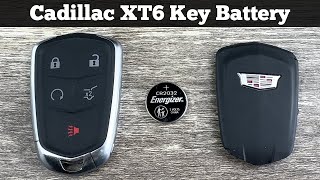
Typical fix: Replace the CR2032 coin battery inside the key fob.
Est. part cost: $5-$10
Rare But Worth Checking
- Damaged or Faulty Key Fob: → Shop Keyless Entry Transmitter The key fob's internal electronics can fail due to being dropped or water damage. This should be considered if a new battery doesn't help and the spare key works perfectly.
- Faulty Body Control Module (BCM): → Shop Body Control Module While a software glitch is far more common, the BCM itself can fail. This should only be considered a last resort after the TSB-directed software reset procedure has been attempted and failed. TSBs specifically warn against premature module replacement.
- Poor Ground Connection: A TSB for other GM models (PIT5405C) has linked P0513 to a loose ground connection at G218. While not specific to the XT6, a visual inspection of major body and engine grounds, particularly the BCM ground, is a valid step in complex electrical troubleshooting.
Diagnosis Steps
- Ask the owner: Has the vehicle's battery been recently replaced, disconnected, jump-started, or gone dead? This is the most critical question.
- Attempt to start the vehicle with the spare key fob. If it works, the problem is with the primary fob.
- Replace the battery (typically a CR2032) in the non-working key fob.
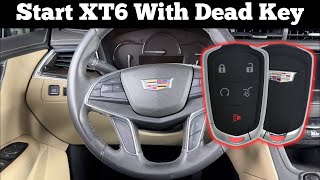
- Attempt to start the vehicle by placing the non-working key fob in the designated transmitter backup pocket as described in the owner's manual. For the XT6, this pocket is inside the center console storage area. 🎬 Watch: How to start your XT6 with a dead key fob
- If the vehicle still won't start, connect a professional scan tool capable of communicating with the BCM (e.g., GM MDI with GDS2 software).
- Check for P0513 in the ECM and any related codes (like B389A or B39xx Environment IDs) in the BCM.
- If a low-voltage event was the trigger, follow the procedure in TSB #23-NA-165: Perform a BCM 'Special Data Reset A' and then relearn the vehicle's keys using GM's Service Programming System (SPS).
- Only after the software reset fails should you diagnose the key fob, BCM hardware, or wiring harnesses for faults.
Parts You'll Likely Need
- Key Fob Battery
(OEM #CR2032)— This is the simplest and most common point of failure for any key fob and should always be the first item checked.
Trusted brands: Energizer, Duracell, Panasonic
OEM price range: $5-$10
Aftermarket price range: $2-$8
Related Codes That Often Appear With This One
- B389A — This BCM code can be set during the same low-voltage event that triggers P0513, as noted in related GM service bulletins #21-NA-277 and #23-NA-163.
- B3978, B3979, B3980, B3981 — These are 'Environment ID' DTCs that may be stored in the BCM and indicate the type of event that led to the fault, as described in TSB #21-NA-277. Their presence strongly suggests a low-voltage event caused the P0513 code.
Technical Service Bulletins (TSBs) & Recalls
- 23-NA-165: Vehicle Will Not Lock and Unlock (Loss of Active Functions) Crank or Start (Loss of Passive Functions) with DTC P0513 Set. This is the primary document outlining the cause and specific software-based fix.
- 21-NA-277: A related bulletin for other GM models that also discusses P0513 appearing after a low voltage condition and warns against unnecessary module replacement, reinforcing the diagnosis.
Platform-Specific Known Issues
- The Body Control Module (BCM) is known to be susceptible to memory corruption from low-voltage events (e.g., dead battery, jump-start), which triggers P0513 and disables the vehicle. This is documented in GM Technical Service Bulletin #23-NA-165.
- This issue is common across GM's C1 platform vehicles that use the VIP electrical architecture, not just the XT6.
Mechanic-Grade Diagnostic Values
- Vehicle Battery Voltage (Resting) — expected: ~12.6 Volts. Failure: A reading below 12.2 Volts indicates a discharged battery that could trigger the BCM memory corruption. The P0513 fault often occurs immediately after a low voltage event.
Hidden / Shadow Codes Worth Checking
- B389A 00: Indicates a BCM internal fault, often set concurrently with P0513 after a low-voltage event. (see via GM GDS2 Scan Tool. TSB #21-NA-277 notes that if this code is not present but the symptoms match, a battery disconnect/reconnect for 30 seconds may cause it to set, confirming the condition.)
- B3978/B3979/B3980/B3981: These are 'Environment ID' DTCs stored in the BCM. The presence of three or more of these codes is a key indicator that a low-voltage event caused the immobilizer fault. (see via GM GDS2 Scan Tool. Their presence is a primary condition for following the repair procedure in TSB #21-NA-277.)
Scan Tool Commands That Help
- GM SPS (Service Programming System): K9 Body Control Module > Special Data Reset A — This is the primary step in the TSB #23-NA-165 procedure to recover the BCM from memory corruption before attempting to relearn keys.
- GM SPS (Service Programming System): Immobilizer procedure > Body Control Module IMMO Learn with Existing Transponder or Remote Key — This is the second step in the TSB procedure, used to relearn the original keys after the BCM has been reset.
- GM SPS (Service Programming System): Immobilizer procedure > Engine Control Module and Body Control Module IMMO Learn — This alternate relearn procedure is used specifically when new key fobs are required, such as after a previous incorrect repair attempt was made.
- GM GDS2: Module Diagnostics > [K9] Body Control Module > Identification Information — Used to view the BCM's Base Model Part Number (BMPN) to confirm it is a 'GEN3R' BCM and is eligible for the TSB #23-NA-165 repair procedure.
Wiring & Ground Locations
- G218 — Typically located on the driver's side, under the dash near the A-pillar or behind the kick panel.. A TSB for other GM vehicles (PIT5405C) identifies a poor connection at this ground as a potential cause for P0513. A bad ground can cause voltage fluctuations that lead to the BCM memory corruption, making it a worthwhile secondary check if the software fix is ineffective.
- BCM Connectors (X1-X7) — The Body Control Module is typically located under the driver or passenger side of the dashboard.. If the TSB software procedure fails, a technician would need to consult a wiring diagram to test for power, ground, and communication integrity at the BCM connectors. A poor pin fit or corroded terminal could mimic a module failure.
Real Owner Repair Stories
- Multiple GM TSBs and repair articles for platform-mates (2019-2024 GM vehicles on the C1 platform with VIP architecture (e.g., GMC Acadia, Chevrolet Malibu, Chevrolet Traverse)) — Vehicle will not crank or start, key fobs are inoperative (both active and passive functions), P0513 is set, often with BCM codes like B389A.
❌ Tried (didn't work) Replacing the vehicle battery without performing a BCM reset., Replacing the BCM module without first attempting the software fix., Attempting a standard key relearn procedure.
✅ What actually fixed it The consistent and documented fix across all platform-mates is following the procedure in TSB #23-NA-165: using a GM scan tool to perform a 'Special Data Reset A' on the BCM, followed by an immobilizer relearn procedure.
OEM Part Supersession History
Multiple (GEN3R BCMs)→N/A (Software fix, not part replacement)— The issue is a software corruption vulnerability, not a universal hardware defect requiring a supersession. The fix is a software procedure.
Heads up: The critical information is the list of affected Base Model Part Numbers (BMPNs) for the GEN3R BCM, as listed in TSB #23-NA-165. These include: 13518569, 13518570, 13518602, 13518603, 13519619, 13519620, 13519648, 13527252, 13527260, 13527261, 13527297, 13527298, 13527827, 13529492, 13529493, 13533809, 13533813, 13533814, 13533817, 13533821. If the BCM is not one of these, the TSB does not apply.
Helpful Videos
We Have This Part in Stock

The information in this article is provided for general reference and educational purposes only. Vehicle specifications, procedures, and part compatibility can vary by production date, trim level, and region. Always consult your vehicle's factory service manual and verify part numbers before purchasing or performing repairs. Safety-critical components such as airbags, seat belts, and braking systems should be installed by a qualified professional.
- Cadillac XT6:
- 🧭 Diagnostic Flowchart
- 🎬 Helpful Videos
- 🛍️ Shop This Part
- What's Unique About the 2020-2025 Cadillac XT6
- Symptoms You May Notice
- Most Likely Causes
- Rare But Worth Checking
- Diagnosis Steps
- Parts You'll Likely Need
- Related Codes That Often Appear With This One
- Technical Service Bulletins (TSBs) & Recalls
- Platform-Specific Known Issues
- Mechanic-Grade Diagnostic Values
- Hidden / Shadow Codes Worth Checking
- Scan Tool Commands That Help
- Wiring & Ground Locations
- Real Owner Repair Stories
- OEM Part Supersession History
- 🎟️ Get 5% Off