

P0513 on 2018-2024 Chevrolet Traverse: Incorrect Immobilizer Key Fixes
P0513 on a 2018-2024 Traverse means the vehicle's security system doesn't recognize the key, causing a no-start. The most likely cause is a Body Control Module (BCM) software glitch after a low voltage event, which requires a dealer-level software update per a GM Technical Service Bulletin. Other causes include a weak key fob battery.
- P0513 on a 2018-2024 Traverse means the engine is disabled because the anti-theft system doesn't recognize the key.
- Before panicking, try your spare key and try placing the fob in the emergency transmitter pocket inside the center console.
- The most probable cause for this specific vehicle is a BCM software glitch after a battery issue (weak battery, jump start), which is documented in GM TSB #23-NA-165.
- Do not replace the BCM or other modules before a dealer has attempted the software reset procedure outlined in the TSB.
- A simple key fob battery replacement is a low-cost first step, but the issue often requires professional service for reprogramming.
What's Unique About the 2018-2024 Chevrolet TRAVERSE
On this generation of the Traverse and its platform mates (Buick Enclave, Cadillac XT5/XT6), the P0513 code is strongly linked to a known software issue in the Body Control Module (BCM). A low voltage event—such as a weak battery, jump-start, or battery replacement—can corrupt the BCM's memory, causing it to lose its connection with the programmed key fobs. General Motors has issued Technical Service Bulletin (TSB) #23-NA-165, which outlines a specific software reset procedure ("Programming A") that must be performed by a dealer to fix this. This bulletin explicitly warns against replacing the BCM or other modules before attempting the software fix.
Diagnostic Flowchart
Tap your situation to follow the diagnostic path that matches what you're seeing on this vehicle.
Symptoms You May Notice
- Engine will not crank or start.
- Engine starts and immediately stalls.
- Security or key-shaped warning light is illuminated or flashing on the dashboard.
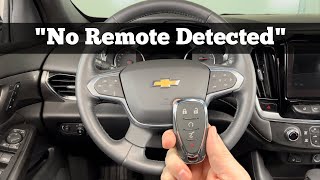
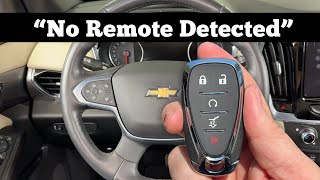
- Message on the driver information center like "No Remote Detected" or "Place Transmitter in Pocket to Start".
- Remote functions like door lock/unlock do not work.
- Multiple, seemingly unrelated warning lights on the dashboard.
- Erratic electrical behavior, such as lights flickering or gauges sweeping.
- Replacing the BCM or ECM before performing the TSB software reset. The TSB specifically warns against replacing modules as the first step, as the issue is often software-related.
- Replacing the starter motor. A no-crank condition caused by P0513 is due to the security system disabling the starter, not a failure of the starter itself.
Most Likely Causes
- Body Control Module (BCM) Memory Corruption 🔴 High Probability → Shop Body Control Module A known issue documented in GM TSB #23-NA-165 states that low voltage events (weak battery, jump-starts, battery replacement) can corrupt the BCM memory, causing it to lose key fob data. This affects the Traverse and its C1XX platform mates with the 'GEN3R' BCM.
How to confirm: This is confirmed if the P0513 code appeared immediately after a battery-related event. A GM dealer will use a scan tool (GDS2) to check for specific environmental DTCs (like B389A, B3924-B3927) and verify the vehicle has an affected GEN3R BCM by part number, as specified in the TSB.
Typical fix: A dealer must perform a special software procedure called "Programming A" using the Service Programming System (SPS) to reset the BCM, followed by an immobilizer relearn with the existing keys. This procedure was created specifically to avoid unnecessary BCM replacement.
Est. part cost: $0-$400 - Weak or Dead Key Fob Battery 🟡 Medium Probability → Shop Vehicle Battery This is a common issue for all vehicles with keyless ignition. The fob may not have enough power to transmit its security code to the car.
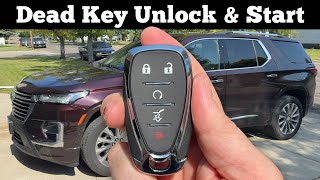
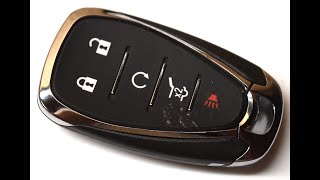
How to confirm: Try using the spare key fob. If the spare key works, the battery in the primary fob is the likely culprit. Another method is to place the problematic fob in the designated transmitter pocket (inside the center console armrest, under the liner) and try to start the car 🎬 Watch: How to start your Traverse with a dead fob battery.; this often works even with a weak battery.
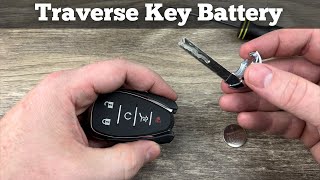
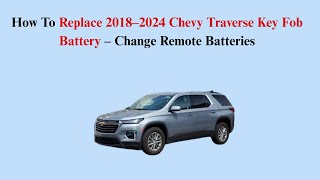
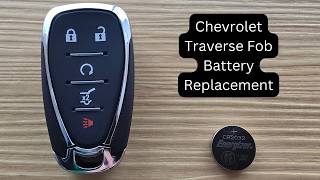
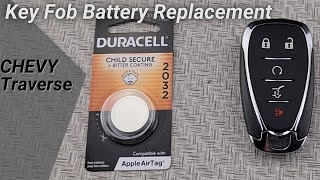
Typical fix: Replace the CR2032 battery inside the key fob. 🎬 See this quick walkthrough on replacing your key fob battery.
Est. part cost: $2-$10 - Weak Vehicle Battery ⚪ Low Probability → Shop Vehicle Battery A low main vehicle battery can cause widespread electrical issues and is the primary trigger for the BCM memory corruption described in TSB 23-NA-165.
How to confirm: Test the main 12V vehicle battery with a multimeter or battery tester. A healthy battery should read approximately 12.6 volts with the engine off. The issue often appears right after the battery has been replaced or jump-started.
Typical fix: Recharge or replace the vehicle's 12V battery. After replacement, the BCM will likely still need the dealer reset procedure if P0513 is present.
Est. part cost: $150-$350 - Faulty Key Fob ⚪ Low Probability → Shop Keyless Entry Transmitter
How to confirm: If replacing the fob battery and trying the spare key doesn't work, and the vehicle battery is healthy, the internal electronics of the key fob may have failed.
Typical fix: Replace the key fob and have it professionally programmed to the vehicle by a dealer or automotive locksmith.
Est. part cost: $150-$400
Rare But Worth Checking
- Faulty Immobilizer Antenna: → Shop Antenna The antenna ring (part of the keyless entry system) reads the key fob's chip. While not common, damage to this component or its wiring can prevent the key from being detected. Diagnosis requires a professional scan tool to check antenna status.
- Wiring Harness Issues: On other GM platforms, similar codes have been traced to corroded wiring under the driver's sill plate or poor ground connections, though this is less common for this specific P0513 issue on the Traverse.
Diagnosis Steps
- Try the spare key fob. If it works, the issue is with your primary fob or its battery.
- If the spare key also fails, try placing one of the fobs in the transmitter pocket located inside the center console armrest (under the removable liner) and attempt to start the vehicle.
- If the vehicle starts with the fob in the pocket, replace the fob's CR2032 battery as soon as possible.
- If the vehicle still does not start, check the health of the main 12V vehicle battery. A low charge or recent replacement is a key indicator for the TSB condition.
- If the battery is healthy and the fobs still don't work, the vehicle almost certainly needs the dealer-level BCM reset procedure outlined in TSB #23-NA-165.
- Scan for codes in the Body Control Module (BCM) with a professional scan tool. The presence of codes like B389A or multiple B392x codes confirms the condition described in the TSB.
- Contact a Chevrolet dealership for service, referencing TSB #23-NA-165 to guide the diagnosis and prevent unnecessary parts replacement.
Parts You'll Likely Need
- Key Fob Battery
(OEM #CR2032)— This is the simplest and often most successful first step when the key fob is not detected.
Trusted brands: Energizer, Duracell
OEM price range: $5-$10
Aftermarket price range: $2-$5 - Keyless Entry Remote Fob
(OEM #13529634 (replaces 13508278, 13580802))— Required if the original fob is damaged or if the TSB procedure requires new fobs to be programmed after a BCM reset. Part number may vary by trim (e.g., with/without power liftgate).
Trusted brands: ACDelco, GM Genuine Parts
OEM price range: $150-$250
Aftermarket price range: $50-$120
Related Codes That Often Appear With This One
- B389A, B3924, B3925, B3926, B3927 — These are specific environmental DTCs stored in the BCM that indicate a memory corruption event, as described in GM service bulletins #21-NA-277 and #23-NA-165. Their presence strongly suggests the software fix is required.
Technical Service Bulletins (TSBs) & Recalls
- 23-NA-165: Vehicle Will Not Lock and Unlock (Loss of Active Functions) Crank or Start (Loss of Passive Functions) with DTC P0513 Set. This TSB provides the diagnostic and software correction procedure for a BCM memory corruption issue.
- 21-NA-277: Vehicle Will Not Crank or Starts and Immediately Stalls, DTC P0513 and/or Multiple Environment ID DTCs Set. This earlier bulletin also details the BCM software corruption issue and the specific recovery procedure.
Platform-Specific Known Issues
- TSB #23-NA-165 documents a condition where the BCM can experience memory corruption after a low voltage event, jump start, or battery replacement, leading to a no-crank/no-start and P0513. The fix is a specific dealer software procedure, not immediate parts replacement.
- TSB #21-NA-277 is an earlier bulletin that also describes this BCM memory corruption issue and the need for a special software procedure, warning technicians not to replace modules.
Mechanic-Grade Diagnostic Values
- DTC Combination Check — expected: P0513 current in ECM, with B389A and three or more environmental DTCs (B3924-B3927) current in the BCM.. Failure: The presence of this specific combination of codes confirms the BCM memory corruption issue described in TSB 23-NA-165 and 21-NA-277.
- Vehicle Battery Voltage (Engine Off) — expected: Approximately 12.6V. Failure: A reading below 12.4V indicates a weak battery, which is the primary trigger for the BCM software glitch that causes P0513.
Hidden / Shadow Codes Worth Checking
- B389A 00: Indicates a BCM memory corruption event. Its presence alongside P0513 is a primary confirmation of the TSB condition. (see via Requires a professional scan tool like the GM GDS2. TSB #21-NA-277 notes that if this code is not initially present, a 30-second battery disconnect and reconnect may be required to trigger it.)
- B3924 00, B3925 00, B3926 00, B3927 00: These are Environment ID DTCs. If three or more are present and current in the BCM, it is a key indicator for the software corruption condition. (see via Requires a professional scan tool like the GM GDS2.)
- B3978 00, B3979 00, B3980 00, B3981 00: An alternate set of Environment ID DTCs that also indicate the BCM software corruption when three or more are present. (see via Requires a professional scan tool like the GM GDS2.)
Scan Tool Commands That Help
- GM SPS (Service Programming System): K9 Body Control Module “Programming A Per Bulletin 23-NA-163 and 23-NA-165 Only.” — This is the primary software recovery procedure to fix BCM memory corruption after a low voltage event. It must be performed before any other immobilizer relearn or part replacement.
- GM SPS (Service Programming System): Body Control Module IMMO Learn with Existing Transponder or Remote Key. — This immobilizer relearn procedure must be performed immediately after successfully running the 'Programming A' function to allow the vehicle to recognize the existing keys.
- GM SPS (Service Programming System): K9 Body Control Module “Programming B Per Bulletin 23-NA-163 Only” — This is a secondary recovery procedure. It should ONLY be used if 'Programming A' and the subsequent immobilizer learn do not resolve the no-start condition, which can happen if an immobilizer learn was attempted *before* the TSB procedure was started.
Wiring & Ground Locations
- K9 Body Control Module (BCM) — Located on the passenger side of the center console, behind the fuse panel. Access may require removing side trim panels.. This is the module that suffers from memory corruption. A technician may need to access it to verify part numbers to confirm it is a 'GEN3R' type, or to check for physical damage or loose connections, although the primary fix is software-based.
OEM Part Supersession History
13508278, 13580802→13529634— Standard part evolution and consolidation.
Heads up: This is the OEM part number for the keyless entry remote fob. Always verify the correct part number based on VIN and vehicle options (e.g., with/without power liftgate).Multiple (see list)→N/A - Software fix applies— List of known 'GEN3R' BCM part numbers that are susceptible to the memory corruption issue described in TSB 23-NA-163.
Heads up: Eligible BMPNs include: 13518569, 13518570, 13518602, 13518603, 13519619, 13519620, 13519648, 13527252, 13527260, 13527261, 13527297, 13527298, 13527827, 13529492, 13529493, 13533809, 13533813, 13533814, 13533817, 13533821. If the BCM is not one of these, the TSB does not apply.
Model Year Variations Within This Range
- 2024: For the 2024 model year, Chevrolet produced both the all-new redesigned Traverse and continued the previous generation as the 'Traverse Limited'. Parts, especially electronic modules and switches, are not interchangeable between the two. Technicians must verify which version of the 2024 Traverse they are working on before ordering parts.
- 2022-2024: The 2022 model year introduced a mid-cycle refresh for the Traverse, which included updates to the interior and infotainment system. While the underlying BCM issue appears to persist across the generation, be aware of potential differences in related modules or wiring when diagnosing electrical issues on refreshed models.
Helpful Videos

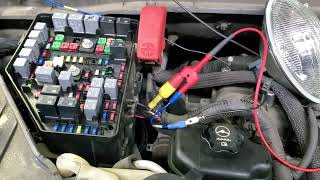
We Have This Part in Stock
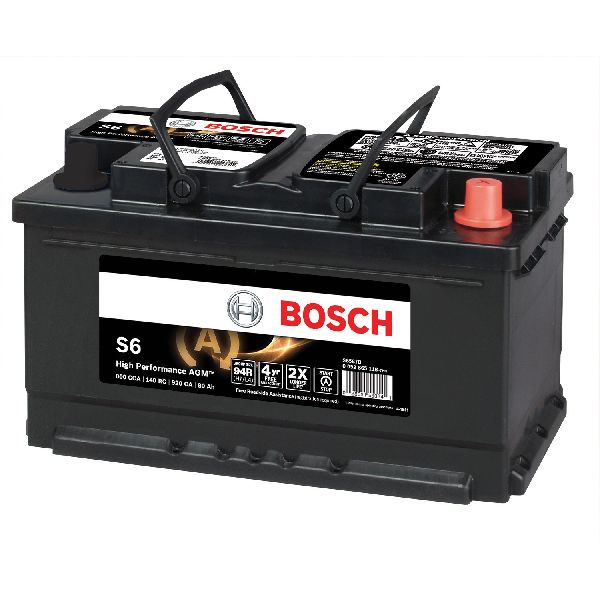

The information in this article is provided for general reference and educational purposes only. Vehicle specifications, procedures, and part compatibility can vary by production date, trim level, and region. Always consult your vehicle's factory service manual and verify part numbers before purchasing or performing repairs. Safety-critical components such as airbags, seat belts, and braking systems should be installed by a qualified professional.
- Chevrolet TRAVERSE:
- 🧭 Diagnostic Flowchart
- 🎬 Helpful Videos
- 🛍️ Shop This Part
- What's Unique About the 2018-2024 Chevrolet TRAVERSE
- Symptoms You May Notice
- Most Likely Causes
- Rare But Worth Checking
- Diagnosis Steps
- Parts You'll Likely Need
- Related Codes That Often Appear With This One
- Technical Service Bulletins (TSBs) & Recalls
- Platform-Specific Known Issues
- Mechanic-Grade Diagnostic Values
- Hidden / Shadow Codes Worth Checking
- Scan Tool Commands That Help
- Wiring & Ground Locations
- OEM Part Supersession History
- Model Year Variations Within This Range
- 🎟️ Get 5% Off