

P0513 on 2019-2023 GMC Acadia: Incorrect Immobilizer Key Causes & Fixes
This code means your Acadia's anti-theft system doesn't recognize the key, preventing it from starting. The most common cause is a software glitch in the Body Control Module (BCM) that requires a dealer update per GM Technical Service Bulletins. Before heading to the shop, try your spare key and replace the key fob battery.
- P0513 on a 2019-2023 Acadia indicates a security system failure that will prevent the vehicle from starting.
- The most likely cause is a BCM software issue triggered by a battery replacement or jump-start, which is documented in GM TSBs and often requires a dealer visit for a software update.
- Before seeking professional help, always try your spare key and replace the battery in the problematic key fob.
- Do not replace the BCM or other expensive modules without first ensuring all relevant software updates and TSB procedures have been performed.
What's Unique About the 2019-2023 Gmc ACADIA
On this generation of the GMC Acadia and its C1XX platform mates (like the Cadillac XT5, Chevy Traverse, and Buick Enclave), P0513 is frequently linked to software issues within the 🎬 Watch: Understanding P0513 causes and immobilizer system fixes Body Control Module (BCM) rather than a simple hardware failure. GM has issued specific Technical Service Bulletins (TSBs) indicating that events like a low battery, jump-start, or even battery replacement can corrupt BCM memory, leading to a loss of key fob communication. This makes it crucial to check for software updates before replacing expensive modules, as explicitly warned in the TSBs.
Diagnostic Flowchart
Tap your situation to follow the diagnostic path that matches what you're seeing on this vehicle.
Symptoms You May Notice
- Engine will not crank or start.
- Engine starts and then immediately stalls.
- Key fobs are inoperative (cannot lock or unlock doors).
- Security light illuminated or flashing on the dashboard.
- Check Engine Light is on.
- Message on Driver Information Center (DIC) like "No Remote Detected" or "Place Key in Transmitter Pocket To Start".
- Replacing the vehicle's main 12V battery without addressing the underlying BCM software issue, which often triggers the P0513 code in the first place.
- Replacing the starter motor when the no-start is caused by the anti-theft system.
- Replacing the BCM or other modules before checking for applicable TSBs and software updates, a step GM explicitly warns against.
Most Likely Causes
- Body Control Module (BCM) Software Corruption 🔴 High Probability → Shop Body Control Module As documented in TSBs #23-NA-165 and #21-NA-277, the BCM in these vehicles is sensitive to voltage fluctuations from jump-starts, battery replacements, or low voltage events, which can corrupt key data. This is a known issue on GM's Global B electrical architecture.
How to confirm: A GM dealer or a qualified shop with access to GM's service information (SPS2) can check if the vehicle's software is up-to-date and if any TSBs apply. The presence of related B-codes like B3924-B3927 strongly points to this cause.
Typical fix: Applying a software update or performing a specific BCM recovery procedure using GM's diagnostic tools. TSBs explicitly state this should be done *before* any module replacement.
Est. part cost: $0 - Weak or Dead Key Fob Battery 🟡 Medium Probability → Shop Vehicle Battery
How to confirm: Try using the spare key fob. If the spare key works, the battery in the primary key is the likely culprit. You can also try placing the non-working fob in the designated immobilizer pocket (in the Acadia, this is typically inside the center console storage bin) to see if it will start. A successful start from the pocket indicates a weak fob battery.
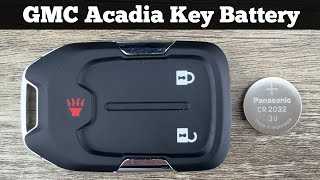
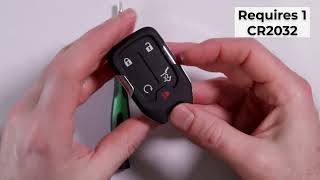
Typical fix: Replace the battery in the key fob (typically a CR2032 coin cell).
Est. part cost: $5-$15 - Faulty Key Fob ⚪ Low Probability → Shop Keyless Entry Transmitter
How to confirm: If a new battery doesn't solve the issue and the spare key works perfectly, the internal transponder chip of the primary key may be damaged from being dropped or getting wet.
Typical fix: Replace and reprogram the key fob. This must be done by a dealer or a qualified automotive locksmith with tools compatible with GM's security system.
Est. part cost: $150-$400
Rare But Worth Checking
- Faulty Body Control Module (BCM): → Shop Body Control Module While software issues are more common, the BCM itself can fail. TSBs specifically advise against replacing the BCM until software-based solutions have been exhausted. A hardware failure is a last resort diagnosis.
- Faulty Immobilizer Antenna: → Shop Antenna The antenna ring, usually located around the start button, reads the key's signal. A failure here will prevent key recognition. This is less common than BCM or key fob issues.
- Wiring Harness Issue: A poor connection or damaged wire between the BCM, immobilizer antenna, and PCM can cause intermittent communication loss and trigger P0513.
Diagnosis Steps
- Check for other DTCs, especially B-codes (Body) and U-codes (Network), with a capable OBD-II scanner that can read manufacturer-specific codes.
- Try starting the vehicle with a known-good spare key fob. If it works, the issue is with the primary key.
- Replace the battery in the non-working key fob as a low-cost first step.
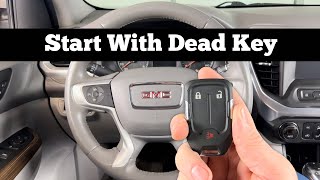
- If the fob battery is weak/dead, try starting the vehicle by placing the fob in the transmitter pocket located in the center console storage area. This allows the car to start even with a weak signal.
- Check for official GM Technical Service Bulletins (TSBs) related to P0513 for your Acadia's VIN. TSBs #23-NA-165 and #21-NA-277 are highly relevant.
- If a TSB applies, the vehicle must be taken to a dealer or qualified shop. The fix involves a specific software procedure, such as 'Programming A Per Bulletin 23-NA-165' or the BCM recovery process in TSB 21-NA-277, using GM's SPS2 software.
- A technician will verify communication with the BCM and ECM. If no TSBs apply and keys are ruled out, they will test the signals from the key fob and the immobilizer antenna.
- Inspect the wiring and connectors for the BCM and immobilizer antenna for any visible damage or corrosion, though this is a less likely cause.
Parts You'll Likely Need
- Key Fob Battery
(OEM #CR2032)— This is the simplest and most common point of failure for an individual key fob.
Trusted brands: Energizer, Duracell, Panasonic
OEM price range: $5-$15
Aftermarket price range: $2-$10 - Keyless Entry Transmitter (Key Fob)
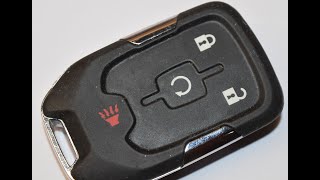
(OEM #13530100 / OHT01060512 (2019), 13522895 / HYQ1ES (2021-2023))— If the internal transponder chip fails, the entire fob must be replaced and programmed to the vehicle. Part numbers vary by year and features.
Trusted brands: ACDelco (OEM)
OEM price range: $150-$300
Aftermarket price range: $70-$150
Related Codes That Often Appear With This One
- B2924 00, B3925 00, B3926 00, B3927 00 — These are Environment ID codes stored in the BCM. TSB #21-NA-277 explicitly links them with P0513, indicating a system-wide loss of key fob recognition, often due to a software glitch after a low voltage event.
Technical Service Bulletins (TSBs) & Recalls
- 23-NA-165: Vehicle Will Not Lock and Unlock (Loss of Active Functions) Crank or Start (Loss of Passive Functions) with DTC P0513 Set.
- 21-NA-277: No Crank, No Start, Quick Start/Stall, Key Fobs Inoperative with DTCs B2924 00, B3925 00, B3926 00, B3927 00, or P0513 set.
Platform-Specific Known Issues
- TSB #23-NA-165 addresses a condition where the vehicle will not lock, unlock, crank, or start, with P0513 set. The cause is identified as a potential BCM memory corruption event following a voltage fluctuation. The fix requires a specific BCM programming routine.
- TSB #21-NA-277 describes a no-crank/no-start or start/stall condition with P0513 and other B-codes set, also pointing to a BCM issue after a low voltage event, and explicitly warns against replacing modules before following a specific diagnostic and recovery procedure that may not require any new parts.
- Owner Experience: Many owners on forums like acadiaforum.net report this issue immediately after replacing the vehicle's 12V battery. The typical story involves the vehicle being completely dead to all key fobs, requiring a tow to the dealer for a BCM software update or re-flash, which resolves the problem.
Hidden / Shadow Codes Worth Checking
- B389A 00: This code may be set in the BCM and is mentioned in related TSBs. Its presence, along with P0513 and other environment ID codes, points toward the specific software corruption issue. (see via A dealer-level scan tool like GM GDS2 is required. The TSB notes that if the code is not present, a battery disconnect/reconnect for 30 seconds may be needed to see if it sets.)
- B3978 00, B3979 00, B3980 00, B3981 00: These are additional Environment ID DTCs that, when three or more are present in the BCM, are a key indicator for the condition described in TSB #PIE0665B, which is closely related to TSB 21-NA-277. (see via A dealer-level scan tool like GM GDS2 that can read current and history body codes.)
Scan Tool Commands That Help
- GM SPS2 (Service Programming System): BCM Recovery / Programming per TSB — This is the primary fix when P0513 is set after a low-voltage event. It is a specific software procedure that restores corrupted BCM memory. TSBs #23-NA-165 and #21-NA-277 explicitly state to perform this *before* replacing any modules.
- GM GDS2 / SPS2: Immobilizer Learn — This function is used to program new keys to the vehicle after replacing a key or the BCM. However, for the common software glitch on the Acadia, TSBs warn *not* to perform this procedure until after the BCM recovery has been attempted, as it will not solve the underlying issue.
- N/A - Manual Procedure: 30-Minute Manual Key Relearn — This procedure (turning the key to 'ON' for 10 minutes, off for 5 seconds, repeated three times) is a generic GM method for teaching the system a new key after component replacement. It is generally not applicable to the push-button start Acadias in this year range and will not fix the TSB-documented software corruption issue.
Wiring & Ground Locations
- K9 Body Control Module (BCM) — Located in the center console area, typically accessible by removing panels in the passenger side footwell.. This is the primary control module for the immobilizer system. All diagnostics and software-based repairs for P0513 are focused on this module. Physical access is needed for replacement, but not for the more common software fix.
- Keyless Entry Control Module — On some GM models, this is a separate module located in the rear of the vehicle, often in the right rear quarter panel area near the blower motor assembly.. This module, also called the Remote Control Door Lock Receiver, handles the RF signals from the fob for locking/unlocking. While the BCM handles the immobilizer logic, a fault with this receiver or its wiring could contribute to key recognition issues.
- Instrument Panel Fuse Block — Inside the vehicle, typically accessible from the passenger footwell area.. Contains fuses for various interior electronics, including potentially the BCM and other related modules. A blown fuse here could cause a loss of power and communication.
Real Owner Repair Stories
- acadiaforum.net user reports (2019 GMC Acadia Denali) — Vehicle would not crank or start immediately after the owner replaced the main 12V battery. All key fobs became completely unresponsive. The code P0513 was stored.
❌ Tried (didn't work) Replacing key fob batteries., Trying the spare key., Placing the key in the transmitter pocket.
✅ What actually fixed it The vehicle was towed to a GMC dealership. The dealer performed a software re-flash or 'reprogrammed the computer' to make the BCM recognize the keys again. This aligns perfectly with the procedures outlined in GM TSBs #23-NA-165 and #21-NA-277.
"I Checked Everything" — The Actual Cause
- The equivalent for this electrical code is 'all parts test good, but the problem persists.' Technicians may confirm the key fob battery is good and that the key sends a signal, yet the vehicle still won't start and sets P0513. The actual cause is not a testable hardware failure but a software corruption within the BCM, triggered by a voltage spike or drop. The TSBs specifically warn against replacing modules in this scenario, as the new module would work, but the original was not actually faulty—it just needed a software recovery.
Model Year Variations Within This Range
- 2019 vs. 2020-2023: The key fob part number changes after the 2019 model year, coinciding with the 2020 mid-cycle refresh. The 2019 models use OEM part #13530100 (FCC ID: OHT01060512), while 2020 and newer models often use #13522895 (FCC ID: HYQ1ES). This indicates a potential change in the underlying radio frequency or security protocol, making the fobs incompatible between these year groups.
Helpful Videos


We Have This Part in Stock


The information in this article is provided for general reference and educational purposes only. Vehicle specifications, procedures, and part compatibility can vary by production date, trim level, and region. Always consult your vehicle's factory service manual and verify part numbers before purchasing or performing repairs. Safety-critical components such as airbags, seat belts, and braking systems should be installed by a qualified professional.
- Gmc ACADIA:
- 🧭 Diagnostic Flowchart
- 🎬 Helpful Videos
- 🛍️ Shop This Part
- What's Unique About the 2019-2023 Gmc ACADIA
- Symptoms You May Notice
- Most Likely Causes
- Rare But Worth Checking
- Diagnosis Steps
- Parts You'll Likely Need
- Related Codes That Often Appear With This One
- Technical Service Bulletins (TSBs) & Recalls
- Platform-Specific Known Issues
- Hidden / Shadow Codes Worth Checking
- Scan Tool Commands That Help
- Wiring & Ground Locations
- Real Owner Repair Stories
- "I Checked Everything" — The Actual Cause
- Model Year Variations Within This Range
- 🎟️ Get 5% Off