

P0513 on 2015-2022 GMC Terrain: Causes and Fixes for 'No Start'
On a 2015-2022 GMC Terrain, code P0513 means the car's security system doesn't recognize the key, preventing it from starting. The most common fixes are replacing a dead key fob battery (under $10), using the key fob backup pocket in the center console, or addressing known wiring and BCM software issues detailed in service bulletins.
- P0513 on a GMC Terrain means your car's anti-theft system isn't recognizing your key, which will prevent it from starting.
- Always start with the simplest fix: try your spare key and replace the battery in the non-working key fob.
- Multiple GM service bulletins exist for this code, pointing to known issues with wiring and control modules that a dealer or knowledgeable independent shop will be aware of.
- Do not immediately assume a major component like the starter or BCM has failed; proper diagnosis is crucial to avoid unnecessary expense.
What's Unique About the 2015-2022 Gmc TERRAIN
The GMC Terrain, and its platform-mate the Chevrolet Equinox, across both the second (2010-2017) and third (2018-present) generations, have a well-documented history of issues that can trigger a P0513 code. Multiple Technical Service Bulletins (TSBs) have been issued by GM, pointing to specific, recurring problems. For earlier models, TSB #PIT5391C identifies a wiring corrosion issue in the driver's sill plate as a known vulnerability. For later models, TSBs #21-NA-277 and #23-NA-165 describe a BCM software corruption issue, often triggered by low voltage events like a battery change or jump-start, that requires a specific dealer-level reset procedure. This pattern of TSBs indicates known design or software vulnerabilities rather than just random component failures.
Diagnostic Flowchart
Tap your situation to follow the diagnostic path that matches what you're seeing on this vehicle.
Generation note: The 2015-2022 year range covers the end of the second generation (2015-2017) and the beginning of the third generation (2018-2022) of the GMC Terrain. Technical Service Bulletins related to code P0513 have been issued for models in both generations, indicating the potential for similar issues across the body style change. Key fob designs and part numbers are different between these generations.
Symptoms You May Notice
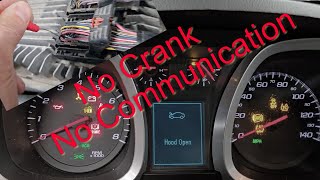
- Engine will not crank or start.
- Engine starts and then immediately stalls.
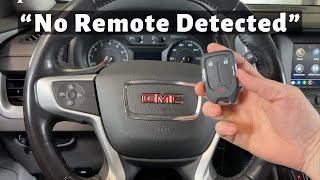
- "No Remote Key Detected" message on the driver information center.
- Security light illuminated or flashing on the dashboard.
- Key fobs are inoperative for locking/unlocking doors (Loss of Active Functions).
- Passive entry/start does not work.
- Replacing the starter motor when the engine doesn't crank, without first checking for security-related trouble codes.
- Replacing the vehicle's main battery without diagnosing the starting issue, as a no-start can be mistaken for a dead battery.
- Replacing the BCM or ECM without first attempting the software reset procedure outlined in TSBs #21-NA-277 and #23-NA-165.
Most Likely Causes
- Weak or Dead Key Fob Battery 🔴 High Probability → Shop Vehicle Battery This is a common failure point for any vehicle with a keyless entry and start system. The CR2032 battery has a finite life.
How to confirm: Try using a spare key fob. If the spare key works, the issue is with the primary key. You can also try placing the non-working fob in the transmitter pocket (in the front cup holder on 2018+ models) to see if the car starts. If it starts, the battery is almost certainly the cause.
Typical fix: Replace the CR2032 battery inside the key fob.
Est. part cost: $2-$10 - Damaged or Corroded Wiring 🟡 Medium Probability TSB #PIT5391C specifically calls out inspecting wiring in the driver's sill plate for damage or corrosion on 2015 models, suggesting a vulnerability to water intrusion in that area. This TSB notes that an open or high resistance in circuit 5199 can prevent the ignition run relay from activating.
How to confirm: Visually inspect the wiring harnesses located under the driver's side door sill trim panel for any signs of water intrusion, corrosion (green or white powder on connectors), or physical damage to the wires or splice packs.
Typical fix: Repair the damaged or corroded wire sections and splice connectors. Ensure the area is protected from future moisture by addressing the source of any water leak.
Est. part cost: $10-$50 - Body Control Module (BCM) Software Corruption 🟡 Medium Probability → Shop Body Control Module TSBs #21-NA-277 and #23-NA-165 describe a specific scenario where the BCM can experience a memory corruption event, often after a low voltage condition (e.g., jump start, battery replacement). This puts the BCM into a state that sets P0513 along with other codes, requiring a special reset procedure.
How to confirm: This requires a GM-specific scan tool (GDS2) to check for a combination of DTCs (like B3924, B3925, B389A) as outlined in the TSBs. This is a job for a dealer or qualified shop with access to GM's Service Programming System (SPS).
Typical fix: Follow the specific BCM restoration procedure outlined in TSB #21-NA-277 or #23-NA-165, which involves a specific sequence using a scan tool to perform a 'Special Data Reset' or 'BCM IMMO Learn'. No parts are typically required unless a previous incorrect repair attempt was made.
Est. part cost: $0 (labor cost for reprogramming will apply) - Faulty Key Fob ⚪ Low Probability → Shop Keyless Entry Transmitter The internal electronics of the key fob can fail from being dropped, water damage, or age.
How to confirm: If a new battery doesn't solve the issue and the spare key works, the key fob itself has likely failed. A locksmith or dealer can also test the fob's signal output.
Typical fix: Replace the key fob and have it professionally programmed to the vehicle.
Est. part cost: $80-$250
Rare But Worth Checking
- Faulty Immobilizer Antenna: → Shop Antenna The antenna ring (transponder coil) around the ignition switch or start button reads the key's transponder chip. If it fails, it cannot receive the signal, even from a good key. Diagnosis involves checking resistance and continuity of the antenna circuit.
- Faulty Body Control Module (BCM): → Shop Body Control Module While a software glitch is more common per the TSBs, the BCM itself can fail internally due to hardware faults, requiring complete replacement and programming. This is usually a last resort after all other causes are ruled out.
- Faulty Underhood Fuse Box: In some cases on related GM platforms, an internal failure within the underhood fuse box has been found to cause intermittent no-crank conditions accompanied by a P0513 code, even when the theft-deterrent system itself is functional.
Diagnosis Steps
- Check if a spare key fob will start the vehicle. If it does, the problem is isolated to the first key.
- Replace the battery (typically a CR2032) in the non-working key fob.
- If the battery change doesn't work, try the vehicle's key fob backup procedure. For 2018+ models, place the fob in the front pocket of the center console (the left cup holder) and try to start the engine. Refer to the owner's manual for the specific location for your year.
- Scan the vehicle for trouble codes in all modules, not just the ECM. Note any BCM codes like B2924, B3925, B389A, etc.
- For 2015-2017 models, inspect the wiring harness under the driver's side door sill plate for any signs of corrosion, water damage, or broken wires, as indicated by TSB #PIT5391C.
- If TSB-related BCM codes are present on a 2018+ model, the vehicle must be taken to a dealer or shop with GM programming capabilities to perform the specific reset procedure outlined in TSB #21-NA-277 or #23-NA-165.
- If wiring is intact and key fobs are ruled out, the vehicle should be taken to a professional for advanced diagnostics on the BCM, immobilizer antenna, and key programming.
Parts You'll Likely Need
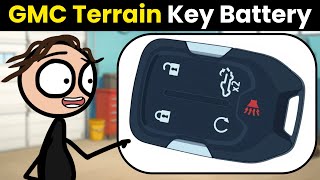
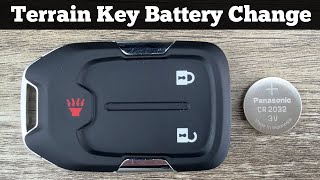
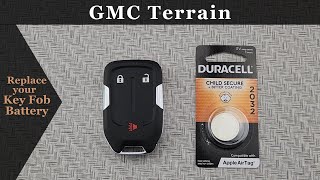
- Key Fob Battery
(OEM #CR2032)— This is the most common and cheapest potential fix for a key fob that has stopped communicating with the vehicle.
Trusted brands: Energizer, Duracell, Panasonic
OEM price range: $5-$10
Aftermarket price range: $2-$8 - Keyless Entry Remote Fob (2015-2017)
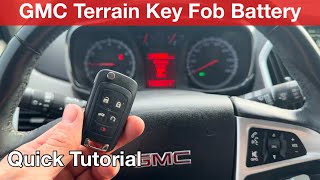
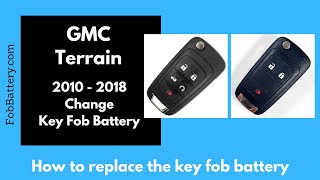
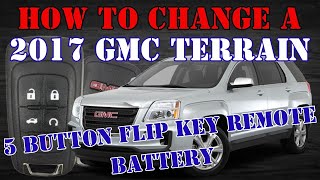
(OEM #13504199 (FCC ID: OHT01060512))— If the key fob's internal electronics have failed on a 2nd generation Terrain, it must be replaced and programmed. This is a flip-key style remote. 🎬 Watch: How to change the battery in your flip-key remote.
Trusted brands: ACDelco, Dorman
OEM price range: $150-$250
Aftermarket price range: $60-$120 - Keyless Entry Remote Fob (2018-2022)
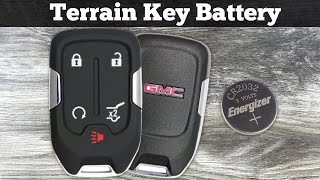
(OEM #13584512 or 13591388 (FCC ID: HYQ1AA))— If the key fob's internal electronics have failed on a 3rd generation Terrain, it must be replaced and programmed. This is a smart key style remote. Part number varies by button configuration (e.g., with/without remote start).
Trusted brands: ACDelco, Dorman
OEM price range: $150-$250
Aftermarket price range: $70-$130
Related Codes That Often Appear With This One
- B3924, B3925, B3926, B3927, B389A — These are Environment ID DTCs that can be set in the BCM along with P0513, as noted in TSB #21-NA-277 and #23-NA-163, pointing to a specific BCM fault condition often caused by a low-voltage event.
- P262B — TSB #PIT5391C mentions that P262B (Control Module Power Output Circuit/Open) may be set along with P0513, often related to the wiring issues in the driver's sill plate.
Technical Service Bulletins (TSBs) & Recalls
- 23-NA-165: Addresses loss of key fob functions (active and passive) and a no-crank/start condition with P0513 set on 2018-2023 Terrains due to BCM memory corruption. Requires a special data reset procedure.
- 21-NA-277: Provides repair information for a no-crank/start or start/stall condition with P0513 and other B-codes, often related to a BCM software state on 2018+ models.
- PIT5391C: Points to damaged or corroded wiring (specifically circuit 5199) in the driver's sill plate as a potential cause for P0513 on 2015 models.
Platform-Specific Known Issues
- A 'No Crank, No Start' condition on 2018+ models may be caused by a BCM software corruption that can be resolved without replacing parts, as detailed in
Hidden / Shadow Codes Worth Checking
- B3924 00, B3925 00, B3926 00, B3927 00: These are 'Environment ID' DTCs stored in the Body Control Module (BCM). The presence of three or more of these codes is a key indicator of the specific BCM memory corruption issue described in TSB #21-NA-277. (see via A professional scan tool with access to all vehicle modules, such as the dealer-level GM GDS2 (Global Diagnostic System 2).)
- B389A 00: This BCM code for 'Immobilizer Environment Identifier Not Programmed' often sets along with the other Environment ID codes and P0513, further confirming the software corruption scenario. TSB #21-NA-277 advises that if this code is not present, a battery disconnect/reconnect for 30 seconds may cause it to set, confirming the condition. (see via GM GDS2 or equivalent advanced scan tool capable of reading BCM-specific DTCs.)
Scan Tool Commands That Help
- GM GDS2 / SPS (Service Programming System): Special Data Reset A — This function, found under the K9 Body Control Module menu, is the first step in the special procedure outlined in TSB #23-NA-165 to correct BCM memory corruption after a low-voltage event when P0513 is set.
- GM GDS2 / SPS (Service Programming System): Body Control Module IMMO Learn with Existing Transponder or Remote Key — This is the second step in the TSB #23-NA-165 procedure, used after performing 'Special Data Reset A' to relearn the existing keys to the now-reset BCM.
- GM GDS2 / SPS (Service Programming System): K9 BCM programming (via VCI) — As per TSB #21-NA-277, this is part of a more involved recovery process that requires a special Vehicle Control Interface (VCI) number obtained by contacting the GM Technical Assistance Center (TAC). It is used to restore a corrupted BCM.
Wiring & Ground Locations
- Driver's Sill Plate Harness — Under the plastic trim panel on the driver's side floor, where the door closes.. TSB #PIT5391C specifically identifies this area on 2015 models as being prone to water intrusion, causing corrosion in wiring and splice packs. An open in circuit 5199 within this harness can cause a no-start and set P0513.
- Main Engine Ground — On 3.6L V6 models, a large ground cable runs from the battery to the engine block, typically on the front left side near or behind the starter motor.. A poor main engine ground can cause widespread electrical issues and low voltage conditions during cranking, which is a known trigger for the BCM memory corruption that leads to P0513 on 2018+ models.
"I Checked Everything" — The Actual Cause
- The most common 'everything checks out but it won't start' scenario for 2018-2022 models is the BCM software corruption detailed in TSBs #21-NA-277 and #23-NA-165. A technician can verify the key fob signal is good, the immobilizer antenna has correct resistance, and all wiring is intact, yet the vehicle will not start due to this internal BCM memory glitch. The cause is not a failed part, but a software state triggered by a past low-voltage event (like a battery change or jump-start), and the only fix is the specific dealer-level software reset procedure.
OEM Part Supersession History
13591388→13584512— Part consolidation and revision.
Heads up: For 2018-2022 models, the key fob must have the FCC ID HYQ1AA and operate at 315 MHz. Some aftermarket replacements may function even with different button layouts as long as these two identifiers match the original.
Model Year Variations Within This Range
- 2018-2022 (3rd Generation): These models are susceptible to the BCM software corruption issue detailed in TSBs #21-NA-277 and #23-NA-165, which requires a GDS2 scan tool to fix. The key fob backup slot is located in the front cupholder area. All keys lost programming requires a scan tool and a 10-minute procedure.
- 2015-2017 (2nd Generation): These models are more prone to wiring corrosion in the driver's sill plate (TSB #PIT5391C). They use a flip-style key and do not have a key fob backup pocket. An 'all keys lost' relearn procedure can be performed without a scan tool; it involves three consecutive 10-minute cycles of turning the key to the 'ON' position.
Helpful Videos
We Have This Part in Stock



The information in this article is provided for general reference and educational purposes only. Vehicle specifications, procedures, and part compatibility can vary by production date, trim level, and region. Always consult your vehicle's factory service manual and verify part numbers before purchasing or performing repairs. Safety-critical components such as airbags, seat belts, and braking systems should be installed by a qualified professional.
- Gmc TERRAIN:
- 🧭 Diagnostic Flowchart
- 🎬 Helpful Videos
- 🛍️ Shop This Part
- What's Unique About the 2015-2022 Gmc TERRAIN
- Symptoms You May Notice
- Most Likely Causes
- Rare But Worth Checking
- Diagnosis Steps
- Parts You'll Likely Need
- Related Codes That Often Appear With This One
- Technical Service Bulletins (TSBs) & Recalls
- Platform-Specific Known Issues
- Hidden / Shadow Codes Worth Checking
- Scan Tool Commands That Help
- Wiring & Ground Locations
- "I Checked Everything" — The Actual Cause
- OEM Part Supersession History
- Model Year Variations Within This Range
- 🎟️ Get 5% Off