

P0513 on 2020-2022 Jeep Gladiator: Invalid Key & No-Start Causes and Fixes
P0513 on a Jeep Gladiator means the vehicle's security system doesn't recognize the key. This usually results in a no-start condition. The most common fixes are trying the spare key, replacing a dead key fob battery (CR2450), or having the keys reprogrammed by a dealer, especially after a PCM software update.
- P0513 means your Gladiator doesn't recognize your key, and it will not start or will stall immediately.
- Always try your spare key first to quickly determine if the problem is the key or the vehicle.
- The easiest and most common DIY fix is replacing the CR2450 battery in your key fob.
- If the code appeared after dealer service, mention TSB S2208000073, as a key reprogramming procedure was likely missed.
- Any fix beyond a battery replacement will require a trip to a dealer or locksmith with the proper tools (like wiTECH) to program security components.
What's Unique About the 2020-2022 Jeep GLADIATOR
For the Jeep Gladiator (JT), which shares its electronics with the Wrangler (JL), the P0513 code is closely tied to the vehicle's complex security handshake between the key fob, Radio Frequency Hub (RFH), Body Control Module (BCM), and Powertrain Control Module (PCM). A specific Technical Service Bulletin (TSB) for this platform highlights that this code can appear after a PCM software update (flash) or replacement if the key reprogramming procedure isn't performed correctly. This makes the issue more than just a simple bad key; it can be a software and procedural problem during service. The Gladiator's dual-battery system (main and auxiliary) can also cause a cascade of electrical issues when failing, sometimes tangentially related to security module communication.
Diagnostic Flowchart
Tap your situation to follow the diagnostic path that matches what you're seeing on this vehicle.
Symptoms You May Notice
- Engine cranks but will not start.
- Engine starts and then immediately shuts off (typically within 2 seconds).
- A solid or flashing red security light (often a dot or key symbol) on the instrument cluster.
- Check Engine Light is on.
- "Key Not Detected" or "Key Fob Battery Low" message on the dash.
- Vehicle does not crank at all; pressing the start button does nothing.
- Replacing the starter motor when the engine cranks but doesn't start.
- Replacing the main vehicle battery without first checking the key fob battery.
- Replacing the PCM when the issue is a simple key programming error that needs to be corrected via a "PCM Replaced" routine.
- Replacing the ignition switch or start/stop button when the issue is with the key or RFH module.
Most Likely Causes
- Weak or Dead Key Fob Battery 🔴 High Probability → Shop Vehicle Battery Key fobs with keyless entry and remote start features constantly use small amounts of power, and batteries typically last only 1-2 years. The Gladiator uses a CR2450 battery.
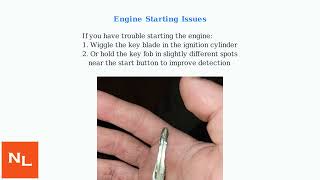
How to confirm: Try using the spare key fob. If the vehicle starts, the battery in the first fob is the likely culprit. A "Key Fob Battery Low" message may also appear on the dash. You can also try the emergency start procedure: press the nose of the key fob directly against the start/stop button and push. If it starts, 🎬 See how to perform this emergency start procedure step-by-step. the battery is almost certainly the issue.
Typical fix: Replace the CR2450 battery inside the key fob. This is a simple DIY task requiring a small flathead screwdriver to pry the case open.
Est. part cost: $5-$10 - Key Fob Programming Issue 🟡 Medium Probability → Shop Keyless Entry Transmitter As documented in TSB #S2208000073, this code is commonly set if the PCM is replaced or its software is updated without correctly performing the "PCM Replaced" routine. This routine re-syncs the security codes from the keys to the new PCM software.
How to confirm: This issue will typically appear immediately after a visit to a repair shop for PCM-related work. The vehicle will not start with any key and will have an active P0513 code.
Typical fix: The vehicle must be taken to a dealer or a qualified shop with a wiTECH scan tool to perform the "PCM Replaced" or "Proxy Configuration Alignment" procedure to re-establish the security handshake between the BCM, RF Hub, and PCM.
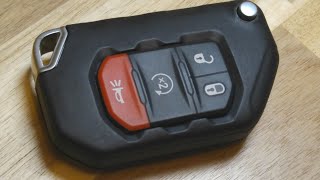
Est. part cost: $0 (if part of original repair), $100-$200 for a standalone programming session. - Faulty Key Fob ⚪ Low Probability → Shop Keyless Entry Transmitter The internal transponder chip or circuitry can fail from being dropped, water damage, or age. The fob is a complex electronic device.
How to confirm: The vehicle starts with the spare key but does not start with the suspect key, even after replacing its battery and trying the emergency start procedure.
Typical fix: The faulty key fob must be replaced and the new fob programmed to the vehicle by a dealer or automotive locksmith. Aftermarket keys may not program correctly.
Est. part cost: $150-$400 - Faulty Radio Frequency Hub (RFH) Module ⚪ Low Probability The RFH (also known as the WCM or SKIM module) is the receiver that reads the key fob's signal. Like any electronic module, it can fail, sometimes due to internal software glitches or hardware failure.
How to confirm: The vehicle will not start with either key fob, even after battery replacement and attempting a key reprogram. Diagnosis requires a scan tool that can check the status and communication of the RFH module. A technician may check for available software updates for the RFH module itself.
Typical fix: Replace the RFH module and program it to the vehicle, along with all keys. This requires dealer-level tools. In some cases, a software re-flash of the existing module can resolve the issue without replacement.
Est. part cost: $200-$500
Rare But Worth Checking
- Failing Main/Auxiliary Vehicle Batteries:
- Wiring Harness Issue:
- Aftermarket Remote Starter or Alarm:
Diagnosis Steps
- Check the instrument cluster for a red security indicator light when trying to start the vehicle. A solid or flashing light indicates a security problem.
- Try to start the vehicle with your spare key fob. If it starts, the problem is with your primary key fob.
- If the spare key works, replace the CR2450 battery in the non-working key fob.
- If the key fob battery is new, try the 'emergency start procedure' by pushing the start button with the nose of the key fob. If this works, it points to a weak signal from the fob or a weak RFH antenna.
- If neither key works, check if the vehicle recently had service, especially a PCM flash or replacement. If so, the issue is almost certainly the one described in TSB S2208000073.
- As a temporary troubleshooting step, some owners have had success with a hard reset by disconnecting both main battery terminals for at least 5 minutes and touching the positive and negative cables together to drain residual power. This may temporarily clear the module glitch.
- If the problem persists, the vehicle must be scanned with a professional tool (like JScan, AlfaOBD, or a dealer's wiTECH) that can read security system data from the BCM and RFH modules.
- A technician will use the scan tool to check for communication with the RFH module and see if the keys are still listed as valid in the system.
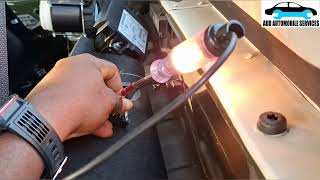
- If programming fails or modules are not communicating, a technician will need to diagnose the Radio Frequency Hub (RFH) module and its wiring harness for damage or shorts. 🎬 Watch this technician diagnose a lost communication issue with the RF hub.
Parts You'll Likely Need
- Key Fob Battery
(OEM #68384435AA (Mopar equivalent for CR2450))— This is the most common and cheapest fix. The key fob's signal is too weak for the vehicle to recognize.
Trusted brands: Energizer, Duracell, Mopar
OEM price range: $5-$10
Aftermarket price range: $2-$8 - Key Fob (Transmitter)
(OEM #68416782AD (3-Button, Passive Entry), 68416784AD (4-Button, Remote Start))— If the internal transponder chip fails, the entire key fob must be replaced and programmed.
Trusted brands: Mopar (OEM)
OEM price range: $140-$250
Aftermarket price range: $100-$180 - Radio Frequency Hub (RFH) Module
(OEM #68488344AA (for 2021 model year, check VIN for others))— If neither key works and programming fails, the module that receives the signal may be faulty.
Trusted brands: Mopar (OEM)
OEM price range: $120-$200
Aftermarket price range: N/A
Related Codes That Often Appear With This One
- U1514-87: Engine Controller Secret Code - Missing Message
- U0401-00: Invalid Data Received from ECM/PCM
Technical Service Bulletins (TSBs) & Recalls
- S2208000073: No Start, After Flash And Or PCM Replace, DTC P0513 Invalid Skim Key Setting.
Platform-Specific Known Issues
- TSB S2208000073: A known issue where a "No Start" condition and code P0513 occurs after the Powertrain Control Module (PCM) has been replaced or its software has been updated. The fix requires a technician to perform the "PCM Replaced" procedure with a diagnostic tool to re-sync the vehicle's security components.
- Owner Experience - Hard Reset: An owner on YouTube with a related Jeep platf
Mechanic-Grade Diagnostic Values
- System Voltage During Programming/Diagnostics — expected: > 13.2 Volts. Failure: Voltage dropping below 13.2 volts can interrupt communication and cause programming to fail, potentially bricking a module or causing codes like P0513.
Hidden / Shadow Codes Worth Checking
- P0513: While a standard SAE code, P0513 often acts as a 'hidden' or 'shadow' code on FCA vehicles because it is stored in the security modules (BCM/RFH) and is not always readable by basic, engine-only OBD-II code readers. (see via Requires a more advanced scan tool with security access and CAN bus capability, such as the dealer's wiTECH tool, or aftermarket systems like AlfaOBD and JScan.)
Scan Tool Commands That Help
- wiTECH (Dealer Tool): PCM Replaced — This is the primary fix required after a PCM is flashed or physically replaced. It transfers the secret key data from the RF Hub/BCM to the new PCM, re-establishing the security handshake. Failure to run this is the cause of TSB S2208000073.
- wiTECH, AlfaOBD: Proxy Configuration Alignment — This procedure synchronizes the configuration of all modules on the vehicle's network. It should be run if modules like the RF Hub or BCM have been replaced, or if the odometer is flashing, which indicates a module mismatch.
- wiTECH: Immobilizer ECU Replace — A service function used when replacing the immobilizer module (RF Hub) to program the new unit to the vehicle and existing keys.
- wiTECH: Check PCM VIN — A preliminary step before running other routines to ensure the VIN stored in the PCM is correct, which is necessary for security procedures.
Wiring & Ground Locations
- RF Hub Module — There are conflicting reports for the JL/JT platform. Some sources indicate it is behind the dashboard on the driver's side, near the OBD-II port. However, other sources with access to the service library state it is located in the driver's side rear of the vehicle, ahead of the fuel filler area. Technicians should verify the location for the specific vehicle being serviced.. This is the module that receives the signal from the key fob. Physical access is required for replacement or to check its wiring connector for damage or corrosion.
- Fuse F10 (Underhood Fuse Box) — In the main fuse box (Power Distribution Center) in the engine bay.. This fuse, typically 10A or 15A, powers the Radio Frequency Hub (RF Hub) and Key Ignition Node (KIN). A blown fuse will cut power to the module, preventing it from reading the key and causing a no-start with P0513.
- Dash/Body Grounds (G904, G905, G906) — These ground points are located in the dash harness and driver-side kick panel area. A specific ground diagram for the JL/JT platform shows multiple ground points in the vicinity of the BCM and under-dash modules.. The RF Hub, BCM, and PCM all rely on clean ground connections to communicate properly. A loose or corroded ground in the dash area can interrupt the security handshake and trigger a P0513 code.
Real Owner Repair Stories
- YouTube video on a Jeep Wrangler JK (2014 Jeep Wrangler JK Unlimited Rubicon) — Red security light stayed on, engine would start and die after 2 seconds. After 3 attempts, it would no longer crank. Both factory keys failed to work. Code P0513 was read with a Superchips tuner.
❌ Tried (didn't work) Using the spare key., Restoring the vehicle's PCM to factory tune (removing a Superchips tune).
✅ What actually fixed it A hard reset. The owner disconnected both battery terminals for five minutes, touched the positive and negative cables together to drain residual power, then reconnected them. Afterward, the vehicle started normally with both keys. - YouTube video on a Jeep Wrangler (Jeep Wrangler (generation not specified, but similar symptoms)) — Red security dot on the dash, vehicle won't start or crank.
❌ Tried (didn't work) Banging on the starter motor.
✅ What actually fixed it A temporary module reset. The owner pulled the relevant fuse (M13 on his model) for two seconds and reinserted it. This allowed the vehicle to start, providing a way to get home or to a shop without a tow. For the Gladiator, the equivalent fuse to check is F10 in the engine bay fuse box. - 2CarPros Forum User (2016 Jeep (model not specified, but push-button start)) — No crank condition after replacing a weak vehicle battery. Flashing lightning bolt icon initially, then just a flashing check engine light.
❌ Tried (didn't work) Replacing the throttle body (based on other codes).
✅ What actually fixed it The user did not post a final fix, but the key diagnostic step was using AlfaOBD software, which revealed the P0513 code that cheaper code readers could not see. This correctly pointed the diagnosis away from the throttle and toward the security system as the cause of the no-crank.
Model Year Variations Within This Range
- 2021-2022: In mid-2021, Jeep began introducing a new style of Powertrain Control Module (PCM) for the 3.6L engine. The transition was not tied to a specific date, as some later 2021 models still have the original PCM. This change can affect wiring diagrams and diagnostic procedures related to the PCM, which is a key component in the P0513 security handshake.
Helpful Videos
We Have This Part in Stock


The information in this article is provided for general reference and educational purposes only. Vehicle specifications, procedures, and part compatibility can vary by production date, trim level, and region. Always consult your vehicle's factory service manual and verify part numbers before purchasing or performing repairs. Safety-critical components such as airbags, seat belts, and braking systems should be installed by a qualified professional.
- Jeep GLADIATOR:
- 🧭 Diagnostic Flowchart
- 🎬 Helpful Videos
- 🛍️ Shop This Part
- What's Unique About the 2020-2022 Jeep GLADIATOR
- Symptoms You May Notice
- Most Likely Causes
- Rare But Worth Checking
- Diagnosis Steps
- Parts You'll Likely Need
- Related Codes That Often Appear With This One
- Technical Service Bulletins (TSBs) & Recalls
- Platform-Specific Known Issues
- Mechanic-Grade Diagnostic Values
- Hidden / Shadow Codes Worth Checking
- Scan Tool Commands That Help
- Wiring & Ground Locations
- Real Owner Repair Stories
- Model Year Variations Within This Range
- 🎟️ Get 5% Off