

P0520 on 2005-2011 Cadillac STS: Engine Oil Pressure Sensor Circuit Causes & Fixes
On the 2005-2011 Cadillac STS, this code is almost always caused by a failed oil pressure sensor and/or a small, clogged filter screen located directly beneath it. The parts are inexpensive, but access to the sensor is extremely difficult on both V6 and V8 engines, making labor the primary cost. Always replace both the sensor and the screen together. A special thin-walled 1-1/16" socket is often required for the V6.
- P0520 on a 2005-2011 STS points to an electrical fault with the oil pressure sensor circuit, not necessarily low oil pressure.
- The first and most critical diagnostic step is to verify the engine's actual oil pressure with a mechanical gauge to rule out a serious mechanical failure.
- The most common fix is to replace both the oil pressure sensor AND the small filter screen located underneath it. Replacing only the sensor often results in the code returning.
- The repair is considered difficult for DIY due to the sensor's location, which is tight on both the V6 and V8 engines.
- On 3.6L V6 models, be aware that this code can be linked to the common issue of timing chain wear.
What's Unique About the 2005-2011 Cadillac STS
The 2005-2011 Cadillac STS was primarily equipped with either the 3.6L V6 (LY7) or the 4.6L Northstar V8. On both engines, a key issue is a small, thimble-shaped filter screen located in the block right under the oil pressure sensor. This screen is notoriously prone to clogging with oil sludge, which starves the sensor of an accurate reading and triggers the P0520 code. For the 3.6L V6 engine specifically, this code can also be an early warning sign of premature timing chain wear, as debris from failing chain guides can contribute to the sludge that clogs the screen.
Symptoms You May Notice
- Check Engine Light is on
- Oil pressure warning light is on or flashing
- Oil pressure gauge reads zero, maximum, or fluctuates erratically between 0 and 100+ PSI.
- Message on the driver information center (DIC) saying 'Low Oil Pressure' or 'Engine Power Reduced'
- Engine knocking or ticking noises (if a true low oil pressure condition exists)
- Replacing the oil pressure sensor but not the filter screen beneath it. A clogged screen will cause the new sensor to read incorrectly, and the code will likely return.
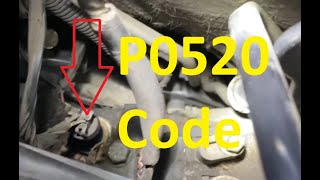
- Replacing the oil pump. P0520 is an electrical circuit code. A mechanical oil pump failure would need to be confirmed 🎬 Watch this quick guide on P0520 causes and fixes with a mechanical gauge test first and would typically present with different symptoms or codes (like P0524).
Most Likely Causes
- Clogged Oil Pressure Sensor Filter Screen 🔴 High Probability → Shop Engine Oil Pressure Sensor This is a well-documented issue on many GM engines from this era, including the V6 and V8 used in the STS. Over time, engine sludge and debris can block this small screen, preventing oil from reaching the sensor and causing a false reading. This is addressed in GM TSB PIP4786C for related engines, which recommends cleaning or replacing this filter.
How to confirm: The screen is located in the engine block directly underneath the oil pressure sensor. It must be visually inspected for blockage after the sensor is removed. It often needs to be pried out with a small pick and is destroyed during removal.
Typical fix: Clean the screen with brake cleaner and compressed air, or replace it. It is highly recommended to replace this inexpensive part whenever the sensor is replaced, as it often breaks during removal.
Est. part cost: $5-$15 - Faulty Engine Oil Pressure Sensor 🔴 High Probability The sensor is a common failure point. It can fail electrically, sending incorrect voltage signals, or it can develop internal leaks that allow oil to seep into the electrical connector, disrupting the signal.
How to confirm: After confirming good mechanical oil pressure, test the sensor's output voltage with a multimeter. If the voltage is stuck high, low, or doesn't change with engine RPM, the sensor is bad. Often, a visual inspection will reveal oil leaking through the sensor body itself.
Typical fix: Replace the engine oil pressure sensor. It is critical to also replace the filter screen at the same time. A special thin-walled 1-1/16" socket is often required for access.
Est. part cost: $30-$80 - Damaged Wiring or Connector ⚪ Low Probability The sensor's location in a high-heat area near the engine block can make wiring brittle over time. Oil leaking from the sensor itself is a very common cause of contamination that ruins the electrical connector pins.
How to confirm: Visually inspect the wiring harness leading to the sensor for any signs of chafing, melting, or breaks. Check the connector for corrosion, oil saturation, or loose pins. A real-world example from a 2014 Malibu with a similar engine setup found that corrosion on the connector pins was the root cause of related codes.
Typical fix: Repair the damaged section of wiring or replace the connector pigtail. Clean oil out of the harness side with electrical contact cleaner.
Est. part cost: $15-$40 - Low Engine Oil Level or Incorrect Oil Type ⚪ Low Probability While P0520 is an electrical code, severely low oil levels can cause pressure to fluctuate, potentially confusing the sensor and triggering a circuit fault. Using oil of the wrong viscosity (e.g., not the 5W-30 specified in the owner's manual) can also affect pressure readings.
How to confirm: Check the engine oil level using the dipstick and verify the condition of the oil. Ensure the correct viscosity is being used per the owner's manual.
Typical fix: Top off or change the engine oil and replace the filter.
Est. part cost: $50-$100
Rare But Worth Checking
- Failing Powertrain Control Module (PCM): → Shop Engine Control Module (ECM) This is extremely rare. The PCM should only be considered as a potential cause after all other possibilities, including the sensor, screen, and all wiring, have been exhaustively tested and ruled out.
Diagnosis Steps
- Check the engine oil level and condition. Ensure it is full and not sludgy.
- CRITICAL: Connect a mechanical oil pressure gauge to the engine to verify the actual oil pressure. This step is mandatory to rule out a serious mechanical problem. If mechanical pressure is low, stop and diagnose the lubrication system (e.g., oil pump, worn bearings).
- If mechanical pressure is good, the fault is electrical. Use a scan tool to monitor the oil pressure sensor's live data. Does the reading change with engine RPM or jump erratically?
- Locate the oil pressure sensor. On the 4.6L V8, it's on the oil filter adapter housing, tucked at the rear of the engine near the firewall, making access extremely difficult. 🎬 Watch this step-by-step oil pressure switch replacement on a Cadillac STS V8 On the 3.6L V6, it's on the driver's side of the engine block, below and behind the oil filter housing, often obscured by power steering lines. 🎬 See how to replace the V6 sensor without removing the power steering
- Inspect the sensor's electrical connector and wiring for damage, corrosion, or oil saturation from a leaking sensor.
- If the wiring looks good, remove the oil pressure sensor. A special thin-walled 1-1/16" oil pressure switch socket is often required, especially on the V6, to fit in the tight space.
- Once the sensor is removed, inspect the small filter screen in the engine block port. It will likely be clogged with debris. Use a small pick to carefully pry it out; expect it to be destroyed in the process.
- If the screen is clogged, the only reliable repair is to replace both the screen and the sensor.
- If the screen is clean but diagnostics point to the sensor, replace the sensor.
- Clean any oil from the connector pigtail before reconnecting. Clear the trouble codes and perform a test drive to ensure the repair was successful.
Parts You'll Likely Need
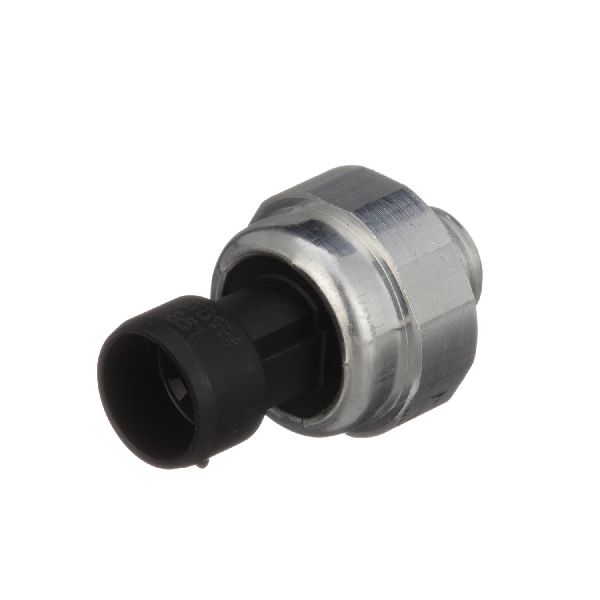
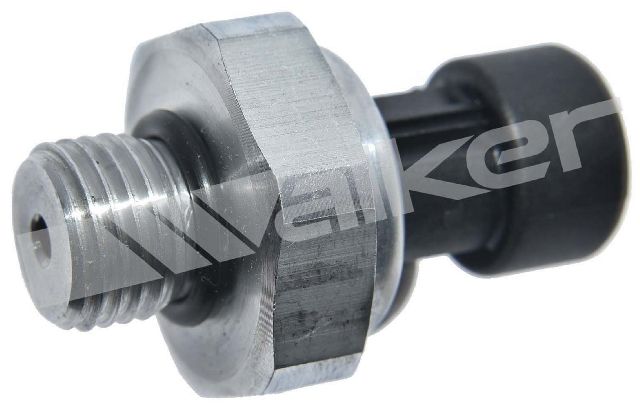
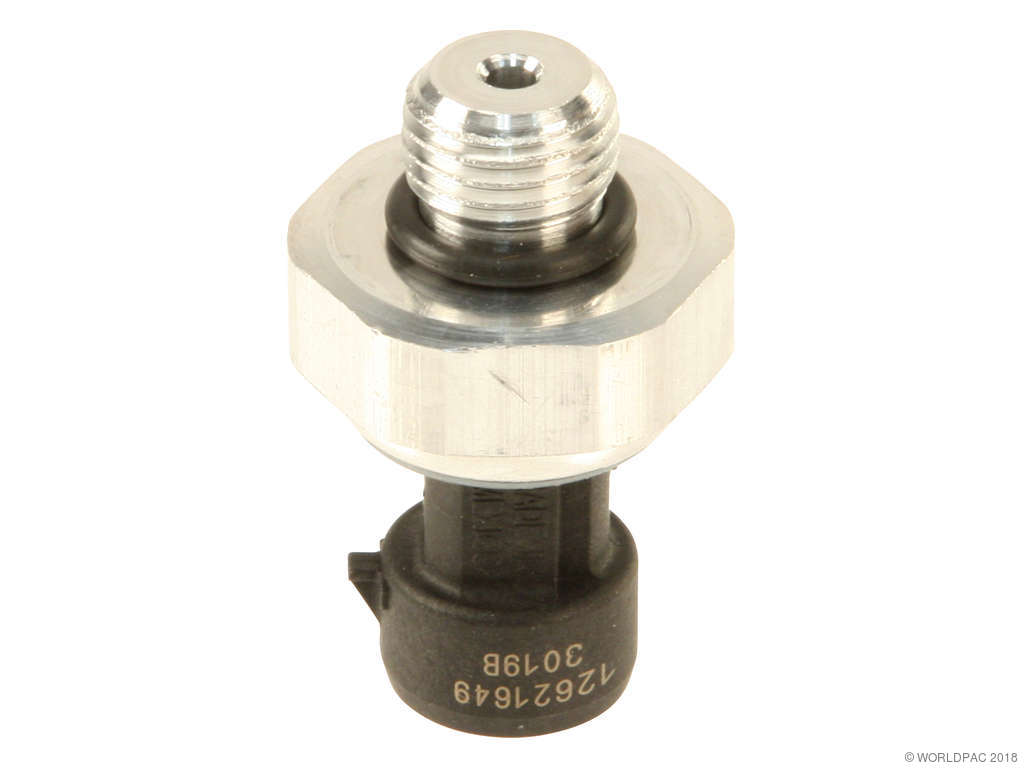
- Engine Oil Pressure Sensor
(OEM #12673134)— This is the most common part to fail electrically or leak, directly causing the P0520 code. This part number supersedes older versions like 12621234 and 12596951.
Trusted brands: ACDelco (OEM), Standard Motor Products (PS508), Dorman
OEM price range: $40-$70
Aftermarket price range: $25-$50 - Oil Pressure Sensor Filter Screen
(OEM #12585328)— This small screen is a known failure point across GM engines of this era. It clogs with sludge, causing false readings from the sensor. It is essential to replace this part along with the sensor.
Trusted brands: ACDelco, Dorman
OEM price range: $8-$15
Aftermarket price range: $5-$10 - Oil Pressure Sensor Connector Pigtail
(OEM #ACDelco PT2313 (or equivalent))— If the original connector is saturated with oil from a leaking sensor, or if the locking tab breaks during removal, the pigtail will need to be replaced to ensure a good connection.
Trusted brands: ACDelco, Dorman
OEM price range: $20-$40
Aftermarket price range: $15-$25
Related Codes That Often Appear With This One
- P0521 — This code for 'Engine Oil Pressure Sensor/Switch Range/Performance' is a companion code that is often set for the exact same reasons: a faulty sensor or a clogged screen. TSB PIP4786C specifically calls out this code.
- P0522 / P0523 — These codes indicate the sensor circuit voltage is specifically too low (P0522) or too high (P0523), pointing directly to a sensor or wiring failure.
- P0008 / P0017 / P0018 — On the 3.6L V6 engine, these timing correlation codes are strong indicators of stretched timing chains. This is a related issue, as debris from the timing system can clog the oil pressure sensor screen.
Technical Service Bulletins (TSBs) & Recalls
- PIP4786C: This TSB is for various GM V8 engines with Active Fuel Management (AFM) that exhibit a low oil pressure message and a P0521 code. It instructs technicians to inspect and clean the 'Valve Lifter Oil Filter' (the same screen located under the oil pressure sensor) for debris before replacing any parts. This confirms the clogged screen is a known issue recognized by GM.
Platform-Specific Known Issues
- Difficult Sensor Access (V8 Northstar): The sensor is located on the oil filter adapter housing at the very back of the engine against the firewall. Access is extremely limited, and most of the job must be done by feel from underneath the vehicle. Some mechanics remove the entire oil filter adapter housing to replace the sensor.
- Difficult Sensor Access (V6 LY7): The sensor is located on the driver's side of the block, tucked behind the power steering lines and below the oil filter housing, making access very tight.
Mechanic-Grade Diagnostic Values
- 5V Reference Circuit Voltage — expected: Approx. 5.0V. Failure: Voltage near 0V indicates a short to ground on the 5V reference circuit, which could be caused by this sensor or another sensor on the same circuit. Voltage significantly above 5V is not typical for this fault.
- Sensor Signal Wire Voltage (Key On, Engine Off) — expected: ~0.5V. Failure: Voltage significantly higher or at 0V with no pressure indicates a faulty sensor or a circuit issue. A reading of 5V could indicate a short to the reference voltage wire.
- Sensor Signal Wire Voltage (Engine at Hot Idle) — expected: ~0.5V - 1.5V (Varies with actual pressure). Failure: Voltage does not rise with engine RPM, or is stuck high/low despite good mechanical pressure. A reading below 0.1V for more than 0.5 seconds can trigger a fault code.
- Sensor Ground Circuit Resistance — expected: < 5.0 Ohms to chassis ground. Failure: High resistance indicates a poor ground connection at the sensor connector or a break in the low reference wire back to the PCM.
Scan Tool Commands That Help
- Tech2 / GDS2: Live Data - Engine Oil Pressure Sensor Voltage — This is the primary function to use. It allows you to see the voltage the PCM is receiving from the sensor in real-time. Comparing this to manual voltage measurements at the sensor helps determine if the wiring harness is intact.
- Tech2 / GDS2: Live Data - Engine Oil Pressure — This displays the calculated oil pressure in PSI or kPa. It's useful for observing erratic readings that correspond to the gauge fluctuations reported by the driver.
Wiring & Ground Locations
- Oil Pressure Sensor Connector (Both Engines) — On the sensor itself. V8: Rear of engine on oil filter adapter. V6: Driver's side of block below oil filter housing.. This 3-wire connector is the most common point of failure. The pins are: Gray (5V Reference), Tan/White (Signal), and Tan (Low Reference/Ground). It is frequently contaminated with oil from a leaking sensor, causing shorts or poor connections.
- G103 (3.6L V6) — Top right side of the engine, fastened to the ECM case.. This is a primary ground for the Engine Control Module (ECM). While not a direct ground for the sensor circuit itself (which is grounded via a low reference wire back to the PCM), a poor ECM ground can cause a wide range of erratic sensor readings and codes, including P0520.
- G107 (4.6L V8) — On the rear side of the right cylinder head.. This is a primary engine-to-chassis ground. A loose or corroded connection here can create a voltage potential difference between the engine block (where the sensor is grounded through the low reference circuit) and the chassis, leading to incorrect sensor readings.
Real Owner Repair Stories
- YouTube user Chris Arnau (Cadillac Deville with Northstar V8 (similar engine architecture and sensor location to STS V8)) — P0520 code present.
✅ What actually fixed it The problem was resolved by replacing the engine oil pressure sensor located on the oil filter adapter housing. The video highlights the extremely difficult access and the need to work by feel. It also shows the process of removing the oil filter adapter housing for better access, though it's not always required.
OEM Part Supersession History
12596951, 12621234→12673134— Standard part evolution for improved reliability and performance. The newer part is the current GM-recommended replacement.
Heads up: The superseded parts are compatible, but the latest part number (12673134) should always be used for replacement to ensure the most updated design.
Diagnostic Flowchart
Other Known Issues on This Vehicle
Issues unrelated to this code that are worth knowing about as an owner of this generation:
- Premature Timing Chain Wear (3.6L V6 LY7) 🔴 High — Common after 60,000-100,000 miles, especially with extended oil change intervals. Can cause codes P0008, P0017, etc. (Ref: Multiple TSBs exist for related models, though no major recall was issued for the STS specifically.)
- Camshaft Actuator Solenoid Failure (V6 & V8) 🟠 Medium — Can occur after 60,000 miles, leading to rough idle, poor performance, and check engine light. Often caused by oil sludge.
- Steering Wheel Position Sensor Failure 🟠 Medium — Common failure leading to 'Service Stability System' messages and ABS/traction control issues.
- Northstar Engine Oil Leaks (4.6L V8) 🟠 Medium — The Northstar V8 is known for oil leaks from various locations, including valve covers, the oil pan, and the oil filter adapter housing.
- Rear Axle Pinion Seal Leak 🟡 Low — A known issue where the rear differential pinion seal can leak, requiring replacement. A recall (07E069000) was issued for some model years. (Ref: NHTSA Recall 07E069000)
Used vs. New Parts: Buying Guide for This Vehicle
When a used part is the smart pick: For this repair, using used parts is strongly discouraged. The primary failure components are the sensor and the filter screen, which are inexpensive wear items. A used wiring pigtail could be considered if a new one is unavailable, but only if the wires are flexible and the connector is free of corrosion or damage.
Donor-vehicle mileage cap: roughly under 20000 miles for the part to have meaningful remaining life.
What to inspect on the donor part:
- For a wiring pigtail, inspect for any brittleness in the wire insulation.
- Ensure the connector's locking tab is intact and clicks firmly.
- Check for any signs of corrosion or oil saturation on the connector pins.
OEM-only on this vehicle (don't cheap out):
- Engine Oil Pressure Sensor
Aftermarket brands forum-validated for this vehicle:
- ACDelco (OEM)
- Standard Motor Products (SMP) is often cited as a reliable alternative.
Brands owners have reported issues with on this vehicle:
- Unnamed or 'white box' generic sensors from online marketplaces are frequently reported to fail prematurely or be dead-on-arrival. Some user reviews have noted issues with incorrect socket sizing on certain budget brands.
Real Owner Stories
Aggregated from forums and TSBs cited above. Mileages and costs reflect what owners reported in those sources.
2005-2012 Cadillac CTS (3.6L V6)
Symptoms: The owner observed erratic gauge behavior where the oil pressure reading would jump between 0 and 100 PSI.
What fixed it: Replacement of the oil pressure sensor using a special thin-walled 1-1/16" socket to navigate the tight space near the power steering pump.
Source hint: YouTube: Cadillac CTS 3.6L P0520 Sensor Replacement
GM 6.0L V8 (Engine Design Peer)
Symptoms: Loss of oil pressure readings; users noted that the small screens do not have oil flow past them, causing them to collect sludge and debris.
What fixed it: Cleaning or replacing the oil pressure sender screen located under the sensor.
Source hint: BobIsTheOilGuy Forum Discussion titled 'Interesting loss of oil pressure issue GM 6 liter'
Cadillac Deville (Northstar V8)
Symptoms: Difficulty accessing the sensor due to its location on the oil filter adapter housing at the rear of the engine.
What fixed it: Removing the entire oil filter adapter housing to gain access to and replace the oil pressure sensor.
Source hint: YouTube: Northstar Oil Pressure Sensor Replacement
Related OBD-II Codes
Frequently Asked Questions
Does GM TSB PIP4786C apply to my Cadillac STS?
What specific tool is needed to replace the oil pressure sensor on the 3.6L V6 STS?
Where is the oil pressure sensor located on the 4.6L V8 Northstar engine?
Should I replace the filter screen even if I am only getting a P0520 code for the sensor?
Can using the wrong oil trigger a P0520 code on my STS?
Why does my oil pressure gauge fluctuate erratically between 0 and 100+ PSI?
Helpful Videos
We Have This Part in Stock


The information in this article is provided for general reference and educational purposes only. Vehicle specifications, procedures, and part compatibility can vary by production date, trim level, and region. Always consult your vehicle's factory service manual and verify part numbers before purchasing or performing repairs. Safety-critical components such as airbags, seat belts, and braking systems should be installed by a qualified professional.
- Cadillac STS:
- 🧭 Diagnostic Flowchart
- 🎬 Helpful Videos
- 🛍️ Shop This Part
- What's Unique About the 2005-2011 Cadillac STS
- Symptoms You May Notice
- Most Likely Causes
- Rare But Worth Checking
- Diagnosis Steps
- Parts You'll Likely Need
- Related Codes That Often Appear With This One
- Technical Service Bulletins (TSBs) & Recalls
- Platform-Specific Known Issues
- Mechanic-Grade Diagnostic Values
- Scan Tool Commands That Help
- Wiring & Ground Locations
- Real Owner Repair Stories
- OEM Part Supersession History
- Other Known Issues on This Vehicle
- Used vs. New Parts: Buying Guide for This Vehicle
- Real Owner Stories
- 2005-2012 Cadillac CTS (3.6L V6)
- GM 6.0L V8 (Engine Design Peer)
- Cadillac Deville (Northstar V8)
- Related OBD-II Codes
- Frequently Asked Questions
- 🎟️ Get 5% Off