

P0520 on 2010-2015 Chevrolet Camaro 3.6L V6: Engine Oil Pressure Sensor Circuit Fixes
On a 2010-2015 Camaro with the 3.6L V6, code P0520 almost always indicates a failed engine oil pressure sensor. It's a common failure item, but extremely difficult to access. Replacing the sensor and the small filter screen beneath it is the most reliable fix. Expect to pay $40-$80 for the parts, but significant labor costs if done at a shop due to poor accessibility.
- P0520 on the 2010-2015 Camaro 3.6L V6 is an electrical fault code, most often caused by a failed oil pressure sensor.
- Before replacing any parts, you must verify the engine's actual oil pressure with a mechanical gauge to rule out a serious internal engine problem.
- Due to a known design issue, you must replace both the oil pressure sensor AND the small filter screen located underneath it to ensure a lasting repair.
- The repair is considered difficult for a DIYer due to the sensor's extremely tight location, which requires patience and special tools.
What's Unique About the 2010-2015 Chevrolet Camaro
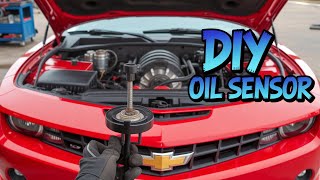
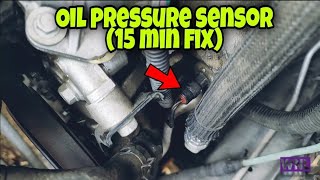
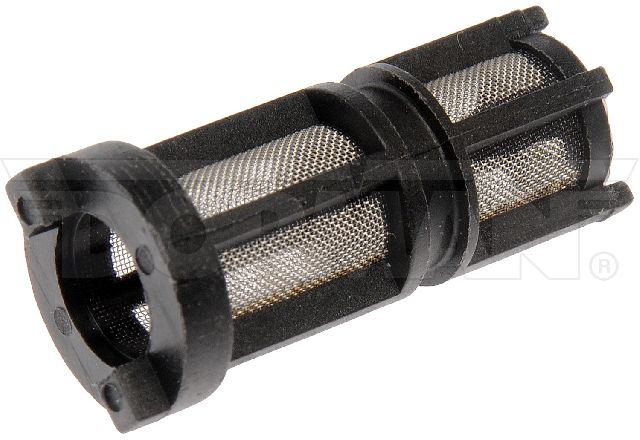
On the 3.6L V6 engines (LLT and LFX) used in the fifth-generation Camaro, the oil pressure sensor is a known high-failure part. A unique and critical aspect of this engine family is a small, thimble-sized filter screen located in the engine block directly underneath the sensor. This screen is notorious for clogging with oil sludge, which can starve the sensor of an accurate pressure reading and trigger the P0520 code. Additionally, the sensor's location on the driver's side of the engine, near the oil filter housing, is extremely difficult to access, making what should be a simple part swap a labor-intensive job often requiring removal of other components like the intake 🎬 Watch: 5th Gen Camaro oil pressure sensor location and access tips or catalytic converter for access.
Symptoms You May Notice
- Check Engine Light is on
- Oil pressure gauge reading is erratic, stuck at zero, or maxed out at its highest reading.
- Low Oil Pressure warning light or message may be illuminated on the dashboard.
- In rare cases of actual low pressure, you might hear engine knocking or ticking sounds.
- Replacing the oil pump. The P0520 code specifically points to an electrical circuit fault. A mechanical pump issue would more likely trigger a P0524 (Engine Oil Pressure Too Low) code and would be confirmed with a mechanical gauge.
Most Likely Causes
- Faulty Engine Oil Pressure Sensor 🔴 High Probability This sensor is a common failure item on many GM vehicles from this era. It can fail internally, causing incorrect electrical signals, or it can leak oil through its body into the electrical connector, shorting the circuit.
How to confirm: Inspect the sensor's electrical connector for any signs of oil. If oil is present, the sensor has failed. The most definitive test is to compare the sensor's reading on a scan tool to the reading from a mechanical oil pressure gauge. If the mechanical gauge shows normal pressure but the scan tool shows an erratic or incorrect value, the sensor is bad.
Typical fix: Replace the engine oil pressure sensor. It is highly recommended to also replace the small filter screen underneath it at the same time.
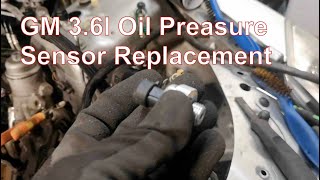
Est. part cost: $30-$80 - Clogged Oil Pressure Sensor Filter Screen 🔴 High Probability → Shop Engine Oil Pressure Sensor The GM 3.6L engine family uses a small filter screen (GM Part #12585328) under the sensor that is prone to clogging with oil sludge and debris. This blockage prevents oil from reaching the sensor, causing it to report incorrect pressure and trigger a P0520 or related code. This is a well-documented issue, referenced in GM TSB PIP4786C. 🎬 See: GM 3.6L oil pressure sensor and screen replacement walkthrough
How to confirm: The screen is located in the port underneath the oil pressure sensor and must be removed for visual inspection. If it is clogged with dark, sludgy material, it is a primary cause of the fault.
Typical fix: Remove and replace the filter screen. This should always be done whenever the oil pressure sensor is replaced to prevent the code from returning.
Est. part cost: $5-$15 - Wiring Harness or Connector Issue 🟡 Medium Probability The wiring to the sensor is in the hot, oily environment of the engine bay, making it susceptible to heat damage, corrosion, or oil contamination from a leaking sensor.
How to confirm: Visually inspect the wiring harness leading to the sensor for any signs of fraying, melting, or breaks. Check the connector for corrosion, backed-out pins, or oil saturation. Use a multimeter to test for a 5-volt reference, good ground, and signal continuity back to the PCM.
Typical fix: Repair the damaged section of the wiring harness or replace the pigtail connector if it is corroded or oil-soaked.
Est. part cost: $15-$40 - Low Engine Oil Level or Incorrect Oil Viscosity ⚪ Low Probability
How to confirm: Check the engine oil level using the dipstick and verify its condition. Ensure the oil being used matches the manufacturer's specification (typically SAE 5W-30 meeting Dexos standards for this engine).
Typical fix: Perform an oil and filter change with the correct grade of oil.
Est. part cost: $50-$100
Rare But Worth Checking
- Failing Oil Pump or Internal Engine Wear: This is a mechanical failure, not an electrical one. If a mechanical gauge confirms that oil pressure is actually low, it points to a serious internal engine problem like a worn oil pump or worn engine bearings. This is rare and would typically be accompanied by engine noise.
- Faulty Powertrain Control Module (PCM): → Shop Engine Control Module (ECM) This is extremely rare. The PCM is the last component to suspect and would typically set other codes like P0601 or P0606. It should only be considered after the sensor, its screen, and all wiring have been thoroughly tested and ruled out.
Diagnosis Steps
- Check the engine oil level and condition. Ensure it is full and clean.
- Connect an OBD-II scanner to confirm the P0520 code and check for any other related codes.
- CRITICAL STEP: Connect a mechanical oil pressure gauge to the engine to verify the actual oil pressure. The port is on the oil filter housing. Compare readings at idle and ~2500 RPM to specifications. If pressure is genuinely low, you have a serious mechanical issue. If pressure is normal, the problem is electrical.
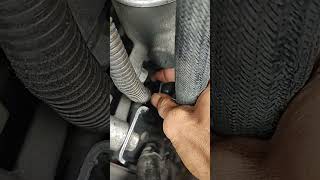
- Locate the oil pressure sensor on the driver's side of the engine, on the oil filter housing. Access is very tight and may require removing the air intake assembly.
- Inspect the sensor's electrical connector for oil contamination, corrosion, or damage. If oil is present, the sensor has failed.
- If the connector is clean, test the circuit. With the key on (engine off), check for a 5-volt reference signal and a good ground at the connector.
- If the circuit tests okay and mechanical pressure is normal, the sensor is faulty. Remove the sensor. This requires a special thin-walled 1-1/16" or 27mm deep socket.
- Upon removing the sensor, inspect the port for the small filter screen. A pick or small screwdriver can be used to extract it. 🎬 Watch: Step-by-step removal and installation on a 5th Gen Camaro If it is clogged with sludge, it must be replaced.
- Replace the oil pressure sensor and the filter screen. Torque the new sensor to the manufacturer's specification. Clear the codes and test drive to confirm the fix.
Parts You'll Likely Need
- Engine Oil Pressure Sensor
(OEM #12673134 (supersedes 12621234, 12596951))— This is the most common cause of a P0520 code on this engine. The original sensor is prone to internal failure and leaking. The current ACDelco part is D1846A.
Trusted brands: ACDelco
OEM price range: $40-$70
Aftermarket price range: $20-$50 - Engine Oil Pressure Sensor Filter Screen
(OEM #12585328)— This screen is located under the sensor and is notorious for clogging with sludge, causing false readings. It should always be replaced with the sensor.
Trusted brands: ACDelco
OEM price range: $5-$15
Aftermarket price range: $3-$10
Related Codes That Often Appear With This One
- P0521 — This code for 'Engine Oil Pressure Sensor/Switch Range/Performance' often appears with P0520 because a faulty sensor or clogged screen can provide readings that are out of the expected performance range. TSB PIP4786C directly addresses this code.
- P0522 — This code for 'Engine Oil Pressure Sensor/Switch Circuit Low' can be set if the sensor fails by shorting to ground or if a clogged screen causes a continuously low voltage signal.
- P0523 — This code for 'Engine Oil Pressure Sensor/Switch Circuit High' indicates the opposite fault, such as an open circuit or a sensor failing in a high-voltage state. A user on a Camaro forum reported this code.
Technical Service Bulletins (TSBs) & Recalls
- PIP4786C: While not for P0520 specifically, this TSB discusses low oil pressure readings on GM 3.6L engines caused by a clogged 'Valve Lifter Oil Filter' (the screen under the pressure sensor), which is a primary cause for P0520 as well.
Platform-Specific Known Issues
- Extreme Difficulty of Access: The single biggest complaint from owners and technicians is the sensor's location. It is tucked on the driver's side of the engine block, below and behind the oil filter housing, with very little clearance. Many DIY repairs and professional jobs require removing the driver-side catalytic converter or the intake manifold to gain adequate access, significantly increasing labor time.
- Special Tool Required: A standard deep socket will often not fit due to clearance issues. A special thin-walled 1-1/16" or 27mm oil pressure sensor socket is highly recommended to remove and install the sensor without damaging it or surrounding components.
Mechanic-Grade Diagnostic Values
- Mechanical Oil Pressure (Hot Idle) — expected: Minimum 10 PSI per GM service information. Many healthy engines show 20-30 PSI.. Failure: Sustained reading below 10 PSI indicates a genuine low-pressure condition (mechanical fault), not a P0520 circuit fault.
- Mechanical Oil Pressure (Hot, at 2,000 RPM) — expected: Minimum 20 PSI per GM service information.. Failure: Pressure does not rise with RPM, indicating a mechanical pump or internal engine issue.
- Oil Pressure Sensor 5V Reference — expected: 4.8V to 5.2V at the sensor connector with key on, engine off.. Failure: Voltage below 4.8V, above 5.2V, or 0V indicates a wiring issue (short/open) or a fault in the ECM.
- Oil Pressure Sensor Signal Voltage (Key On, Engine Off) — expected: ~0.5 Volts.. Failure: Voltage is 0V, 5V, or significantly different, indicating a faulty sensor or wiring issue.
- Normal High Pressure Reading (LFX Engine) — expected: Up to 60 PSI (413 kPa) may be displayed and is considered a normal characteristic under various operating conditions per GM Bulletin PIP4690D.. Failure: This is not a failure indicator; it's a normal condition that can be misdiagnosed as a problem. Technicians should be aware that consistently high readings are not necessarily a fault.
Wiring & Ground Locations
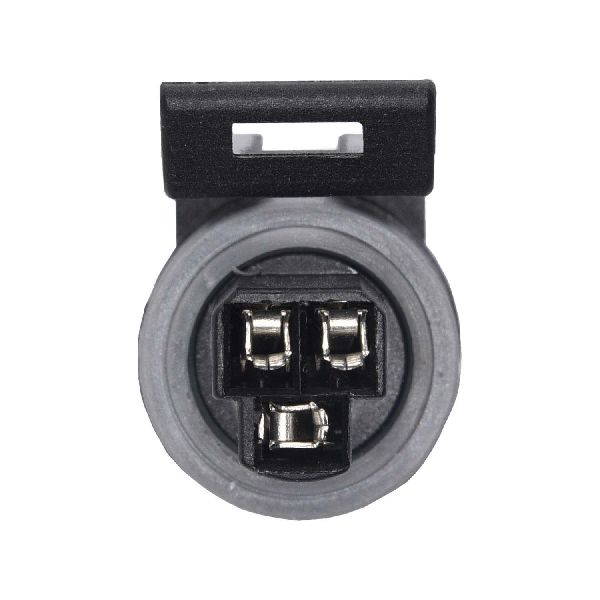
- Oil Pressure Sensor Connector — On the oil pressure sensor, located on the driver's side of the engine block, near the oil filter housing. It is a 3-wire connector.. This connector provides the 5V reference (typically a Gray wire), a low reference/ground (typically Tan/White or Black), and the signal wire (typically Tan) back to the ECM. Oil leaking from a failed sensor frequently contaminates this connector, causing a short and triggering P0520.
- G103 & G105 — G103 is on the cowl in the left rear of the engine compartment. G105 is at the left front of the engine compartment.. These are major grounding points for the Engine Control Module (ECM). A loose or corroded connection at these points can cause unstable sensor reference voltages and erratic ECM behavior, leading to false sensor codes like P0520.
- G107 — On the left rear of the engine block for the 3.6L V6.. This is a primary engine-to-chassis ground. A poor connection here can cause unstable readings from multiple engine sensors that rely on the block for a ground path, including the oil pressure sensor.
Real Owner Repair Stories
- Camaro5 Forums, user reports & GM Bulletin PIP4690D (2012-2013 Chevrolet Camaro 3.6L LFX) — Owner sees the oil pressure gauge reading very high, often around 60 PSI or higher, sometimes maxing out the gauge. This may or may not be accompanied by a P0520 or P0523 code.
❌ Tried (didn't work) Worrying about an oil pump over-pressure condition., Replacing the oil pressure sensor, only to find the new sensor reports the same high pressure.
✅ What actually fixed it No fix was needed. According to GM Technical Service Bulletin PIP4690D, high oil pressure readings (up to and around 60 PSI) are considered a normal characteristic for the LLT and LFX engines under various operating conditions. The issue was a lack of awareness of this normal behavior, not a component failure. The 'fix' was understanding the vehicle's normal operational parameters.
OEM Part Supersession History
12596951→12621234— Part redesign and material improvements by GM.12621234→12673134— Further design revision for improved reliability and performance.
Heads up: The current part, 12673134 (also sold as ACDelco D1846A), is the correct replacement for all previous versions for this vehicle application.
Model Year Variations Within This Range
- 2010-2011 (LLT) vs. 2012-2015 (LFX): The 2010-2011 models use the LLT 3.6L V6, while the 2012-2015 models use the updated LFX 3.6L V6. While the P0520 fault is common to both, the LFX engine has tighter tolerances and may be more sensitive to oil type and filter choice. For example, using an oil filter with the wrong bypass pressure rating is a known issue on LFX engines that can cause pressure-related codes. The fundamental location and failure mode of the sensor and screen remain the same across both engines.
Diagnostic Flowchart
Other Known Issues on This Vehicle
Issues unrelated to this code that are worth knowing about as an owner of this generation:
- Premature Timing Chain Stretch 🔴 High — Very common on 2010-2011 LLT engines, often appearing between 60,000 and 120,000 miles. Less common but still possible on 2012+ LFX engines. Triggers codes like P0008, P0009, P0016, P0017. (Ref: TSB #12-06-01-009F; Special Coverage Adjustment #11340C (may not apply to all Camaros).)
- Intake Valve Carbon Buildup 🟠 Medium — An inherent issue for all direct-injection engines (LLT and LFX). Becomes problematic after 60,000-100,000 miles, causing cold start misfires, rough idle, and power loss. (Ref: TSB PIP5029G/E.)
- Water Pump Failure 🟠 Medium — The water pump gasket or internal bearing can fail, leading to coolant leaks, typically from the weep hole on the side of the engine block. Onset can vary, but it's a commonly replaced item.
- Torque Converter Shudder (Automatic) 🟡 Low — Common issue on 6-speed automatic models where the transmission shudders during light acceleration, often described as driving over rumble strips. Usually appears after 50,000 miles. (Ref: TSB 18-NA-355 (recommends a specific fluid exchange procedure).)
Used vs. New Parts: Buying Guide for This Vehicle
When a used part is the smart pick: Never. A used oil pressure sensor is not a smart choice for this repair. The part has a very high failure rate and is extremely difficult to access, making the labor cost the dominant factor. Installing a used part with an unknown history creates a high risk of repeating the labor-intensive repair in the near future.
What to inspect on the donor part:
- Not applicable as used parts are not recommended.
OEM-only on this vehicle (don't cheap out):
- Engine Oil Pressure Sensor
- Engine Oil Pressure Sensor Filter Screen
Aftermarket brands forum-validated for this vehicle:
- ACDelco (GM Original Equipment): This is the OEM supplier and the most recommended brand to ensure compatibility and reliability.
Brands owners have reported issues with on this vehicle:
- Generic/No-Name Brands: Forum users and mechanics often report that cheap, unbranded sensors sourced from online marketplaces have a high rate of out-of-the-box failure or premature failure. Given the high labor cost to replace this part, the small savings on a cheap sensor are not worth the risk.
Real Owner Stories
Aggregated from forums and TSBs cited above. Mileages and costs reflect what owners reported in those sources.
2010-2015 Chevrolet Camaro 3.6L V6
Symptoms: The oil pressure gauge reading is erratic, stuck at zero, or maxed out at its highest reading. The sensor is tucked on the driver's side of the engine block with very little clearance.
What fixed it: Replacement of the oil pressure sensor using a special thin-walled 1-1/16" or 27mm deep socket due to the extreme difficulty of access.
Source hint: vehicle_specific_issues section regarding 'Extreme Difficulty of Access' and 'Special Tool Required'
2010-2015 Chevrolet Camaro 3.6L V6
Symptoms: Check Engine Light on with a P0520 code; visual inspection of the sensor's electrical connector revealed oil had leaked through the sensor body into the connector.
What fixed it: Replaced the engine oil pressure sensor and the small filter screen underneath it at the same time.
Source hint: common_causes for 'Faulty Engine Oil Pressure Sensor'
Related OBD-II Codes
Frequently Asked Questions
Does GM TSB PIP4786C apply to my 3.6L Camaro if I have a P0520 code?
What is the specific part number for the filter screen I need to replace on my LLT/LFX engine?
Can I use a standard deep socket to remove the sensor on my 2010-2015 Camaro?
Why is the labor for this repair so high on the Camaro compared to other cars?
Should I only replace the sensor if it's leaking oil into the connector?
What type of oil should I be using to prevent these sensor and screen issues in my LFX engine?
Helpful Videos
We Have This Part in Stock


The information in this article is provided for general reference and educational purposes only. Vehicle specifications, procedures, and part compatibility can vary by production date, trim level, and region. Always consult your vehicle's factory service manual and verify part numbers before purchasing or performing repairs. Safety-critical components such as airbags, seat belts, and braking systems should be installed by a qualified professional.
- Chevrolet Camaro:
- 🧭 Diagnostic Flowchart
- 🎬 Helpful Videos
- 🛍️ Shop This Part
- What's Unique About the 2010-2015 Chevrolet Camaro
- Symptoms You May Notice
- Most Likely Causes
- Rare But Worth Checking
- Diagnosis Steps
- Parts You'll Likely Need
- Related Codes That Often Appear With This One
- Technical Service Bulletins (TSBs) & Recalls
- Platform-Specific Known Issues
- Mechanic-Grade Diagnostic Values
- Wiring & Ground Locations
- Real Owner Repair Stories
- OEM Part Supersession History
- Model Year Variations Within This Range
- Other Known Issues on This Vehicle
- Used vs. New Parts: Buying Guide for This Vehicle
- Real Owner Stories
- 2010-2015 Chevrolet Camaro 3.6L V6
- 2010-2015 Chevrolet Camaro 3.6L V6
- Related OBD-II Codes
- Frequently Asked Questions
- 🎟️ Get 5% Off