

P0520 on 2013-2016 Chevrolet Malibu 2.5L: Engine Oil Pressure Sensor Circuit Causes and Fixes
On a 2013-2016 Malibu with the 2.5L engine, code P0520 is almost always a failed oil pressure sensor. The part is inexpensive, but it is located under the intake manifold, making replacement a labor-intensive job of 2-3 hours. Due to the high labor cost, using a genuine ACDelco sensor is strongly recommended to avoid repeat failure.
- P0520 on the 2.5L Malibu points to an electrical fault with the oil pressure sensor or its circuit, not a mechanical engine problem.
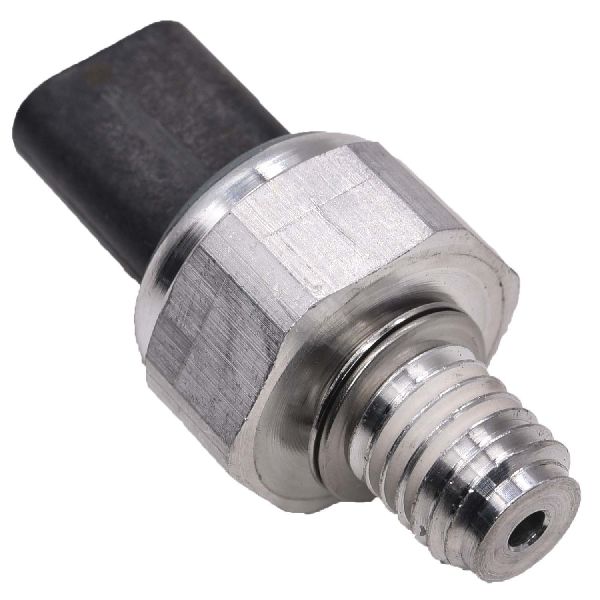
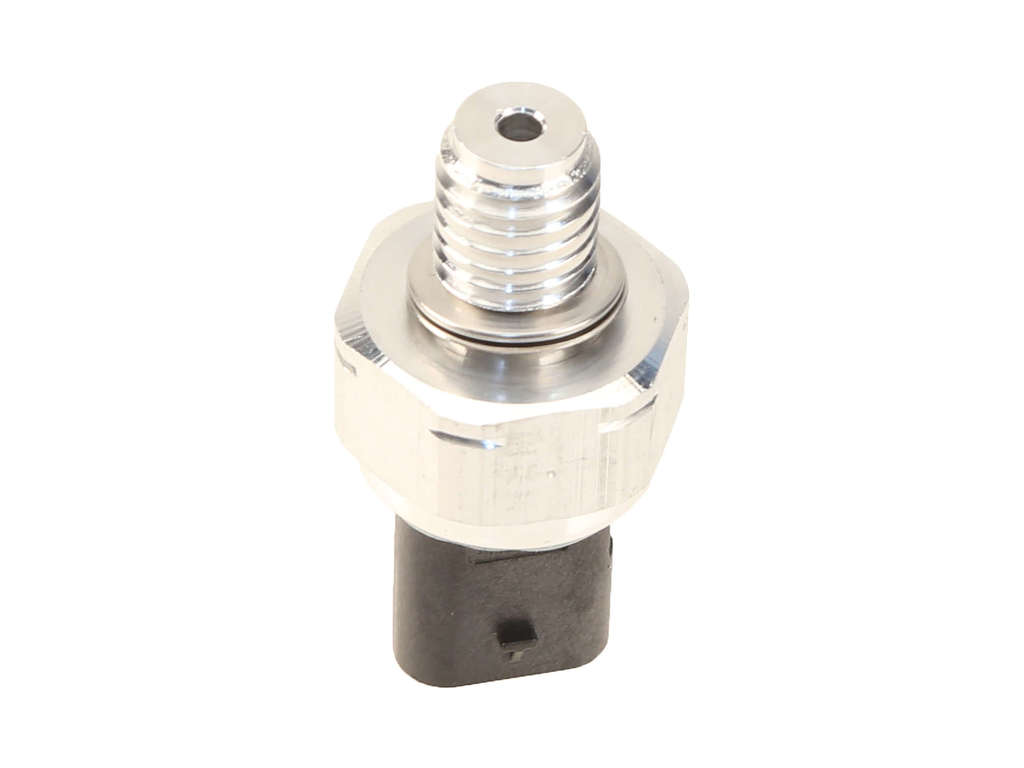
- The number one cause is a failed oil pressure sensor (ACDelco P/N: 12673134).
- The repair is difficult and expensive for a DIYer or a shop because the sensor is located under the intake manifold, requiring 2-3+ hours of labor.
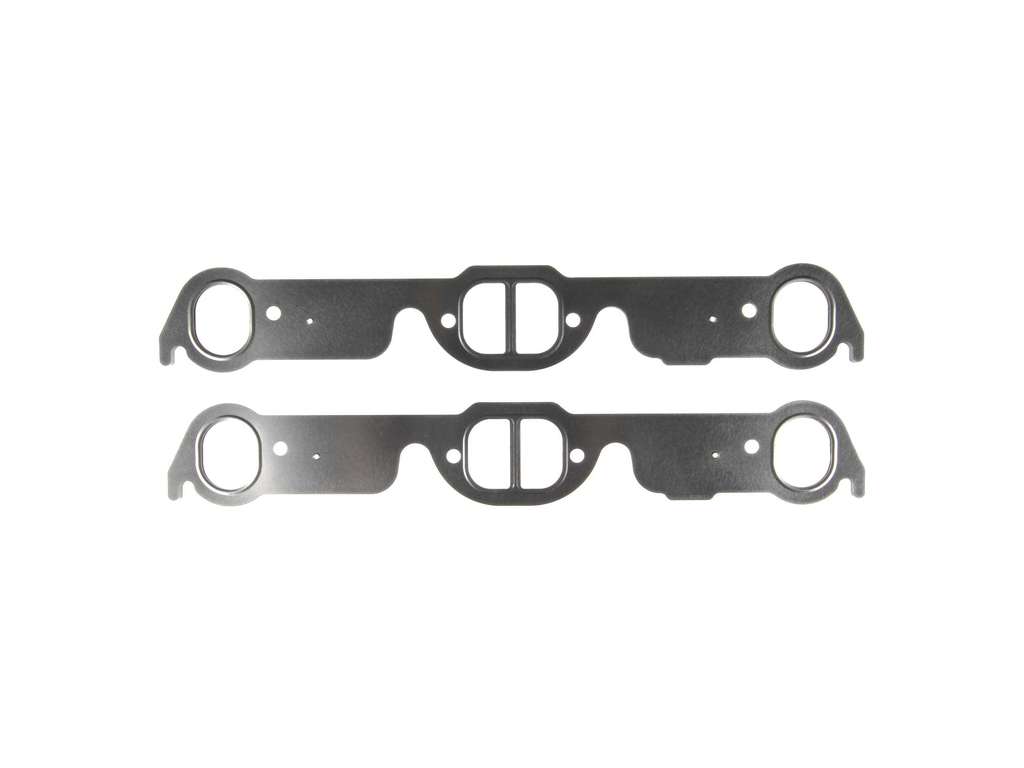
- Always replace the intake manifold gaskets (ACDelco P/N: 12657427) during the repair to prevent future vacuum leaks.
- Do not drive the vehicle extensively with this code, as you have no reliable way of knowing the true engine oil pressure.
What's Unique About the 2013-2016 Chevrolet Malibu
The defining challenge for the P0520 code on the 2.5L LCV engine in the 8th generation Malibu is the physical location of the oil pressure sensor. Unlike many engines where the sensor is easily accessible, GM placed it underneath the intake manifold. This design choice turns what would be a simple, 15-minute repair into a significant job that requires removing the alternator and the entire intake manifold just to gain access, drastically increasing labor time and cost.
Generation note: This guide covers the eighth-generation Chevrolet Malibu (2013-2015) and the 2016 Malibu Limited, which was a continuation of the eighth generation. The fully redesigned ninth-generation 2016 Malibu used a different 1.5L turbo base engine to which this specific guidance does not apply.
Symptoms You May Notice
- Check Engine Light illuminated
- Oil pressure warning light on the dashboard
- Oil pressure gauge on the instrument cluster reading zero, maximum, or an erratic value
- In some cases, the remote start feature may be disabled by the PCM as a safety precaution.
- In rare cases, engine noise if an actual low oil pressure condition exists concurrently
- Replacing the oil pump. P0520 is an electrical circuit code, not a mechanical pressure code. A failing oil pump would typically set performance codes like P06DD or P06DE.
- Confusing the Oil Pressure Sensor with the Oil Pressure Control Solenoid. The 2.5L engine has a separate oil pressure control solenoid for its variable-output oil pump. This part is related to code P06DE and is in a different location.
Most Likely Causes
- Failed Engine Oil Pressure Sensor 🔴 High Probability The sensor itself is a common failure point on many GM vehicles from this era. The internal electronics fail over time due to heat cycles, leading to incorrect voltage signals. Oil can also leak through the sensor body and contaminate the electrical connector.
How to confirm: After confirming correct oil level and verifying actual mechanical oil pressure is good with a manual gauge, the sensor is the presumed culprit. A scan tool may show a fixed, irrational pressure reading (e.g., 130 PSI) or zero volts/PSI regardless of engine RPM. Due to the sensor's location, direct electrical testing is impractical, making replacement the most common diagnostic step.
Typical fix: Replace the engine oil pressure sensor. Due to its location, the intake manifold gaskets must also be replaced.
Est. part cost: $60-$100 - Damaged Wiring or Connector ⚪ Low Probability The wiring harness is located in a high-heat area in the engine bay. Over time, the plastic connector can become brittle and break, or wires can become frayed or oil-soaked from a leaking sensor.
How to confirm: Visually inspect the sensor's electrical connector and the surrounding harness for signs of damage, corrosion, or oil contamination once the intake manifold is removed. Check for continuity on the signal, ground, and 5V reference wires.
Typical fix: Repair the damaged section of the wiring harness or replace the pigtail connector.
Est. part cost: $15-$40
Rare But Worth Checking
- Faulty Powertrain Control Module (PCM): → Shop Engine Control Module (ECM) This is extremely rare. The PCM should only be considered after a new OEM sensor and verified wiring have failed to resolve the code. A more likely scenario is oil contamination at the ECM connector from a leaking sensor.
- Low Engine Oil Level: While P0520 is an electrical code, extremely low oil levels can sometimes cause erratic readings that trigger a circuit fault before a performance code like P0521 or P0524 is set. Always check the dipstick first.
Diagnosis Steps
- Check the engine oil level and condition. Ensure the oil is full and not overdue for a change. The 2.5L LCV engine requires SAE 5W-20 dexos-approved oil.
- Connect an OBD-II scanner to confirm P0520 is the active code and check for other related codes like P0521, P0522, or P0523.
- Use the scanner to view live data for the Engine Oil Pressure sensor. A reading that is stuck high (e.g., 130 PSI) or at zero, regardless of RPM, strongly suggests a sensor or circuit fault.
- If possible, connect a mechanical oil pressure gauge in place of the sensor to verify the engine's actual oil pressure. If pressure is within spec, the problem is confirmed to be electrical. This step is often skipped due to the sensor's inaccessibility, proceeding directly to sensor replacement.
- To access the sensor, disconnect the battery.
- Remove the air intake ducting and throttle body.
- Remove the alternator to gain access to the intake manifold.
- Disconnect fuel lines and electrical connectors, then remove the intake manifold to expose the engine oil pressure sensor.
- While access is available, inspect the sensor's electrical connector and wiring for any signs of damage, corrosion, or oil contamination.
- Replace the oil pressure sensor and the single-use intake manifold gaskets.
- Reassemble all components in reverse order. Torque the intake manifold bolts to 10 Nm (89 lb-in) to prevent vacuum leaks, as per TSB #PIP5529B.
- Reconnect the battery, clear the trouble codes with the scanner, and perform a drive cycle to ensure the code does not return.
Parts You'll Likely Need
- Engine Oil Pressure Sensor
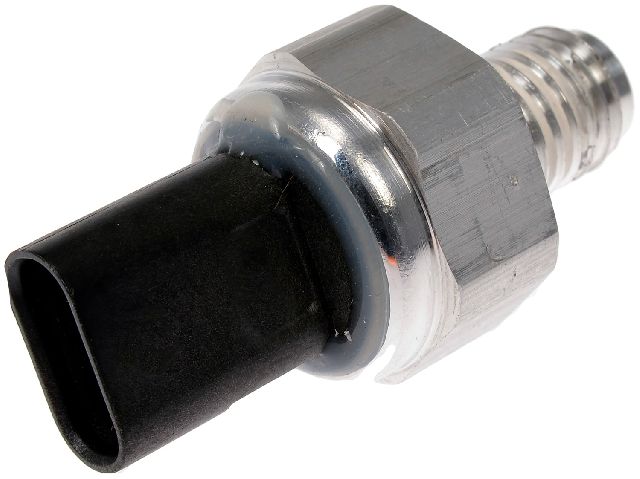
(OEM #12673134)— This sensor is the most common failure point for the P0520 code on this vehicle. The original part number (12621234) has been superseded by this updated part. Using a genuine ACDelco part is highly recommended to avoid premature failure and repeating the labor-intensive repair.
Trusted brands: ACDelco (GM Genuine)
OEM price range: $40-$60
Aftermarket price range: $25-$50 - Intake Manifold Gasket Set
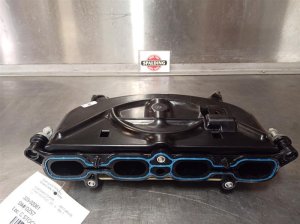
(OEM #12657427)— The intake manifold must be removed to access the sensor. These gaskets are single-use and must be replaced to prevent vacuum leaks after the repair.
Trusted brands: ACDelco, Fel-Pro
OEM price range: $20-$40
Aftermarket price range: $15-$30
Related Codes That Often Appear With This One
- P0521 — Indicates the sensor's reading is out of its expected performance range. It shares the same root cause (a bad sensor).
- P0522 — Indicates the sensor circuit voltage is too low. This is often set along with P0520 by the same failing sensor.
- P0523 — Indicates the sensor circuit voltage is too high. A sensor that is failing erratically can trigger this code as well.
Technical Service Bulletins (TSBs) & Recalls
- TSB #PIP5529B: While not for P0520 directly, this TSB is highly relevant to the repair. It addresses a known issue on the 2.5L LCV engine where intake manifold bolts loosen over time, causing vacuum leaks and various trouble codes. It instructs technicians to re-torque the bolts to 10 Nm (89 lb-in), a critical step during reassembly for the P0520 job.
Platform-Specific Known Issues
- Owner Experience: 2014 Malibu P0520: A user on Chevytalk.org with a 2014 Malibu 2.5L reported a P0520 code and an oil pressure gauge pegged at maximum. The confirmed fix was replacing the oil pressure sensor, which required removing the intake manifold. The user noted the difficulty of the job but confirmed it solved the problem.
- Repair Story: High Mileage Malibu: A Reddit user with a 2014 Malibu 2.5L with over 200,000 miles mentioned having to address various sensor and solenoid issues over the vehicle's life to keep it running, which is typical for this platform. While not mentioning P0520 specifically, it fits the pattern of sensor-related repairs being a common maintenance item.
Mechanic-Grade Diagnostic Values
- Sensor 5V Reference Voltage — expected: 4.8V to 5.2V DC with key on, engine off (measured between the 5V reference pin and ground at the sensor connector).. Failure: Voltage below 4.8V or above 5.2V points to a wiring issue, a short on the reference circuit, or a faulty ECM.
- Sensor Signal Voltage (Live Data) — expected: Approximately 1.3V - 2.0V at warm idle, rising towards 4.0V with increased engine RPM.. Failure: A static reading of 0V, 5V, or a value that does not change with RPM indicates a failed sensor or circuit fault.
- Sensor Low Reference (Ground) Circuit — expected: Less than 10 Ohms of resistance to a known good chassis ground. Less than 100mV when back-probing at the connector with the key on.. Failure: Resistance over 10 Ohms or voltage over 100mV indicates a poor ground connection, which can cause erratic readings.
Wiring & Ground Locations
- Engine Oil Pressure Sensor Connector — Under the intake manifold, next to the starter motor. It is a 3-wire, GT150-style connector.. This is the primary connection point. It contains the 5V reference, signal, and ground wires for the sensor. Its location makes it difficult to access for testing.
- G122 — At the rear of the engine on the cylinder head.. This is a primary engine ground. A poor connection here can cause floating or incorrect readings for multiple engine sensors, including the oil pressure sensor.
- G101 — Left front of the engine compartment.. This is a key engine compartment ground. Verifying it is clean and tight is a fundamental step in diagnosing any electrical fault on this vehicle.
- ECM Connectors (X1, X2, X3) — Engine Control Module, located in the engine bay.. A leaking oil pressure sensor can wick oil all the way up the wiring harness and contaminate the pins within the ECM connectors, causing P0520 and other seemingly unrelated codes.
Real Owner Repair Stories
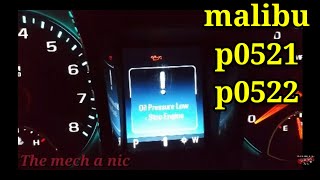
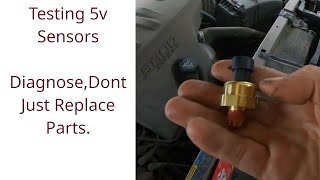
- YouTube channel 'The mech a nic' (2015 Chevrolet Malibu) — Check engine light on with 'Low Oil Pressure, Shut Off Engine' message on the dash. Scan tool showed codes P0521 and P0522. Live data showed 0 PSI and 0 volts from the oil pressure sensor.
❌ Tried (didn't work) Cleaning the electrical connector and plugging it back in did not fix the issue.
✅ What actually fixed it Replacing the engine oil pressure sensor. After replacement, the scan tool showed oil pressure fluctuating between 38-45 PSI and a signal voltage of 2.0V at idle, which resolved the codes.
OEM Part Supersession History
12621234→12673134— Updated part design for improved reliability and durability.
Diagnostic Flowchart
Other Known Issues on This Vehicle
Issues unrelated to this code that are worth knowing about as an owner of this generation:
- Excessive Oil Consumption 🔴 High — Common issue, particularly as mileage increases. Can be caused by piston ring issues. Must be addressed to prevent catalytic converter failure.
- Stretched Timing Chain 🔴 High — A known issue for the Ecotec engine family, often occurring between 80,000 and 150,000 miles. Presents as a rattling noise on startup and codes like P0016.
- Loose Intake Manifold Bolts 🟠 Medium → Shop Engine Intake Manifold — Common enough to warrant a TSB. Causes vacuum leaks leading to codes like P0171, P0106, and P0506. (Ref: TSB #PIP5529B)
- Failing Camshaft Position Actuator Solenoids (VVT) 🟠 Medium — A frequent failure item, causing codes like P0010, P0011, P0013, and P0014. Relatively easy and inexpensive to replace.
- Brake Vacuum Assist Failure (2014 models) 🔴 High — Specific to 2014 models with the 2.5L engine and auto stop/start. Can cause a loss of brake assist. (Ref: Recall #14V240000)
Used vs. New Parts: Buying Guide for This Vehicle
When a used part is the smart pick: For this specific repair, using a used part is almost never a smart choice for the sensor itself. The part is inexpensive and the labor to access it is very high (2.5-3.5 hours). The risk of a used sensor failing prematurely outweighs any cost savings. A used wiring harness pigtail from a junkyard is a reasonable choice if the original connector is physically broken during the repair.
Donor-vehicle mileage cap: roughly under 80000 miles for the part to have meaningful remaining life.
What to inspect on the donor part:
- For a pigtail connector: Ensure the plastic is not brittle or cracked.
- Check that the locking tab is intact and functional.
- Inspect the pins for any signs of corrosion (green or white powder).
- Ensure the attached wires are flexible and the insulation is not cracked or oil-soaked.
OEM-only on this vehicle (don't cheap out):
- Engine Oil Pressure Sensor. Due to the high labor cost of replacement, using a genuine ACDelco/GM part is strongly recommended by professional technicians and experienced owners. Aftermarket sensors for this application have a documented high failure rate, creating a significant risk of having to repeat the entire job.
Brands owners have reported issues with on this vehicle:
- Unbranded or 'white-box' sensors sold on online marketplaces. While inexpensive, their failure rate is unacceptably high for a part that requires removing the intake manifold to replace.
Real Owner Stories
Aggregated from forums and TSBs cited above. Mileages and costs reflect what owners reported in those sources.
2014 Chevrolet Malibu 2.5L
Symptoms: The oil pressure gauge was pegged at the maximum reading and the P0520 code was present.
What fixed it: Replacing the oil pressure sensor, which required the removal of the intake manifold.
Source hint: chevytalk.org - '2014 malibu p0520'
2014 Chevrolet Malibu 2.5L — ~210000 miles
Symptoms: Experienced various sensor and solenoid issues typical for the high-mileage platform.
What fixed it: Addressing sensor and solenoid maintenance items to keep the vehicle running.
Source hint: Reddit user with a 2014 Malibu 2.5L with over 200,000 miles
2013-2016 Chevrolet Malibu 2.5L LCV
Symptoms: The sensor was not registering a reading. Upon inspection, three wires going directly from the sensor to the computer were found to be separated/damaged.
What fixed it: Repairing the three wires that connect the sensor directly to the computer.
Source hint: youtube_comment, Señorial Equizio
Related OBD-II Codes
Frequently Asked Questions
Why is my 2013-2016 Malibu's remote start no longer working since the check engine light came on?
Does TSB #PIP5529B apply to the repair process for P0520 on my Malibu?
Can I just replace the sensor, or do I need other parts for my 2.5L LCV engine?
Is there a recall for the oil pressure sensor on the 2014 Malibu?
What kind of oil should I be using in my 2013-2016 Malibu 2.5L to avoid sensor-related issues?
Helpful Videos
Used OEM Parts in Stock
New Aftermarket Parts Available


The information in this article is provided for general reference and educational purposes only. Vehicle specifications, procedures, and part compatibility can vary by production date, trim level, and region. Always consult your vehicle's factory service manual and verify part numbers before purchasing or performing repairs. Safety-critical components such as airbags, seat belts, and braking systems should be installed by a qualified professional.
- Chevrolet Malibu:
- 🧭 Diagnostic Flowchart
- 🎬 Helpful Videos
- 🛍️ Shop This Part
- What's Unique About the 2013-2016 Chevrolet Malibu
- Symptoms You May Notice
- Most Likely Causes
- Rare But Worth Checking
- Diagnosis Steps
- Parts You'll Likely Need
- Related Codes That Often Appear With This One
- Technical Service Bulletins (TSBs) & Recalls
- Platform-Specific Known Issues
- Mechanic-Grade Diagnostic Values
- Wiring & Ground Locations
- Real Owner Repair Stories
- OEM Part Supersession History
- Other Known Issues on This Vehicle
- Used vs. New Parts: Buying Guide for This Vehicle
- Real Owner Stories
- 2014 Chevrolet Malibu 2.5L
- 2014 Chevrolet Malibu 2.5L — ~210000 miles
- 2013-2016 Chevrolet Malibu 2.5L LCV
- Related OBD-II Codes
- Frequently Asked Questions
- 🎟️ Get 5% Off