

P0520 on 2009-2017 Chevrolet Traverse: Engine Oil Pressure Sensor Circuit Causes and Fixes
On a 2009-2017 Traverse, code P0520 is almost always caused by a failed engine oil pressure sensor and its small, clogged filter screen. The most reliable fix is to replace both parts together. Expect to pay $50-$90 for OEM parts, with DIY difficulty being 3/5 due to tight access.
- P0520 on a Traverse almost always points to a faulty oil pressure sensor and its clogged filter screen.
- Before replacing any parts, you MUST verify the real engine oil pressure with a mechanical gauge to rule out a serious internal engine problem.
- Always replace both the sensor (ACDelco #12673134) and the screen (GM #12585328) at the same time to ensure a lasting repair.
- The repair requires removing the passenger-side front wheel and fender liner for access.
- Use only an OEM ACDelco oil filter and the correct full synthetic oil to prevent future pressure-related issues.
What's Unique About the 2009-2017 Chevrolet Traverse
The first-generation Traverse and its Lambda platform mates (GMC Acadia, Buick Enclave) with the 3.6L V6 are known for a specific trio of issues that trigger this code: a high failure rate for the oil pressure sensor, a tiny filter screen underneath the sensor that clogs with sludge, and sensitivity to non-OEM oil filters. Unlike many other GM applications where the sensor is buried, the Traverse platform uniquely places it on the front of the engine, near the oil filter housing. This makes the repair accessible by removing the passenger-side front wheel and wheel well liner 🎬 See this step-by-step sensor replacement walkthrough, a specific procedure owners need to be aware of.
Generation note: The 2009-2017 range covers the entire first generation of the Chevrolet Traverse. Models from 2009-2012 use the 3.6L LLT V6, while 2013-2017 models use the updated 3.6L LFX V6. However, the causes, diagnostic steps, and repair procedure for code P0520 are identical for both engines in this generation, as well as for its platform mates like the GMC Acadia and Buick Enclave.
Symptoms You May Notice
- Check Engine Light illuminated
- Oil pressure gauge on the instrument cluster reads zero, fluctuates wildly, or is stuck
- "Low Oil Pressure - Stop Engine" warning message may a 🎬 Watch: How to diagnose and fix this warning messageppear on the driver information center
- Engine may enter a reduced power or "limp mode"
- Unusual engine noises (knocking, clunking) in severe cases where actual low oil pressure exists.
- Replacing only the oil pressure sensor without also replacing the small filter screen underneath it. A clogged screen will cause the new sensor to read incorrectly and the code will return.
- Assuming the engine has a major mechanical problem without first verifying the actual oil pressure with a mechanical gauge. The sensor and its circuit are far more likely to fail than the oil pump.
Most Likely Causes
- Faulty Engine Oil Pressure Sensor (Switch) 🔴 High Probability The sensor is a known high-failure part on this engine platform. It can fail internally, sending incorrect voltage signals, or develop leaks where oil contaminates the electrical connector, corrupting the signal.
How to confirm: After confirming good mechanical oil pressure, inspect the sensor's electrical connector for any signs of engine oil. If oil is present, the sensor has failed. If not, it can still be faulty internally and is the most likely cause if wiring is intact.
Typical fix: Replace the engine oil pressure sensor. It is highly recommended to replace the filter screen underneath it at the same time. A special 1-1/16" deep socket is required for removal.
Est. part cost: $60-$120 - Clogged Oil Pressure Sensor Filter Screen 🔴 High Probability → Shop Engine Oil Pressure Sensor A small, thimble-shaped filter screen (GM Part #12585328) sits in the block 🎬 Watch: How to extract and replace the sensor screen just below the sensor. It is notorious for clogging with oil sludge, which prevents oil from reaching the sensor and causes a false reading. GM TSB PIP4786C specifically discusses this issue.
How to confirm: This can only be confirmed by removing the oil pressure sensor and inspecting the screen. If it is dark or appears blocked, it is clogged. It can be removed with a small pick or screw.
Typical fix: Remove the old screen with a pick and install a new one. This should always be done when the sensor is replaced to prevent the code from returning.
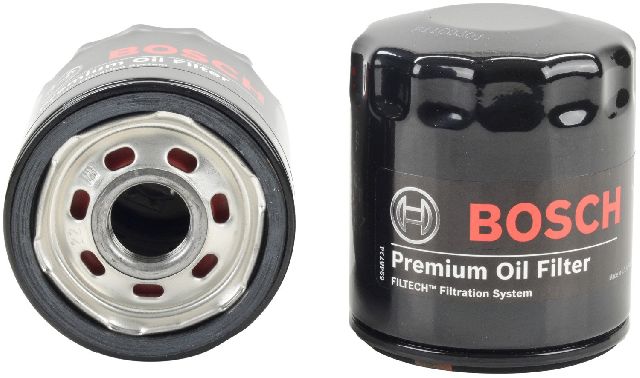
Est. part cost: $5-$15 - Incorrect or Clogged Oil Filter 🟡 Medium Probability → Shop Engine Oil Filter Adapter The 3.6L engine is sensitive to oil filter construction. Using aftermarket filters instead of the OEM ACDelco part (PF63E) is a known trigger for oil pressure-related codes, as documented in GM TSB 10-06-01-003B.
How to confirm: Check the brand of the currently installed oil filter. If it is not an OEM ACDelco filter, this is a likely contributing factor.
Typical fix: Perform an oil change using the correct viscosity full synthetic oil (5W-30) and install a new ACDelco oil filter.
Est. part cost: $10-$20 - Low Engine Oil Level or Degraded Oil ⚪ Low Probability
How to confirm: Check the engine oil dipstick for proper level and inspect the oil's condition. If it is very low, black, or sludgy, this can cause pressure issues.
Typical fix: Top up the oil to the correct level or perform a complete oil and filter change.
Est. part cost: $50-$80
Rare But Worth Checking
- Wiring Harness or Connector Damage: The wiring to the sensor can become damaged from heat, vibration, or chafing. A visual inspection of the harness leading to the sensor is worthwhile before replacing parts. Oil leaking from a failed sensor can also saturate and ruin the connector pigtail.
- Failing Oil Pump / Internal Engine Wear: While P0520 is typically an electrical fault, it can in rare cases be triggered by a legitimate low oil pressure condition from a failing oil pump or worn engine bearings. This is why verifying pressure with a mechanical gauge is a critical first step.
- Powertrain Control Module (PCM) Fault: → Shop Engine Control Module (ECM) In very rare instances, the PCM itself can fail, causing it to misinterpret the signal from a perfectly good sensor. This should only be considered after all other possibilities have been exhausted.
Diagnosis Steps
- Check the engine oil level and condition. Ensure it is full and not overly dirty or sludgy.
- Connect an OBD-II scanner and read the live data for the Engine Oil Pressure parameter. Note the reading with the engine off (should be 0 PSI) and at idle.
- CRITICAL STEP: Connect a mechanical oil pressure gauge to the engine. The port is the same one the sensor uses. This is the only way to confirm if you have a real oil pressure problem or just a sensor circuit fault.
- Compare the mechanical gauge reading to the scanner's reading. If mechanical pressure is normal (e.g., >20-25 PSI at hot idle) but the scanner reading is incorrect, the problem lies with the sensor or its circuit.
- If mechanical pressure is good, turn off the engine and inspect the oil pressure sensor's electrical connector for oil contamination. Oil inside the connector confirms the sensor has failed internally.
- If the connector is clean, test the sensor's wiring harness for a 5V reference signal, a good ground, and continuity on the signal wire back to the PCM. Wiggle the harness to check for intermittent breaks.
- If the wiring is confirmed to be good, the cause is a faulty oil pressure sensor and/or a clogged filter screen underneath it. Proceed with replacement of both parts.
Parts You'll Likely Need
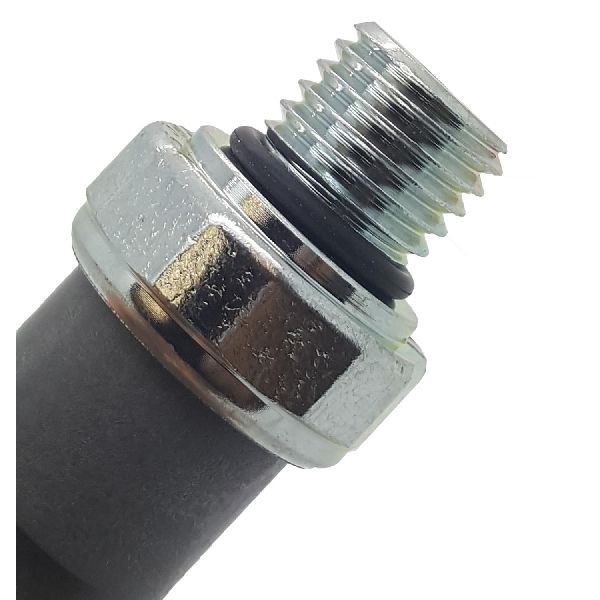
- Engine Oil Pressure Sensor
(OEM #12673134)— This is the most common part to fail and cause the P0520 code. The original part number (12621234, and earlier 12596951) was superseded by this improved version.
Trusted brands: ACDelco (OEM), Delphi, Standard Motor Products (SMP)
OEM price range: $60-$120
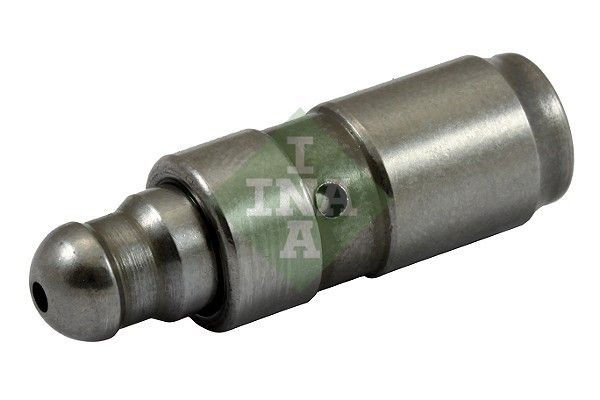
Aftermarket price range: $25-$70 - Valve Lifter Oil Filter (Sensor Screen)
(OEM #12585328)— This small screen is located under the sensor and is notorious for clogging with sludge, causing false readings. It is considered mandatory to replace this with the sensor, as noted in TSB PIP4786C.
Trusted brands: ACDelco (OEM), Dorman
OEM price range: $5-$15
Aftermarket price range: $3-$10 - Engine Oil Filter
(OEM #PF63E)— This engine is sensitive to oil filter design. Using a non-OEM filter can cause pressure regulation issues and trigger codes. Sticking with the ACDelco filter is a reliable preventative measure.
Trusted brands: ACDelco
OEM price range: $10-$15
Aftermarket price range: $5-$12
Related Codes That Often Appear With This One
- P0521 — Indicates 'Engine Oil Pressure Sensor/Switch Range/Performance'. This often appears with P0520 because a faulty sensor or clogged screen can provide readings that are out of the expected performance range.
- P0522 — Indicates 'Engine Oil Pressure Sensor/Switch Circuit Low'. This can be set if the sensor fails by shorting to ground or if a clogged screen causes a continuously low voltage signal.
- P0523 — Indicates 'Engine Oil Pressure Sensor/Switch Circuit High'. This can be set if the sensor fails with an internal open or if there is a break in the wiring.
Technical Service Bulletins (TSBs) & Recalls
- PIP4786C: Discusses the oil pressure sensor screen becoming clogged with debris, leading to low oil pressure readings and codes like P0521 and P0522, which are directly related to P0520.
- 10-06-01-003B: Warns that some aftermarket oil filters can cause oil pressure issues on the 3.6L V6 engine.
Platform-Specific Known Issues
- The oil pressure sensor on the Traverse 3.6L is located on the front of the engine block, just above and to the right of the oil filter housing. Access is gained by removing the passenger side front wheel and the plastic wheel well liner.
- A 1-1/16 inch deep well socket is required to remove and install the sensor.
- Due to the high failure rate of both the sensor and the screen, they should always be replaced as a pair to avoid a repeat failure.
Mechanic-Grade Diagnostic Values
- EOP Sensor 5V Reference Circuit Voltage — expected: 4.8V to 5.2V (Gray wire to ground, Key On Engine Off). Failure: Voltage outside this range indicates a wiring or ECM problem.
- Sensor Ground Circuit Voltage — expected: Near 0 Volts (at connector, Key On Engine Off). Failure: Voltage significantly above 0V indicates a poor ground connection.
- Sensor Signal Wire Voltage (Key On, Engine Off) — expected: ~0.5 Volts. Failure: A reading of 0V may indicate a short to ground; a reading near 5V may indicate an open circuit.
- Sensor Signal Wire Voltage (Engine Idling, Hot) — expected: 1.0 - 2.0 Volts. Failure: Voltage that is stuck, erratic, or does not correspond with a mechanical gauge reading indicates a faulty sensor.
- Mechanical Oil Pressure (Minimum @ Hot Idle) — expected: 103 kPa (15 psi). Failure: Pressure below this value indicates a mechanical lubrication issue, not a sensor fault.
Scan Tool Commands That Help
- GDS2 / Tech2: Engine Oil Pressure (EOP) Sensor Data Display — This is the primary live data PID to monitor. The pressure reading on the scan tool should be compared to a mechanical gauge. If the scan tool shows 0 PSI or a maxed-out value (like 130 PSI) while the mechanical gauge shows normal pressure, the fault is confirmed to be in the sensor or its electrical circuit.
Wiring & Ground Locations
- EOP Sensor Connector — On the front of the engine block, just above and to the right of the oil filter housing.. This 3-pin connector provides the 5V reference, ground, and signal return for the sensor. It is prone to oil contamination from a leaking sensor, which can corrupt the signal. The signal wire is typically Tan/White.
- ECM Connector X1, Pin 60 — The Engine Control Module (ECM) is located on the left side of the engine. Pin 60 on the X1 connector is for the Oil Pressure Sensor Signal.. This is the termination point for the sensor's signal wire (Tan/White). Checking for continuity between the sensor connector and this pin can identify a break in the signal wire.
- G103 — Located at the left rear of the engine compartment on the cowl, above the brake booster.. This is a major ground point for the BCM and other modules. While not the direct ground for the sensor itself, a poor connection here can cause various electrical issues and communication problems between modules that process the oil pressure data.
Real Owner Repair Stories
- Go-Parts.com Forum User Report (2011 GMC Acadia 3.6L (Lambda Platform sister vehicle)) — Check Engine Light with code P0520, oil pressure gauge reading zero.
❌ Tried (didn't work) Initially replaced only the oil pressure sensor.
✅ What actually fixed it The code returned shortly after replacing only the sensor. The problem was permanently resolved by removing the new sensor and also replacing the small, clogged filter screen (GM Part #12585328) located in the engine block port underneath the sensor.
OEM Part Supersession History
12596951→12621234— Initial design improvement by GM.12621234→12673134— Further revision for improved reliability and to consolidate parts across different GM engine families. This is the current recommended OEM replacement.
Model Year Variations Within This Range
- 2009-2012: These models use the 3.6L LLT V6 engine.
- 2013-2017: These models use the updated 3.6L LFX V6 engine. While internal components differ, the location of the oil pressure sensor, the failure pattern, and the repair procedure for code P0520 remain identical to the earlier LLT engine.
Diagnostic Flowchart
Other Known Issues on This Vehicle
Issues unrelated to this code that are worth knowing about as an owner of this generation:
- Premature Timing Chain Stretch 🔴 High — Very common, especially on 2009-2012 models. Often occurs between 70,000 and 120,000 miles. Can be triggered by extended oil change intervals. (Ref: Special Coverage Adjustment 11340C extended warranty to 10 years/120,000 miles for 2009 models.)
- 3-5-R Transmission Wave Plate Failure 🔴 High — Common in earlier models (approx. 2009-2012) with the 6T75 transmission. Can lead to loss of reverse and certain forward gears, requiring a transmission rebuild. (Ref: Multiple TSBs exist, but no universal recall was issued. It's a well-known failure point.)
- Leaking Water Pump 🟠 Medium — A frequent failure item, often leaking from the weep hole or shaft seal. Onset can be anywhere from 60,000 to 150,000+ miles.
- Power Steering Pump Failure / Hose Leaks 🟠 Medium — Common issue leading to whining noises, fluid leaks, and a loss of power steering assist, particularly at low speeds. (Ref: Special Coverage 14329 (NHTSA SB-10056459-3388) covered pump replacement for 2009-2011 models up to 10 years/150,000 miles.)
- Failed EVAP Purge Valve 🟡 Low — A very common but inexpensive and easy-to-fix issue. Typically causes a P0496 code and can lead to difficulty starting after refueling.
Used vs. New Parts: Buying Guide for This Vehicle
When a used part is the smart pick: For this specific repair, obtaining used parts is generally not recommended. The only exception might be sourcing an undamaged wiring harness pigtail from a junkyard if the original connector has been ruined by oil contamination or physical damage.
Donor-vehicle mileage cap: roughly under 100000 miles for the part to have meaningful remaining life.
What to inspect on the donor part:
- For a wiring pigtail, ensure the locking tab is intact.
- Check for brittle or cracked wire insulation.
- Verify the connector pins are clean, straight, and free of corrosion or oil residue.
OEM-only on this vehicle (don't cheap out):
- Engine Oil Pressure Sensor: Given the high failure rate and multiple part revisions, using a new OEM ACDelco sensor (Part #12673134) is the most reliable choice to prevent repeat failures.
- Valve Lifter Oil Filter (Screen): This part (#12585328) is inexpensive and critical. There is no reason to use a used one, which is likely to be clogged.
- Engine Oil Filter: Stick to the OEM ACDelco PF63E filter, as GM has issued service bulletins regarding oil pressure issues caused by some aftermarket filter designs.
Aftermarket brands forum-validated for this vehicle:
- Standard Motor Products (SMP): Generally considered a reliable OE-quality alternative for sensors if ACDelco is unavailable.
- Delphi: Often an OEM supplier to GM, their parts are typically equivalent to ACDelco.
Brands owners have reported issues with on this vehicle:
- Dorman: While widely available, some user reviews for the Dorman 926-040 sensor report premature failure, with some units failing within weeks or months of installation.
Real Owner Stories
Aggregated from forums and TSBs cited above. Mileages and costs reflect what owners reported in those sources.
2007 Saturn Outlook 3.6L V6
Symptoms: The owner reported a leaking oil pressure sending unit that required multiple replacements, highlighting a high failure rate for the part.
What fixed it: Replacing the leaking oil pressure sending unit.
Source hint: Reddit r/MechanicAdvice
2009-2017 Chevrolet Traverse 3.6L V6
Symptoms: Owners on community forums described the oil pressure gauge reading zero or fluctuating wildly, often accompanied by the 'Low Oil Pressure - Stop Engine' message.
What fixed it: Replacing both the sensor (ACDelco 12673134) and the filter screen (12585328) via the passenger wheel well.
Source hint: traverseforum.com
GMC Acadia 3.6L V6
Symptoms: Identical symptoms to the Traverse, including P0520 codes and erratic oil pressure readings.
What fixed it: Replacing the oil pressure sensor and the small filter screen located underneath it.
Source hint: acadiaforum.net
Related OBD-II Codes
Frequently Asked Questions
Which specific oil filter should I use for my 3.6L Traverse to avoid oil pressure codes?
Is there a TSB for the oil pressure sensor screen clogging on the Chevrolet Traverse?
What special tools do I need to replace the oil pressure sensor on my 2009-2017 Traverse?
Where is the oil pressure sensor located on the 3.6L LLT V6 engine?
Should I replace just the sensor or the screen as well?
Can a bad oil filter really cause a P0520 or 'Low Oil Pressure' warning?
Helpful Videos
We Have This Part in Stock


The information in this article is provided for general reference and educational purposes only. Vehicle specifications, procedures, and part compatibility can vary by production date, trim level, and region. Always consult your vehicle's factory service manual and verify part numbers before purchasing or performing repairs. Safety-critical components such as airbags, seat belts, and braking systems should be installed by a qualified professional.
- Chevrolet Traverse:
- 🧭 Diagnostic Flowchart
- 🎬 Helpful Videos
- 🛍️ Shop This Part
- What's Unique About the 2009-2017 Chevrolet Traverse
- Symptoms You May Notice
- Most Likely Causes
- Rare But Worth Checking
- Diagnosis Steps
- Parts You'll Likely Need
- Related Codes That Often Appear With This One
- Technical Service Bulletins (TSBs) & Recalls
- Platform-Specific Known Issues
- Mechanic-Grade Diagnostic Values
- Scan Tool Commands That Help
- Wiring & Ground Locations
- Real Owner Repair Stories
- OEM Part Supersession History
- Model Year Variations Within This Range
- Other Known Issues on This Vehicle
- Used vs. New Parts: Buying Guide for This Vehicle
- Real Owner Stories
- 2007 Saturn Outlook 3.6L V6
- 2009-2017 Chevrolet Traverse 3.6L V6
- GMC Acadia 3.6L V6
- Related OBD-II Codes
- Frequently Asked Questions
- 🎟️ Get 5% Off