

P0520 on 2013-2014 Dodge Dart: Engine Oil Pressure Sensor Circuit Causes and Fixes
On a 2013-2014 Dodge Dart, code P0520 almost always means the engine oil pressure sensor has failed. A Technical Service Bulletin (TSB 18-034-14 REV. A) was issued for this exact problem across many Chrysler vehicles, recommending replacement with a revised part. The sensor is an inexpensive part, typically costing $20-$40, and is a straightforward DIY repair for many owners, though access is tight.
- P0520 on a 2013-2014 Dart is almost certainly a bad oil pressure sensor.
- A manufacturer TSB (#18-034-14 REV. A) confirms this is a known issue with a specified fix: replacing the sensor with a revised part.
- The repair is a common DIY task, but requires a special 1-1/16" deep socket for oil pressure sensors.
- Always verify the oil level is correct first, but do not mistake this electrical code for a definite mechanical oil pressure problem without further diagnosis.
- This same sensor failure is common across many other Chrysler/Jeep/Dodge vehicles that use the 2.4L Tigershark engine.
What's Unique About the 2013-2014 Dodge DART
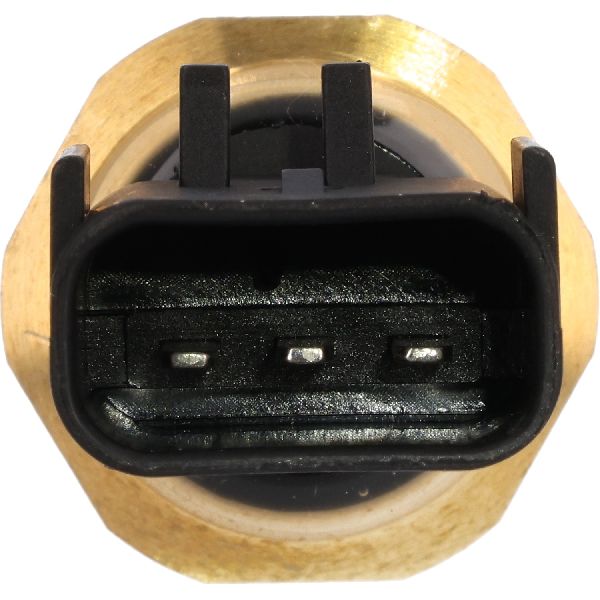
The Dodge Dart is particularly known for this issue, so much so that Chrysler issued a broad Technical Service Bulletin (TSB #18-034-14 REV. A) for the 2013-2014 models, among many others. The bulletin acknowledges a high failure rate for the original sensor and instructs technicians to replace it with a newly designed, more reliable part. This official documentation makes diagnosing P0520 on a Dart much more direct than on other vehicles, as it strongly points to a known faulty component rather than a random electrical issue. One common failure mode is the sensor leaking oil internally through the 3-pin electrical connector, causing a short or incorrect reading.
Diagnostic Flowchart
Tap your situation to follow the diagnostic path that matches what you're seeing on this vehicle.
Symptoms You May Notice
- Check Engine Light is on
- Oil pressure warning light may illuminate on the dashboard
- In some cases, the vehicle may enter 'limp mode,' limiting engine RPM and speed.
- Oil pressure gauge (if equipped) may show an erratic, unusually high, or zero reading.
- Replacing the oil pump. The P0520 code is an electrical circuit fault, not a mechanical pressure fault (like P0521 or P0524). Replacing the pump will not fix a bad sensor or wiring.
Most Likely Causes
- Faulty Engine Oil Pressure Sensor 🔴 High Probability The original factory sensor is a known weak point, as confirmed by manufacturer TSB #18-034-14 REV. A, which calls for replacement with a revised part. The sensor is prone to internal failure, often leaking oil through the connector pins, which disrupts the electrical signal.
How to confirm: Given the TSB and widespread owner reports, replacing the sensor is often the first and final diagnostic step. A simple test is to unplug the sensor; if the oil pressure reading on a scan tool changes (e.g., from a stuck high value to zero), the sensor is faulty. The sensor is located on the passenger side of the engine block, below the water pump.
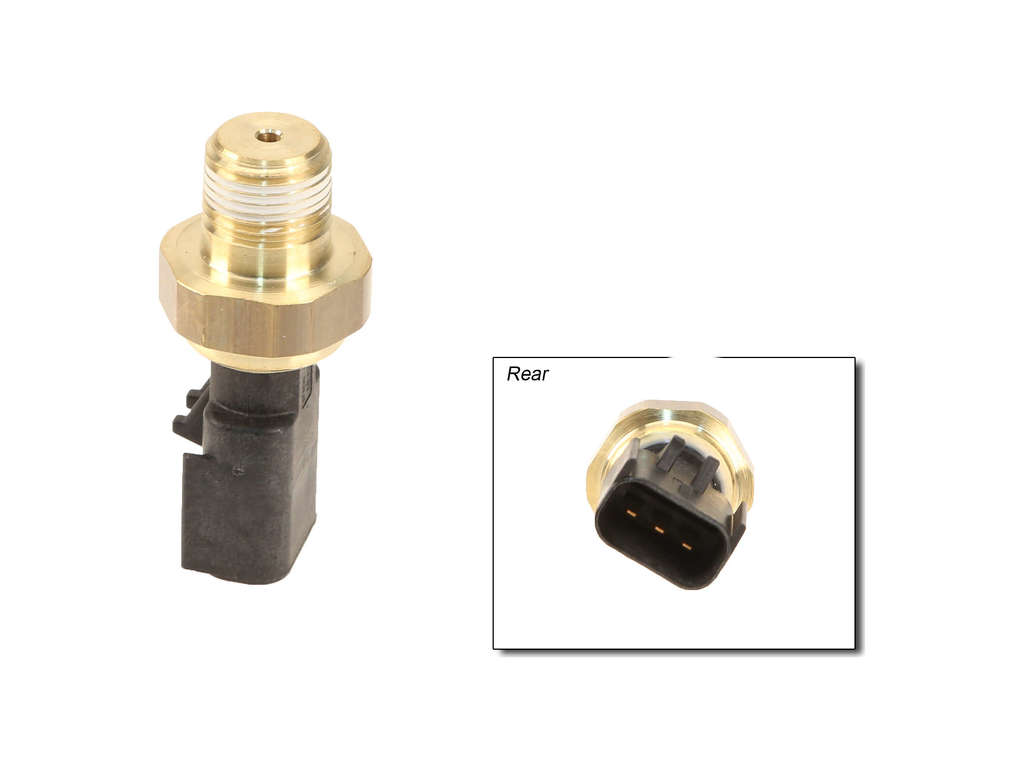
Typical fix: Replace the old oil pressure sensor with the revised OEM part (Mopar #68224292AA). This requires removing the plastic engine cover and air intake tube for access from the top. A special 1-1/16" deep socket designed for oil pressure sensors is recommended.
Est. part cost: $20-$50 - Damaged Wiring or Connector 🟡 Medium Probability The sensor is located on the engine block where it's exposed to heat and vibration, which can make wiring brittle or cause the connector to become loose or contaminated with oil. The connector has a red safety lock tab that must be disengaged before unplugging.
How to confirm: Visually inspect the wiring harness and 3-pin connector leading to the oil pressure sensor for any signs of cracking, melting, corrosion, or oil saturation. Wiggle the connector with the engine running to see if it affects the oil pressure gauge or check engine light.
Typical fix: Repair the damaged section of wiring or clean/replace the connector pigtail. Cleaning the connector area with a small brush can help ensure a good connection.
Est. part cost: $10-$30 - Low Engine Oil Level or Incorrect Oil ⚪ Low Probability This is not specific to the Dart but is a universal first check. Using the wrong oil viscosity (e.g., not SAE 0W-20 for the 2.0L/2.4L) or having a very low oil level can cause pressure fluctuations that may, in some cases, trigger a circuit code.
How to confirm: Check the engine oil level using the dipstick and verify the condition of the oil. Ensure the correct oil type was used during the last oil change.
Typical fix: Top off or change the engine oil with the manufacturer-specified grade and a quality filter.
Est. part cost: $30-$70
Rare But Worth Checking
- Faulty Powertrain Control Module (PCM): → Shop Engine Control Module (ECM) This is extremely rare. The PCM should only be considered a potential cause after the sensor, wiring, and oil system have been thoroughly checked and confirmed to be in good working order.
Diagnosis Steps
- First, check the engine oil level and condition with the dipstick. Ensure it is full and the oil is the correct viscosity (SAE 0W-20).
- Scan the vehicle for trouble codes to confirm P0520 is active. Note any other codes present, especially P0522 (low voltage).
- Consult TSB #18-034-14 REV. A. This bulletin applies to Darts with 2.0L or 2.4L engines built on or before March 12, 2014. If applicable, the recommended procedure is to replace the oil pressure sensor.
- Visually inspect the oil pressure sensor's electrical connector and wiring. The sensor is on the passenger side of the engine, below the water pump. Look for oil leaks from the sensor itself, which can contaminate the connector, as well as any frayed or damaged wires.
- With a scan tool displaying live data, observe the oil pressure reading with the key on, engine off. A reading stuck at a high value (e.g., 100+ PSI) points to a failed sensor. Unplugging the sensor should cause the reading to drop to zero, confirming the wiring is likely intact and the sensor is bad.
- If the sensor has been replaced and the code returns, use a multimeter to test the 3-wire circuit. Check for 5V reference voltage from the PCM, test for continuity to ground, and ensure the signal wire is not shorted or open.
- If a mechanical gauge is available, test the actual engine oil pressure to definitively rule out a mechanical issue. Compare the readings to the manufacturer's specifications.
- If the sensor, wiring, and actual oil pressure are all good, the final possibility is a fault within the PCM, which requires professional diagnosis.
Parts You'll Likely Need
- Engine Oil Pressure Sensor
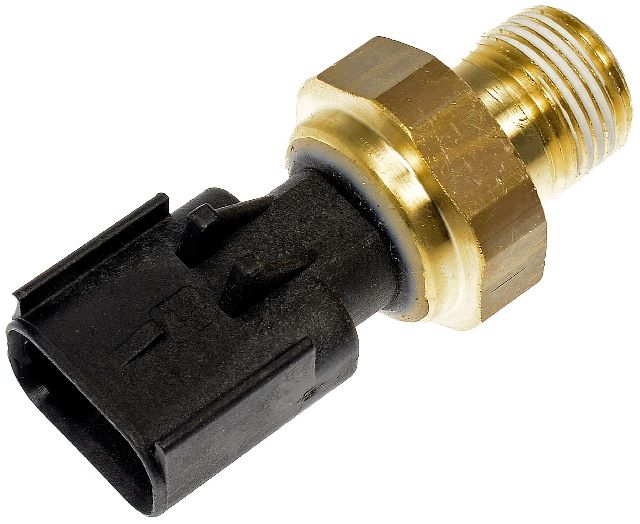
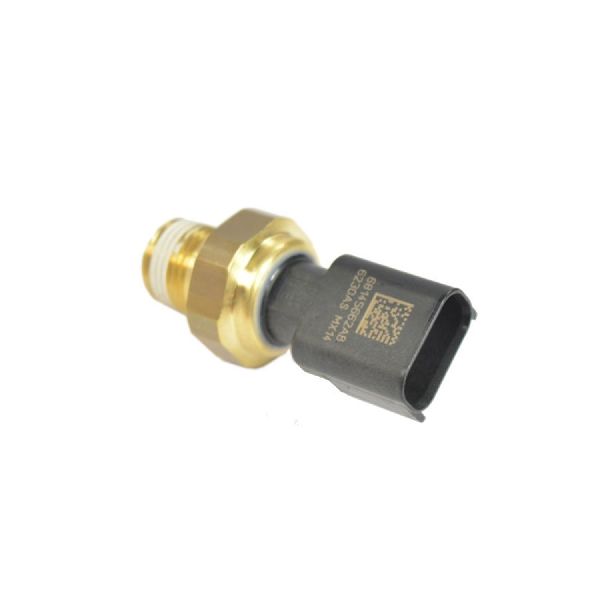
(OEM #68224292AA)— This is the revised part number specified in TSB #18-034-14 REV. A to fix the P0520 code. The original, failure-prone sensors have part numbers like 05149062AA, 05149062AB, or 68145662AA. Note that some Mopar parts sites show 68224292AA being superseded by 68224292AB, AC, and AD, but these appear to be for a different part (catalytic converter) and may be a catalog error.
Trusted brands: Mopar
OEM price range: $25-$50
Aftermarket price range: $15-$35 - Oil Pressure Sensor Socket — A special tool is required for removal and installation due to the sensor's shape and tight location. A 1-1/16 inch (or sometimes 27mm) deep socket designed specifically for oil pressure switches is necessary. A standard deep socket will not fit over the plastic connector housing.
Trusted brands: Lisle, OEMTOOLS
OEM price range: $10-$20
Aftermarket price range: $10-$20
Related Codes That Often Appear With This One
- U0140 — An owner complaint filed with the NHTSA (ODI #11281059) showed P0520 appearing with U0140 (Lost Communication With Body Control Module). This could indicate a broader electrical issue or may be an unrelated secondary fault. 🎬 Watch: How to fix common electrical ground issues on Darts.
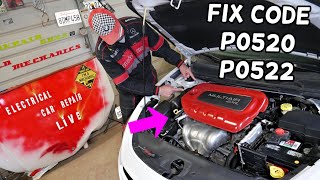
- P0522 — This code for 'Engine Oil Pressure Sensor/Switch Circuit Low' is a more specific version of P0520 and is often caused by the same faulty sensor, 🎬 See how to diagnose and fix P0520 and P0522 codes. which may be shorted internally.
Technical Service Bulletins (TSBs) & Recalls
- Bulletin #18-034-14 REV. A: "P0520- Engine Oil Pressure Sensor Circuit. This bulletin involves replacing the oil pressure sensor with a revised part." This TSB is extensive and applies to many 2013-2014 Chrysler, Dodge, Jeep, and Ram vehicles with various engines, including the 2.0L and 2.4L in the Dart, built on or before March 12, 2014.
Platform-Specific Known Issues
- A significant number of 2013-2014 Dodge Darts with the 2.0L and 2.4L engines were equipped with faulty oil pressure sensors from the factory. This was officially addressed by Chrysler with TSB #18-034-14 REV. A, which involves replacing the original sensor with an updated part to resolve the P0520 code.
- Access to the sensor is tight. It is located on the passenger side of the engine block, below the water pump and behind the accessory belt. While it can be replaced from above after removing the air intake ducting, many owners report scraped knuckles and difficulty reaching it. Some find access from below to be easier, especially with the vehicle on ramps.
Mechanic-Grade Diagnostic Values
- Oil Pressure Sensor - 5V Reference Wire Voltage — expected: ~5.0 Volts DC with key on, engine off.. Failure: 0V or significantly less than 5V indicates an open/short in the reference circuit or a PCM fault.
- Oil Pressure Sensor - Signal Wire Voltage (KOEO) — expected: ~4.5 Volts DC with key on, engine off.. Failure: Voltage stuck low or at 0V may indicate a shorted sensor or wiring issue.
- Oil Pressure Sensor - Circuit Integrity Test — expected: Jumping the sensor ground and signal circuits at the connector should cause the voltage on a scan tool to drop from ~4.5V to less than 0.5V.. Failure: If the voltage does not drop, it indicates an open or high resistance in the signal or ground wire back to the PCM.
Scan Tool Commands That Help
- wiTECH or equivalent professional scanner: Live Data - Engine Oil Pressure — Used to monitor the voltage or pressure value being reported by the sensor in real-time. This helps determine if the sensor reading is stuck, erratic, or responding to changes, which is a primary step before physical inspection.
Wiring & Ground Locations
- Oil Pressure Sensor Connector (C119) — On the passenger side of the engine block, below the water pump.. This 3-pin connector is the primary interface for the sensor. The pins can become contaminated with oil from an internally leaking sensor, causing incorrect readings. The wire colors are typically: Pin 1 - Violet/Yellow (5V Reference), Pin 2 - Violet/Gray (Signal), Pin 3 - Brown/White (Sensor Ground).
- G104 — On the left (driver's) front side of the engine.. This is a primary engine ground point. Poor contact here due to corrosion can cause a variety of sensor and module communication errors, including P0520.
- G108 (2.0L Engine) — On the right (passenger) side of the engine compartment, on the front wheel well cover.. This is a key chassis ground point. On some models, engine harness grounds tie in near here. Corrosion or looseness can cause floating ground issues, affecting sensor readings.
- Main Chassis Ground Strap — Connects the engine to the chassis on the passenger side, near the strut tower. Often a flat, braided ribbon cable.. This is the main ground path for the entire engine. It is known to become corroded and brittle, leading to widespread, intermittent electrical problems that can mimic sensor failures.
Real Owner Repair Stories
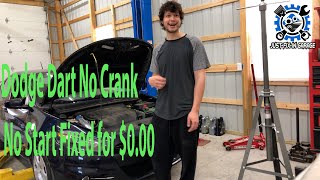
- YouTube channel 'ThatCalebGuy' (2013 Dodge Dart with 2.0L engine) — No crank, no start condition. The owner had driven to a store, and the car would not restart.
❌ Tried (didn't work) Replacing the starter motor.
✅ What actually fixed it The issue was a bad ground connection between the chassis and the engine block. The fix was to locate the ground points under the driver's side of the car (one 10mm bolt to the frame, one 13mm bolt to the engine), remove them, clean all contact surfaces and the hardware with a wire brush to remove corrosion, and reassemble. The car started immediately after the grounds were cleaned.
OEM Part Supersession History
05149062AA, 68145662AA→68224292AA— The original sensors were known to have a high failure rate, leading to the P0520 code. TSB 18-034-14 REV. A recommends replacing them with the revised part.
Heads up: The Pass 2 note about 68224292AA being superseded by part numbers for a catalytic converter (e.g., 68224292AB/AC/AD) appears to be a parts catalog error. Technicians should verify the part application with a VIN at the dealer to ensure they receive the correct oil pressure sensor and not a mis-cataloged part.
Helpful Videos
We Have This Part in Stock


The information in this article is provided for general reference and educational purposes only. Vehicle specifications, procedures, and part compatibility can vary by production date, trim level, and region. Always consult your vehicle's factory service manual and verify part numbers before purchasing or performing repairs. Safety-critical components such as airbags, seat belts, and braking systems should be installed by a qualified professional.
- Dodge DART:
- 🧭 Diagnostic Flowchart
- 🎬 Helpful Videos
- 🛍️ Shop This Part
- What's Unique About the 2013-2014 Dodge DART
- Symptoms You May Notice
- Most Likely Causes
- Rare But Worth Checking
- Diagnosis Steps
- Parts You'll Likely Need
- Related Codes That Often Appear With This One
- Technical Service Bulletins (TSBs) & Recalls
- Platform-Specific Known Issues
- Mechanic-Grade Diagnostic Values
- Scan Tool Commands That Help
- Wiring & Ground Locations
- Real Owner Repair Stories
- OEM Part Supersession History
- 🎟️ Get 5% Off