

P0520 on 2013-2014 Dodge Viper: Engine Oil Pressure Sensor Circuit Fault
For a 2013-2014 Viper, code P0520 is almost always caused by a faulty original engine oil pressure sensor. A manufacturer Technical Service Bulletin (TSB 18-034-14 REV. A) recommends replacing it with a revised part (Mopar #5149064AB). This is the most likely fix, and driving is not recommended until the actual oil pressure is verified.
- The P0520 code on a 2013-2014 Viper is almost certainly a faulty oil pressure sensor.
- A specific Technical Service Bulletin (18-034-14 REV. A) exists for this exact problem, making diagnosis straightforward.
- Do not drive the vehicle until you can confirm it's a sensor issue and not a real low oil pressure problem, as engine damage could occur.
- The fix is to replace the sensor with the revised OEM part (Mopar #5149064AB). Aftermarket sensors are not recommended for this repair based on owner experiences.
- The job is DIY-friendly for those with basic tools, but requires a specific deep 1-1/16" or 27mm socket for oil pressure sensors to access the part in a tight space.
What's Unique About the 2013-2014 Dodge VIPER
The 2013-2014 Dodge Viper (and many other Chrysler vehicles from this era) is known for this specific issue. The manufacturer issued Technical Service Bulletin #18-034-14 REV. A, which directly addresses the P0520 code by recommending the replacement of the original oil pressure sensor with a revised, more reliable part. This makes a faulty sensor the most probable cause, more so than on other vehicles without such a specific documented history. The TSB applies to a wide range of Chrysler, Dodge, Jeep, and Ram vehicles built on or before March 12, 2014.
Diagnostic Flowchart
Tap your situation to follow the diagnostic path that matches what you're seeing on this vehicle.
Symptoms You May Notice
- Check Engine Light is on.
- Oil pressure gauge reads zero, is maxed out (e.g., 99+ PSI), or fluctuates erratically.
- Red oil pressure warning light may be on or flickering.
- In some cases, the engine may enter a reduced-power "limp mode".
- Gauge shows pressure (e.g., 25-50 PSI) with the key in the 'on' position but the engine not running.
- Oil leaking from the body of the sensor itself.
- Replacing the oil pump. The P0520 code specifically points to a circuit fault. While a failing oil pump can cause low pressure, it's not the primary cause for this specific code, especially given the known TSB for the sensor itself.
- Using a cheap aftermarket sensor. Forum users across multiple Chrysler platforms report that non-OEM sensors for this specific issue can fail quickly or not work correctly out of the box, leading to the code returning.
Most Likely Causes
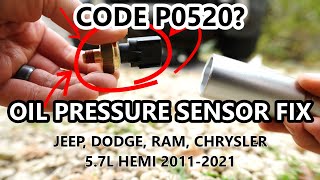
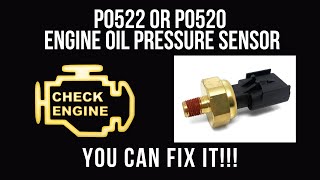
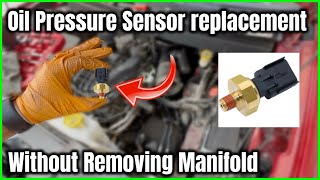
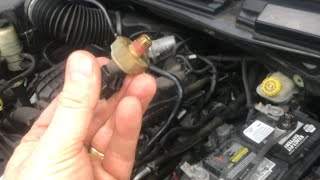
- Faulty Engine Oil Pressure Sensor 🔴 High Probability A known issue documented by Chrysler/Dodge in TSB 18-034-14 REV. A, which calls for replacing the original sensor with a revised part. This problem is common across many FCA vehicles from the period, including Hemi and Pentastar engines. 🎬 Watch: Replacing the sensor on a 5.7L Hemi engine.
How to confirm: After verifying the oil level is correct, this is the most likely cause. If the oil pressure gauge reads incorrectly (e.g., shows pressure when the engine is off, is pegged at 99+ PSI, or reads zero with no engine noise), the sensor is the prime suspect.
Typical fix: Replace the engine oil pressure sensor with the updated OEM Mopar part #5149064AB. Some owners on forums report that aftermarket sensors can be unreliable and recommend sticking with the OEM part to avoid repeat failures.
Est. part cost: $40-$65 - Wiring or Connector Issue 🟡 Medium Probability The sensor's location on the engine block exposes the wiring and connector to heat and vibration. On the Viper, it is located on the front, passenger side of the engine block, near the alternator, which is a tight spot. Oil leaking from the sensor can also contaminate the connector.
How to confirm: Visually inspect the sensor's electrical connector and nearby wiring for signs of oil contamination, corrosion, or physical damage. Wiggling the connector with the engine running may cause the gauge reading to change, indicating a poor connection. Check for a secure click when reconnecting the harness.
Typical fix: Clean the connector terminals with electrical contact cleaner or repair/replace the damaged section of the wiring harness pigtail.
Est. part cost: $5-$50 - Low Engine Oil Level or Pressure ⚪ Low Probability
How to confirm: First, check the engine oil dipstick to ensure the level is correct. To be certain, verify the actual engine oil pressure using a mechanical pressure gauge screwed into the sensor's port. If the mechanical gauge shows low pressure, there is a serious internal engine problem that must be addressed immediately.
Typical fix: Top off or change the engine oil. If pressure is mechanically confirmed to be low, this indicates a more severe issue like a failing oil pump or clogged oil passages, requiring professional diagnosis.
Est. part cost: $0-$1000+
Rare But Worth Checking
- Faulty Powertrain Control Module (PCM): → Shop Engine Control Module (ECM) This is extremely rare. All other possibilities, especially the sensor and wiring, should be exhaustively ruled out before considering the PCM as the cause.
Diagnosis Steps
- Check the engine oil level and condition using the dipstick. Top off if low.
- Use an OBD-II scanner to confirm P0520 is the primary code. Note any other codes.
- Observe the oil pressure gauge with the key on but the engine off. If it shows any pressure, the sensor is almost certainly faulty.
- If possible, connect a mechanical oil pressure gauge in place of the sensor to verify the engine's actual oil pressure. This is the most definitive step to rule out a real pressure problem.
- Locate the sensor on the front, passenger side of the engine block, near the bottom of the alternator. Access is tight.
- Inspect the sensor's electrical connector and wiring for damage, corrosion, or oil saturation. Ensure the locking tab on the connector is intact.
- If the wiring appears intact and mechanical pressure is good, replace the engine oil pressure sensor. A deep 1-1/16" or 27mm socket is required for removal and installation.
- Clear the trouble code with the scan tool. If you don't have one, disconnecting the battery's negative terminal for 10-15 minutes may also clear the code.
- Perform a test drive to ensure the code does not return and the oil pressure gauge reads normally.
Parts You'll Likely Need
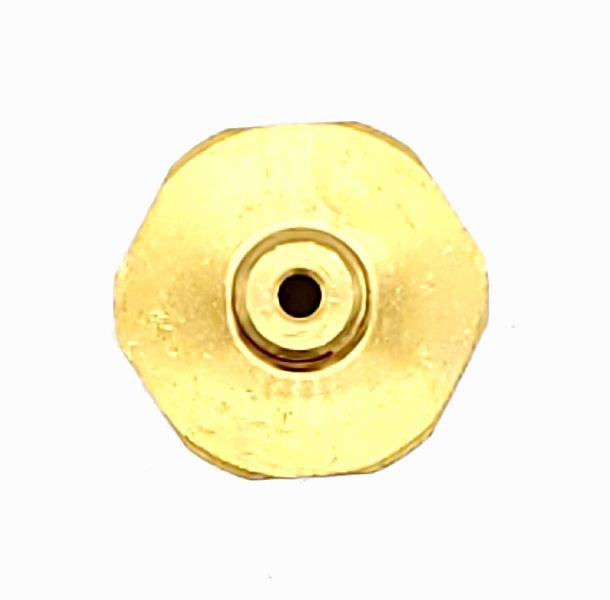
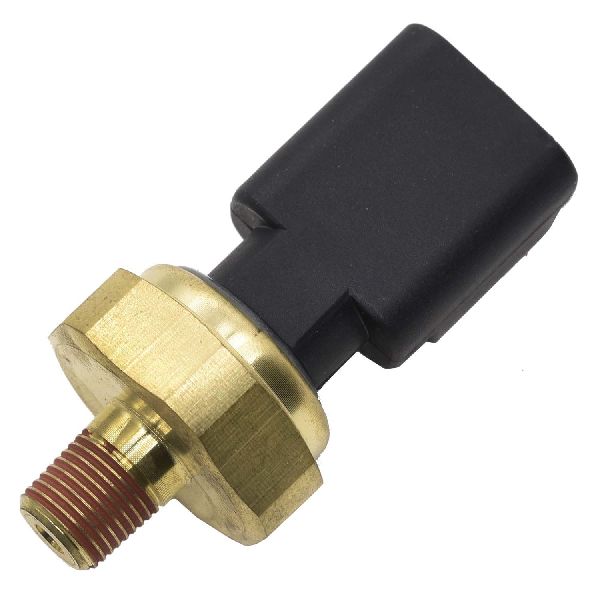
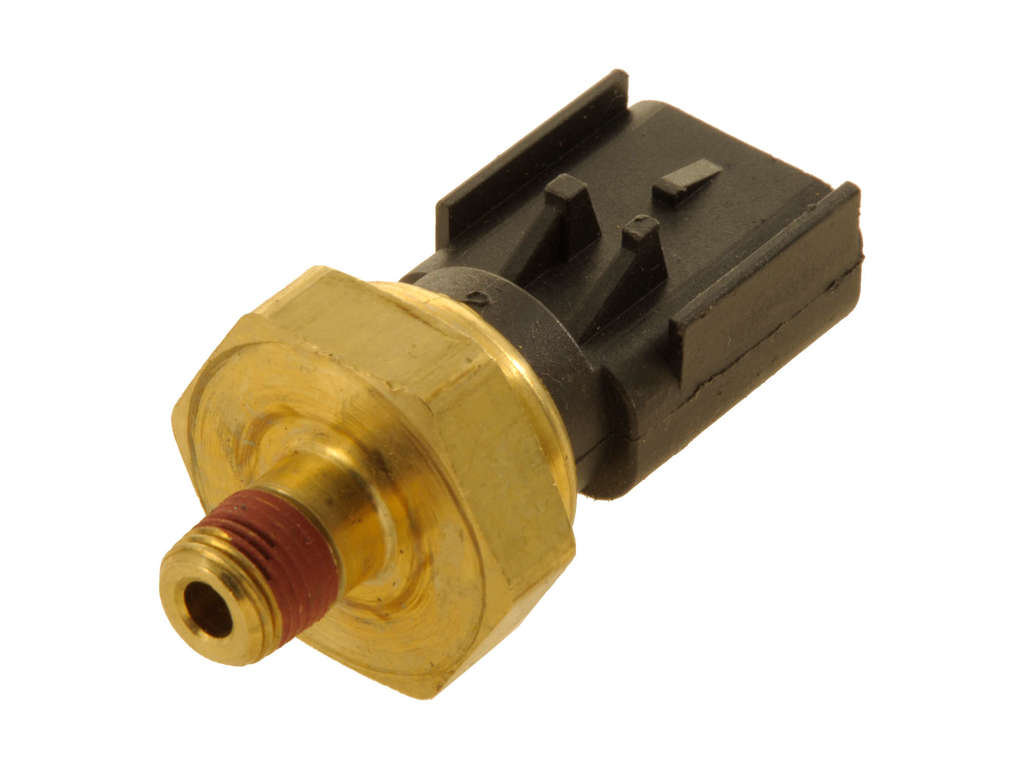
- Engine Oil Pressure Sensor
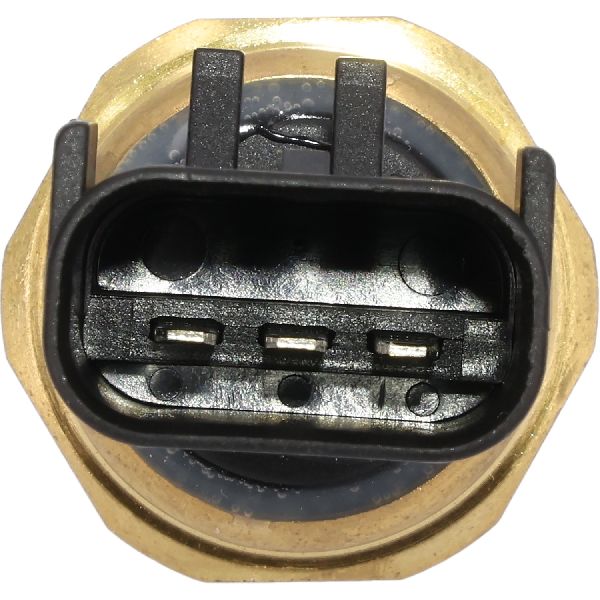
(OEM #5149064AB)— This is the most common failure point for the P0520 code on this vehicle, as documented by TSB 18-034-14 REV. A. The original part is prone to failure, and this is the revised version. It supersedes previous part numbers 5149064AA, 5093908AA, and 56028807AB.
Trusted brands: Mopar (recommended), Standard Motor Products (SMP), Holstein
OEM price range: $40-$65
Aftermarket price range: $25-$50 - Oil Pressure Sensor Socket — A special tool is required to remove the sensor due to its shape and tight location. A 1-1/16 inch (or 27mm) deep socket designed for oil pressure switches is necessary. A standard deep socket may not fit 🎬 Watch: A mechanic's guide to replacing the sensor and switch. over the sensor body.
Trusted brands: Lisle, OEMTOOLS
OEM price range: $10-$20
Aftermarket price range: $10-$20
Technical Service Bulletins (TSBs) & Recalls
- 18-034-14 REV. A: Addresses DTC P0520 - Engine Oil Pressure Sensor Circuit. The bulletin involves replacing the original oil pressure sensor with a revised part to fix the issue. It applies to a wide range of 2013-2014 Chrysler/Dodge/Jeep/Ram vehicles, including the Viper with the 8.4L engine.
Platform-Specific Known Issues
- TSB 18-034-14 REV. A: A Technical Service Bulletin was issued by Chrysler for the 2013-2014 Viper (and many other models) specifically for the P0520 code. The bulletin confirms that a faulty sensor is a known problem and instructs technicians to replace it with a revised part, #5149064AB.
- Sensor Location and Access: On the 8.4L V10, the sensor is located on the front, passenger side of the engine block, near and sometimes partially obscured by the alternator. Access is tight and is typically done from underneath the vehicle. While the alternator does not need to be removed, it makes the job more difficult.
Mechanic-Grade Diagnostic Values
- Sensor Reference Voltage — expected: ~5 V. Failure: Voltage significantly lower than 5V indicates a power supply issue from the PCM or wiring.
- Sensor Signal Voltage (Key On, Engine Off) — expected: ~0.5 V. Failure: Voltage significantly different from 0.5V with the engine off points to a faulty sensor or wiring short.
- Sensor Signal Voltage (Jumpered) — expected: < 0.5 V. Failure: If voltage does not drop below 0.5V when the signal and ground circuits are jumpered, it indicates an open or short in the signal wire.
- Sensor Installation Torque — expected: 12 ft-lb. Failure: Over-tightening can damage the sensor, while under-tightening can cause leaks.
Scan Tool Commands That Help
- wiTECH (or equivalent professional scanner): Monitor Engine Oil Pressure Sensor voltage — Used with the ignition on but engine off to check the baseline voltage from the sensor. A reading around 4.5V is expected, which should drop to less than 0.5V when the signal and ground circuits are jumpered for testing.
Wiring & Ground Locations
- Oil Pressure Sensor Connector — On the front, passenger side of the 8.4L engine block, near the alternator.. This is a 3-wire connector. The circuit consists of a 5-volt reference from the PCM, a sensor ground circuit, and the signal return circuit to the PCM. Oil leaking from a failed sensor can contaminate this connector, causing a bad connection and triggering the P0520 code.
- Engine Ground Strap — Various points on the engine block to the chassis. A specific ground strap for the 2013-2017 Viper is Mopar part #5035144AA.. A poor engine ground can cause floating voltages and erratic readings on various sensors, including the oil pressure sensor. While not a primary cause, it should be checked if the sensor and its direct wiring are confirmed to be good.
Real Owner Repair Stories
- RamForum.com user (2014 Ram 5.7 Hemi) — Check Engine Light with P0520. Oil pressure would occasionally read low (12-15 psi) on startup, then jump to normal after a restart.
❌ Tried (didn't work) An aftermarket BWD branded sensor was installed but the code returned.
✅ What actually fixed it Replacing the aftermarket sensor with an OEM Mopar sensor (part #05149062AB for that application) resolved the issue. The user noted it was a 5-minute job from the top using a 27mm deep socket and a 3-inch extension.
OEM Part Supersession History
56028807AB, 5093908AA, 5149064AA→5149064AB— The original sensors were prone to internal failure, leading to incorrect readings and leaks. The TSB (18-034-14 REV. A) mandated replacement with the revised part to improve reliability.
Heads up: While older part numbers will physically fit, they are known to be failure-prone. Aftermarket sensors are reported by users to be 'hit or miss' and may not resolve the code. The original sensor may have rounded corners on its body, while the updated part has square corners, sometimes requiring a different specialty socket.
Helpful Videos
We Have This Part in Stock


The information in this article is provided for general reference and educational purposes only. Vehicle specifications, procedures, and part compatibility can vary by production date, trim level, and region. Always consult your vehicle's factory service manual and verify part numbers before purchasing or performing repairs. Safety-critical components such as airbags, seat belts, and braking systems should be installed by a qualified professional.
- Dodge VIPER:
- 🧭 Diagnostic Flowchart
- 🎬 Helpful Videos
- 🛍️ Shop This Part
- What's Unique About the 2013-2014 Dodge VIPER
- Symptoms You May Notice
- Most Likely Causes
- Rare But Worth Checking
- Diagnosis Steps
- Parts You'll Likely Need
- Technical Service Bulletins (TSBs) & Recalls
- Platform-Specific Known Issues
- Mechanic-Grade Diagnostic Values
- Scan Tool Commands That Help
- Wiring & Ground Locations
- Real Owner Repair Stories
- OEM Part Supersession History
- 🎟️ Get 5% Off