

P0520 on 2008-2019 Ford Taurus 3.5L: Engine Oil Pressure Sensor Circuit Causes and Fixes
On the 3.5L Taurus, code P0520 is almost always a faulty engine oil pressure sensor (switch). The sensor is known to fail and leak oil internally into its electrical connector, causing a bad signal. It is located directly above the hot exhaust, and when it fails, it can also leak externally, creating a fire risk. Replacing the sensor is a cheap and easy DIY fix, costing around $20-$50 for the part and requiring a 21mm deep socket.
- P0520 on a 3.5L Taurus almost always means the oil pressure sensor has failed.
- Immediately check for oil leaking from the sensor onto the exhaust, as this is a fire hazard.
- Never assume the engine has low oil pressure without first verifying with a mechanical gauge. The sensor is the most likely culprit.
- This is a beginner-friendly DIY repair that can be done with basic tools in under an hour, potentially saving you from an expensive and incorrect diagnosis.
What's Unique About the 2008-2019 Ford Taurus
For the Ford Taurus with the 3.5L V6, the oil pressure sensor is a very common failure point. What makes this platform unique is the sensor's location directly above the hot catalytic converter. When the sensor fails, it frequently leaks oil through its body or into the electrical connector. Oil dripping onto the extremely hot exhaust causes a distinct burning oil smell and poses a serious fire hazard. This specific risk makes addressing a P0520 code, especially if accompanied by a leak, more urgent than on many other vehicles.
Generation note: This guide covers the fifth generation (2008-2009) and sixth generation (2010-2019) Ford Taurus. The 3.5L V6 engine was available in both, and the oil pressure sensor location and failure mode are consistent across these model years and other Ford models with the same engine.
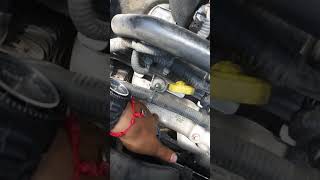
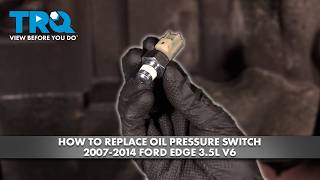
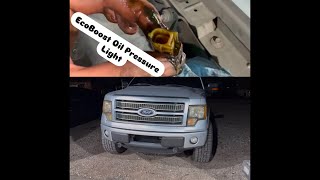
🎬 Watch: Replacing the oil pressure switch on a Ford 3.5L V6Symptoms You May Notice
- Check Engine Light is on
- Red oil pressure warning light is on or flickering, especially at idle
- Oil pressure gauge (if equipped) reads zero, is maxed out, or moves erratically
- Burning oil smell from the engine bay due to the sensor leaking onto the exhaust
- Visible oil leak from the sensor itself, or oil found inside the electrical connector
- Engine knocking or ticking noises (in the rare case of actual low oil pressure)
- Replacing the oil pump without first verifying the actual mechanical oil pressure with a gauge. A bad sensor is far more common than a bad oil pump for this code.
- Assuming the engine is failing just because the oil light is on. Always perform the basic checks first, as a faulty sensor is the most likely cause for this specific code.
- Replacing the sensor but not the oil-contaminated pigtail connector. If oil has wicked into the wiring, the new sensor may still send a faulty signal.
Most Likely Causes
- Faulty Engine Oil Pressure Sensor/Switch 🔴 High Probability The sensor is a known common failure item across many Ford models. It can fail electrically, sending bad data, or fail physically by developing a leak through the sensor body and into the electrical connector, which is the most common failure mode.
How to confirm: Visually inspect the sensor for oil leaking from its plastic connector. Unplug the connector and check for oil inside; if oil is present, the sensor is bad and must be replaced. If no leak is visible, the most definitive test is to confirm good mechanical oil pressure with a gauge, which isolates the problem to the sensor or its wiring.
Typical fix: Replace the engine oil pressure sensor. This is a simple unbolt-and-replace procedure using a 21mm or 13/16" deep socket.
Est. part cost: $20-$60 - Damaged Wiring or Electrical Connector 🟡 Medium Probability The sensor's proximity to the hot catalytic converter can make the wiring and connector brittle over time, leading to cracks, corrosion, or loose pins. Oil leaking from the sensor can also saturate and ruin the connector and harness.
How to confirm: Visually inspect the wiring harness leading to the sensor for any signs of melting, chafing, or oil contamination. Wiggle the connector with the engine running (if safe) to see if the oil light flickers. Use a multimeter to check for continuity and voltage at the connector.
Typical fix: Repair the damaged section of wiring with new wire, solder, and heat shrink. If the connector is damaged or full of oil, replace it with a new pigtail connector (e.g., Motorcraft WPT-1376).
Est. part cost: $15-$40 - Incorrect Engine Oil Level or Type ⚪ Low Probability Not a platform-specific issue, but a universal first check. Using the wrong viscosity oil (e.g., too thick or too thin) or having a very low oil level can affect pressure readings. The 3.5L Duratec specifies SAE 5W-20 oil.
How to confirm: Check the engine oil level using the dipstick. Verify that the oil in the engine matches the viscosity recommended by Ford in the owner's manual (5W-20).
Typical fix: Top up the oil to the correct level or perform an oil change with the correct grade of oil (SAE 5W-20) and a quality filter.
Est. part cost: $40-$80
Rare But Worth Checking
- Clogged Oil Passages or Failing Oil Pump: This would be a true mechanical low-pressure situation. A mechanical oil pressure test is required to rule this out. Ford's minimum specification for the 3.5L is often cited as 30 PSI at 1500 RPM when hot. If the pressure is actually low, the engine requires immediate professional service.
- Faulty Powertrain Control Module (PCM): → Shop Engine Control Module (ECM) This is extremely unlikely. The PCM should only be considered as the cause after every other possibility, including wiring, has been thoroughly tested and ruled out.
Diagnosis Steps
- Check the engine oil level and condition. Ensure it is full, the correct viscosity (5W-20), and not milky or contaminated.
- Scan for other diagnostic trouble codes. Note any other codes present, but focus on P0520 if it's the only one.
- Visually inspect the oil pressure sensor, located on the front of the engine, above the oil filter and catalytic converter. Unplug its electrical connector and look for signs of oil leaking from the sensor body or, more importantly, inside the connector itself. If oil is in the connector, the sensor is bad.
- Inspect the wiring harness for any signs of heat damage, melting, corrosion, or oil saturation from a leaking sensor.
- CRITICAL: Perform a mechanical oil pressure test. Remove the sensor, thread in a mechanical pressure gauge, start the engine, and compare the readings to the manufacturer's specifications (a common spec is a minimum of 30 PSI at 1500 RPM when hot). If the pressure is good, the engine is healthy, and the fault lies with the sensor or wiring.
- If mechanical pressure is good, test the electrical circuit. With the key on, check for a 5-volt reference and a good ground at the connector.
- If the circuit tests good and mechanical pressure is normal, the oil pressure sensor is faulty and should be replaced.
Parts You'll Likely Need
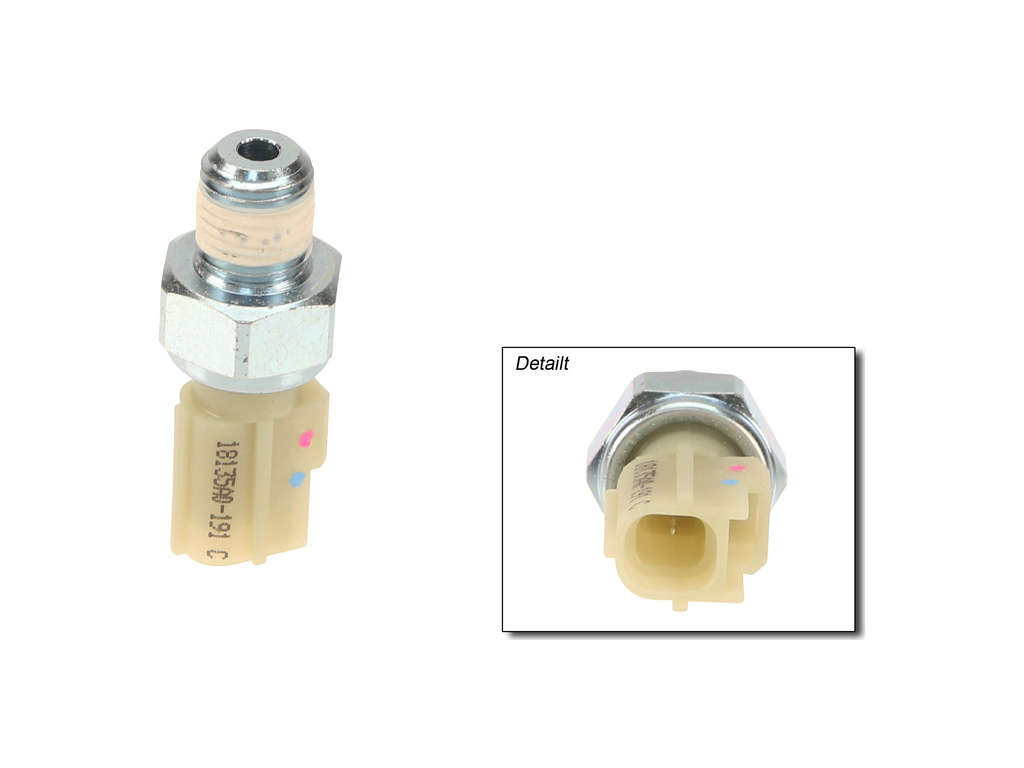
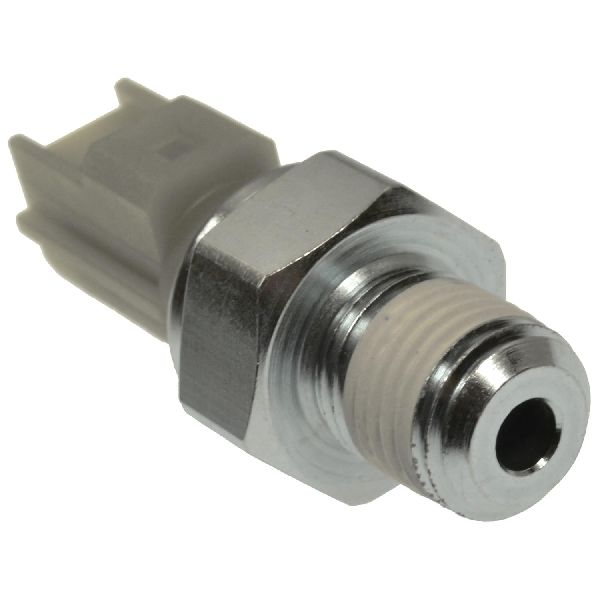
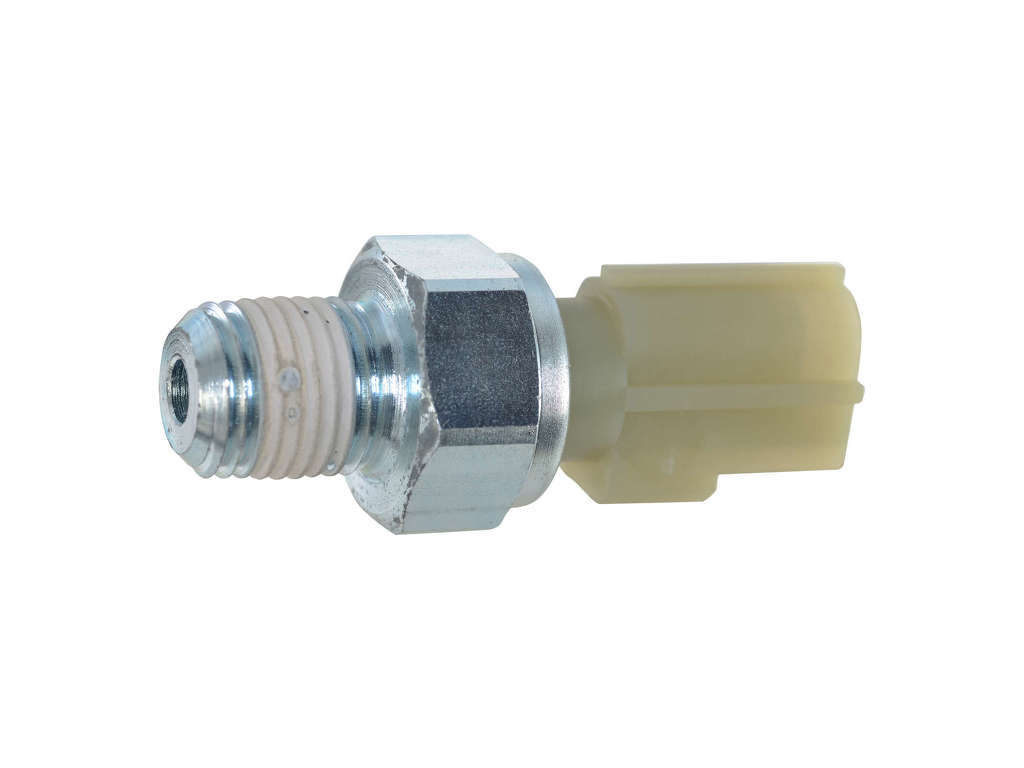
- Engine Oil Pressure Sensor / Switch
(OEM #SW-8368 (replaces 6U5Z-9278-D, SW-6357))— This is the most common failure point for code P0520 on this vehicle. The sensor fails both electrically and by leaking oil. Sticking with the OEM Motorcraft part is highly recommended for reliability.
Trusted brands: Motorcraft, Bosch, Standard Motor Products (SMP)
OEM price range: $30-$50
Aftermarket price range: $15-$35 - Oil Pressure Sensor Connector Pigtail
(OEM #WPT-1376)— Often required if the original connector is damaged by heat or saturated with oil from the leaking sensor. A clean connection is critical for the new sensor to work properly.
Trusted brands: Motorcraft, Dorman, Standard Motor Products (SMP)
OEM price range: $30-$45
Aftermarket price range: $15-$30
Related Codes That Often Appear With This One
- P0521 — Indicates 'Engine Oil Pressure Sensor/Switch Range/Performance'. This code can appear with P0520 if the sensor's readings are erratic but not completely failed.
- P0522 — Indicates 'Engine Oil Pressure Sensor/Switch Circuit Low'. This points to the signal voltage being consistently too low, often due to a short or a failed sensor.
- P0523 — Indicates 'Engine Oil Pressure Sensor/Switch Circuit High'. This points to the signal voltage being consistently too high, often due to an open circuit or a failed sensor.
Platform-Specific Known Issues
- A known issue is the sensor leaking oil directly onto the hot catalytic converter, which creates a fire hazard and a strong burning oil smell. This makes replacement more urgent.
- Owner experiences confirm that oil leaking *into* the electrical connector is a primary failure mode, causing the erratic signal that triggers P0520. Simply replacing the sensor without cleaning or replacing the oil-soaked connector may not fix the issue.
Mechanic-Grade Diagnostic Values
- Mechanical Oil Pressure (Hot Engine) — expected: Minimum 30 PSI at 1500 RPM. Failure: Pressure below 30 PSI at 1500 RPM indicates a mechanical engine issue (e.g., oil pump, clogged passages), not a sensor fault.
- Sensor Connector Voltage (Key On, Engine Off) — expected: One pin should have a 5-volt reference, one should be a signal return ground, and the third is the signal wire.. Failure: Absence of 5V reference or a bad ground points to a wiring or PCM issue, not a sensor failure.
Scan Tool Commands That Help
- Ford IDS (Integrated Diagnostic System): Live Data Monitoring (PID) — The official Ford dealer tool can monitor the oil pressure PID (Parameter ID) in real-time to see the exact voltage the PCM is receiving from the sensor. This helps differentiate between a sensor sending erratic data versus a complete circuit failure.
- Ford IDS (Integrated Diagnostic System): Self-Test — Running a PCM self-test can help identify related circuit fault codes that may not be immediately obvious, providing a more complete diagnostic picture.
Wiring & Ground Locations
- Oil Pressure Sensor Connector — On the front of the engine block, typically positioned just above the oil filter housing and near the hot catalytic converter.. This connector is the primary point of failure. It is prone to heat damage from the exhaust and oil contamination from a leaking sensor, which can cause the P0520 code even with a new sensor.
- Shared Sensor Ground — The oil pressure sensor shares its ground circuit with other analog sensors like the MAP sensor and fuel rail pressure sensor.. A fault in the shared ground circuit could potentially cause issues with multiple sensors simultaneously. If other sensor codes are present, checking the shared ground circuit is a critical diagnostic step.
Real Owner Repair Stories
- Ford Edge Forum user (2013 Ford Edge 3.5L) — Intermittent low oil pressure light, but only at idle or in stop-and-go traffic, and primarily when the A/C was running. The car drove perfectly otherwise.
❌ Tried (didn't work) Multiple engine flushes., Replacing the oil pressure sensor.
✅ What actually fixed it The root cause was traced back to a previous internal water pump failure that had been repaired. The mechanic who finally diagnosed it concluded that engine bearings were likely failing due to contamination from the prior water pump issue, causing a true low oil pressure condition at idle that the new sensor was correctly detecting. The engine would eventually need replacement. - Ford F150 Forum user (2011 F-150 3.5L) — Check engine light with codes P0017 and P0018 (camshaft position correlation) immediately after a timing chain replacement.
❌ Tried (didn't work) Initial timing chain installation.
✅ What actually fixed it The user discovered the timing chain was off by one tooth. After re-doing the timing job correctly, the codes were resolved. This is a critical edge case because incorrect mechanical timing can affect VCT operation, which is dependent on oil pressure, potentially leading to oil pressure-related codes if the system is struggling to compensate.
OEM Part Supersession History
6U5Z-9278-D, SW-6357→SW-8368— Standard part evolution and consolidation for multiple vehicle applications.
Heads up: While multiple aftermarket versions exist, owner forums and reviews frequently recommend using the OEM Motorcraft part (SW-8368) to avoid premature failure or incorrect readings.
Model Year Variations Within This Range
- 2008-2012: The standard 3.5L Duratec V6 produced 263 hp.
- 2013-2019: Following a 2013 model year facelift, the standard 3.5L V6 was updated to produce 288 hp. The exterior and interior were also restyled. However, the oil pressure sensor design and location remained consistent.
Diagnostic Flowchart
Other Known Issues on This Vehicle
Issues unrelated to this code that are worth knowing about as an owner of this generation:
- Internal Water Pump Failure 🔴 High — Very common, often occurs between 80,000 and 150,000 miles. Failure is considered inevitable by many owners. Repair costs are high ($2,000-$4,000) due to the pump being driven by the timing chain.
- Electronic Throttle Body (ETB) Failure 🔴 High — Very common across the 3.5L/3.7L engine family. The issue was so widespread Ford issued Customer Satisfaction Program 13N03 and 16B23, extending the warranty (now expired for most). (Ref: TSB 16-0139, Customer Satisfaction Program 13N03, 16B23)
- Power Transfer Unit (PTU) Failure (AWD Models) 🟠 Medium — Common on All-Wheel Drive models, typically after 70,000 miles. The failure is caused by the 'lifetime' gear oil breaking down from excessive heat from the nearby exhaust. (Ref: TSB for 2013-2014 models regarding a missing vent hose.)
- Stretched Timing Chain 🔴 High — Often occurs at high mileage (>120,000 miles) or as a direct consequence of a failing internal water pump leaking coolant into the oil, which degrades the chain guides.
Used vs. New Parts: Buying Guide for This Vehicle
When a used part is the smart pick: For this specific repair, sourcing used parts is generally not recommended. The primary failing part, the oil pressure sensor, is inexpensive to buy new and is a known high-failure item, making a used one a poor gamble. A used wiring pigtail could be considered if a new one is unavailable, but it must be inspected carefully.
Donor-vehicle mileage cap: roughly under 50000 miles for the part to have meaningful remaining life.
What to inspect on the donor part:
- For a wiring pigtail: check for any signs of oil saturation, which can wick up the copper strands and cause resistance issues.
- Inspect the plastic for brittleness, cracking, or heat damage from the nearby catalytic converter.
- Ensure the locking tab on the connector is intact and functional.
OEM-only on this vehicle (don't cheap out):
- Engine Oil Pressure Sensor
Aftermarket brands forum-validated for this vehicle:
- Bosch
- Standard Motor Products (SMP)
Brands owners have reported issues with on this vehicle:
- Unbranded, no-name sensors from online marketplaces are frequently cited as failing quickly or being dead-on-arrival.
Real Owner Stories
Aggregated from forums and TSBs cited above. Mileages and costs reflect what owners reported in those sources.
2010-2019 Ford Taurus SHO 3.5L EcoBoost — 47000 miles
Symptoms: Owners discussing PTU (Power Transfer Unit) failures on AWD models at various mileages.
What fixed it: Preventative fluid changes for the PTU.
Source hint: Reddit r/TaurusSHO - 'When did your PTU fail?'
2018 Ford Taurus 3.5L Duratec — ~115000 miles
Symptoms: Discussion regarding the internally-driven water pump design where failure causes coolant to leak into the oil, potentially leading to catastrophic engine damage.
What fixed it: Replacement of the internal water pump (driven by the timing chain).
Source hint: BobIsTheOilGuy.com - 'Ford 3.5L Duratec Water Pump Design Concern'
2008-2019 Ford Taurus 3.5L V6 — ~100000 miles
Symptoms: Erratic signal triggering P0520; oil found leaking into the electrical connector of the sensor.
What fixed it: Replacing the engine oil pressure sensor and cleaning or replacing the oil-soaked electrical connector.
Source hint: Vehicle-specific issues section / Owner experiences
Related OBD-II Codes
Frequently Asked Questions
I have a burning oil smell coming from my 2013 Ford Taurus engine bay. Could this be related to code P0520?
My oil light is flickering at idle, but the car sounds fine. Is there a specific part I should check first?
What is the correct oil type for my 2008-2019 Taurus 3.5L to avoid pressure codes?
Is there a specific electrical connector I should buy if mine is oil-soaked?
What is the minimum oil pressure my Taurus should have during a mechanical test?
Are there any extended warranties for the throttle body issues mentioned in the context?
Helpful Videos
We Have This Part in Stock


The information in this article is provided for general reference and educational purposes only. Vehicle specifications, procedures, and part compatibility can vary by production date, trim level, and region. Always consult your vehicle's factory service manual and verify part numbers before purchasing or performing repairs. Safety-critical components such as airbags, seat belts, and braking systems should be installed by a qualified professional.
- Ford Taurus:
- 🧭 Diagnostic Flowchart
- 🎬 Helpful Videos
- 🛍️ Shop This Part
- What's Unique About the 2008-2019 Ford Taurus
- Symptoms You May Notice
- Most Likely Causes
- Rare But Worth Checking
- Diagnosis Steps
- Parts You'll Likely Need
- Related Codes That Often Appear With This One
- Platform-Specific Known Issues
- Mechanic-Grade Diagnostic Values
- Scan Tool Commands That Help
- Wiring & Ground Locations
- Real Owner Repair Stories
- OEM Part Supersession History
- Model Year Variations Within This Range
- Other Known Issues on This Vehicle
- Used vs. New Parts: Buying Guide for This Vehicle
- Real Owner Stories
- 2010-2019 Ford Taurus SHO 3.5L EcoBoost — 47000 miles
- 2018 Ford Taurus 3.5L Duratec — ~115000 miles
- 2008-2019 Ford Taurus 3.5L V6 — ~100000 miles
- Related OBD-II Codes
- Frequently Asked Questions
- 🎟️ Get 5% Off