

P0520 on 2019-2023 Genesis G70 3.3T: Engine Oil Pressure Sensor Circuit Causes and Fixes
On a 2019-2023 G70 3.3T, P0520 almost always means the oil pressure sensor has failed. This is a very common failure for this engine. The part is cheap (~$70), but it's buried under the intake manifold, making the repair a labor-intensive job that can cost $800-$1500 at a shop. A Genesis dealer quoted one owner $1,250 for labor alone to perform this repair.
- P0520 on a G70 3.3T is almost certainly a failed oil pressure sensor.
- DO NOT DRIVE. You must first confirm it's not a real, catastrophic loss of oil pressure by having it towed and diagnosed.
- The most important diagnostic step is to test the actual oil pressure with a mechanical gauge.
- The repair is expensive due to labor, not parts, because the sensor is buried under the intake manifolds.
What's Unique About the 2019-2023 Genesis G70
The story of P0520 on the Genesis G70 3.3T is all about location. This engine, which is shared with the Kia Stinger GT, G80, and G90, has a well-documented and extremely common issue with the oil pressure sensor failing. The sensor itself is a simple part, but it is notoriously difficult to access because it is buried deep in the engine valley, underneath both the upper and lower intake manifolds. This placement in a high-heat area contributes to its frequent failure and turns a simple part replacement into a significant, labor-intensive, and expensive repair.
Symptoms You May Notice
- Check Engine Light is on.
- Oil pressure warning light may be on or flickering, especially at warm idle.
- Warning light turns off as soon as engine RPM is raised slightly above idle.
- Oil pressure gauge (if equipped) showing zero or erratic readings.
- Replacing the oil pump. P0520 is an electrical circuit code. The oil pump is a mechanical part and is not a likely cause unless a mechanical pressure test confirms a low pressure problem.
- Replacing a rear main seal. A leaking oil pressure sensor in the engine valley can drip oil down the back of the engine, which can be mistaken for a rear main seal leak. Kia TSB ENG237 for this engine family specifically warns technicians to use a borescope to check the oil pressure switch to avoid this misdiagnosis.
Most Likely Causes
- Failing Engine Oil Pressure Sensor/Switch 🔴 High Probability This is a widely documented, common failure on the 3.3T engine across the Genesis and Kia lineup. The sensor is located in the high-heat engine valley, which contributes to premature failure of its internal electronics or seals.
How to confirm: The definitive test is to verify actual oil pressure with a mechanical gauge. If mechanical pressure is within spec (e.g., above 11.4 PSI at warm idle) but the code persists, the sensor is bad. Oil found inside the sensor's electrical connector also confirms an internal failure.
Typical fix: Replace the engine oil pressure sensor. This requires removing the upper and lower intake manifolds. The intake gaskets must also be replaced.
Est. part cost: $40-$80 - Wiring or Connector Issue ⚪ Low Probability The sensor failing and leaking oil directly into the electrical connector is a common cause of a circuit fault. The wiring harness is also subject to high heat in the engine valley, which can make connectors brittle over time.
How to confirm: Visually inspect the sensor connector for oil contamination, corrosion, or damage. This is difficult and may require a borescope. Check for damage to the wiring harness leading to the sensor.
Typical fix: Clean the oil out of the connector and replace the failed sensor. If the connector or wiring is damaged, it will need to be repaired or replaced.
Est. part cost: $10-$50 for a pigtail connector
Rare But Worth Checking
- Low Engine Oil Level: While P0520 is a circuit code, severe oil leaks can cause other related pressure codes. A recall (NHTSA 24V-191) exists for a cracking left-hand turbocharger oil feed pipe on this engine which can cause significant oil loss. It's critical to check the oil level immediately.
- Faulty Powertrain Control Module (PCM): → Shop Engine Control Module (ECM) This is extremely rare. The PCM should only be considered after all other possibilities, including the sensor and wiring, have been exhaustively ruled out.
Diagnosis Steps
- Check the engine oil level and condition immediately. Top off if low and note any visible leaks.
- Scan the vehicle for any other OBD-II codes to see if other issues are present.
- CRITICAL STEP: Connect a mechanical oil pressure gauge to the engine. Start the engine and compare the gauge reading to the manufacturer's specifications (at least 11.4 PSI at warm idle). If the pressure is good, proceed with diagnosing the sensor circuit. If pressure is low, stop the engine immediately to prevent damage.
- Assuming oil pressure is good, gain access to the oil pressure sensor connector. This is difficult and may require a borescope or partial disassembly.
- Inspect the sensor and its electrical connector for oil contamination, corrosion, or damage. Oil inside the connector confirms the sensor has failed internally and must be replaced.
- If no visible damage is found, use a digital multimeter to test the sensor's circuit. Check for the correct reference voltage (typically 5V) and ground at the connector.
- If the wiring and voltages are correct, the oil pressure sensor is faulty and must be replaced.
Parts You'll Likely Need
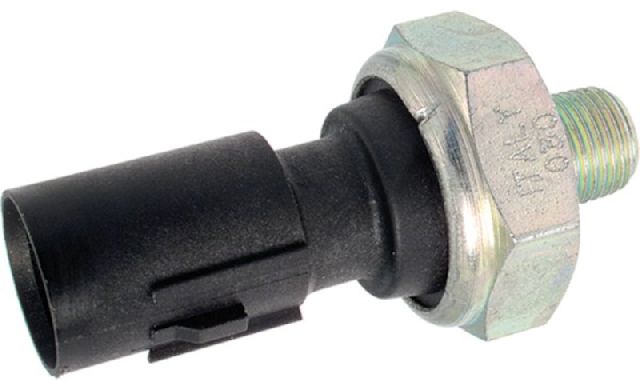
- Engine Oil Pressure Sensor/Switch
(OEM #94751-3C000)— This is the most common failure point for code P0520 on this engine due to heat exposure in the engine valley.
Trusted brands: Hyundai/Genesis OE
OEM price range: $40-$80
Aftermarket price range: $25-$50 - Upper Intake Manifold (Surge Tank) Gasket
(OEM #29215-3L100)— This is a single-use gasket that must be replaced anytime the upper intake manifold is removed to access the oil pressure sensor.
Trusted brands: Hyundai/Genesis OE
OEM price range: $20-$40
Aftermarket price range: $15-$30 - Lower Intake Manifold Gaskets (x2)
(OEM #28411-3L100)— These are single-use gaskets for the lower intake runners that must be replaced when the lower manifold is removed for sensor access.
Trusted brands: Hyundai/Genesis OE
OEM price range: $30-$50
Aftermarket price range: $20-$40
Related Codes That Often Appear With This One
- P0521 — Stands for 'Engine Oil Pressure Sensor/Switch Range/Performance'. It is often triggered by the same failing sensor as its readings become erratic, especially showing the classic symptom of a flickering oil light at warm idle.
- P0522 — Stands for 'Engine Oil Pressure Sensor/Switch Low Voltage'. This often indicates the sensor has failed internally or there is a short, frequently caused by oil leaking into the connector.
Technical Service Bulletins (TSBs) & Recalls
- While not a TSB for P0520, Kia TSB ENG237 for the same engine family warns technicians to check for a leaking oil pressure switch with a borescope to avoid misdiagnosing a rear main seal leak.
Platform-Specific Known Issues
- The location of the oil pressure sensor is the primary issue for this platform, turning a minor part failure into a major, expensive repair due to high labor costs.
- A safety recall (NHTSA 24V-191 / Genesis Recall 019G) was issued for the left-hand turbocharger oil feed pipe, which can crack and leak oil. While not a direct cause of P0520, a significant oil leak can lead to low oil pressure and related codes, and underscores the engine's heat issues.
Mechanic-Grade Diagnostic Values
- Mechanical Oil Pressure at Warm Idle — expected: At least 11.4 PSI. Failure: Pressure below 11.4 PSI indicates a mechanical engine problem (oil pump, sludge, etc.), not a sensor circuit fault.
- Oil Pressure Sensor Signal Voltage (Key-On, Engine-Off) — expected: ~0.4V - 0.5V. Failure: A reading of 0V suggests a short to ground or open in the power/signal wire. A reading of 5V suggests a short to voltage or an open ground circuit.
- Oil Pressure Sensor Reference Voltage (at harness connector, unplugged) — expected: 5.0V. Failure: Voltage significantly below 5.0V indicates a wiring issue or a problem with the PCM's 5V reference circuit.
Scan Tool Commands That Help
- Genesis GDS (Global Diagnostic System): Live Data / Current Data Analysis — Use this to observe the oil pressure sensor's signal voltage in real-time. This helps determine if the signal is stuck, erratic, or illogical relative to engine RPM, which is a key symptom of a failing sensor.
- Genesis GDS (Global Diagnostic System): S/W Management > Resetting adaptive values — While not strictly required for an oil pressure sensor replacement, resetting the PCM's learned values can be beneficial after major engine work, including the intake manifold removal required for this job.
Wiring & Ground Locations
- Ghg03 — Located at the left rear of the engine.. This is a main grounding point for the engine harness that includes the oil pressure sensor wiring. A loose or corroded connection here could cause erratic sensor readings or other electrical faults, mimicking a sensor failure. It should be checked if a new sensor and clean connector do not resolve the code.
- Oil Pressure Sensor Connector — Deep in the engine valley, under the lower intake manifold.. This 3-wire connector (power, ground, signal) is the direct interface to the sensor. It is not typically damaged by chafing, but is the common failure point when the sensor it's connected to leaks oil directly into it, causing a short circuit and triggering P0520.
Real Owner Repair Stories
- DTech Engineering YouTube Channel (Hyundai Genesis with Lambda V6 engine (same family)) — Oil warning light would illuminate specifically at warm idle when RPM dropped to ~560 RPM. The light would immediately go away as soon as RPMs increased.
✅ What actually fixed it The oil pressure sensor was replaced. The original sensor's electrical connector was full of oil, confirming an internal leak. A mechanic's tip was shared: grinding down a 24mm wrench to make it thinner allows removal of the sensor without having to remove a coolant pipe that is in the way. - Reddit user on r/GenesisG70 (2019 Genesis G70 3.3T, 92,000 miles) — Check engine light with code P0521 (related performance code).
✅ What actually fixed it The owner was quoted $1,250 for labor by a Genesis dealer to replace the oil pressure sensor. This story confirms the high labor cost and commonality of the failure at higher mileage. - Kia Stinger Forum User Reports (2019 Kia Stinger GT 3.3T V6, ~85,000 miles) — Oil pressure sensor failure, noted as a common issue around the 75k-100k mile mark for this platform.
✅ What actually fixed it Replacement of the oil pressure sensor located under the intake manifold. This corroborates the failure pattern on the sister vehicle which shares the identical engine and sensor location.
OEM Part Supersession History
94751-3C000→94751-3C000 (stable)— The part number appears to be stable for this application across the model years.
Heads up: While the part number is stable, it is always recommended to verify the correct part number with the vehicle's VIN before purchasing, as minor variations can exist.
Model Year Variations Within This Range
- 2019-2023: The Genesis G70 received a significant facelift for the 2022 model year, changing its exterior and interior appearance. However, the 3.3T Lambda II V6 engine, the oil pressure sensor, its problematic location, and the associated repair procedure for code P0520 remained identical across the entire 2019-2023 range.
Diagnostic Flowchart
Other Known Issues on This Vehicle
Issues unrelated to this code that are worth knowing about as an owner of this generation:
- Harsh Transmission Downshifting 🟡 Low — Common complaint, especially in pre-update models during stop-and-go traffic (3-2 and 2-1 shifts). Not typically a failure, but a comfort issue.
- Left-Hand Turbocharger Oil Feed Pipe Crack 🔴 High — Affects a significant number of 2019-2022 models, leading to a recall. Can cause oil leakage onto the exhaust manifold, creating a fire risk. (Ref: NHTSA 24V-191 / Genesis Recall 019G)
- Minor Interior Rattles 🟡 Low — Some owners report rattles from the sunglasses holder, sunroof area, or plastic trim behind the rearview mirror. Usually a minor annoyance fixed under warranty or with simple adjustments.
- Premature Wear on Exterior Trim/Wheels 🟠 Medium — Reports exist of the dark chrome trim on Sport models oxidizing and the clear coat on wheels peeling. These are often covered under warranty.
- Infotainment System Glitches 🟡 Low — Pre-update models in particular can experience issues like a flickering display, slow response, or Bluetooth/Apple CarPlay disconnects. Often resolved with a software update.
- Limited-Slip Differential (LSD) Failure 🟠 Medium — A minority of owners have reported issues with the electronic LSD on Sport Prestige models, sometimes requiring replacement under warranty.
Used vs. New Parts: Buying Guide for This Vehicle
When a used part is the smart pick: Never. For this specific repair, using a used part is strongly discouraged. The oil pressure sensor is a known high-failure item, and the labor to access it is extremely high (3.5-5+ hours). The risk of a used part failing prematurely far outweighs any potential cost savings.
What to inspect on the donor part:
- Not applicable. Do not use a used sensor for this repair.
OEM-only on this vehicle (don't cheap out):
- Engine Oil Pressure Sensor/Switch: Due to the high labor cost of a potential do-over, using a genuine Hyundai/Genesis OEM sensor is the only recommended path.
- Intake Manifold Gaskets: These are single-use gaskets. Using new, OEM gaskets is critical to prevent vacuum leaks after reassembly.
Aftermarket brands forum-validated for this vehicle:
- No aftermarket brands are consistently recommended or validated for this specific sensor. The consensus among professional mechanics and forum users is to use the genuine OEM part.
Brands owners have reported issues with on this vehicle:
- Unbranded, 'white box' sensors from online marketplaces should be avoided. The quality control is questionable, and the risk of early failure is high, which would require repeating the entire expensive repair.
Real Owner Stories
Aggregated from forums and TSBs cited above. Mileages and costs reflect what owners reported in those sources.
2019 Genesis G70 3.3T — 93000 miles
Symptoms: Check engine light and oil light came on.
What fixed it: Replaced the oil pressure sensor and intake manifold gaskets.
Cost: $1,250-$2,000
Source hint: Reddit user on r/GenesisG70
2018-2023 Kia Stinger GT (3.3T) — ~48000 miles
Symptoms: The 'dreaded oil pressure sensor light' appeared at idle and disappeared with an increase in RPM.
What fixed it: Replacement of the oil pressure sensor located under the intake manifold.
Source hint: Reddit r/StingerGT thread
Related OBD-II Codes
Frequently Asked Questions
Is there a recall for the oil pressure sensor on my 2019-2023 Genesis G70 3.3T?
Why is the labor cost so high for a simple sensor replacement on the 3.3T engine?
My oil light only flickers at a warm idle but goes away when I drive. Is this P0520?
Does Kia TSB ENG237 apply to my Genesis G70?
Can I confirm the sensor is bad without taking the engine apart?
What is the minimum oil pressure my G70 3.3T should have at idle?
Helpful Videos

Used OEM Parts in Stock
New Aftermarket Parts Available


The information in this article is provided for general reference and educational purposes only. Vehicle specifications, procedures, and part compatibility can vary by production date, trim level, and region. Always consult your vehicle's factory service manual and verify part numbers before purchasing or performing repairs. Safety-critical components such as airbags, seat belts, and braking systems should be installed by a qualified professional.
- Genesis G70:
- 🧭 Diagnostic Flowchart
- 🎬 Helpful Videos
- 🛍️ Shop This Part
- What's Unique About the 2019-2023 Genesis G70
- Symptoms You May Notice
- Most Likely Causes
- Rare But Worth Checking
- Diagnosis Steps
- Parts You'll Likely Need
- Related Codes That Often Appear With This One
- Technical Service Bulletins (TSBs) & Recalls
- Platform-Specific Known Issues
- Mechanic-Grade Diagnostic Values
- Scan Tool Commands That Help
- Wiring & Ground Locations
- Real Owner Repair Stories
- OEM Part Supersession History
- Model Year Variations Within This Range
- Other Known Issues on This Vehicle
- Used vs. New Parts: Buying Guide for This Vehicle
- Real Owner Stories
- 2019 Genesis G70 3.3T — 93000 miles
- 2018-2023 Kia Stinger GT (3.3T) — ~48000 miles
- Related OBD-II Codes
- Frequently Asked Questions
- 🎟️ Get 5% Off