

P0520 on 2004-2012 GMC Canyon: Engine Oil Pressure Sensor Circuit Causes and Fixes
On a 2004-2012 GMC Canyon, code P0520 is most often caused by a failed engine oil pressure sensor (also called a switch or sending unit). Replacing the sensor is a common and affordable DIY fix. Expect to pay around $30-$50 for an aftermarket sensor and a special socket.
- P0520 on a 2004-2012 Canyon almost always means the oil pressure sensor has failed.
- Before buying parts, check your oil level and inspect the sensor's connector for oil leaks, which is a sure sign of failure.
- The sensor is located above the oil filter and is accessed through the driver's side wheel well.
- You will need a special 1-1/16" or 27mm oil pressure switch socket to perform the replacement.
- This is a very manageable DIY repair that can save you significant money over a shop visit.
What's Unique About the 2004-2012 GMC Canyon
For the first-generation GMC Canyon and its platform mates (Chevy Colorado, Hummer H3), the P0520 code is a very common and straightforward issue. Unlike some other GM V8s where a small filter screen under the sensor can clog, the primary failure on these trucks is almost always the sensor itself. The sensor is known to fail electrically or develop an internal leak, which forces oil into the electrical connector, disrupting the signal. The repair is accessible for DIYers and well-documented by owners, especially for the I4 and I5 engines where it's located just above the oil filter.
Symptoms You May Notice
- Check Engine Light is on.
- Low oil pressure warning light is on, or the gauge reads zero or an incorrect value (e.g., pegged high).
- Fluctuating or erratic oil pressure gauge readings.
- Visible oil leaking from the oil pressure sensor itself, often contaminating the electrical connector.
- Engine may be stuck in 'limp mode' or reduced power mode.
- Replacing the oil pump. The P0520 code specifically points to an electrical circuit fault, not a mechanical pressure problem. Always verify the actual oil pressure with a mechanical gauge before suspecting major mechanical components like the oil pump.
Most Likely Causes
- Faulty Engine Oil Pressure Sensor/Switch 🔴 High Probability The sensor is a very common failure item on the GMT355 platform. It can fail electrically, providing incorrect voltage readings, or develop an internal leak that contaminates the connector with oil.
How to confirm: Visually inspect the sensor's electrical connector for engine oil. If oil is present, the sensor has failed internally and must be replaced. If no oil is present, testing with a multimeter is possible, but given the high failure rate and low cost, replacement is the most common and practical diagnostic step.
Typical fix: Replace the engine oil pressure sensor. A special 1-1/16 inch or 27mm deep socket is required for removal and installation. Disconnect the battery, remove the driver's side front wheel and fender liner for access.
Est. part cost: $25-$60 - Wiring or Connector Issue 🟡 Medium Probability The sensor's location in the wheel well on I4/I5 models exposes the wiring to moisture, road debris, and potential physical damage, leading to corrosion or broken wires over time.
How to confirm: Visually inspect the wiring harness and connector pigtail leading to the oil pressure sensor for any signs of chafing, breaks, corrosion in the pins, or loose connections. Clean the connector contacts with electrical cleaner. A multimeter can be used to check for the 5V reference signal, ground, and signal continuity back to the ECM.
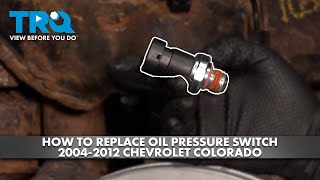
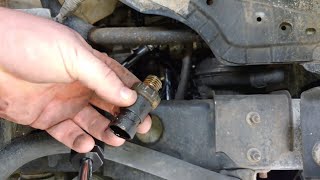
Typical fix: Repair the damaged section of wiring or replace the connector pigtail. The ACDelco PT2312 is a common pigtail replacement. 🎬 See this video guide on replacing the switch
Est. part cost: $15-$40 - Low Engine Oil Level or Poor Oil Condition ⚪ Low Probability
How to confirm: Always perform a basic check of the engine oil level using the dipstick and inspect the oil's condition. Extremely low, dirty, or sludgy oil can cause actual pressure issues that might, in some cases, trigger a circuit code.
Typical fix: Perform an oil and filter change using the correct viscosity oil specified for your engine (e.g., 5W-30).
Est. part cost: $40-$80
Rare But Worth Checking
- Powertrain Control Module (PCM) Issue: → Shop Engine Control Module (ECM) This is extremely rare. All other possibilities, especially the sensor and wiring, should be exhaustively ruled out before considering the PCM as the cause. A PCM failure is a last resort diagnosis.
Diagnosis Steps
- Verify the engine oil level and condition using the dipstick. Ensure it is full and the oil is not excessively dirty or sludgy.
- As a definitive first step, connect a mechanical oil pressure gauge in place of the sensor to verify the engine's actual oil pressure. This rules out a serious mechanical problem.
- Visually inspect the oil pressure sensor and its electrical connector. On I4 and I5 engines, the sensor is located above the oil filter. Access requires removing the driver's side front wheel and the plastic fender liner.
- If oil is found inside the electrical connector, the sensor has failed internally and must be replaced. This is a very common failure mode.
- If no oil is present, inspect the wiring harness for any visible damage, chafing, corrosion, or loose connections. Clean the connector with electrical contact cleaner.
- If the wiring appears intact, the most likely cause is a failed sensor. Replace the oil pressure sensor. A special deep socket (1-1/16" or 27mm) is required.
- After replacement, clear the trouble codes with a scan tool. Start the engine and monitor the oil pressure gauge on the dashboard to ensure it reads correctly and the Check Engine Light does not return.
Parts You'll Likely Need
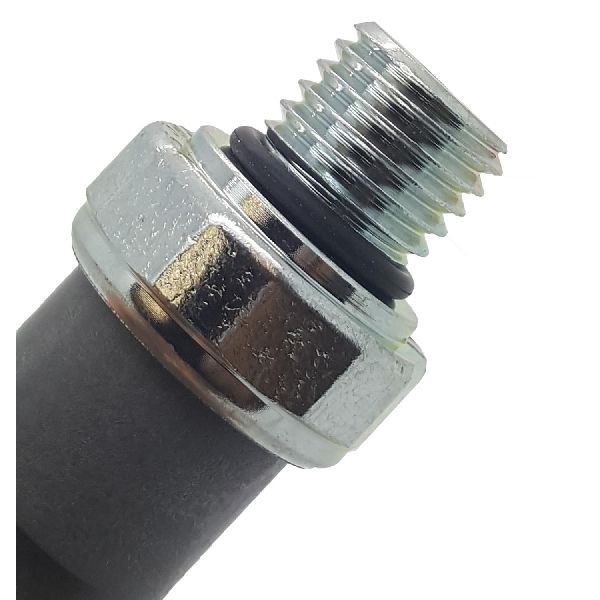
- Engine Oil Pressure Sensor / Switch
(OEM #12673134)— This is the most common failure point for the P0520 code on this vehicle. It fails electrically or leaks internally. The OEM part 12673134 supersedes older part numbers 12621234 and 12596951.
Trusted brands: ACDelco (GM Genuine), Dorman, Standard Motor Products (SMP)
OEM price range: $40-$70
Aftermarket price range: $25-$50 - Oil Pressure Switch Socket — A special deep socket, typically 1-1/16 inch or 27mm, is required to remove and install the sensor due to its shape and location.
Trusted brands: Lisle, OEMTools, Powerbuilt
OEM price range: $10-$20
Aftermarket price range: $8-$15 - Oil Pressure Sensor Connector Pigtail
(OEM #ACDelco PT2312)— If the original connector is damaged, corroded, or has oil saturation that can't be cleaned, replacing the pigtail is necessary to ensure a good connection.
Trusted brands: ACDelco, Dorman
OEM price range: $25-$40
Aftermarket price range: $15-$30
Related Codes That Often Appear With This One
- P0521 — P0521 indicates an 'Engine Oil Pressure Sensor/Switch Range/Performance' problem. A failing sensor can provide readings that are erratic but not completely out of the circuit's electrical limits, triggering P0521, often alongside P0520.
- P0522 — This code indicates the sensor circuit voltage is specifically low. It often appears with P0520 if the sensor fails by shorting internally or if the signal wire shorts to ground.
- P0523 — This code indicates the sensor circuit voltage is specifically high. It can be triggered by a broken wire, a disconnected sensor, or an internally failed sensor creating an open circuit.
Technical Service Bulletins (TSBs) & Recalls
- While no TSB is specific to P0520 on the Canyon, GM has issued TSBs for related issues. TSB 20-NA-161 addresses DTC P0521 on other GM trucks due to a sticking oil pressure relief valve, which is a less likely cause here but shows related diagnostic paths. TSB PIP5416D notes that wiring harness chafing can cause erratic oil pressure readings and various DTCs on 2016+ models, a principle that also applies to first-gen trucks. A Chrysler TSB (18-034-14) for P0520 on their engines also points to replacing the sensor with a revised part, showing this is a common issue across manufacturers.
Mechanic-Grade Diagnostic Values
- Sensor Reference Voltage — expected: ~5.0 Volts. Failure: Missing or low voltage indicates a problem with the PCM or the wiring between the PCM and the sensor.
- Sensor Ground Circuit — expected: Near 0 Volts. Failure: Voltage reading above 0.1V indicates a poor ground connection, which can cause incorrect sensor readings.
- Sensor Signal Wire Voltage — expected: Varies with oil pressure. Typically 0.5V (low pressure) to 4.5V (high pressure).. Failure: Voltage stuck at 0V (short to ground), 5V (open circuit/short to power), or a static, non-changing value indicates a failed sensor or wiring fault.
- Mechanical Oil Pressure (Hot Idle) — expected: ~25-30 PSI. Failure: Significantly lower pressure indicates a mechanical engine issue (e.g., oil pump, bearings), not a sensor circuit problem.
- Sensor Installation Torque — expected: 15 ft-lbs. Failure: Over-tightening can damage the sensor or threads; under-tightening can cause leaks.
Scan Tool Commands That Help
- Tech 2 / GDS2: Cylinder Deactivation (AFM) Valve Lifter Oil Manifold Diagnosis and Testing — On 5.3L V8 models, if P0520 is accompanied by other codes like P0521 or misfire codes, this guided test can help determine if a failing AFM lifter manifold is causing oil pressure issues that may contribute to the electrical code.
Wiring & Ground Locations
- Engine Oil Pressure (EOP) Sensor Connector — On I4 and I5 engines, located on the driver's side of the engine block, just above the oil filter housing. On 5.3L V8 engines, it's at the top rear of the engine block, behind the intake manifold.. This is the primary connection point to inspect for oil contamination from an internally failed sensor. The connector has three terminals.
- EOP Sensor Connector Pin A (Tan/White wire) — Pin A on the sensor connector.. This is the Low Reference (ground) wire from the PCM. A bad connection here will cause faulty readings.
- EOP Sensor Connector Pin B (Gray wire) — Pin B on the sensor connector.. This is the 5-volt Reference wire from the PCM. Check for 5V here with the key on, engine off.
- EOP Sensor Connector Pin C (Tan wire) — Pin C on the sensor connector.. This is the Signal wire that sends the variable voltage reading back to the PCM. A short or open on this wire is a direct cause of P0520, P0522, or P0523.
- Engine Block Grounds (e.g., G103, G105) — Located on the engine block and inner fenders. Specific locations vary by year and engine.. While the sensor has a dedicated low reference wire, poor engine block grounding can introduce electrical noise and potential voltage offsets that may affect sensor readings. Cleaning these main grounds is a good practice when diagnosing any electrical fault.
Real Owner Repair Stories
- YouTube video by 'Fix it Again' (2009 GMC Canyon) — Oil pressure light came on.
✅ What actually fixed it The owner replaced the engine oil pressure sensor located above the oil filter. He noted the importance of cleaning the electrical contacts on the harness connector with electrical cleaner before plugging it into the new sensor. The light went off after the replacement. - YouTube video by 'Uncle Phil's Garage' (Chevy Colorado (first generation)) — Low oil pressure red light came on intermittently. Engine sounded fine, oil level was correct.
✅ What actually fixed it The owner identified oil inside the electrical connector for the pressure sensor, indicating an internal leak in the sensor. He replaced the sensor and cleaned the oil out of the connector with brake cleaner, which resolved the issue. He noted the torque spec for the new sensor is 15 ft-lbs.
OEM Part Supersession History
12596951, 12621234→12673134— GM regularly updates service parts to integrate new materials or design improvements for better reliability and durability.
Heads up: The new part number (12673134) is a direct replacement for the older numbers and should be used for all repairs. No programming is required upon replacement.
Model Year Variations Within This Range
- 2004-2006: Primarily used the 2.8L I4 and 3.5L I5 engines. Some early 3.5L engines had issues with valve seats which could lead to low compression, but this is unrelated to the P0520 code itself.
- 2007-2012: Engines were updated to the 2.9L I4 and 3.7L I5. The sensor location and P0520 diagnostic process remained the same for these engines.
- 2009-2012: The 5.3L V8 engine became an option. On the V8, the oil pressure sensor is located at the back of the engine behind the intake manifold, making it significantly more difficult to access than on the I4/I5 models.
Diagnostic Flowchart
Other Known Issues on This Vehicle
Issues unrelated to this code that are worth knowing about as an owner of this generation:
- PassLock Anti-Theft System Failure 🟠 Medium — Very common across this generation. Causes an intermittent no-start condition where the truck cranks but won't fire, often requiring a 10-minute wait. (Ref: No official recall, but it is a widely known problem. The common fix is replacing the ignition switch lock cylinder or performing a bypass.)
- Cracked Exhaust Manifold (I5 Engines) 🟠 Medium — Common on the 3.5L and 3.7L I5 engines, causing an exhaust leak noise (ticking) that is most noticeable when cold.
- Blower Motor Resistor Failure 🟡 Low — Extremely common failure. Results in the HVAC fan only working on certain speeds (usually high) or not at all. Often the connector melts as well.
- Worn Intake Valve Seats (2004-2006 3.5L I5) 🔴 High — Affected early models, leading to low compression, misfires (P0300), and rough idle. Requires cylinder head repair. (Ref: GM extended warranty coverage for this specific issue on some vehicles, but that has since expired.)
- Faulty Fan Clutch 🟠 Medium — The fan clutch can fail, causing a loud roaring noise on startup that may persist, or it can fail to engage, leading to overheating in traffic. (Ref: GM issued TSB 00678C for some HD trucks with similar issues, recommending a revised fan clutch.)
Used vs. New Parts: Buying Guide for This Vehicle
When a used part is the smart pick: A used part never makes sense for this repair. The oil pressure sensor is a low-cost, high-failure-rate electronic component. The risk of getting a used part that has or will shortly develop the same internal leak or electrical fault is extremely high.
What to inspect on the donor part:
- Do not buy this part used.
OEM-only on this vehicle (don't cheap out):
- Engine Oil Pressure Sensor
Aftermarket brands forum-validated for this vehicle:
- ACDelco (GM Genuine/Original Equipment)
- Standard Motor Products (SMP)
- NTK
Brands owners have reported issues with on this vehicle:
- Unnamed or 'white-box' ultra-cheap online marketplace brands. Forum and video evidence suggests these have a high rate of out-of-box failure or short service life. While a specific brand isn't always named, the pattern of 'cheap Amazon sensor failed' is common.
Real Owner Stories
Aggregated from forums and TSBs cited above. Mileages and costs reflect what owners reported in those sources.
2012 GMC Canyon (Platform Mate: Grand Caravan)
Symptoms: The oil pressure gauge was maxing out at 96 PSI.
What fixed it: Replacing the faulty oil pressure switch.
Source hint: DoItYourself.com Community Forums - '2012 Grand Caravan - Code P0520'
2004-2012 GMC Canyon (I4/I5)
Symptoms: Check Engine Light on with P0520; consensus on forums regarding the sending unit located above the oil filter.
What fixed it: Replacing the oil pressure sending unit using a special socket via the driver's side wheel well.
Source hint: 355nation.net & coloradofans.com
2006-2010 Hummer H3 (I5)
Symptoms: P0520 code on the Atlas I5 engine, which shares the GMT355 platform.
What fixed it: Replacing the sensor through the driver's side wheel well access point.
Source hint: 2006-2010 Hummer H3 (3.5L I5, 3.7L I5, 5.3L V8) platform mate description
Related OBD-II Codes
Frequently Asked Questions
Where is the oil pressure sensor located on my GMC Canyon with the I4 or I5 engine?
What special tools do I need to replace the oil pressure sensor on a 2004-2012 Canyon?
Does TSB 20-NA-161 apply to my P0520 code on the Canyon?
Is there a specific replacement wiring part if my connector is contaminated with oil?
Could my P0520 code be related to the PassLock anti-theft issues common on this truck?
Why is my oil pressure gauge pegged at the maximum value?
Helpful Videos
We Have This Part in Stock


The information in this article is provided for general reference and educational purposes only. Vehicle specifications, procedures, and part compatibility can vary by production date, trim level, and region. Always consult your vehicle's factory service manual and verify part numbers before purchasing or performing repairs. Safety-critical components such as airbags, seat belts, and braking systems should be installed by a qualified professional.
- GMC Canyon:
- 🧭 Diagnostic Flowchart
- 🎬 Helpful Videos
- 🛍️ Shop This Part
- What's Unique About the 2004-2012 GMC Canyon
- Symptoms You May Notice
- Most Likely Causes
- Rare But Worth Checking
- Diagnosis Steps
- Parts You'll Likely Need
- Related Codes That Often Appear With This One
- Technical Service Bulletins (TSBs) & Recalls
- Mechanic-Grade Diagnostic Values
- Scan Tool Commands That Help
- Wiring & Ground Locations
- Real Owner Repair Stories
- OEM Part Supersession History
- Model Year Variations Within This Range
- Other Known Issues on This Vehicle
- Used vs. New Parts: Buying Guide for This Vehicle
- Real Owner Stories
- 2012 GMC Canyon (Platform Mate: Grand Caravan)
- 2004-2012 GMC Canyon (I4/I5)
- 2006-2010 Hummer H3 (I5)
- Related OBD-II Codes
- Frequently Asked Questions
- 🎟️ Get 5% Off