

P0520 on 2010-2021 Hyundai Tucson 2.4L: Engine Oil Pressure Sensor Circuit Causes and Fixes
Code P0520 on a Hyundai Tucson 2.4L GDI most often means the oil pressure sensor/switch has failed. However, it can also be a critical warning of low oil level due to the engine's known oil consumption issues. Always check the oil level immediately before replacing any parts.
- **STOP DRIVING IMMEDIATELY:** If you see code P0520 accompanied by a red oil pressure light, stop the vehicle safely and turn off the engine to prevent catastrophic damage.
- **Check Oil First:** The very first step is to check the engine oil level. Low oil is a common and dangerous cause for this code on the 2.4L Tucson.
- **Diagnosis is Key:** Before replacing the sensor, a mechanic must verify the engine's actual oil pressure with a mechanical gauge to rule out a serious internal engine problem.
- **Recall for 2011-2013 Models:** If you own a Tucson from these years, ensure Recall Campaign 181 has been performed, which includes an upgraded oil pressure switch.
- **Sensor Replacement is Involved:** Replacing the sensor is not a simple job; it requires removing the intake manifold, making it a 2-3 hour task for a professional.
What's Unique About the 2010-2021 Hyundai Tucson
For the Hyundai Tucson with the 2.4L Theta II GDI engine, this code is a double-edged sword. While it can be a simple, inexpensive sensor failure, this engine family is widely known for excessive oil consumption and manufacturing defects that can cause premature rod bearing wear, leading to catastrophic engine failure. This widespread issue resulted in class-action lawsuits and the implementation of a Knock Sensor Detection System (KSDS) via a software update. This system is designed to detect the vibrations of a failing engine and will trigger code P1326, often putting the vehicle into limp mode. Therefore, P0520 should be treated with extreme caution on this vehicle, as it could be the first and only warning of impending engine failure due to oil starvation.
Generation note: This guide covers the 2nd generation (LM, 2010-2015) and 3rd generation (TL, 2016-2021) Hyundai Tucson. Both generations used versions of the 2.4L Theta II engine, which is known for potential oil consumption and catastrophic failure. A specific recall (Campaign 181) applies to the 2011-2013 models to install a more sensitive oil pressure switch.
Symptoms You May Notice
- Check Engine Light is on
- Red oil pressure warning light is on or flickering, especially at idle
- Oil pressure gauge reading is abnormally low or high
- Engine making unusual knocking or clunking noises
- Poor engine performance or stalling
- Engine goes into 'limp mode' (reduced power, RPM limited to ~2000), especially if code P1326 is also present
- Replacing the oil pressure sensor without first checking the engine oil level and verifying actual oil pressure with a mechanical gauge. This can lead to catastrophic engine failure if the real problem is oil starvation.
Most Likely Causes
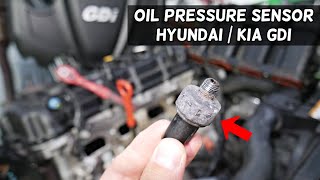
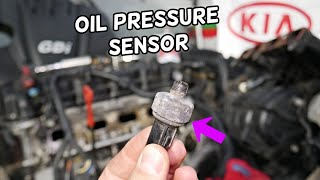
- Faulty Engine Oil Pressure Sensor/Switch 🔴 High Probability The sensor itself is a common failure item. It can fail electrically, providing incorrect readings, or develop physical leaks. Oil can also leak internally through the electrical connector and wick up the wiring harness, causing further issues.
How to confirm: After confirming the oil level is correct and the engine has proper mechanical oil pressure, test the sensor's circuit. If the wiring is good, the sensor is the likely culprit. The sensor is often replaced as a primary diagnostic step due to its high failure rate and relatively low cost.
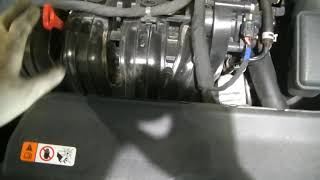
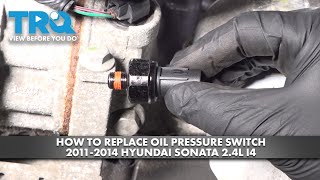
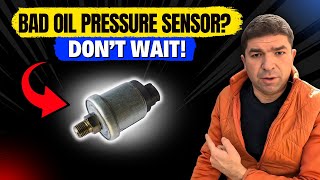
Typical fix: Replace the engine oil pressure sensor/switch. This is a labor-intensive job as the sensor is located deep in the engine valley, under the intake manifold, just above the oil filter housing. 🎬 Watch: See the exact location of the oil pressure sensor.
Est. part cost: $25-$50 - Low Engine Oil Level from Excessive Oil Consumption 🔴 High Probability The 2.4L Theta II GDI engine is notorious for excessive oil consumption, often caused by manufacturing defects or carbon buildup on piston rings. This can lead to a true low oil pressure state, triggering the P0520 code and potentially causing catastrophic bearing failure.
How to confirm: Check the engine oil dipstick immediately. If the oil level is low, top it off and monitor for rapid consumption (e.g., losing a quart in under 1,500 miles). A formal oil consumption test performed by a dealer may be necessary to qualify for warranty repairs.
Typical fix: If oil consumption is severe, the long-term fix often requires significant engine repair or a complete engine replacement, which may be covered under the extended 'Lifetime Warranty' from the class-action settlement if the vehicle qualifies.
Est. part cost: $0 (for oil top-off) to $7000+ (for engine replacement, if not covered by warranty) - Damaged Wiring or Electrical Connector 🟡 Medium Probability The single-wire harness to the sensor can become damaged, corroded, or disconnected. Oil saturation from a leaking sensor is a common cause of connector and wire failure.
How to confirm: Visually inspect the wiring harness leading to the oil pressure sensor for any breaks, corrosion, or loose connections. Check for continuity and proper voltage using a multimeter.
Typical fix: Repair or replace the damaged section of the wiring harness or the connector itself.
Est. part cost: $5-$100
Rare But Worth Checking
- Failing Oil Pump or Clogged Oil Passages: While less common than a bad sensor or low oil level, a mechanical failure in the oiling system can cause genuine low pressure. On Theta II engines, this can be caused by metallic debris from the manufacturing process clogging the oil pickup tube or passages. This should be investigated with a mechanical pressure test.
Diagnosis Steps
- Check the Oil Level Immediately: Before starting the engine again, check the oil dipstick. If it is low, top it off to the correct level. This is the most critical first step for this engine.
- Scan for Other Codes: Use an OBD-II scanner to see if any other codes are present. CRITICAL NOTE: If code P1326 is present, DO NOT clear it. The dealer must see this active code to begin the warranty/recall process for a potential engine replacement.
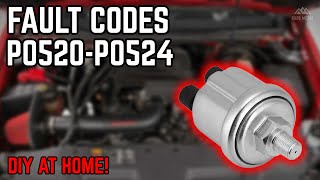
- Verify Mechanical Oil Pressure: This is a mandatory step. 🎬 Watch: How to diagnose and fix P0520 and P0524 codes. Disconnect the oil pressure sensor and connect a mechanical oil pressure gauge. Start the engine and compare the gauge reading to the manufacturer's specifications. If pressure is low, you have a serious mechanical problem (likely related to oil consumption, a failing oil pump, or bearing failure). Do not proceed.
- Inspect Sensor and Wiring: If mechanical pressure is good, the fault is in the electrical circuit. Turn off the engine. Visually inspect the oil pressure sensor's connector and wiring for any signs of damage, corrosion, or oil leaks from the sensor body itself.
- Test the Circuit: Use a multimeter to check for proper voltage and ground at the sensor connector. If the wiring is intact and has correct power/ground, the sensor itself is almost certainly the problem.
- Replace the Oil Pressure Sensor: If the sensor is determined to be faulty, replace it. On the 2.4L GDI, this requires removing the intake manifold to gain access.
- Clear Codes and Test Drive: After replacement, clear the trouble codes with a scanner and perform a test drive to ensure the code and oil light do not return.
Parts You'll Likely Need
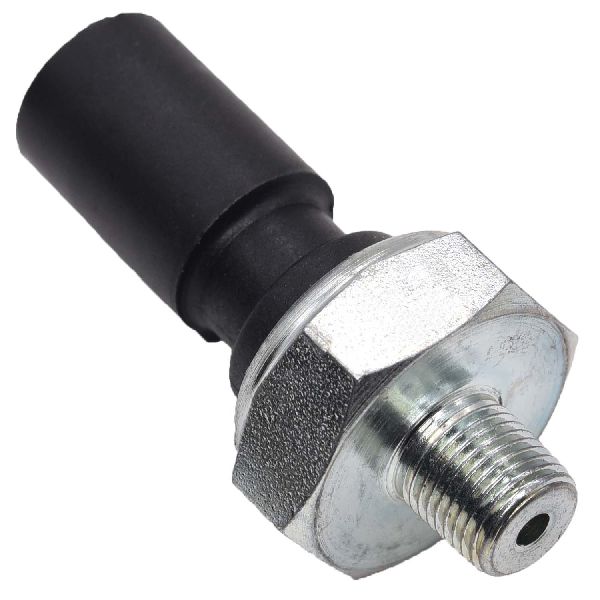
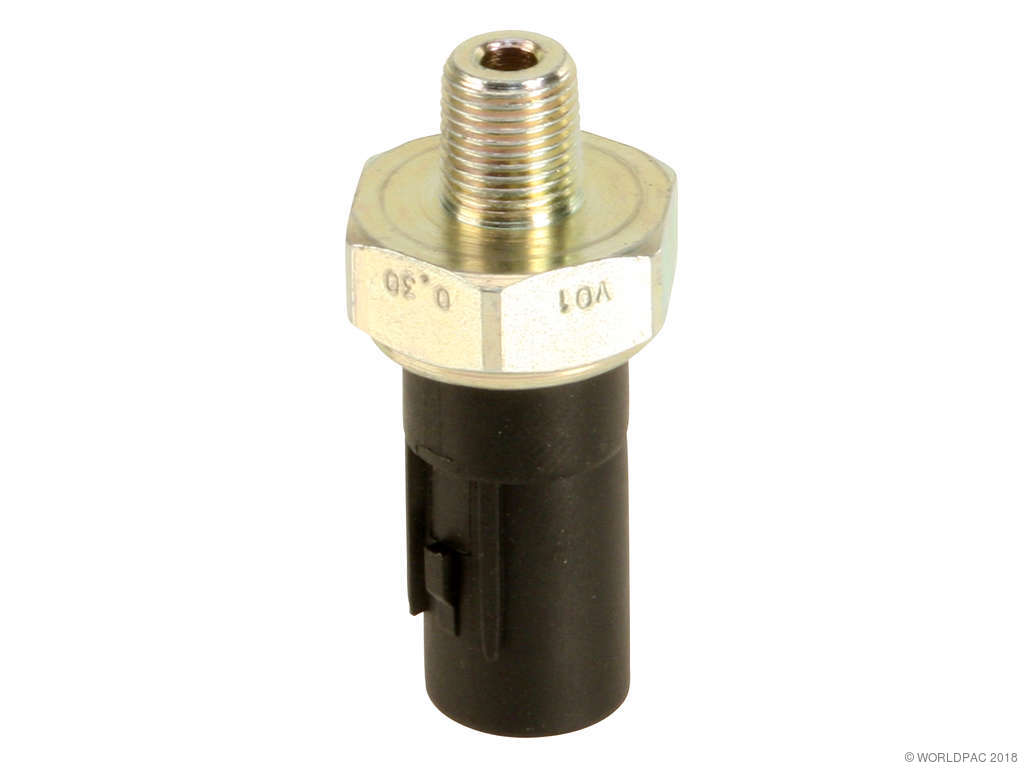
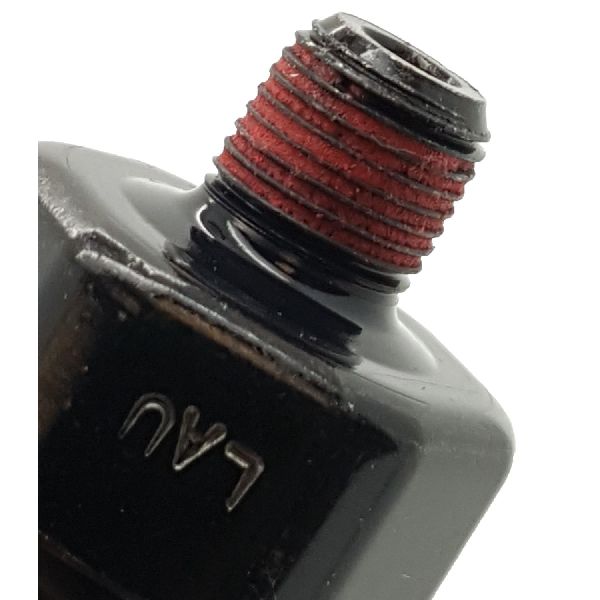
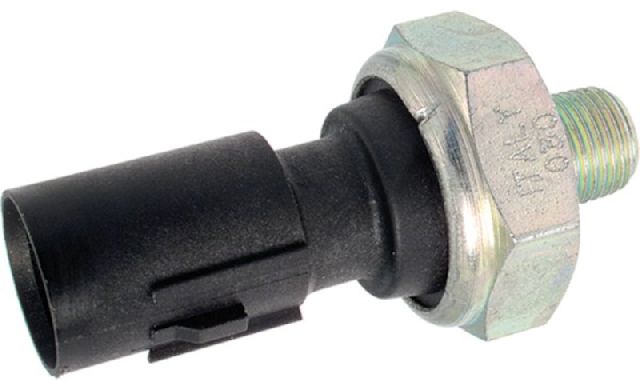
- Engine Oil Pressure Sensor / Switch
(OEM #94750-37200QQH)— This is the most common part to fail electrically or develop a leak. For 2011-2013 models, this specific part number is an updated, more sensitive version specified in Recall 181 to better detect low oil levels.
Trusted brands: Hyundai (OEM), Standard Motor Products (SMP), Beck/Arnley
OEM price range: $25-$45
Aftermarket price range: $15-$30
Related Codes That Often Appear With This One
- P1326 — This is a critical code specific to Hyundai/Kia. It means the Knock Sensor Detection System (KSDS) has detected vibrations consistent with imminent connecting rod bearing failure. It is often the direct result of the oil starvation issues that can also trigger P0520. The vehicle will enter a protective 'limp mode'. Seeing this code is the first step toward a potential engine replacement under the extended warranty program. 🎬 Watch: How to diagnose P1326 and replace the knock sensor.
- P0300-P0304 — Cylinder misfire codes can occur alongside P0520 if low oil pressure is causing issues with timing components (like CVVT phasers) or if severe oil consumption is fouling spark plugs.
- P0524 — Indicates 'Engine Oil Pressure Too Low'. While P0520 points to a circuit fault, P0524 indicates the PCM is receiving a signal that confirms pressure is dangerously low. Seeing both strongly suggests a true, severe mechanical problem.
Technical Service Bulletins (TSBs) & Recalls
- 19-01-012H (Recall Campaign 181): Describes the procedure to inspect the oil pan and install an updated oil pressure switch on 2011-2013 Tucson 2.4L vehicles to prevent engine damage from oil leaks.
- 19-01-006H (Service Campaign T3G): Details the inspection and repair procedure for vehicles presenting with code P1326, which can lead to engine replacement.
- 22-EM-002H-1: Provides guidelines for dealers on performing an engine oil consumption test to determine eligibility for warranty repairs.
Platform-Specific Known Issues
- Theta II GDI Engine Class Action Lawsuit & Lifetime Warranty: The 2.4L GDI engine was the subject of major class-action lawsuits due to a defect causing premature connecting rod bearing wear and catastrophic engine failure. The settlement resulted in a warranty extension to a 'Lifetime Warranty' for the engine short block for original and subsequent owners whose vehicles successfully had the Knock Sensor Detection System (KSDS) software update completed.
- Recall Campaign 181 (TSB 19-01-012H): Affects certain 2011-2013 Tucson models with the 2.4L engine. Hyundai initiated this recall to inspect for oil pan leaks and install an updated, more sensitive oil pressure switch (part # 94750-37200QQH) to warn drivers of low oil levels sooner, helping to prevent engine damage.
- Service Campaign T3G (related to TSB 19-01-006H): This service campaign was initiated to address DTC P1326. The procedure involves a bearing clearance test and, depending on the results, either a wiring harness update or a full engine replacement, covered under the warranty extension.
Mechanic-Grade Diagnostic Values
- Mechanical Oil Pressure at Idle (Warm Engine) — expected: At least 8.5 PSI. Failure: Pressure below 8.5 PSI indicates a critical mechanical lubrication issue (oil starvation, failing pump, etc.).
- Mechanical Oil Pressure at 2,000 RPM (Warm Engine) — expected: At least 28.4 PSI. Failure: Pressure below 28.4 PSI confirms a mechanical low-pressure condition under load.
- Oil Pressure Switch Continuity Test — expected: With the sensor removed (no pressure applied), there should be no electrical continuity between the terminal pin and the switch body/threads.. Failure: Continuity with no pressure applied indicates the switch is internally shorted and must be replaced.
Scan Tool Commands That Help
- Hyundai GDS (Global Diagnostic System): Live Data Monitoring — While P0520 indicates a circuit fault, the dealer-level GDS can monitor the PCM's interpretation of the oil pressure circuit status in real-time, which can help differentiate between an intermittent wiring fault and a hard sensor failure. However, there is no specific bidirectional command to test this simple switch; diagnosis relies on manual pressure testing.
Wiring & Ground Locations
- Engine Oil Pressure Sensor Connector — On the engine block, below the intake manifold, and directly above the oil filter housing. Access requires removing the intake manifold.. This is the single-wire connector for the sensor. It is a frequent point of failure due to oil contamination leaking through a failed sensor, causing a poor connection and triggering P0520.
- Sensor Ground Path — The oil pressure switch grounds directly through its metal body and threads into the engine block.. A clean, tight connection into the engine block is required for a proper ground. Corrosion or improper torque on the sensor can create a bad ground and a faulty signal.
Real Owner Repair Stories
- AliExpress User Review (2015 Hyundai Tucson with 2.0L/2.4L Theta II engine) — Intermittent oil pressure warning light on the dashboard, particularly during cold starts.
❌ Tried (didn't work) Mechanic initially suspected low oil level or a failing oil pump.
✅ What actually fixed it The owner checked the oil level and found it was normal, leading them to replace the oil pressure sensor. This resolved the issue. The user noted the replacement part superseded OEM numbers 94750-37000 and 94750-37100.
"I Checked Everything" — The Actual Cause
- A common scenario for P0520 is when a mechanical oil pressure test shows the pressure is perfectly within spec, yet the code persists even after replacing the sensor. The root cause is often oil that has leaked *through* the old, failed sensor and saturated the single-wire electrical connector. Technicians may miss this if they only replace the sensor but fail to thoroughly clean the connector with electrical contact cleaner, or repair the wire if the oil has wicked up into the harness and degraded the insulation.
OEM Part Supersession History
94750-37000, 94750-37100→94750-37200QQH— The 94750-37200QQH part is an updated, more sensitive switch implemented as part of Recall Campaign 181 to provide an earlier warning of a low oil level condition.
Heads up: While older parts may physically fit, using the latest superseded part number is critical, especially for 2011-2013 models, to get the benefit of the safety campaign update.
Model Year Variations Within This Range
- 2011-2013: These model years were specifically targeted by Recall Campaign 181 to replace the original oil pressure switch with the updated, more sensitive part (94750-37200QQH) to better prevent engine damage from low oil levels.
- 2015+: Some later model year 2.4L Theta II engines incorporated an electronically controlled intake CVVT (E-CVVT). While this system has its own potential failure modes (e.g., cold start rattle), it does not directly alter the diagnosis for the P0520 oil pressure switch circuit code.
Diagnostic Flowchart
Other Known Issues on This Vehicle
Issues unrelated to this code that are worth knowing about as an owner of this generation:
- Catastrophic Engine Failure (Rod Bearing Wear) 🔴 High — Widespread across the Theta II 2.4L GDI population. Can occur at various mileages, often after 60,000 miles. This defect was the primary subject of multiple class-action lawsuits. (Ref: Resulted in multiple recalls (e.g., Hyundai Recall 198), service campaigns (T3G), and a Lifetime Warranty extension for the engine short block for qualifying vehicles that received the KSDS update.)
- Excessive Oil Consumption 🔴 High — Very common, often starting after 50,000-70,000 miles. Many owners report adding a quart of oil every 1,000-1,500 miles. It is a precursor to rod bearing failure. (Ref: Addressed in TSBs like 22-EM-002H-1, which provide guidelines for oil consumption testing and potential engine repair/replacement.)
- Spontaneously Shattering Panoramic Sunroof 🟠 Medium — Common enough to trigger a class-action lawsuit. Affects 2010-2016 Tucson models, among other Hyundai vehicles. The glass can allegedly shatter without impact. (Ref: A class-action settlement extended the warranty for this issue to 10 years/120,000 miles and provided reimbursement for prior repairs.)
- Infotainment and Electrical Glitches 🟡 Low — Frequently reported on the 3rd generation (2016-2021). Issues include the touchscreen freezing, being unresponsive, or Apple CarPlay/Android Auto disconnecting randomly.
Used vs. New Parts: Buying Guide for This Vehicle
When a used part is the smart pick: A used engine wiring harness from a low-mileage vehicle can be a viable option if the original is oil-saturated or damaged beyond a simple connector repair. A complete, tested, low-mileage used engine is a common choice if the original engine fails due to oil starvation and is not covered by the lifetime warranty.
Donor-vehicle mileage cap: roughly under 80000 miles for the part to have meaningful remaining life.
What to inspect on the donor part:
- For wiring: Check for brittle plastic, cut wires, or previous sloppy repairs. Ensure connectors are intact.
- For an engine: Remove the oil cap to check for milky sludge (coolant mixing) or heavy varnish. Ask for a vehicle history report to check for regular maintenance. If possible, get compression and leak-down test numbers.
OEM-only on this vehicle (don't cheap out):
- Engine Oil Pressure Sensor/Switch: Due to the low part cost and high importance, a new OEM part is strongly recommended. A used sensor is a significant risk for a negligible savings.
- Engine Oil Filter: Always use a genuine Hyundai/Kia oil filter. Aftermarket filters have been linked to incorrect pressure and flow characteristics on this engine, which can contribute to oiling problems.
Aftermarket brands forum-validated for this vehicle:
- Standard Motor Products (SMP)
- Beck/Arnley
Real Owner Stories
Aggregated from forums and TSBs cited above. Mileages and costs reflect what owners reported in those sources.
2017 Hyundai Tucson 2.4L GDI
Symptoms: Experienced the P1326 knock sensor code and limp mode symptoms.
What fixed it: Full engine replacement covered at no cost under the warranty/recall process after dealer negotiations.
Cost: $0-$0
Source hint: Reddit (r/Hyundai) thread titled 'How many of you have experienced the P1326 knock...'
2017 Hyundai Santa Fe Sport 2.4L GDI
Symptoms: Vehicle threw a P0522 code (related to P0520 oil pressure circuit).
What fixed it: Replacement of the oil pressure sensor/switch, which required removing the intake manifold and using a 24mm deep socket.
Source hint: Hyundai-Forums.com thread '2017-santa-fe-sport-2-4l-oil-pressure-switch-location'
Related OBD-II Codes
Frequently Asked Questions
Is there a recall for the oil pressure switch on my 2012 Hyundai Tucson 2.4L?
Why is my Tucson going into 'limp mode' with a 2000 RPM limit along with the P0520 code?
I have a P0520 and my oil is low; could this be covered under a warranty extension?
Where is the oil pressure sensor located on the 2.4L GDI engine?
What should I do if I see code P1326 along with P0520?
Can high oil consumption cause the P0520 code on my Tucson?
Helpful Videos


We Have This Part in Stock


The information in this article is provided for general reference and educational purposes only. Vehicle specifications, procedures, and part compatibility can vary by production date, trim level, and region. Always consult your vehicle's factory service manual and verify part numbers before purchasing or performing repairs. Safety-critical components such as airbags, seat belts, and braking systems should be installed by a qualified professional.
- Hyundai Tucson:
- 🧭 Diagnostic Flowchart
- 🎬 Helpful Videos
- 🛍️ Shop This Part
- What's Unique About the 2010-2021 Hyundai Tucson
- Symptoms You May Notice
- Most Likely Causes
- Rare But Worth Checking
- Diagnosis Steps
- Parts You'll Likely Need
- Related Codes That Often Appear With This One
- Technical Service Bulletins (TSBs) & Recalls
- Platform-Specific Known Issues
- Mechanic-Grade Diagnostic Values
- Scan Tool Commands That Help
- Wiring & Ground Locations
- Real Owner Repair Stories
- "I Checked Everything" — The Actual Cause
- OEM Part Supersession History
- Model Year Variations Within This Range
- Other Known Issues on This Vehicle
- Used vs. New Parts: Buying Guide for This Vehicle
- Real Owner Stories
- 2017 Hyundai Tucson 2.4L GDI
- 2017 Hyundai Santa Fe Sport 2.4L GDI
- Related OBD-II Codes
- Frequently Asked Questions
- 🎟️ Get 5% Off