

P0520 on 2011-2015 Kia Optima 2.4L GDI: Oil Pressure Sensor Circuit Malfunction Explained
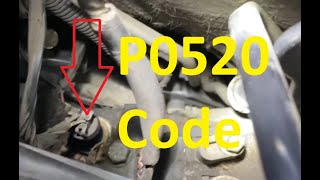
P0520 on a 2011-2015 Kia Optima indicates a malfunction in the oil pressure sensor's electrical circuit. While often caused by a faulty sensor, it's critical to rule out actual low oil pressure due to the Theta II engine's known issues with oil consumption and catastrophic bearing failure. Replacing the sensor costs about $20-$60 for the part, but requires significant labor as the intake manifold must be removed for access.
- P0520 on a 2011-2015 Optima 2.4L is a critical warning. Do not drive the vehicle until it is diagnosed.
- Your first and most important check is the engine oil level. These engines consume oil, and low levels can cause this code and destroy the engine.
- A faulty, leaking oil pressure sensor is a very common cause, but you MUST rule out actual low mechanical oil pressure before assuming it's just a bad sensor.
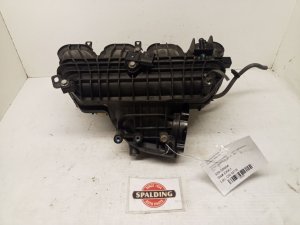
- Replacing the sensor is labor-intensive, requiring removal of the intake manifold.
- This code could be an early sign of the well-documented catastrophic engine bearing failure that affects these Theta II engines.
What's Unique About the 2011-2015 Kia Optima
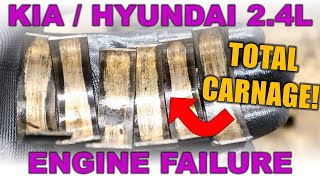
On the Kia Optima with the Theta II 2.4L GDI engine, any oil pressure code, including P0520, must be treated with extreme caution. These engines are notorious for serious mechanical issues, including excessive oil consumption and catastrophic connecting rod bearing failure, often stemming from manufacturing debris left in oil passages. An oil pressure sensor code can be an early warning of oil starvation that leads to engine seizure. This known defect led to multiple class-action lawsuits, recalls (like SC147), and a lifetime warranty extension for the engine short block on qualifying vehicles. Therefore, what might be a simple sensor issue on another vehicle could be a sign of impending, critical engine failure on this specific platform.
Symptoms You May Notice
- Check Engine Light is on.
- Oil pressure warning light on the dashboard may be on or flickering, especially at idle.
- Engine may make unusual knocking or ticking noises, indicating a lack of lubrication.
- In severe cases related to underlying mechanical failure, the engine may run poorly, stall, or enter a reduced-power "limp mode", especially if code P1326 is also present.
- Replacing the oil pressure sensor without first checking the oil level. The Theta II's high oil consumption makes this a mandatory first step.
- Assuming the code is *only* a sensor fault and continuing to drive. On this engine, it could be a warning of catastrophic failure, and driving could seize the engine.
- Replacing the sensor without checking for oil contamination in the electrical connector, which guarantees the new sensor will also report faulty data.
Most Likely Causes
- Faulty Engine Oil Pressure Sensor/Switch 🔴 High Probability This is a very common failure point on Kia/Hyundai vehicles. The sensor can fail electronically or develop an internal leak, allowing oil to contaminate the electrical connector and disrupt the signal. Kia has issued warranty extensions for leaking oil pressure switches on some models due to this high failure rate.
How to confirm: Visually inspect the oil pressure sensor's electrical connector for any signs of engine oil. If oil is present, the sensor is bad and must be replaced. The sensor is located under the intake manifold, making inspection difficult without some disassembly.
Typical fix: Replace the oil pressure sensor. On the 2.4L GDI engine, this is a labor-intensive job as the intake manifold must be removed to access it. Some mechanics have developed methods to replace it from underneath the vehicle by removing a bracket, but it is still a difficult job.
Est. part cost: $20-$60 - Low Engine Oil Level 🔴 High Probability The Theta II 2.4L GDI engine is widely known for excessive oil consumption due to issues with piston rings and carbon buildup. Kia defines excessive consumption as more than 1 quart per 1,000 miles and has a TSB outlining a testing procedure. If the oil level drops too low, the oil pump will draw in air, causing a loss of pressure and potentially triggering a circuit code as the sensor readings become erratic.
How to confirm: Check the engine oil level on the dipstick. This should be the very first diagnostic step. A level below the 'L' mark is critical.
Typical fix: Top up the engine oil to the correct level using the manufacturer-specified oil type (typically 5W-20 or 5W-30). Monitor consumption closely, as it may indicate a need for engine repair or replacement under warranty.
Est. part cost: $20-$40 for oil - Wiring or Connector Issue 🟡 Medium Probability The sensor wiring is located in the hot, vibration-prone area under the intake manifold. Oil leaking from the sensor itself can also saturate and damage the connector and harness, causing a short or open circuit.
How to confirm: After unplugging the sensor, inspect the connector and harness for signs of corrosion, damage, or oil saturation. Test for proper voltage and ground at the connector using a multimeter.
Typical fix: Repair the damaged section of the wiring harness or replace the connector pigtail. Clean any oil residue thoroughly with electrical contact cleaner.
Est. part cost: $10-$30 - Clogged or Incorrect Oil Filter ⚪ Low Probability → Shop Engine Oil Filter Adapter Using low-quality aftermarket oil filters is a known issue for this platform. Filters without proper anti-drain-back valves or with incorrect bypass pressure ratings can cause oil pressure problems, especially at startup.
How to confirm: Check the brand and part number of the installed oil filter. Cross-reference it with the OEM recommendation.
Typical fix: Replace the filter with a genuine Kia/Hyundai oil filter (Part No. 26300-35505 or superseding number) and perform an oil change.
Est. part cost: $10-$20 for filter
Rare But Worth Checking
- Internal Engine Mechanical Failure: While P0520 is an electrical code, it can be triggered by the erratic readings that occur during a catastrophic engine failure. On the Theta II engine, premature connecting rod bearing wear from manufacturing debris can lead to a sudden loss of oil pressure. This is a known issue that led to recalls (SC147) and a class-action lawsuit resulting in a lifetime warranty for qualifying vehicles. A mechanical pressure test is the only way to rule this out.
- Failing Oil Pump: Less common than a sensor failure, but a worn or failing oil pump can cause intermittent or low oil pressure, which could potentially lead to an erratic sensor signal and a P0520 code.
Diagnosis Steps
- STOP THE ENGINE. Do not continue to run or drive the vehicle.
- Check the engine oil level using the dipstick. If it is low, top it off with the correct viscosity oil (5W-20 or 5W-30) and re-evaluate. Note if the oil is excessively dirty or has a burnt smell.
- Visually inspect the area around the oil filter and oil pressure sensor for leaks. The sensor is located under the intake manifold, just above the oil filter housing. Access may require removing the plastic under-shield.
- Disconnect the oil pressure sensor's electrical connector. Check for engine oil inside the connector. If oil is present, the sensor has failed internally and must be replaced.
- If the connector is dry and the oil level is correct, the next step is CRITICAL: perform a mechanical oil pressure test. This involves removing the sensor and connecting a manual pressure gauge to the engine.
- Compare the gauge readings at idle and ~3000 RPM to the manufacturer's specifications. If pressure is below specification, the engine has a serious internal mechanical problem (e.g., worn bearings, bad oil pump) and requires professional service. Contact a Kia dealer to check for warranty coverage.
- If mechanical pressure is good, the problem is likely electrical. Test the sensor's wiring for proper voltage, ground, and signal continuity back to the PCM using a digital multimeter.
- If wiring is confirmed to be good and mechanical pressure is normal, replace the oil pressure sensor and the intake manifold gasket.
Parts You'll Likely Need
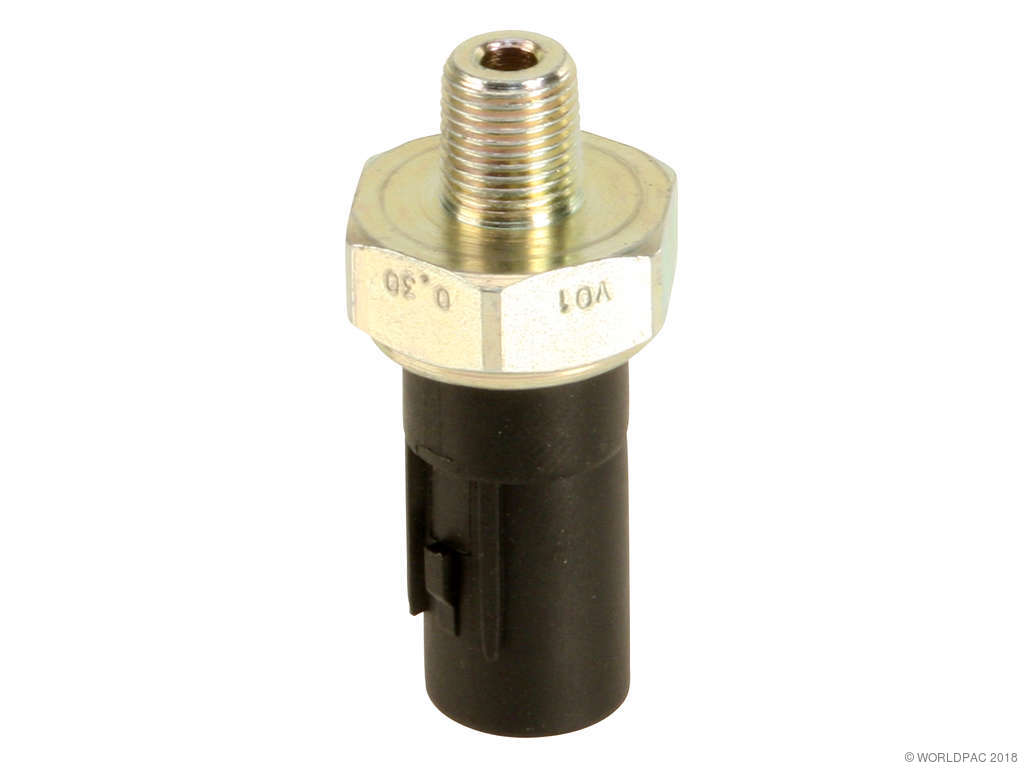
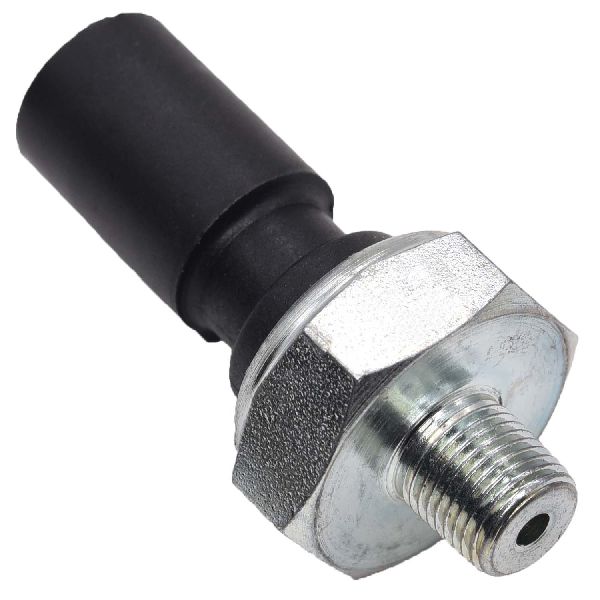
- Engine Oil Pressure Sensor/Switch
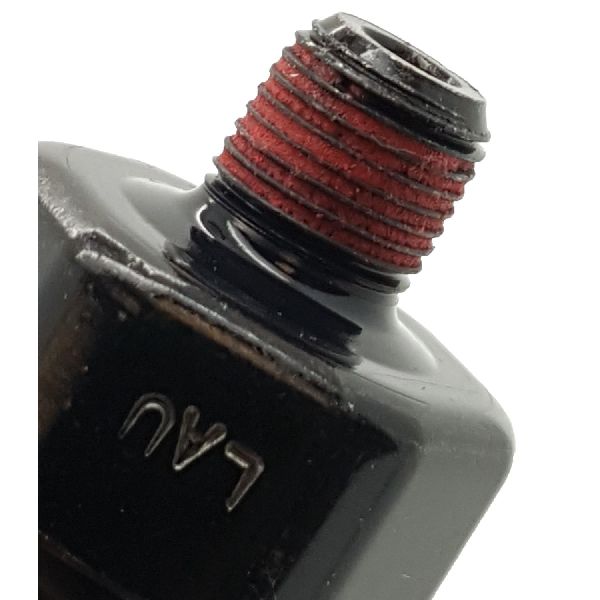
(OEM #94750-37100)— This is the most common cause of a P0520 code, due to high failure rates from internal leaking or electronic faults. The OEM part number 94750-37100 replaces the previous number 94750-37000.
Trusted brands: Standard Motor Products, Beck/Arnley, Genuine Kia/Hyundai
OEM price range: $40-$70
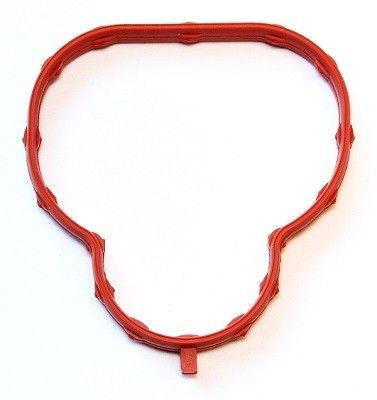
Aftermarket price range: $20-$50 - Intake Manifold Gasket
(OEM #28411-2G000)— The intake manifold must be removed to access the oil pressure sensor. The gasket is a single-use part and must be replaced to prevent vacuum leaks.
Related Codes That Often Appear With This One
- P0521 — This code indicates the Engine Oil Pressure Sensor/Switch Performance is out of range. It often appears with P0520 as they both relate to the sensor's signal integrity.
- P0524 — This code means "Engine Oil Pressure Too Low." If you see this with P0520, it is a critical combination that strongly suggests a true mechanical low oil pressure problem, not just a sensor circuit fault.
- P1326 — This is a Kia-specific code for the Knock Sensor Detection System (KSDS). This system was added via a product improvement campaign (PI1803) to detect the unique vibrations of failing rod bearings. If P0520 is present due to oil starvation causing bearing wear, P1326 will likely appear as well, putting the car into limp mode to prevent further damage.
Technical Service Bulletins (TSBs) & Recalls
- Recall SC147 (NHTSA 17V224000): This safety recall addresses the core engine defect. It instructs dealers to inspect for connecting rod bearing wear and replace the engine assembly if necessary due to manufacturing debris causing oil flow restriction.
- Product Improvement Campaign PI1803: This campaign details the installation of the Knock Sensor Detection System (KSDS) software. This update is designed to detect bearing wear vibrations and trigger code P1326, placing the vehicle in limp mode to prevent catastrophic failure. Having this update is often a prerequisite for engine warranty claims.
- TSB ENG222: This service bulletin outlines the official procedure for dealers to diagnose and confirm excessive oil consumption, defined as more than one quart per 1,000 miles. It involves a multi-step process including combustion chamber cleaning and multiple test drives.
- TSB CHA060 / Customer Satisfaction Program CS1604: While unrelated to the engine, this TSB addresses the common failure of the flexible steering coupler (part #56315-2K000-FFF), which causes a distinct clicking noise in the steering column.
Platform-Specific Known Issues
- Theta II Engine Failure: The 2.4L GDI engine in this vehicle is subject to a class-action lawsuit and recalls (NHTSA 17V224000 / Kia SC147) for premature connecting rod bearing wear. This is caused by metal debris from manufacturing that can block oil passages, leading to oil starvation, bearing failure, and potential engine seizure or fire. The settlement extended the warranty to a lifetime warranty for the engine short block for qualifying vehicles that have had the KSDS software update performed.
Mechanic-Grade Diagnostic Values
- Mechanical Oil Pressure at Idle (engine at normal operating temp) — expected: Greater than 11.4 PSI (78.4 kPa). Failure: Pressure below 11.4 PSI indicates a severe mechanical issue like worn bearings or a failing oil pump.
- Mechanical Oil Pressure at 4,000 RPM — expected: 56.9 - 71.1 PSI (392.3 - 490.3 kPa). Failure: Pressure significantly below this range points to a major lubrication system fault.
- Sensor Connector Pin 3 Voltage (Key On, Engine Off) — expected: 5V Reference. Failure: No voltage or significantly lower voltage indicates a wiring issue or a problem with the PCM's 5V reference circuit.
- Sensor Connector Pin 2 Continuity to Ground — expected: Near 0 ohms. Failure: High resistance or an open circuit (OL) indicates a bad ground connection, which can cause erratic sensor readings.
- Sensor Connector Pin 1 Signal Voltage (Key On, Engine Off) — expected: ~0.5V. Failure: 0V or 5V could indicate a short to ground or a short to power in the signal wire.
Scan Tool Commands That Help
- Kia GDS (Global Diagnostic System): Live Data / Data Stream for 'Engine Oil Pressure Sensor' — This is the primary function used for diagnosis. It allows a technician to view the voltage or pressure value being reported by the sensor in real-time. Graphing this data while wiggling wires or changing engine RPM can help identify intermittent opens, shorts, or a sensor that is slow to respond or provides an erratic signal.
- Kia GDS (Global Diagnostic System): Wiring Signal Interference Check — This specific test is used after the KSDS update has been performed and code P1326 is present. It helps differentiate between true bearing knock and electrical interference in the knock sensor circuit, which could be related to other faulty sensor wiring in the vicinity.
Wiring & Ground Locations
- Oil Pressure Sensor Connector — Screwed into the engine block, underneath the intake manifold, just above the oil filter housing.. This is the primary point of failure. The connector itself can become contaminated with oil from a leaking sensor, or the wiring can be damaged by heat and vibration.
- Sensor Connector Pinout (Common) — At the sensor connector.. Knowing the pinout is required for electrical testing. A common configuration is: Pin 1 - Signal (to PCM), Pin 2 - Ground, Pin 3 - 5V Reference (from PCM). This must be verified with a vehicle-specific diagram.
- Engine Ground Strap (91860-4C010 / 91860-2T011) — A heavy braided cable connecting the engine block or transmission case to the vehicle's chassis/frame rail.. A corroded or loose main engine ground can cause a floating ground, leading to unstable voltage references for multiple sensors, including the oil pressure sensor, resulting in erratic readings and fault codes.
Real Owner Repair Stories
- Multiple Kia-Forums.com users (2012 Kia Optima EX 2.4L) — Check engine light on with P0520, oil light flickering at idle.
❌ Tried (didn't work) Topping off engine oil.
✅ What actually fixed it The oil pressure sensor was found to be leaking oil directly into the electrical connector. Replacing the sensor (the most difficult part of the job) and thoroughly cleaning the oil out of the harness-side connector with electrical contact cleaner resolved the code. - BobIsTheOilGuy.com forum user (2011 Kia Sportage 2.4L Theta II (mechanically identical)) — Low oil light at idle, code P0014 (related to oil pressure for cam timing), but P0520 can also be a symptom.
❌ Tried (didn't work) Replacing the oil filter., Checking the oil pickup tube for clogs (it was clean).
✅ What actually fixed it A mechanical gauge confirmed extremely low oil pressure (2-3 PSI at cold start). This indicated severe internal engine wear, likely in the main bearings, causing excessive clearance and a loss of pressure. The ultimate resolution in such cases is engine replacement, often covered under Kia's extended warranty for this specific failure.
OEM Part Supersession History
94750-37000→94750-37100— Standard part revision, likely for improved durability or to address the internal leaking issue.
Heads up: The new part number is a direct replacement for the old one.
Model Year Variations Within This Range
- 2011-2015: All vehicles in this range were subject to the Knock Sensor Detection System (KSDS) software update via Product Improvement Campaign PI1803. A vehicle that has had this update will behave differently when a problem is detected (blinking MIL, limp mode, code P1326) than a vehicle without the update. A dealer can verify if the campaign was completed.
- 2011 vs 2012-2015: Some salvage yards and parts systems list the 2011 engine as a standalone year. While the core long block is physically the same (Theta II 2.4L GDI), there may be minor differences in external components or sensors. However, a mechanic familiar with these engines noted that any differing components can typically be swapped over from the original engine onto the donor.
Diagnostic Flowchart
Other Known Issues on This Vehicle
Issues unrelated to this code that are worth knowing about as an owner of this generation:
- Steering Coupler Failure 🟠 Medium — Extremely common, typically manifests as a clicking or clunking noise when turning the steering wheel, especially when stationary. Onset can be as early as 35,000 miles. (Ref: TSB CHA060 / Customer Satisfaction Program CS1604 extended warranty coverage for this part (P/N 56315-2K000-FFF).)
- Catastrophic Engine Failure (Rod Bearing) 🔴 High — A widespread, well-documented manufacturing defect. Failure can occur suddenly at a wide range of mileages (typically 60,000-120,000 miles) and often results in complete engine seizure. (Ref: Recall SC147; Class-action lawsuit resulted in a lifetime warranty extension for the engine short block on qualifying vehicles.)
- Excessive Oil Consumption 🔴 High — Very common issue related to piston ring design and carbon buildup. Many owners report consuming over 1 quart of oil per 1,000 miles. (Ref: TSB ENG222 provides a dealer procedure for verifying consumption.)
- Leaking Low-Pressure Fuel Hose 🔴 High — The fuel hose can crack over time due to engine heat, causing a fuel leak in the engine bay, which is a significant fire risk. (Ref: NHTSA Recall 18V907000)
- Malfunctioning Door Latch Assembly 🟡 Low — Common for door latches to fail, preventing the door from being opened from either the inside or outside. Often occurs around 100,000 miles.
Used vs. New Parts: Buying Guide for This Vehicle
When a used part is the smart pick: For this repair, a used part is only advisable for the intake manifold if it was damaged during removal. Given the high labor cost to access the sensor, using a used oil pressure sensor is a very poor decision, as its remaining lifespan is unknown and the failure rate is high.
Donor-vehicle mileage cap: roughly under 150000 miles for the part to have meaningful remaining life.
What to inspect on the donor part:
- For an intake manifold: Inspect for any cracks, especially around bolt holes.
- Ensure all threaded inserts are intact and not stripped.
- Verify the mating surfaces are not warped or deeply scored.
OEM-only on this vehicle (don't cheap out):
- Engine Oil Filter: This is critical. Aftermarket filters for this engine are a known cause of oil pressure issues. Always use the genuine Kia/Hyundai filter (26300-35505 or superseding number).
- Engine Oil Pressure Sensor: While some aftermarket brands are reputable, the cost of the OEM sensor is low compared to the high labor cost of the job. Using an OEM part (94750-37100) is the safest bet to avoid a repeat repair.
Aftermarket brands forum-validated for this vehicle:
- Standard Motor Products (SMP)
- Beck/Arnley
Brands owners have reported issues with on this vehicle:
- Unbranded, no-name sensors from online marketplaces. The quality control is non-existent, and failure out of the box or shortly after is common.
Real Owner Stories
Aggregated from forums and TSBs cited above. Mileages and costs reflect what owners reported in those sources.
2013 Kia Optima 2.4L GDI — 180000 miles
Symptoms: Steering is a little stiff and the car has high mileage; owner seeking advice on maintenance and potential issues like the steering coupler and engine codes.
What fixed it: The source discusses the common failure of the flexible steering coupler (part #56315-2K000-FFF) which causes clicking, though P0520 specifically requires sensor replacement or engine inspection.
Source hint: Reddit r/Cartalk thread titled '13 kia optima180k miles steering is a little/'
2011 Kia Optima EX 2.4L
Symptoms: Check engine light on with code P0520.
What fixed it: Replacement of the oil pressure sensor/switch, which is a common failure point often involving oil leaking into the electrical connector.
Source hint: https://www.kia-forums.com/threads/2011-optima-ex-2-4-p0520-code.347065/
Related OBD-II Codes
Frequently Asked Questions
Is my 2011-2015 Kia Optima covered under a warranty extension for the engine issues related to oil pressure?
Why is the oil pressure sensor so expensive to replace on the 2.4L GDI engine?
Can a specific oil filter cause the P0520 code on my Optima?
What does it mean if my oil light is flickering at idle along with the P0520 code?
Does Recall SC147 (NHTSA 17V224000) fix the P0520 oil pressure circuit issue?
How much oil consumption is considered 'normal' for the 2.4L Theta II engine according to Kia?
Helpful Videos
Used OEM Parts in Stock
New Aftermarket Parts Available


The information in this article is provided for general reference and educational purposes only. Vehicle specifications, procedures, and part compatibility can vary by production date, trim level, and region. Always consult your vehicle's factory service manual and verify part numbers before purchasing or performing repairs. Safety-critical components such as airbags, seat belts, and braking systems should be installed by a qualified professional.
- Kia Optima:
- 🧭 Diagnostic Flowchart
- 🎬 Helpful Videos
- 🛍️ Shop This Part
- What's Unique About the 2011-2015 Kia Optima
- Symptoms You May Notice
- Most Likely Causes
- Rare But Worth Checking
- Diagnosis Steps
- Parts You'll Likely Need
- Related Codes That Often Appear With This One
- Technical Service Bulletins (TSBs) & Recalls
- Platform-Specific Known Issues
- Mechanic-Grade Diagnostic Values
- Scan Tool Commands That Help
- Wiring & Ground Locations
- Real Owner Repair Stories
- OEM Part Supersession History
- Model Year Variations Within This Range
- Other Known Issues on This Vehicle
- Used vs. New Parts: Buying Guide for This Vehicle
- Real Owner Stories
- 2013 Kia Optima 2.4L GDI — 180000 miles
- 2011 Kia Optima EX 2.4L
- Related OBD-II Codes
- Frequently Asked Questions
- 🎟️ Get 5% Off