

P0520 on 1999-2004 Oldsmobile Alero 3.4L: Engine Oil Pressure Sensor Circuit Fixes
For a 1999-2004 Oldsmobile Alero with the 3.4L V6, code P0520 almost always points to a failed engine oil pressure sensor. It's a common failure item, but can be difficult to access, located above the starter motor. Expect to pay $15-$30 for an aftermarket sensor and $40-$50 for an OEM part. Always check oil level first, as a failing lower intake manifold gasket is a common related issue on this engine that can cause oil contamination and pressure problems.
- P0520 on your Alero most likely means the oil pressure sensor has failed.
- Always check your engine oil level and condition first; a low oil level or 'milky' oil can trigger this code and indicates a more urgent problem, likely a failed Lower Intake Manifold gasket.
- The sensor itself is inexpensive, but its location on the 3.4L V6 above the starter makes replacement challenging and requires a special socket.
- If you replace the sensor and the code persists, carefully inspect the wiring and connector for damage before suspecting a larger mechanical issue.
- Using a quality OEM (ACDelco) or reputable aftermarket brand for the replacement sensor is recommended to ensure a lasting repair.
What's Unique About the 1999-2004 Oldsmobile Alero
On the GM LA1 3.4L V6 engine used in the Alero, the most notable issue related to code P0520 is the difficult location of the oil pressure sensor. It is located on the front of the engine block (radiator side), but positioned above the starter motor, making access tight. Replacement often requires a special deep socket (1-1/16" or 27mm) and working from underneath the vehicle. Additionally, this engine is notorious for lower intake manifold (LIM) gasket failures, which can cause coolant to contaminate the oil, leading to sludge and genuine low oil pressure that can also trigger a P0520 code.
Symptoms You May Notice
- Check Engine Light is on.
- Red oil pressure warning light on the dashboard is on or flickering.
- Oil pressure gauge (if equipped) reads zero, maxed out, or fluctuates wildly.
- Visible oil leak from the sensor itself, often seeping through the electrical connector.
- Engine knocking or clunking sounds (in cases of actual low oil pressure).
- Replacing the oil pump before confirming a true low oil pressure condition with a mechanical gauge.
- Replacing the PCM without exhaustively testing the sensor, wiring, and connections first.
- Replacing only the oil pressure sensor when the root cause is oil contamination from a failing lower intake manifold gasket.
Most Likely Causes
- Failed Engine Oil Pressure Sensor 🔴 High Probability These sensors are a common failure point on many GM vehicles of this era. They can fail internally, causing incorrect electrical readings, or develop leaks where oil pushes through the sensor body and into the electrical connector.
How to confirm: After verifying oil level and checking for obvious wiring damage, this is the most likely cause. A definitive test involves checking the sensor's output voltage with a multimeter or comparing its reading on a scan tool to a mechanical oil pressure gauge. If the sensor connector is full of oil, the sensor has failed internally and must be replaced.
Typical fix: Replace the engine oil pressure sensor. Using an OEM ACDelco part is highly recommended to avoid premature failure of aftermarket units.
Est. part cost: $15-$50 - Damaged Wiring or Connector 🟡 Medium Probability The wiring harness to the sensor can become brittle from heat and age, or the connector can become contaminated with oil from a leaking sensor, causing a poor connection.
How to confirm: Visually inspect the wiring and connector for breaks, corrosion, or oil saturation. Use a multimeter to check for the correct reference voltage (typically 5V) and ground at the connector.
Typical fix: Repair the damaged section of wiring or clean/replace the connector pigtail.
Est. part cost: $5-$25 - Low Engine Oil Level or Poor Oil Condition 🟡 Medium Probability This engine is highly susceptible to Lower Intake Manifold (LIM) gasket failure, which allows coolant to mix with the engine oil. This contamination degrades the oil's lubricating properties and can lead to sludge, which can block oil passages and cause low pressure.
How to confirm: Check the engine oil dipstick. If the oil is low, milky ('milkshake' appearance), sludgy, or contains metal particles, it indicates a mechanical issue that needs to be addressed before replacing any sensors.
Typical fix: Top off or change the engine oil and filter using the manufacturer-specified viscosity (5W-30 is recommended). If coolant contamination is found, the lower intake manifold gaskets must be replaced with the updated metal-frame design (e.g., Fel-Pro MS 98014 T).
Est. part cost: $30-$70 for an oil change, $100-$200 for LIM gasket parts.
Rare But Worth Checking
- Failing Oil Pump or Clogged Oil Passages: While rare, a failing oil pump or sludge blocking oil passages can cause genuine low oil pressure, triggering the P0520 code. This is a serious mechanical issue that must be confirmed with a mechanical oil pressure test. Sludge is a higher risk on the LA1 if oil changes are neglected or if the LIM gaskets are leaking coolant into the oil.
- Faulty Powertrain Control Module (PCM): → Shop Engine Control Module (ECM) It is extremely unlikely for the PCM to be the cause, but if the sensor, wiring, and actual oil pressure have all been confirmed as good, the PCM's input circuit could be at fault.
Diagnosis Steps
- Check the engine oil level and condition. Look for a milky appearance indicating coolant contamination. Top off or change if necessary. Recommended oil is 5W-30.
- Connect an OBD-II scanner to confirm P0520 is the active code and check for any other related codes.
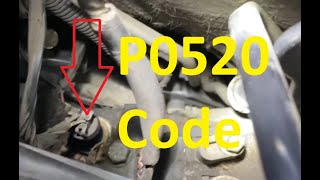
- Visually inspect the oil pressure sensor (located above the starter) and its electrical connector for any obvious signs of damage, corrosion, or oil leaks. If the connector is full of oil, the sensor has failed.
- With the ignition on and engine off, use a multimeter to test for reference voltage (around 5 volts) and a good ground at the sensor connector.
- If wiring seems okay, the next step is to test the actual oil pressure. Connect a mechanical oil pressure gauge in place of the sensor.
- Start the engine and compare the mechanical gauge reading to the manufacturer's specifications. For the LA1 3.4L, specs are approximately 15 psi at 1100 RPM when warm. Another source cites 10 psi at 500 RPM and 30-55 psi at 2000 RPM. If pressure is within spec, the sensor is faulty.
- If the mechanical gauge shows low oil pressure, there is a serious internal engine problem (e.g., oil pump, worn bearings, sludge from LIM gasket failure) that requires professional diagnosis.
- If pressure is good, replace the engine oil pressure sensor. A special 1-1/16" or 27mm oil pressure sensor socket is required for removal and installation.
Parts You'll Likely Need
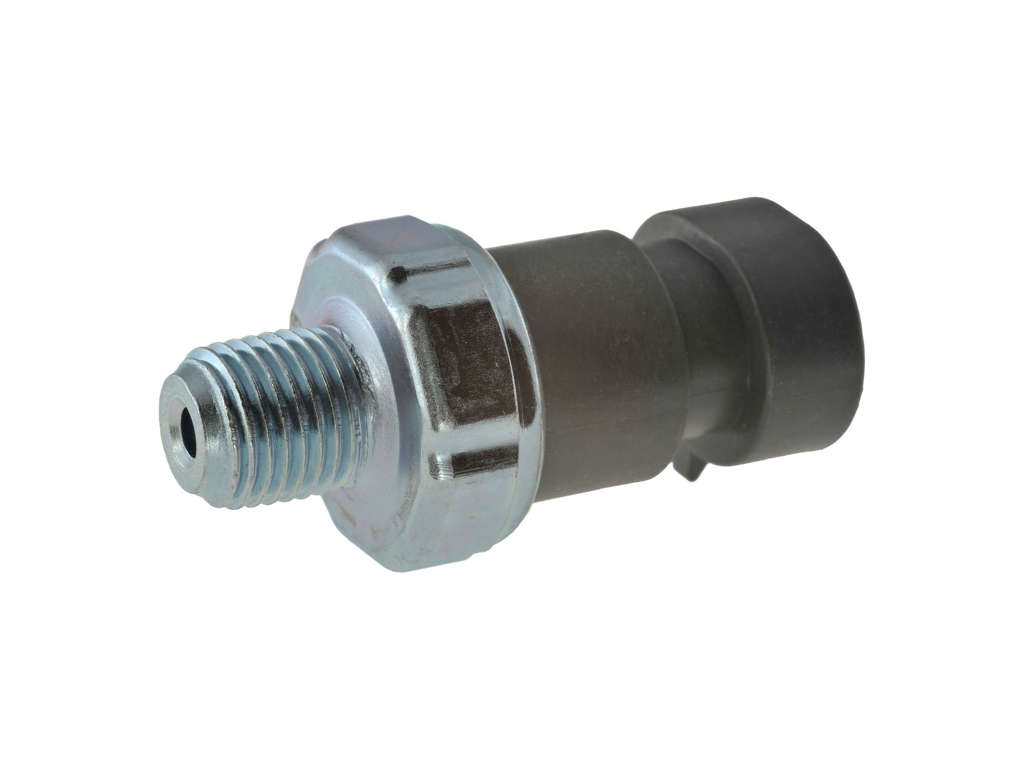
- Engine Oil Pressure Sensor / Switch
(OEM #19244505)— This is the most common part to fail and directly cause the P0520 code. It can fail electrically or start to leak oil through the connector. The ACDelco service part number is often D1846A, which may supersede the original GM part number.
Trusted brands: ACDelco (Recommended), Delphi, Standard Motor Products
OEM price range: $40-$50
Aftermarket price range: $15-$30 - Oil Pressure Sensor Socket — A special deep socket, typically 1-1/16 inch or 27mm, is required to remove and install the sensor due to its shape and tight location.
Trusted brands: Lisle, OEMTools, GearWrench
Aftermarket price range: $10-$20
Related Codes That Often Appear With This One
- P0521 — This code indicates 'Engine Oil Pressure Sensor/Switch Range/Performance', suggesting the sensor's readings are erratic or illogical, which often happens when the sensor is failing.
- P0522 — This code for 'Engine Oil Pressure Sensor/Switch Circuit Low Voltage' can appear if the sensor has an internal short or there is a wiring issue causing a low voltage signal.
- P0523 — This code for 'Engine Oil Pressure Sensor/Switch Circuit High Voltage' can appear if the sensor has an internal open or a wiring issue causing a high voltage signal.
- P0300-P0306 — If the P0520 is caused by a severe mechanical issue like a failing LIM gasket leading to coolant in oil, this can eventually cause misfires and trigger cylinder-specific misfire codes.
Technical Service Bulletins (TSBs) & Recalls
- TSB #03-06-01-010B: While not for P0520 directly, this is a critical TSB for the LA1 engine. It details the procedure for repairing engine oil or coolant leaks from the lower intake manifold gaskets using updated metal-frame gaskets. This is a common root cause of oil contamination that can lead to P0520.
Platform-Specific Known Issues
- The location of the oil pressure sensor on the 3.4L LA1 V6 is notoriously difficult to access. It is situated on the front of the engine block, above the starter motor, making replacement a time-consuming task for DIYers.
- A frequent and serious issue with the LA1 engine is the failure of the lower intake manifold (LIM) gaskets. The original plastic-framed gaskets degrade, allowing coolant to leak into the engine oil. This can cause oil sludging, bearing failure, and trigger low oil pressure codes like P0520. A 'milkshake' residue on the oil cap is a tell-tale sign.
Mechanic-Grade Diagnostic Values
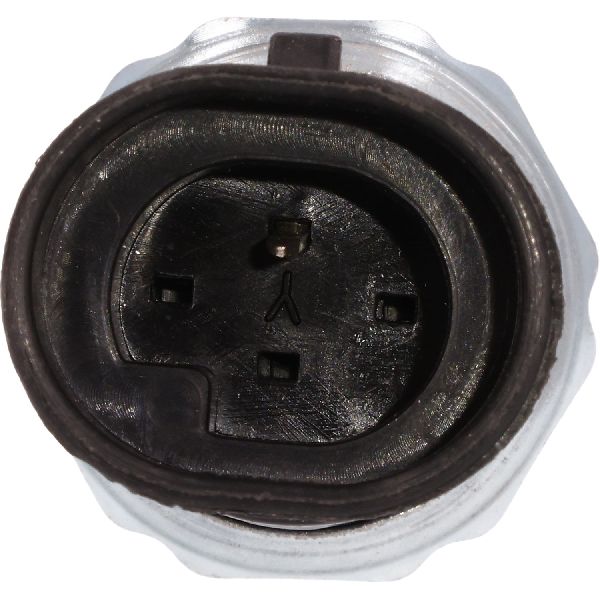
- Oil Pressure Sensor Connector Pinout — expected: This is a single-wire sensor. The connector (ACDelco PT100 / S-639) has one tan wire that carries the pressure signal directly to the instrument cluster, not the PCM. The sensor body provides the ground through the engine block.. Failure: The PCM sets P0520 based on an illogical condition, but live data for pressure is not available to the PCM on this platform. Diagnosis relies on testing the wire for continuity to the cluster and checking the sensor with a mechanical gauge.
Scan Tool Commands That Help
- Tech 2: Data Display — A GM Tech 2 scanner is unable to read live oil pressure data on this specific vehicle platform (and similar F-bodies). The oil pressure sensor's single wire sends its signal directly to the instrument panel cluster, bypassing the PCM. Therefore, a scan tool cannot be used to verify sensor operation for P0520 on this Alero.
Wiring & Ground Locations
- Oil Pressure Sensor Connector — On the front of the engine block, positioned above the starter motor.. This is a 1-way female connector, often gray, with a single tan wire. It can become contaminated with oil from a leaking sensor or brittle from heat, causing a poor connection and triggering the P0520 code.
- G103 / G104 — On GM vehicles of this era, major engine and PCM grounds are often located on studs at the rear of the cylinder heads or on the engine block near the thermostat housing. For example, G104 is often on the passenger side rear of the engine block.. While the sensor grounds through the block, the instrument cluster and PCM rely on these main grounds. A poor ground at G103 (often for the PCM and instrument cluster) or G104 can cause erratic gauge behavior and potentially contribute to fault codes, although it's less likely to be the direct cause of an isolated P0520.
Real Owner Repair Stories
- aleromod.com forum user (Oldsmobile Alero 3.4L V6) — Oil light coming on at idle, especially when warm. Oil pressure gauge dropping to zero.
❌ Tried (didn't work) Initially thought it was a major engine issue.
✅ What actually fixed it The problem was resolved by replacing the engine oil pressure sensor. The user noted the difficult access above the starter but confirmed the new sensor fixed the flickering light and gauge drop. The old sensor was leaking oil through the plastic connector.
OEM Part Supersession History
Unknown GM PN→ACDelco D1846A (GM 19244505)— Standard service part replacement for the original factory-installed sensor.
Heads up: The connector for the sensor is a single-pin weather pack style. The replacement pigtail is commonly ACDelco PT100 or Standard Motor Products S-639. Ensure the replacement sensor has the single, blade-style pin, as some other GM applications use a three-pin sensor that will not work.
Diagnostic Flowchart
Other Known Issues on This Vehicle
Issues unrelated to this code that are worth knowing about as an owner of this generation:
- Lower Intake Manifold (LIM) Gasket Failure 🔴 High → Shop Engine Intake Manifold — Extremely common, often occurring between 80,000 and 150,000 miles. Caused by original plastic-carrier gaskets degrading from Dex-Cool coolant. (Ref: TSB #03-06-01-010B)
- Coolant Elbow Failure 🟠 Medium — Common failure item. The plastic coolant bypass elbows located on the accessory bracket become brittle and crack, causing a coolant leak.
- Premature Brake Wear and Noise 🟡 Low — Widespread complaints of rapid brake pad and rotor wear, often accompanied by grinding noises, particularly in humid climates. (Ref: Multiple TSBs were issued for brake noise and wear early in the vehicle's life.)
- Ignition Switch Failure 🔴 High — Part of the massive GM ignition switch recall. The switch can move out of the 'Run' position while driving, causing a loss of power and disabling airbags. (Ref: NHTSA Recall 14V-400)
- Passlock Security System Malfunctions 🟠 Medium — Common issue where the Passlock anti-theft system fails, causing intermittent no-start conditions and a flashing 'Security' light on the dash.
Used vs. New Parts: Buying Guide for This Vehicle
When a used part is the smart pick: For this specific repair, using a used part is not recommended. The primary failure part, the oil pressure sensor, is an inexpensive wear item. A used sensor has an unknown lifespan and is likely to fail soon. Adjacent parts that may need to be removed, like the starter motor, can be sourced used from a reputable salvage yard if needed.
Donor-vehicle mileage cap: roughly under 80000 miles for the part to have meaningful remaining life.
What to inspect on the donor part:
- For a donor starter, check for corrosion on the terminals and ensure the gear teeth are not excessively worn or damaged.
- Look for a donor vehicle that does not show signs of a severe front-end collision, which could have damaged engine accessories.
- Avoid parts from vehicles that show evidence of the common lower intake manifold gasket failure (milky oil cap residue).
OEM-only on this vehicle (don't cheap out):
- Engine Oil Pressure Sensor: While aftermarket is available, forums and mechanics strongly recommend using an ACDelco OEM sensor to prevent premature failure and repeat repairs.
Aftermarket brands forum-validated for this vehicle:
- Fel-Pro (for Lower Intake Manifold Gaskets - the metal frame MS 98014 T is considered an upgrade over the OEM design)
- Delphi (often an OEM supplier, considered a good alternative for the sensor if ACDelco is unavailable)
- Standard Motor Products (SMP) (a reputable aftermarket brand for sensors and connectors)
Brands owners have reported issues with on this vehicle:
- Unbranded, 'white-box' sensors from online marketplaces are frequently cited as failing within months. For a part this difficult to access, the labor of re-doing the job outweighs the initial cost savings.
Real Owner Stories
Aggregated from forums and TSBs cited above. Mileages and costs reflect what owners reported in those sources.
1999-2004 Oldsmobile Alero 3.4L V6 — ~115000 miles
Symptoms: The original plastic-framed gaskets degraded, allowing coolant to leak into the engine oil, causing oil sludging and triggering low oil pressure symptoms.
What fixed it: Replaced the lower intake manifold gaskets with the updated metal-frame design (e.g., Fel-Pro MS 98014 T).
Source hint: vehicle_specific_issues
1999-2004 Oldsmobile Alero 3.4L V6
Symptoms: Red oil pressure warning light on the dashboard is on or flickering; visible oil leak from the sensor itself, often seeping through the electrical connector.
What fixed it: Replace the engine oil pressure sensor with an OEM ACDelco part.
Source hint: common_causes
3400 V6 (LA1)
Symptoms: Early signs of lower intake manifold gasket failure, including engine popping and oil contamination issues.
What fixed it: Addressing LIM gasket leaks to prevent oil sludging and subsequent pressure issues.
Source hint: bobistheoilguy.com - Forum discussions on the 3400 V6
Related OBD-II Codes
Frequently Asked Questions
Where is the oil pressure sensor located on my 3.4L Alero?
Does TSB #03-06-01-010B apply to my P0520 code?
What kind of oil should I use for my 1999-2004 Oldsmobile Alero 3.4L V6?
I see a 'milkshake' residue on my oil cap; is this related to the P0520 code?
What special tools do I need to replace the oil pressure sensor myself?
Is there a specific replacement part recommended for the oil pressure sensor?
Helpful Videos
![How to Fix P0520 Engine Code in 4 Minutes [2 DIY Methods / Only $6.92]](https://img.youtube.com/vi/BgVFr_19gZY/mqdefault.jpg)
We Have This Part in Stock


The information in this article is provided for general reference and educational purposes only. Vehicle specifications, procedures, and part compatibility can vary by production date, trim level, and region. Always consult your vehicle's factory service manual and verify part numbers before purchasing or performing repairs. Safety-critical components such as airbags, seat belts, and braking systems should be installed by a qualified professional.
- Oldsmobile Alero:
- 🧭 Diagnostic Flowchart
- 🎬 Helpful Videos
- 🛍️ Shop This Part
- What's Unique About the 1999-2004 Oldsmobile Alero
- Symptoms You May Notice
- Most Likely Causes
- Rare But Worth Checking
- Diagnosis Steps
- Parts You'll Likely Need
- Related Codes That Often Appear With This One
- Technical Service Bulletins (TSBs) & Recalls
- Platform-Specific Known Issues
- Mechanic-Grade Diagnostic Values
- Scan Tool Commands That Help
- Wiring & Ground Locations
- Real Owner Repair Stories
- OEM Part Supersession History
- Other Known Issues on This Vehicle
- Used vs. New Parts: Buying Guide for This Vehicle
- Real Owner Stories
- 1999-2004 Oldsmobile Alero 3.4L V6 — ~115000 miles
- 1999-2004 Oldsmobile Alero 3.4L V6
- 3400 V6 (LA1)
- Related OBD-II Codes
- Frequently Asked Questions
- 🎟️ Get 5% Off