

P0520 on 2010-2011 Saab 9-5 2.8L V6: Engine Oil Pressure Switch Circuit Fixes
On a 2010-2011 Saab 9-5 with the 2.8L V6, code P0520 is most often caused by a failed engine oil pressure switch. The part is relatively inexpensive, but its location on the engine makes replacement difficult, often requiring removal of other components for access. Before replacing the switch, it is critical to verify actual oil pressure with a mechanical gauge to rule out a serious internal engine problem.
- P0520 points to a fault in the oil pressure switch circuit, not necessarily a mechanical oil pressure problem.
- The most critical first step is to verify the engine's actual oil pressure with a mechanical gauge.
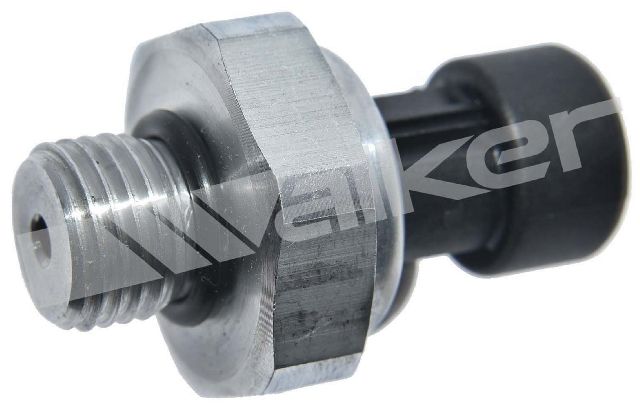
- The most common fix is replacing the engine oil pressure switch (part #12674782).
- This is a difficult DIY job due to the sensor's location; professional repair is recommended.
- Do not drive the vehicle with this code, as you could be risking severe engine damage.
What's Unique About the 2010-2011 Saab 9-5
The 2010-2011 Saab 9-5 is based on the General Motors Epsilon II platform, and its A28NER V6 engine is a GM design also used in vehicles like the Buick LaCrosse/Regal and Cadillac SRX. Therefore, issues and parts are often shared with these GM vehicles. For this code, the primary challenge is not the complexity of the system but the physical location of the oil pressure switch. It is notoriously difficult to access, often located near the oil filter housing or on the engine block in a tight spot, which can turn a simple part replacement into a significant labor effort—a common point of frustration for owners of this and similar GM V6 engines.
Symptoms You May Notice
- Service Vehicle Soon indicator illuminated
- Low Oil Pressure warning light on the dashboard
- Oil pressure gauge (if equipped) reading low or zero
- Engine may enter a reduced power or "limp" mode
- Engine running rough or making unusual noises (if actual low pressure exists)
- Replacing the oil pump without first verifying actual low oil pressure with a mechanical gauge.
- Replacing the ECM when the fault is in the wiring or the sensor itself.
- Immediately replacing the sensor without checking for oil contamination in the connector or testing the wiring harness for shorts/opens.
Most Likely Causes
- Faulty Engine Oil Pressure Switch 🔴 High Probability → Shop Engine Oil Pressure Switch These switches are a common failure item across many GM vehicles. They can fail internally, or develop leaks where oil seeps into the electrical connector, causing a short or poor connection. The plastic and terminals can degrade from heat and chemical exposure.
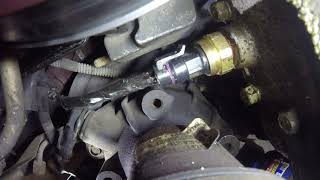
How to confirm: After confirming proper oil pressure with a mechanical gauge, test the switch for continuity. With the engine off, it should show low resistance (under 5 Ω) to ground. With the engine running (and good pressure), it should show infinite resistance (open). Visually inspect the connector for oil contamination. A special short socket (often 1-1/16&q 🎬 Watch: GM V6 oil pressure sensor replacement walkthroughuot;) may be needed for removal.
Typical fix: Replace the engine oil pressure switch and clean the connector thoroughly with electrical contact cleaner.
Est. part cost: $40-$70 - Wiring Harness or Connector Issue 🟡 Medium Probability The wiring is subject to engine heat and vibration. Oil leaking from a faulty switch is a very common cause of contamination that degrades the connector and wiring insulation over time, leading to shorts or opens.
How to confirm: Inspect the wiring to the oil pressure switch for any signs of damage, chafing, or melting. Check the connector for corrosion or oil saturation. Perform a continuity test on the signal wire between the ECM and the sensor connector. Check for a short to ground.
Typical fix: Repair the damaged section of the wiring harness or replace the connector pigtail. Ensure the new wiring is properly secured away from heat sources.
Est. part cost: $15-$30 - Low Engine Oil Level or Pressure ⚪ Low Probability This is not specific to the vehicle but is a fundamental possibility for this code. If oil pressure is genuinely low, the switch will not open, triggering the code. Causes can range from a simple low oil level to a failing oil pump or clogged oil passages.
How to confirm: Check the engine oil level and condition on the dipstick. Crucially, connect a mechanical oil pressure gauge to the engine and verify the actual pressure against 🎬 Watch: How to test oil pressure with a mechanical gauge the manufacturer's specifications. This is the most important diagnostic step to prevent catastrophic engine damage.
Typical fix: If oil is low, top it off and check for leaks. If pressure is confirmed to be low, further diagnosis is required to find the cause (e.g., worn oil pump, clogged pickup tube, internal engine wear).
Est. part cost: $10-$2000+
Rare But Worth Checking
- Faulty Engine Control Module (ECM): → Shop Engine Control Module (ECM) This is extremely rare. The SAAB diagnostic procedure only suggests this as a possibility after all other circuit and component tests have failed. Before condemning the ECM, all wiring and sensor tests must be completed.
Diagnosis Steps
- Check the engine oil level and condition. Top up if necessary.
- Connect an OBD-II scanner to verify code P0520 and check for any other codes. Note the freeze frame data.
- Using the scan tool, observe the oil pressure switch parameter. It should read "Low" with the engine off and "OK" or "High" with the engine running.
- CRITICAL: Connect a mechanical oil pressure gauge to the engine to measure the actual oil pressure. Compare this reading to the manufacturer's specifications. If pressure is low, stop and diagnose the mechanical issue.
- If mechanical pressure is good, proceed with diagnosing the electrical circuit.
- Locate the oil pressure switch. On the A28NER, this is typically on the engine block, often near the oil filter housing, and may require removing other components for access.
- Disconnect the harness connector at the switch. Inspect the switch and connector for oil contamination, corrosion, or damage. Clean or repair as needed.
- With the connector disconnected and ignition ON, the scan tool parameter should now read "OK" or "High". If it still reads "Low", there is a short to ground in the signal wire to the ECM.
- If the wiring is confirmed to be good and free of shorts, and mechanical pressure is normal, the oil pressure switch is faulty and should be replaced.
Parts You'll Likely Need
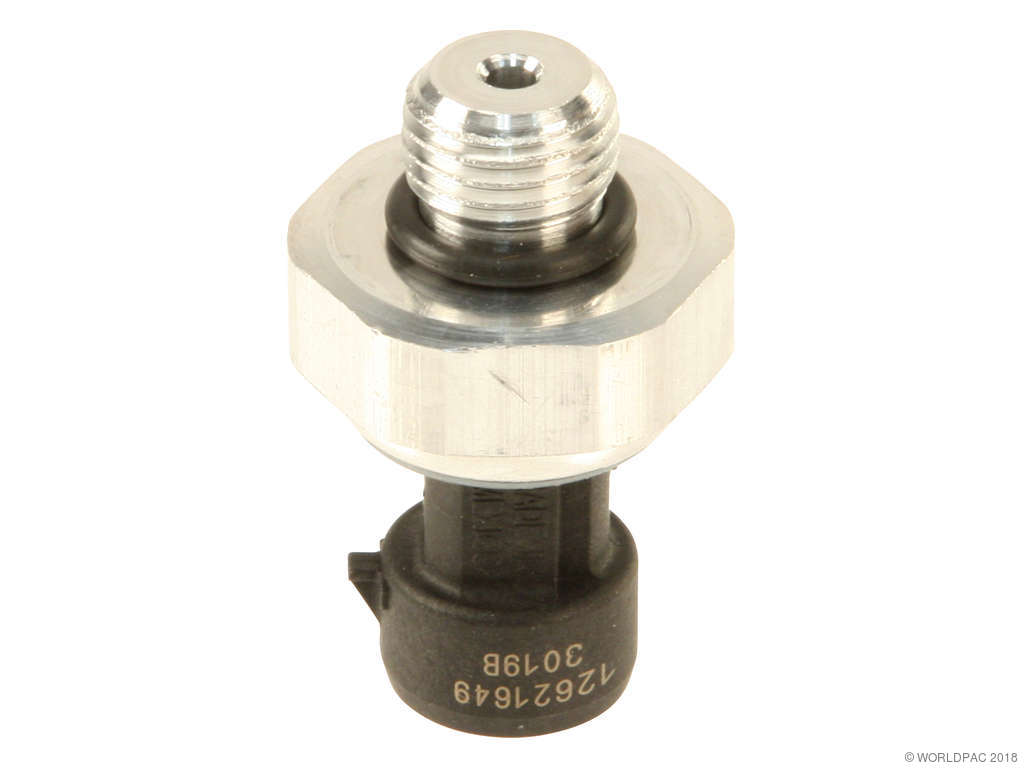
- Engine Oil Pressure Switch
(OEM #12674782)— This switch is the most common failure point that triggers a P0520 code, either by failing internally or by leaking oil into its own connector.
Trusted brands: Genuine Saab/GM, ACDelco
OEM price range: $50-$70
Aftermarket price range: $30-$50
Related Codes That Often Appear With This One
- P0521 — P0521 indicates an issue with the sensor's performance/range, which can be caused by a failing sensor that also triggers P0520.
- P0522 — P0522 indicates the circuit voltage is low, which is closely related to the P0520 fault condition where the circuit is seen as grounded for too long.
- P0523 — P0523 indicates the circuit voltage is high (open circuit), which could occur intermittently from the same failing sensor or wiring that causes P0520.
Technical Service Bulletins (TSBs) & Recalls
- While no specific Saab TSB for P0520 on this model was found, GM has issued TSBs for this code on other vehicles with similar engine families (e.g., Chrysler/GM TSB 18-034-14 for other models), which involves replacing the oil pressure sensor with a revised part. This indicates a known issue with the sensor design across the manufacturer's lineup.
Platform-Specific Known Issues
- The most significant vehicle-specific issue is the difficult location of the oil pressure switch on the A28NER V6 engine, which complicates what would otherwise be a simple repair. Access often requires removing other components, significantly increasing labor time and cost.
Mechanic-Grade Diagnostic Values
- Engine Oil Pressure Switch Resistance (Engine Off) — expected: Less than 5 Ω between the signal terminal and ground.. Failure: Resistance significantly higher than 5 Ω indicates a faulty switch.
- Engine Oil Pressure Switch Resistance (Engine Running with good pressure) — expected: Infinite resistance (Open Line / OL) between the signal terminal and ground.. Failure: Any low resistance reading indicates the switch is stuck closed.
- Mechanical Engine Oil Pressure (Hot Idle) — expected: Approximately 3.7 - 4.1 bar (54 - 59 PSI) with oil at 50-80°C.. Failure: Pressure significantly below this range indicates a mechanical issue (e.g., oil pump, pickup tube, bearing wear).
- Engine Oil Pressure Switch Tightening Torque — expected: 30 Nm (22 lbf ft). Failure: N/A
Scan Tool Commands That Help
- GM Tech 2 / GDS2: Read Data: Engine Oil Pressure Switch Parameter — This is the primary way to see what the ECM is interpreting from the sensor circuit. With ignition on/engine off, it should read 'Low'. With the engine running, it should read 'OK' or 'High'. If it reads 'Low' while the engine is running for more than 10 seconds, code P0520 will set.
- GM Tech 2 / GDS2: Circuit Test Verification — While not a direct command, the scan tool is used to verify circuit integrity. Disconnect the sensor; the parameter should change to 'OK'. If it doesn't, the signal wire is shorted to ground. Jumper the signal wire to ground; the parameter should read 'Low'. If it doesn't, there is an open or high resistance in the circuit.
Wiring & Ground Locations
- B37 Engine Oil Pressure Switch Connector — On the engine block, typically near the oil filter housing. Access is very tight.. This is the connection point for all electrical tests. Terminal A is the signal circuit, and the switch body provides the ground path through the engine block. Oil contamination here is a primary cause of failure.
- G25 — Main ground connection on the gearbox.. A poor main ground at the transmission can cause a variety of strange electrical issues, as it's a primary ground path for the engine and its sensors.
- K20 Engine Control Module (ECM) — In the engine bay.. The signal wire from the oil pressure switch terminates here. A continuity and short-to-ground test must be performed on the wire between the B37 connector and the K20 connector to rule out a wiring fault.
Real Owner Repair Stories
- Reddit user on r/saab (2006 Saab 9-3 Aero 2.8T V6) — Scan tool reading an impossible 128 PSI at idle, then dropping to zero above 3000 RPM.
✅ What actually fixed it The consensus from experienced users was a classic defective oil pressure sensor, which is known to fail in bizarre ways on this engine. - YouTube channel Kintsugi Moto (Saab 900 (older model, but demonstrates a critical diagnostic principle for genuine low pressure)) — Oil pressure light stayed on after starting. Mechanical gauge confirmed ZERO actual oil pressure.
❌ Tried (didn't work) Replacing the oil pressure sensor., Removing and cleaning the oil pressure relief valve (PRV).
✅ What actually fixed it The O-ring on the oil pickup tube inside the oil pan had failed, causing the oil pump to suck air instead of oil. This was confirmed by intentionally overfilling the crankcase with 2 extra quarts of oil, which submerged the leaking O-ring and allowed pressure to build, proving the pump was good but was being starved of oil.
OEM Part Supersession History
12570798, 12621659, 12621649→12674782— Part has been revised by GM to improve reliability.
Heads up: No known incompatibilities. The latest part number is the correct replacement for all previous versions.
Diagnostic Flowchart
Other Known Issues on This Vehicle
Issues unrelated to this code that are worth knowing about as an owner of this generation:
- Timing Chain Stretch 🔴 High — A widely reported issue on the GM 2.8L/3.0L/3.6L V6 family, often occurring between 70,000 and 120,000 miles. Can cause camshaft correlation codes (e.g., P0017) and, in severe cases, catastrophic engine failure.
- Haldex (XWD) All-Wheel Drive System Failure 🟠 Medium — The Haldex unit requires regular fluid and filter changes (every 30-40k miles). Neglect leads to pump failure, clogged filters, and loss of AWD, often indicated by a 'Service XWD' message.
- Premature Front Strut Failure (HiPer Strut) 🟠 Medium — The HiPer Strut front suspension on Aero XWD models is prone to premature failure, leading to clunking noises, poor ride quality, and fluid leaks, often between 50,000 and 80,000 miles.
- Ignition Coil Failure 🟡 Low — Like many V6 engines with coil-on-plug designs in a tight, hot engine bay, the A28NER can experience ignition coil failures, leading to misfires (P030x codes). This is a common maintenance item.
Used vs. New Parts: Buying Guide for This Vehicle
When a used part is the smart pick: For this repair, a used part is almost never a smart choice for the sensor itself, as it is an inexpensive wear item with high failure rates. A used wiring harness pigtail from a junkyard is a viable option if the original connector is broken or contaminated with oil.
Donor-vehicle mileage cap: roughly under 100000 miles for the part to have meaningful remaining life.
What to inspect on the donor part:
- For a wiring pigtail: ensure the plastic is not brittle or cracked.
- Check that the locking tab on the connector is intact.
- Inspect the wire insulation for flexibility; avoid any that are hard or cracking.
- Look for clean, corrosion-free metal terminals inside the connector.
OEM-only on this vehicle (don't cheap out):
- While not strictly 'OEM-only', using a Genuine GM/ACDelco oil pressure switch is highly recommended. The labor to access and replace this part is significant, so the risk of premature failure from a low-quality aftermarket part outweighs the small cost savings.
Aftermarket brands forum-validated for this vehicle:
- ACDelco (Original Equipment)
- Standard Motor Products (SMP)
Brands owners have reported issues with on this vehicle:
- Unbranded, 'white-box' sensors from online marketplaces are generally not recommended due to inconsistent quality and the high labor cost of a potential repeat repair.
Real Owner Stories
Aggregated from forums and TSBs cited above. Mileages and costs reflect what owners reported in those sources.
2010 Saab 9-5 2.8L Turbo V6
Symptoms: The 'Service Vehicle Soon' indicator illuminated along with a low oil pressure warning light on the dashboard.
What fixed it: Replacement of the engine oil pressure switch and thorough cleaning of the electrical connector with contact cleaner due to oil seepage.
Source hint: saabcentral.com
2008-2010 Saab 9-3 Aero 2.8L V6 (B284) — ~95000 miles
Symptoms: Owner reported concerns regarding timing chain stretch and oil pressure sensor failure, which are shared issues across this engine architecture.
What fixed it: Replacement of the oil pressure switch; discussions also noted the importance of monitoring for timing chain stretch (P0017).
Source hint: saabcentral.com
2010-2011 Saab 9-5 A28NER
Symptoms: The engine management system triggered a P0520 code; the owner noted the repair was complicated by the very difficult access to the sensor on the V6 block.
What fixed it: The oil pressure switch was replaced after removing obstructing components to gain access to the block near the oil filter housing.
Source hint: saabforum.nl
Related OBD-II Codes
Frequently Asked Questions
Is there a specific TSB for the P0520 code on my 2010-2011 Saab 9-5?
Where is the oil pressure switch located on the A28NER 2.8L Turbo V6?
Can I use a used oil pressure switch from a donor car to save money?
What part number should I look for if I need to replace the switch?
Could my P0520 code be related to the timing chain issues common on the 2.8T V6?
What should the oil pressure switch reading look like on a scan tool for this Saab?
Helpful Videos
We Have This Part in Stock


The information in this article is provided for general reference and educational purposes only. Vehicle specifications, procedures, and part compatibility can vary by production date, trim level, and region. Always consult your vehicle's factory service manual and verify part numbers before purchasing or performing repairs. Safety-critical components such as airbags, seat belts, and braking systems should be installed by a qualified professional.
- Saab 9-5:
- 🧭 Diagnostic Flowchart
- 🎬 Helpful Videos
- 🛍️ Shop This Part
- What's Unique About the 2010-2011 Saab 9-5
- Symptoms You May Notice
- Most Likely Causes
- Rare But Worth Checking
- Diagnosis Steps
- Parts You'll Likely Need
- Related Codes That Often Appear With This One
- Technical Service Bulletins (TSBs) & Recalls
- Platform-Specific Known Issues
- Mechanic-Grade Diagnostic Values
- Scan Tool Commands That Help
- Wiring & Ground Locations
- Real Owner Repair Stories
- OEM Part Supersession History
- Other Known Issues on This Vehicle
- Used vs. New Parts: Buying Guide for This Vehicle
- Real Owner Stories
- 2010 Saab 9-5 2.8L Turbo V6
- 2008-2010 Saab 9-3 Aero 2.8L V6 (B284) — ~95000 miles
- 2010-2011 Saab 9-5 A28NER
- Related OBD-II Codes
- Frequently Asked Questions
- 🎟️ Get 5% Off