

P0520 on 2003-2007 Saturn Ion 2.2L: Engine Oil Pressure Sensor Circuit Causes and Fixes
On a 2003-2007 Saturn Ion, code P0520 is almost always caused by a failed engine oil pressure sensor. A key symptom is oil leaking from the sensor's electrical connector onto the starter motor below. The part is inexpensive, but it is difficult to access, being located on the back of the engine above the starter motor. Always verify the engine oil level first.
- P0520 on your Saturn Ion points to an electrical fault with the oil pressure sensor circuit, not necessarily low oil pressure.
- Always check your oil level first; a low level can sometimes trigger this code.
- The most likely fix is replacing the oil pressure sensor. Check for oil leaking from the sensor's connector onto the starter motor as a tell-tale sign of failure.
- Be prepared for a difficult job as the sensor is located above the starter motor; a special socket is required.
- Be aware of major unrelated safety issues on this car, including the ignition switch recall and potential for power steering failure.
What's Unique About the 2003-2007 Saturn Ion
The Saturn Ion uses the GM Ecotec L61 engine, which it shares with cars like the Chevrolet Cobalt and HHR. On this engine platform, the primary challenge with a P0520 code is the physical location of the oil pressure sensor. It is tucked away on the rear of the engine block, above the starter motor, making what should be a simple sensor swap a more labor-intensive job. Owners should be aware that accessing this part from underneath the vehicle is the main difficulty in the repair.
Symptoms You May Notice
- Check Engine Light is on
- Oil pressure warning light is on or flashing on the dashboard
- Oil pressure gauge (if equipped) reads zero or behaves erratically
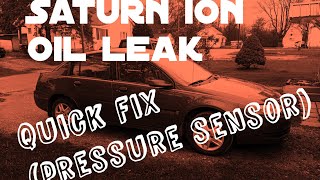
- Visible oil leak from the back of the engine, often dripping onto the starter motor. 🎬 Watch: How to find and fix this common oil leak
- Oil found inside the sensor's electrical connector upon inspection.
- Engine may make ticking or knocking noises if actual oil pressure is low
- Replacing the oil pump without first verifying low oil pressure with a mechanical gauge.
- Replacing the PCM when the actual fault is in the wiring or the sensor itself.
- Assuming the code means low oil pressure without checking for the common electrical failure of the sensor.
Most Likely Causes
- Faulty Engine Oil Pressure Sensor 🔴 High Probability The sensor is a common failure point due to age and heat cycles. A very frequent failure mode on the Ecotec is the sensor failing internally and leaking oil directly through its electrical pins and into the wiring connector.
How to confirm: Visually inspect the sensor, which is located above the starter. If the sensor and its connector are wet with oil, the sensor has failed internally and must be replaced. The definitive test is to compare its reading to a mechanical oil pressure gauge.
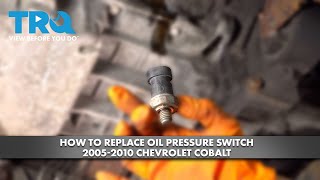
Typical fix: Replace the engine oil pressure sensor. This often requires a special oil pressure sensor socket (typically 27mm or 1-1/16 inch) and may require removing the starter for access.
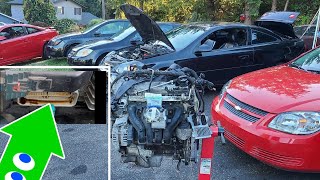
Est. part cost: $20-$50 - Damaged Wiring or Electrical Connector 🟡 Medium Probability The wiring harness to the sensor is in a hot, tight area on the back of the engine, making it susceptible to heat damage, abrasion, or oil contamination over time. Oil leaking from a failed sensor can saturate the pigtail, causing poor contact. 🎬 See how oil can travel through the wire harness
How to confirm: Visually inspect the wiring and connector for breaks, corrosion, or oil saturation. Perform a continuity and voltage drop test on the sensor's circuit.
Typical fix: Repair the damaged section of the wiring harness or replace the connector pigtail if it is oil-soaked or corroded.
Est. part cost: $10-$30 - Low Engine Oil Level ⚪ Low Probability The Ecotec 2.2L engine can consume oil between changes, especially as it ages. If the level becomes critically low, it can cause pressure fluctuations that may trigger a circuit fault code.
How to confirm: Check the engine oil level using the dipstick. If it is below the 'add' mark, this is a likely contributor.
Typical fix: Top up the engine oil to the correct level and monitor for consumption. Perform a fresh oil and filter change.
Est. part cost: $30-$60
Rare But Worth Checking
- Failing Oil Pump or Clogged Oil Passages: While rare, a mechanical failure causing genuinely low oil pressure can sometimes trigger this electrical code. This must be ruled out with a mechanical pressure gauge to prevent catastrophic engine failure.
- Faulty Powertrain Control Module (PCM): → Shop Engine Control Module (ECM) This is extremely rare. The PCM should only be considered after all other possibilities, including the sensor, wiring, and actual mechanical pressure, have been thoroughly ruled out.
Diagnosis Steps
- Check Engine Oil Level and Condition: Before any other step, verify the oil level is correct and the oil is not sludgy or contaminated. Top up or change the oil if necessary.
- Scan for Other Codes: Use an OBD-II scanner to confirm P0520 and check for any other related codes that could provide more diagnostic clues.
- Inspect Wiring and Connector: From under the vehicle, locate the starter motor on the rear of the engine. The oil pressure sensor is directly above it. Inspect the sensor and its electrical connector for oil saturation. If oil is present, the sensor has failed internally and is the cause.
- Test the Circuit: If the wiring is dry and looks okay, use a multimeter to check for the correct reference voltage (typically 5V) and a good ground at the sensor connector.
- Crucial Step: Verify Actual Oil Pressure: Connect a mechanical oil pressure gauge to the engine (usually at the port where the sensor is installed). Start the engine and compare the mechanical reading to the manufacturer's specifications. This step is critical to determine if you have a real oil pressure problem or just a sensor/circuit issue.
- Test or Replace the Sensor: If the mechanical oil pressure is good, the fault lies with the sensor or its circuit. Given the low cost of the sensor and the high labor to access it, it is often cost-effective to replace the sensor if the wiring tests okay. A special deep socket (often 27mm) is required for removal.
Parts You'll Likely Need
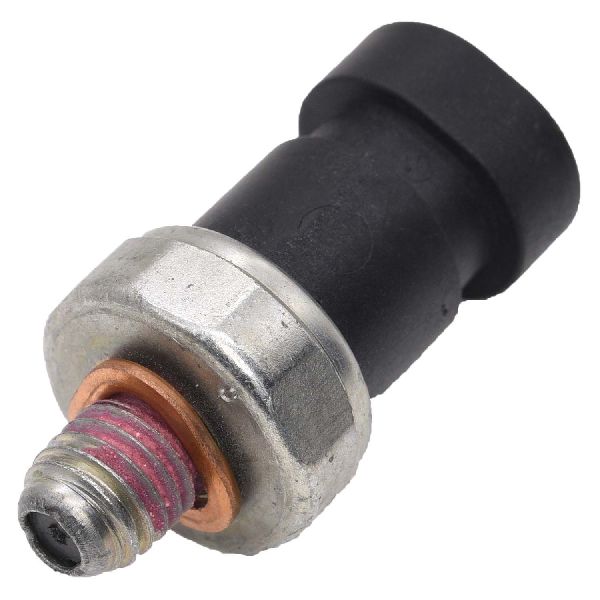
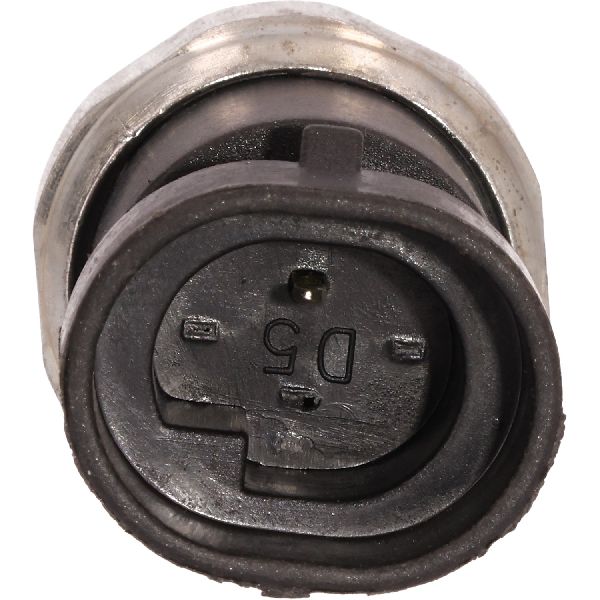
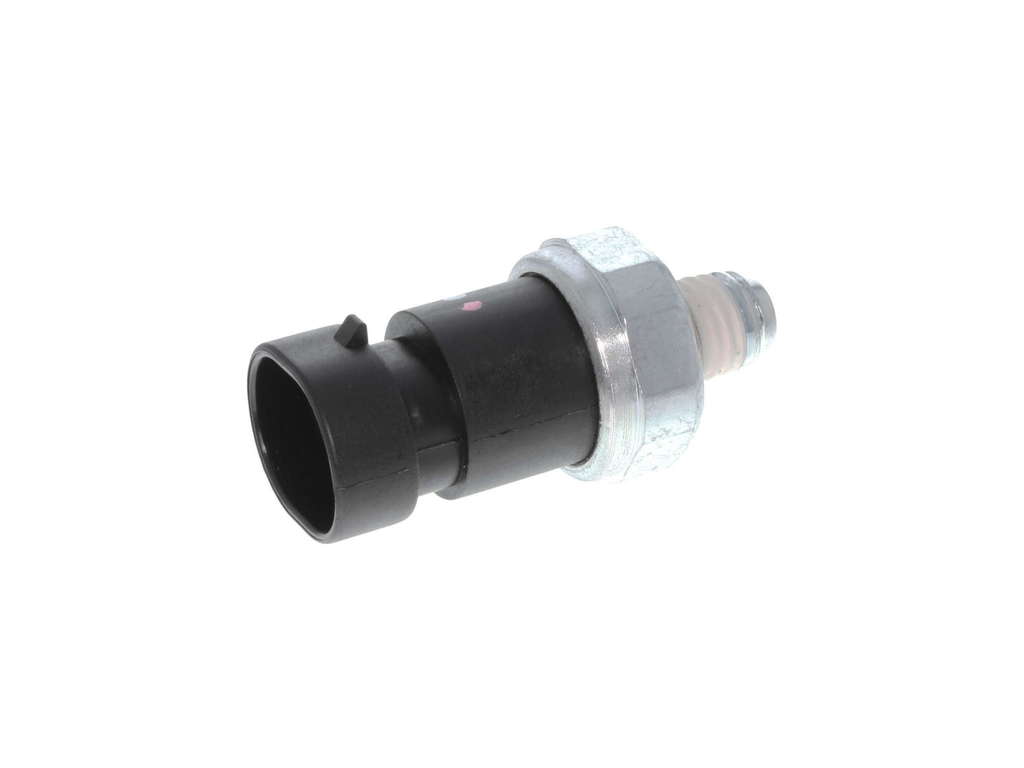
- Engine Oil Pressure Sensor / Switch
(OEM #12673723 (supersedes D1849A))— This is the most common failure point for code P0520. The sensor's internal seals fail, causing oil to leak through the connector and creating an electrical fault.
Trusted brands: ACDelco, Delphi, Standard Motor Products (SMP)
OEM price range: $35-$55
Aftermarket price range: $20-$40 - Oil Pressure Sensor Socket — A special deep socket (typically 27mm or 1-1/16") is required to remove and install the sensor due to its shape and tight location.
Trusted brands: Lisle, OEMTools
Aftermarket price range: $10-$20
Related Codes That Often Appear With This One
- P0521 — P0521 indicates an 'Engine Oil Pressure Sensor/Switch Range/Performance' problem, suggesting the sensor is providing a signal that is erratic or not within the expected range for given engine conditions, which is closely related to a circuit malfunction.
- P0522 — P0522 indicates 'Engine Oil Pressure Sensor/Switch Circuit Low Voltage', pointing specifically to a short to ground or a sensor that has failed in a low-voltage state, often caused by oil leaking into the connector.
- P0523 — P0523 indicates 'Engine Oil Pressure Sensor/Switch Circuit High Voltage', pointing specifically to an open circuit or a sensor that has failed in a high-voltage state.
Technical Service Bulletins (TSBs) & Recalls
- Special Coverage Adjustment 14329: While not for P0520, this document addresses the common and related issue of sudden loss of Electric Power Steering Assist on the Saturn Ion, a critical safety concern for owners.
Platform-Specific Known Issues
- The location of the oil pressure sensor on the 2.2L Ecotec engine is notoriously difficult to access. It is positioned on the back of the engine block, and the starter motor must typically be removed 🎬 Watch: Step-by-step oil pressure switch replacement walkthrough to gain access for replacement.
- A common real-world symptom is finding the starter motor and the bottom of the bellhousing covered in engine oil, which is a strong indicator that the oil pressure sensor directly above has failed and is leaking.
Mechanic-Grade Diagnostic Values
- Engine Oil Pressure Sensor Signal Voltage — expected: 0.5V to 4.5V, varying with engine RPM.. Failure: A constant reading near 0V or 5V, or a reading that does not change with engine speed, indicates a sensor or circuit fault.
- Sensor 5V Reference Voltage (at connector, KOEO) — expected: Approximately 5V on the reference wire (often Gray).. Failure: Significantly lower or no voltage indicates a problem with the PCM or the wiring between the PCM and the sensor.
- Sensor Resistance (disconnected) — expected: Close to 0 Ohms between the sensor body and its ground terminal.. Failure: A reading of 'OL' (Open Loop) on a multimeter indicates an internal failure of the sensor.
- Mechanical Oil Pressure (L61/L61-based engines) — expected: Minimum 26 PSI at idle with a warm engine; 30-45 PSI at 1850 RPM.. Failure: Pressure significantly below these specifications indicates a mechanical engine issue (e.g., oil pump, worn bearings), not a sensor circuit fault.
Hidden / Shadow Codes Worth Checking
- Immature or Old Code: On some GM vehicles, a P0520 may first appear as an 'immature' or 'old' code in advanced scan tools (like HP Tuners) before it triggers a Check Engine Light. This often happens on cold starts and may not illuminate the light until the fault occurs multiple times within a set number of drive cycles. (see via Advanced scan tools like HP Tuners, Tech2, or GDS2. A standard OBD-II reader may not show the code until it becomes a 'confirmed' DTC.)
Wiring & Ground Locations
- Oil Pressure Sensor Connector (3-wire) — On the sensor body, located on the rear of the engine block above the starter motor.. This is the primary point for testing. The wires are typically: Pin 1 - Ground (Black), Pin 2 - Signal (Tan/White), Pin 3 - 5V Reference (Gray). Verifying 5V power, good ground, and a changing signal voltage on these pins is the core of electrical diagnosis.
- G105 / G107 — G105 is on the lower left rear of the engine, above the starter. G107 is at the rear of the engine/cylinder head.. These are the main engine block and head ground points for the L61 engine. A loose or corroded ground at these locations can cause erratic sensor readings and various electrical faults, including P0520.
- Braided Ground Strap — Connects from the valve cover to the engine block on the exhaust side.. While not directly for the oil pressure sensor, this ground strap is crucial for overall engine sensor stability. It is known to become brittle and break, especially after service like a head gasket replacement, leading to hard-to-diagnose electrical issues.
Real Owner Repair Stories
- Cobalt SS Network Forum User (2010 Chevrolet Cobalt 2.2L (platform mate)) — P0520 code appeared only on cold starts. The Check Engine Light did not illuminate, but the code was present as an 'immature' code when checked with scanning software.
❌ Tried (didn't work) Clearing the code (it would return on the next cold start).
✅ What actually fixed it The user was advised that this is a classic symptom of a failing oil pressure sensor. The final fix confirmed by similar reports was replacing the oil pressure sensor/switch.
OEM Part Supersession History
D1849A→12673723— Standard part number update and potential internal design revision for improved reliability.
Model Year Variations Within This Range
- 2003-2004: These early models were available with a problematic VTi continuously variable transmission (CVT) which was dropped for 2005. While not directly related to the engine sensor, the interior and some electronics were also updated in 2005, so wiring harness routing or connector types could have minor differences.
- 2006: The base 2.2L L61 engine received a power boost from 140 hp to 145 hp.
- 2007: The 2.2L Ecotec engine was fitted with the ECU from the larger 2.4L engine, which may affect diagnostic parameters or software logic slightly compared to earlier years. Power output remained at 145 hp.
Diagnostic Flowchart
Other Known Issues on This Vehicle
Issues unrelated to this code that are worth knowing about as an owner of this generation:
- Defective Ignition Switch 🔴 High — Extremely common across all 2003-2007 models, subject to a major recall. (Ref: GM Recall N14V047000. The switch can unexpectedly move to the 'off' position while driving, causing a loss of engine power, power steering, and disabling the airbags.)
- Electric Power Steering (EPS) Failure 🔴 High — Common issue where power steering assist is suddenly lost, making the vehicle very difficult to steer at low speeds. (Ref: Special Coverage Adjustment 14329; also related to general steering complaints.)
- Premature Timing Chain Tensioner Failure 🔴 High — The original timing chain tensioner design can fail, causing chain rattle on startup, and if ignored, can lead to the chain skipping teeth or breaking, resulting in catastrophic engine damage (interference engine). (Ref: No specific recall, but an updated part design is available. It is a widely documented failure point on Ecotec engines of this era.)
- Ignition Control Module/Coil Failure 🟠 Medium — A common cause for engine misfires (P0300 series codes) and poor running conditions. The module and coil packs are often replaced as a single unit.
- Fuel Pump Module/Fuel Filter Corrosion 🟠 Medium — Subject to recalls for cracks in the fuel pump module and corrosion on the fuel filter, which can lead to fuel leaks. (Ref: Recalls 09V419000, 12V459000.)
Used vs. New Parts: Buying Guide for This Vehicle
When a used part is the smart pick: For this repair, a used part only makes sense for the connector pigtail. If the original connector is damaged or oil-soaked, a clean pigtail cut from a junkyard harness is a cost-effective solution. The sensor itself should always be purchased new due to its high failure rate and low cost.
Donor-vehicle mileage cap: roughly under 100000 miles for the part to have meaningful remaining life.
What to inspect on the donor part:
- For a wiring pigtail, inspect for any brittleness, cracking, or heat damage to the insulation.
- Ensure the connector's locking tab is intact and clicks firmly.
- Check the internal pins for any signs of corrosion or oil contamination.
- Ensure you get at least 4-6 inches of wire to make splicing easy.
OEM-only on this vehicle (don't cheap out):
- While not strictly 'OEM-only', using a quality sensor is critical. Cheap, unbranded sensors are known to fail quickly or be improperly calibrated, causing the code to return.
Aftermarket brands forum-validated for this vehicle:
- ACDelco (OEM)
- Delphi
- Standard Motor Products (SMP)
Brands owners have reported issues with on this vehicle:
- Unbranded, no-name sensors from online marketplaces have a high rate of premature failure for this specific application.
Real Owner Stories
Aggregated from forums and TSBs cited above. Mileages and costs reflect what owners reported in those sources.
2006 Saturn Ion 2.2L L61 I4
Symptoms: Oil was leaking from the sensor's electrical connector and dripping directly onto the starter motor.
What fixed it: Replaced the oil pressure sensor using a stubby ratchet, swivel, and a special socket.
Source hint: YouTube - 'Front oil leak Saturn ion Chevy Cobalt. Easy fix! (Oil pressure sensor)'
2003 Saturn Ion 2.2L L61 I4
Symptoms: Owner reported a P0520 code and was unable to locate the sending unit due to it being hidden behind the intake manifold.
What fixed it: Located the sensor above the starter near the oil filter for replacement.
Source hint: Saturn Forum - 'oil pressure sending unit' (https://www.saturnforum.com/forum/saturn-ion-17/oil-pressure-sending-unit-26159/)
Chevrolet Cobalt 2.2L L61 I4 (Platform Mate)
Symptoms: Difficulty removing the oil pressure sensor due to the extremely tight location above the starter.
What fixed it: Removed the starter motor to gain access to the sensor from the bottom of the vehicle.
Source hint: Cobalt SS Network - 'Oil pressure sensor removal. WTF?'
Related OBD-II Codes
Frequently Asked Questions
Where is the oil pressure sensor located on my 2.2L Ecotec Saturn Ion?
Does the Special Coverage Adjustment 14329 for the Saturn Ion cover my P0520 code?
What special tools do I need to replace the oil pressure sensor on my 2006 Ion?
Why is there oil dripping onto my starter motor and bellhousing?
Is there a recall for the engine issues causing my Check Engine Light?
Helpful Videos
We Have This Part in Stock


The information in this article is provided for general reference and educational purposes only. Vehicle specifications, procedures, and part compatibility can vary by production date, trim level, and region. Always consult your vehicle's factory service manual and verify part numbers before purchasing or performing repairs. Safety-critical components such as airbags, seat belts, and braking systems should be installed by a qualified professional.
- Saturn Ion:
- 🧭 Diagnostic Flowchart
- 🎬 Helpful Videos
- 🛍️ Shop This Part
- What's Unique About the 2003-2007 Saturn Ion
- Symptoms You May Notice
- Most Likely Causes
- Rare But Worth Checking
- Diagnosis Steps
- Parts You'll Likely Need
- Related Codes That Often Appear With This One
- Technical Service Bulletins (TSBs) & Recalls
- Platform-Specific Known Issues
- Mechanic-Grade Diagnostic Values
- Hidden / Shadow Codes Worth Checking
- Wiring & Ground Locations
- Real Owner Repair Stories
- OEM Part Supersession History
- Model Year Variations Within This Range
- Other Known Issues on This Vehicle
- Used vs. New Parts: Buying Guide for This Vehicle
- Real Owner Stories
- 2006 Saturn Ion 2.2L L61 I4
- 2003 Saturn Ion 2.2L L61 I4
- Chevrolet Cobalt 2.2L L61 I4 (Platform Mate)
- Related OBD-II Codes
- Frequently Asked Questions
- 🎟️ Get 5% Off