

P0520 on 2012-2016 Subaru Impreza: Engine Oil Pressure Switch Circuit Causes and Fixes
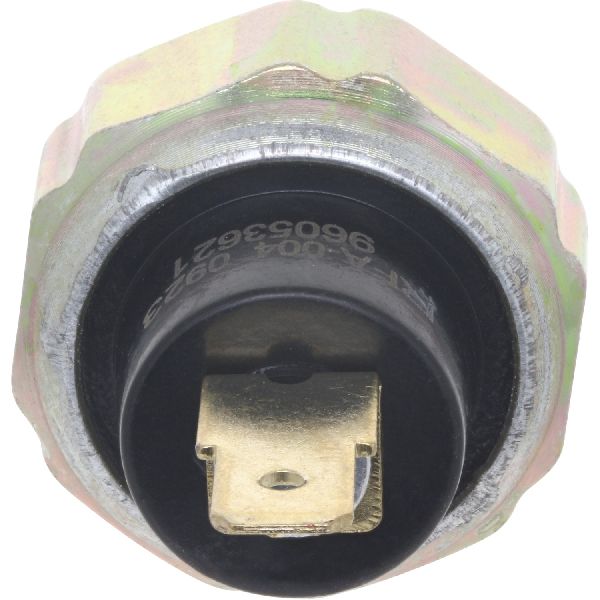
On a 2012-2016 Impreza, code P0520 is almost always a failed engine oil pressure switch. It's a known issue addressed by a Subaru TSB. Replacing the switch with the updated OEM part (25240AA060) is a simple, low-cost fix (~$25 for the part) and usually resolves the code.
- P0520 on this Impreza is an electrical circuit code, not a direct indicator of low oil pressure.
- The overwhelming cause is a faulty, inexpensive oil pressure switch. It's a known issue with a Subaru-approved updated part.
- Always check the oil level first, but expect to replace the oil pressure switch (part #25240AA060).
- When replacing the switch, use a 24mm deep socket and be extremely careful not to overtighten it into the aluminum engine block.
- Do not ignore this code, as it turns off your only warning for a potentially catastrophic loss of oil pressure.
What's Unique About the 2012-2016 Subaru Impreza
The FB20 engine in this generation of Impreza, along with the entire Subaru FB engine family, is known for premature failure of the original oil pressure switch. The issue was common enough that Subaru issued a Technical Service Bulletin (TSB 02-162-15R) acknowledging that the original switches had poor internal contacts. The updated part features nickel-plated contacts for better durability. The failure is so frequent that P0520 on this vehicle points almost exclusively to the switch itself, which often fails both electrically and by developing a physical oil leak through the body of the sensor.
Symptoms You May Notice
- Check Engine Light is on
- Oil pressure warning light on the dashboard is on or flickering
- Oil pressure gauge (if equipped) reads zero or behaves erratically
- Visible oil leak from the oil pressure switch itself, often dripping down the front of the engine block near the alternator
- Replacing the PCM before thoroughly checking the sensor and wiring.
- Assuming a major mechanical engine problem (low oil pressure) before replacing the inexpensive and high-failure-rate oil pressure switch.
- Replacing the switch with a cheap aftermarket part. Some owners report these failing quickly or having incorrect threading.
Most Likely Causes
- Faulty Engine Oil Pressure Switch 🔴 High Probability → Shop Engine Oil Pressure Switch The original-design sensor is a known failure point due to poor internal contacts, as acknowledged by Subaru TSB 02-162-15R. The switch is also a common source of oil leaks.
How to confirm: Inspect the switch for oil leaks. Test continuity: with the engine off, the switch should show continuity to ground; with the engine running, it should be an open circuit. Given the low part cost (~$25) and extremely high failure rate, direct replacement is a common and effective diagnostic step.
Typical fix: Replace the oil pressure switch with the updated OEM part (25240AA060). Use a 24mm deep socket. CRITICAL: Do not overtighten the new switch, as it threads into the aluminum engine block and can cause expensive damage. The torque spec is low, typically around 18 ft-lbs, but hand-tight plus a quarter turn is a safe field method.
Est. part cost: $20-$35 - Damaged Wiring or Connector ⚪ Low Probability Oil leaking from the faulty pressure switch can seep into the single-wire electrical connector and damage it over time. Wires can also become brittle from heat cycles in the engine bay.
How to confirm: Visually inspect the single-wire connector and nearby wiring for signs of oil saturation, corrosion, or physical damage. Ensure the connector is fully seated on the switch.
Typical fix: Clean the connector with electrical contact cleaner. If the connector or pigtail is damaged, it will need to be repaired or replaced.
Est. part cost: $5-$50 - Low Engine Oil Level ⚪ Low Probability While P0520 is an electrical code, an extremely low oil level is a critical safety check. Early FB-series engines were also known for excessive oil consumption issues, making regular oil level checks essential.
How to confirm: Check the engine oil level on the dipstick. This should be the first step for any oil-related warning light.
Typical fix: Top up the engine oil to the correct level using the manufacturer-specified 0W-20 viscosity oil.
Est. part cost: $10-$20
Rare But Worth Checking
- Faulty Powertrain Control Module (PCM): → Shop Engine Control Module (ECM) This is extremely unlikely. The PCM should only be considered after all other possibilities, including the sensor, wiring, and mechanical pressure verification, have been exhausted.
- Clogged Oil Passages / Failing Oil Pump: A true mechanical pressure issue would typically trigger other codes like P0524 (Engine Oil Pressure Too Low). This is a worst-case scenario that should be ruled out by testing with a mechanical oil pressure gauge if a new sensor and verified wiring do not resolve the issue.
Diagnosis Steps
- Check the engine oil level and condition on the dipstick. Top up if necessary with 0W-20 oil.
- Visually inspect the oil pressure switch and its electrical connector for oil leaks, contamination, or damage. The switch is located on the front of the engine, top side, near the alternator. It has a single-wire connector.
- If the switch is leaking oil, it is faulty and must be replaced.
- Given the high probability of failure, the most common and efficient next step is to replace the oil pressure switch (Part No. 25240AA060) using a 24mm deep socket. 🎬 Watch this DIY guide to fixing P0520 and P0524 codes
- CRITICAL WARNING: The switch threads into the aluminum engine block. Do NOT overtighten. Hand-tighten, then give it approximately a quarter turn with a wrench. Over-torquing can crack the engine block.
- If a new switch does not fix the issue, test the wiring harness for continuity and check for a proper signal at the connector.
- As a final verification step, use a mechanical oil pressure gauge to test the actual engine oil pressure to rule out a serious internal engine problem.
Parts You'll Likely Need
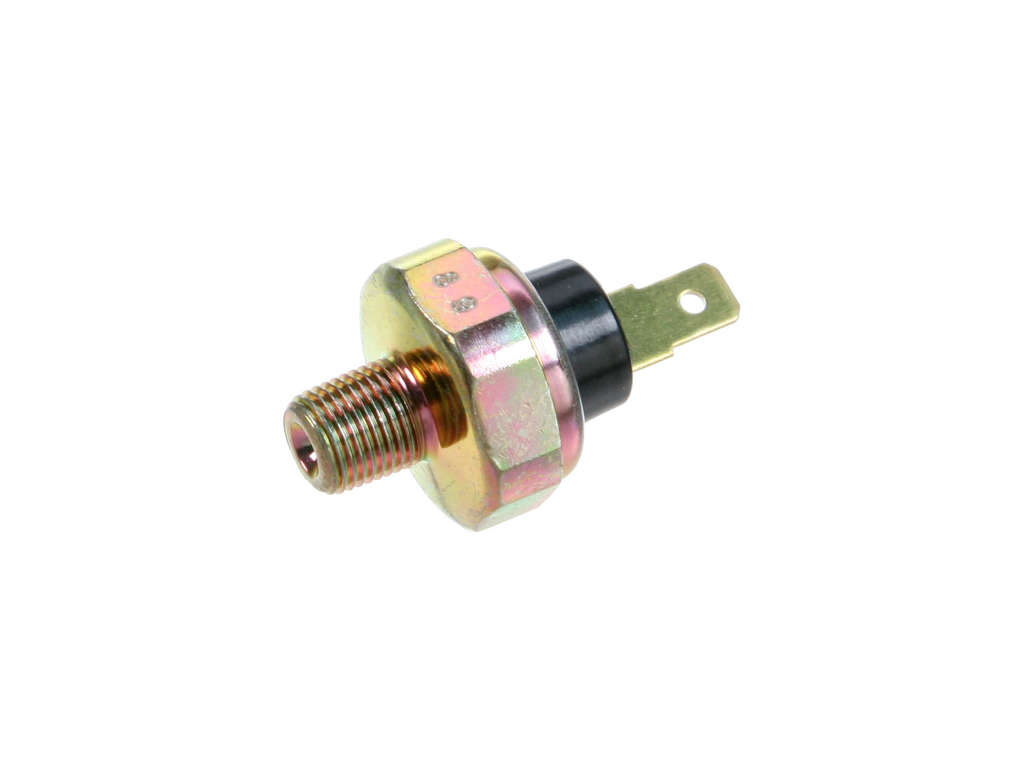
- Engine Oil Pressure Switch
(OEM #25240AA060)— This is the most common cause of P0520 on this engine. The original part was prone to failure, and Subaru released this updated part with nickel-plated contacts to fix the issue per TSB 02-162-15R.
Trusted brands: Subaru (Genuine), NTK, Standard Motor Products (SMP)
OEM price range: $20-$35
Aftermarket price range: $15-$30
Related Codes That Often Appear With This One
- P0524 — A sensor that has failed electrically might send a signal that the ECM interprets as both a circuit fault (P0520) and a critically low pressure reading (P0524).
Technical Service Bulletins (TSBs) & Recalls
- 02-162-15R: Addresses premature failure of the original oil pressure switch due to poor internal contacts and specifies an updated part (25240AA060) with nickel-plated contacts for improved durability.
- 02-141-13R: Details a redesigned rubber cap for the switch's electrical connector to provide better protection against moisture and contaminants for 2012 and newer models.
- 02-157-14R: While not for P0520, this TSB is highly relevant as it details the procedure for diagnosing and addressing the excessive oil consumption issue common on 2012-2013 Impreza models with the FB20 engine.
Platform-Specific Known Issues
- The original oil pressure switch is a known high-failure item, prompting Subaru to issue TSB 02-162-15R with an improved part.
- The switch is also a common source of oil leaks, where oil seeps through the body of the switch itself, not just the threads. This is a tell-tale sign of failure.
- A real-world example from a Subaru Crosstrek (platform mate) owner on Reddit involved a P0520 code caused by a cheap aftermarket switch that had failed. The wiring had also been poorly modified to fit the non-OEM part, compounding the issue.
Mechanic-Grade Diagnostic Values
- Mechanical Engine Oil Pressure at Idle (600-750 RPM) — expected: 69 kPa (10 psi) or more. Failure: Pressure below this threshold indicates a mechanical lubrication problem (e.g., oil pump, bearings), not a P0520 circuit fault.
- Mechanical Engine Oil Pressure at 3,000 RPM — expected: 206 kPa (30 psi) or more. Failure: Low pressure under load points to significant mechanical wear or a failing oil pump.
- Oil Pressure Switch Resistance (Engine OFF) — expected: Near 0 Ω (continuity to ground). Failure: An open circuit (infinite resistance) with the engine off indicates a failed switch.
- Oil Pressure Switch Resistance (Engine RUNNING) — expected: OL / Infinite Ω (open circuit). Failure: Continuity to ground with the engine running and oil pressure present indicates a failed switch.
- Voltage at Oil Pressure Switch Connector (Engine OFF, Ignition ON) — expected: Approximately 0V. Failure: Significant voltage present may indicate a short to power in the harness.
- Voltage at Oil Pressure Switch Connector (Engine RUNNING) — expected: Should rise to near battery voltage as the switch opens the path to ground.. Failure: Voltage remaining at 0V while the engine is running points to a switch that is stuck closed or a short to ground in the wiring.
Wiring & Ground Locations
- Main Engine Ground — Bolts to the top of the engine block or transmission bell housing, often sharing a bolt with the starter motor.. The oil pressure switch is a single-wire sensor that completes its circuit by grounding through the engine block. A corroded or loose main engine ground can create high resistance, potentially causing intermittent or false circuit codes like P0520. Ensuring this ground is clean and tight is a crucial step in diagnosing any engine-related electrical fault.
- Oil Pressure Switch Connector — A single-wire connector attached to the oil pressure switch, located on the front of the engine, top side, near the alternator. It is covered by a small rubber boot.. This is the primary point of failure in the circuit after the switch itself. Oil leaking from a failed switch often contaminates this connector, causing corrosion and poor contact. The wire can also become brittle from heat.
- ECM Pin for Oil Pressure Switch — On a similar platform, the oil pressure switch signal wire goes to Pin 31 on connector B134 of the ECM.. For advanced diagnostics, a technician can test for continuity and voltage directly at the ECM pin to isolate a wiring problem between the switch and the computer. This confirms if the fault is in the harness or is an internal ECM issue (which is rare).
OEM Part Supersession History
Unknown, various pre-2015 part numbers→25240AA060— The original switches were prone to internal contact failure and leaking. The updated part 25240AA060 features nickel-plated contacts for improved durability and reliability, as specified in TSB 02-162-15R.
Heads up: While older parts may physically fit, they are prone to the same failure. It is critical to use the updated OEM part 25240AA060 or a quality aftermarket equivalent that meets the revised specification.
Model Year Variations Within This Range
- 2012-2016: Subaru TSB 02-141-13R introduced a redesigned rubber cap for the oil pressure switch connector for 2012 and newer models to provide better protection from moisture and contamination. While the switch itself is the primary failure point, ensuring this updated cap is in place can help prevent future wiring issues.
- 2015: A minor facelift occurred in May 2015, which included revised grilles, headlamps, and interior touchscreens. While this did not directly affect the P0520 code, it's a known production change within the vehicle's generation.
Diagnostic Flowchart
Other Known Issues on This Vehicle
Issues unrelated to this code that are worth knowing about as an owner of this generation:
- Excessive Oil Consumption 🔴 High — Common in early FB20 engines (approx. 2012-2014 models). Caused by issues with piston ring design. Many owners report needing to add a quart of oil every 1,200-2,000 miles. (Ref: Subaru addressed this with a class-action lawsuit settlement, extended warranties, and TSB 02-157-14R, which involved an oil consumption test and potential short block replacement for affected vehicles.)
- Valve Spring Fracture 🔴 High — Affects 2012-2014 models. The valve springs could fracture, leading to engine noise, stalling, and failure to restart. (Ref: Subaru issued a recall (NHTSA Campaign ID: 18V722000, Subaru recall WTY-84) to replace the valve springs free of charge.)
- CVT Transmission Issues 🟠 Medium — Some owners experience shuddering, stalling, or a growling noise from the continuously variable transmission (CVT). The issue is often traced to a faulty torque converter lock-up solenoid within the valve body. (Ref: Subaru extended the warranty on the CVT for certain models to 10 years/100,000 miles to cover these issues.)
- Premature Wheel Bearing Failure 🟡 Low — Both front and rear wheel bearings can fail prematurely, sometimes in as little as 30,000-40,000 miles, causing a roaring or grinding noise that increases with vehicle speed.
- Brake Light Switch Malfunction 🟠 Medium — A faulty brake light switch could prevent brake lights from illuminating, prevent the vehicle from starting, or prevent the shifter from moving out of Park. (Ref: Subaru issued a recall (NHTSA Campaign ID: 19V880000) to replace the switch.)
Used vs. New Parts: Buying Guide for This Vehicle
When a used part is the smart pick: For this specific repair, a used part should never be considered. The original part has a known high failure rate, and the cost of a new, updated OEM part is very low.
What to inspect on the donor part:
- Not applicable. Do not purchase this part used.
OEM-only on this vehicle (don't cheap out):
- Engine Oil Pressure Switch - Given the known defect with the original design and the low cost of the updated OEM part (25240AA060), using anything else is a significant risk. Many forum posts detail premature failure of cheap aftermarket switches.
Aftermarket brands forum-validated for this vehicle:
- NTK
- Standard Motor Products (SMP)
Brands owners have reported issues with on this vehicle:
- Unbranded, 'white-box' parts from online marketplaces are frequently cited as failing quickly or having incorrect thread pitches.
Real Owner Stories
Aggregated from forums and TSBs cited above. Mileages and costs reflect what owners reported in those sources.
2013 Subaru XV Crosstrek FB20
Symptoms: The owner experienced a P0520 code and discovered the issue was caused by a cheap aftermarket switch that had failed. Additionally, the wiring had been poorly modified to fit the non-OEM part.
What fixed it: Replacing the failed aftermarket switch and addressing the damaged wiring.
Source hint: Go-Parts Forum Summary - '13 crosstrek oil pressure sensor'
2012-2013 Subaru Impreza FB20
Symptoms: Owner discussed the well-known oil burning issue where the engine requires a quart of oil every 1,200-2,000 miles, which can lead to low oil levels and related warnings.
What fixed it: The dealer process involves an oil consumption test and potentially replacing the short block under warranty as per TSB 02-157-14R.
Source hint: Reddit - r/subaru - 'Anyone have any experience with the fb20 oil burning issue?'
2012-2016 Subaru Impreza FB20
Symptoms: Check engine light with code P0520; owner was preparing to perform a DIY replacement of the oil pressure sensor.
What fixed it: Replacement of the oil pressure sensor.
Source hint: Reddit - r/car - 'Oil pressure sensor p0520'
Related OBD-II Codes
Frequently Asked Questions
Which specific Subaru TSB addresses the P0520 code and the updated oil pressure switch?
Is there a risk of engine damage when replacing the oil pressure switch on my FB20 engine?
My 2012 Impreza is burning a lot of oil; could this be related to the P0520 code?
What is the specific part number for the improved oil pressure switch for the 2012-2016 Impreza?
Is there a TSB for the electrical connector itself on the 2012-2016 models?
Can I use an aftermarket oil pressure switch to fix the P0520 code?
Helpful Videos
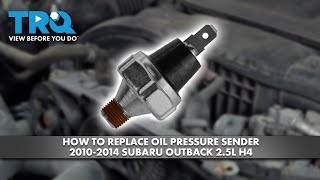
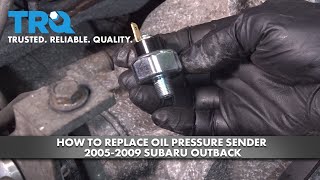
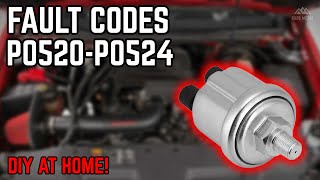
We Have This Part in Stock


The information in this article is provided for general reference and educational purposes only. Vehicle specifications, procedures, and part compatibility can vary by production date, trim level, and region. Always consult your vehicle's factory service manual and verify part numbers before purchasing or performing repairs. Safety-critical components such as airbags, seat belts, and braking systems should be installed by a qualified professional.
- Subaru Impreza:
- 🧭 Diagnostic Flowchart
- 🎬 Helpful Videos
- 🛍️ Shop This Part
- What's Unique About the 2012-2016 Subaru Impreza
- Symptoms You May Notice
- Most Likely Causes
- Rare But Worth Checking
- Diagnosis Steps
- Parts You'll Likely Need
- Related Codes That Often Appear With This One
- Technical Service Bulletins (TSBs) & Recalls
- Platform-Specific Known Issues
- Mechanic-Grade Diagnostic Values
- Wiring & Ground Locations
- OEM Part Supersession History
- Model Year Variations Within This Range
- Other Known Issues on This Vehicle
- Used vs. New Parts: Buying Guide for This Vehicle
- Real Owner Stories
- 2013 Subaru XV Crosstrek FB20
- 2012-2013 Subaru Impreza FB20
- 2012-2016 Subaru Impreza FB20
- Related OBD-II Codes
- Frequently Asked Questions
- 🎟️ Get 5% Off