

P0521 on 2008-2016 Audi A5 2.0L TFSI: Engine Oil Pressure Sensor Causes and Fixes
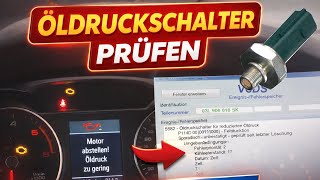
On the 2008-2016 Audi A5 2.0L TFSI, code P0521 most often points to a faulty oil pressure switch. This engine has two switches, and replacing the failed one (or both) is the most common fix. The blue (high-pressure) switch is a particularly common failure. Expect to pay $20-$50 per switch for an OEM-quality part.
- P0521 on your Audi A5 2.0T is most likely caused by one of the two inexpensive oil pressure switches on the oil filter housing.
- Before replacing any parts, you MUST verify the engine's actual oil pressure with a mechanical gauge to rule out a serious mechanical problem.
- Do not continue driving with an active oil pressure warning light, as there is a small but real risk of catastrophic engine damage.
- When changing the oil and filter, use only oil that meets VW 502 00 specifications and a high-quality filter from a brand like MANN or Genuine Audi to prevent oil system issues.
What's Unique About the 2008-2016 Audi A5
The 2.0L TFSI (EA888) engine in the B8/B8.5 generation A5 uses a two-stage oil pressure system to improve efficiency. This system uses two separate oil pressure switches—one for low RPM/pressure (typically brown) and one for high RPM/pressure (typically blue)—located on the oil filter housing. Code P0521 is frequently triggered on this platform due to the failure of one of these inexpensive switches, which can cause a frightening (but often false) oil pressure warning on the dashboard. The blue, high-pressure switch is a very common point of failure.
Generation note: The 2008-2016 model years cover the entire B8 and B8.5 generations of the Audi A5. The 2.0L TFSI engine used (EA888 Gen 2) is consistent across these years in its use of a two-stage oil pressure system, making the causes and fixes for P0521 very similar for the entire range. Later Gen 3 EA888 engines had significant updates, including to the oiling system, but these are not typically found in this vehicle range.
Symptoms You May Notice
- Check Engine Light is on
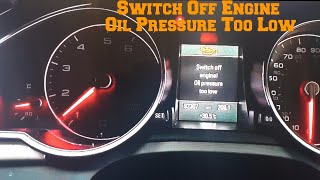
- Oil pressure warning light illuminated on the dashboard, sometimes flashing red with an audible chime
- Oil pressure gauge (if equipped) reading abnormally high or low
- In some cases, the engine may enter a reduced power or 'limp' mode
- Engine noise (tapping/knocking) if the oil pressure is genuinely low
- Immediately replacing the oil pump without verifying actual pressure. The switches are a far more common and cheaper failure point.
- Replacing the oil level sensor in the oil pan. The oil level sensor (G266) reports the quantity and temperature of oil, not the pressure, and is a separate system.
Most Likely Causes
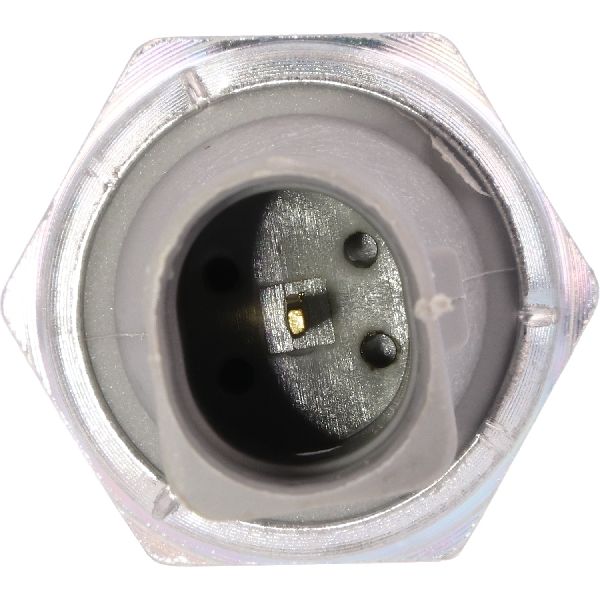
- Faulty Oil Pressure Switch 🔴 High Probability → Shop Engine Oil Pressure Switch The two oil pressure switches on the 2.0L TFSI engine are a very common failure point, leading to incorrect pressure readings. The blue high-pressure switch is particularly prone to failure.
How to confirm: After confirming the actual oil pressure is good with a mechanical gauge, the next step is to test the switches or replace them. Given their low cost, replacement is often the most practical diagnostic step. The low-pressure (brown) switch operates between 0.55-0.85 bar, while the high-pressure (blue) switch operates between 2.15-2.95 bar.
Typical fix: Replace the faulty oil pressure switch. Many owners choose to replace both the high and low-pressure switches at the same time. They are located on the oil filter housing and require a 24mm deep socket to replace.
Est. part cost: $20-$50 per switch - Low Engine Oil Level or Incorrect Oil 🟡 Medium Probability The EA888 Gen 2 engine is known for significant oil consumption, which can lead to low oil levels if not monitored. Using oil that does not meet VW/Audi specifications (e.g., VW 502 00) can also affect the oiling system's performance.
How to confirm: Check the engine oil level using the MMI system or a physical dipstick if one has been added. Verify the correct oil viscosity (e.g., 5W-40 synthetic meeting VW 502 00 spec) was used during the last oil change.
Typical fix: Top off the oil to the correct level or perform a full oil and filter change with manufacturer-specified oil.
Est. part cost: $60-$120 for oil and filter - Faulty Oil Pressure Control Valve (Solenoid) ⚪ Low Probability The variable displacement oil pump is controlled by a solenoid (N428). If this solenoid fails or its circuit is compromised, the pump may default to a high-pressure state or fail to switch stages correctly, triggering warnings. Unplugging the solenoid should cause the pump to default to high pressure, which can be a diagnostic step.
How to confirm: This is a more advanced diagnosis. It involves using a scan tool like VCDS to monitor commanded vs. actual oil pressure and testing the solenoid's circuit. A related code, P164D, often points more directly to this component.
Typical fix: Replace the oil pressure control valve/solenoid, which is located near the oil pressure switches on the oil filter housing.
Est. part cost: $50-$100 - Clogged or Incorrect Oil Filter ⚪ Low Probability → Shop Engine Oil Filter Adapter The oiling system is sensitive to flow. Aftermarket oil filters with poor construction can collapse or have incorrect bypass valve specifications, restricting flow and causing pressure deviations.
How to confirm: Inspect the oil filter. If it is not a genuine Audi part or a high-quality OEM equivalent (like MANN or Mahle), replace it.
Typical fix: Replace the oil filter with a genuine or MANN/Mahle-branded filter.
Est. part cost: $15-$25
Rare But Worth Checking
- Failing Oil Pump or Internal Blockage: → Shop Engine Oil Pump This is the worst-case scenario. A GM TSB mentions that a sticking oil pressure relief valve within the oil pump can cause P0521. On the EA888, clogged balance shaft screens are a known issue that can restrict oil flow and cause pressure loss, sometimes leading to catastrophic failure. If a mechanical gauge confirms that the oil pressure is genuinely low across all RPMs, the cause is likely a failing oil pump, a clogged oil pickup tube in the oil pan, or worn engine bearings.
- Wiring Harness or Connector Damage: While less common than sensor failure, the wiring to the oil pressure switches can become damaged or corroded, causing an erratic signal. A visual inspection of the harness near the oil filter housing is warranted, especially checking for oil contamination in the connectors, as the switches can leak oil through their electrical pins.
Diagnosis Steps
- Check the engine oil level and condition. Ensure it is full and the correct viscosity oil is being used.
- Scan the vehicle for any other fault codes. Codes related to camshaft timing or the pressure control solenoid (P164D) can provide important clues.
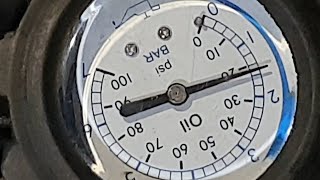
- CRITICAL STEP: Connect a mechanical oil pressure gauge in place of one of the sensors to verify the actual engine oil pressure. Compare the readings at idle and at 2000-3000 RPM to the manufacturer's specifications. Audi specs are often around 1.2-2.1 bar (17-30 psi) at idle and 3.0-4.0 bar (43-58 psi) at 3700 RPM when warm.
- If actual oil pressure is within spec, the problem is electrical. Inspect the connectors and wiring at both oil pressure switches for damage, corrosion, or oil contamination.
- If the wiring looks good, the most likely cause is a faulty oil pressure switch. Given their low cost, it is common practice to replace the suspect switch (or both). The low-pressure switch is brown (operates at ~0.7 bar) and the high-pressure switch is blue (operates at ~2.5 bar).
- If actual oil pressure is LOW, do not run the engine. The problem is mechanical. Further diagnosis is required to check the oil pump, oil pickup tube, and for internal blockages like clogged balance shaft screens.
- After repairs, clear the fault code and perform a test drive to ensure the issue is resolved.
Parts You'll Likely Need
- Engine Oil Pressure Switch (High Pressure, Blue)
(OEM #06H919081A)— This is the high-pressure switch for the two-stage system and a very common failure point for P0521. It is specified to operate between 2.15-2.95 bar.
Trusted brands: Genuine Audi/VW, Hella, Vemo, Bosch
OEM price range: $40-$60
Aftermarket price range: $15-$35 - Engine Oil Pressure Switch (Low Pressure, Brown)
(OEM #06D919081B)— This is the low-pressure switch. While less common to fail than the blue switch, it is often replaced at the same time as a preventative measure. It is specified to operate between 0.55-0.85 bar.
Trusted brands: Genuine Audi/VW, Hella, Vemo, Bosch
OEM price range: $30-$50
Aftermarket price range: $10-$30
Related Codes That Often Appear With This One
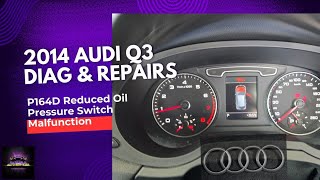
- P164D — This is an Audi-specific code for 'Oil Pressure Switch for reduced Oil Pressure - Malfunction'. It often appears alongside or instead of P0521 and points more directly to a fault in the two-stage pressure regulation system, often the low-pressure (brown) switch or its circuit.
- P0011 — Camshaft timing codes can be triggered by low oil pressure because the variable valve timing (VVT) system is hydraulically operated by engine oil. If oil pressure is insufficient, the camshaft phasers may not adjust correctly.
- P0341 — Similar to P0011, this camshaft position sensor code can be a downstream effect of a timing chain tensioner not getting adequate oil pressure, causing slack in the chain and an erratic cam signal.
Technical Service Bulletins (TSBs) & Recalls
- A general GM TSB (not Audi-specific but relevant to the code's nature) SB-10059078-4342 discusses the P0521 code.
- A service bulletin for some GM vehicles suggests P0521 can be caused by a sticking oil pressure relief valve within the oil pump assembly, which is a plausible, though rare, cause on Audis as well.
Platform-Specific Known Issues
- The 2.0L TFSI engine's two-stage oil pressure system, while efficient, adds a layer of complexity with two switches that can fail independently. The blue high-pressure switch is the most frequent culprit.
- Failure to use a high-quality oil filter (Genuine or MANN/Mahle) has been anecdotally linked to pressure regulation issues and intermittent warnings on this platform.
- Owner Experience: A user on the Audizine forums (thread title: 'DIY: B8 A4 2.0T Oil Pressure Switches') documented successfully resolving a P0521 code and flashing red oil light by replacing both the brown and blue switches. The repair took under an hour with a 24mm deep socket.
Mechanic-Grade Diagnostic Values
- Engine Oil Pressure at Idle (warm engine, >80°C) — expected: 1.2 - 2.1 bar (17.4 - 30.5 psi). Failure: Pressure below 1.2 bar indicates a mechanical issue; pressure within spec but code present points to electrical fault.
- Engine Oil Pressure at 2000 RPM (warm engine) — expected: 1.6 - 2.1 bar (23.2 - 30.5 psi). Failure: Pressure below 1.6 bar suggests a mechanical issue.
- Engine Oil Pressure at 3700 RPM (warm engine) — expected: 3.0 - 4.0 bar (43.5 - 58.0 psi). Failure: Pressure outside this range indicates a problem with the high-pressure stage of the oil pump or its control.
- Low-Pressure Switch (Brown) Activation Range — expected: 0.55 - 0.85 bar (8.0 - 12.3 psi). Failure: The switch should change state within this pressure window.
- High-Pressure Switch (Blue) Activation Range — expected: 2.15 - 2.95 bar (31.2 - 42.8 psi). Failure: The switch should change state within this pressure window.
- Oil Pressure Control Solenoid (N428) Voltage — expected: 8.4 - 12 volts. Failure: Voltage outside this range could indicate a wiring or ECU issue.
Hidden / Shadow Codes Worth Checking
- P164D: Reduced Oil Pressure Switch Malfunction. This is an Audi/VW specific code that often accompanies P0521. It points more directly to a fault with the low-pressure (brown) switch or the two-stage regulation system itself, rather than a general range/performance issue. (see via VCDS (VAG-COM), OBDeleven, or other professional European scan tools.)
Scan Tool Commands That Help
- VCDS (VAG-COM) or ODIS: Read Measuring Value Blocks (MVB) for Oil Pressure — Use this to see the status of the oil pressure switches (e.g., 'Oil pressure OK' or 'Oil pressure not OK') as seen by the ECU. This helps determine if the ECU is receiving the signal you expect based on mechanical gauge readings. For P164D, a VCDS log can show the exact RPM and temperature when the fault occurred.
- VCDS (VAG-COM) or ODIS: Output Test for Oil Pressure Control Valve (N428) — This allows the technician to command the oil pump to switch between its low and high pressure stages. While monitoring with a mechanical gauge, this test can confirm if the control solenoid (N428) and the pump's mechanical stage-switching are functioning correctly.
Wiring & Ground Locations
- Oil Pressure Switch Connectors — Located on the oil filter housing/oil cooler assembly, accessible from underneath the vehicle after removing the splash shield.. These connectors are prone to oil contamination from leaking switches. Oil inside the connector can disrupt the signal and trigger P0521. The switches themselves provide the ground path to the engine block.
- Engine Block Ground — The primary ground for the engine harness is typically a stud on the engine block itself, often near the high-pressure fuel pump or starter.. While not a primary cause for this specific code, a poor main engine ground can cause a variety of erratic sensor readings. Some aftermarket coil pack grounding kits for the EA888 engine attach to a ground point near the passenger side motor mount or behind the battery.
Real Owner Repair Stories
- Ross-Tech Forums user (2009 Audi A4 2.0T) — P164D code (related to P0521), oil pressure drops to 11 psi at warm idle.
❌ Tried (didn't work) Replaced low-pressure oil switch, Replaced oil pressure control valve (N428), Replaced intake camshaft control valve, Verified balance shafts were clean
✅ What actually fixed it The user suspected a wiring harness issue after having to replace multiple connectors. The problems began after a replacement harness was installed. The final resolution pointed towards fixing faulty wiring/connectors from the replacement harness, as multiple sensor faults appeared after it was installed. - YouTube user comment on 'AUDI CDN 2.0T timing' (Audi 2.0T with CDN engine code) — Oil pressure warning light comes on when slowing down.
✅ What actually fixed it The issue was clogged balance shafts, which restricted oil flow and caused a genuine low-pressure condition at low RPM. The fix involved cleaning or replacing the balance shafts.
OEM Part Supersession History
06H919081A (Blue, High-Pressure)→04E919081A— Part consolidation and potential internal design update for reliability.
Heads up: The new part is a direct replacement for the old one.06D919081B (Brown, Low-Pressure)→038919081K (sometimes listed as an alternative)— Part consolidation across multiple VAG platforms.
Heads up: 06D919081B is listed for 1.2-1.6 bar, while some replacements like 038919081K are listed for 0.55-0.85 bar. It is critical to use the switch with the correct pressure rating for the vehicle's system. For the B8 A5, the lower pressure switch should be in the 0.55-0.85 bar range.
Model Year Variations Within This Range
- 2008-2012 (B8): These models primarily use the EA888 Gen 2 engine, which is notorious for high oil consumption due to piston ring design. This makes low oil level a more frequent root cause for P0521 in earlier models.
- 2013-2016 (B8.5 Facelift): These models use a revised version of the EA888 Gen 2 engine with updated piston rings and a revised timing chain tensioner, which reduced but did not always eliminate oil consumption issues. The causes for P0521 remain largely the same as the earlier B8 models.
Diagnostic Flowchart
Other Known Issues on This Vehicle
Issues unrelated to this code that are worth knowing about as an owner of this generation:
- Timing Chain Tensioner Failure 🔴 High — Common on early EA888 Gen 1/2 engines (approx. before 2013). Failure can occur as early as 60,000 miles. Symptoms include a rattling noise on cold start. (Ref: Audi issued a technical service bulletin and a warranty extension for this issue. An updated tensioner design is the fix.)
- Excessive Oil Consumption 🔴 High — Widespread on 2009-2017 EA888 engines due to issues with piston ring design. Can manifest as needing to add oil every 500-1000 miles. (Ref: Subject of multiple class-action lawsuits. The fix often involves new pistons and rings, which is a major engine repair.)
- PCV Valve Failure 🟠 Medium — The diaphragm inside the PCV valve assembly is prone to tearing, typically every 40,000-60,000 miles. (Ref: No recall, but multiple part revisions exist (e.g., 06H103495AE, 06H103495AK). Symptoms include a whistling/howling noise from the engine bay, rough idle, and lean fault codes (P0171).)
- Water Pump / Thermostat Housing Failure 🟠 Medium — The plastic housing is prone to cracking and leaking coolant, often between 60,000 and 90,000 miles. Failure can cause overheating. (Ref: A class-action lawsuit led to a warranty extension for this component on some models. The replacement part is also made of plastic.)
- Carbon Buildup on Intake Valves 🟡 Low — As a direct-injection engine, fuel doesn't wash over the intake valves, leading to carbon accumulation over time (typically noticeable by 80,000-100,000 miles). Symptoms include misfires, rough idle, and reduced performance.
Used vs. New Parts: Buying Guide for This Vehicle
When a used part is the smart pick: For this specific repair, using used parts is not recommended. The primary failure components are low-cost electronic sensors (switches) that have a known failure rate. A used sensor carries a high risk of being near the end of its service life or already faulty.
What to inspect on the donor part:
- Not applicable as used parts are not advised.
OEM-only on this vehicle (don't cheap out):
- While not strictly 'OEM-only', it is highly recommended to use either Genuine VW/Audi parts or parts from an OEM supplier for the oil pressure switches. Cheap, unbranded sensors have a very high failure rate.
Aftermarket brands forum-validated for this vehicle:
- Hella
- Vemo
- Bosch
- Rein
Brands owners have reported issues with on this vehicle:
- Unbranded, no-name sensors from online marketplaces are frequently reported to be dead-on-arrival or fail shortly after installation.
Real Owner Stories
Aggregated from forums and TSBs cited above. Mileages and costs reflect what owners reported in those sources.
2009-2012 Audi A4 2.0T (B8)
Symptoms: P0521 code and a flashing red oil light on the dashboard.
What fixed it: Replacing both the brown (low-pressure) and blue (high-pressure) oil pressure switches using a 24mm deep socket.
Source hint: Audizine.com thread titled 'DIY: B8 A4 2.0T Oil Pressure Switches'
Related OBD-II Codes
Frequently Asked Questions
Which oil pressure switch is most likely causing the P0521 code on my Audi A5 2.0L TFSI?
My A5 is flashing a red oil light with an audible chime; is this related to P0521?
Can using a non-OEM oil filter trigger oil pressure codes on the EA888 engine?
What are the specific pressure ratings for the brown and blue switches on the A5 2.0L TFSI?
Does the P0521 code mean my oil pump is failing?
What oil specification should I use to avoid pressure issues in my 2008-2016 Audi A5?
Helpful Videos

We Have This Part in Stock

The information in this article is provided for general reference and educational purposes only. Vehicle specifications, procedures, and part compatibility can vary by production date, trim level, and region. Always consult your vehicle's factory service manual and verify part numbers before purchasing or performing repairs. Safety-critical components such as airbags, seat belts, and braking systems should be installed by a qualified professional.
- Audi A5:
- 🧭 Diagnostic Flowchart
- 🎬 Helpful Videos
- 🛍️ Shop This Part
- What's Unique About the 2008-2016 Audi A5
- Symptoms You May Notice
- Most Likely Causes
- Rare But Worth Checking
- Diagnosis Steps
- Parts You'll Likely Need
- Related Codes That Often Appear With This One
- Technical Service Bulletins (TSBs) & Recalls
- Platform-Specific Known Issues
- Mechanic-Grade Diagnostic Values
- Hidden / Shadow Codes Worth Checking
- Scan Tool Commands That Help
- Wiring & Ground Locations
- Real Owner Repair Stories
- OEM Part Supersession History
- Model Year Variations Within This Range
- Other Known Issues on This Vehicle
- Used vs. New Parts: Buying Guide for This Vehicle
- Real Owner Stories
- 2009-2012 Audi A4 2.0T (B8)
- Related OBD-II Codes
- Frequently Asked Questions
- 🎟️ Get 5% Off