

P0521 on 2012-2018 Audi A6 3.0T: Engine Oil Pressure Sensor Causes and Fixes
For the 2012-2018 Audi A6 3.0T, code P0521 is almost always caused by a faulty oil pressure switch. The engine has two, and the 2-pin violet switch (Part #06E919081G) is the most common failure point. Parts cost around $50-$150, but labor is high ($800-$1500) due to the switches being buried under the supercharger, a notoriously difficult job.
- Do not drive your vehicle with a P0521 code. Immediately verify actual engine oil pressure with a mechanical gauge to rule out catastrophic mechanical failure.
- The most likely cause is a faulty oil pressure switch, specifically the updated purple 2-pin switch (Part #06E919081G).
- Due to the extreme difficulty of accessing the switches under the supercharger, this is a very challenging DIY job (5/5 difficulty) and professional labor costs can be high.
- Always use an OEM-specification oil filter with the correct 155mm length to prevent oil pressure issues.
- When performing the repair, it is strongly recommended to replace both oil pressure switches at the same time to avoid future labor costs.
What's Unique About the 2012-2018 Audi A6
The Audi 3.0T V6 uses a two-stage oil pressure system with two separate switches (a high-pressure F22 and a reduced-pressure F378), making it more complex than single-sensor systems. P0521 is a very common code on this platform, and the issue is frequently the pressure switch itself rather than a major mechanical failure. Audi has released an updated, more durable purple-colored switch (part #06E919081G) to address this common failure. Accessing these switches is notoriously difficult as they are located under the supercharger in the 'V' of the engine, making the repair labor-intensive and costly.
Symptoms You May Notice
- Check Engine Light illuminated
- Red oil pressure warning light on the dashboard
- EPC (Electronic Power Control) light illuminated
- Message on dash: 'Do not exceed 4,000 RPM'
- Vehicle enters a protective 'limp mode', limiting engine RPM
- Message on dash: 'Reduced oil pressure. Switch off engine'
- Replacing the oil pump. The oil pump is rarely the cause of this specific code on the 3.0T engine; the issue is almost always electrical (the sensor) or related to the oil filter rather than a mechanical pump failure.
- Ignoring the specific oil filter requirements. Many owners and shops may use a generic filter that fits, but the specific 155mm length is critical for proper oil pressure regulation in this engine, as documented in a TSB.
Most Likely Causes
- Faulty Oil Pressure Sensor/Switch 🔴 High Probability The original-spec sensors on the 3.0T engine are a known common failure item. Audi released an updated part (06E919081G) to improve durability. The 2-pin violet switch is the most frequent culprit, often leaking oil through its electrical connector.
How to confirm: After confirming actual oil pressure is good with a mechanical gauge, the sensor is the prime suspect. A diagnostic scan tool can sometimes show erratic readings. Visually inspect the sensor's connector for oil contamination, which is a definitive sign of internal failure.
Typical fix: Replace both the high-pressure (F22) and reduced-pressure (F378) oil pressure switches. Due to the difficult access, it is highly recommended to replace both at the same time. This often requires a 24mm 12-point swivel socket and long extensions.
Est. part cost: $50-$150 - Incorrect or Clogged Oil Filter 🟡 Medium Probability → Shop Engine Oil Filter Adapter Audi issued TSB 2033379/3 stating that using an oil filter shorter than the specified 155mm (+/- 1mm) can cause oil pressure issues and trigger codes like P164D. This happens because a short filter fails to properly actuate a drain flap in the oil filter housing, causing a pressure drop.
How to confirm: Check the part number of the installed oil filter (OEM is 06E115562H or equivalent) and measure its length. If it is not an OEM-spec filter, it is a likely cause.
Typical fix: Replace the oil and filter with high-quality, OEM-specification parts. Ensure the filter is the correct 155mm length from a reputable brand like Mann, Mahle, or Audi Genuine.
Est. part cost: $20-$50 - Low or Incorrect Grade Engine Oil ⚪ Low Probability
How to confirm: Check the oil level using the MMI system and verify service records for the type of oil used. The oil should meet Audi's VW 502 00 or 504 00 specification.
Typical fix: Top off the oil to the correct level or perform a full oil change with the correct viscosity and specification oil.
Est. part cost: $70-$120
Rare But Worth Checking
- Damaged Wiring or Connector: The wiring harness to the sensors is in a tight, hot area under the supercharger. It can become brittle or damaged. Check for oil contamination in the connectors, which indicates a failed sensor leaking internally and requires cleaning or replacement of the connector pigtail.
- Clogged Oil Passages or Failing Oil Pump: → Shop Engine Oil Pump This is a serious mechanical issue but is a very rare cause for P0521 on this engine. This would only be considered after all sensor and circuit-related possibilities have been ruled out and low pressure has been confirmed with a mechanical gauge.
- Misaligned Plug in Oil Filter Housing (CREC Engines): → Shop Engine Oil Filter Adapter For 2015-2016 CREC engines, TSB 2041093/1 notes that a misaligned rubber plug in the oil filter housing can cause oil pressure faults like P164D, which may appear with P0521.
Diagnosis Steps
- First, check the engine oil level via the MMI and note its condition. Top up if low with VW 502 00/504 00 spec oil.
- CRITICAL STEP: Connect a mechanical oil pressure gauge to the engine to verify the actual oil pressure. A port is available on the oil filter housing. Do not proceed with replacing parts until you confirm the engine has good oil pressure.
- Expected pressure (hot idle): 1.2 to 2.0 bar (17-29 PSI).
- Expected pressure (at ~3700 RPM): 3.0 to 4.0 bar (43-58 PSI).
- If oil pressure is confirmed to be within specification, the issue is with the sensor circuit. If pressure is low, investigate mechanical causes (oil filter, pump, blockages).
- Inspect the wiring and connectors for the two oil pressure switches for any signs of damage, corrosion, or oil contamination. Oil in the connector confirms a failed switch.
- Given the high failure rate and difficult access, the most common and efficient repair is to replace both oil pressure switches (F22 and F378).
- After replacement, clear the codes with a scan tool and perform a test drive to ensure the issue is resolved.
Parts You'll Likely Need
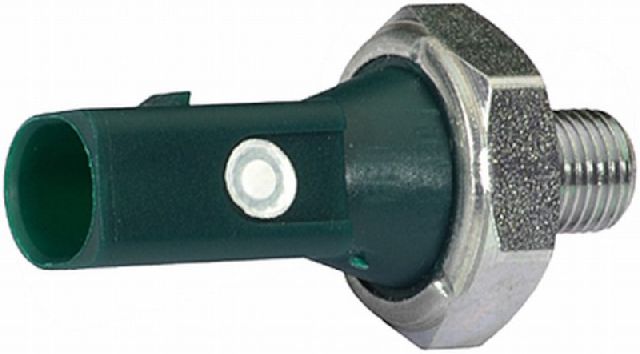
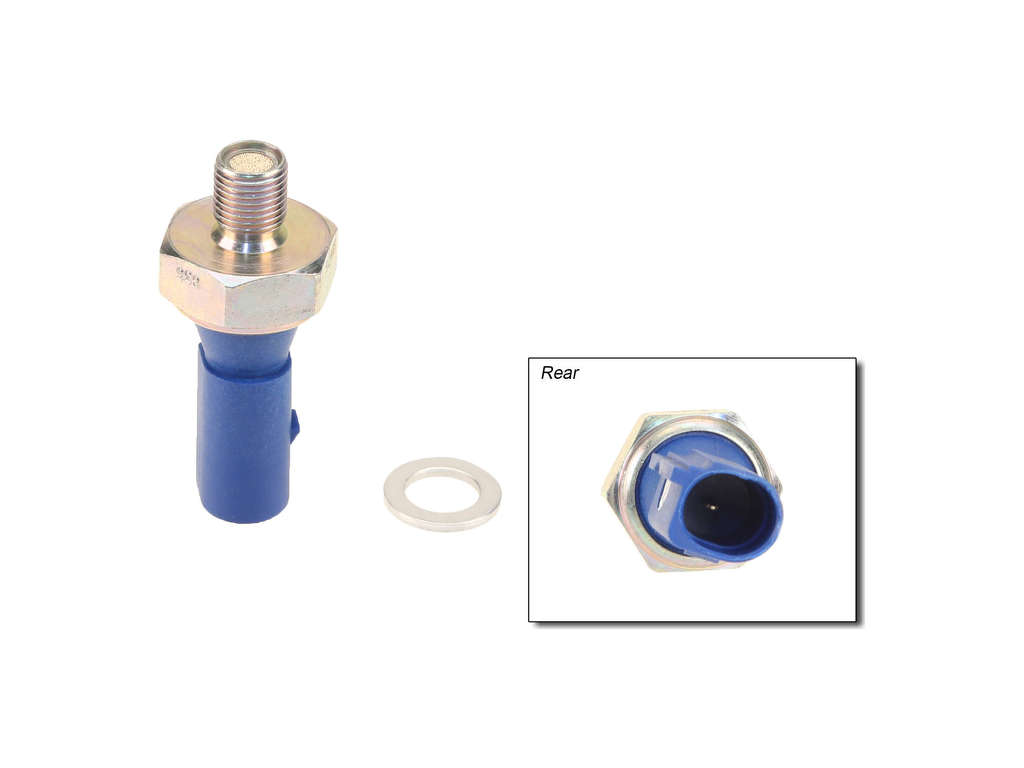
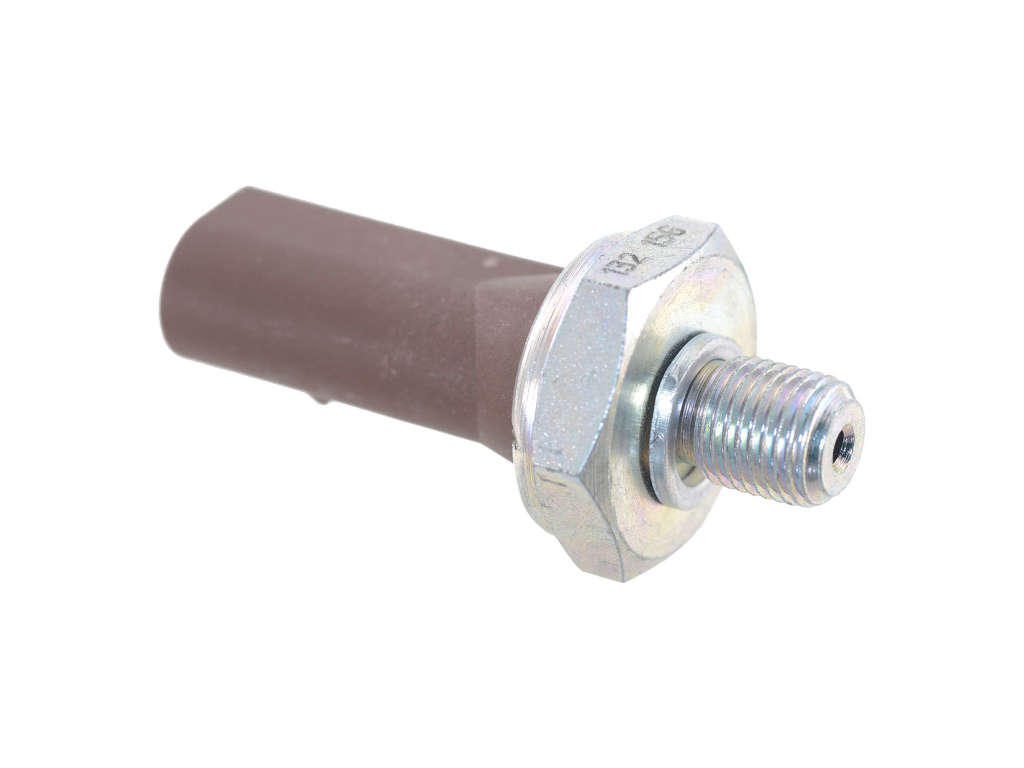
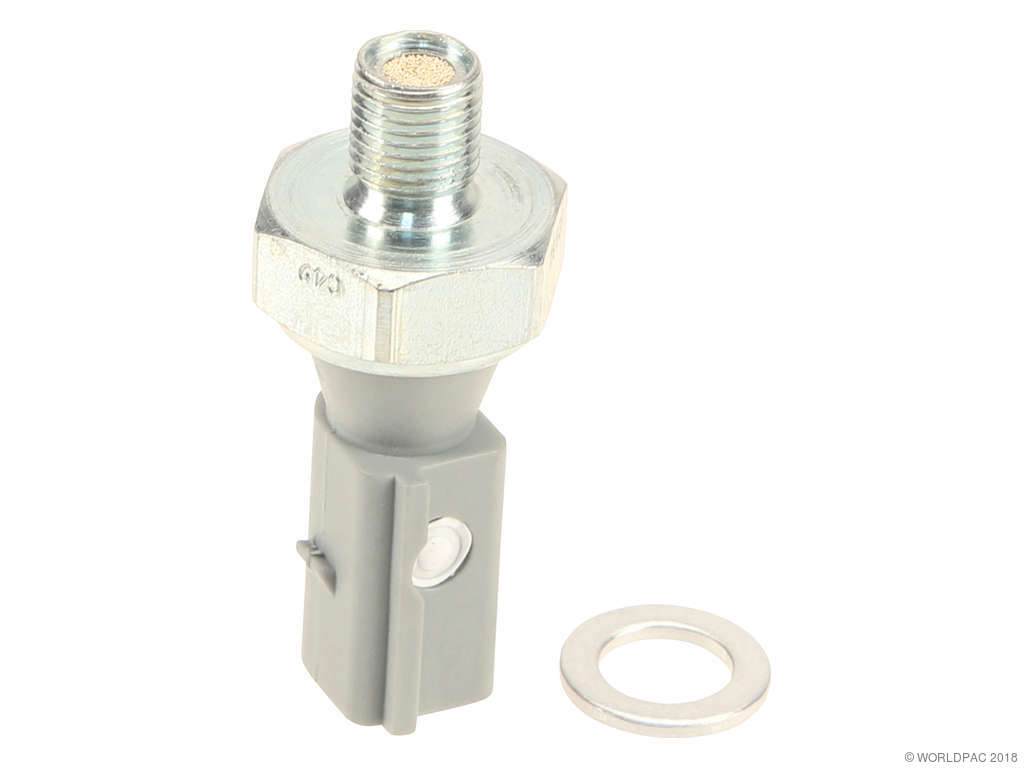
- Engine Oil Pressure Switch (Reduced Pressure, F378)
(OEM #06E919081G)— This 2-pin, violet-colored switch is the most common failure point for code P0521 on the 3.0T engine. This is the updated, more reliable part.
Trusted brands: Audi Genuine, Vemo, Hella, Bosch
OEM price range: $40-$70
Aftermarket price range: $25-$50 - Engine Oil Pressure Switch (High Pressure, F22)
(OEM #038919081K or 038919081P)— This is the 1-pin switch. Since accessing these sensors is very labor-intensive, it is highly recommended to replace this second switch at the same time.
Trusted brands: Audi Genuine, Bosch, Facet
OEM price range: $30-$60
Aftermarket price range: $15-$40 - OEM-Specification Oil Filter
(OEM #06E115562H)— Using an incorrect (short) oil filter is a known cause of oil pressure issues on this engine, per TSB 2033379/3.
Trusted brands: Mann-Filter, Mahle, Audi Genuine
OEM price range: $15-$25
Aftermarket price range: $10-$20 - Supercharger Gaskets and Seals — If the supercharger is removed for access, all associated single-use gaskets and seals must be replaced to prevent future intake and coolant leaks.
Trusted brands: Audi Genuine, Victor Reinz
OEM price range: $50-$100
Aftermarket price range: $30-$60
Related Codes That Often Appear With This One
- P164D — This Audi-specific code for 'Oil pressure switch for reduced oil pressure malfunction' is very common with P0521. It is often triggered by using an incorrect (too short) oil filter or a faulty reduced pressure switch (F378).
- P164B — This code for 'Oil Pressure Switch Malfunction' often points directly to a failure of the F22 high-pressure switch.
Technical Service Bulletins (TSBs) & Recalls
- TSB 2033379/3: Warns that an oil filter shorter than 155mm can cause oil pressure malfunctions.
- TSB 2041093/1: Notes a misaligned rubber plug in the oil filter housing on 2015-2016 CREC engines can cause oil pressure faults.
Platform-Specific Known Issues
- Access to the oil pressure switches is extremely difficult, located in the 'V' of the engine under the supercharger. This makes the repair very labor-intensive. While some skilled mechanics can perform the replacement without removing the supercharger using a combination of long extensions, hook tools, and a 24mm 12-point swivel socket, many shops will only perform the job by removing the supercharger.
- A Technical Service Bulletin (TSB 2033379/3) was issued highlighting that using an oil filter shorter than the specified 155mm can cause oil pressure faults and trigger code P164D.
Mechanic-Grade Diagnostic Values
- Oil Pressure Control Solenoid Valve (N428) Resistance — expected: Approximately 22-23 Ohms. Failure: Significantly higher resistance (e.g., 150+ Ohms) or an open circuit (OL) indicates internal failure of the solenoid.
- Oil Pressure Switch Status via VCDS/ODIS Live Data — expected: The scan tool should display the status of both switches (F22 and F378) changing state (e.g., from 'OK' to 'not OK', or 'Pressure Low' to 'Pressure High') as engine RPM is raised and lowered through the switchover threshold (approx. 2500-3500 RPM).. Failure: A switch that does not change state when RPMs are varied indicates it is stuck or has failed electrically.
- High-Pressure Switch (F22) Continuity Test — expected: With the engine off, the single-pin F22 switch should show continuity to ground.. Failure: No continuity (an open circuit) with the engine off suggests the switch has failed internally.
Scan Tool Commands That Help
- VCDS (VAG-COM) or ODIS: Read Measuring Value Blocks (MVB) / Advanced Measuring Values — This is a primary diagnostic step after checking mechanical pressure. It allows a technician to observe the live electrical status of both the high-pressure (F22) and reduced-pressure (F378) switches to see if the ECM is receiving the expected signal change as engine RPMs are varied. This can isolate a faulty switch from a wiring issue without physical access.
- ODIS (Audi Dealer Tool): Guided Fault Finding / Test Plan for P0521 — When diagnosing P0521, the official Audi software runs a specific, automated test plan. It prompts the technician to perform checks in a prescribed order, including guided pressure tests at specific RPMs, to systematically isolate the fault according to factory procedures.
Wiring & Ground Locations
- J623 Engine Control Module, Connector T56c, Pin 14 — The J623 ECM is located in the engine bay, typically inside a protective electronics box. T56c is a 56-pin connector on the module.. The signal wire from the F22 high-pressure switch terminates at pin T56c/14. A technician can test for continuity and voltage at this pin to diagnose a wiring fault between the ECM and the sensor without having to access the hard-to-reach sensor itself.
- Engine Block Ground Point — A primary engine ground strap/point is located on the right (passenger) side of the engine compartment, near the alternator.. A poor engine ground can cause floating voltages and erratic readings from various engine sensors, including the oil pressure switches. Ensuring this ground is clean and tight is a fundamental step in diagnosing any electrical fault.
- N428 Oil Pressure Regulation Valve Connector (T14l) — The N428 valve is located on the engine block, and its T14l connector is a key interface.. A fault related to the N428 valve (P164E) can sometimes accompany P0521. The T14l connector is involved with both the power supply and the ground control from the ECM, making it a critical point for testing the valve's circuit.
Real Owner Repair Stories
- AMS Diagnostics YouTube Channel (Audi A6 (C7 generation) 3.0T) — Persistent low oil pressure warning light on the dashboard, even after an initial repair attempt.
❌ Tried (didn't work) A previous garage had already replaced an oil pressure switch, but the fault remained., A second garage diagnosed a failed oil pump and recommended a costly replacement.
✅ What actually fixed it The actual fault was a failed Oil Pressure Control Solenoid Valve (N428). The valve had high internal resistance (153 Ohms vs. 22.5 Ohms on the new part), causing an open circuit fault. Replacing the N428 solenoid, which regulates the switch between high and low pressure modes, resolved all warnings.
"I Checked Everything" — The Actual Cause
- For code P0521, the equivalent of a 'smoke test clean' scenario is when a mechanical oil pressure gauge confirms that the engine's actual oil pressure is perfectly within specification, yet the P0521 code and dashboard warnings persist. This result immediately rules out major mechanical problems like a failing oil pump, clogged pickup tube, or worn engine bearings. In this situation, the actual cause is almost certainly electrical: a faulty oil pressure switch sending an incorrect signal, damaged wiring between the switch and the ECM, or an oil-contaminated connector causing a short or high resistance.
When the Usual Fixes Don't Work
- While the vast majority of P0521 codes on the 3.0T are fixed by replacing one or both oil pressure switches, there are documented cases where this does not solve the problem. In one notable instance, after a shop had already replaced a pressure switch to no avail, the root cause was found to be a failed Oil Pressure Control Solenoid Valve (N428). The valve's internal resistance was too high, preventing it from properly regulating the oil pump's pressure stages. This demonstrates that if replacing the common switches doesn't fix the code, the next logical step is to test the N428 valve circuit before suspecting a major mechanical failure like the oil pump.
OEM Part Supersession History
Various older part numbers→06E919081G— The original-spec oil pressure switches were prone to premature failure. The updated part is a more durable design to withstand heat and prevent internal oil leaks.
Heads up: The violet-colored 2-pin switch (06E919081G) is the correct, updated replacement for the reduced pressure switch (F378) and should always be used. Using older stock or an incorrect part will likely lead to a repeat failure.
Model Year Variations Within This Range
- 2015-2016 (CREC Engines): Facelift models with the CREC engine are specifically mentioned in TSB 2041093/1. These engines can suffer from a misaligned or weak rubber plug inside the oil filter housing, which causes an internal pressure leak and can trigger P0521, often alongside P164D.
- Pre-Mid-2012 (CGXB Engines): Early first-generation 3.0T engines had a PCV (oil separator) with a higher pressure regulation valve. While not a direct cause of P0521, issues with the PCV system can affect overall crankcase pressure and oil system behavior.
Diagnostic Flowchart
Other Known Issues on This Vehicle
Issues unrelated to this code that are worth knowing about as an owner of this generation:
- Water Pump & Thermostat Failure 🔴 High — Very common, especially on pre-2013 models. Often fails between 60k-100k miles, causing coolant leaks. The thermostat can stick, leading to overheating. (Ref: Service actions were issued for early models to replace thermostats.)
- PCV Valve (Oil Separator) Failure 🔴 High — Extremely common failure. The diaphragm can tear, causing a loud whistle, high oil consumption, and lean codes. The plastic body can also crack, leading to coolant/oil mixing. (Ref: An updated PCV valve with a lower pressure regulation setting was released for early engines to address oil consumption.)
- Carbon Buildup on Intake Valves 🟠 Medium — As a direct-injection engine, carbon buildup is inevitable over time (typically noticeable after 80k-120k miles), leading to reduced performance and misfires. Not as severe as earlier FSI engines but still requires periodic cleaning.
- Timing Chain Tensioner Wear 🔴 High — Less common than other issues but critical. A brief chain rattle on cold start that lasts more than 1-2 seconds can indicate failing tensioners. If ignored, it can lead to catastrophic engine failure. Repair is extremely labor-intensive.
- Supercharger Intercooler Leaks 🟠 Medium — The intercooler cores, located within the supercharger housing, can develop leaks. This leads to coolant consumption with no external signs of a leak and can cause misfires if coolant enters the cylinders.
Used vs. New Parts: Buying Guide for This Vehicle
When a used part is the smart pick: For this specific repair, using used parts is not recommended. The primary failure components are electronic sensors and single-use gaskets. The cost savings are minimal compared to the high risk of premature failure and repeating the difficult labor.
What to inspect on the donor part:
- Not applicable, as used parts are not advised for this repair.
OEM-only on this vehicle (don't cheap out):
- Oil Filter: Due to the strict 155mm length requirement specified in a TSB, using a Genuine Audi filter or a verified OEM-equivalent is critical to prevent pressure issues.
- Supercharger Gaskets: These are single-use seals. Reusing them will almost certainly cause vacuum, coolant, or boost leaks. Always use new gaskets when the supercharger is removed.
Aftermarket brands forum-validated for this vehicle:
- Sensors: Bosch, Hella, Vemo (often an OEM supplier).
- Oil Filters: Mann-Filter, Mahle (both are OEM suppliers for Audi).
Brands owners have reported issues with on this vehicle:
- Unknown/white-box brands for sensors and oil filters. The risk of incorrect specifications or poor quality control is too high given the critical nature of the oiling system and the high labor cost to correct a mistake.
Real Owner Stories
Aggregated from forums and TSBs cited above. Mileages and costs reflect what owners reported in those sources.
2012-2018 Audi A6 3.0T Supercharged V6
Symptoms: Red oil pressure warning light on the dashboard and a message stating 'Reduced oil pressure. Switch off engine'.
What fixed it: Replacing the oil and filter with high-quality, OEM-specification parts, ensuring the filter was the correct 155mm length.
Source hint: TSB 2033379/3
2012-2018 Audi A6 3.0T Supercharged V6
Symptoms: EPC (Electronic Power Control) light illuminated and a 'Do not exceed 4,000 RPM' message on the dash.
What fixed it: Replacement of both the high-pressure (F22) and reduced-pressure (F378) oil pressure switches located under the supercharger.
Source hint: Reddit r/Audi - 'Help needed! Low oil pressure fault codes'
2014 Audi A4 (B8.5) 3.0T
Symptoms: Oil pressure low when car warmed up; erratic readings on diagnostic tools.
What fixed it: Confirmed actual oil pressure with a mechanical gauge (17-29 psi at idle) and then replaced the faulty oil pressure sensors.
Source hint: AudiWorld Forums - 'Oil pressure low when car warmed up'
Related OBD-II Codes
Frequently Asked Questions
My 2012-2018 Audi A6 3.0T is displaying a 'Do not exceed 4,000 RPM' message. Is this related to P0521?
Is there a specific oil filter I should use to avoid oil pressure faults on my A6?
I heard there is an updated part for the oil pressure sensor. What is the part number?
Do I really need to remove the supercharger on my 3.0T to fix P0521?
What should the actual oil pressure be on my 2012-2018 Audi A6 3.0T?
Does TSB 2041093/1 apply to my 2015 Audi A6 with the 3.0T engine?
Helpful Videos
We Have This Part in Stock



The information in this article is provided for general reference and educational purposes only. Vehicle specifications, procedures, and part compatibility can vary by production date, trim level, and region. Always consult your vehicle's factory service manual and verify part numbers before purchasing or performing repairs. Safety-critical components such as airbags, seat belts, and braking systems should be installed by a qualified professional.
- Audi A6:
- 🧭 Diagnostic Flowchart
- 🎬 Helpful Videos
- 🛍️ Shop This Part
- What's Unique About the 2012-2018 Audi A6
- Symptoms You May Notice
- Most Likely Causes
- Rare But Worth Checking
- Diagnosis Steps
- Parts You'll Likely Need
- Related Codes That Often Appear With This One
- Technical Service Bulletins (TSBs) & Recalls
- Platform-Specific Known Issues
- Mechanic-Grade Diagnostic Values
- Scan Tool Commands That Help
- Wiring & Ground Locations
- Real Owner Repair Stories
- "I Checked Everything" — The Actual Cause
- When the Usual Fixes Don't Work
- OEM Part Supersession History
- Model Year Variations Within This Range
- Other Known Issues on This Vehicle
- Used vs. New Parts: Buying Guide for This Vehicle
- Real Owner Stories
- 2012-2018 Audi A6 3.0T Supercharged V6
- 2012-2018 Audi A6 3.0T Supercharged V6
- 2014 Audi A4 (B8.5) 3.0T
- Related OBD-II Codes
- Frequently Asked Questions
- 🎟️ Get 5% Off