

P0521 on 2005-2012 Buick LaCrosse: Engine Oil Pressure Sensor Fixes
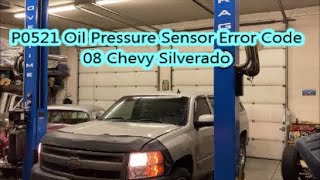
On a 2005-2012 Buick LaCrosse, code P0521 is most often caused by a faulty engine oil pressure sensor. Before replacing it, you must verify the actual oil pressure with a mechanical gauge to rule out a serious internal engine problem. A new sensor costs between $25 and $80. It is also critical to replace the small filter screen located underneath the sensor, as it is a common point for sludge to collect and cause false readings.
- P0521 means the oil pressure sensor reading is unreliable; it does not guarantee that the oil pressure is actually low.
- DO NOT drive your vehicle. The risk of severe engine damage is too high if the pressure is genuinely low.
- The absolute first step in diagnosis is to check the oil level and then verify the true oil pressure with a mechanical gauge.
- The most common fix is replacing the oil pressure sensor, but the difficulty and cost of this repair vary greatly depending on which engine your LaCrosse has.
- Always use the correct viscosity oil that meets GM's dexos standards and a quality oil filter to prevent oil-related issues.
What's Unique About the 2005-2012 Buick LACROSSE
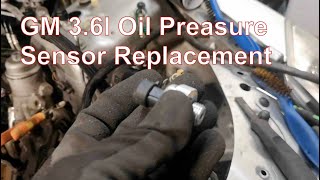
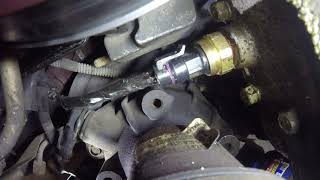
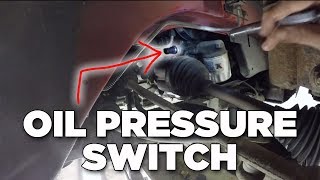
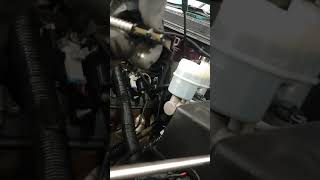
For the 2005-2012 LaCrosse, the repair difficulty for P0521 varies dramatically by engine. On the first-generation's 3.8L V6, the sensor is relatively easy to access on the front of the engine block, just above the oil filter, located below the power steering pump. 🎬 See how to replace the sensor on a 3.8L V6. However, on the 3.6L V6 engines used across both generations, the sensor is in a much more difficult-to-reach location, typically at the front of the engine near the oil filter housing but in a very tight space that may require removal of other components for access. On some shared platforms with this engine, intake manifold removal is required for other jobs, but for the LaCrosse, the primary challenge is the tight workspace 🎬 Watch: 3.6L V6 oil pressure sensor location and replacement guide. around the front of the engine.
Diagnostic Flowchart
Tap your situation to follow the diagnostic path that matches what you're seeing on this vehicle.
Generation note: The 2005-2012 range covers two LaCrosse generations. The first generation (2005-2009) used 3.8L V6, 3.6L V6, and 5.3L V8 engines. The second generation (2010-2012) used 2.4L I4, 3.0L V6, and 3.6L V6 engines. The most common cause (a faulty sensor) is the same, but the part number and especially the sensor's location and replacement difficulty vary significantly between these different engines. The 5.3L V8 and 3.6L V6 engines also feature a small filter screen under the sensor that is prone to clogging and is a critical part of the repair.
Symptoms You May Notice
- Check Engine Light is on
- Low oil pressure warning light or message displayed on the instrument cluster.
- Oil pressure gauge reading is erratic, zero, or unusually high (pegged at max).
- Engine running rough or making ticking/knocking noises (if actual oil pressure is low).
- Vehicle may enter a reduced power or 'limp' mode.
- Active Fuel Management (AFM) may be disabled by the ECM as a precaution on V8 models.
- Replacing the oil pump before verifying actual oil pressure with a mechanical gauge.
- Replacing the Engine Control Module (ECM) when the issue is a simple sensor or wiring fault.
- Replacing the oil pressure sensor but failing to replace the small, clogged filter screen underneath it, causing the code to return.
Most Likely Causes
- Faulty Engine Oil Pressure Sensor (Sending Unit) 🔴 High Probability These sensors are a common failure point on many GM vehicles due to heat cycles, internal wear, and oil seeping into the electrical connector.
How to confirm: After confirming the oil level is correct and the actual oil pressure is within spec using a mechanical gauge, the sensor is the most likely culprit. A scan tool may show erratic or stuck pressure readings (e.g., 129.9 PSI with the engine off). If unplugging the sensor causes the gauge to drop to zero, the sensor is likely bad.
Typical fix: Replace the engine oil pressure sensor. It is critical to also replace the small filter screen underneath it at the same time.
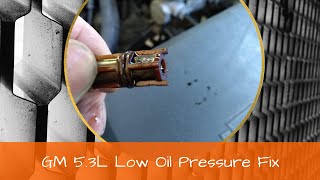
Est. part cost: $25-$80 - Clogged Oil Pressure Sensor Screen 🔴 High Probability Many GM engines, including the 3.6L V6 and 5.3L V8 in the LaCrosse, have a small, thimble-shaped filter screen in the block directly beneath the oil pressure sensor. This screen is notorious for getting clogged with sludge and debris, restricting oil flow to the sensor and causing a false P0521 code.
How to confirm: This is often found during the replacement of the sensor. If the code persists after a sensor replacement, a clogged screen is a primary suspect. TSB #PIP4786C specifically directs technicians to inspect this filter for debris.
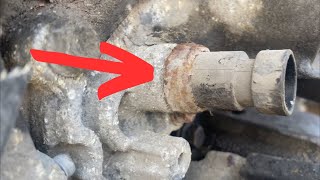
Typical fix: Remove and replace the screen (Part No. 12585328) when replacing the 🎬 Watch: How to remove the sensor and clogged filter screen. oil pressure sensor. The old screen can often be removed with a small pick or by threading a coarse screw into it and pulling it out.
Est. part cost: $5-$15 - Low Engine Oil Level or Incorrect Oil Viscosity 🟡 Medium Probability Some of the V8 engines used in this platform family were subject to oil consumption issues (TSB 10-06-01-008H), making low oil levels a more frequent possibility. Using oil that is not GM's dexos-spec synthetic can also cause issues.
How to confirm: Check the engine oil dipstick. The oil level should be between the 'add' and 'full' marks. Verify that the oil used meets GM's dexos specification and is the correct viscosity (e.g., 5W-30) as listed on the oil cap.
Typical fix: Top off or change the engine oil and filter with the correct type and amount of oil.
Est. part cost: $30-$70 - Clogged or Incorrect Oil Filter ⚪ Low Probability → Shop Engine Oil Filter Adapter GM engines from this era can be sensitive to the oil filter's internal bypass valve rating. Using a low-quality or incorrect aftermarket filter can lead to pressure inconsistencies that trigger this code. Some owners have reported the issue being resolved simply by switching to a specific ACDelco or high-quality aftermarket filter.
How to confirm: This is often suspected if the code appears shortly after an oil change. Compare the installed filter to the OEM ACDelco filter specified for your engine (e.g., PF48E). A simple test is to replace only the filter with a new OEM one to see if pressure readings normalize.
Typical fix: Replace the oil filter with a high-quality OEM ACDelco filter.
Est. part cost: $10-$20 - Damaged Wiring or Connector ⚪ Low Probability The sensor's wiring is exposed to significant engine heat, which can make the connector brittle and the wiring insulation fragile over time, leading to breaks or shorts. Wires can break internally while the insulation appears intact.
How to confirm: Visually inspect the wiring harness and connector leading to the oil pressure sensor for any signs of melting, chafing, corrosion, or oil contamination. Flex the individual wires near the connector to check for internal breaks that may cause an intermittent connection.
Typical fix: Repair the damaged section of the wiring harness or replace the pigtail connector.
Est. part cost: $5-$50
Rare But Worth Checking
- Failing Oil Pump or Worn Engine Components: → Shop Engine Oil Pump This is the worst-case scenario. If a mechanical gauge confirms that the oil pressure is truly low, it points to a serious internal engine problem like a weak oil pump or worn bearings, requiring extensive and costly repairs.
- Sticking Oil Pump Pressure Relief Valve: → Shop Engine Oil Pump GM has issued service bulletins (e.g., 20-NA-161, PIP5630D for other models) indicating that the pressure relief valve within the oil pump assembly can stick due to sludge or debris, causing genuine low or high oil pressure conditions and triggering a P0521 code.
- Clogged Oil Passages: Severe sludge buildup from neglected oil changes can restrict oil flow, causing pressure drops and triggering the code. An engine flush might help, but disassembly may be required in extreme cases.
Diagnosis Steps
- Check the engine oil level and condition. Top off or change if necessary, ensuring the correct dexos-spec oil is used.
- CRITICAL: Connect a mechanical oil pressure gauge to the engine, usually at the same port as the sensor. Start the engine and compare the gauge's reading to the manufacturer's specifications (typically a minimum of 24 PSI at 1,000 RPM when warm). This step determines if you have a real pressure problem or just a sensor issue.
- If pressure is good, the problem is likely electrical or a clogged sensor screen. If pressure is low, stop immediately and diagnose the mechanical cause (e.g., oil pump, worn bearings, stuck relief valve).
- Assuming pressure is good, inspect the oil pressure sensor's electrical connector and wiring for damage, corrosion, or oil saturation.
- Using a scan tool, monitor the live data from the oil pressure sensor. Look for readings that are stuck (e.g., at 129.9 PSI with engine off), erratic, or don't change with engine RPM.
- If the wiring is intact and the sensor reading is faulty (despite good mechanical pressure), replace the engine oil pressure sensor AND the small filter screen located in the block underneath it.
- Ensure the correct, high-quality (ACDelco recommended) oil filter is installed.
- Clear the trouble codes and perform a drive cycle to ensure the repair was successful.
Parts You'll Likely Need
- Engine Oil Pressure Sensor / Switch
(OEM #12673134)— This sensor is the most common failure point for code P0521. It sends incorrect pressure readings to the ECM. This part number supersedes older versions 12621234 and 12596951.
Trusted brands: ACDelco
Related Codes That Often Appear With This One
- P0520 — P0520 indicates a fault in the oil pressure sensor circuit itself, while P0521 points to a performance/range issue. They often appear together as they relate to the same component.
- P0300-P0306 — If actual oil pressure is low, it can affect the operation of components like hydraulic lifters or camshaft phasers (on V6/V8s), potentially leading to engine misfires.
- P0522, P0523 — These codes indicate the sensor signal voltage is specifically too low (P0522) or too high (P0523), while P0521 indicates a general performance problem. They are all closely related faults of the same system.
Technical Service Bulletins (TSBs) & Recalls
- PIP4786C: Addresses diagnosis for a low oil pressure message which may be accompanied by a P0521 DTC, specifically mentioning checking the sensor screen for debris. [⭐ MANUFACTURER TSB — highest authority]
- 10-06-01-008H: Details issues with excessive oil consumption on V8 engines with Active Fuel Management (AFM), which can cause the low oil level that triggers P0521.
- 20-NA-161: While for newer models, this TSB shows a history of P0521 being caused by a sticking oil pressure relief valve in the oil pump, a potential rare cause on older models as well.
Platform-Specific Known Issues
- A Technical Service Bulletin (TSB #PIP4786C) was issued for 2005 models (among others) acknowledging that a P0521 code may accompany a low oil pressure message, directing technicians to inspect the 'Valve Lifter Oil Filter' (the screen under the sensor) for debris. [⭐ MANUFACTURER TSB — highest authority]
- The difficulty of replacing the sensor is highly dependent on the engine. On the 3.8L V6, it is a simple job above the oil filter. On the 3.6L V6, it is in a very tight space near the oil filter housing, making access difficult.
- TSB 10-06-01-008H addresses excessive oil consumption on some V8 engines (like the 5.3L LS4) which can lead to a low oil level, a primary cause for P0521. The fix involves a redesigned valve cover and potentially an oil deflector shield in the oil pan.
Mechanic-Grade Diagnostic Values
- 5-Volt Reference Circuit Voltage — expected: 4.8V to 5.2V (measured at the sensor connector with ignition on, engine off). Failure: Voltage outside this range indicates a problem with the ECM or the wiring.
- Engine Oil Pressure Sensor Signal Voltage — expected: Approx. 0.5V at low pressure (KOEO) and up to 4.5V at high pressure. A typical warm idle reading is around 1.3V.. Failure: Voltage is stuck, does not change with RPM, or is less than 0.1V or greater than 4.4V for over 10 seconds.
- Low Reference (Ground) Circuit Resistance — expected: Less than 10 Ω between the low reference circuit terminal at the connector and a known good ground.. Failure: Higher resistance indicates an open or poor ground connection in the circuit from the ECM.
- Mechanical Oil Pressure (Hot Idle) — expected: Minimum 24 PSI at 1,000 RPM is a general GM specification. Should be above 20 PSI at a minimum.. Failure: Pressure significantly below this specification points to a mechanical engine issue, not a sensor fault.
- Scan Tool Oil Pressure (Key On, Engine Off) — expected: 0 PSI / 0 kPa.. Failure: A high reading, such as 129.9 PSI, with the engine off confirms an electrical fault in the sensor or circuit.
Scan Tool Commands That Help
- GDS2 / Tech2: Live Data Monitoring: 'Engine Oil Pressure Sensor' — This is the primary function to diagnose P0521. It allows the technician to view the pressure value being reported by the sensor in real-time to check if it's stuck, erratic, or doesn't respond to changes in engine RPM.
Wiring & Ground Locations
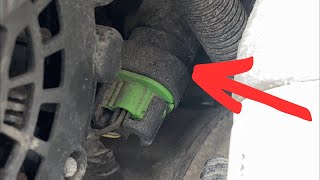
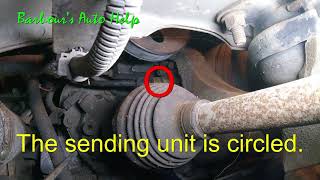
- B37 Engine Oil Pressure Switch (3.6L V6) — On the left front of the engine, near the oil filter housing.. This is the physical location of the sensor that needs to be inspected, tested, and potentially replaced.
- Engine Oil Pressure Switch (3.8L V6) — On the front of the engine block, below the power steering pump.. This is the sensor location for the 3.8L engine, which differs significantly from the 3.6L.
- Sensor Connector (3-wire) — Connects directly to the oil pressure sensor.. This connector contains the 5V reference, signal, and ground wires that must be tested for voltage and continuity. It is a common point of failure due to heat and oil contamination.
- G113 (3.8L V6) — On a transaxle stud, near the starter motor.. This is a key engine ground point. A poor connection here could potentially cause erratic sensor readings for multiple components, including the oil pressure sensor.
Real Owner Repair Stories
- Reddit user in r/ChevyTrucks (Chevy Truck (similar GM architecture)) — Persistent P0521 code after replacing the oil pressure switch once.
❌ Tried (didn't work) Replacing the oil pressure sensor with an aftermarket part.
✅ What actually fixed it Multiple users provided successful fixes: one user resolved the issue by switching to a Mobil 1 M1-113A oil filter and ensuring correct oil levels. Another user fixed a similar issue on a different vehicle by replacing the aftermarket sensor with an OEM sensor. A third user suggested flexing the wires at the connector to check for internal breaks. - Chevy Forums user 'Thomas Badger' (2013 Suburban LTZ with 120k miles) — Oil pressure issues.
❌ Tried (didn't work) Initial diagnosis was uncertain.
✅ What actually fixed it The problem was resolved by replacing the oil pressure sensor. The user noted the old filter screen under the sensor was about 5% obstructed with debris as well.
OEM Part Supersession History
12596951, 12621234→12673134— Standard part evolution for improved reliability and performance.
Heads up: While aftermarket parts are available, some owner reports indicate that persistent P0521 codes were only resolved after switching from an aftermarket sensor to a genuine GM/ACDelco OEM part.
Model Year Variations Within This Range
- 2005-2009 (Gen 1): The 3.8L V6 engine has the oil pressure sensor located below the power steering pump, which is generally considered easier to access than the sensor on the 3.6L V6.
- 2005-2012 (with 3.6L V6): The 3.6L V6 (both LLT and later LFX versions) places the sensor on the front of the engine near the oil filter housing, in a location known for being tight and difficult to access without removing other components like the alternator.
Helpful Videos

The information in this article is provided for general reference and educational purposes only. Vehicle specifications, procedures, and part compatibility can vary by production date, trim level, and region. Always consult your vehicle's factory service manual and verify part numbers before purchasing or performing repairs. Safety-critical components such as airbags, seat belts, and braking systems should be installed by a qualified professional.
- Buick LACROSSE:
- 🧭 Diagnostic Flowchart
- 🎬 Helpful Videos
- What's Unique About the 2005-2012 Buick LACROSSE
- Symptoms You May Notice
- Most Likely Causes
- Rare But Worth Checking
- Diagnosis Steps
- Parts You'll Likely Need
- Related Codes That Often Appear With This One
- Technical Service Bulletins (TSBs) & Recalls
- Platform-Specific Known Issues
- Mechanic-Grade Diagnostic Values
- Scan Tool Commands That Help
- Wiring & Ground Locations
- Real Owner Repair Stories
- OEM Part Supersession History
- Model Year Variations Within This Range
- 🎟️ Get 5% Off