

P0521 on 2005-2007 Buick Rainier: Oil Pressure Sensor Range/Performance Issues and Fixes
On a 2005-2007 Buick Rainier, code P0521 is most often caused by a faulty oil pressure sensor or a clogged filter screen beneath it. Replacing both parts is a common and effective fix, with parts costing between $25 and $75. The repair is significantly more difficult on the 5.3L V8 due to the sensor's location.
- P0521 means the oil pressure sensor is giving an illogical reading; it does not automatically mean your engine has low oil pressure.
- The first and most important diagnostic step is to verify the actual oil pressure with a mechanical gauge.
- If you have the 5.3L V8 engine, the problem is very likely a small, cheap, and easily clogged filter screen underneath the sensor. Always replace this screen when replacing the sensor.
- The difficulty of this repair varies greatly by engine: it is easy on the 4.2L I6 and much harder on the 5.3L V8 due to the sensor's location.
- Do not ignore this code. Driving without knowing your true oil pressure is a gamble that can lead to complete engine failure.
What's Unique About the 2005-2007 Buick RAINIER
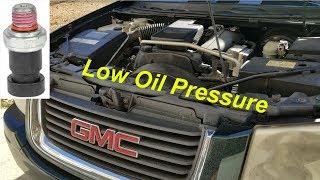
The Buick Rainier used two different GM Vortec engines, a 4.2L inline-6 and a 5.3L V8, and this code is common on both. For the 5.3L V8 🎬 Watch: Diagnosing low oil pressure on the 4.2L engine. (LH6) specifically, a very frequent cause is a small, thimble-shaped filter screen located in the engine block directly underneath the oil pressure sensor. This screen, officially called a 'Valve Lifter Oil Filter', is notorious for getting clogged with sludge, which starves the sensor of oil pressure and causes it to send a faulty low reading, triggering the P0521 code even if the engine's main oil pressure is perfectly fine. This issue is shared across all vehicles on the GM GMT360 platform, including the Chevy Trailblazer, GMC Envoy, and Saab 9-7X.
Diagnostic Flowchart
Tap your situation to follow the diagnostic path that matches what you're seeing on this vehicle.
Symptoms You May Notice
- Check Engine Light is on
- "Low Oil Pressure" warning message on the driver information center
- Oil pressure gauge behaving erratically (dropping to zero, maxing out, or fluctuating)
- Engine running rough or making unusual ticking or knocking noises
- Active Fuel Management (AFM) system on the 5.3L V8 may not activate (vehicle will not switch to V4 mode).
- Replacing the oil pump when the issue is only a clogged sensor screen or a faulty sensor.
- Ignoring the small filter screen on the 5.3L V8 model and only replacing the sensor, which does not fix the root cause of the blockage, 🎬 See how the AFM system causes these sensor range codes. leading to a quick return of the code.
- Replacing the instrument cluster gauge when the problem is with the sensor sending the signal.
Most Likely Causes
- Clogged Oil Pressure Sensor Filter Screen (5.3L V8) 🔴 High Probability → Shop Engine Oil Pressure Sensor This small filter screen under the sensor on the 5.3L V8 is a known failure point, easily getting clogged with oil sludge and debris. This restricts oil flow specifically to the sensor, causing a false low reading.
How to confirm: The screen is not visible until the oil pressure sensor is removed. TSB PIP4786C specifically instructs technicians to inspect this filter for debris if scan tool data shows low pressure but mechanical pressure is verified as normal. It is considered best practice to replace this screen whenever the sensor is replaced on the 5.3L V8.
Typical fix: Remove the old sensor, use a pick or a coarse-threaded screw (like a small 5/16" lag bolt) to gently extract the old filter screen, and install a new one before installing the new sensor. 🎬 Watch this walkthrough on cleaning the screen and sensor. The TSB notes the filter can sometimes be cleaned with brake cleaner and compressed air if not damaged.
Est. part cost: $5-$15 - Faulty Engine Oil Pressure Sensor (Sending Unit) 🔴 High Probability The sensor is an electronic component that operates in a high-heat, high-pressure environment and can fail over time, leading to incorrect readings or internal leaks. Some owners report that aftermarket sensors can be unreliable or fail quickly, making an OEM ACDelco part a recommended choice.
How to confirm: After confirming the true mechanical oil pressure is good with a manual gauge, a faulty sensor is the most likely culprit. Scan tool readings that are erratic, stuck, or don't match the mechanical gauge point to a bad sensor. A visual inspection may also reveal oil leaking from the sensor's plastic connector.
Typical fix: Replace the engine oil pressure sensor. A special 1-1/16 inch oil pressure switch socket is highly recommended to avoid damaging the new sensor during installation, especially on the V8 model.
Est. part cost: $20-$60 - Low or Incorrect Engine Oil / Filter 🟡 Medium Probability → Shop Engine Oil Filter Adapter Using oil of the wrong viscosity or simply having a low oil level can cause pressure fluctuations that trigger the code. Neglected oil changes lead to sludge buildup, which is a primary cause of the clogged sensor screen. Some owners have reported the P0521 code appearing after using a non-OEM oil filter, suggesting the filter's bypass valve characteristics may play a role.
How to confirm: Check the oil level on the dipstick and review service records for the last oil change and the type of oil and filter used.
Typical fix: Perform an oil and filter change using the manufacturer-recommended oil viscosity (typically 5W-30) and a quality filter.
Est. part cost: $40-$80 - Damaged Wiring or Connector ⚪ Low Probability
How to confirm: Visually inspect the wiring harness and connector leading to the oil pressure sensor for any signs of damage, corrosion, oil saturation, or loose connections. Wiggle the harness while observing live data on a scan tool to see if the reading fluctuates.
Typical fix: Repair the damaged section of the wiring harness or replace the connector pigtail. Clean any oil from the connector with electrical contact cleaner before reconnecting.
Est. part cost: $15-$50
Rare But Worth Checking
- Failing Oil Pump or Worn Internal Engine Components: → Shop Engine Oil Pump This is the worst-case scenario. If a mechanical gauge confirms that the engine's oil pressure is actually low, it points to a much more serious internal problem. On the 5.3L V8, this can include a weak oil pump, a sticking oil pressure relief valve, or failing Active Fuel Management (AFM) lifters, which can get stuck or collapse due to oiling issues. This is a major and expensive repair.
Diagnosis Steps
- Check the engine oil level and condition. Top off or change the oil if necessary, using the correct viscosity and a quality filter.
- Connect an OBD-II scanner to confirm the P0521 code and check for any other related codes. Observe the live oil pressure data from the sensor.
- CRITICAL STEP: Connect a mechanical oil pressure gauge to the engine to verify the true oil pressure. Compare the mechanical reading to the reading from the sensor on your scan tool.
- If mechanical pressure is normal but the scan tool reading is erratic or incorrect, the problem lies with the sensor, the filter screen (on V8s), or the sensor's circuit.
- Inspect the oil pressure sensor's electrical connector and wiring for damage, corrosion, or looseness. Clean if oil-soaked.
- If wiring is okay, the next step is to replace the oil pressure sensor. For the 5.3L V8, it is essential to also remove and replace the small filter screen (part #12585328) located in the block underneath the sensor.
- Clear the trouble codes with a scan tool and perform a test drive to ensure the issue is resolved and the oil pressure gauge reads correctly.
Parts You'll Likely Need
- Engine Oil Pressure Sensor (Switch/Sending Unit)
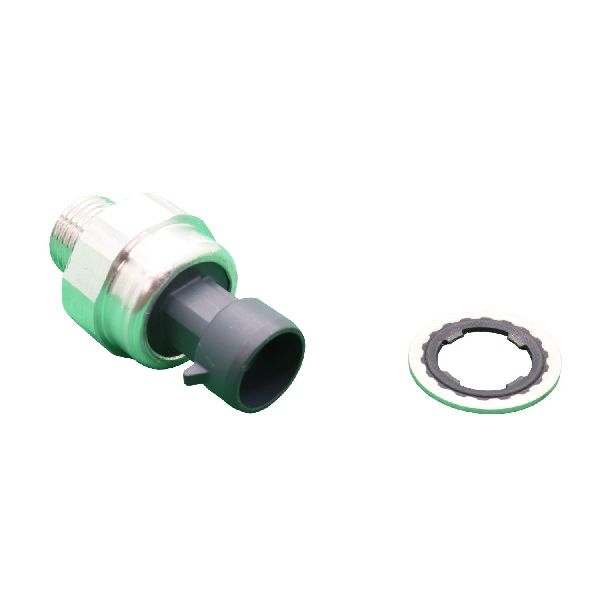
(OEM #12673134 (supersedes 12621234, 12596951))— This sensor is the most common part to fail, causing incorrect pressure readings to be sent to the ECM.
Trusted brands: ACDelco (OEM), Delphi, Dorman
OEM price range: $45-$60
Aftermarket price range: $20-$40 - Valve Lifter Oil Filter (Sensor Screen)
(OEM #12585328)— On the 5.3L V8, this screen is a primary failure point, getting clogged with sludge and causing the P0521 code. It should always be replaced with the sensor.
Trusted brands: ACDelco (OEM), Dorman
OEM price range: $8-$15
Aftermarket price range: $5-$10 - Oil Pressure Switch Socket — A special deep socket (typically 1-1/16 inch or 27mm) is needed to remove and install the sensor without damaging it, especially on the V8 where access is tight.
Trusted brands: Lisle, OEMTOOLS
Aftermarket price range: $10-$20
Related Codes That Often Appear With This One
- P0520 — P0520 refers to a fault in the sensor's circuit, while P0521 refers to its performance. They often appear together as they both relate to the oil pressure sending unit.
- P0522 — This code indicates the sensor circuit voltage is too low, which can be triggered by the same faults (bad sensor, wiring issues) that cause P0521.
- P0523 — This code indicates the sensor circuit voltage is too high. A sensor that has failed internally can cause any of these related codes to appear.
Technical Service Bulletins (TSBs) & Recalls
- PIP4786C: 'Low Oil Pressure Message/Light - Inspect Valve Lifter Oil Filter.' Directly addresses P0521 and instructs technicians to check the small screen under the sensor for blockages as a key diagnostic step.
Platform-Specific Known Issues
- The location of the sensor differs significantly between the two engines. On the 4.2L I6, it is on the lower passenger side of the engine block above the oil filter and is relatively easy to access. On the 5.3L V8, it is at the very back of the engine behind the intake manifold, making it much more difficult to reach. Access requires long extensions, a swivel socket, and often working by feel.
- A GM Technical Service Bulletin (TSB), #PIP4786C, was issued for vehicles including the 2005-2007 Rainier that may experience a low oil pressure message and a P0521 code. It advises technicians to follow standard diagnostics and check the sensor filter screen for debris.
Mechanic-Grade Diagnostic Values
- Minimum Engine Oil Pressure (5.3L V8, Hot) — expected: 6 psig (41 kPa) @ 1,000 RPM, 18 psig (124 kPa) @ 2,000 RPM, 24 psig (165 kPa) @ 4,000 RPM. Failure: Readings below these minimums on a mechanical gauge indicate a true low oil pressure condition (worn components, pump issue, or pickup tube leak).
- Active Fuel Management (AFM/DOD) Relief Valve Oil Pressure (5.3L V8) — expected: 55-75 psig (379-517 kPa). Failure: This is the pressure at which the relief valve for the AFM system operates. Issues in this range can point to problems within the AFM-specific oiling passages or the valve itself.
- Oil Pressure Sensor Voltage — expected: Typically 0.5V at low pressure and up to 4.5V at high pressure.. Failure: A signal that is stuck, does not change with RPM, or is outside this range points to a faulty sensor or wiring issue.
- ECM Predicted vs. Actual Oil Pressure — expected: Difference should be between -6.8 PSI and +7.3 PSI.. Failure: If the difference between the ECM's predicted oil pressure and the actual sensor reading exceeds this range for several seconds, code P0521 will set.
Wiring & Ground Locations
- G103 — At the left rear of the engine compartment on the cowl, often above the brake booster.. This ground serves the Instrument Panel Cluster (IPC), Body Control Module (BCM), and Data Link Connector (DLC). A poor connection here can cause erratic gauge behavior or communication issues, mimicking a sensor failure.
- G104 — On the rear of the passenger side cylinder head.. This ground is tied to the Vehicle Control Module (VCM) and various instrument panel functions on related GM platforms. A faulty ground here can lead to incorrect signals being processed by the vehicle's computers.
- Oil Pressure Sensor Connector — On the sensor itself, at the top rear of the 5.3L V8 engine block or lower passenger side on the 4.2L I6.. The three pins are typically a 5-volt reference, a signal return ground, and the variable voltage signal wire. Oil leaking through a failed sensor can contaminate this connector, causing a poor connection and triggering the code.
Real Owner Repair Stories
- YouTube video by 'HumbleMechanic' channel (2007-2013 Chevrolet/GMC Truck with 5.3L V8) — Check Engine Light with code P0521.
❌ Tried (didn't work) Checking engine oil level (it was correct).
✅ What actually fixed it The problem was resolved by replacing both the oil pressure sensor and the small filter screen located in the block underneath it. A specific technique was used to remove the old screen by gently threading a 5/16" lag bolt into it and pulling it out.
OEM Part Supersession History
12596951, 12621234→12673134— GM updates parts to improve reliability and consolidate inventory.
Heads up: For the Buick Rainier platform, the sensor for the 4.2L I6 engine integrates the oil temperature sending unit, while the sensor for the 5.3L V8 does not. The part numbers may be different or the same part may be used with one function being ignored by the V8's ECM.
Model Year Variations Within This Range
- 2005-2007: In 2005, the 5.3L V8 was updated from the Gen III LM4 to the Gen IV LH6. The LH6 engine introduced Active Fuel Management (AFM), also called Displacement on Demand (DOD). This system uses pressurized oil to deactivate lifters and requires specific oil pressure levels to function, making diagnosis of P0521 more complex as it can be related to the main oiling system or the AFM-specific components like its dedicated relief valve.
Helpful Videos

We Have This Part in Stock


The information in this article is provided for general reference and educational purposes only. Vehicle specifications, procedures, and part compatibility can vary by production date, trim level, and region. Always consult your vehicle's factory service manual and verify part numbers before purchasing or performing repairs. Safety-critical components such as airbags, seat belts, and braking systems should be installed by a qualified professional.
- Buick RAINIER:
- 🧭 Diagnostic Flowchart
- 🎬 Helpful Videos
- 🛍️ Shop This Part
- What's Unique About the 2005-2007 Buick RAINIER
- Symptoms You May Notice
- Most Likely Causes
- Rare But Worth Checking
- Diagnosis Steps
- Parts You'll Likely Need
- Related Codes That Often Appear With This One
- Technical Service Bulletins (TSBs) & Recalls
- Platform-Specific Known Issues
- Mechanic-Grade Diagnostic Values
- Wiring & Ground Locations
- Real Owner Repair Stories
- OEM Part Supersession History
- Model Year Variations Within This Range
- 🎟️ Get 5% Off