

P0521 on 2015-2018 Cadillac ATS-V: Oil Pressure Sensor Causes and Fixes
On a 2015-2018 Cadillac ATS-V, code P0521 is most often caused by a faulty engine oil pressure sensor. Before replacing it, verify the engine oil level is correct and that the proper specification oil filter is installed, as these are also common culprits. The sensor itself is a relatively inexpensive part, but labor is significant due to its location under the intake manifold.
- P0521 on the ATS-V is a serious code that should be addressed immediately to prevent potential engine damage.
- The most critical diagnostic step is to verify the actual engine oil pressure with a mechanical gauge to rule out a true low-pressure condition.
- The most likely causes are simple: low oil level, an incorrect oil filter, or a faulty oil pressure sensor.
- When replacing the oil pressure sensor (ACDelco #12674782), it is essential to also replace the small filter screen underneath it (ACDelco #12585328).
What's Unique About the 2015-2018 Cadillac ATS-V
The Cadillac ATS-V uses the high-performance 3.6L Twin-Turbo V6 (LF4) engine. Like many modern GM engines, it is sensitive to oil type and filter specifications. Using an oil filter with an incorrect internal bypass valve pressure rating is a documented cause of P0521. Specifically, the correct filter is an ACDelco UPF63R, and using a standard PF63E can trigger the code due to its different bypass pressure (22 psi vs 36 psi). Additionally, the oil pressure sensor is located in a difficult-to-access position at the back of the engine, underneath the intake manifold, making replacement much more labor-intensive than on other vehicles.
Diagnostic Flowchart
Tap your situation to follow the diagnostic path that matches what you're seeing on this vehicle.
Symptoms You May Notice
- Check Engine Light illuminated
- Low Oil Pressure warning light or message on the instrument cluster
- Oil pressure gauge reading abnormally high or low, or fluctuating erratically
- Engine running rough or making unusual ticking/clattering noises (if actual oil pressure is low)
- Replacing the oil pump before verifying the actual oil pressure with a mechanical gauge.
- Replacing the oil pressure sensor but failing to also replace the small, inexpensive filter screen underneath it.
- Assuming the engine has a major internal problem before checking the simple things like oil level and, critically, the exact model of oil filter installed.
Most Likely Causes
- Faulty Engine Oil Pressure Sensor 🔴 High Probability The sensor operates in a high-heat, high-vibration environment at the back of the engine block, under the intake manifold. This location makes it prone to failure and difficult to replace.
How to confirm: After confirming oil level and filter are correct, use a scan tool to monitor the sensor's reading. If it is stuck, erratic, or doesn't match a reading from a mechanical oil pressure gauge, the sensor is bad.
Typical fix: Replace the engine oil pressure sensor and the small filter screen located in the block bore directly underneath it. This requires removing the intake manifold for access.
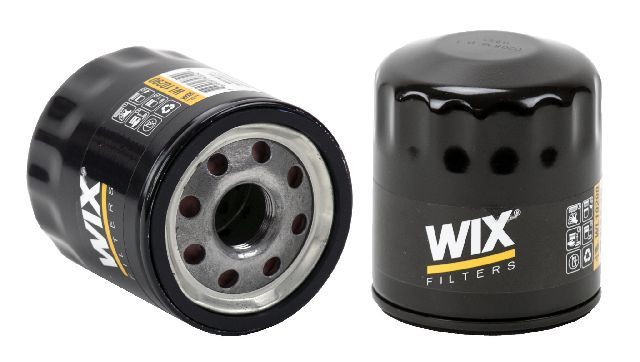
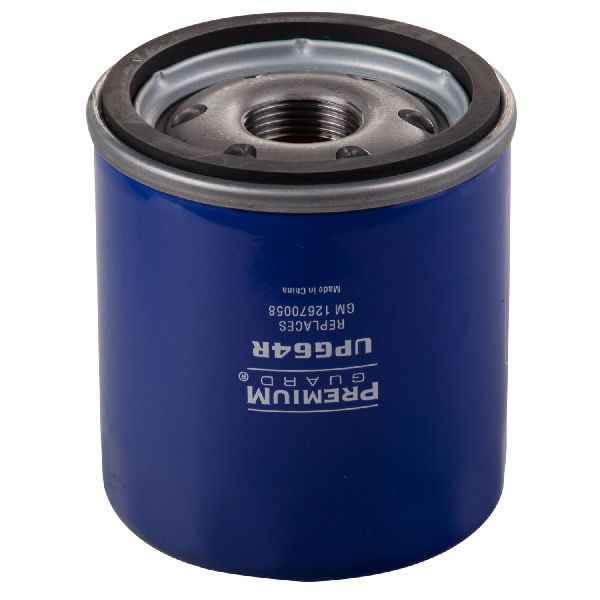
Est. part cost: $30-$60 - Incorrect or Clogged Engine Oil Filter 🟡 Medium Probability → Shop Engine Oil Filter Adapter The LF4 engine requires a specific oil filter, the ACDelco UPF63R, which has a 36psi bypass valve setting. Using a common alternative like the PF63E (22psi bypass) can cause incorrect pressure readings and trigger P0521. This is a widely discussed issue on GM forums.
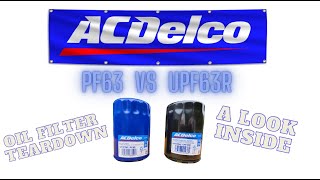
How to confirm: Check the part number on the installed oil filter. If the code appeared shortly after an oil change, this is a very strong indicator. The correct filter is the black ACDelco UPF63R, not the blue PF63E. 🎬 Watch: See the internal differences between the PF63 and UPF63R filters.
Typical fix: Replace the oil filter with the correct OEM-specified ACDelco UPF63R part.
Est. part cost: $15-$25 - Low or Incorrect Viscosity Engine Oil 🟡 Medium Probability TSB #18-NA-246 notes that short-trip driving can cause fuel to dilute the engine oil, lowering its viscosity and causing pressure issues that can trigger P0521. [⭐ MANUFACTURER TSB]
How to confirm: Check the engine oil level via the dipstick and inspect its condition. If the level is low or the oil smells strongly of gasoline, it can cause pressure issues.
Typical fix: Top up the oil to the correct level or perform a complete oil and filter change using the manufacturer-specified oil viscosity (typically 5W-30 or 0W-40 synthetic, check owner's manual).
Est. part cost: $70-$120 - Clogged Oil Pressure Sensor Filter Screen ⚪ Low Probability → Shop Engine Oil Pressure Sensor Over time, sludge and debris from the engine can clog the small, thimble-like filter screen that sits underneath the pressure sensor, leading to an inaccurate reading. This is especially true if oil change intervals have been extended.
How to confirm: This is typically found during the replacement of the oil pressure sensor. The screen will be visibly blocked with contaminants. It is considered a mandatory replacement item when changing the sensor.
Typical fix: Replace the filter screen. This should be done any time the oil pressure sensor is replaced.
Est. part cost: $5-$15
Rare But Worth Checking
- Wiring Harness or Connector Issue: The wiring to the sensor can become damaged from heat or vibration, or the connector pins can become corroded, leading to a poor signal. The harness is routed in a tight, hot area at the back of the engine.
- Failing Oil Pump or Sticking Relief Valve: → Shop Engine Oil Pump While uncommon, a worn or failing oil pump will cause genuine low oil pressure across all RPMs. This is a worst-case scenario that must be confirmed with a mechanical gauge before any major engine work is performed.
Diagnosis Steps
- Check the engine oil level and condition. Top up or perform an oil change with the correct specification oil (Dexos approved) and filter (ACDelco UPF63R) if needed.
- Connect an OBD-II scanner and read the live data for the oil pressure sensor. Note the reading with the key on/engine off (should be 0 PSI) and at warm idle (should be ~17-20 PSI, rising with RPM). Look for stuck or erratic values.
- CRITICAL STEP: Manually verify the engine oil pressure. Remove the oil pressure sensor and install a mechanical oil pressure gauge. Compare the mechanical reading to the manufacturer's minimum specifications (10 PSI @ Idle, 20 PSI @ 2,000 RPM when hot). This step determines if you have a sensor problem or a real, dangerous low-pressure condition.
- If mechanical pressure is good, the fault is with the sensor or its circuit. Inspect the sensor's electrical connector and wiring for damage, corrosion, or oil contamination. The connector is difficult to reach without some disassembly. 🎬 Watch: A mechanic's guide to accessing the oil pressure sending unit.
- If the wiring is intact and mechanical pressure is good, replace the engine oil pressure sensor and the filter screen located underneath it. This will require removing the charge air cooler and intake manifold for access.
- If mechanical pressure is low, the engine requires further professional diagnosis for issues like a failing oil pump, clogged oil pickup tube, or internal wear.
Parts You'll Likely Need
- Engine Oil Pressure Sensor
(OEM #12674782)— This is the most common component to fail, leading to the P0521 range/performance code when oil level and filter are correct.
Trusted brands: ACDelco
OEM price range: $35-$50
Aftermarket price range: $25-$45 - Engine Oil Pressure Sensor Filter Screen
(OEM #12585328)— This screen sits below the sensor and often gets clogged with sludge, causing the sensor to read incorrectly. It is critical to replace this whenever the sensor is replaced.
Trusted brands: ACDelco
OEM price range: $5-$15
Aftermarket price range: $5-$10 - Engine Oil Filter
(OEM #ACDelco UPF63R)— Using an incorrect filter, such as a PF63E, is a known cause of P0521. This specific filter has the correct bypass pressure rating for the LF4 engine.
Trusted brands: ACDelco
OEM price range: $15-$25
Aftermarket price range: $10-$20 - Intake Manifold Gaskets
(OEM #12657434)— These gaskets are single-use and must be replaced when the intake manifold is removed to access the oil pressure sensor.
Trusted brands: ACDelco, Fel-Pro
OEM price range: $20-$40
Aftermarket price range: $15-$30
Related Codes That Often Appear With This One
- P06DE — This code for 'Engine Oil Pressure Control Solenoid Valve Stuck On' is directly related to the oil pressure regulation system. TSB #18-NA-246 explicitly links P0521 and P06DE, suggesting a potential common cause like fuel-contaminated oil or a cascading failure. [⭐ MANUFACTURER TSB]
- P0172 — This code for 'System Too Rich Bank 1' is mentioned alongside P0521 in TSB #18-NA-246. The connection is that excessive short-trip driving can cause fuel to enter the crankcase, leading to a rich condition and simultaneously degrading the oil, causing pressure performance issues. [⭐ MANUFACTURER TSB]
Technical Service Bulletins (TSBs) & Recalls
- PIP4786C: Provides information regarding a low oil pressure message accompanied by DTC P0521.
- 18-NA-246: Mentions procedures to correct customer concerns of a MIL illuminated with DTC P0521, P0172, and/or P06DE, often related to fuel-in-oil from short trips.
Platform-Specific Known Issues
- TSB #PIP4786C: Low Oil Pressure Message: This bulletin was issued for vehicles that may display a low oil pressure message and have DTC P0521 stored. It advises technicians to follow standard diagnosis, starting with verifying actual oil pressure with a mechanical gauge before replacing parts. It also mentions inspecting a 'Valve Lifter Oil Filter' for debris, which on other GM engines is the same part as the oil pressure sensor screen, reinforcing the theme of checking for sludge in oil passages. [⭐ MANUFACTURER TSB, 8]
- TSB #18-NA-246: MIL with P0521, P0172, P06DE: This bulletin addresses a combination of codes that can be caused by fuel contaminating the engine oil, often due to frequent short-trip driving. The fuel dilution lowers oil viscosity, affecting the oil pressure control system's performance and triggering P0521 and P06DE, while also causing a rich running condition that sets P0172. [⭐ MANUFACTURER TSB]
Mechanic-Grade Diagnostic Values
- Engine Oil Pressure (Hot) — expected: Minimum 69 kPa (10 psi) at Idle; Minimum 138 kPa (20 psi) at 2,000 RPM.. Failure: Pressure below these minimums when measured with a mechanical gauge indicates a mechanical engine issue, not a sensor fault.
- Oil Pressure Sensor Signal Voltage — expected: Varies with pressure. Approximately 0.5V at low pressure and 4.5V at high pressure.. Failure: Voltage is stuck at a fixed value, does not change with engine RPM, or is erratic.
- Oil Pressure Sensor Connector - 5V Reference — expected: 4.8-5.2 volts between terminal 2 and ground with ignition ON.. Failure: No voltage indicates an open/short in the reference circuit or a faulty ECM.
- Oil Pressure Sensor Connector - Low Reference Circuit — expected: Less than 1.0 ohm of resistance between terminal 1 and a good chassis ground.. Failure: High resistance indicates a poor ground connection for the sensor.
- Oil Pressure Sensor Resistance (generic GM sensor) — expected: Approximately 240 Ohms at 0 PSI, 103 Ohms at 40 PSI, and 33.5 Ohms at 80 PSI.. Failure: Readings are open (infinite resistance), shorted (zero resistance), or do not correlate with applied pressure.
Scan Tool Commands That Help
- GDS2 (GM Techline): Engine Oil Pressure Control Valve Actuator Test — This bidirectional control is used to command the oil pressure control solenoid on and off. It is particularly useful for diagnosis when P0521 is present alongside P06DE (Engine Oil Pressure Control Solenoid Valve Stuck On) to verify the solenoid's mechanical and electrical function independently of the sensor.
Wiring & Ground Locations
- Engine Ground G104 — On related GM 3.6L engines (LFX), this ground is located at the rear of the engine. A visual inspection at the rear of the LF4 cylinder heads for a ground strap is recommended.. The oil pressure sensor relies on a clean engine ground via its low-reference circuit. A loose or corroded main engine ground can introduce electrical noise or offsets into the sensor's signal, causing the ECM to see an irrational reading and set P0521.
- ECM Ground (part of G101) — On the related ATS platform, G101 is located at the front of the engine on the lower block.. The ECM compares the sensor's signal to its own ground reference. A fault at the ECM's main ground point can cause a discrepancy between the sensor's reading and what the ECM expects, potentially triggering P0521 even if the sensor and its immediate wiring are good.
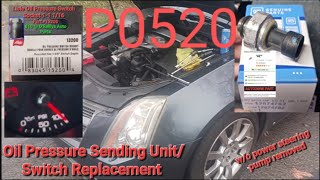
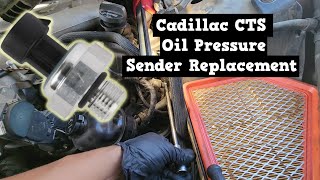
- Oil Pressure Sensor Connector — At the sensor body, located at the rear of the engine block underneath the intake manifold. 🎬 See this walkthrough on how to replace the oil pressure sensor.. The three terminals in the connector are for the 5V reference (Terminal 2), low reference/ground (Terminal 1), and the signal wire. Oil leaking through a failed sensor can contaminate these pins, and engine vibration can cause the terminals to loosen, leading to an erratic signal.
Real Owner Repair Stories
- Reddit user in r/ChevyTrucks (Chevrolet Truck (common GM issue)) — Persistent P0521 code.
❌ Tried (didn't work) Replacing the oil pressure sensor with an aftermarket part from a local auto parts store.
✅ What actually fixed it Replacing the aftermarket sensor with a genuine OEM ACDelco sensor resolved the problem. This suggests the ECM is sensitive to the specific electronic characteristics of the OEM part. - Reddit user (GM Truck) — P0521 code returned after replacing the oil pressure switch.
❌ Tried (didn't work) Replacing the oil pressure sensor.
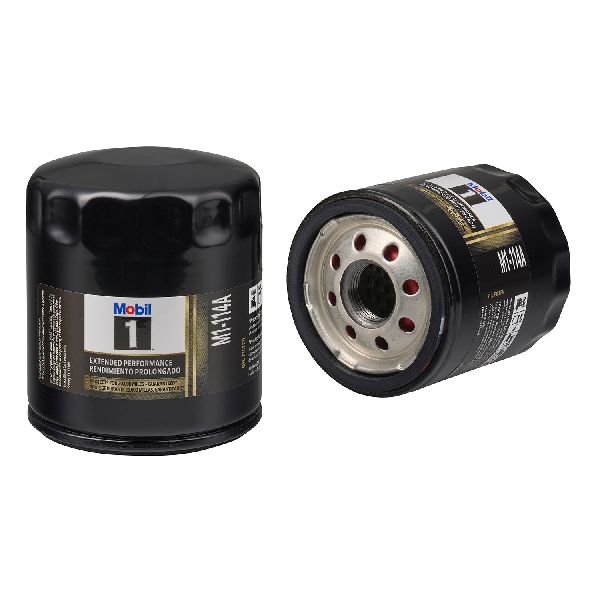
✅ What actually fixed it The owner started using a Mobil 1 M1-113A oil filter, which resolved the issue. This highlights that even premium aftermarket filters can cause issues if their bypass valve specifications don't match the OEM (UPF63R for the ATS-V) requirements.
Model Year Variations Within This Range
- 2015-2018: No significant variations in the LF4 engine's oiling system or the P0521 diagnostic procedure have been documented within this model year range. The ATS-V sedan was discontinued after 2018, but the coupe continued into 2019 with the same engine and specifications.
Helpful Videos
We Have This Part in Stock


The information in this article is provided for general reference and educational purposes only. Vehicle specifications, procedures, and part compatibility can vary by production date, trim level, and region. Always consult your vehicle's factory service manual and verify part numbers before purchasing or performing repairs. Safety-critical components such as airbags, seat belts, and braking systems should be installed by a qualified professional.
- Cadillac ATS-V:
- 🧭 Diagnostic Flowchart
- 🎬 Helpful Videos
- 🛍️ Shop This Part
- What's Unique About the 2015-2018 Cadillac ATS-V
- Symptoms You May Notice
- Most Likely Causes
- Rare But Worth Checking
- Diagnosis Steps
- Parts You'll Likely Need
- Related Codes That Often Appear With This One
- Technical Service Bulletins (TSBs) & Recalls
- Platform-Specific Known Issues
- Mechanic-Grade Diagnostic Values
- Scan Tool Commands That Help
- Wiring & Ground Locations
- Real Owner Repair Stories
- Model Year Variations Within This Range
- 🎟️ Get 5% Off