

P0521 on 2005-2009 Cadillac CTS-V: Oil Pressure Sensor Causes and Fixes
On a 2005-2009 CTS-V, P0521 is almost always caused by a faulty oil pressure sensor and/or its small, clogged filter screen. The sensor is a known high-failure part on these GM V8 engines. Replacing the sensor (ACDelco 12677836) and screen (ACDelco 12585328) is the most common fix, costing around $50-$90 for parts. Always verify true pressure with a mechanical gauge before assuming the sensor is bad.
- P0521 on a CTS-V is a serious code, but the fix is usually simple and inexpensive if addressed quickly.
- The most likely cause is a failed oil pressure sensor and/or a clogged filter screen located beneath it.
- Always use a high-quality, OEM-spec oil filter (like ACDelco PF48) and the correct viscosity oil.
- Before replacing any parts, you must verify the engine's true oil pressure with a mechanical gauge to rule out a serious internal engine problem.
- Due to the sensor's location behind the intake manifold, the repair is more labor-intensive than on many other vehicles.
What's Unique About the 2005-2009 Cadillac CTS-V
The V8 engines in the 2005-2009 CTS-V (LS6, LS2, and LSA) are notorious for P0521, primarily due to the oil pressure sensor's design and location. It's a high-failure item situated in a difficult-to-reach spot at the back of the engine, under the intake manifold. A small, thimble-like filter screen (Part No. 12585328) sits directly below the sensor and is prone to clogging with sludge, which is a very common cause of the faulty reading. Several Technical Service Bulletins (TSBs) have been issued for GM V8s of this era, linking the code to oil filter choice (PF48 vs. PF48E) and oil consumption issues that can accelerate sludge buildup.
Diagnostic Flowchart
Tap your situation to follow the diagnostic path that matches what you're seeing on this vehicle.
Generation note: This range covers two distinct CTS-V generations. The first generation includes the 2005 model with the 5.7L LS6 V8 and the 2006-2007 models with the 6.0L LS2 V8. The second generation began in 2009 with the supercharged 6.2L LSA V8. 🎬 Watch: Step-by-step oil pressure sensor replacement on the LSA engine. While the engines differ, the P0521 issue, related causes (sensor, screen, oil type), and diagnosis are highly similar across all three V8 powerplants in this timeframe as they share the same basic architecture for the oiling system sensor location.
Symptoms You May Notice
- Check Engine Light illuminated
- Low Oil Pressure warning message on the instrument panel
- Oil pressure gauge reading abnormally low, high, or erratically (may drop to 0 or max out at 80 or 129 PSI)
- Engine running rough or making unusual noises (in case of true low oil pressure)
- Vehicle may enter a reduced power or 'limp' mode.
- Replacing the oil pump first. The oil pump is rarely the cause of P0521; the sensor, its screen, and the oil filter are far more likely culprits.
- Replacing the instrument cluster. While a faulty gauge can happen, the P0521 code specifically points to an issue detected by the ECM from the sensor's electrical circuit, not the gauge itself.
Most Likely Causes
- Faulty Engine Oil Pressure Sensor 🔴 High Probability The oil pressure sensor on GM V8 engines of this era is a known high-failure part. It is subjected to intense heat and vibration at the back of the engine valley, 🎬 See this walkthrough for replacing the sensor on GM LS engines. leading to internal failure and erratic readings.
How to confirm: Compare the oil pressure reading on a scan tool to a reading from a mechanical oil pressure gauge. If the mechanical gauge shows normal pressure but the scan tool reading is incorrect, the sensor is bad. With the key on and engine off, a faulty sensor might read max pressure (e.g., 129 PSI) or zero. If the sensor is unplugged and a high reading drops to zero, the sensor is confirmed bad.
Typical fix: Replace the engine oil pressure sensor. It is highly recommended to replace the filter screen underneath it at the same time. Use of an OEM ACDelco part is strongly advised.
Est. part cost: $40-$75 - Clogged Oil Pressure Sensor Filter Screen 🔴 High Probability → Shop Engine Oil Pressure Sensor A small screen (GM Part #12585328) is located in the oil passage directly beneath the sensor to protect it. This screen frequently becomes clogged with engine sludge or debris, blocking oil flow to the sensor and causing a false low reading. TSB PIP4786C directly instructs technicians to inspect this filter for debris before replacing any other parts.
How to confirm: This is typically found during the replacement of the oil pressure sensor. If the sensor is removed and the screen is visibly clogged with black sludge, it is the cause. The screen can be pulled out with a small pick or by threading a coarse-thread screw into it. 🎬 Watch: How to fix P0521 by cleaning the sensor and screen.
Typical fix: Remove and replace the small filter screen. This is almost always done in conjunction with replacing the sensor itself. Some TSBs and mechanics suggest the filter can be cleaned with brake cleaner and compressed air if not damaged.
Est. part cost: $5-$15 - Incorrect Oil or Oil Filter 🟡 Medium Probability → Shop Engine Oil Filter Adapter GM has issued multiple TSBs regarding P0521 appearing after an oil change. TSB PIP5276 specifically notes that using a PF48E filter in very cold weather (below 0°F) can trigger the code and recommends switching to a standard PF48. The PF48E uses a plastic internal core, while the older PF48 used a metal one, which some owners prefer.
How to confirm: Check the part number of the installed oil filter. If the code appeared shortly after an oil change and a non-OEM or PF48E filter is installed, this is a likely suspect.
Typical fix: Change the oil and filter, using a high-quality filter specified by GM, such as an ACDelco PF48 or the higher-performance UPF48R.
Est. part cost: $30-$60 - Low Engine Oil Level ⚪ Low Probability
How to confirm: Check the engine oil dipstick. If the level is below the minimum mark, this is the likely cause.
Typical fix: Top up the engine oil to the correct level and investigate the cause of the oil loss (e.g., leaks or consumption).
Est. part cost: $10-$20
Rare But Worth Checking
- Wiring Harness or Connector Issue: The 3-wire connector to the sensor can become damaged or saturated with oil from a leaking sensor, causing a poor connection. Inspect the connector for oil and test the circuit for 5V reference, proper ground, and signal voltage.
- Failing Oil Pump / Internal Engine Wear: → Shop Engine Oil Pump This is the worst-case scenario. If a mechanical gauge confirms that the engine's oil pressure is genuinely low (e.g., less than 6 PSI at 1,000 RPM), it points to a serious mechanical problem like a worn oil pump, clogged pickup tube, or excessive bearing clearances. This requires immediate professional diagnosis.
Diagnosis Steps
- Check the engine oil level and condition. If low, top it off and clear the code. If the oil is old or dirty, perform an oil change.
- Verify the correct oil filter is installed. Many GM TSBs point to incorrect aftermarket filters as a cause. Replace with a recommended ACDelco PF48 or UPF48R filter if in doubt.
- Connect a scan tool and observe the oil pressure reading (KOEO and KOER). Note if it is stuck high (e.g. 129 PSI), low, or fluctuates wildly.
- Crucially, connect a mechanical oil pressure gauge to the engine. This is the only way to confirm true oil pressure.
- Compare the mechanical gauge reading to the scan tool reading. If the mechanical gauge shows good pressure (GM's minimum spec is often cited as 6 psi at 1,000 RPM, 18 psi at 2,000 RPM, and 24 psi at 4,000 RPM) but the scan tool shows a faulty reading, the problem is in the sensor circuit.
- If the sensor circuit is at fault, inspect the sensor's 3-wire electrical connector for damage, corrosion, or oil saturation. Test the circuit for a 5V reference, proper ground, and a variable signal voltage.
- If the connector and wiring appear okay, the most likely cause is a faulty oil pressure sensor and/or a clogged filter screen underneath it. Proceed with replacement.
- If the mechanical gauge confirms low oil pressure, do not continue to run the engine. The problem is mechanical (e.g., oil pump, pickup tube, worn bearings) and requires professional engine diagnosis.
Parts You'll Likely Need
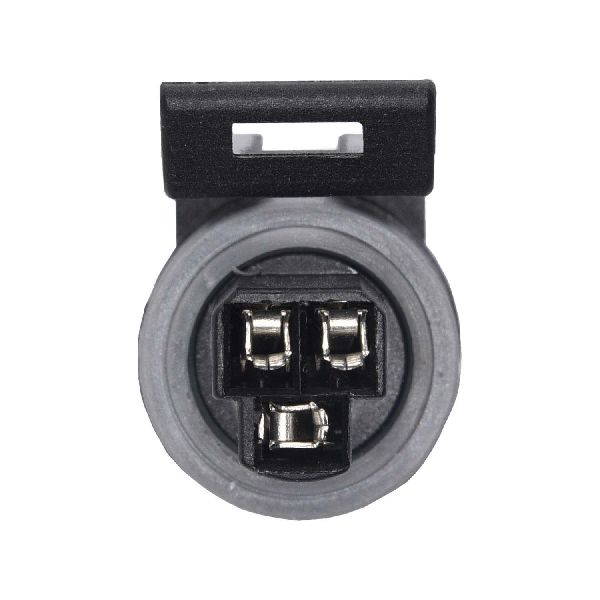
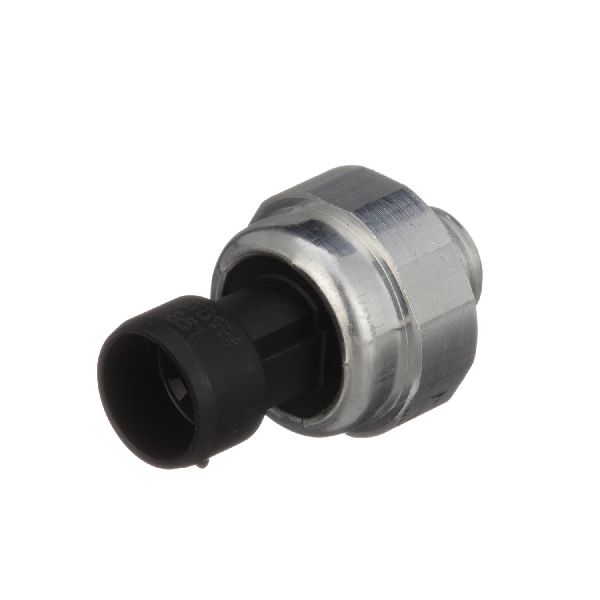
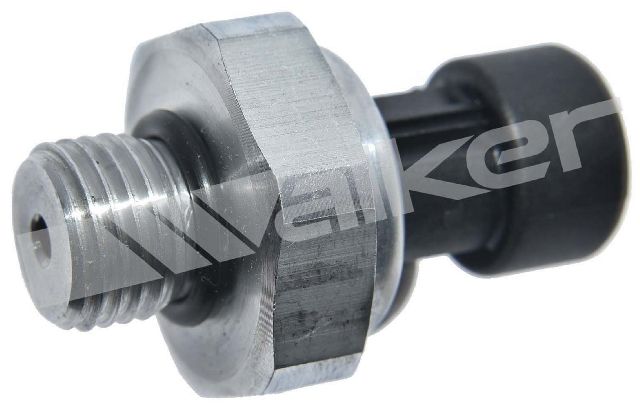
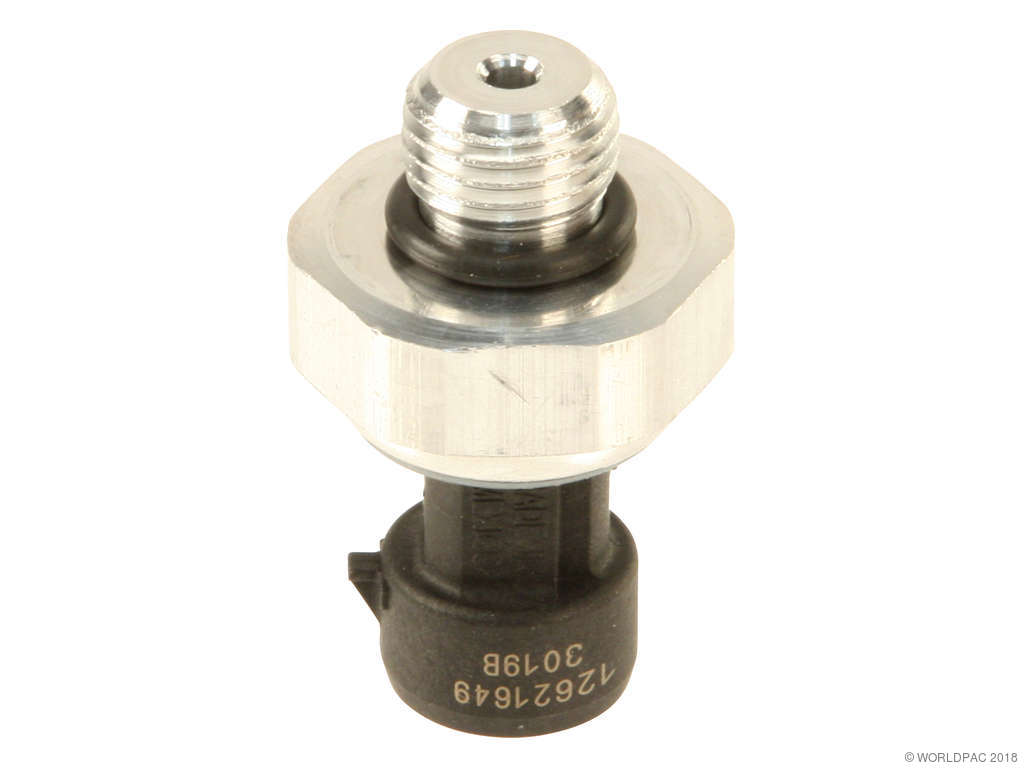
- Engine Oil Pressure Sensor
(OEM #12677836 (supersedes 12616646, D1846A))— This is the most common part to fail and cause a P0521 code on these engines. It is a known high-failure item.
Trusted brands: ACDelco (GM Genuine)
OEM price range: $40-$75
Aftermarket price range: $25-$50 - Oil Pressure Sensor Filter Screen
(OEM #12585328)— This small screen, located under the sensor, is highly prone to clogging with sludge, which starves the sensor of an accurate pressure reading. It should always be replaced with the sensor.
Trusted brands: ACDelco (GM Genuine), Dorman
OEM price range: $5-$15
Aftermarket price range: $5-$10
Related Codes That Often Appear With This One
- P0523 — This code for 'Engine Oil Pressure Sensor/Switch Circuit High' can appear with P0521 if the sensor is failing erratically, sending signals that are both too high and out of the expected performance range.
Technical Service Bulletins (TSBs) & Recalls
- PIP5276G: Mentions P0521 and low oil pressure messages, referencing bulletin 10-06-01-008.
- PIP4786C: Notes low oil pressure messages and DTC P0521, advising standard diagnosis.
- 18-NA-246: Mentions P0521 in conjunction with other codes on a later model, but shows its relevance in GM's diagnostic landscape.
- 10-06-01-008: A key bulletin regarding oil consumption and related issues that can cause sludge, leading to P0521.
Platform-Specific Known Issues
- TSB PIP4786C: Explicitly directs technicians to inspect the 'Valve Lifter Oil Filter' (the screen under the sensor) for debris or sludge if P0521 is present and a mechanical gauge shows good pressure at the oil filter housing.
- TSB PIP5276G: Addresses P0521 appearing after an oil change, instructing technicians to use a PF48E filter and verify that previous oil consumption-related TSBs have been performed, as they can contribute to sludge.
- TSB PIP5276 (earlier version): Specifically recommended changing from a PF48E oil filter to a PF48 filter if the P0521 code sets in ambient temperatures below 0°F (-18°C).
- Repair Location: The sensor's location at the very back of the engine valley, between the intake manifold and the firewall, makes access difficult and labor-intensive.
Mechanic-Grade Diagnostic Values
- Engine Oil Pressure Sensor Signal Voltage — expected: Approximately 0.5V at low pressure (or KOEO) and up to 4.5V at high pressure.. Failure: Voltage is stuck near 0V, near 5V, or does not change with engine RPM. A reading of a high, fixed value (e.g., 129-130 PSI) with Key On, Engine Off indicates a shorted sensor.
- 5-Volt Reference Circuit Voltage (at sensor connector) — expected: 4.8V to 5.2V with ignition ON, engine OFF.. Failure: Voltage outside this range indicates a problem with the ECM or the wiring between the ECM and the sensor.
- ECM Conditions for Setting DTC P0521 — expected: The ECM expects to see rational pressure readings based on RPM.. Failure: The code may set if the ECM sees pressure greater than 880 kPa (127.6 psi) or less than 8 kPa (1.16 psi).
- Minimum Mechanical Oil Pressure (Hot) — expected: GM's minimum specification is often cited as 6 psi at 1,000 RPM, 18 psi at 2,000 RPM, and 24 psi at 4,000 RPM.. Failure: Pressure significantly below these thresholds indicates a mechanical engine issue, not a sensor fault.
Scan Tool Commands That Help
- Tech2 / GDS2: View Engine Oil Pressure (EOP) Sensor Live Data — This is the primary electronic diagnostic step. Use with Key On, Engine Off to check for a shorted sensor (stuck high reading). Use with Engine Running to compare the sensor's reported pressure against a mechanical gauge.
- Tech2 / GDS2: View Failure Records — For intermittent faults, this data can show the engine operating conditions and mileage when the DTC was set, helping to replicate the problem.
Wiring & Ground Locations
- Oil Pressure Sensor Connector — At the top rear of the engine, between the back of the intake manifold and the firewall.. This 3-wire connector is the primary interface for the sensor. It provides the 5V reference, ground, and returns the signal voltage. It is prone to oil contamination from a leaking sensor, which can disrupt the signal.
- G110 — Near the Electronic Brake Control Module (EBCM) at the right front corner of the engine compartment.. This is a major engine and chassis ground. While not directly for the oil pressure sensor, a poor connection here can cause various unpredictable electrical issues and codes, including sensor performance problems.
- G200 / G201 — G200 is in the left kick panel; G201 is in the right kick panel.. These are primary interior/dash grounds. A forum post mentioned a dealer repair for an erratic oil sensor involved running an additional ground wire to the driver's side kick panel ground, suggesting this can be a point of failure for the circuit.
Real Owner Repair Stories
- YouTube user 'Kllanno' (Cadillac CTS-V (2nd Gen, LSA engine)) — Oil pressure gauge not working, causing a ticking/clicking sound from the dash as the gauge tried to move.
❌ Tried (didn't work) The user went straight for the known common cause.
✅ What actually fixed it The user replaced the oil pressure sensor located at the back of the engine. After replacement, the gauge read correctly and the noise stopped. The video confirms the difficult access but shows it is a DIY-possible job. - YouTube user 'Carbo Garage' (2011 Cadillac CTS-V (LSA engine)) — Oil pressure gauge dropped to zero, Check Engine Light on with code P0521.
❌ Tried (didn't work) The user first inspected the wiring harness and found it to be intact.
✅ What actually fixed it Replaced the oil pressure sensor. The video notes that the filter screen was not present in the hole on this particular engine. After torquing the new sensor to 35 Newton-meters and reconnecting, the gauge functioned correctly.
OEM Part Supersession History
12616646 (and others like 12556117, 12559780, 12562230, 12573107, 12614969)→12677836— Standard part evolution for improved reliability and material changes by GM.
Heads up: While the parts are physically interchangeable, there are three main variations of oil pressure sensors for LS engines with different electrical connectors. It is crucial to verify the connector style on the vehicle's harness matches the new sensor. Part number 12677836 is the most common for this CTS-V range.
Model Year Variations Within This Range
- 2005: The 2005 CTS-V used the 5.7L LS6 engine. While architecturally similar to the later LS2, some specific parts may differ slightly, though the P0521 cause and fix are consistent.
- 2006-2007: These years used the 6.0L LS2 engine, which marked the transition from Gen III to Gen IV small-block architecture.
- 2009: The 2009 model introduced the second-generation CTS-V with the supercharged 6.2L LSA engine. While the oil pressure sensor is in the same notoriously difficult location, the intake manifold and surrounding components that must be navigated for access are different from the naturally aspirated LS6/LS2.
Helpful Videos
We Have This Part in Stock


The information in this article is provided for general reference and educational purposes only. Vehicle specifications, procedures, and part compatibility can vary by production date, trim level, and region. Always consult your vehicle's factory service manual and verify part numbers before purchasing or performing repairs. Safety-critical components such as airbags, seat belts, and braking systems should be installed by a qualified professional.
- Cadillac CTS-V:
- 🧭 Diagnostic Flowchart
- 🎬 Helpful Videos
- 🛍️ Shop This Part
- What's Unique About the 2005-2009 Cadillac CTS-V
- Symptoms You May Notice
- Most Likely Causes
- Rare But Worth Checking
- Diagnosis Steps
- Parts You'll Likely Need
- Related Codes That Often Appear With This One
- Technical Service Bulletins (TSBs) & Recalls
- Platform-Specific Known Issues
- Mechanic-Grade Diagnostic Values
- Scan Tool Commands That Help
- Wiring & Ground Locations
- Real Owner Repair Stories
- OEM Part Supersession History
- Model Year Variations Within This Range
- 🎟️ Get 5% Off