

P0521 on 2010-2016 Cadillac SRX: Oil Pressure Sensor Causes and Fixes
On a 2010-2016 Cadillac SRX, code P0521 is most often caused by a faulty engine oil pressure sensor or the small, thimble-sized filter screen located underneath it becoming clogged. Before replacing the sensor, always check the engine oil level and condition first. A new OEM sensor costs between $25 and $75, but labor can be significant due to its difficult-to-access location on the rear of the 3.6L V6 engine.
- Do not drive your vehicle with a P0521 code, as it could signal a true low oil pressure condition that can destroy the engine.
- The most likely cause is a failed oil pressure sensor OR a clogged filter screen located directly underneath it.
- Always verify the actual oil pressure with a mechanical gauge before performing costly repairs like replacing an oil pump.
- On the 3.6L V6, the sensor is very difficult to access, and professional repair is recommended for most owners.
- Always start with the simplest checks: engine oil level and condition.
- When replacing the sensor, it is mandatory to also replace the small filter screen (Part #12585328) underneath it.
What's Unique About the 2010-2016 Cadillac SRX
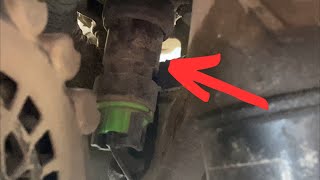
On the second-generation Cadillac SRX with the 3.0L and 3.6L V6 engines, the P0521 code is a well-documented issue. The failure of the sensor itself is common, but a more frequent culprit is the small filter screen (sometimes called the Valve Lifter Oil Filter) located in the block directly beneath the sensor. This screen is notorious for getting clogged with sludge or debris, restricting oil flow to the sensor and causing a false low-pressure reading. The location of the sensor on the 3.6L V6 is at the rear of the engine, making access extremely difficult and labor-intensive. 🎬 Watch: See the difficult sensor location and replacement steps. Using an incorrect specification oil filter can also contribute to this code on these GM engines, making it important to use high-quality, OEM-spec parts.
Diagnostic Flowchart
Tap your situation to follow the diagnostic path that matches what you're seeing on this vehicle.
Symptoms You May Notice
- Check Engine Light is on
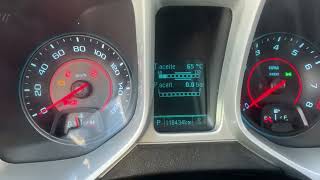
- Low oil pressure warning message on the driver information center
- Oil pressure gauge reading abnormally low, high, or erratically
- Engine running rough or making knocking/ticking noises (in case of actual low pressure)
- Engine stalling
- Replacing the oil pump before confirming the actual oil pressure with a mechanical gauge.
- Replacing the Engine Control Module (ECM) when the issue is a simple sensor or wiring fault.
- Replacing only the oil pressure sensor without also replacing the small, inexpensive filter screen underneath it, leading to a quick return of the code.
Most Likely Causes
- Faulty Engine Oil Pressure Sensor 🔴 High Probability This is a known high-failure part on many GM vehicles of this era, including the SRX. The sensor can fail internally or leak oil through its body into the electrical connector, causing erratic readings.
How to confirm: Use a scan tool to monitor the sensor's reading. Then, connect a mechanical oil pressure gauge and compare the readings. If the mechanical gauge shows good pressure (e.g., ~20-25 PSI at hot idle for the 3.6L) but the scan tool shows an erratic or incorrect reading, the sensor is bad.
Typical fix: Replace the oil pressure sensor. It is critical to also replace the small filter screen that is located in the engine block bore directly beneath the sensor at the same time.
Est. part cost: $25-$75 - Clogged Oil Pressure Sensor Screen 🔴 High Probability GM TSB PIP4786C specifically addresses this issue. A small, thimble-sized filter screen (GM Part #12585328) sits under the sensor to protect it. It is extremely common for this screen to become clogged with engine sludge or debris, which restricts oil flow to the sensor and triggers a false P0521 code.
How to confirm: This can only be confirmed by removing the oil pressure sensor and extracting the screen from its bore in the engine block. If it is full of dark, sludgy material, it is the likely cause.
Typical fix: The screen can sometimes be cleaned with brake cleaner and compressed air, but replacement is highly recommended due to the low cost of the part and the high labor cost to access it. Always replace this screen when replacing the sensor.
Est. part cost: $5-$15 - Low or Incorrect Engine Oil 🟡 Medium Probability The 3.0L and 3.6L engines are known for oil consumption, and some are susceptible to timing chain stretch, which is exacerbated by poor oil quality or low levels. Following the Oil Life Monitor (OLM) too strictly can lead to degraded oil.
How to confirm: Physically check the engine oil level using the dipstick and inspect the oil's condition. Ensure it is not dirty, sludgy, or have the wrong viscosity (5W-30 is specified).
Typical fix: Top off or change the engine oil and filter with a full synthetic oil meeting the GM dexos specification and the correct grade.
Est. part cost: $50-$120 - Incorrect or Clogged Oil Filter ⚪ Low Probability → Shop Engine Oil Filter Adapter Using an oil filter with an incorrect bypass valve pressure rating is a documented cause of P0521 on GM engines. If the code appeared shortly after an oil change, this is a strong possibility. The 3.6L V6 uses a cartridge-style filter (ACDelco PF63E).
How to confirm: Check the part number of the installed oil filter against the OEM specification. Ensure it's a quality filter from a reputable brand like ACDelco.
Typical fix: Replace the oil filter with a high-quality, OEM-specified part, such as an ACDelco PF63E.
Est. part cost: $10-$20
Rare But Worth Checking
- Worn Internal Engine Components: If actual oil pressure is confirmed to be low with a mechanical gauge and all other causes are ruled out, it could point to more severe issues like worn engine bearings or a failing oil pump. On these engines, it can also be an early warning of stretched timing chains, which rely on oil pressure for their tensioners.
- Wiring or Connector Issue: Damage or corrosion to the wiring harness or the connector for the oil pressure sensor can cause erratic readings. Oil leaking from the old sensor can saturate the connector, causing a poor connection. This should be checked during sensor replacement.
- Sticking Oil Pump Pressure Relief Valve: → Shop Engine Oil Pump GM TSB 20-NA-161, for similar engines, notes that the oil pressure relief valve within the oil pump can sometimes stick, causing intermittent low oil pressure and a P0521 code. This is a more complex mechanical issue.
Diagnosis Steps
- Verify the engine oil level and condition. Top off or change if necessary using a full synthetic 5W-30 dexos-approved oil.
- Connect an OBD-II scanner to read the codes and view the live data from the oil pressure sensor. Note if the reading is stuck, erratic, or illogical (e.g., high pressure with engine off).
- Safely raise the vehicle and locate the oil pressure sensor. On the 3.0L V6, it's at the front-bottom of the engine near the alternator. On the 3.6L V6, it's on the rear of the engine block, below the intake manifold, against the firewall, making it very difficult to access.
- Disconnect the sensor and connect a mechanical oil pressure gauge to the engine in its place.
- Start the engine and compare the reading on the mechanical gauge to the manufacturer's specifications. For a warm 3.6L LFX, expect ~20-25 PSI at idle, rising with RPM.
- If mechanical pressure is good but the scan tool reading was faulty, the problem is in the sensor circuit. Inspect the connector and wiring for oil saturation or damage before replacing the sensor.
- If the sensor is replaced, ALWAYS remove the old filter screen from the block (GM #12585328) and install a new one.
- If mechanical pressure is low, the problem is more serious and could involve the oil pump, clogged oil passages, or worn engine bearings, requiring further mechanical diagnosis.
Parts You'll Likely Need
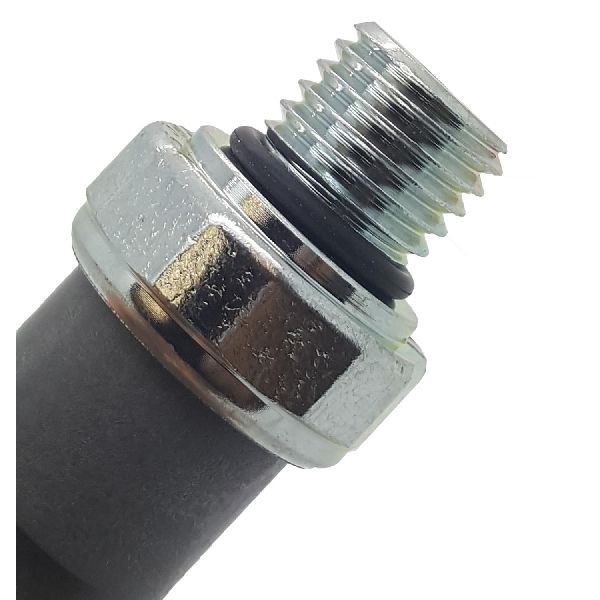
- Engine Oil Pressure Sensor
(OEM #12673533 (supersedes 12621234))— This is the most common component to fail and cause the P0521 code on this vehicle. Using an OEM part is recommended as some aftermarket sensors may not resolve the code.
Trusted brands: ACDelco (OEM), Standard Motor Products
OEM price range: $40-$60
Aftermarket price range: $25-$45 - Oil Pressure Sensor Filter Screen
(OEM #12585328)— This small screen, located under the sensor, is a primary cause of P0521 due to clogging from sludge. It is considered mandatory to replace this part whenever the sensor is replaced.
Trusted brands: ACDelco (OEM)
OEM price range: $5-$15
Aftermarket price range: $5-$10
Related Codes That Often Appear With This One
- P0520 — This code for 'Engine Oil Pressure Sensor/Switch Circuit' points to an electrical fault. It can appear with P0521 if the sensor is failing electrically.
- P0523 — This code for 'Engine Oil Pressure Sensor/Switch Circuit High' indicates a continuously high voltage signal. It can appear if the sensor fails and sends erratic readings that go both high and low.
- P0008, P0017 — These codes indicate a timing correlation error, often due to stretched timing chains on the 3.0L/3.6L engines. Since the chain tensioners are hydraulic, low or erratic oil pressure can contribute to or be a symptom of timing chain problems.
Technical Service Bulletins (TSBs) & Recalls
- PIP4786C: Advises technicians to inspect the Valve Lifter Oil Filter (screen) for debris when a P0521 code is present, as it can get clogged and cause a false low-pressure reading.
- 20-NA-161: Noted for similar GM engines, this TSB suggests that a P0521 code can sometimes be caused by a sticking oil pressure relief valve in the oil pump, indicating a more serious mechanical issue.
Platform-Specific Known Issues
- TSB PIP4786C: Clogged Sensor Screen: A GM Technical Service Bulletin, #PIP4786C, was issued for vehicles that may display a low oil pressure message and have a P0521 code. It specifically instructs technicians to inspect the 'Valve Lifter Oil Filter' (the screen under the sensor) for debris or sludge before replacing any other parts, confirming this is a prima
Mechanic-Grade Diagnostic Values
- Engine Oil Pressure (3.6L LFX V6, at operating temperature) — expected: 45 - 65 PSI. Failure: Pressure significantly below this range when measured with a mechanical gauge.
- Oil Pressure Sensor Connector - Reference Voltage — expected: 5 Volts (Key On, Engine Off). Failure: Voltage significantly lower than 5V (e.g., 3.8V) can indicate a short in another sensor on the same circuit or a wiring issue. No voltage indicates a wiring or ECM problem.
- Oil Pressure Sensor Connector - Signal Voltage — expected: Varies between 0V and 5V with engine running; voltage increases as oil pressure increases.. Failure: Voltage is stuck, does not change with RPM, or reads an illogical value (e.g., high voltage with engine off).
- Oil Pressure Sensor Resistance (Gauge Sender Type) — expected: A stable reading that changes with pressure (e.g., 30-55 ohms on some GM models), not jumping erratically.. Failure: Resistance is open (infinite), shorted (zero), or bounces around inconsistently when tested.
Wiring & Ground Locations
- G110 — Lower left side of the engine block (on 2013 3.6L V6).. This is a primary engine ground. A poor connection here can cause erratic sensor readings and various electrical faults, including for the oil pressure sensor circuit.
- Engine Oil Pressure Switch Connector — On the 3.6L, at the rear of the engine block below the intake manifold. On the 3.0L, at the front-bottom of the engine. It is a 3-pin circular connector.. This is the direct connection to the sensor. It should be inspected for oil saturation from a leaking sensor, corrosion, or damaged pins. The signal wire is labeled 'Oil pressure sw sig' in some diagrams.
- Engine Control Module (ECM) — Located in the left front of the engine compartment on the 2013 SRX.. The oil pressure sensor signal wire terminates here. A poor pin connection at the ECM is a rare but possible cause of a persistent P0521 after the sensor and wiring have been checked.
Real Owner Repair Stories
- Reddit user in r/ChevyTrucks (Chevy Truck with similar GM engine architecture) — Recurring P0521 code.
❌ Tried (didn't work) Replacing the oil pressure sensor.
✅ What actually fixed it Switching to a specific high-quality oil filter (Mobil 1 M1-113A) resolved the issue, suggesting the previous filter had incorrect bypass characteristics. - Reddit user in r/ChevyTrucks (Dodge Charger with Hemi (different vehicle, but illustrates a common principle)) — Persistent P0521 code.
❌ Tried (didn't work) Replacing the sensor with an aftermarket part from a local auto parts store.
✅ What actually fixed it Replacing the sensor a second time with an OEM (Original Equipment Manufacturer) part finally cleared the code.
"I Checked Everything" — The Actual Cause
- In cases where the oil pressure sensor and screen are replaced (and mechanical pressure is confirmed good) but the P0521 code returns, the root cause has been traced to using an incorrect oil filter. Some aftermarket filters have bypass valve ratings that are not compatible with the specific requirements of GM's oiling system, leading to irrational pressure readings by the ECM.
When the Usual Fixes Don't Work
- While the most common fixes are the sensor and screen, there are numerous owner accounts where these repairs did not solve the problem. In one such case involving a similar GM engine, the issue was only resolved after switching to a specific brand of OEM-specification oil filter, even after the sensor had been replaced. In another, an aftermarket sensor failed to fix the code, which was only resolved by installing a genuine OEM sensor. This underscores that for the P0521 code on this platform, adherence to exact OEM specifications for all related parts—including the oil filter and the sensor itself—is critical.
OEM Part Supersession History
12621234→12673533— Standard part revision for improved reliability or manufacturing changes.
Heads up: Using the older part number is not recommended as the latest revision typically contains improvements. Some owners report that only OEM sensors, regardless of part number, will resolve the code.
Model Year Variations Within This Range
- 2010-2011: These years used the 3.0L LF1 V6 engine. The oil pressure sensor is located at the front-bottom of the engine, making it easier to access than on the 3.6L. This engine was also noted for having a high-RPM torque peak, which affects its driving characteristics.
- 2012-2016: These years used the 3.6L LFX V6 engine. The oil pressure sensor is in a very difficult-to-access location at the rear of the engine against the firewall.
- 2012 vs 2013-2016: The 2012 model year SRX with the 3.6L LFX engine still used an older, more failure-prone timing chain design. An improved timing chain was introduced during the 2013 model year. As failing timing chain tensioners can be related to oil pressure issues, this is a relevant distinction.
Helpful Videos
We Have This Part in Stock


The information in this article is provided for general reference and educational purposes only. Vehicle specifications, procedures, and part compatibility can vary by production date, trim level, and region. Always consult your vehicle's factory service manual and verify part numbers before purchasing or performing repairs. Safety-critical components such as airbags, seat belts, and braking systems should be installed by a qualified professional.
- Cadillac SRX:
- 🧭 Diagnostic Flowchart
- 🎬 Helpful Videos
- 🛍️ Shop This Part
- What's Unique About the 2010-2016 Cadillac SRX
- Symptoms You May Notice
- Most Likely Causes
- Rare But Worth Checking
- Diagnosis Steps
- Parts You'll Likely Need
- Related Codes That Often Appear With This One
- Technical Service Bulletins (TSBs) & Recalls
- Platform-Specific Known Issues
- Mechanic-Grade Diagnostic Values
- Wiring & Ground Locations
- Real Owner Repair Stories
- "I Checked Everything" — The Actual Cause
- When the Usual Fixes Don't Work
- OEM Part Supersession History
- Model Year Variations Within This Range
- 🎟️ Get 5% Off