

P0521 on 2005-2011 Cadillac STS: Causes for Oil Pressure Sensor Problems and Fixes
On a 2005-2011 Cadillac STS, code P0521 is most often caused by a faulty engine oil pressure sensor or its small, clogged filter screen. Before replacing anything, verify the actual oil pressure with a mechanical gauge. A new sensor costs $30-$80, but labor can be high due to its difficult location at the rear of the engine, which requires a special 1-1/16" socket for removal.
- P0521 is a critical code. Do not drive the vehicle until the issue is diagnosed to avoid potentially catastrophic engine damage.
- Before performing any expensive repairs, you MUST verify the engine's true oil pressure using a mechanical gauge.
- The most common fix is to replace both the oil pressure sensor and the small filter screen located underneath it.
- Be prepared for a difficult repair due to the sensor's location at the rear of the engine against the firewall.
What's Unique About the 2005-2011 Cadillac STS
For this generation of GM vehicles, including the Cadillac STS, the P0521 code is a very common issue. The problem is frequently not the oil pressure itself, but the sensor system. A small, thimble-shaped filter screen is located in the engine block directly beneath the oil pressure sensor. This screen is prone to clogging with sludge, especially if oil changes are neglected, which then starves the sensor of pressure and causes it to send faulty readings. As a result, replacing both the sensor and this small screen is the standard, and often required, repair. For V8 models, the issue can also be triggered by using the wrong type of oil filter, with GM issuing bulletins about using a PF48 filter instead of a PF48E in certain conditions.
Diagnostic Flowchart
Tap your situation to follow the diagnostic path that matches what you're seeing on this vehicle.
Symptoms You May Notice
- Check Engine Light is on
- Low Oil Pressure warning light or message displayed on the instrument cluster.
- Oil pressure gauge reading is abnormally low, high, or erratic (e.g., stuck at zero or maxed out).
- In cases of true low oil pressure, the engine may run rough or produce ticking, clattering, or knocking noises.
- On V8 models with Active Fuel Management (AFM), the system may be disabled by the ECM as a precaution.
- Replacing the oil pump before verifying the issue is not the sensor. The oil pump is a durable component and rarely the cause of P0521.
- Replacing the instrument cluster or gauge. The P0521 code is an electrical fault reported by the ECM, not a mechanical issue with the gauge itself.
Most Likely Causes
- Faulty Engine Oil Pressure Sensor 🔴 High Probability The oil pressure sensors used on this generation of GM vehicles are a known high-failure item, often failing internally or leaking oil into the electrical connector.
How to confirm: After confirming true oil pressure with a mechanical gauge, test the sensor's voltage output with a multimeter. If the voltage is erratic or doesn't correspond to the known pressure, the sensor is bad. Often, the sensor is replaced based on the high probability of failure once a mechanical gauge confirms good pressure.
Typical fix: Replace the engine oil pressure sensor. A special 1-1/16" oil pressure sensor socket is required for removal due to tight clearances.
Est. part cost: $30-$80 - Clogged Oil Pressure Sensor Filter Screen 🔴 High Probability → Shop Engine Oil Pressure Sensor A small screen below the sensor is designed to protect it but often gets clogged with oil sludge, leading to an inaccurate pressure reading at the sensor.
How to confirm: This is typically diagnosed by removing the oil pressure sensor. The screen is located in the port below it and can be visually inspected for blockage. It is often removed with a pick tool.
Typical fix: Remove and replace the filter screen. This should always be done when replacing the sensor. 🎬 Watch how to properly remove and replace the small filter screen.
Est. part cost: $5-$15 - Low Engine Oil Level or Incorrect Oil/Filter 🟡 Medium Probability → Shop Engine Oil Filter Adapter Using an oil filter with an incorrect bypass pressure rating is a known cause for oil pressure issues on GM engines. Specifically for V8 models, TSB #PIP5276B advises that a PF48E filter can cause P0521 in cold weather and recommends using a PF48 filter instead.
How to confirm: Check the oil level on the dipstick. Verify the part number of the installed oil filter against OEM (ACDelco) specifications for your specific engine.
Typical fix: Top off or change the engine oil and replace the oil filter with a correct, high-quality one, such as the specified ACDelco part.
Est. part cost: $40-$80 - Wiring or Connector Issue ⚪ Low Probability The sensor is located at the back of the engine, where high heat can make the wiring and pigtail connector brittle and prone to cracking or oil saturation over time.
How to confirm: Visually inspect the sensor's connector and wiring for damage, corrosion, or looseness. Perform a continuity test on the wiring harness.
Typical fix: Repair the damaged wiring or replace the pigtail connector.
Est. part cost: $15-$40
Rare But Worth Checking
- Failing Oil Pump or Internal Engine Wear: → Shop Engine Oil Pump This is the worst-case scenario. If a mechanical gauge confirms that the engine's oil pressure is genuinely low, it points to a serious internal problem like a worn oil pump, worn engine bearings, or clogged oil passages throughout the engine. Some GM TSBs also mention a sticking pressure relief valve inside the oil pump as a cause.
Diagnosis Steps
- Check the engine oil level and condition. If it's low or dirty, top it off or perform an oil change, clear the codes, and see if the problem returns.
- CRITICAL: Connect a mechanical oil pressure gauge to the engine. This is the only way to know if you have a real oil pressure problem or just a sensor circuit issue.
- Compare the mechanical gauge reading to the reading from a scan tool. If the mechanical gauge shows good pressure but the scan tool shows an erratic or incorrect reading, the problem is in the sensor circuit.
- If the pressure is confirmed to be good, inspect the oil pressure sensor connector and wiring for any signs of damage, oil saturation, or corrosion.
- If the wiring is okay, the most likely cause is a faulty oil pressure sensor and/or a clogged filter screen underneath it.
- Remove the oil pressure sensor using a specialty 1-1/16" socket. Inspect and replace the small filter screen located in the engine block port using a pick tool.
- Install a new, preferably OEM, oil pressure sensor.
- If the mechanical gauge shows low oil pressure, the issue is internal to the engine. Further diagnosis of the oil pump, pickup tube, and internal passages is required.
Parts You'll Likely Need
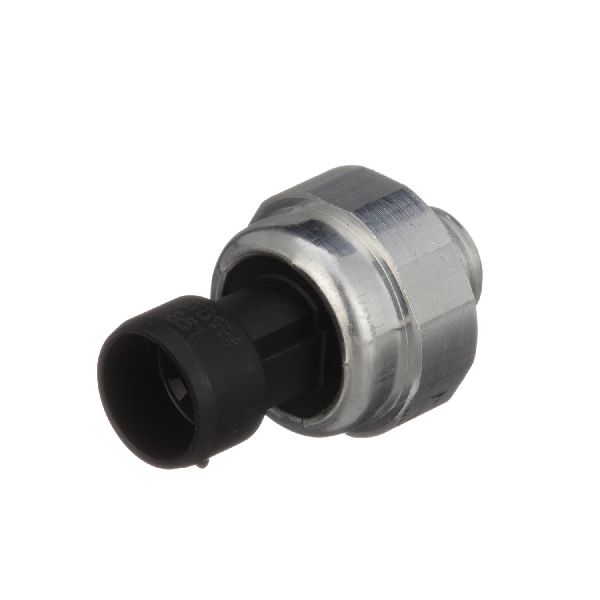
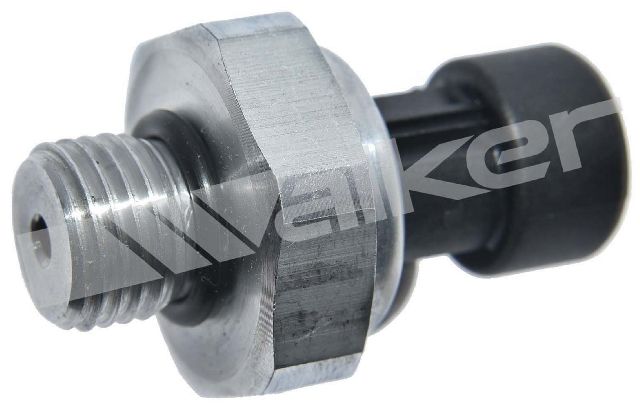
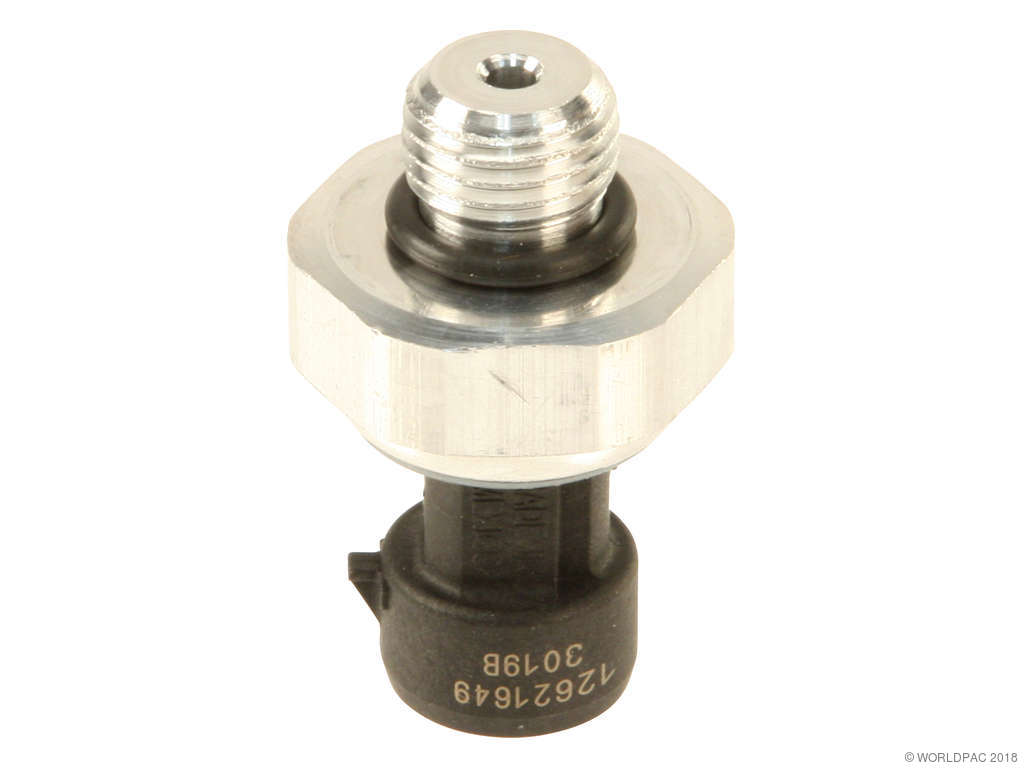
- Engine Oil Pressure Sensor
(OEM #12621234 (superseded by 12677836))— This is the most common failure point for code P0521. The sensor fails and sends incorrect data to the ECM. Using a genuine ACDelco part is highly recommended as aftermarket sensors are known to fail prematurely.
Trusted brands: ACDelco
OEM price range: $40-$80
Aftermarket price range: $25-$50 - Engine Oil Pressure Sensor Filter
(OEM #12585328)— This small screen, located under the sensor, frequently clogs with sludge and is a primary cause of the code. It should always be replaced with the sensor.
Trusted brands: ACDelco, Dorman
OEM price range: $5-$15
Aftermarket price range: $5-$10 - Oil Pressure Sensor Socket — A special deep socket, typically 1-1/16 inch, is required to access and remove the sensor due to extremely tight clearances against the firewall. 🎬 See a clever trick for reaching the sensor in tight spaces. A standard deep socket is often too tall to fit.
Trusted brands: Lisle, OEMTOOLS
OEM price range: $10-$20
Aftermarket price range: $10-$20
Related Codes That Often Appear With This One
- P0523 — This code for 'Engine Oil Pressure Sensor/Switch Circuit High' can appear if the sensor fails by shorting internally, causing the signal to get stuck high.
- P0522 — This code for 'Engine Oil Pressure Sensor/Switch Circuit Low' can appear if the sensor circuit has an open or if there is a legitimate, severe loss of oil pressure.
- P06DD — Seen on some newer GM engines, this code for 'Engine Oil Pressure Control Circuit Stuck Off' points more directly to a mechanical issue with a dual-stage oil pump rather than just a sensor fault.
Technical Service Bulletins (TSBs) & Recalls
- PIP4786C: Confirms that a P0521 DTC may be found when a customer reports a low oil pressure message, and directs technicians to follow standard diagnostic procedures.
- PIP5276B/E/G: A series of related TSBs for V8 engines that address P0521, particularly after an oil change or in cold weather. They discuss the impact of using a PF48E oil filter and recommend switching to a PF48 in some cases to resolve the code.
Platform-Specific Known Issues
- The location of the oil pressure sensor on both the V6 and V8 engines is at the very back of the engine block, near the firewall, making access extremely difficult. 🎬 Watch this step-by-step guide for replacing the sensor on an STS. This is why the DIY difficulty is high and labor costs can be significant.
- On the 4.6L Northstar V8, the sensor is located on the oil filter adapter housing, which is also in a very tight spot.
Mechanic-Grade Diagnostic Values
- Mechanical Oil Pressure (Engine Warm) — expected: 20-25 PSI at idle. Should rise with RPM, with a minimum of 20 PSI at 2,000 RPM.. Failure: Pressure significantly below 20 PSI at warm idle suggests a mechanical issue.
- Sensor 5V Reference Circuit Voltage — expected: 4.8V to 5.2V with key on, engine off.. Failure: Voltage outside this range indicates a wiring issue or a fault in the ECM.
- Sensor Signal Circuit Voltage — expected: Varies with pressure, typically ~0.5V-1.3V at idle, rising to ~4.5V at high pressure.. Failure: Voltage is stuck near 0V or 5V, or does not change with engine RPM. The ECM may set P0522 if voltage is < 0.2V or P0523 if > 4.4V for over 10 seconds.
- Sensor Resistance (generic GM-style sensor) — expected: Approximately 240 Ohms at 0 PSI, 103 Ohms at 40 PSI, and 33.5 Ohms at 80 PSI.. Failure: Readings are open (infinite resistance), shorted (zero resistance), or do not correspond to known pressure.
Scan Tool Commands That Help
- Tech2 / GDS2: View Live Data: Engine Oil Pressure Sensor Parameter — This is the primary diagnostic step to observe the sensor's reported pressure in real-time. It helps identify if the reading is erratic, stuck at a fixed value (e.g., 130 PSI), or illogical for the engine's current state (e.g., not returning to 0 PSI when the engine is off).
- Tech2 / GDS2: View Freeze Frame / Failure Records — Use this to see the exact engine conditions (RPM, temperature, speed) at the moment the P0521 code was triggered. This provides critical context, such as whether the fault occurred during a cold start, at high RPM, or at idle.
Wiring & Ground Locations
- Engine Oil Pressure Sensor Connector — At the sensor, located on the rear of the engine block near the firewall, often above the bell housing.. This 3-wire connector provides the 5V reference, low reference (ground), and signal return to the ECM. It is a common point of failure due to heat exposure, which can make it brittle, and oil contamination from a leaking sensor, which can disrupt the signal.
- G107 (on 3.6L V6) — On the front of the right-side cylinder head.. This is a key engine ground. A loose or corroded connection here can cause unstable readings from various engine sensors, including the oil pressure sensor, leading to intermittent or false codes.
- G103 — On the cowl, located above the brake booster.. This is a primary chassis ground. Poor contact at this point can affect the Engine Control Module (ECM) and its sensor readings.
Real Owner Repair Stories
- Reddit user in r/ChevyTrucks (Similar GM Truck) — P0521 code would return 100 to 1000 miles after being cleared.
❌ Tried (didn't work) Replacing the oil pressure switch 3 different times., Removing the filter screen underneath the sensor.
✅ What actually fixed it The user drove the truck for 40,000 miles with the code active and noticed no actual performance issues before selling the vehicle. This highlights that the code can sometimes be persistent without an apparent mechanical fault. - Reddit user in r/ChevyTrucks (Similar GM Truck) — Recurring P0521 code.
❌ Tried (didn't work) Standard oil and filter changes., Replacing the oil pressure sensor.
✅ What actually fixed it Switching to a specific high-quality oil filter (Mobil 1 M1-113A) resolved the issue permanently. - Reddit user in r/ChevyTrucks (GM Hemi vehicle) — P0521 code remained active after repair attempt.
❌ Tried (didn't work) Replacing the oil pressure sensor with an aftermarket part from a local auto parts store.
✅ What actually fixed it Replacing the sensor again, but this time with a genuine OEM part, finally cleared the code.
OEM Part Supersession History
12621234→12677836— Standard part evolution for improved reliability and materials.
Heads up: While many aftermarket sensors are available, forum and owner reports strongly indicate a high failure rate or incompatibility, causing the P0521 code to persist. Using a genuine ACDelco OEM sensor (12677836) is highly recommended to ensure a lasting repair.
Model Year Variations Within This Range
- 2010-2011 (and later models with 3.6L V6): Per GM TSB PIP4690G, it is considered normal for the oil pressure gauge to read very high (up to 110 PSI) on a cold start, especially in cold weather. This should not be diagnosed as a fault. The pressure should return to a normal range (approx. 20-25 PSI at warm idle) as the engine warms up.
Helpful Videos
We Have This Part in Stock


The information in this article is provided for general reference and educational purposes only. Vehicle specifications, procedures, and part compatibility can vary by production date, trim level, and region. Always consult your vehicle's factory service manual and verify part numbers before purchasing or performing repairs. Safety-critical components such as airbags, seat belts, and braking systems should be installed by a qualified professional.
- Cadillac STS:
- 🧭 Diagnostic Flowchart
- 🎬 Helpful Videos
- 🛍️ Shop This Part
- What's Unique About the 2005-2011 Cadillac STS
- Symptoms You May Notice
- Most Likely Causes
- Rare But Worth Checking
- Diagnosis Steps
- Parts You'll Likely Need
- Related Codes That Often Appear With This One
- Technical Service Bulletins (TSBs) & Recalls
- Platform-Specific Known Issues
- Mechanic-Grade Diagnostic Values
- Scan Tool Commands That Help
- Wiring & Ground Locations
- Real Owner Repair Stories
- OEM Part Supersession History
- Model Year Variations Within This Range
- 🎟️ Get 5% Off