

P0521 on 2005-2012 Chevrolet Corvette: Causes and Fixes for Oil Pressure Faults
On a 2005-2012 Corvette, P0521 almost always points to a failed engine oil pressure sensor. However, due to its location behind the intake manifold against the firewall, replacement is a significant labor-intensive job. Many owners opt to install an oil pressure sensor relocation kit during the repair to simplify future service. Expect to pay $350-$650+ for a professional repair.
- P0521 on a C6 Corvette is most often caused by a failed oil pressure sensor.
- Do not continue driving. You must verify whether the oil pressure is actually low or if it's just a sensor error to avoid catastrophic engine damage.
- The sensor is located behind the intake manifold, making replacement a 3-4 hour job for a professional.
- Always use the OEM-specified ACDelco PF48E oil filter, as mentioned in GM service bulletins, to prevent oil pressure issues.
- When replacing the sensor, also replace the intake manifold gaskets and clean the small filter screen under the sensor.
What's Unique About the 2005-2012 Chevrolet CORVETTE
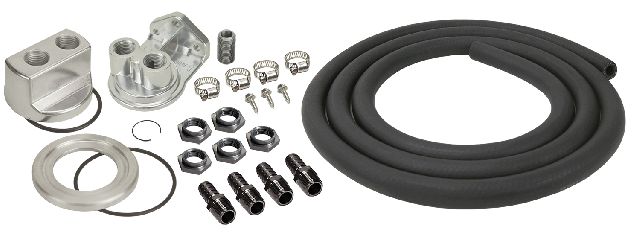
For the C6 Corvette and its LS-family of engines (LS2, LS3, LS7), the P0521 code is a very common issue. The primary reason this platform is unique is the location of the oil pressure sensor itself. It is notoriously difficult to access, as it's located at the very back of the engine block in the valley, tucked under the intake manifold against the firewall. This turns a simple sensor swap into a multi-hour job that requires removing the entire intake manifold, making it a much more involved and costly repair than on many other vehicles. Because of this, many owners install an 'oil pressure sensor relocation kit', which uses a braided line to move the sensor to a much more accessible location, like the firewall.
Diagnostic Flowchart
Tap your situation to follow the diagnostic path that matches what you're seeing on this vehicle.
Symptoms You May Notice
- Check Engine Light is on
- Low Oil Pressure warning message on the Driver Information Center (DIC)
- Oil pressure gauge reads zero, excessively high (e.g., pegged at 60+ PSI), or fluctuates erratically.
- Engine may stall in some cases.
- Engine noise (ticking, clattering) if true low oil pressure exists.
- Replacing the oil pump before verifying the oil pressure sensor's reading with a mechanical gauge.
- Replacing the instrument cluster due to an erratic gauge reading without first diagnosing the sensor and its circuit.
- Repeatedly replacing the sensor without checking the connector pigtail for damage or corrosion.
Most Likely Causes
- Faulty Engine Oil Pressure Sensor 🔴 High Probability The sensor is a known high-failure item on GM's LS series engines used in the Corvette. Constant heat and vibration from its location at the back of the engine valley contribute to its eventual failure.
How to confirm: Use a scan tool to monitor the oil pressure reading. Then, verify the actual oil pressure 🎬 Watch: How to diagnose a failed sender and verify pressure. by connecting a mechanical pressure gauge. If the mechanical gauge shows normal pressure but the scan tool shows an erratic or incorrect reading, the sensor is bad.
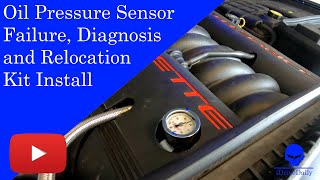
Typical fix: Replace the oil pressure sensor and the small filter screen located in the block underneath it. This requires removing the intake manifold 🎬 See this walkthrough on replacing the sensor and intake manifold. for access. Many owners install an oil pressure sensor relocation kit at this time to make future replacements trivial. 🎬 Watch: How to install an oil pressure sensor relocation kit.
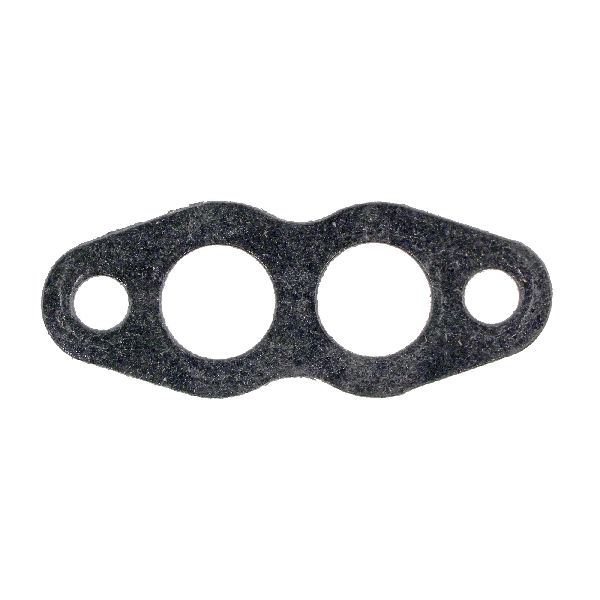
Est. part cost: $40-$65 - Incorrect or Clogged Oil Filter 🟡 Medium Probability → Shop Engine Oil Filter Adapter As noted in multiple GM Technical Service Bulletins (like PIP5276G), using a non-specified oil filter can cause oil pressure reading issues. Aftermarket filters may have different bypass valve specifications or flow characteristics that the ECM interprets as a performance fault.
How to confirm: Check the part number on the installed oil filter. Cross-reference it with the OEM-specified filter (ACDelco PF48E). If the wrong filter is installed, or if it's been an excessive amount of time since the last oil change, this could be the cause.
Typical fix: Change the engine oil and replace the filter with a new, OEM-specified ACDelco PF48E filter.
Est. part cost: $10-$15 - Low Engine Oil Level or Dirty Oil 🟡 Medium Probability All engines consume some oil, and performance engines like those in the Corvette can use more under spirited driving. Low or broken-down oil can cause pressure fluctuations that trigger the code.
How to confirm: Check the engine oil level using the dipstick and inspect the oil's condition. If the level is below the 'add' mark or the oil is very dark and sludgy, this is a likely contributor.
Typical fix: Top off the oil to the correct level or perform a complete oil and filter change using the manufacturer-specified oil viscosity.
Est. part cost: $50-$100 - Wiring or Connector Issue ⚪ Low Probability The sensor connector is in a high-heat area at the back of the engine, making the wiring and plastic connector brittle over time. Oil leaks can also contaminate the connection, leading to poor signal quality. A common failure point is the harness being pinched or damaged during intake manifold reinstallation.
How to confirm: While the intake manifold is off for sensor replacement, inspect the sensor's electrical connector and nearby wiring for signs of corrosion, damage, or oil saturation. A CorvetteForum user reported solving a persistent P0521 by cleaning corrosion from an electrical connector on the driver's side head. Check for continuity on the low reference circuit between the sensor connector and the ECM.
Typical fix: Clean the connector terminals. If the connector or wiring is damaged, a new connector pigtail may need to be spliced in.
Est. part cost: $15-$30
Rare But Worth Checking
- Failing Oil Pump or Sticking Pressure Relief Valve: → Shop Engine Oil Pump This is a serious mechanical failure. If a mechanical gauge confirms low oil pressure across all RPM ranges, the oil pump may be worn or its internal pressure relief valve may be stuck. This is much less common than a sensor failure but is catastrophic if not addressed. Tapping the front engine cover with a rubber mallet can sometimes temporarily un-stick the valve.
- Clogged Oil Pickup Tube Screen or Internal Sludge: In engines with poor maintenance history, sludge can build up and restrict oil flow at the oil pump's pickup tube in the oil pan. This would be confirmed by a mechanical gauge showing low pressure, especially at startup. A leaking pickup tube O-ring can also cause aeration and low pressure.
Diagnosis Steps
- Check the engine oil level and condition. Top up or change if necessary.
- Using an OBD-II scanner, read the live data for the Engine Oil Pressure sensor. Note its reading with the engine off, at idle, and at higher RPMs. Look for irrational values (pegged high, zero, or erratic).
- Verify the type of oil filter installed. If it is not an ACDelco PF48E, consider replacing it as per TSB PIP5276G.
- Safely gain access to an oil pressure port on the engine (often by removing the original sensor) and connect a mechanical oil pressure gauge.
- Start the engine and compare the reading on the mechanical gauge to the reading from the scan tool. A healthy LS engine should have ~25-35 PSI at hot idle, increasing by about 10 PSI per 1000 RPM. If the mechanical gauge shows stable, normal pressure while the scan tool shows faulty readings, the oil pressure sensor is confirmed bad.
- If the mechanical gauge confirms low oil pressure, stop the engine immediately. The problem is internal to the engine (e.g., oil pump, pickup tube O-ring, bearings) and requires professional diagnosis.
- If the sensor is confirmed faulty, proceed with replacement. This involves removing the intake manifold. While the manifold is off, carefully inspect the sensor's electrical connector and wiring for heat damage, brittleness, or corrosion.
- Consider installing an oil pressure sensor relocation kit at this time to make any future replacements much easier.
- After reassembly with new intake gaskets, clear the DTC and test drive the vehicle to ensure the fault does not return.
Parts You'll Likely Need
- Engine Oil Pressure Sensor
(OEM #12677836 (also known as ACDelco D1846A))— This is the most common failure point for code P0521. The original part number 12616646 has been superseded multiple times by parts including 12677836.
Trusted brands: ACDelco (GM Genuine)
OEM price range: $40-$65
Aftermarket price range: $25-$50 - Intake Manifold Gasket Set
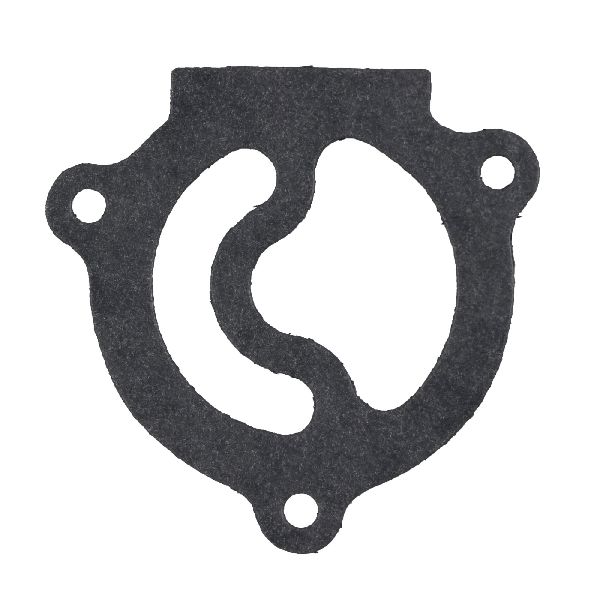
(OEM #ACDelco 19207929 or Fel-Pro MS 92438)— The intake manifold must be removed to access the oil pressure sensor. The gaskets are a one-time-use part and must be replaced to prevent vacuum leaks.
Trusted brands: ACDelco, Fel-Pro
OEM price range: $40-$60
Aftermarket price range: $25-$40 - Oil Pressure Sensor Filter Screen
(OEM #12585328)— This small, thimble-sized filter sits in the block directly below the sensor. It is often clogged with sludge and should be replaced or at least cleaned during the sensor replacement.
Trusted brands: ACDelco (GM Genuine)
OEM price range: $5-$10
Aftermarket price range: $3-$8 - Engine Oil Filter
(OEM #PF48E)— Multiple TSBs indicate that using the correct ACDelco PF48E filter is critical for preventing oil pressure issues.
Trusted brands: ACDelco
OEM price range: $10-$15
Aftermarket price range: $5-$12
Related Codes That Often Appear With This One
- P0522 (Engine Oil Pressure Sensor/Switch Circuit Low)
- P06DD (Engine Oil Pressure Control Solenoid Valve Stuck Off)
- P0523 (Engine Oil Pressure Sensor/Switch Circuit High)
Technical Service Bulletins (TSBs) & Recalls
- PIP5276G: Mentions DTC P0521 with a low oil pressure message, often after an oil change. It stresses using the correct PF48E filter and checking for issues with the left rocker cover baffle.
- PIP4786C: Notes that DTC P0521 may be found in the ECM along with a low oil pressure message and instructs technicians to follow standard diagnostic procedures. [NHTSA ID: 10084395]
- PIP5276E: Connects DTC P0521 to issues occurring after an oil change and specifically recommends using a PF48e type filter. [NHTSA ID: 10059078]
Platform-Specific Known Issues
- The primary issue for the 2005-2012 Corvette is the location of the oil pressure sensor at the rear of the engine valley, under the intake manifold. This makes replacement significantly more labor-intensive than on other vehicles.
Mechanic-Grade Diagnostic Values
- Engine Oil Pressure Sensor Signal Voltage — expected: Approximately 0.5V at low pressure, rising to 4.5V at high pressure.. Failure: Voltage is stuck, erratic, or does not correspond to engine RPM changes.
- Engine Oil Pressure Sensor Low Reference Circuit Resistance — expected: Less than 10 Ω between sensor connector terminal 2 and ECM connector X1-terminal 23.. Failure: Resistance is higher than 10 Ω, indicating a poor ground connection.
- Minimum Mechanical Oil Pressure (Hot) — expected: Approx. 22-24 PSI @ 1000 RPM, 30-35 PSI @ 2000 RPM, 33-38 PSI @ 3000 RPM.. Failure: Pressure is significantly below these values, indicating a mechanical engine issue.
Scan Tool Commands That Help
- GDS2 (GM Techline): Engine Mechanical Data Display & DTC Check — A specific GM procedure involves running the engine through a cycle of 2,000 RPM for 30s, 4,000 RPM for 15s, and idle for 15s, repeated ten times. If P0521, P06DD, or P06DE sets during this test, it points towards a faulty oil pump rather than a sensor or wiring issue.
Wiring & Ground Locations
- G101 / G106 — G101 is on the lower front of the engine block. It jumpers to G106, located on the front center of the frame cross rail under the crank pulley.. This is a primary ground point for the Engine Control Module (ECM). A poor connection here can cause a variety of erratic sensor readings, including the oil pressure sensor.
- G102 — Located at the left rear of the engine.. This ground serves the ignition coils. While not directly for the oil pressure sensor, a poor engine ground in this area can create electrical noise and potential issues for nearby sensor circuits.
- Oil Pressure Sensor Connector — At the sensor, top rear of the engine under the intake manifold.. The three pins are typically for a 5V reference, a low reference (ground), and the signal wire. The low reference circuit (often terminal 2) must have a solid connection to ground via the ECM for an accurate reading.
Real Owner Repair Stories
- CorvetteForum user (C7 Corvette (similar LS engine architecture and issue)) — P0521 code with oil pressure gauge reading high (60 PSI). Clearing the code would temporarily show normal pressure.
❌ Tried (didn't work) Replacing the oil pressure sensor
✅ What actually fixed it The final solution was cleaning corrosion from an electrical connector located on the driver's side head. - CorvetteForum user '5 Liter Eater' (C6 Corvette) — Zero oil pressure for ~10 seconds on startup, then low idle pressure (~15 PSI), but normal pressure at higher RPM. The issue was intermittent.
❌ Tried (didn't work) Changing the oil filter (initially seemed to work but was a coincidence)
✅ What actually fixed it The oil pressure relief valve in the oil pump was stuck open. The user suggests that rapping on the front cover or balancer with a rubber mallet can sometimes temporarily un-stick the valve for diagnosis.
OEM Part Supersession History
12616646 (and others)→12677836 (current as of search)— Standard part evolution for improved reliability and manufacturing.
Heads up: The list of superseded part numbers includes 12559780, 12562230, 12569323, 12573107, 12614969, and 12616646. All are replaced by 12677836.
Model Year Variations Within This Range
- 2005-2007 (LS2) vs 2008-2012 (LS3): The LS3 engine (2008+) features a more robust block casting and revised oiling compared to the LS2 (2005-2007). While both use the same style of oil pressure sensor and suffer from the same failure mode, the LS3 generally runs slightly higher oil pressure. The cylinder heads, intake, and valvetrain are also different, but this does not fundamentally change the P0521 diagnosis.
Helpful Videos
We Have This Part in Stock


The information in this article is provided for general reference and educational purposes only. Vehicle specifications, procedures, and part compatibility can vary by production date, trim level, and region. Always consult your vehicle's factory service manual and verify part numbers before purchasing or performing repairs. Safety-critical components such as airbags, seat belts, and braking systems should be installed by a qualified professional.
- Chevrolet CORVETTE:
- 🧭 Diagnostic Flowchart
- 🎬 Helpful Videos
- 🛍️ Shop This Part
- What's Unique About the 2005-2012 Chevrolet CORVETTE
- Symptoms You May Notice
- Most Likely Causes
- Rare But Worth Checking
- Diagnosis Steps
- Parts You'll Likely Need
- Related Codes That Often Appear With This One
- Technical Service Bulletins (TSBs) & Recalls
- Platform-Specific Known Issues
- Mechanic-Grade Diagnostic Values
- Scan Tool Commands That Help
- Wiring & Ground Locations
- Real Owner Repair Stories
- OEM Part Supersession History
- Model Year Variations Within This Range
- 🎟️ Get 5% Off