

P0521 on 2015-2019 Chevrolet Express: Oil Sensor Fault vs. Engine Damage
P0521 indicates an oil pressure sensor performance issue. It's often a faulty sensor, its filter screen, or the wrong oil filter. However, it can also signal severe engine problems like a failing oil pump or worn bearings. Do not drive until actual oil pressure is verified with a mechanical gauge.
- P0521 is a critical code. Immediately stop driving and check the oil level.
- The first and most important diagnostic step is to verify the true engine oil pressure with a mechanical gauge.
- If mechanical pressure is good, the most likely fix is replacing the oil pressure sensor AND the small filter screen underneath it.
- If mechanical pressure is low, you are facing a serious engine problem. TSBs point towards a failing oil pump or damaged main bearings as possible causes.
- Using a high-quality, OEM-spec oil filter (like ACDelco) is crucial, as incorrect filters can trigger this code.
What's Unique About the 2015-2019 Chevrolet EXPRESS
On the V8 engines (4.8L, 5.3L, 6.0L) common in the Express van, this code is a double-edged sword. While it's frequently caused by a simple, inexpensive sensor and its notoriously clogged filter screen, GM has issued Technical Service Bulletins (TSBs) linking P0521 to severe mechanical failures. Specifically, TSBs mention a sticking oil pump relief valve or a damaged #1 main bearing as potential causes, turning a seemingly minor sensor code into a warning of potential catastrophic engine failure. (Bulletin #PIP5630D, #20-NA-161) The issue is especially prevalent on engines with Active Fuel Management (AFM), where oil pressure is critical for lifter operation, although the L96 6.0L used in many of these vans does not have AFM.
Diagnostic Flowchart
Tap your situation to follow the diagnostic path that matches what you're seeing on this vehicle.
Symptoms You May Notice
- Check Engine Light is on.
- Low Oil Pressure warning light or message on the dashboard.
- Oil pressure gauge reading abnormally low (zero) or high (maxed out).
- Engine ticking or knocking noises, indicating a lack of lubrication.
- Engine may run rough, stall, or show decreased performance.
- Immediately replacing the oil pump without first verifying actual oil pressure with a mechanical gauge.
- Replacing the oil pressure sensor but failing to replace the small, inexpensive filter screen underneath it, leading to a recurring code.
- Replacing the sensor with a cheap aftermarket part, which may fail quickly or be inaccurate out of the box.
Most Likely Causes
- Faulty Engine Oil Pressure Sensor (Sending Unit) 🔴 High Probability The sensor is a very common failure point on GM V8 engines. It is located in a high-heat area at the back of the engine block, behind the intake manifold, making it difficult to access. Its failure can cause erratic or incorrect readings. Using non-OEM sensors is a known cause of repeat failures.
How to confirm: After confirming the actual oil pressure is correct with a mechanical gauge, a scan tool showing incorrect or erratic pressure points to a bad sensor.
Typical fix: Replace the oil pressure sensor and the filter screen beneath it. This often requires a special deep socket and wobble extensions to access.
Est. part cost: $40-$80 - Clogged Oil Pressure Sensor Filter Screen 🔴 High Probability → Shop Engine Oil Pressure Sensor A small, thimble-shaped filter screen (Part No. 12585328) sits in the engine block port directly under the sensor. It is notorious for getting clogged with sludge or debris, especially on higher mileage engines or those with infrequent oil changes. This blocks oil from reaching the sensor and causes a false low-reading.
How to confirm: The screen can only be inspected upon removal of the oil pressure sensor. If it is clogged with dark, gritty material, this is the likely culprit.
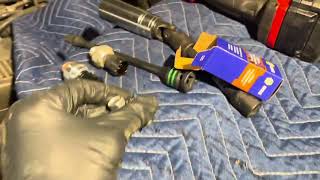
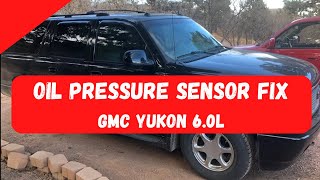
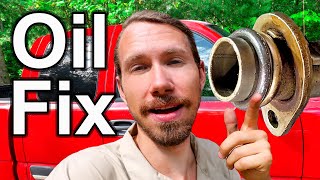
Typical fix: Remove and discard the old screen and install a new one. It is best practice to replace this screen anytime the sensor is replaced. 🎬 See this walkthrough for replacing the sensor and screen
Est. part cost: $5-$15 - Incorrect or Clogged Engine Oil Filter 🟡 Medium Probability → Shop Engine Oil Filter Adapter GM's oiling systems can be sensitive to the oil filter's bypass valve pressure and flow characteristics. Using a non-spec, cheap, or poor-quality filter can cause pressure reading anomalies and trigger a P0521 code, especially after an oil change. Some TSBs recommend using an updated filter like the ACDelco UPF48R instead of the PF48E.
How to confirm: Check if the code appeared shortly after an oil change. Verify the installed filter is a quality OEM-equivalent part (e.g., ACDelco PF48E or updated UPF48R). Some owners report success switching to a high-performance filter like the Mobil 1 M1-113A.
Typical fix: Replace the oil filter with a high-quality, OEM-spec filter (like ACDelco) and perform an oil change with the correct Dexos-approved synthetic oil.
Est. part cost: $10-$20 - Low Engine Oil Level or Incorrect Viscosity 🟡 Medium Probability While the L96 6.0L engine does not have Active Fuel Management (AFM), which is highly sensitive to oil level, all engines require the correct oil level and viscosity for proper lubrication and pressure. Using oil that is too thick or thin can affect pressure readings.
How to confirm: Check the engine oil dipstick. The oil level should be within the specified range. Verify the correct oil viscosity (e.g., 5W-30) was used during the last oil change.
Typical fix: Top off or change the engine oil to the correct level and viscosity using a Dexos-approved synthetic oil.
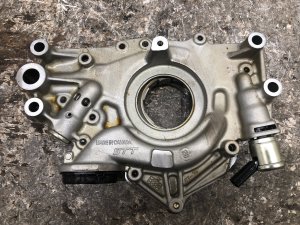
Est. part cost: $40-$80 - Sticking Oil Pump Relief Valve ⚪ Low Probability → Shop Engine Oil Pump TSB #PIP5630D and #20-NA-161 specifically identify a sticking relief valve in the oil pump as a cause for P0521 on these engines. This is a serious mechanical failure that leads to genuine low oil pressure.
How to confirm: This requires advanced diagnosis. If a mechanical gauge confirms low oil pressure and other causes are ruled out, the oil pan must be removed to inspect the oil pump.
Typical fix: Replace the engine oil pump assembly.
Est. part cost: $150-$300
Rare But Worth Checking
- Damaged #1 Main Bearing: Mentioned in TSB #PIP5630D and #20-NA-161, this is a catastrophic engine failure. If a mechanical gauge confirms low oil pressure, the TSB advises dropping the oil pan to inspect the #1 main bearing for damage or spinning. A spun bearing often requires complete engine replacement.
- Wiring Harness or Connector Issue: The wiring to the sensor can become damaged from heat or chafing, causing a short or open circuit. The connector itself can also fail. A visual inspection of the harness and connector for good connection and integrity is necessary.
- Failing AFM/DOD Lifters: In engines with Active Fuel Management (AFM) or Displacement on Demand (DOD), failing lifters can cause oil pressure problems and may be accompanied by a misfire code like P0300. This is a significant internal engine issue. Note: The common 6.0L L96 in the Express does not have AFM.
- Damaged Oil Pump Pickup Tube O-Ring: → Shop Engine Oil Pump A hardened, cracked, or improperly seated O-ring on the oil pump's pickup tube is a well-documented cause of low oil pressure on LS-family engines. It allows the pump to suck in air, causing pressure to drop and become erratic. This requires oil pan removal to inspect and replace.
Diagnosis Steps
- Check the engine oil level and condition. Ensure it is full, clean, and of the correct Dexos-approved viscosity.
- Connect a scan tool to confirm P0521 is the primary code and check for any other related codes.
- CRITICAL STEP: Connect a mechanical oil pressure gauge to the engine. Compare the mechanical gauge reading to the reading on the scan tool's live data.
- If mechanical pressure is normal but the scan tool reading is low/erratic, the problem is in the sensor circuit. Inspect the sensor wiring and connector. If wiring is good, replace the oil pressure sensor and the filter screen beneath it. Accessing the sensor is difficult, requiring removal of the plastic engine cover and reaching behind the intake manifold. 🎬 Watch: How to replace the sensor on a 6.0L engine
- If mechanical pressure is low, the engine has a serious lubrication problem. Do not run the engine further.
- For low mechanical pressure, follow TSB guidance: inspect for an incorrect/clogged oil filter. If the filter is correct, remove the oil pan to inspect the oil pump pickup tube for a damaged O-ring or blockage, the oil pump relief valve for sticking, and the #1 main bearing for damage (Per TSB #20-NA-161).
Parts You'll Likely Need
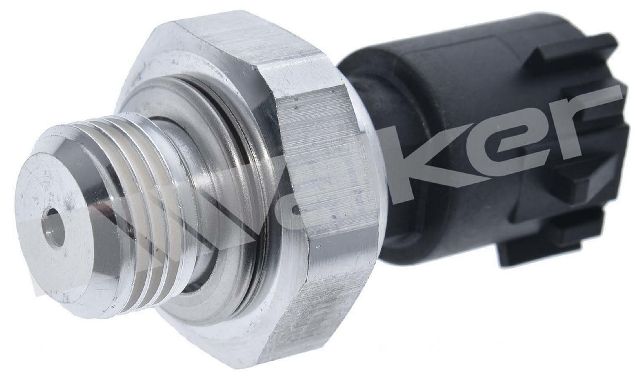
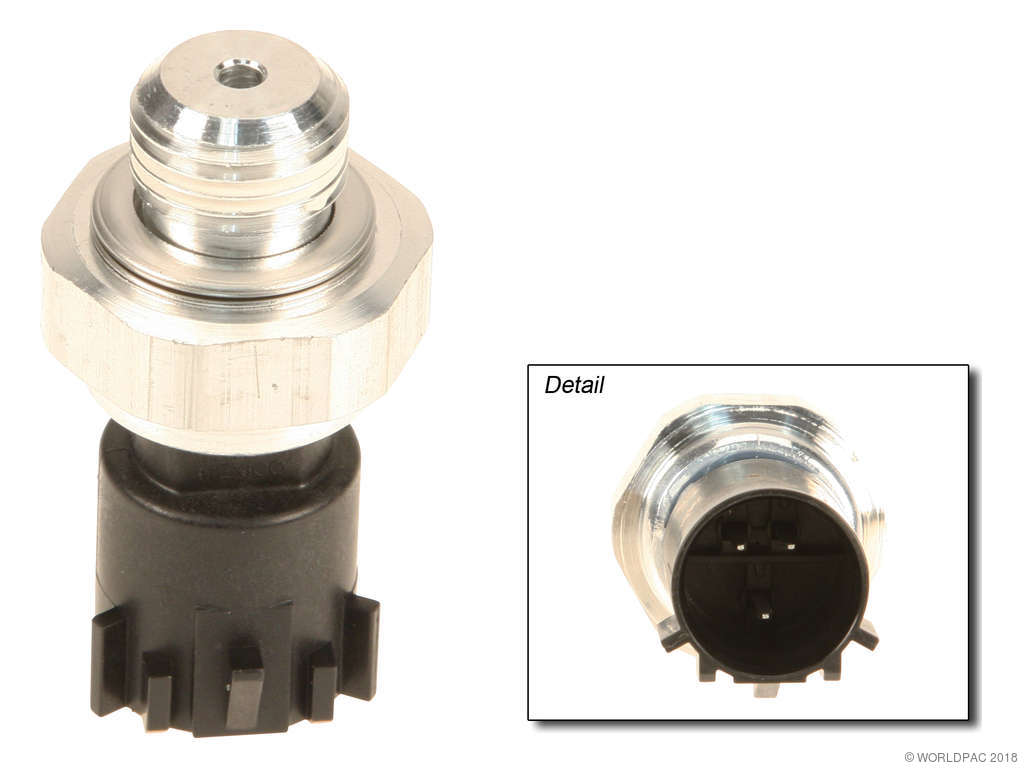
- Engine Oil Pressure Sensor (Switch/Sending Unit)
(OEM #12673134)— This is the most common failure point for a P0521 code when actual oil pressure is confirmed to be good. It supersedes older part numbers like 12621234.
Trusted brands: ACDelco, GM Genuine Parts
OEM price range: $60-$85
Aftermarket price range: $40-$60 - Oil Pressure Sensor Filter Screen
(OEM #12585328)— This small screen is located under the sensor and is a very common point for clogging, which starves the sensor of oil pressure and causes a false reading. It should be replaced whenever the sensor is.
Trusted brands: Dorman, ACDelco, GM Genuine Parts
OEM price range: $5-$15
Aftermarket price range: $5-$10 - Engine Oil Pump — In cases of confirmed low mechanical oil pressure, a sticking relief valve can be the cause, requiring replacement of the entire pump assembly as per TSBs. (Bulletin #PIP5630D, #20-NA-161)
Trusted brands: Melling, ACDelco
OEM price range: $200-$300
Aftermarket price range: $150-$250
Related Codes That Often Appear With This One
- P0522 — Indicates 'Engine Oil Pressure Sensor/Switch Circuit Low,' often pointing to a short in the wiring or a failed sensor.
- P0523 — Indicates 'Engine Oil Pressure Sensor/Switch Circuit High,' often pointing to an open circuit or a failed sensor.
- P0300 — A random/multiple cylinder misfire code can occur if low oil pressure affects components like Active Fuel Management (AFM) lifters.
Technical Service Bulletins (TSBs) & Recalls
- PIP5630D
- 20-NA-161
- PIP4786C
Platform-Specific Known Issues
- TSB #PIP5630D and #20-NA-161 specifically call out that P0521 can be caused by a sticking oil pump relief valve or a damaged/spun #1 main bearing, requiring oil pan removal for inspection if mechanical pressure is confirmed low.
Mechanic-Grade Diagnostic Values
- Minimum Hot Oil Pressure (Mechanical Gauge) — expected: At least 24 PSI at 1,000 RPM, 34 PSI at 2,000 RPM, and 37 PSI at 4,000 RPM.. Failure: Pressure below these minimums indicates a serious mechanical issue like worn bearings, a failing oil pump, or a stuck relief valve.
- Typical Hot Oil Pressure at Idle (forum consensus) — expected: 30-40 PSI.. Failure: Readings consistently below 25 PSI at hot idle, when verified mechanically, suggest a problem.
- Sensor Signal Wire Voltage (Engine at Hot Idle) — expected: Variable voltage, typically 1.0V - 2.5V, corresponding to the engine's actual oil pressure.. Failure: Voltage that is erratic, unchanging, or does not correspond to a mechanical gauge reading points to a faulty sensor, wiring, or a clogged screen.
Scan Tool Commands That Help
- GDS2 / Tech2: Live Data Graphing - Engine Oil Pressure — This is used to visually monitor the oil pressure sensor's signal over time while changing engine RPM. Erratic jumps, dropouts to zero, or a flat line when RPMs change are strong indicators of a faulty sensor or wiring, assuming a mechanical gauge shows steady pressure.
Wiring & Ground Locations
- G103 — At the rear of the left-hand (driver's side) engine cylinder head.. This is a primary engine ground. A loose or corroded connection at G103 can cause erratic behavior from various engine sensors, including the oil pressure sensor, which relies on a stable ground reference.
- Oil Pressure Sensor Connector — At the top rear of the engine block, behind the intake manifold. It is a 3-pin oval connector.. The connector itself or the wiring leading to it can become brittle and fail from heat cycling. The pins can also get contaminated with oil if the sensor leaks internally, causing poor contact and faulty readings. The three wires are typically a 5-volt reference, a low reference (ground), and the signal wire to the ECM.
Real Owner Repair Stories
- Reddit user in r/ChevyTrucks (Chevrolet Truck with persistent P0521) — Check engine light with P0521 would return 100-1000 miles after being cleared.
❌ Tried (didn't work) Replacing the oil pressure sensor three different times., Removing the sensor filter screen.
✅ What actually fixed it Switching to a Mobil 1 M1-113A oil filter resolved the issue, suggesting the bypass or flow characteristics of the previous filters were causing the code. - Reddit user in r/ChevyTrucks (2009 Silverado 2500 6.0L) — Very low oil pressure at idle (6 PSI when warm).
❌ Tried (didn't work) Replacing the oil pressure sensor., Changing the oil and filter.
✅ What actually fixed it The user suggests a cheap test is to overfill the oil by 2 quarts. If the pressure reading improves, it strongly indicates the oil pump pickup tube O-ring is torn and sucking air. Replacing the O-ring is the fix.
OEM Part Supersession History
12596951, 12621234→12673134— Standard part evolution for improved reliability and performance. The newer part is the validated replacement for service.
Heads up: Using older, superseded part numbers is not recommended as they were replaced for a reason. Aftermarket equivalents should cross-reference to the latest GM number, 12673134.
Model Year Variations Within This Range
- 2015-2019: The primary V8 engine offered during this period was the 6.0L L96. For the 2021 model year, the 6.0L V8 was replaced by a new 6.6L L8T V8 engine, so diagnostics and parts may differ for models outside the specified 2015-2019 range.
Helpful Videos
Used OEM Parts in Stock
New Aftermarket Parts Available


The information in this article is provided for general reference and educational purposes only. Vehicle specifications, procedures, and part compatibility can vary by production date, trim level, and region. Always consult your vehicle's factory service manual and verify part numbers before purchasing or performing repairs. Safety-critical components such as airbags, seat belts, and braking systems should be installed by a qualified professional.
- Chevrolet EXPRESS:
- 🧭 Diagnostic Flowchart
- 🎬 Helpful Videos
- 🛍️ Shop This Part
- What's Unique About the 2015-2019 Chevrolet EXPRESS
- Symptoms You May Notice
- Most Likely Causes
- Rare But Worth Checking
- Diagnosis Steps
- Parts You'll Likely Need
- Related Codes That Often Appear With This One
- Technical Service Bulletins (TSBs) & Recalls
- Platform-Specific Known Issues
- Mechanic-Grade Diagnostic Values
- Scan Tool Commands That Help
- Wiring & Ground Locations
- Real Owner Repair Stories
- OEM Part Supersession History
- Model Year Variations Within This Range
- 🎟️ Get 5% Off