

P0521 on 2009 Chevrolet Impala: Oil Pressure Sensor Causes and Fixes
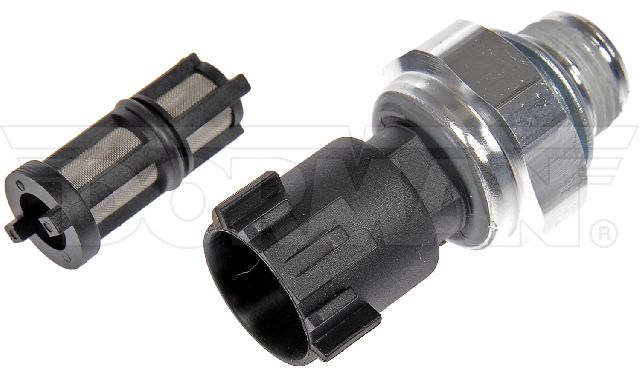
On a 2009 Impala, code P0521 is almost always a faulty oil pressure sensor and/or its small, clog-prone filter screen. Replacing both is the standard fix, costing around $40-$100 for OEM parts. Always verify true oil pressure with a mechanical gauge first to rule out serious internal engine problems.
- The first and most important step is to verify the actual oil pressure with a mechanical gauge. Do not replace any parts until this is done.
- The most common fix for P0521 on a 2009 Impala is to replace both the oil pressure sensor and the small filter screen underneath it.
- Always use a high-quality OEM (ACDelco/GM Genuine) sensor and screen to ensure a lasting repair.
- Ensure the engine oil is full, clean, and the correct viscosity (5W-30), and that a quality oil filter is installed.
What's Unique About the 2009-2009 Chevrolet Impala
On this generation of Chevrolet Impala, and many GM vehicles from this era, P0521 is an extremely common code. The issue is often not the sensor itself, but a tiny, thimble-sized filter screen located in the engine block directly beneath the sensor. This screen, officially called the 'Valve Lifter Oil Filter', frequently becomes clogged with oil sludge or debris. This blockage prevents the sensor from getting an accurate pressure reading, triggering the P0521 code even if the sensor is working perfectly. GM issued a service bulletin (PIP4786C) specifically for the 2007-2009 Impala acknowledging this issue and advising technicians to inspect and clean or replace this filter before replacing any other parts.
Symptoms You May Notice
- Check Engine Light is on
- Oil pressure warning light is on or flickering
- Oil pressure gauge reads erratically (drops to zero, pegs high, or fluctuates wildly)
- Message on the driver information center about low oil pressure, such as "Oil Pressure Low - Stop Engine"
- Remote start feature is disabled.
- Active Fuel Management (AFM) may not engage on V8 models.
- Replacing only the oil pressure sensor without replacing the clogged screen underneath it. The code will often return quickly.
- Assuming the engine is failing and needs a new oil pump before verifying the actual oil pressure with a mechanical gauge.
- Replacing the sensor and screen when the actual fault is a damaged wire or connector in the sensor's pigtail harness.
Most Likely Causes
- Clogged Valve Lifter Oil Filter (Screen) 🔴 High Probability → Shop Engine Oil Filter Adapter This small screen is a known weak point in the design, prone to clogging with oil sludge, especially if oil change intervals are extended. GM issued TSB PIP4786C specifically addressing this part causing P0521 on the 2009 Impala.
How to confirm: The screen is located underneath the oil pressure sensor. It must be removed for visual inspection. If it is full of dark, thick debris or sludge, it is the likely cause. Technicians often use a pick tool to pull it out of its bore in the engine block.
Typical fix: Replace the screen. It is a very low-cost part and should always be replaced whenever the oil pressure sensor is replaced. Some technicians clean it with brake cleaner and compressed air, but replacement is cheap and recommended.
Est. part cost: $5-$15 - Faulty Engine Oil Pressure Sensor 🔴 High Probability The sensor itself is a common failure item. It is exposed to heat and pressure cycles, and internal electronics can fail, causing irrational readings. Aftermarket sensors are reported by some owners to fail prematurely, making an OEM part a safer bet.
How to confirm: After confirming good mechanical oil pressure, and if the wiring is intact, the sensor is the most likely culprit. Testing the sensor's output voltage can confirm a fault, but replacement is often done alongside the screen as a preventative measure.
Typical fix: Replace the engine oil pressure sensor. It is highly recommended to use an OEM ACDelco part to prevent premature failure. The part number has been superseded multiple times, with 12673134 being the current version.
Est. part cost: $35-$85 - Low or Incorrect Engine Oil / Filter 🟡 Medium Probability → Shop Engine Oil Filter Adapter
How to confirm: Check the engine oil level using the dipstick. Verify that the oil is at the correct level and that its condition is not excessively dirty or sludgy. Also, ensure the correct type of oil filter is being used, as some aftermarket filters have been anecdotally linked to this code.
Typical fix: Perform an oil and filter change using the correct viscosity oil (typically 5W-30) and a quality oil filter like the ACDelco PF48E.
Est. part cost: $30-$70
Rare But Worth Checking
- Sticking Oil Pump Pressure Relief Valve: → Shop Engine Oil Pump This is a more serious mechanical issue, primarily noted on the 5.3L V8 engine (Impala SS). TSB PIP4158D addresses this issue, where the valve inside the oil pump sticks, causing genuine low oil pressure. This would be confirmed with a mechanical gauge test.
- Wiring Harness or Connector Damage: The wiring to the sensor can become damaged or corroded, or oil can contaminate the connector, leading to a bad signal. In some documented cases, a previous improper repair to the pigtail connector was the true root cause, even after the sensor and screen were replaced. This should be inspected before replacing parts.
- Worn Internal Engine Components: In very high-mileage engines, worn crankshaft or camshaft bearings can cause a genuine loss of oil pressure, which would be confirmed by a low reading on a mechanical gauge. This is a worst-case scenario and is much less common than sensor-circuit faults.
Diagnosis Steps
- Check the engine oil level and condition. If low or dirty, correct this first, clear the code, and see if it returns.
- CRITICAL STEP: Connect a mechanical oil pressure gauge to the engine. This usually involves removing the oil pressure sensor to access the port. Start the vehicle and compare the mechanical gauge reading to the reading on the dashboard gauge or scan tool.
- If mechanical pressure is good and stable (e.g., >25 PSI at operating temp idle for a V8), but the dash gauge is erratic, the problem is in the sensor circuit. Proceed to the next step.
- If mechanical pressure is low, the engine has a serious internal problem (e.g., bad oil pump, worn bearings). This requires professional diagnosis.
- Assuming mechanical pressure is good, inspect the oil pressure sensor's electrical connector and wiring for damage, corrosion, or oil contamination. Pay close attention to the pigtail for signs of previous, poor repairs.
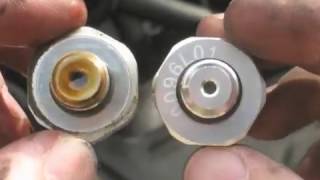
- If the wiring is okay, remove the oil pressure sensor. On V6 models (3.5L/3.9L), it is located on the passenger side of the engine block, near the starter, often behind a heat shield. 🎬 See this 3.9L V6 sensor replacement walkthrough On the 5.3L V8, it is at the very back of the engine behind the intake manifold. A special deep socket (typically 27mm or 1-1/16") and long extensions are required.
- Once the sensor is removed, inspect and remove the small filter screen from the port in the engine block using a pick tool.
- It is highly recommended to replace both the oil pressure sensor and the filter screen at the same time.
- Install the new screen, pushing it into the bore until it seats. Install the new sensor, ensuring it is torqued to specification (approx. 15 ft-lbs). Do not overtighten.
- Reconnect the electrical connector, clear the DTC, and test drive the vehicle to ensure the code does not return.
Parts You'll Likely Need
- Engine Oil Pressure Sensor
(OEM #12673134)— This is the sensor that sends the pressure reading to the computer. It is a very common failure point. The OEM part number has been updated several times from 12596951 and 12621234 to the current 12673134.
Trusted brands: ACDelco, GM Genuine Parts
OEM price range: $45-$85
Aftermarket price range: $25-$50 - Valve Lifter Oil Filter (Screen)
(OEM #12585328)— This small screen clogs with sludge, blocking oil from reaching the sensor and causing a false P0521 code. It is a known issue documented in GM TSB PIP4786C and should always be replaced with the sensor.
Trusted brands: GM Genuine Parts, ACDelco, Dorman
OEM price range: $5-$15
Aftermarket price range: $5-$10
Technical Service Bulletins (TSBs) & Recalls
- PIP4786C: Addresses low oil pressure messages and DTC P0521, advising inspection of the 'Valve Lifter Oil Filter' for debris. Affects 2007-2009 Impala models.
- PIP4158D: Notes that the oil pump relief valve can stick on the 5.3L V8 Impala SS, causing 🎬 Watch: How to fix P0521 on the Impala SS genuine low oil pressure and P0521.
Platform-Specific Known Issues
- GM Technical Service Bulletin PIP4786C was issued for 2007-2009 Impalas (among many other GM vehicles), specifically citing P0521 and instructing technicians to inspect the Valve Lifter Oil Filter (screen) for debris before replacing other parts. The bulletin advises that the filter can often be cleaned, but replacement is inexpensive.
Mechanic-Grade Diagnostic Values
- Minimum Engine Oil Pressure (Hot Idle) — expected: >22-24 PSI @ 1000 RPM. Failure: Pressure significantly below this value when measured with a mechanical gauge suggests a mechanical fault (oil pump, bearings) rather than a sensor issue.
- Sensor 5-Volt Reference Circuit — expected: 4.8 - 5.2 Volts DC. Failure: Voltage measured at the gray wire of the sensor connector (with key on, sensor unplugged) outside this range indicates a wiring or ECM problem.
- Sensor Low Reference (Ground) Circuit Resistance — expected: < 1.0 Ohm to ground. Failure: Higher resistance on the black wire of the sensor connector indicates a bad ground connection, which can cause erratic readings.
- Sensor Signal Wire Voltage (Key On, Engine Off) — expected: ~0.5V - 1.0V. Failure: Voltage on the Tan/White wire significantly outside this range with the key on suggests a faulty sensor.
Scan Tool Commands That Help
- Tech2 / GDS2: Live Data Monitoring (EOP Sensor) — Use this to observe the oil pressure value being reported by the sensor to the ECM in real-time. This helps determine if the reading is erratic, stuck, or plausible for the current engine state before connecting a mechanical gauge.
- Tech2 / GDS2: VLOM Solenoid Activation Test — On 5.3L V8 engines with Active Fuel Management (AFM), this bidirectional test commands the solenoids in the Valve Lifter Oil Manifold (VLOM). A significant pressure drop during the test can indicate a faulty VLOM is the root cause of the low pressure condition, not the sensor.
Wiring & Ground Locations
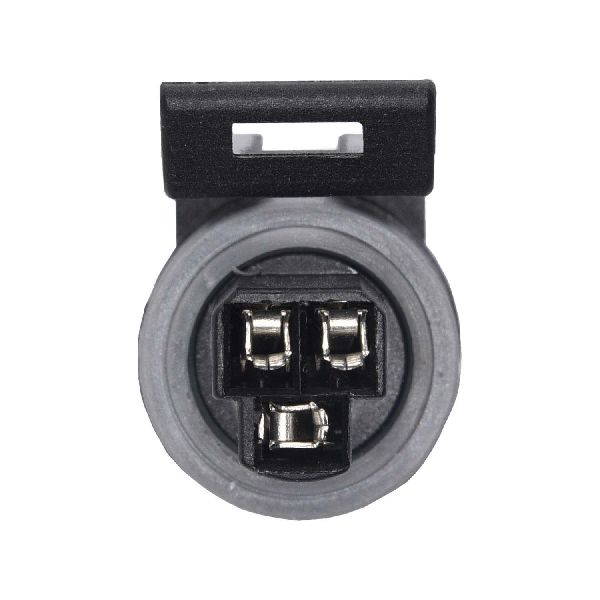
- Engine Oil Pressure (EOP) Sensor Connector — On V6 engines, it's on the passenger side of the engine block, near the starter. On the 5.3L V8, it's at the top rear of the engine, behind the intake manifold against the firewall.. This 3-wire connector can become contaminated with oil from a leaking sensor or damaged by heat, causing a poor connection. The pins are: Gray (5V Reference), Tan/White (Signal), and Black (Low Reference/Ground).
- G111 — On the 3.5L/3.9L V6 engines, this ground is located on the engine block, above the starter motor.. This is a key engine block ground point. A loose or corroded G111 can affect the low reference signal for multiple sensors, including the oil pressure sensor, leading to incorrect readings.
- G102 / G103 / G104 — These are primary engine grounds located on the cylinder heads (G102/G104 on the driver's side head, G103 on the passenger side head).. The ECM relies on a solid engine ground connection to provide an accurate low reference signal to its sensors. A fault at these major ground points can cause a host of sensor-related codes, including P0521.
Real Owner Repair Stories
- Reddit user in r/ChevyTrucks (Chevrolet Truck (similar GM engine architecture)) — Persistent P0521 code.
❌ Tried (didn't work) Replacing the oil pressure sensor with an aftermarket part from a local auto parts store.
✅ What actually fixed it Replacing the aftermarket sensor with a genuine OEM sensor resolved the code. - Reddit user in r/ChevyTrucks (Chevrolet Truck (similar GM engine architecture)) — Recurring P0521 code.
❌ Tried (didn't work) Replacing the oil pressure sensor.
✅ What actually fixed it The owner started using a Mobil 1 M1-113A oil filter, and the issue was resolved. - BobIsTheOilGuy forum user (GM vehicle with LS4 V8 engine (same as Impala SS)) — P0521 code returned after replacing both the sensor and the VLOM (screen).
❌ Tried (didn't work) Replacing oil pressure sensor., Replacing Valve Lifter Oil Filter (screen).
✅ What actually fixed it A responding technician suggested the fix was to switch from the standard ACDelco PF48E oil filter to the upgraded ACDelco UPF48R filter, as recommended in a TSB for this issue.
"I Checked Everything" — The Actual Cause
- A common scenario analogous to a 'smoke test clean' for this code is when a mechanical gauge confirms oil pressure is perfect, yet the P0521 code persists. In these cases, the root cause is often not a mechanical engine problem but a subtle component issue. Two documented examples are: using an aftermarket oil pressure sensor that provides incorrect voltage despite fitting correctly, or using an oil filter (even a new one) whose internal bypass valve characteristics are not compatible with the engine's expectations, a situation addressed by GM TSB PIP5276E.
OEM Part Supersession History
12596951, 12621234→12673134— Standard part evolution for improved reliability and performance.
Heads up: No known incompatibilities. The newer part number is the correct service replacement for the older numbers.ACDelco PF48 / PF48E→ACDelco UPF48R— The UPF48R is an upgraded filter with a more robust design and different bypass characteristics, recommended in some TSBs to resolve persistent P0521 codes.
Heads up: This is not a direct supersession but a recommended upgrade to solve specific issues. The PF48E is still considered a standard replacement, but may cause issues in some cases.
Diagnostic Flowchart
Other Known Issues on This Vehicle
Issues unrelated to this code that are worth knowing about as an owner of this generation:
- Transmission Pressure Control Solenoid Failure (4T65-E) 🔴 High — Very common. Can cause harsh shifting, delayed engagement, or no movement. Often triggers code P1811. (Ref: Multiple TSBs exist for various 4T65-E transmission issues.)
- HVAC Blend Door Actuator Failure 🟠 Medium — Extremely common. Owners report a loud clicking or ticking sound from the dashboard when changing temperature or airflow settings. The plastic gears inside the actuator fail.
- Intermediate Steering Shaft Clunk 🟡 Low — Common issue where a clunking noise is heard or felt through the steering wheel, especially at low speeds. Caused by a poor design in the intermediate shaft. (Ref: GM issued TSBs for this, recommending lubrication or replacement of the shaft.)
- PassLock Security System Fault 🟠 Medium — Fairly common. The vehicle's anti-theft system can malfunction, causing a 'Security' light to illuminate and resulting in a crank-no-start condition or the engine starting and immediately stalling.
- Reduced Engine Power due to Throttle Body/APP Sensor 🟠 Medium — A significant number of owners report the vehicle suddenly entering 'Reduced Engine Power' mode, limiting speed. This is often traced to faults in the accelerator pedal position (APP) sensor or the throttle body itself.
Used vs. New Parts: Buying Guide for This Vehicle
When a used part is the smart pick: For this specific repair, using a used part is not recommended. The primary failure components are a low-cost electronic sensor and an even lower-cost filter screen. The risk of acquiring a part that is already failing or near the end of its service life far outweighs the minimal cost savings.
What to inspect on the donor part:
- N/A - Do not purchase used.
OEM-only on this vehicle (don't cheap out):
- Engine Oil Pressure Sensor: Forum and repair data strongly suggest that aftermarket sensors have a high failure rate or can be calibrated differently, causing the P0521 code to persist even after replacement. Using a genuine GM or ACDelco sensor is critical for a lasting repair.
Aftermarket brands forum-validated for this vehicle:
- ACDelco (OEM Supplier)
- Mobil 1 (Specifically the M1-113A oil filter has been reported to solve issues)
Brands owners have reported issues with on this vehicle:
- Generic 'white box' or store-brand oil pressure sensors have been anecdotally reported to fail prematurely or not resolve the code.
Real Owner Stories
Aggregated from forums and TSBs cited above. Mileages and costs reflect what owners reported in those sources.
2006 Chevrolet Impala SS 5.3L LS4 V8
Symptoms: The user experienced a P0521 code, the remote start feature was not working, and the Active Fuel Management (DOD) was stuck and not engaging.
What fixed it: Replacing the oil pressure switch (sensor) resolved the code and restored functionality to the remote start and AFM systems.
Source hint: LS1TECH thread titled 'Please Help!!n p0521 Code'
Related OBD-II Codes
Frequently Asked Questions
Does TSB PIP4786C apply to my 2009 Chevrolet Impala?
Why is my remote start disabled on my 2009 Impala when the check engine light is on?
Is there a specific oil pressure sensor part number I should use for my Impala?
I have an Impala SS with the 5.3L V8; could my P0521 be caused by something other than the sensor?
Where is the oil pressure sensor located on the 3.5L or 3.9L V6 Impala?
Do I really need to replace the small screen under the sensor?
Can P0521 affect the Active Fuel Management (AFM) on my Impala SS?
Helpful Videos
We Have This Part in Stock


The information in this article is provided for general reference and educational purposes only. Vehicle specifications, procedures, and part compatibility can vary by production date, trim level, and region. Always consult your vehicle's factory service manual and verify part numbers before purchasing or performing repairs. Safety-critical components such as airbags, seat belts, and braking systems should be installed by a qualified professional.
- Chevrolet Impala:
- 🧭 Diagnostic Flowchart
- 🎬 Helpful Videos
- 🛍️ Shop This Part
- What's Unique About the 2009-2009 Chevrolet Impala
- Symptoms You May Notice
- Most Likely Causes
- Rare But Worth Checking
- Diagnosis Steps
- Parts You'll Likely Need
- Technical Service Bulletins (TSBs) & Recalls
- Platform-Specific Known Issues
- Mechanic-Grade Diagnostic Values
- Scan Tool Commands That Help
- Wiring & Ground Locations
- Real Owner Repair Stories
- "I Checked Everything" — The Actual Cause
- OEM Part Supersession History
- Other Known Issues on This Vehicle
- Used vs. New Parts: Buying Guide for This Vehicle
- Real Owner Stories
- 2006 Chevrolet Impala SS 5.3L LS4 V8
- Related OBD-II Codes
- Frequently Asked Questions
- 🎟️ Get 5% Off