

P0521 on 2013-2016 Chevrolet Tahoe: Oil Pressure Sensor Causes and Fixes
On a 2013-2016 Tahoe, code P0521 is most often caused by a faulty engine oil pressure sensor, a clogged filter screen beneath it, or an incorrect (often aftermarket) oil filter. The ECM flags this code when the sensor's reading differs from the expected pressure by more than ~7 PSI. Replacing the sensor and screen is the typical fix, costing around $50-$90 for OEM parts, but labor can be high ($300-$700+) if the intake manifold must be removed for access.
- Before any expensive repairs, check your oil level and ensure the correct ACDelco oil filter is installed. This is a cheap and surprisingly common fix.
- Always treat a low oil pressure warning as serious until proven otherwise. The first diagnostic step should be to verify actual oil pressure with a mechanical gauge.
- If the sensor needs replacement, also replace the small filter screen underneath it and use a quality OEM (ACDelco) sensor to prevent a comeback.
- Be aware that replacing the sensor is a difficult job due to its location. DIY difficulty is high (4/5) and may require special tools.
What's Unique About the 2013-2016 Chevrolet TAHOE

On these GM trucks and SUVs, the P0521 code is notoriously sensitive to the type of oil filter used. Multiple Technical Service Bulletins (TSBs) have been issued by GM specifically linking this code to the use of non-OEM or even incorrect ACDelco filters after an oil change. [PIP-5272-A, PIP5276E] Furthermore, the oil pressure sensor is located in a very difficult-to-access position. On GMT900 models (2013-2014), it's at the rear of the engine block against the firewall, under the cowl. On many models, especially those with Active Fuel Management (AFM), accessing it requires removing the intake manifold, turning a simple sensor swap into a significant labor task. For the K2XX generation (2015-2016), the sensor was moved to a much more accessible location at the front of the engine, underneath the throttle body.
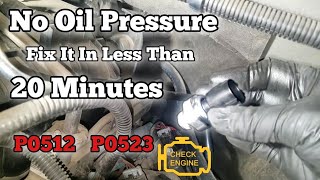
🎬 Watch: Step-by-step guide to replacing the oil pressure sensorDiagnostic Flowchart

Tap your situation to follow the diagnostic path that matches what you're seeing on this vehicle.
Generation note: This range covers two Tahoe generations: the end of the GMT900 (2013-2014) and the start of the K2XX (2015-2016). The P0521 issue is common across both generations, affecting the related 5.3L and 6.2L V8 engines, though specific part numbers for the sensor may differ slightly. The fundamental cause (sensor, screen, filter) is consistent, but the repair location and difficulty change dramatically between generations.
Symptoms You May Notice

- Check Engine Light is on
- Low Oil Pressure warning message on the driver information center
- Oil pressure gauge reads zero, erratically fluctuates, or is stuck at maximum (80 PSI)
- Engine may enter a reduced power mode
- Engine running rough or making unusual noises (if actual oil pressure is low)
- Replacing the oil pump before verifying actual oil pressure with a mechanical gauge.
- Replacing the instrument cluster due to an erratic gauge reading, when the fault lies with the sensor or its circuit.
- Repeatedly replacing the oil pressure sensor with cheap aftermarket brands, which may not meet OEM specifications and can cause the code to return quickly.
Most Likely Causes


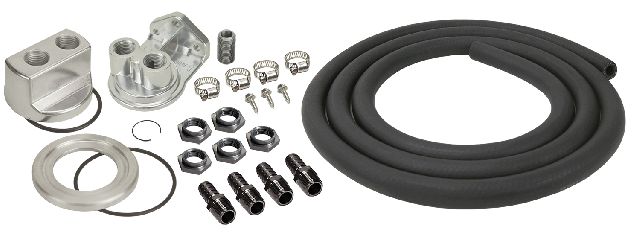
- Incorrect or Faulty Engine Oil Filter 🔴 High Probability → Shop Engine Oil Filter Adapter GM TSBs directly link P0521 to using incorrect filters, especially after an oil change. The system is sensitive to the filter's bypass valve characteristics and internal construction (e.g., plastic 'E-core' vs. metal core). [PIP-5272-A, PIP5276E, 9]
How to confirm: Check if a non-ACDelco filter is installed. If so, replace it with the correct ACDelco filter (e.g., PF48E or the older, more robust PF48), clear the code, and see if it returns. Some TSBs even recommend upgrading to the UPF48R filter to resolve the code.
Typical fix: Replace the oil filter with the correct OEM ACDelco part and perform an oil change.
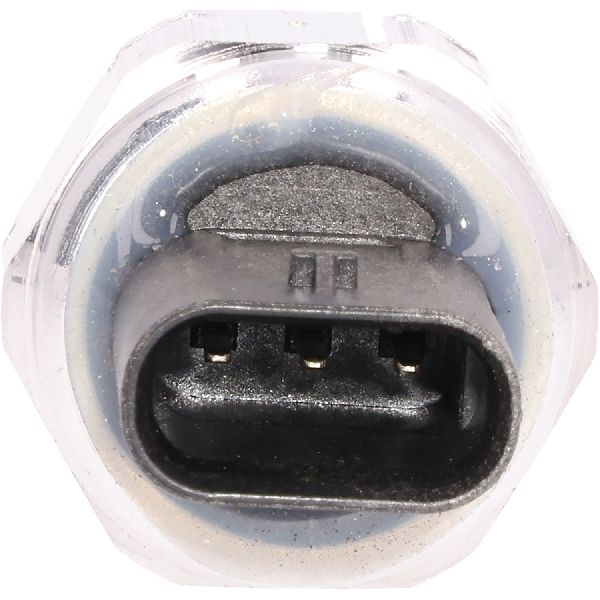
Est. part cost: $10-$15 - Faulty Engine Oil Pressure Sensor (Switch) 🔴 High Probability The sensor is a very common failure item on these GM V8 engines. It can fail electronically, causing erratic readings, or develop leaks that contaminate its three-pin electrical connector.
How to confirm: After verifying actual oil pressure is good with a mechanical gauge, this is the next logical part to replace. Inspect the connector for oil saturation. Many owners replace it preventatively due to the high failure rate and difficult access on GMT900 models.
Typical fix: Replace the engine oil pressure sensor. It is highly recommended to use an ACDelco or GM Genuine part to avoid repeat failures.
Est. part cost: $30-$70 - Clogged Oil Pressure Sensor Filter Screen 🟡 Medium Probability → Shop Engine Oil Pressure Sensor A small, thimble-shaped screen is located in the oil passage directly beneath the sensor. It can become clogged with engine sludge or debris, especially on higher-mileage engines, starving the sensor of oil pressure and causing a false low reading.
How to confirm: This screen can only be inspected upon removal of the oil pressure sensor. A common DIY method to remove a stuck screen is to thread a coarse bolt (like a 5/16") into it and pull it out.
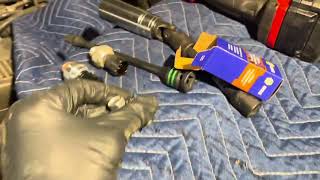
Typical fix: Remove and replace the filter screen. It is best practice to replace this screen anytime the sensor is replaced. 🎬 See how to remove and replace the sensor filter screen
Est. part cost: $5-$15 - Low or Incorrect Viscosity Engine Oil ⚪ Low Probability
How to confirm: Check the oil level on the dipstick and verify that the correct oil viscosity (e.g., 5W-30 meeting Dexos specification) was used during the last oil change.
Typical fix: Top off or change the engine oil with the manufacturer-specified type and grade.
Est. part cost: $40-$80
Rare But Worth Checking
- Wiring Harness or Connector Damage: The wiring and connector to the sensor can become brittle from heat cycles or damaged during other repairs. A poor connection (chafed wire, loose pin) can mimic a failed sensor.
- Failing Oil Pump or Sticking Relief Valve: → Shop Engine Oil Pump This is a serious mechanical issue that results in actual low oil pressure. A mechanical oil pressure test is the only way to confirm this. If the mechanical gauge shows low pressure, the engine requires immediate professional diagnosis.
- Faulty Valve Lifter Oil Manifold (VLOM): On engines with Active Fuel Management (AFM), the VLOM sits under the intake manifold and directs oil flow. A faulty VLOM can bleed off pressure internally, causing low oil pressure to the top end of the engine and triggering P0521. This is a more complex and expensive repair.
Diagnosis Steps
- Check the engine oil level and condition. Ensure it is full and not overly dirty.
- Verify the correct ACDelco oil filter is installed. If an aftermarket filter is present, replace it with the OEM part (PF48E or PF48), clear the code, and drive to see if the light returns. [PIP-5272-A, 11]
- Connect a scan tool to observe the live oil pressure reading. Note if it's stuck, erratic, or zero. A reading of 129.9 PSI with the engine off indicates a sensor or circuit fault.
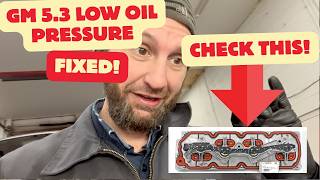
- CRITICAL STEP: Connect a mechanical oil pressure gauge to the port to measure the engine's actual oil pressure. Compare this to manufacturer specifications. GM specs are generally a minimum of 24 PSI at 1,000 RPM. A hot idle pressure around 25-30 PSI is considered healthy. 🎬 Watch: Solving low oil pressure issues on GM 5.3L engines
- If mechanical pressure is good, the fault is in the sensor circuit. Disconnect the sensor and test the harness connector. Check for 4.8-5.2 volts on the 5-volt reference wire (often gray) and less than 1.0 ohm of resistance to ground on the low reference wire (often black).
- If the connector is clean and wiring tests normal, replace both the engine oil pressure sensor and the small filter screen located underneath it. This requires a special deep 1-1/16 inch (or 27mm) socket.
- If mechanical pressure is low, the engine has a serious internal problem (e.g., worn bearings, failing oil pump, faulty VLOM) and requires professional teardown and inspection.
Parts You'll Likely Need
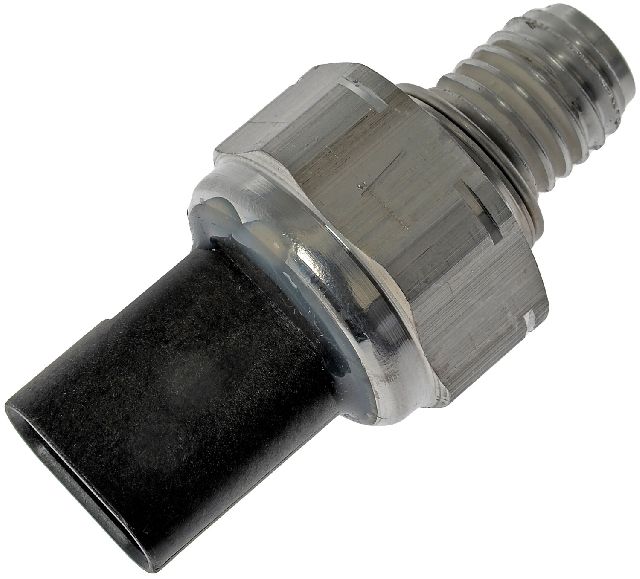
- Engine Oil Pressure Sensor
(OEM #12673134 (Also known as ACDelco D1846A))— This sensor is the most common point of failure for the P0521 code on this vehicle. Using a genuine GM or ACDelco part is strongly recommended.
Trusted brands: ACDelco, GM Genuine Parts
OEM price range: $45-$85
Aftermarket price range: $20-$50 - Engine Oil Pressure Sensor Filter Screen
(OEM #12585328)— This screen often clogs with sludge, causing a false reading at the sensor. It should always be replaced at the same time as the sensor to ensure an accurate reading and prevent a quick return of the code.
Trusted brands: ACDelco, Dorman
OEM price range: $10-$20
Aftermarket price range: $5-$15 - Engine Oil Filter
(OEM #PF48E / UPF48R)— Using the correct OEM oil filter is critical, as specified in GM service bulletins to prevent this code. The PF48E is standard, but some TSBs recommend the higher-performance UPF48R to resolve persistent P0521 issues.
Trusted brands: ACDelco
OEM price range: $10-$18
Aftermarket price range: $5-$12
Related Codes That Often Appear With This One
- P0522 — This code indicates 'Engine Oil Pressure Sensor/Switch Circuit Low Voltage,' which can occur if the sensor fails in a shorted state or if there is a wiring issue.
- P0523 — This code indicates 'Engine Oil Pressure Sensor/Switch Circuit High Voltage,' which can occur if the sensor fails in an open state or is unplugged.
- P0641 — This code indicates an open circuit on the 'Sensor Reference Voltage A Circuit.' The oil pressure sensor shares this 5-volt reference circuit with other sensors, like the A/C pressure sensor and fuel rail pressure sensor. A fault in another sensor or its wiring on this circuit can cause P0521.
Technical Service Bulletins (TSBs) & Recalls
- PIP-5272-A: Low oil pressure and P0521 after an oil and filter change on 2014-15 models.
- PIP5276G: Addresses P0521 and low oil pressure messages, referencing other bulletins and potential AFM-related causes.
- PIP4786C: General guidance for technicians on diagnosing low oil pressure messages and P0521.
- PIP5276E: Links P0521 after an oil change to filter choice, recommending a PF48E filter.
- PIP5276B: Recommends switching from a PF48E to a PF48 filter in very cold climates to resolve P0521.
Platform-Specific Known Issues
- TSB #PIP-5272-A notes that P0521 can appear on 2014-15 models specifically after an oil and filter change, pointing to filter incompatibility.
- TSB #PIP5276B advises that in cold temperatures (below 0°F), a PF48E filter (plastic core) should be replaced with a PF48 filter (metal core) to resolve P0521 on some models.
- The sensor's location on GMT900 models (2013-2014) at the rear of the engine against the firewall makes replacement exceptionally difficult, often requiring special tools like a specific 1-1/16" deep oil pressure socket and multiple wobble extensions and u-joints.
- TSB #PIP5276G expands on the issue, suggesting inspection of the left rocker cover baffle for leaks as a potential related cause, especially if other AFM-related work has been done.
Mechanic-Grade Diagnostic Values
- 5-Volt Reference Circuit Voltage — expected: 4.8-5.2 Volts. Failure: Voltage below 4.8V or above 5.2V indicates a problem in the ECM or the 5V reference circuit (which may be shorted by another sensor).
- Low Reference Circuit Resistance to Ground — expected: Less than 1.0 Ohm. Failure: Resistance greater than 1.0 Ohm indicates an open or high resistance in the ground circuit.
- Scan Tool Oil Pressure Reading (KOEO - Key On, Engine Off) — expected: 0 PSI. Failure: A high reading, such as 129.9 PSI, with the engine off points to a definite electrical fault in the sensor or circuit.
- Sensor Signal Voltage Range — expected: Approximately 1.0 - 4.0 Volts. Failure: Voltage outside this range during engine operation will trigger a fault code.
Scan Tool Commands That Help
- GDS2 / Tech2 / High-End Scan Tool: Instrument Cluster Gauge Sweep — To rule out a faulty instrument panel gauge motor before condemning the sensor. If the gauge sweeps its full range correctly during the test, the gauge itself is functional.
- GDS2 / Tech2 / High-End Scan Tool: Live Data Monitoring — To observe the 'Engine Oil Pressure Sensor' parameter in real-time while varying engine RPM. A healthy sensor will show pressure changes that correspond to RPM changes.
Wiring & Ground Locations
- Oil Pressure Sensor Connector (3-pin) — On 2013-2014 models, at the top rear of the engine block, behind the intake manifold near the firewall. On 2015-2016 models, at the front of the engine, below the throttle body.. This is the primary connection point to test. The pins are: 5V Reference (often a Gray wire), Low Reference/Ground (often a Black wire), and Signal (often a Tan/White wire).
Real Owner Repair Stories
- Reddit user @BrettBerger3 (Chevy Truck with 5.3L engine) — Persistent P0521 code returning after 100 miles, even after replacing the oil pressure sensor once.
❌ Tried (didn't work) Replacing the oil pressure sensor (likely with an aftermarket part)., Clearing codes with a scan tool.
✅ What actually fixed it The owner reported that switching to a Mobil 1 M1-113A oil filter and ensuring proper oil levels ultimately resolved the issue, highlighting the platform's sensitivity to oil filters. - Tahoe Yukon Forum user (2007 5.3L (GMT900 platform, same as 2013-2014 Tahoe)) — P0521 code, low oil pressure warning while driving in very cold (5°F) weather. Oil pressure dropped to ~18 PSI at highway speed.
❌ Tried (didn't work) Adding Seafoam to the oil.
✅ What actually fixed it The owner performed an oil change, specifically replacing the existing STP brand filter with a WIX 57045XP filter. This immediately restored normal oil pressure, indicating the previous filter was faulty, clogged, or incompatible with the cold temperatures.
OEM Part Supersession History
ACDelco PF48→ACDelco PF48E— The 'E' designates a new 'E-Core' design, which uses a plastic internal cage instead of metal to save cost and weight.
Heads up: While the PF48E is the standard replacement, TSB #PIP5276B specifically recommends reverting to the older, all-metal PF48 design in extremely cold temperatures (below 0°F) to resolve P0521, suggesting the PF48E's bypass characteristics can be problematic in the cold.
Model Year Variations Within This Range
- 2013-2014 (GMT900): The oil pressure sensor is located in a notoriously difficult-to-reach position at the top rear of the engine block, against the firewall. Replacement often takes several hours and requires special sockets, wobble extensions, and patience.
- 2015-2016 (K2XX): The oil pressure sensor was relocated to the front of the engine, underneath the throttle body. This makes replacement significantly easier, requiring only the removal of the air intake tube for access. The job can be done in under an hour.
Helpful Videos
We Have This Part in Stock

The information in this article is provided for general reference and educational purposes only. Vehicle specifications, procedures, and part compatibility can vary by production date, trim level, and region. Always consult your vehicle's factory service manual and verify part numbers before purchasing or performing repairs. Safety-critical components such as airbags, seat belts, and braking systems should be installed by a qualified professional.
- Chevrolet TAHOE:
- 🧭 Diagnostic Flowchart
- 🎬 Helpful Videos
- 🛍️ Shop This Part
- What's Unique About the 2013-2016 Chevrolet TAHOE
- Symptoms You May Notice
- Most Likely Causes
- Rare But Worth Checking
- Diagnosis Steps
- Parts You'll Likely Need
- Related Codes That Often Appear With This One
- Technical Service Bulletins (TSBs) & Recalls
- Platform-Specific Known Issues
- Mechanic-Grade Diagnostic Values
- Scan Tool Commands That Help
- Wiring & Ground Locations
- Real Owner Repair Stories
- OEM Part Supersession History
- Model Year Variations Within This Range
- 🎟️ Get 5% Off