

P0521 on 2011-2024 Dodge Durango 5.7L: Oil Pressure Sensor Performance Causes and Fixes
On the 5.7L Hemi Durango, code P0521 is almost always caused by a failed engine oil pressure sensor. Before replacing it, check your oil level and use the correct 5W-20 oil and a quality filter. The sensor is a relatively affordable part ($40-$85) and it's highly recommended to use a genuine Mopar replacement (Part No. 5149062AB) for reliability, as aftermarket versions are known to fail. The sensor is located on the front of the engine above the oil filter, making it an accessible DIY job.
- First, check your oil level and condition. This is the simplest and cheapest check.
- The most likely cause of P0521 on a 5.7L Hemi Durango is a failed oil pressure sensor.
- It is highly recommended to use a genuine Mopar replacement sensor (Part No. 5149062AB) and a Mopar oil filter to prevent the code from returning.
- Before performing expensive repairs like replacing an oil pump, you MUST verify the true oil pressure with a mechanical gauge to rule out a serious internal engine problem.
What's Unique About the 2011-2024 Dodge Durango
For the third-generation (WD) Dodge Durango with the 5.7L Hemi, the P0521 code is a very common issue that almost always points to the oil pressure sensor itself. Unlike some other Hemi applications where the sensor is buried at the back of the engine, on the Durango it is conveniently located on the front of the engine, just above the oil filter, making it much more accessible for replacement from underneath the vehicle. While a failing oil pump or internal engine wear can cause this code, it is far more likely to be a simple sensor failure on this specific platform, a fact corroborated by countless owner experiences in forums.
Symptoms You May Notice
- Check Engine Light illuminated
- Oil pressure warning light on
- Oil pressure gauge reading erratically, too low, or too high
- Engine may run rough or make unusual noises if actual oil pressure is low
- Vehicle may enter a reduced power or 'limp' mode
- Replacing the oil pump without first verifying low pressure with a mechanical gauge. This is an expensive and often unnecessary repair, as the sensor is the most common point of failure.
- Replacing the sensor with a cheap aftermarket part, which often fails quickly and causes the code to return.
Most Likely Causes
- Faulty Engine Oil Pressure Sensor 🔴 High Probability The oil pressure sensor on many Chrysler/Dodge/Ram vehicles, including the 5.7L Hemi, is a known high-failure item. Heat cycles and oil exposure cause the internal electronics to fail over time, or the sensor can leak oil into its own electrical connector. The original part (5149062AA) was so failure-prone it was superseded by a more reliable revised part (5149062AB).
How to confirm: After verifying the oil level and condition are correct, the definitive test is to compare the sensor's reading (via a scan tool) to a reading from a mechanical oil pressure gauge connected to the engine. If the mechanical gauge shows good pressure but the scan tool shows erratic or incorrect readings, the sensor is bad. Visually inspect the sensor's connector for oil contamination, a sure sign of a leaking, faulty sensor.
Typical fix: Replace the oil pressure sensor. It is strongly recommended to use a genuine Mopar part (5149062AB) as aftermarket sensors are known to have a high failure rate. The job requires a special 1-1/16" or 27mm deep oil pressure sensor socket. The sensor is located above the oil filter and is accessed from under the vehicle.
Est. part cost: $40-$85 - Low or Incorrect Engine Oil 🟡 Medium Probability Using oil other than the specified 5W-20 viscosity can cause pressure readings outside the expected range, particularly for the Multi-Displacement System (MDS). Low oil level can cause the oil pump to suck in air, leading to a drop in pressure and triggering the code.
How to confirm: Check the engine oil level using the dipstick. Verify the oil on the dipstick is not milky (coolant contamination) or excessively dirty/sludgy. Confirm the correct 5W-20 oil is being used.
Typical fix: Top off the oil to the correct level or perform a complete oil and filter change with the manufacturer-specified 5W-20 oil.
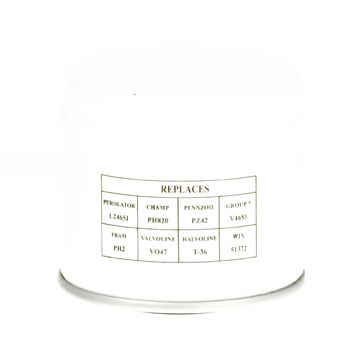
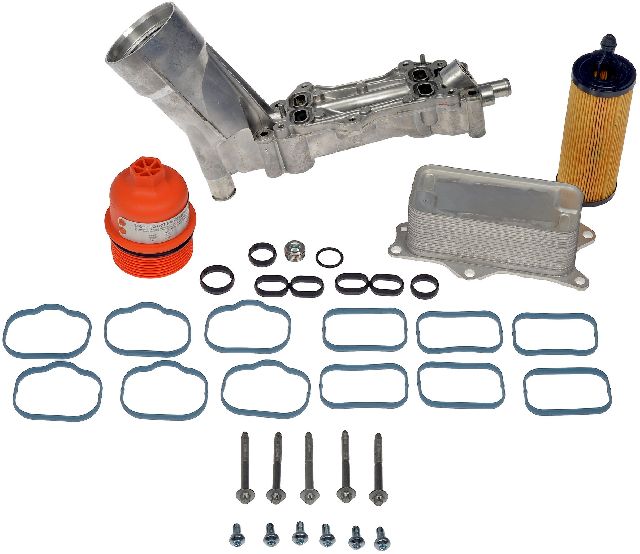
Est. part cost: $50-$100 - Incorrect or Low-Quality Oil Filter 🟡 Medium Probability → Shop Engine Oil Filter Adapter The 5.7L Hemi engine is known to be sensitive to the flow characteristics and bypass valve specifications of oil filters. Using a non-OEM or low-quality filter can restrict oil flow and trigger pressure-related codes.
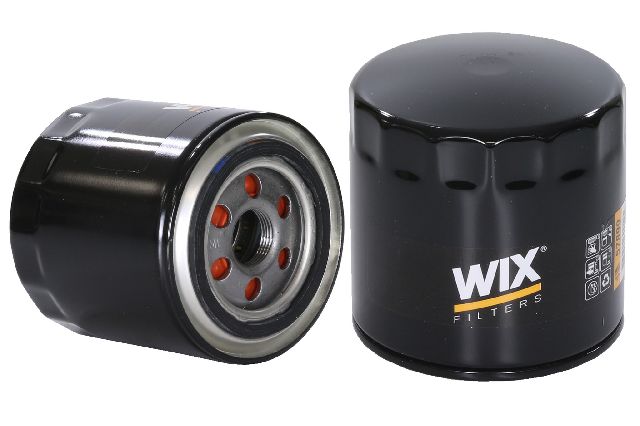
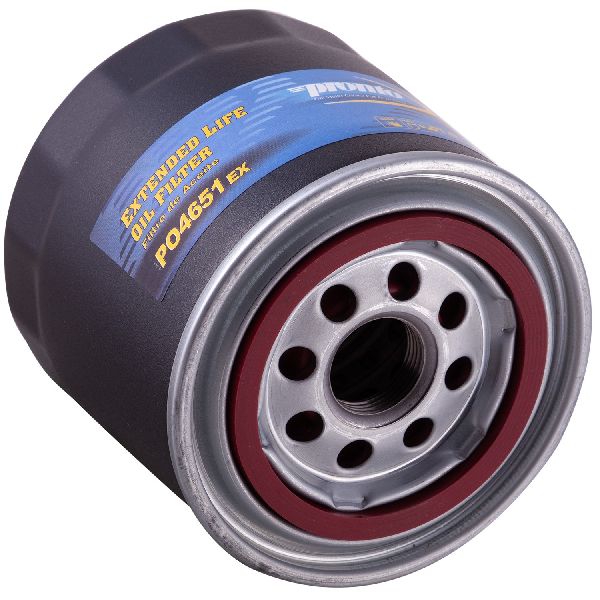
How to confirm: Check the brand and part number of the installed oil filter. If it is not a Mopar OEM filter or a high-quality equivalent known to work well with Hemis (like WIX or Mobil 1), it is suspect. One forum user identified a 'Prompto' brand filter as the direct cause of his P0521 and P1524 codes.
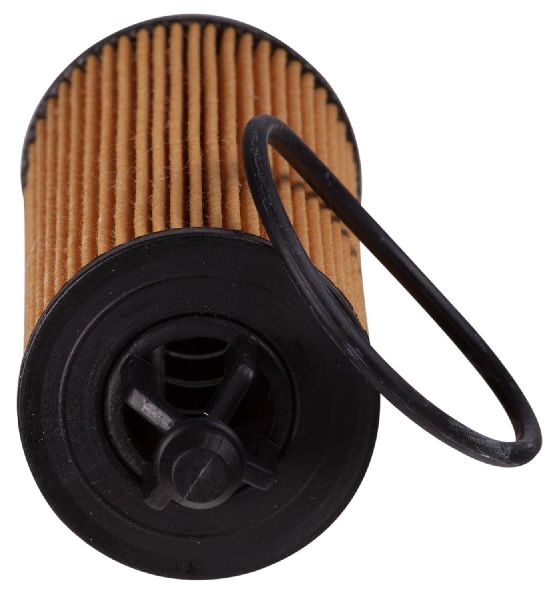
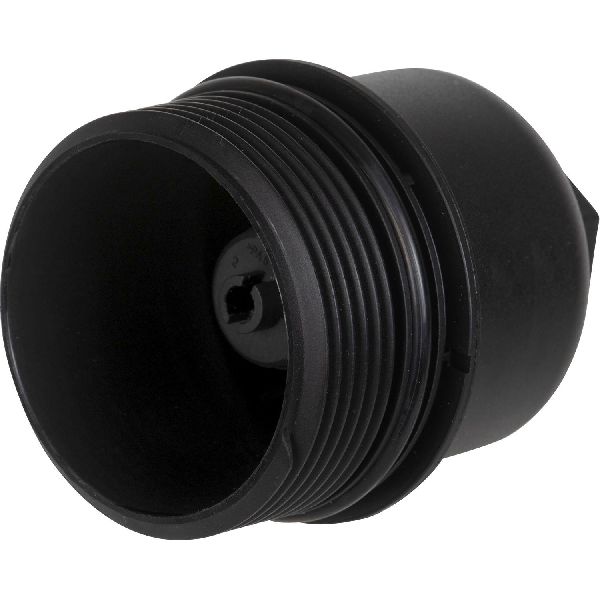
Typical fix: Replace the oil filter with a genuine Mopar filter (Part No. 4892339AB / MO-339). This is often done along with an oil change and frequently solves the problem.
Est. part cost: $10-$25
Rare But Worth Checking
- Wiring or Connector Issue: The sensor's wiring harness can become damaged or saturated with oil from a leaking sensor, causing a poor connection. The plastic connector can become brittle from heat cycles. Always inspect the connector and wiring when replacing the sensor.
- Failing Oil Pump or Internal Engine Wear: → Shop Engine Oil Pump This is the worst-case scenario. Worn engine bearings or a failing oil pump can cause a genuine low oil pressure condition. This must be ruled out with a mechanical oil pressure test before assuming it's just a sensor issue.
- Outdated PCM Software: On some related vehicles, TSBs (like 18-089-23 for 2023 Ram 1500s) have been issued for pressure-related codes where the PCM software was too sensitive. A dealership software update can be a potential fix if all mechanical and sensor issues are ruled out.
Diagnosis Steps
- Check the engine oil level and condition using the dipstick. Ensure it is full and not overly dirty or sludgy.
- Verify the correct oil viscosity (5W-20) and a quality oil filter (Mopar is recommended) are being used.
- Inspect the oil pressure sensor's electrical connector and wiring for any visible damage, corrosion, or oil saturation from a leaking sensor. The connector has a red locking tab that must be disengaged.
- Connect a scan tool to monitor the oil pressure reading live. Note if the reading is stuck, erratic, or clearly incorrect for the engine's state (e.g., showing high pressure with the engine off).
- CRITICAL STEP: Connect a mechanical oil pressure gauge to the engine. The test port is where the oil pressure sensor is located. A healthy 5.7L Hemi should have at least 4 psi at hot idle and 25-110 psi at 3000 RPM. Some owners report healthy pressures around 35 psi at hot idle and 60 psi on the highway.
- Compare the mechanical gauge reading to the scan tool's electronic reading. If the mechanical gauge shows good, stable pressure while the scan tool shows a problem, the oil pressure sensor is faulty and should be replaced.
- If the mechanical gauge confirms low oil pressure, the problem is more serious and requires further diagnosis of the oil pump or internal engine components like worn bearings.
Parts You'll Likely Need
- Engine Oil Pressure Sensor
(OEM #5149062AB)— This is the most common cause of P0521 on the 5.7L Hemi. The original sensor (part number ending in AA) was known to be failure-prone, and this is the revised, more reliable part that supersedes 5149062AA and 68060337AA.
Trusted brands: Mopar
OEM price range: $40-$85
Aftermarket price range: $25-$50 - Engine Oil Filter
(OEM #4892339AB)— The 5.7L Hemi is sensitive to oil filter flow rates. Using a non-OEM filter is a known cause of oil pressure-related codes. Using a genuine Mopar filter is a crucial step in diagnosis and repair.
Trusted brands: Mopar, WIX, Mobil 1
OEM price range: $15-$25
Aftermarket price range: $5-$15 - Oil Pressure Sensor Socket — A special deep socket, typically 1-1/16 inch or 27mm, is required to remove and install the sensor due to its shape and location.
Trusted brands: Lisle, OEMTools, GearWrench
OEM price range: $10-$20
Aftermarket price range: $10-$20
Related Codes That Often Appear With This One
- P0520 — This code indicates an 'Engine Oil Pressure Sensor/Switch Circuit' malfunction. It is very similar to P0521 and often points to the same root causes, such as a faulty sensor or wiring issue. TSB 18-034-14 REV. A was issued for P0520, calling for the replacement of the same sensor.
- P1521 — This is a manufacturer-specific code for 'Incorrect Engine Oil Type'. It can be triggered if the oil viscosity is wrong, which can also cause the irrational pressure readings that set P0521.
- P1524 — This code means 'Oil Pressure Out Of Range - Camshaft Advance/Retard Disabled'. The Hemi's VVT and MDS systems require stable oil pressure. If the PCM gets an unreliable reading (P0521), it may disable these systems and set P1524 as a protective measure.
Technical Service Bulletins (TSBs) & Recalls
- TSB 18-034-14 REV. A: Issued July 15, 2014, for multiple 2013-2014 Chrysler/Dodge/Jeep/Ram vehicles including the Durango (WD). It addresses code P0520 by replacing the original oil pressure sensor with a revised part. This directly corroborates that the sensor is a known failure point.
- TSB 09-019-23 & 09-011-22: While not for P0521, these TSBs for 2019-2022 Durangos address a cold engine 'tick' by replacing exhaust manifolds, a common issue on the 5.7L Hemi.
- Bulletin #18-108-15: While issued for other models in the manufacturer's lineup, this bulletin notes that a technician may find P0521 (Engine Oil Pressure Sensor Performance) stored in the PCM memory alongside other codes like P0300.
Platform-Specific Known Issues
- A relevant Technical Service Bulletin (TSB 18-034-14 REV. A) was issued for 2013-2014 Dodge Durango models (among many others) for the related P0520 code. It acknowledges a high failure rate of the original oil pressure sensor (p/n 05149062AA) and mandates replacement with the updated part (p/n 5149062AB), which is the same fix for P0521.
Mechanic-Grade Diagnostic Values
- Engine Oil Pressure Sensor Signal Voltage — expected: Approximately 0.5V with key on, engine off. Varies with pressure up to ~4.5V when running under load.. Failure: Voltage is stuck at 0V, 5V, or does not change with engine RPM.
- Engine Oil Pressure Sensor Internal Resistance — expected: 25-80 Ohms between the signal and ground pins when disconnected at room temperature.. Failure: An open circuit (infinite resistance) or a short (near-zero ohms).
- Oil Pressure Sensor Torque Specification — expected: 11-12 lb-ft (15-16 Nm). Failure: Over-tightening can damage the sensor or threads; under-tightening can cause leaks.
- MDS Solenoid Resistance (for general engine health context) — expected: 11.8-14.2 Ohms. Failure: Reading outside this range indicates a faulty solenoid, which can be related to oil pressure issues.
Wiring & Ground Locations
- Oil Pressure Sensor Connector — On the front of the engine, just above the oil filter, accessed from underneath the vehicle.. This 3-pin connector is the direct interface to the sensor. It has a red locking tab that must be disengaged. It is critical to inspect this connector for oil saturation, which indicates a leaking sensor that has failed internally and is wicking oil up into the wiring.
- Sensor Pinout (Generic 5.7L) — At the sensor connector.. A generic 3-wire Mopar sensor has a 5V supply (Pin 1), a signal wire (Pin 2), and a ground (Pin 3). Knowing the pinout allows for testing voltage and ground at the connector to rule out wiring issues before replacing the sensor. For example, Pin 1 should have 5V with the key on.
- G304 — On some Durango models, this ground point is located in the left rear quarterpanel area, bolted to the body.. While not a primary engine ground, poor body and module grounds can cause a wide range of seemingly unrelated electrical issues and communication errors between modules. A faulty ground can introduce noise or voltage offsets that could affect how the PCM interprets the oil pressure sensor signal, although it is a less likely cause.
Real Owner Repair Stories
- RamForum.com user (2007 Ram 5.7L Hemi (similar engine and issue)) — P0521 code, then P0522 after some attempted fixes.
❌ Tried (didn't work) Replacing the oil pressure sensor with a cheap aftermarket one., Getting an oil change.
✅ What actually fixed it The problem was only resolved after replacing the aftermarket sensor with a genuine OEM Mopar oil pressure sensor and resetting the computer by disconnecting the battery. - RamForum.com user (2013 Ram 1500 5.7L Hemi, 74,000 miles) — Check engine light with codes P0521 and P1524. Oil pressure gauge was reading low (25psi at hot idle, 30psi on highway).
❌ Tried (didn't work) Initial diagnosis pointed towards a bad sensor, but the user investigated the filter first.
✅ What actually fixed it The cause was a cheap 'Prompto' brand oil filter. An oil and filter change using a quality filter restored pressure to normal (35psi idle, 60psi highway) and cleared the codes. - Reddit user r/Dodge (2014 RAM 1500 5.7L HEMI) — Persistent P0521 code.
❌ Tried (didn't work) Replacing the oil pressure sensor with a genuine Mopar part., Performing an oil change with 5W-20 full synthetic and a new filter.
✅ What actually fixed it This story is an example of an unresolved case where common fixes did not work, suggesting a deeper issue like wiring or a PCM problem that the user was still investigating. It highlights that while the sensor is the most common fix, it is not always the solution.
OEM Part Supersession History
5149062AA→5149062AB— The original 'AA' sensor was known for a high failure rate, leading to incorrect readings and oil leaks through the connector. The 'AB' version is the revised, more reliable part.68060337AA→5149062AB— This was another part number used for the same application that was also consolidated into the 5149062AB part number for reliability and part simplification.56044777AA→5149062AB— An older part number that has been superseded by the current 5149062AB.
Diagnostic Flowchart
Other Known Issues on This Vehicle
Issues unrelated to this code that are worth knowing about as an owner of this generation:
- Hemi Lifter / Camshaft Failure ('Hemi Tick') 🔴 High → Shop Engine Camshaft — Common, especially on models from 2009 onwards with MDS. Can occur from 80,000 miles, sometimes earlier. Often starts as a light, persistent ticking noise. (Ref: TSB S2109000001 exists for camshaft/lifter replacement procedures.)
- Broken Exhaust Manifold Bolts 🟠 Medium — Extremely common, typically between 60,000 and 120,000 miles. Caused by thermal stress cycling. Results in a ticking noise, especially when the engine is cold, that can be mistaken for lifter tick. (Ref: TSB 09-019-23 and 09-011-22 address this for 2019-2022 models.)
- Totally Integrated Power Module (TIPM) Failure 🔴 High — Most prevalent on 2011-2013 models. Can cause a wide range of bizarre electrical issues, including no-start conditions, fuel pump failure, random activation of horn/wipers, and battery drain. (Ref: A recall was issued for some 2011-2013 models related to the fuel pump relay inside the TIPM.)
Used vs. New Parts: Buying Guide for This Vehicle
When a used part is the smart pick: For this specific P0521 repair, using a used part is almost never a smart choice. The primary failure component, the oil pressure sensor, is a low-cost electronic item with a known wear-and-tear failure mode. A used sensor carries the same risk of failure as the part being replaced.
What to inspect on the donor part:
- Not applicable for this repair, as a new OEM sensor is strongly recommended.
OEM-only on this vehicle (don't cheap out):
- Engine Oil Pressure Sensor
Aftermarket brands forum-validated for this vehicle:
- While Mopar is highly recommended, some professional technicians report success with Standard Motor Products (SMP) or Delphi as a second choice if OEM is unavailable.
Brands owners have reported issues with on this vehicle:
- Generic, unbranded, or 'white-box' sensors from online marketplaces. Forum posts frequently mention these parts failing within days or weeks, causing the code to return.
Real Owner Stories
Aggregated from forums and TSBs cited above. Mileages and costs reflect what owners reported in those sources.
2013 Dodge Durango 5.7L Hemi — 180000 miles
Symptoms: Owner experienced a second lifter failure after a previous $5,000 repair for the same issue; discussed the frequency of the 'Hemi tick'.
What fixed it: The owner discussed the high cost of lifter replacement, though another user noted driving 50k miles with the failure without catastrophic engine loss.
Source hint: Reddit r/DodgeDurango: 'How long did your Hemi 5.7 last after it developed a lifter failure?'
2010-2024 Ram 1500 5.7L Hemi (Platform Mate) — ~100000 miles
Symptoms: Low oil pressure codes P0521 and P1524; oil pressure was reading only 30psi on the highway.
What fixed it: Replacing a low-quality 'Prompto' brand oil filter with a high-quality filter, which restored highway oil pressure to 60psi.
Source hint: RamForum.com: 'Codes P1524 and P0521 - Oil Pressure Low'
2011-2024 Dodge Durango 5.7L Hemi
Symptoms: Oil pressure sensor repair for codes P0520 and P1521.
What fixed it: Replacement of the oil pressure sensor using a 27mm socket, accessed from underneath the vehicle.
Source hint: YouTube: 'Dodge Durango oil sensor repair. 5.7 liter hemi.' by JoDaddy's Garage
Related OBD-II Codes
Frequently Asked Questions
Does TSB 18-034-14 REV. A apply to my 2014 Dodge Durango with the 5.7L Hemi?
What is the specific part number I should use for the oil pressure sensor on my Durango?
Can using the wrong oil filter cause a P0521 code on my 5.7L Hemi?
What oil viscosity should I be using in my 2011-2024 Durango 5.7L to avoid pressure codes?
Where is the oil pressure sensor located on the Durango 5.7L Hemi?
Is the 'Hemi tick' related to the P0521 code?
Helpful Videos
We Have This Part in Stock

The information in this article is provided for general reference and educational purposes only. Vehicle specifications, procedures, and part compatibility can vary by production date, trim level, and region. Always consult your vehicle's factory service manual and verify part numbers before purchasing or performing repairs. Safety-critical components such as airbags, seat belts, and braking systems should be installed by a qualified professional.
- Dodge Durango:
- 🧭 Diagnostic Flowchart
- 🎬 Helpful Videos
- 🛍️ Shop This Part
- What's Unique About the 2011-2024 Dodge Durango
- Symptoms You May Notice
- Most Likely Causes
- Rare But Worth Checking
- Diagnosis Steps
- Parts You'll Likely Need
- Related Codes That Often Appear With This One
- Technical Service Bulletins (TSBs) & Recalls
- Platform-Specific Known Issues
- Mechanic-Grade Diagnostic Values
- Wiring & Ground Locations
- Real Owner Repair Stories
- OEM Part Supersession History
- Other Known Issues on This Vehicle
- Used vs. New Parts: Buying Guide for This Vehicle
- Real Owner Stories
- 2013 Dodge Durango 5.7L Hemi — 180000 miles
- 2010-2024 Ram 1500 5.7L Hemi (Platform Mate) — ~100000 miles
- 2011-2024 Dodge Durango 5.7L Hemi
- Related OBD-II Codes
- Frequently Asked Questions
- 🎟️ Get 5% Off