

P0521 on 2020-2023 Ford Explorer: Oil Pressure Sensor vs. Internal Leaks
P0521 on a 2020-2023 Explorer indicates an oil pressure sensor performance issue. While it can be a faulty sensor (~$100-$350 to fix), Ford TSBs warn it can also signal a serious internal oil leak, especially on 3.0L EcoBoost engines. Immediate diagnosis with a mechanical gauge is critical to prevent catastrophic engine failure.
- P0521 on a 2020-2023 Explorer is a critical warning. Stop driving immediately.
- The first step is always to check the oil level and condition.
- A mechanical oil pressure test is mandatory to differentiate between a bad sensor and a true low-pressure condition.
- On 3.0L EcoBoost engines, be aware of TSB SSM 51764, which points to a potential serious internal oil leak.
- If the sensor is replaced, using an OEM Motorcraft part is highly recommended to avoid repeat failures.
What's Unique About the 2020-2023 Ford EXPLORER
For the 2020-2023 Ford Explorer, particularly those with the 3.0L EcoBoost engine, this code carries a higher level of concern than on many other vehicles. Ford has issued a specific Technical Service Bulletin (TSB SSM 51764) indicating that P0521, often paired with P0524, can be a symptom of a genuine and severe internal oil pressure leak. This bulletin elevates the code from a potential sensor nuisance to a warning of a possible critical mechanical failure, making a thorough diagnosis more important than just swapping the sensor. The TSB points to a possible misaligned main oil gallery tube or a failed seal behind the engine's front cover as potential causes.
Diagnostic Flowchart
Tap your situation to follow the diagnostic path that matches what you're seeing on this vehicle.
Symptoms You May Notice
- Check Engine Light (Malfunction Indicator Lamp) is on
- Low Oil Pressure warning light is illuminated on the dashboard
- Oil pressure gauge reading is abnormally low, high, or erratic
- Engine may stall or run rough
- Engine ticking or knocking sounds, which is a severe symptom of oil starvation.
- Replacing the oil pressure sensor without first verifying the actual oil pressure with a mechanical gauge. If the pressure is genuinely low, a new sensor will not fix the underlying mechanical problem and can lead to catastrophic engine failure.
- Assuming a new replacement sensor is good. There are owner reports of faulty new-in-box sensors causing the same issue to persist, with the ultimate fix being another replacement with an OEM part from a dealer.
Most Likely Causes
- Low Engine Oil Level 🔴 High Probability
How to confirm: Check the engine oil level using the dipstick. Ensure the vehicle is on level ground and has been off for a few minutes to allow oil to drain back to the pan.
Typical fix: Top up the oil to the correct level or perform a full oil and filter change using the manufacturer-specified oil.
Est. part cost: $40-$80 - Faulty Engine Oil Pressure Sensor 🟡 Medium Probability Sensors are common failure points due to constant heat and vibration. A known failure mode on similar Ford engines is for the sensor to leak oil internally into its own electrical connector, causing a signal fault. Aftermarket sensors are also noted to be potentially unreliable.
How to confirm: After confirming oil level and pressure are good with a mechanical gauge, test the sensor's output with a multimeter or advanced scan tool. Inspect the sensor's electrical connector for oil contamination.
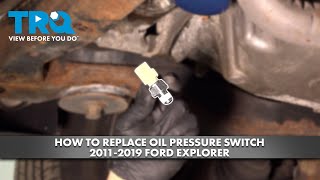
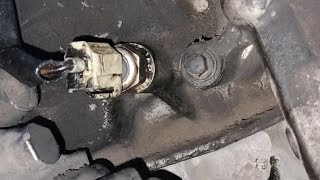
Typical fix: Replace the engine oil pressure sensor. It is located near the oil filter housing. 🎬 See this walkthrough on how to replace the pressure switch
Est. part cost: $30-$90 - Internal Oil Pressure Leak 🟡 Medium Probability Specifically noted for the 3.0L EcoBoost engine in TSB SSM 51764. The bulletin states this can be caused by a misaligned main oil gallery tube (part #6718) or a failed engine oil gallery seal (part #00815) after the front engine cover has been serviced.
How to confirm: This requires professional diagnosis, starting with verifying low pressure with a mechanical gauge, then following the specific diagnostic steps (Pinpoint Test E) outlined in the Ford Workshop Manual, which may lead to oil pump replacement and inspection of the front cover components.
Typical fix: Requires significant internal engine repair, involving removal of the engine front cover to inspect/realign the oil gallery tube and replace the seal. This is a labor-intensive job with costs potentially exceeding $2,000.
Est. part cost: $500-$2500+ - Incorrect or Poor Quality Engine Oil/Filter ⚪ Low Probability → Shop Engine Oil Filter Adapter
How to confirm: Verify that the oil viscosity (e.g., 5W-30) matches the manufacturer's specification in the owner's manual. Check that a quality oil filter (preferably Motorcraft) is installed.
Typical fix: Perform an oil and filter change using the correct OEM-specified products.
Est. part cost: $40-$80
Rare But Worth Checking
- Wiring or Connector Issue: The wiring harness to the oil pressure sensor can become damaged, corroded, or contaminated with oil, causing an erratic signal. Inspect the connector and harness for any visible signs of wear, fraying, or oil saturation. A TSB for other Ford models notes that liquid contamination in the sensor connector is a specific cause of this code.
- Failing Oil Pump: → Shop Engine Oil Pump While less common than other causes, a worn or failing oil pump cannot generate sufficient pressure, leading to this code. This is a major mechanical failure often requiring over 10 hours of labor to replace.
- Incorrect Sensor Installed After Engine Replacement: TSB SSM 50988 mentions that P0521 can occur on 2020-2021 Explorer 3.3L models after a short or long block engine replacement. This is due to a design change in the oil pressure sensor that is not backward compatible. The fix is to transfer the sensor from the original engine or install the correct part, GN1Z-9D290-D.
Diagnosis Steps
- STOP DRIVING. Do not run the engine until the oil level is checked to prevent potential catastrophic damage.
- Check the engine oil level and condition. Top up or change if low or dirty.
- Verify the correct oil viscosity is being used as per the owner's manual.
- Connect a mechanical oil pressure gauge to the engine to measure the actual oil pressure. This is the most critical diagnostic step.
- Compare the mechanical gauge reading to the manufacturer's specifications for the current engine RPM. (e.g., some Ford engines require at least 24 psi to prevent issues like timing chain rattle).
- If mechanical pressure is good, inspect the oil pressure sensor's wiring and connector for damage, corrosion, or oil contamination.
- If wiring is good and mechanical pressure is normal, the oil pressure sensor is the likely culprit. Replace it with a quality OEM part. 🎬 Watch: Step-by-step guide to changing the oil pressure sensor
- If mechanical pressure is confirmed to be low, the vehicle has a serious mechanical issue. Do not start the engine again. The problem could be an internal leak (per TSB 51764), a failing oil pump, or other internal engine problems requiring professional service.
Parts You'll Likely Need
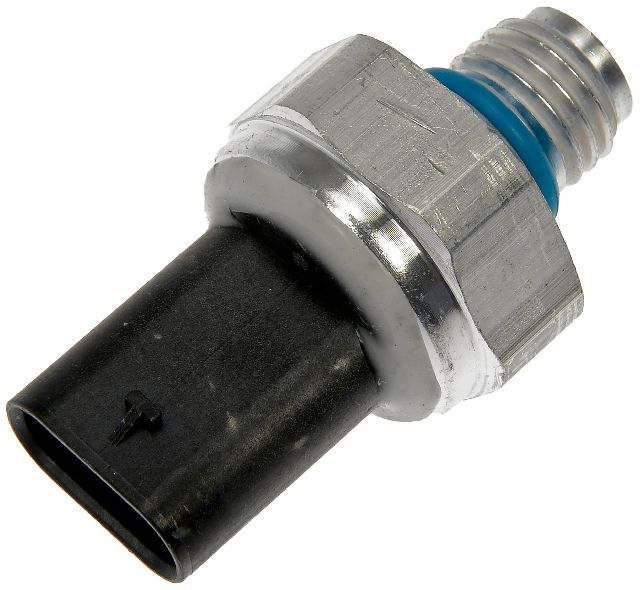
- Engine Oil Pressure Sensor
(OEM #GN1Z-9D290-D)— This sensor is the most common part to fail when oil level and actual pressure are confirmed to be correct. TSB SSM 50988 specifies part GN1Z-9D290-D for 3.3L models after engine replacement, and this part number has superseded previous versions and is listed for newer 3.0L models as well.
Trusted brands: Motorcraft, Dorman
OEM price range: $40-$80
Aftermarket price range: $25-$50
Related Codes That Often Appear With This One
- P0524 — Stands for 'Engine Oil Pressure Too Low'. Ford TSB SSM 51764 explicitly states that P0521 and P0524 can appear together, strongly suggesting a true low oil pressure condition that requires immediate attention.
Technical Service Bulletins (TSBs) & Recalls
- SSM 51764: Notes that P0521 and/or P0524 on 3.0L EcoBoost engines in 2020-2023 Explorer/Aviator models may be caused by an internal oil pressure leak. It directs technicians to WSM Pinpoint Test E and advises inspection of the main oil gallery tube and seal if the front cover is removed.
- SSM 50988: Warns that P0521 can occur after an engine replacement on 2020-2021 Explorer 3.3L models due to a design change in the oil pressure sensor. Specifies replacing the sensor with part number GN1Z-9D290-D.
Platform-Specific Known Issues
- Ford Technical Service Bulletin SSM 51764 specifically highlights that on 2020-2023 Explorers and Lincoln Aviators with the 3.0L EcoBoost, codes P0521 and P0524 can be caused by an internal oil pressure leak. The bulletin directs technicians to inspect the main oil gallery tube and replace the front cover seal if WSM diagnostics point to an oil pump replacement.
- Ford TSB SSM 50988 indicates that P0521 can appear after an engine block replacement on 2020-2021 3.3L models if the oil pressure sensor from the new block is a different, incompatible design. The fix requires installing the correct sensor (GN1Z-9D290-D).
Mechanic-Grade Diagnostic Values
- Engine Oil Pressure Sensor Voltage — expected: Typically 0.5V at low pressure and 4.5V at high pressure.. Failure: Voltage that is stuck, erratic, or does not correspond to the engine's actual oil pressure.
- Minimum Engine Oil Pressure (General Ford) — expected: At least 24 psi at certain RPMs.. Failure: Pressure dropping below this threshold can cause components like timing chain tensioners to function improperly, leading to engine rattle.
- Live Oil Pressure Data Logging (Explorer ST) — expected: Stable oil pressure under load.. Failure: A significant, sharp drop in oil pressure during hard acceleration or launches, visible on high-resolution data logging tools like HP Tuners.
Scan Tool Commands That Help
- Advanced Scan Tool (e.g., HP Tuners): Live Data Logging - Engine Oil Pressure — To identify intermittent oil pressure drops that may not be apparent during static tests. This is particularly useful for diagnosing performance-related issues, such as oil starvation during hard launches on ST models.
Wiring & Ground Locations
- Fuse F5 (Under-hood Fuse Box) — Located in the under-hood fuse box.. This 5A fuse provides keep-alive power to the Powertrain Control Module (PCM), which processes the signal from the oil pressure sensor.
- Fuse F6 (Under-hood Fuse Box) — Located in the under-hood fuse box.. This 20A fuse provides main power to the Powertrain Control Module (PCM).
- Fuse F24 (Under-hood Fuse Box) — Located in the under-hood fuse box.. This 10A fuse provides power to the Powertrain Control Module (PCM) / Hybrid Powertrain Control Module (HPCM).
Real Owner Repair Stories
- Explorer ST Forum (Ford Explorer ST (3.0L EcoBoost)) — Data logs showing a large, sudden drop in oil pressure specifically during hard launches.
❌ Tried (didn't work) Running the oil level at the 'full' mark on the dipstick did not always resolve the issue for those launching the vehicle hard.
✅ What actually fixed it As a workaround, overfilling the engine oil by approximately 1/2 quart helped mitigate the pressure drop. The user suggests the root cause is the OEM oil pan design lacking sufficient baffling, and a baffled aftermarket pan would be the proper fix. - Reddit r/FordExplorer (2013 Ford Explorer Sport) — Sporadic 'Low Oil Pressure' alert, flashing on and off randomly.
❌ Tried (didn't work) An initial replacement of the oil pressure sensor.
✅ What actually fixed it The mechanic diagnosed the brand new replacement sensor as faulty. The issue was resolved by installing a second new sensor, this time sourced directly from a Ford dealer. - Reddit r/FordExplorer (2021 Ford Explorer ST) — Engine knocking followed by loss of acceleration and engine shutdown. Dipstick was found to be dry.
✅ What actually fixed it This is a cautionary tale: the engine failed due to oil starvation *without* ever displaying a low oil pressure warning or check engine light on the dash, indicating a complete failure of the warning system itself. The engine required professional diagnosis after being towed.
When the Usual Fixes Don't Work
- While P0521 is intended to warn of a pressure problem, there is at least one owner report of a 2021 Explorer ST engine failing from oil starvation with no warning light or trouble code ever being triggered. This indicates the monitoring system is not foolproof and can fail to alert the driver of a critical low-oil condition.
OEM Part Supersession History
GN1Z-9D290-A, GN1Z-9D290-B, GN1Z-9D290-C→GN1Z-9D290-D— Part has been updated by the manufacturer over time.
Heads up: TSB SSM 50988 notes that after an engine replacement on a 3.3L, the sensor from the new block may be an incompatible design, requiring the installation of GN1Z-9D290-D. This highlights the importance of using the specified part number rather than assuming compatibility.
Model Year Variations Within This Range
- 2020-2023: The high-performance Explorer ST trim, with the 3.0L EcoBoost, has been identified in owner forums as being susceptible to oil pressure drops during hard launches, likely due to the standard oil pan's design. This issue may not be present or as pronounced on non-ST models with different engines or driving styles.
Helpful Videos

We Have This Part in Stock

The information in this article is provided for general reference and educational purposes only. Vehicle specifications, procedures, and part compatibility can vary by production date, trim level, and region. Always consult your vehicle's factory service manual and verify part numbers before purchasing or performing repairs. Safety-critical components such as airbags, seat belts, and braking systems should be installed by a qualified professional.
- Ford EXPLORER:
- 🧭 Diagnostic Flowchart
- 🎬 Helpful Videos
- 🛍️ Shop This Part
- What's Unique About the 2020-2023 Ford EXPLORER
- Symptoms You May Notice
- Most Likely Causes
- Rare But Worth Checking
- Diagnosis Steps
- Parts You'll Likely Need
- Related Codes That Often Appear With This One
- Technical Service Bulletins (TSBs) & Recalls
- Platform-Specific Known Issues
- Mechanic-Grade Diagnostic Values
- Scan Tool Commands That Help
- Wiring & Ground Locations
- Real Owner Repair Stories
- When the Usual Fixes Don't Work
- OEM Part Supersession History
- Model Year Variations Within This Range
- 🎟️ Get 5% Off