

P0521 on 2019-2024 Genesis G70 3.3T: Engine Oil Pressure Sensor Performance and Fixes
On the Genesis G70 3.3T, code P0521 is almost always caused by a failing oil pressure sensor. The most common symptom is a flickering oil light at warm idle that disappears when RPMs increase. The sensor itself is inexpensive (~$70), but it's buried under the upper and lower intake manifolds, making replacement a very labor-intensive job that can cost over $1,000-$2,500 at a shop. This issue is identical on the Kia Stinger GT and other Genesis models with the same engine.
- P0521 on a G70 3.3T is almost always a faulty oil pressure sensor, not actual low oil pressure.
- The key symptom is a flickering oil light at warm idle that disappears with acceleration.
- DO NOT drive the vehicle. You must confirm the oil pressure is actually safe with a mechanical gauge before proceeding.
- Be prepared for a high repair bill ($1,000+) due to the sensor's location deep inside the engine, which requires many hours of labor to access.
- If you approve the repair, ensure the quote includes replacing the intake manifold gaskets and fuel injector seals to prevent future leaks.
What's Unique About the 2019-2024 Genesis G70
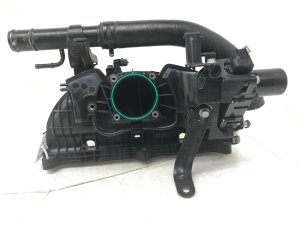
The story of P0521 on the Genesis G70 and its platform mates with the 3.3L V6 Turbo (Kia Stinger GT, Genesis G80/G90) is all about location. The oil pressure sensor is a widely-known failure point, but it's buried deep in the engine valley, underneath both the upper and lower intake manifolds and high-pressure fuel system components. This turns a simple, cheap sensor replacement into a major, multi-hour repair job requiring significant engine disassembly, which is a frequent and expensive frustration for owners.
Generation note: The 2019-2024 model years cover the first generation (IK) of the Genesis G70, which includes a significant facelift for the 2022 model year. However, the 3.3L V6 Turbo engine, oil pressure sensor location, and the repair procedure for this code remain the same across all years in this range. The issue is also prevalent on all other Hyundai/Kia models using this engine.
Symptoms You May Notice
- Check Engine Light is on
- Oil pressure warning light flickers on the dashboard, especially at idle when the engine is warm (e.g., below ~700 RPM).
- Oil pressure light goes off as soon as you accelerate or raise engine RPM above idle.
- In some cases, the oil pressure gauge may read erratically or show zero.
- In rare cases of actual low pressure, you may hear engine ticking, knocking, or rattling noises, indicating severe mechanical distress.
- Immediately replacing the sensor without first verifying the actual oil pressure with a mechanical gauge. This could lead to performing an expensive 5+ hour repair when the real issue is a dangerous mechanical fault or a simple low oil level.
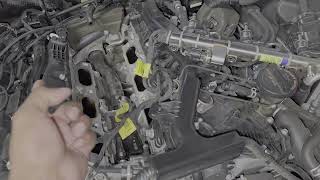
- Replacing the wrong oil pressure sensor. Some technicians unfamiliar with the platform may mistakenly identify a different, more accessible sensor. The correct sensor for P0521 is under 🎬 See exactly where the sensor is hidden in the engine valley. the intake manifolds.
Most Likely Causes
- Failing Engine Oil Pressure Sensor/Switch 🔴 High Probability This is a widely reported failure point on the 3.3T engine across the Genesis and Kia lineup. The sensor is located in a high-heat area in the engine valley, which can lead to premature failure of its internal electronics or seals, causing it to send faulty signals or leak oil into its own electrical connector.
How to confirm: The definitive test is to connect a mechanical oil pressure gauge. If the mechanical pressure is within spec (e.g., above 11.4 PSI at warm idle) but the scan tool shows erratic readings from the sensor, the sensor is bad. Oil found inside the sensor's electrical connector upon removal also provides 100% confirmation of internal failure.
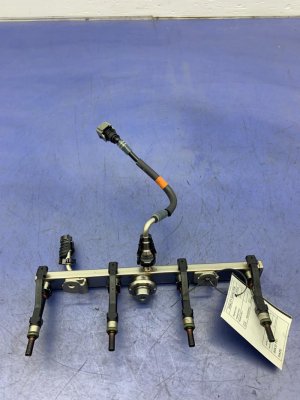
Typical fix: Replace the oil pressure sensor. This requires removing the upper (surge tank) and lower intake manifolds and the high-pressure fuel rails to access it. All associated single-use gaskets and injector seals must also be replaced.
Est. part cost: $70-$120 for an OEM sensor. - Low or Incorrect Engine Oil 🟡 Medium Probability While not a specific proneness, a known issue on this engine is a leaking left-hand turbocharger oil feed pipe (NHTSA Recall 24V-191), which can cause a gradual loss of oil, leading to low pressure and triggering this code.
How to confirm: Check the oil level on the dipstick after letting the engine sit for 5-10 minutes. Review service records to ensure the correct oil viscosity (e.g., 5W-30 full synthetic, meeting API SN PLUS or SP specs) was used.
Typical fix: Top off or change the engine oil with the manufacturer-specified type and grade. If a leak from the turbo oil feed pipe is found, it must be replaced with the updated stainless steel part under the recall.
Est. part cost: $50-$100 for oil and filter. - Clogged or Incorrect Oil Filter ⚪ Low Probability → Shop Engine Oil Filter Adapter
How to confirm: Inspect the oil filter. Poor quality aftermarket filters can sometimes collapse, use incorrect bypass valve specifications, or have faulty anti-drain-back valves, all of which can impede oil flow and affect pressure readings, especially at startup or idle.
Typical fix: Replace the oil filter with a high-quality OEM or equivalent filter (e.g., Hyundai/Kia part 26320-3LTA0).
Est. part cost: $10-$25
Rare But Worth Checking
- Damaged Wiring or Connector: The wiring harness to the sensor is in a high-heat area and can be damaged by heat or during other engine repairs. Check for brittle insulation, corrosion in the connector pins, or loose connections before committing to the full sensor replacement job.
- Failing Oil Pump or Clogged Oil Passages: → Shop Engine Oil Pump This is the worst-case scenario. If a mechanical gauge confirms that oil pressure is actually low (e.g., below 11.4 PSI at warm idle), the problem is internal to the engine and requires major, expensive repairs. This is very uncommon on the Lambda II engine.
Diagnosis Steps
- Read the code with an OBD-II scanner and check for any other related codes.
- CRITICAL STEP: Check the engine oil level and condition. If low, top it off, clear the codes, and see if the issue returns. Note any signs of external leaks, particularly around the turbochargers.
- Verify the correct oil viscosity (5W-30 Synthetic) and a quality OEM oil filter are being used.
- Connect a scan tool and monitor the live data from the oil pressure sensor. Observe the readings at warm idle and while revving the engine. Look for erratic values, or values that don't change with RPM.
- THE MOST IMPORTANT STEP: Connect a mechanical oil pressure gauge to the engine to measure the actual oil pressure. This is the only way to confirm a bad sensor versus a real pressure problem.
- Compare the mechanical gauge reading to the manufacturer's specification (e.g., at least 11.4 PSI at warm idle).
- If mechanical pressure is GOOD: The issue is electrical. The sensor itself has almost certainly failed. Inspect its connector for oil contamination upon removal. Replace the sensor and all required gaskets.
- If mechanical pressure is BAD: Stop the engine immediately. The problem is a serious mechanical fault (e.g., oil pump, clogged pickup tube, worn bearings) that requires professional engine diagnosis and repair.
Parts You'll Likely Need
- Engine Oil Pressure Sensor/Switch
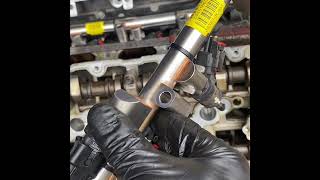
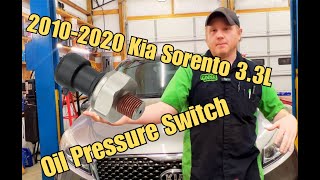
(OEM #94751-3C000)— This is the most common failure point for 🎬 Watch: How to access and replace the sensor on a Genesis. code P0521 on this engine.
Trusted brands: Hyundai/Genesis (OEM)
OEM price range: $70-$120
Aftermarket price range: $25-$80 - Upper Intake Manifold (Surge Tank) Gasket
(OEM #29215-3L100)— This is a single-use gasket that must be replaced when the intake manifold is removed to access the sensor.
Trusted brands: Hyundai/Genesis (OEM)
OEM price range: $40-$60
Aftermarket price range: $20-$40 - Lower Intake Manifold Gaskets
(OEM #28411-3L100)— These six individual gaskets are single-use and must be replaced during reassembly.
Trusted brands: Hyundai/Genesis (OEM)
OEM price range: $40-$60
Aftermarket price range: $20-$40 - Fuel Injector Seal Kit
(OEM #35313-3L000)— Recommended to be replaced as a set of six since the high-pressure fuel rails are removed. This prevents dangerous fuel leaks after the repair.
Trusted brands: Hyundai/Genesis (OEM)
OEM price range: $30-$50
Aftermarket price range: $20-$40
Related Codes That Often Appear With This One
- P0520 — This code indicates a general fault in the oil pressure sensor circuit, and can appear alongside P0521.
- P0522 — This code specifically indicates the sensor circuit reading is low, which can be triggered by the same failing sensor that causes the P0521 performance issue.
- P0019 — This camshaft/crankshaft correlation code can be triggered by oil pressure issues, as the cam phasing (CVVT) system is hydraulically operated. A significant oil leak or pressure problem can affect cam timing.
Platform-Specific Known Issues
- The location of the oil pressure sensor is the single biggest issue for this platform, turning a minor part failure into a major, expensive repair due to high labor costs.
- Related models (Genesis G70/G80/G90 3.3T) were subject to NHTSA Recall 24V-191 for a cracking left
Mechanic-Grade Diagnostic Values
- Mechanical Oil Pressure at Hot Idle (approx. 650 RPM) — expected: 11.4 PSI or higher. Failure: Pressure below 11.4 PSI indicates a mechanical engine issue (oil pump, clog, etc.), not a sensor failure.
- Mechanical Oil Pressure at 3,000 RPM (Hot) — expected: 35.6 PSI or higher. Failure: Pressure below this specification points to a significant mechanical oiling system fault.
- Oil Pressure Sensor Signal Voltage (Live Data) — expected: Varies with pressure. Approx. 5.0V at 0 bar (engine off), and approx. 2.5V at 5 bar (72 PSI).. Failure: Voltage that is stuck, erratic, or doesn't correlate with engine RPM and expected pressure. A reading of 5.0V with the engine running indicates the sensor is reading zero pressure.
- Oil Pressure Sensor 5V Reference Voltage (at connector, KOEO) — expected: ~5.0V. Failure: Voltage significantly below 5.0V indicates a problem with the ECM or the wiring on the 5V reference circuit.
Scan Tool Commands That Help
- Hyundai GDS (or equivalent advanced scanner): Engine Mechanical Data Display / Live Data — This is the primary function used to diagnose P0521. It allows a technician to monitor the oil pressure sensor's reported voltage and pressure in real-time while changing engine RPM, to see if the readings are illogical or erratic compared to known specifications.
Wiring & Ground Locations
- Oil Pressure Sensor Connector — Deep in the engine valley, under the lower intake manifold.. This is the main component connector. It is a 3-wire connector for the variable pressure sensor (P/N 94751-3C000). Check for oil contamination inside the connector, which confirms internal sensor failure.
- ECM Connector Pin 48 — At the main Engine Control Module (ECM).. This pin is the dedicated Sensor Ground for the oil pressure sensor and MAP sensor. A poor connection or fault at this pin could cause erratic readings.
- Ground Point GC102 — Likely located on the left rear of the engine block or cylinder head.. This is a primary engine ground point. While its exact location on the G70 is not documented in the search results, a GM diagram identifies G102 in a similar location for grounding ignition coils. A loose or corroded main engine ground can cause a variety of sensor errors, including P0521.
Real Owner Repair Stories
- Reddit user @MacDreBro on r/GenesisG70 (Genesis G70 3.3T, failure at 93,000 miles) — Classic oil light flicker and P0521 code.
✅ What actually fixed it Replaced the oil pressure sensor. The user bought an OEM part on eBay for approximately $30 and had a Genesis dealer perform the labor for $1,250, which included replacing the intake manifold gasket. - YouTube video on a Kia Stinger GT 3.3T (Kia Stinger GT 3.3T (mechanically identical to G70 3.3T)) — Oil pressure light and code, requiring sensor replacement.
✅ What actually fixed it A DIY replacement of the oil pressure sensor. The user purchased a kit for approximately $200 that included the sensor, six fuel injector seals, and all necessary intake and throttle body gaskets. The video documents the process of removing the intake manifolds and fuel rails to access the sensor.
OEM Part Supersession History
94750-37000→Current— This is the part number for the simple, one-wire on/off oil pressure switch, NOT the sensor that causes P0521.
Heads up: This part is often misidentified as the cause of P0521. It serves a different function and is located elsewhere on the engine. Replacing this part will not fix a P0521 code.
Model Year Variations Within This Range
- 2019-2022: These model years are covered by NHTSA Recall 24V-191 for a cracking left-hand (Bank 2) turbocharger oil feed pipe. While not a direct cause, the resulting oil leak can lead to a low oil level, which can trigger a P0521 code as a secondary symptom.
Diagnostic Flowchart
Other Known Issues on This Vehicle
Issues unrelated to this code that are worth knowing about as an owner of this generation:
- Leaking Turbocharger Oil Feed Pipe 🔴 High — Common enough to trigger a major safety recall (NHTSA 24V-191). Affects the left-hand turbocharger. (Ref: NHTSA Recall 24V-191 / Genesis Recall 019G)
- Intake Valve Carbon Buildup 🟠 Medium — Common to all Gasoline Direct Injection (GDI) engines. Becomes noticeable after 40k-60k miles, potentially causing misfires or rough idle.
- Electronic Wastegate Actuator Rattle/Failure 🟠 Medium — A noticeable squeaking or rattling noise may develop from the turbo wastegate actuator. In some cases, it can lead to failure, causing overboost/underboost codes (e.g., P0299) and requiring turbocharger replacement.
- High-Pressure Fuel Pump (HPFP) Failure 🟡 Low — Less common, but some failures have been reported, which can lead to loss of power. (Ref: A recall for the fuel pump assembly (not specifically HPFP) exists for some model years (NHTSA 23V-422).)
- Warped Brake Rotors 🟡 Low — A common complaint, especially on earlier models, is brake vibration or shuddering due to warped front rotors. Often addressed by replacing with aftermarket pads and rotors.
Used vs. New Parts: Buying Guide for This Vehicle
When a used part is the smart pick: For this specific repair, using used parts is NOT recommended for any component. The labor cost to access the sensor is extremely high, often exceeding $1,000. The financial risk of a used sensor or gasket failing prematurely far outweighs any small initial savings on parts.
What to inspect on the donor part:
- Not applicable. Do not use used parts for this repair.
OEM-only on this vehicle (don't cheap out):
- Engine Oil Pressure Sensor (P/N 94751-3C000): While aftermarket options exist, the extreme labor cost makes using the proven OEM part the wisest choice to ensure longevity and avoid a repeat repair. Some owners have reported aftermarket sensors failing to resolve the code on similar vehicles.
- Upper and Lower Intake Manifold Gaskets: These are single-use, precision-molded gaskets. Never reuse old gaskets or use used ones, as a vacuum or boost leak will cause significant performance issues and require repeating the entire job.
- Fuel Injector Seals: These are critical single-use seals. Reusing old seals or using used ones creates a high risk of a dangerous high-pressure fuel leak in the engine valley.
Aftermarket brands forum-validated for this vehicle:
- No specific aftermarket brands are consistently validated in owner forums for this specific sensor. Given the high labor cost, sticking with the Hyundai/Genesis OEM part is the most reliable option.
Brands owners have reported issues with on this vehicle:
- Generic, unbranded sensors from online marketplaces. An owner on a Reddit forum for a different vehicle noted that a generic auto parts store sensor did not fix their P0521 issue, while an OEM sensor did.
Real Owner Stories
Aggregated from forums and TSBs cited above. Mileages and costs reflect what owners reported in those sources.
2019-2024 Genesis G70 3.3L V6 Turbo
Symptoms: Oil pressure light flickers on the dashboard, especially at idle when the engine is warm (e.g., below ~700 RPM). The light goes off as soon as you accelerate or raise engine RPM above idle.
What fixed it: Replacement of the oil pressure sensor, which required removing the upper and lower intake manifolds and high-pressure fuel rails.
Source hint: Reddit (r/StingerGT) and Article Symptoms
2017-2020 Genesis G80 Sport 3.3L V6 Turbo
Symptoms: P0521 code triggered; owner noted the high cost of repair due to the sensor being buried deep in the engine valley.
What fixed it: Replacement of the oil pressure sensor and associated gaskets.
Cost: $700-$2,900
Source hint: Reddit (r/genesisg80)
2019-2024 Genesis G70 3.3L V6 Turbo — 52000 miles
Symptoms: Vehicle required oil pressure sensor replacement; upon teardown, heavy carbon buildup was discovered on the intake valves.
What fixed it: Oil pressure sensor replacement and cleaning of intake valves.
Source hint: GenesisG70.com / Reddit (r/GenesisG70)
Related OBD-II Codes
Frequently Asked Questions
Is there a recall for the oil pressure issue on my 2019-2024 Genesis G70 3.3T?
Why does my oil light only flicker when the engine is warm and idling?
What is the correct oil type and filter for my G70 3.3T to avoid pressure codes?
How much should I expect to pay to fix the P0521 code at a dealership?
Can I just replace the sensor myself to save on labor?
Could my P0521 code be related to the carbon buildup issues I've heard about?
Helpful Videos

We Have This Part in Stock

The information in this article is provided for general reference and educational purposes only. Vehicle specifications, procedures, and part compatibility can vary by production date, trim level, and region. Always consult your vehicle's factory service manual and verify part numbers before purchasing or performing repairs. Safety-critical components such as airbags, seat belts, and braking systems should be installed by a qualified professional.
- Genesis G70:
- 🧭 Diagnostic Flowchart
- 🎬 Helpful Videos
- 🛍️ Shop This Part
- What's Unique About the 2019-2024 Genesis G70
- Symptoms You May Notice
- Most Likely Causes
- Rare But Worth Checking
- Diagnosis Steps
- Parts You'll Likely Need
- Related Codes That Often Appear With This One
- Platform-Specific Known Issues
- Mechanic-Grade Diagnostic Values
- Scan Tool Commands That Help
- Wiring & Ground Locations
- Real Owner Repair Stories
- OEM Part Supersession History
- Model Year Variations Within This Range
- Other Known Issues on This Vehicle
- Used vs. New Parts: Buying Guide for This Vehicle
- Real Owner Stories
- 2019-2024 Genesis G70 3.3L V6 Turbo
- 2017-2020 Genesis G80 Sport 3.3L V6 Turbo
- 2019-2024 Genesis G70 3.3L V6 Turbo — 52000 miles
- Related OBD-II Codes
- Frequently Asked Questions
- 🎟️ Get 5% Off