

P0521 on 2017-2022 Genesis G90 3.3T: Engine Oil Pressure Sensor Guide
On the 2017-2022 Genesis G90 3.3T, code P0521 is most often caused by a failing engine oil pressure sensor/switch. This part is difficult to access, making the repair costly (around $2,600 at a dealer) despite the part itself being relatively inexpensive. The primary symptom is a flickering oil light at warm idle that disappears with acceleration.
- P0521 on a G90 3.3T is almost always a faulty oil pressure sensor, not actual low oil pressure.
- Symptoms typically include a flickering oil light specifically at warm idle, which goes away when you accelerate.
- Do not continue driving, as there is a small but critical chance of actual low oil pressure which can destroy the engine.
- The repair is very labor-intensive and expensive because the sensor is located under the intake manifolds.
- Always confirm with a mechanical gauge that the oil pressure is actually good before committing to the expensive sensor replacement.
What's Unique About the 2017-2022 Genesis G90
The Genesis G90 with the 3.3L V6 Turbo engine is known for experiencing this issue, often presenting as a flickering oil light at idle when the engine is warm. The primary challenge on this platform is the location of the oil pressure sensor; it is buried deep in the engine valley, underneath the upper and lower intake manifolds and between the cylinder banks. This makes replacement a labor-intensive and expensive job, which is a common complaint among owners on forums for the G90 and its platform-mates like the Kia Stinger.
Symptoms You May Notice
- Check Engine Light is on.
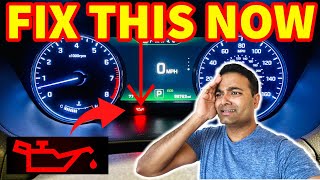
- Oil pressure warning light flickers or stays on, especially at idle when the engine is warm (e.g., below 600 RPM).
- Oil pressure warning light turns off as soon as engine RPMs increase above idle.
- Oil pressure gauge (if equipped) reads too high or too low.
- Engine makes ticking or knocking noises (a sign of actual low oil pressure).
- Replacing the oil pump without first verifying actual oil pressure with a mechanical gauge. The issue is far more likely to be the sensor itself.
- Assuming the oil light is just a 'glitch' and continuing to drive. While it's often the sensor, the risk of engine destruction from actual low pressure is too high to ignore.
Most Likely Causes
- Failing Engine Oil Pressure Sensor/Switch 🔴 High Probability This is a widely reported failure point for the Genesis 3.3T and related Hyundai/Kia engines. The sensor is subjected to significant heat and vibration in the engine valley, leading to internal failure over time. The sensor's internal seal can fail, allowing oil to contaminate the electrical connector.
How to confirm: A technician will first verify the actual engine oil pressure with a mechanical gauge. If the mechanical pressure is normal, but the scan tool shows erratic readings from the sensor, the sensor is faulty. Upon removal of the intake, the sensor's electrical connector may be full of oil, which is a definitive sign of a failed sensor.
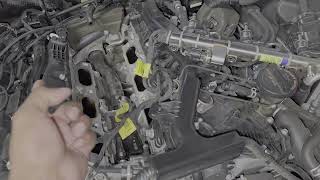
Typical fix: Replace the engine oil pressure sensor and any related gaskets (intake manifold, injector seals). Due to the difficult location, this is a labor-intensive job. A special thin-walled 24mm wrench, sometimes ground down to be even thinner, is often required to access and remove the sensor without removing additional cooling pipes. 🎬 See this walkthrough for accessing the sensor in the engine valley.
Est. part cost: $50-$150 - Low or Incorrect Engine Oil 🟡 Medium Probability
How to confirm: Check the oil level using the dipstick. Verify that the oil viscosity used matches the manufacturer's recommendation (check the owner's manual). Old, sludgy, or incorrect viscosity oil can cause pressure issues.
Typical fix: Perform an oil and filter change using the correct grade of oil (e.g., 5W-30 or as specified for the model year). Clear the codes and see if P0521 returns.
Est. part cost: $50-$100 - Wiring or Connector Issue ⚪ Low Probability The wiring harness in the hot engine valley can become brittle over time. Oil leaking from a failed sensor can also contaminate and degrade the connector and wiring.
How to confirm: Inspect the wiring harness and connector leading to the oil pressure sensor for any signs of damage, corrosion, or oil saturation. This is difficult to do without first removing the intake manifold.
Typical fix: Repair the damaged section of the wiring harness or clean/replace the connector pigtail.
Est. part cost: $20-$50
Rare But Worth Checking
- Clogged Oil Passages or Failing Oil Pump: → Shop Engine Oil Pump This is a serious mechanical issue. If a mechanical gauge confirms that the engine's oil pressure is actually low, these are the next items to investigate. A stuck oil pressure relief valve in the pump can cause low pressure at idle. This would represent a major internal engine problem.
Diagnosis Steps
- Check the engine oil level and condition. Ensure the correct oil viscosity is being used. Top up or change the oil if necessary.
- Connect an OBD-II scanner to monitor the oil pressure sensor readings in real-time. Note if the readings are erratic, stuck, or illogical for the engine's RPM (e.g., low pressure warning at idle, but normal readings off-idle).
- Crucially, connect a mechanical oil pressure gauge to the engine to measure the actual oil pressure. This is the only way to differentiate between a sensor problem and a real, dangerous low-pressure condition. A reading below 20 psi at the sensor port when hot may indicate a mechanical issue.
- If mechanical pressure is good but the sensor reading is bad, the problem is in the sensor's circuit. Proceed with inspecting the sensor and its wiring.
- If mechanical pressure is low, stop the engine immediately. The problem is internal to the engine (e.g., oil pump, clogged passages, worn bearings) and requires major repair.
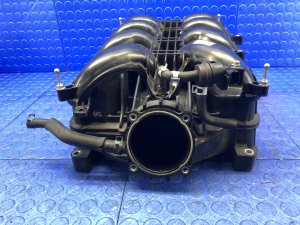
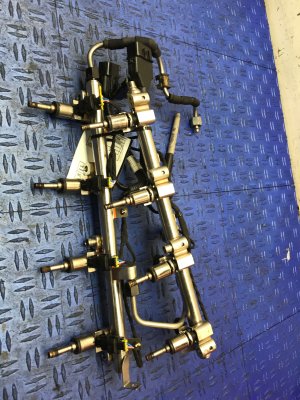
- To access the sensor, remove the upper and lower intake manifolds and fuel rails.
- Inspect the sensor's electrical connector for oil contamination, corrosion, or damage. Oil in the connector confirms the sensor has failed internally.
- If the wiring and connector are intact, replace the oil pressure sensor. It is also best practice to replace the intake manifold gaskets and fuel injector seals during reassembly.
Parts You'll Likely Need
- Engine Oil Pressure Sensor/Switch
(OEM #94751-3C000)— This is the most common failure point for code P0521 on this engine, often causing a flickering oil light at idle.
Trusted brands: Hyundai/Genesis (OEM)
OEM price range: $70-$120
Aftermarket price range: $40-$80 - Intake Manifold Gasket Set
(OEM #29215-3L100, 28411-3L100)— These are single-use gaskets and must be replaced when the intake manifold is removed to access the oil pressure sensor.
Trusted brands: Hyundai/Genesis (OEM)
OEM price range: $50-$80
Aftermarket price range: $30-$60 - Fuel Injector Seal Kit
(OEM #35313-3L000)— Recommended to be replaced when the fuel rails are removed during the job to prevent fuel leaks.
Trusted brands: Hyundai/Genesis (OEM)
OEM price range: $40-$60
Aftermarket price range: $20-$40
Technical Service Bulletins (TSBs) & Recalls
- While no TSB is specific to P0521 on the G90, Hyundai has issued TSBs like 21-EM-003H for other models concerning engine oil consumption inspection, which outlines a methodical process for diagnosing oil-related issues. A GM TSB for P0521 (24-NA-021) on a different engine family highlights a specific RPM test cycle to try and trigger the code, which could be a useful diagnostic strategy. It also mentions that if the code sets during the test, the oil pump should be replaced, which points to a potential, though less common, mechanical cause.
Platform-Specific Known Issues
- There is a safety recall (NHTSA Campaign: 24V191000) for the 2017-2022 G90 3.3T concerning a left turbocharger oil supply pipe that can degrade and leak oil, creating a fire risk. While this is a separate issue from the P0521 code, it is a critical oil-related problem that owners should ensure has been addressed by a dealer.
Mechanic-Grade Diagnostic Values
- Engine Oil Pressure at Idle (Hot) — expected: 11.4 PSI (0.8 kgf/cm², 78 kPa) or higher. Failure: Pressure below 11.4 PSI may indicate a mechanical issue.
- Engine Oil Pressure at 3000 RPM (Hot) — expected: 35.6 PSI (2.5 kgf/cm², 245 kPa) or higher. Failure: Pressure below 35.6 PSI can indicate a failing oil pump or clogged passages.
- Oil Pressure Sensor - 5V Reference Voltage — expected: ~5.0V with key on, engine off. Failure: Significantly lower voltage (e.g., < 4.5V) indicates a wiring issue or a shorted sensor on the 5V reference circuit.
Scan Tool Commands That Help
- GDS (Global Diagnostic System): Engine Mechanical Data Display — To monitor live oil pressure sensor voltage and compare it against expected values during diagnosis. A GM TSB for a similar code suggests a specific test cycle of raising RPM to 2000, then 4000, and returning to idle, repeating 10 times to try and trigger the fault, a procedure which could be adapted using GDS data display.
Wiring & Ground Locations
- ECM Connector Pin 48 — At the Engine Control Module (ECM). This is the Sensor Ground for the oil pressure sensor. A poor connection here could cause erratic readings.
- ECM Connector Pin 49 — At the Engine Control Module (ECM). This is a shared Sensor Ground for other sensors including the Camshaft Position Sensors. A fault here could potentially set other codes.
Real Owner Repair Stories
- Reddit user Hellbanez on r/kiastinger (2018 Kia Stinger GT (3.3T), failure at 150,000 km) — Low oil pressure light comes on at idle when the engine is up to temperature, and turns off when throttle is given. Oil level was good, no power loss or weird sounds.
❌ Tried (didn't work) The user notes another person with the same issue replaced the sensor and it didn't fix it, causing hesitation. However, the user's own fix was successful.
✅ What actually fixed it The oil pressure sensor was replaced at an independent shop. The user also proactively had the intake valves walnut blasted at the same time since the intake manifold was already removed. The repair cost was approximately $1100 CAD.
Diagnostic Flowchart
Used vs. New Parts: Buying Guide for This Vehicle
When a used part is the smart pick: For this specific repair, using a used part is NEVER recommended. The oil pressure sensor is a high-failure-rate electronic component buried in a location that requires 4-6 hours of intensive labor to access. The risk of a used sensor failing shortly after installation far outweighs any potential cost savings.
What to inspect on the donor part:
- Not applicable. Do not use a salvaged oil pressure sensor for this repair.
OEM-only on this vehicle (don't cheap out):
- Engine Oil Pressure Sensor/Switch
- Intake Manifold Gaskets
Aftermarket brands forum-validated for this vehicle:
- While some high-quality aftermarket brands may exist, the consensus in owner forums strongly favors using only the genuine Hyundai/Genesis OEM sensor (Part No. 94751-3C000) due to the extreme labor cost of a potential repeat repair.
Brands owners have reported issues with on this vehicle:
- Any unbranded, low-cost sensors from online marketplaces should be avoided. The quality control is unknown, and the risk of premature failure is too high for a part this difficult to access.
Real Owner Stories
Aggregated from forums and TSBs cited above. Mileages and costs reflect what owners reported in those sources.
2017 Genesis G90 3.3L V6 Turbo — 65085 miles
Symptoms: The oil pressure warning light illuminated on the dashboard only when the vehicle was at a complete stop (at idle). The light went off as soon as the car started moving again, and there were no abnormal engine noises.
What fixed it: Replaced the oil pressure sender/switch and fuel injector seals.
Cost: $80-$200
Source hint: YouTube video titled 'I Bought a Twin Turbo Genesis with a "Bad Engine" for 50% Off and Fixed it for $80!'
Genesis G80 3.3L V6 Turbo
Symptoms: The oil light came on at low RPMs and would turn off with increased RPMs.
What fixed it: A dealer quoted $2,600 for the repair, which involves replacing the sensor due to its difficult location.
Cost: $2600-$2600
Source hint: YouTube - Kleantrix
Kia Stinger GT 3.3L V6 Turbo
Symptoms: Owner experienced the common oil light at idle issue, which is identical to the G90's.
What fixed it: Replaced the oil pressure sensor at an independent shop for approximately $1100 CAD due to the part's 'nightmare' location.
Source hint: Reddit - r/StingerGT
2017 Genesis G90 3.3L V6 Turbo
Symptoms: The oil light came on only at idle below 1500 RPM after an oil change.
What fixed it: The source only confirms the symptom and does not state what repair was performed.
Source hint: Reddit - r/GenesisMotors
Frequently Asked Questions
Is the oil pressure sensor failure a common, known issue on the 2017-2022 Genesis G90 3.3T?
Why does my oil pressure warning light only come on at idle and turn off when I accelerate?
How can I be sure it's just a bad sensor and not a real, engine-damaging low oil pressure problem?
Is there a recall for oil-related problems on my G90 3.3T?
Why is the repair for the oil pressure sensor so labor-intensive and expensive?
Are other cars with the 3.3T engine, like the Kia Stinger, affected by this same P0521 issue?
Helpful Videos


We Have This Part in Stock

The information in this article is provided for general reference and educational purposes only. Vehicle specifications, procedures, and part compatibility can vary by production date, trim level, and region. Always consult your vehicle's factory service manual and verify part numbers before purchasing or performing repairs. Safety-critical components such as airbags, seat belts, and braking systems should be installed by a qualified professional.
- Genesis G90:
- 🧭 Diagnostic Flowchart
- 🎬 Helpful Videos
- 🛍️ Shop This Part
- What's Unique About the 2017-2022 Genesis G90
- Symptoms You May Notice
- Most Likely Causes
- Rare But Worth Checking
- Diagnosis Steps
- Parts You'll Likely Need
- Technical Service Bulletins (TSBs) & Recalls
- Platform-Specific Known Issues
- Mechanic-Grade Diagnostic Values
- Scan Tool Commands That Help
- Wiring & Ground Locations
- Real Owner Repair Stories
- Used vs. New Parts: Buying Guide for This Vehicle
- Real Owner Stories
- 2017 Genesis G90 3.3L V6 Turbo — 65085 miles
- Genesis G80 3.3L V6 Turbo
- Kia Stinger GT 3.3L V6 Turbo
- 2017 Genesis G90 3.3L V6 Turbo
- Frequently Asked Questions
- 🎟️ Get 5% Off