

P0521 on 2005-2009 GMC Envoy: Oil Pressure Sensor Performance Causes & Fixes
Code P0521 on a 2005-2009 GMC Envoy usually points to a faulty oil pressure sensor or a clogged screen beneath it. Replacing both is the most common fix, costing around $40-$80 for parts. The repair is moderately difficult due to the sensor's location, especially on V8 models. On V8s with Active Fuel Management (AFM), this issue can also prevent the system from engaging.
- P0521 on a 2005-2009 Envoy means the oil pressure reading is out of its expected range, not necessarily that the pressure is dangerously low.
- The most common cause by far is a combination of a faulty oil pressure sensor and a clogged filter screen located directly underneath it.
- Always replace the small filter screen (Part #12585328) when replacing the sensor to prevent the problem from returning.
- Before replacing parts, verify the engine's actual oil pressure with a mechanical gauge to rule out a more serious internal engine problem.
- Be prepared for a difficult repair if you have the 5.3L V8, as the sensor is located in a tight spot at the back of the engine.
What's Unique About the 2005-2009 Gmc ENVOY
The GMC Envoy and its platform-mates (like the Chevy Trailblazer) from this era are well-known for P0521. The issue is frequently caused by a small, thimble-like filter screen located in the engine block directly underneath the oil pressure sensor. This screen, officially called the Valve Lifter Oil Filter, is notorious for getting clogged with engine sludge and debris, which restricts oil flow to the sensor and causes false or erratic pressure readings, triggering the code. The 2005 and newer 5.3L V8 engines in these vehicles feature Active Fuel Management (AFM), and this filter is critical for that system, making its condition even more important.
Diagnostic Flowchart
Tap your situation to follow the diagnostic path that matches what you're seeing on this vehicle.
Symptoms You May Notice
- Check Engine Light is on
- "Low Oil Pressure" or "Stop Engine" message on the driver information center
- Oil pressure gauge reading erratically, at zero, or maxed out (e.g., stuck at 80 PSI).
- Engine may run rough or make ticking/clattering noises if actual oil pressure is low.
- On 5.3L V8 models with Active Fuel Management (AFM), the system may fail to engage (i.e., it will not switch to V4 mode).
- Replacing the instrument panel cluster because the gauge is reading incorrectly.
- Assuming the engine is failing and needs replacement without first verifying the true oil pressure with a mechanical gauge.
- Replacing the sensor but not the clogged screen underneath, leading to a quick return of the code.
Most Likely Causes
- Clogged Oil Pressure Sensor Filter Screen 🔴 High Probability → Shop Engine Oil Pressure Sensor This small screen (Valve Lifter Oil Filter, P/N 12585328) is known to get clogged with sludge, especially if oil changes are neglected. This is a very common failure point on these GM engines and is specifically mentioned in TSB PIP4786C.
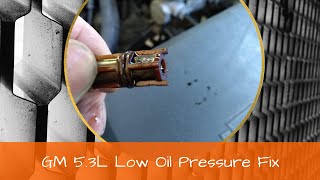
How to confirm: The screen can only be inspected upon removal of the oil pressure sensor. It will often be visibly filled with black debris. A pick or a coarse-threaded screw is often used to extract it from its port. 🎬 Watch: How to remove the sensor and clogged oil screen
Typical fix: Remove the old screen and replace it with a new one. TSB PIP4786C notes that it can sometimes be cleaned with brake cleaner and compressed air, but replacement is inexpensive and highly recommended.
Est. part cost: $5-$15 - Faulty Engine Oil Pressure Sensor 🔴 High Probability The sensor operates in a high-heat environment and can fail internally. A common failure mode is the internal diaphragm breaking, allowing oil to leak up into the electrical connector, causing a short and erratic readings.
How to confirm: After confirming actual oil pressure is good with a mechanical gauge, the sensor is the next logical part to fail. If the electrical connector is full of oil when disconnected, the sensor has failed internally and must be replaced.
Typical fix: Replace the oil pressure sensor. A special deep socket (typically 1-1/16" or a specific oil pressure switch socket) is required for removal.
Est. part cost: $30-$70 - Low or Incorrect Engine Oil 🟡 Medium Probability
How to confirm: Check the oil level on the dipstick and verify the condition of the oil. Using oil that does not meet the manufacturer's specification (e.g., 5W-30 Dexos-approved for later models) can cause issues.
Typical fix: Perform an oil and filter change using the correct viscosity and type of oil as specified in the owner's manual.
Est. part cost: $40-$80 - Wiring or Connector Issue ⚪ Low Probability
How to confirm: Inspect the electrical connector and wiring going to the oil pressure sensor for damage, corrosion, or oil contamination from a leaking sensor. A damaged pigtail can mimic sensor failure.
Typical fix: Clean the connector with electrical contact cleaner and repair any damaged wires. If the connector is oil-soaked from a leaking sensor, it may need to be replaced with a new pigtail (ACDelco P/N PT2779 / 88988301).
Est. part cost: $15-$30
Rare But Worth Checking
- Failing Oil Pump or Sticking Relief Valve: → Shop Engine Oil Pump If a mechanical gauge confirms that the engine's actual oil pressure is low (e.g., below 24 PSI at 1000 RPM on a hot V8), the oil pump may be failing or its pressure relief valve may be stuck. This is a more serious mechanical issue.
- Worn Internal Engine Components: Excessive clearance in engine bearings can cause a true loss of oil pressure, especially at hot idle. This would typically be accompanied by engine knocking or ticking noises and is a sign of significant engine wear.
Diagnosis Steps
- Check the engine oil level and condition. Top off or change the oil if necessary, using the manufacturer-specified grade.
- Connect an OBD-II scanner to confirm the P0521 code and check for any other codes. Note the live oil pressure data.
- Crucially, connect a mechanical oil pressure gauge to the engine to verify the true oil pressure. A healthy hot engine should show at least 24-25 PSI at 1000 RPM and increase with engine speed.
- Compare the mechanical gauge reading to the scanner reading. If mechanical pressure is good but the scanner reading is bad (e.g., pegged at 129 PSI), the issue is with the sensor or its circuit.
- Inspect the oil pressure sensor's electrical connector for damage, corrosion, or oil saturation. Oil in the connector confirms a failed sensor.
- If the circuit appears okay, remove the oil pressure sensor. This is located above the oil filter on the 4.2L I6 and at the back of the engine near the firewall on the 5.3L V8, which is very difficult to access.
- Once the sensor is removed, inspect and remove the small filter screen from the port in the engine block using a pick or a coarse-threaded screw.
- Replace both the filter screen and the oil pressure sensor. It is highly recommended to use OEM or high-quality aftermarket parts, as cheap sensors are known to fail out of the box.
- Clear the code and perform a test drive to confirm the fix. Check that the oil pressure gauge reads normally and, on V8 models, that the AFM system engages.
Parts You'll Likely Need
- Engine Oil Pressure Sensor
(OEM #12673134 (supersedes 12621234, 12596951))— This sensor is the primary cause of the P0521 code, failing due to heat and internal wear, providing incorrect readings to the ECM.
Trusted brands: ACDelco (OEM), Standard Motor Products (SMP) PS308, Dorman 926-040
OEM price range: $40-$60
Aftermarket price range: $25-$45 - Valve Lifter Oil Filter Screen
(OEM #12585328)— This screen is notorious for getting clogged with sludge, which blocks oil flow to the sensor and causes false readings. It should always be replaced with the sensor.
Trusted brands: ACDelco (OEM), Dorman 917-143, Standard Motor Products EOF100
OEM price range: $8-$15
Aftermarket price range: $5-$10
Technical Service Bulletins (TSBs) & Recalls
- PIP4786C: Notes that vehicles may present with a low oil pressure message and DTC P0521. It advises technicians to inspect the Valve Lifter Oil Filter for debris or sludge if scan tool data shows low pressure but a mechanical gauge confirms pressure is normal. It suggests cleaning or replacing the filter before other components.
Platform-Specific Known Issues
- TSB PIP4786C: GM Technical Service Bulletin #PIP4786C directly addresses the P0521 code and low oil pressure messages. It instructs technicians to inspect the Valve Lifter Oil Filter for debris/sludge if scan tool pressure is low but mechanical pressure is normal, before replacing any parts.
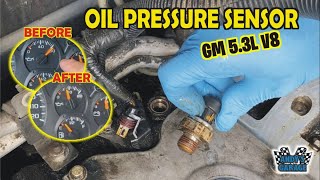
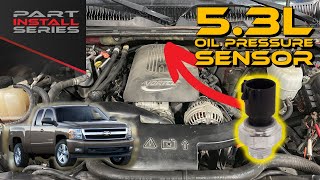
- 5.3L V8 Sensor Location: On the 5.3L V8 engine, the sensor is located in a very difficult-to-access position at the back of the engine block, against the firewall and partially under the intake manifold. 🎬 See this walkthrough for replacing the sensor on a V8 This makes the replacement significantly more labor-intensive. Many owners use a step stool and reach around the back of the engine by feel.
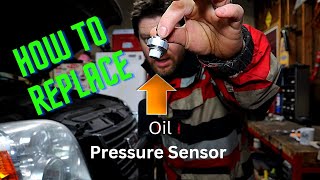
- 4.2L I6 Sensor Location: On the 4.2L I6 engine, the sensor is much easier to access, located on the passenger side of the engine block just above the oil filter housing. 🎬 Watch: Step-by-step oil pressure sensor replacement guide
Mechanic-Grade Diagnostic Values
- Engine Oil Pressure Sensor 5-Volt Reference — expected: 5.0 Volts DC. Failure: Voltage significantly lower than 5.0V, or missing entirely, indicates a problem with the ECM or the 5V reference circuit. A shorted sensor can pull this voltage down, sometimes triggering other codes like P0641.
- Engine Oil Pressure Sensor Signal Wire (backprobed at sensor) — expected: Variable voltage signal between ~0.5V (low pressure) and ~4.5V (high pressure) that changes with engine RPM.. Failure: Voltage is stuck at 0V, 5V, or does not respond to changes in engine RPM when actual pressure (verified by mechanical gauge) is changing.
- Minimum Mechanical Oil Pressure (5.3L V8, Hot Engine) — expected: At least 24 PSI @ 1,000 RPM, 35 PSI @ 2,000 RPM, 38 PSI @ 3,000 RPM.. Failure: Pressure measured with a mechanical gauge is significantly below these specifications, indicating a mechanical engine issue (e.g., oil pump, worn bearings) rather than a sensor fault.
Hidden / Shadow Codes Worth Checking
- P0641: Sensor Reference Voltage 'A' Circuit/Open. This code can appear alongside P0521 if the oil pressure sensor fails by shorting internally, which pulls down the 5-volt reference circuit it shares with other sensors. Finding P0641 strongly points to an electrical failure rather than a simple clogged screen. (see via Standard OBD-II scanner.)
Wiring & Ground Locations
- EOP Sensor Connector (5.3L V8) — At the back of the engine, near the firewall, behind the intake manifold.. The 3-wire connector provides the sensor with its 5V reference (Gray wire), low reference/ground (Black wire), and sends the signal back to the ECM (Tan/White wire). Oil leaking into this connector from a failed sensor is a primary cause of failure.
- ECM Pin 41 (5.3L V8) — At the Engine Control Module (ECM), which is located near the lower left front of the engine.. The Gray wire from the oil pressure sensor, carrying the 5V reference voltage, connects to Pin 41 at the ECM. Testing for 5V at this pin can help determine if the ECM is providing the correct voltage.
- G103 — Located at the left rear of the engine compartment on the cowl, above the brake booster.. This is a major ground point for several key electronic modules, including the Body Control Module (BCM) and Instrument Panel Cluster (IPC). A poor connection here can cause a wide range of bizarre electrical issues, though it's a less direct cause for P0521.
- G108 — On the lower-left side of the engine block.. This is a primary engine block ground. While not directly for the sensor's low reference circuit, a poor engine ground can affect sensor readings and overall ECM performance.
Real Owner Repair Stories
- GMTNation.com user 'CajunWon' (2006 Envoy Denali 5.3L) — Check Engine Light with code P0521, oil pressure gauge pegged high.
❌ Tried (didn't work) The user was initially intimidated by the sensor's location and considered not doing the repair., Had difficulty extracting the old filter screen and ultimately left it in place, taking a risk.
✅ What actually fixed it The user replaced the oil pressure sensor. They disconnected the brake booster hose for better access and used a special sensor socket. After several attempts, the code was cleared, and the gauge and scan tool began showing normal, varying pressure. - Reddit user on r/MechanicAdvice (2006 GMC Envoy Denali) — Code P0521 would not clear after replacing the sensor.
❌ Tried (didn't work) Replacing the oil pressure sensor with a new part did not immediately solve the problem.
✅ What actually fixed it Forum advice pointed towards two possibilities: the new aftermarket sensor was bad out-of-the-box (a known issue), or there was a wiring/voltage issue. The consensus was to first check live data with a scan tool to see what the computer is reading, and if the reading is illogical, physically test the voltage at the sensor connector before condemning the new part.
OEM Part Supersession History
12596951→12621234, then 12673134— Standard part evolution for improved reliability and material changes by the manufacturer.
Heads up: The newest part number, 12673134, is the correct and most reliable replacement for all previous versions on this vehicle. Using older stock (NOS) is not recommended.
Helpful Videos
We Have This Part in Stock


The information in this article is provided for general reference and educational purposes only. Vehicle specifications, procedures, and part compatibility can vary by production date, trim level, and region. Always consult your vehicle's factory service manual and verify part numbers before purchasing or performing repairs. Safety-critical components such as airbags, seat belts, and braking systems should be installed by a qualified professional.
- Gmc ENVOY:
- 🧭 Diagnostic Flowchart
- 🎬 Helpful Videos
- 🛍️ Shop This Part
- What's Unique About the 2005-2009 Gmc ENVOY
- Symptoms You May Notice
- Most Likely Causes
- Rare But Worth Checking
- Diagnosis Steps
- Parts You'll Likely Need
- Technical Service Bulletins (TSBs) & Recalls
- Platform-Specific Known Issues
- Mechanic-Grade Diagnostic Values
- Hidden / Shadow Codes Worth Checking
- Wiring & Ground Locations
- Real Owner Repair Stories
- OEM Part Supersession History
- 🎟️ Get 5% Off