

P0521 on 2005-2012 GMC Savana 1500: Oil Pressure Sensor Causes and Fixes
On a 2005-2012 GMC Savana, code P0521 is most often caused by a faulty oil pressure sensor and its clogged filter screen. The repair involves replacing both parts, which are located in a hard-to-reach spot at the back of the engine. Expect parts to cost between $40 and $85. Always use an OEM ACDelco sensor and the specified ACDelco PF48E oil filter, as aftermarket parts are known to cause repeat issues.
- Do not ignore code P0521. Immediately check your oil level and limit driving until the problem is diagnosed to prevent catastrophic engine damage.
- The most critical first step is to verify the actual oil pressure with a mechanical gauge to rule out a serious internal engine problem.
- The most common fix is replacing both the oil pressure sensor and the small filter screen located underneath it.
- Due to the sensor's difficult location on the Savana, this repair is considered challenging (4/5 difficulty) and may require several hours.
- Use only the manufacturer-specified 5W-30 Dexos-approved synthetic oil and a high-quality ACDelco oil filter to prevent sludge buildup and recurring issues.
What's Unique About the 2005-2012 Gmc SAVANA 1500
For this generation of GMC Savana and its twin, the Chevrolet Express, the P0521 code is an extremely common and well-documented issue on their Vortec V8 engines (4.8L, 5.3L, 6.0L). The problem is frequently not the sensor alone, but a small, thimble-sized filter screen (P/N 12585328) in the engine block directly underneath it. This screen is notorious for getting clogged with sludge, starving the sensor of an accurate oil pressure reading. Due to the sensor's location at the top rear of the engine block against the firewall, replacement is known to be a difficult job, often harder than on trucks like the Silverado due to the van's body. A common DIY method for removing a stuck screen is the 'screw trick,' where a coarse-threaded screw is gently turned into the old filter to create a handle for pulling it out.
Diagnostic Flowchart
Tap your situation to follow the diagnostic path that matches what you're seeing on this vehicle.
Symptoms You May Notice
- Check Engine Light is on.
- Low Oil Pressure warning message or light is on.
- Oil pressure gauge reads abnormally low, high (pegged at 80+ PSI), or fluctuates erratically.
- Engine making unusual ticking or knocking noises (in cases of actual low oil pressure).
- Engine stalling in some cases.
- Replacing the oil pressure sensor but not the small filter screen underneath it, leading to the code returning shortly after.
- The dealer or a shop recommending a full engine replacement before thoroughly diagnosing the much more common sensor, screen, and oil pump issues.
- Using a cheap, non-OEM (aftermarket) oil pressure sensor, which may fail prematurely or provide inaccurate readings right out of the box.
Most Likely Causes
- Clogged Oil Pressure Sensor Filter Screen 🔴 High Probability → Shop Engine Oil Pressure Sensor This small screen is notorious on GM V8 engines for collecting sludge and debris, especially if oil changes are neglected. TSB PIP4786C specifically identifies this clogged screen as a primary cause.
How to confirm: The screen is located underneath the oil pressure sensor and must be removed for visual inspection. If it is clogged with dark, gritty material, it is faulty. It is often destroyed during removal and should always be replaced.
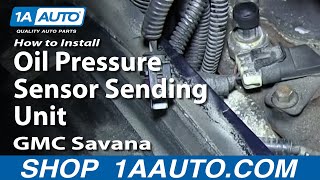
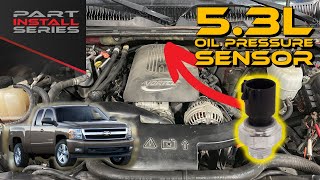
Typical fix: Replace the filter screen. This should always be done when replacing the oil pressure sensor. A pick or a coarse-threaded screw can be used to extract the old screen from its port. 🎬 See how to replace both the sensor and the screen.
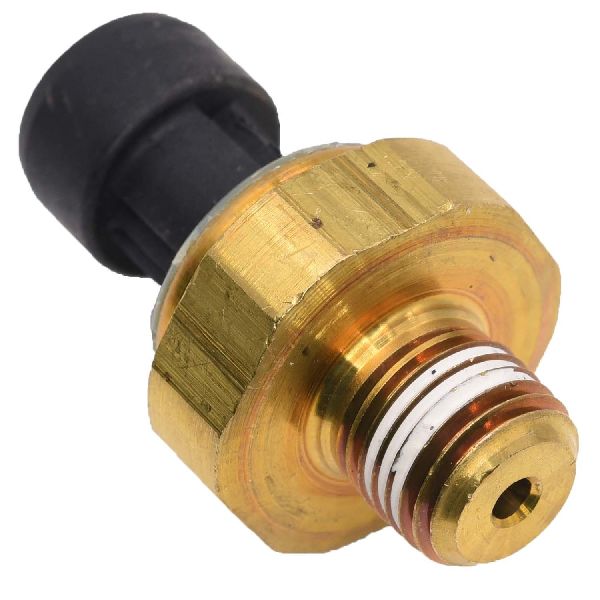
Est. part cost: $5-$15 - Faulty Engine Oil Pressure Sensor 🔴 High Probability The sensor is located in a high-heat area at the back of the engine, leading to a high failure rate. Aftermarket sensors are widely reported to fail quickly or be inaccurate out of the box, making an OEM ACDelco part highly recommended.
How to confirm: After confirming actual oil pressure is good with a mechanical gauge, the sensor is the prime suspect. A failed sensor may leak oil through its electrical connector, rattle when shaken, or cause the gauge to be pegged at maximum.
Typical fix: Replace the engine oil pressure sensor. It is highly recommended to use an OEM ACDelco part and to replace the filter screen at the same time. Torque the new sensor to 22 ft-lbs.
Est. part cost: $45-$80 - Low or Incorrect Engine Oil 🟡 Medium Probability These engines are sensitive to oil type and level. Using oil that is not the manufacturer-specified viscosity (e.g., 5W-30) or a non-Dexos approved oil can trigger this code.
How to confirm: Check the oil level on the dipstick and verify the oil type used during the last service.
Typical fix: Perform an oil and filter change using the correct grade of full synthetic, Dexos-approved oil and a quality OEM-spec filter (like the ACDelco PF48E).
Est. part cost: $50-$100 - Incorrect or Poor Quality Oil Filter ⚪ Low Probability → Shop Engine Oil Filter Adapter Some aftermarket oil filters may have incorrect internal bypass valve specifications. GM has issued service bulletins (e.g., PIP5276E) linking incorrect filters to this code, especially after an oil change. Some owners have resolved persistent P0521 codes simply by switching to a high-quality filter like the ACDelco PF48E or Mobil 1 M1-113A.
How to confirm: Check the brand and part number of the installed oil filter. If it is not an OEM-specified filter, it is suspect.
Typical fix: Replace the oil filter with a high-quality OEM filter, such as the ACDelco PF48E.
Est. part cost: $10-$20
Rare But Worth Checking
- Sticking Oil Pump Relief Valve: → Shop Engine Oil Pump As per GM TSB 20-NA-161, this code can be caused by a sticking pressure relief valve inside the oil pump, leading to genuine low oil pressure. This is a serious mechanical issue that requires professional diagnosis.
- Worn Internal Engine Components: If a mechanical gauge confirms that oil pressure is genuinely low, and the oil pump is functioning correctly, the cause could be serious internal wear, such as on the camshaft or main bearings. TSB 20-NA-161 specifically mentions checking the #1 main bearing for damage.
- Failing Oil Pump: → Shop Engine Oil Pump While less common than sensor issues, a failing oil pump can cause actual low oil pressure and trigger P0521. This would be confirmed with a mechanical gauge test and is a more likely culprit on very high-mileage engines.
- Damaged Wiring or Connector: The wiring to the sensor can become brittle from heat or damaged. Check the 3-pin connector and harness for oil contamination (from a leaking sensor), chafing, or corrosion.
Diagnosis Steps
- Check the engine oil level and condition. Top off if low or perform an oil change if the oil is old, dirty, or of the incorrect type, ensuring an OEM-spec filter is used.
- CRITICAL STEP: Connect a mechanical oil pressure gauge to the engine to verify the actual oil pressure. The port is where the sensor is located.
- Compare the mechanical gauge reading to the manufacturer's specifications. GM's minimum spec is roughly 6 PSI at 1,000 RPM, 18 PSI at 2,000 RPM, and 24 PSI at 4,000 RPM. A healthy engine should be closer to 25-30 PSI at hot idle.
- If mechanical pressure is good, the problem is in the sensor circuit. Inspect the sensor's electrical connector and wiring for damage, oil saturation, or corrosion.
- If the wiring is okay, replace the oil pressure sensor AND the small filter screen located in the block underneath it. Use an OEM part.
- Torque the new sensor to 22 ft-lbs to avoid damaging the new part.
- If mechanical pressure is low, further diagnosis is needed per TSB 20-NA-161, checking for a sticking oil pump relief valve or excessive internal engine wear.
- After repairs, clear the code with a scan tool and perform a test drive to ensure the issue is resolved.
Parts You'll Likely Need
- Engine Oil Pressure Sensor (Switch/Sending Unit)
(OEM #12673134)— This is the most common part to fail, causing incorrect readings. Its location subjects it to intense heat, and aftermarket versions are known to be unreliable.
Trusted brands: ACDelco (OEM Recommended), Dorman (926-040, includes filter, mixed reviews)
OEM price range: $50-$80
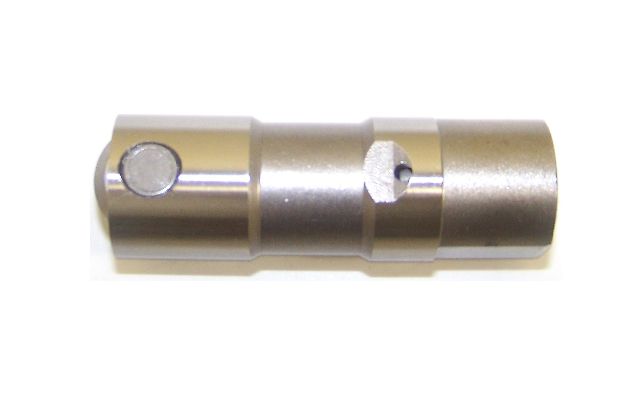
Aftermarket price range: $30-$60 - Engine Valve Lifter Oil Manifold Filter (Sensor Screen)
(OEM #12585328 (or 12639759 for some models))— This screen is the #1 cause of repeat failures. It gets clogged with sludge, blocking oil from reaching the sensor. It MUST be replaced with the sensor.
Trusted brands: ACDelco
OEM price range: $5-$15
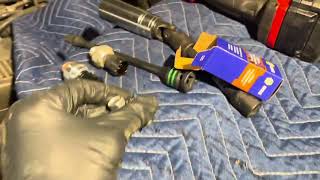
Aftermarket price range: $3-$10 - Oil Pressure Switch Socket — A special deep socket, typically 1-1/16" (27mm), is required to access and remove the sensor due to its shape and difficult location. A standard socket will not work. 🎬 Watch this repair walkthrough for a Chevrolet Express with no oil pressure.
Trusted brands: Lisle, OEMTOOLS
OEM price range: $10-$20
Related Codes That Often Appear With This One
- P0522 — This code indicates 'Engine Oil Pressure Sensor/Switch Low Voltage.' It can appear with P0521 if the sensor fails in a way that causes the signal to drop to zero.
- P0523 — This code indicates 'Engine Oil Pressure Sensor/Switch High Voltage.' It can appear with P0521 if the sensor is failing and sending erratic signals that go both out of range and too high, often causing the gauge to max out at 80+ PSI.
Technical Service Bulletins (TSBs) & Recalls
- PIP4786C: Instructs technicians to inspect the Valve Lifter Oil Filter (screen) for sludge if scan tool pressure is low but mechanical pressure is good.
- 20-NA-161: A critical bulletin for later models that links P0521 to a sticking oil pressure relief valve in the oil pump, and in worst-case scenarios, a damaged #1 main bearing requiring significant engine repair or replacement.
- PIP5276E / PIP5276G: Warns that P0521 can appear after an oil change and recommends using a specific ACDelco PF48E filter to resolve the issue.
- 10-06-01-008H: Discusses excessive oil consumption on Active Fuel Management (AFM) engines, a root cause of the sludge that clogs the sensor screen and triggers P0521.
Platform-Specific Known Issues
- The location of the sensor on the Savana van makes this repair significantly more difficult than on a Silverado or Tahoe with the same engine, due to the tighter clearance between the back of the engine and the firewall/doghouse.
- Many owners and technicians find they must physically climb partially into the engine bay to get the correct angle and leverage to remove the sensor.
Mechanic-Grade Diagnostic Values
- Engine Oil Pressure Sensor 5V Reference Wire Voltage — expected: Approximately 5.0 volts with key on, engine off.. Failure: Voltage significantly lower than 5.0V or 0V indicates a wiring issue or a problem with the ECM's 5V reference circuit. A reading over 5.5V can also indicate a fault.
- Engine Oil Pressure Sensor Signal Wire Voltage — expected: Approximately 0.5V with the engine stationary. Voltage should vary directly with engine oil pressure when running.. Failure: Voltage that is stuck high, low, or does not change with engine RPM (when mechanical pressure is known to be good) indicates a faulty sensor or wiring issue.
- Engine Oil Pressure Sensor Ground Wire — expected: Should have continuity to a known good ground on the engine block or chassis.. Failure: High resistance or an open circuit on the ground wire will cause incorrect sensor readings.
Wiring & Ground Locations
- Oil Pressure Sensor Connector — Top rear of the engine block, near the firewall, often partially obscured by the intake manifold.. This 3-pin connector and its pigtail are in a high-heat area and are prone to becoming brittle, oil-soaked (from a leaking sensor), or damaged, causing signal faults. The typical wire colors are: Gray (5V Reference), Tan/White (Signal), and Black (Sensor Ground).
- G102 — Located at the left rear of the engine block.. This is a primary ground point for the ignition coils. While not directly for the oil pressure sensor, a poor ground here can cause electrical noise and potential ECM issues that could manifest in various ways.
- G103 / G101 — Located on the front of the passenger side cylinder head (G103) or the front lower driver's side of the block (G101).. G101 is a primary ground for the Engine Control Module (ECM). A poor connection here can cause a wide range of sensor-related trouble codes, including P0521, due to improper ECM grounding.
- G104 — Located at the left rear corner of the engine, where a ground strap connects the cylinder head to the firewall.. This is a critical engine-to-chassis ground. A loose or corroded connection here can cause a variety of electrical issues as the engine block itself is not properly grounded to the rest of the vehicle.
Real Owner Repair Stories
- Reddit user in r/ChevyTrucks (Chevrolet Truck with persistent P0521) — Check Engine Light with code P0521 returning after sensor replacement.
❌ Tried (didn't work) Replacing the oil pressure sensor., Removing the filter screen entirely.
✅ What actually fixed it The issue was finally resolved by switching to a specific high-quality oil filter, the Mobil 1 M1-113A. Another user in the same thread confirmed this fix worked for them as well. - Forum user (GM Truck with V8) — P0521 code was still active after replacing the sensor.
❌ Tried (didn't work) Replacing the sensor with a part from a local auto parts store.
✅ What actually fixed it Replacing the aftermarket sensor with a genuine OEM sensor fixed the problem, suggesting the aftermarket part was faulty out of the box.
OEM Part Supersession History
12596951, 12621234→12673134— Standard part evolution for improved reliability or manufacturing changes.
Heads up: The connectors may differ on very early models vs. later models. The 12673134 is sometimes referred to as the 'large plug' style. Always verify the connector shape before purchasing a replacement.
Model Year Variations Within This Range
- 2007-2012 (GMT900 platform years): Models equipped with Active Fuel Management (AFM) are more susceptible to oil consumption and sludge buildup, which directly contributes to the clogging of the oil pressure sensor screen. GM TSB 10-06-01-008H addresses this oil consumption issue which is a root cause for the debris that fouls the screen.
Helpful Videos
We Have This Part in Stock


The information in this article is provided for general reference and educational purposes only. Vehicle specifications, procedures, and part compatibility can vary by production date, trim level, and region. Always consult your vehicle's factory service manual and verify part numbers before purchasing or performing repairs. Safety-critical components such as airbags, seat belts, and braking systems should be installed by a qualified professional.
- Gmc SAVANA 1500:
- 🧭 Diagnostic Flowchart
- 🎬 Helpful Videos
- 🛍️ Shop This Part
- What's Unique About the 2005-2012 Gmc SAVANA 1500
- Symptoms You May Notice
- Most Likely Causes
- Rare But Worth Checking
- Diagnosis Steps
- Parts You'll Likely Need
- Related Codes That Often Appear With This One
- Technical Service Bulletins (TSBs) & Recalls
- Platform-Specific Known Issues
- Mechanic-Grade Diagnostic Values
- Wiring & Ground Locations
- Real Owner Repair Stories
- OEM Part Supersession History
- Model Year Variations Within This Range
- 🎟️ Get 5% Off