

P0521 on 2015-2019 GMC Savana: Oil Pressure Sensor vs. Serious Engine Issues
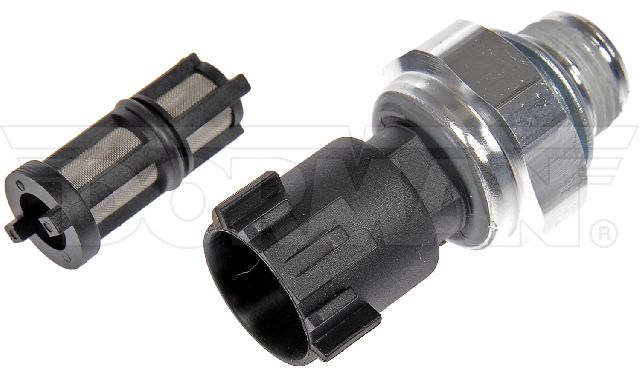
Code P0521 on a 2015-2019 Savana indicates a problem with the oil pressure reading. It could be a simple fix like a faulty oil pressure sensor (ACDelco #12673134) and its filter screen (ACDelco #12585328) (~$45-$105 for parts), or it could signal a critical internal engine problem like a sticking oil pump or failed main bearings, which requires immediate professional diagnosis.
- P0521 on a 2015-2019 Savana is a critical code that should be addressed immediately.
- You MUST verify the engine's actual oil pressure with a mechanical gauge to distinguish between a faulty sensor and a true low-pressure condition that can destroy the engine.
- The most common fix is replacing both the oil pressure sensor and the small filter screen located underneath it.
- Always use the manufacturer-specified Dexos-approved full synthetic oil and a quality filter to prevent sludge and pressure issues.
- Be aware of GM Technical Service Bulletins that point to more severe mechanical failures like a bad oil pump or damaged main bearings as potential causes.
What's Unique About the 2015-2019 Gmc SAVANA
On these GM V8 engines (like the 6.0L L96), P0521 is a notoriously common code 🎬 Watch: Understanding the P0521 code on GM V8 engines with a wide range of possibilities. While often caused by a simple, failure-prone oil pressure sensor and its easily-clogged filter screen, there are more sinister possibilities. Manufacturer technical service bulletins (TSBs) for this platform specifically warn that this code can be the first sign of severe mechanical failure, including a sticking oil pump relief valve or, in worst-case scenarios, a damaged #1 main bearing. This makes it critical to differentiate between a sensor fault and a true low-pressure condition.
Diagnostic Flowchart
Tap your situation to follow the diagnostic path that matches what you're seeing on this vehicle.
Symptoms You May Notice
- Check Engine Light is on
- Low oil pressure warning light or message on the instrument panel
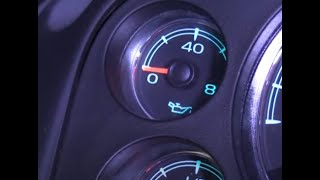
- Oil pressure gauge reading erratically, dropping to zero, or stuck at maximum.
- Engine making ticking, clattering, or knocking noises.
- Engine may stall
- Replacing the oil pressure sensor without replacing the clogged filter screen underneath it, leading to the code returning.
- Replacing the oil pressure sensor with a cheap aftermarket part that fails again in a short period.
- Assuming the sensor is bad when the actual problem is a mechanical issue causing low oil pressure (e.g., a failing oil pump, worn bearings, or restricted oil filter).
Most Likely Causes
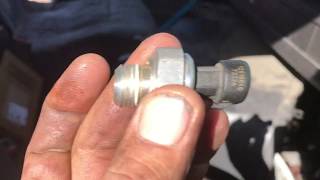
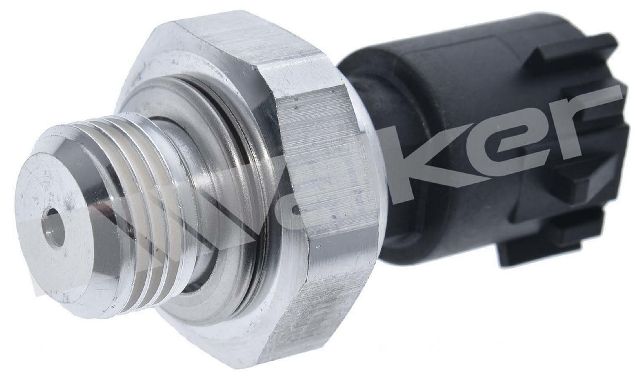
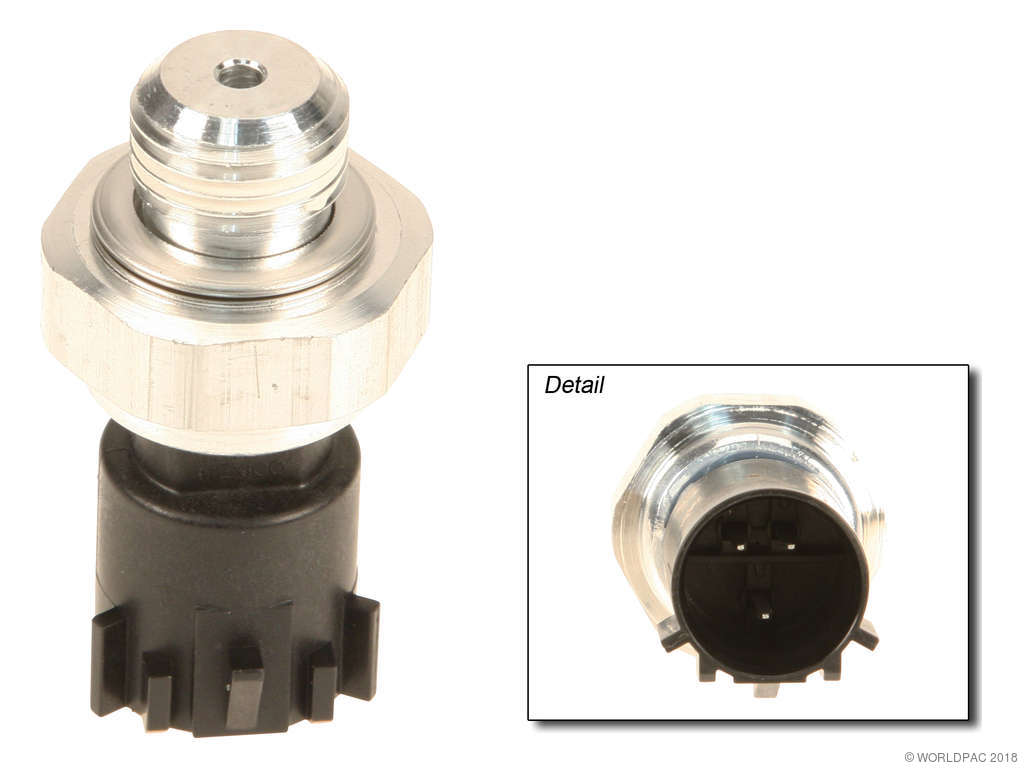
- Faulty Engine Oil Pressure Sensor (Sending Unit) 🔴 High Probability The sensor is a known high-failure item on many GM V8 engines. It can fail internally, causing erratic or incorrect readings. Some owners on forums strongly recommend using an OEM ACDelco part, as aftermarket sensors have been reported to fail quickly.
How to confirm: After verifying actual oil pressure with a mechanical gauge, if the gauge shows good pressure but the scan tool shows erratic readings from the sensor, the sensor is faulty. A rattling sound when the old sensor is shaken also indicates internal failure.
Typical fix: Replace the oil pressure sensor. It is located at the back of the engine, behind the intake manifold, making access difficult. A special 1-1/16 inch (or 27mm) deep socket, often with a swivel, is required.
Est. part cost: $40-$90 - Clogged Oil Pressure Sensor Filter Screen 🔴 High Probability → Shop Engine Oil Pressure Sensor A small, thimble-sized filter screen is located in the oil passage directly beneath the sensor. It is notorious for getting clogged with sludge and debris, which restricts oil flow to the sensor and causes an incorrect, low reading.
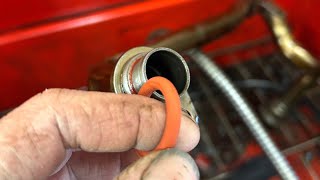
How to confirm: This is typically found during the replacement of the sensor. The screen will be visibly clogged with dark debris. It can be difficult to remove from its bore without damaging it.
Typical fix: Remove and replace the filter screen. This should always be done when replacing the oil pressure sensor to prevent the code from returning.
Est. part cost: $5-$15 - Low Engine Oil Level or Incorrect Oil/Filter 🟡 Medium Probability → Shop Engine Oil Filter Adapter These engines can consume oil, and using oil that is not the manufacturer-recommended viscosity (specifically a full synthetic Dexos-approved oil) can cause pressure issues. Using a non-OEM or incorrect specification oil filter can also cause a pressure drop across the filter media, triggering a P0521.
How to confirm: Check the oil level on the dipstick. Verify the oil type and oil filter part number used during the last oil change.
Typical fix: Top off or change the oil and filter using the correct specification oil and an ACDelco filter (e.g., PF48E).
Est. part cost: $50-$100 - Sticking Oil Pump Relief Valve ⚪ Low Probability → Shop Engine Oil Pump GM Technical Service Bulletins #PIP5630D and #20-NA-161 specifically identify a sticking relief valve in the oil pump as a cause for P0521 on these vehicles, leading to a true low oil pressure condition. The valve is internal to the oil pump assembly.
How to confirm: This requires internal engine diagnosis. If a mechanical gauge confirms low oil pressure and other causes are ruled out, the oil pump must be inspected.
Typical fix: Replace the engine oil pump assembly. This is a labor-intensive repair requiring removal of the oil pan.
Est. part cost: $150-$300
Rare But Worth Checking
- Damaged #1 Main Bearing: This is a catastrophic failure mentioned in TSB #PIP5630D and #20-NA-161. If a mechanical gauge confirms very low oil pressure, the TSB directs technicians to drop the oil pan and inspect the #1 main bearing for damage or spinning. This repair could involve replacing the crankshaft and bearings or the entire engine.
- Damaged Wiring or Connector: The wiring to the sensor is in a high-heat area at the back of the engine and can become brittle or damaged, causing a poor connection and faulty signal. A visual inspection and testing continuity of the harness is a key diagnostic step.
- Leaking Oil Cooler Lines/Gasket: → Shop Engine Oil Cooler A leak at the oil cooler block-off plate where the lines enter the oil pan can introduce air into the system, which may cause skewed pressure readings at the sensor and trigger a P0521 code.
Diagnosis Steps
- Check the engine oil level and condition. Top off or change if necessary, ensuring the correct Dexos-approved oil viscosity and an ACDelco oil filter are used.
- Connect a scan tool to read the DTC and observe the oil pressure reading from the ECM. Note if it is erratic, stuck high, or stuck low.
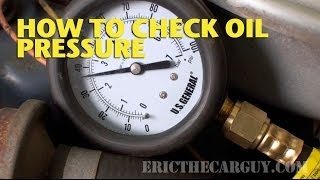
- CRITICAL: Connect a mechanical oil pressure gauge to the engine. This is the only way to verify the true oil pressure.
- Start the engine and let it reach operating temperature. Compare the mechanical gauge reading to the scan tool data. For the 6.0L V8 (L96), minimum oil pressure should be ~24 PSI @ 1000 RPM and increase with engine speed.
- If mechanical pressure is good but the scan tool reading is bad, the problem is in the sensor circuit. Inspect the sensor's wiring and connector for damage. If the wiring is good, replace the oil pressure sensor and the filter screen below it.
- If mechanical pressure is low, this indicates a serious mechanical issue. Do not run the engine. Proceed with internal diagnosis as outlined in GM TSBs, which includes inspecting the oil pump relief valve and main bearings.
Parts You'll Likely Need
- Engine Oil Pressure Sensor
(OEM #12673134)— This is the most common failure point for code P0521 on these engines, often failing internally and providing incorrect readings. This part number supersedes older versions like 12621234 and 12596951.
Trusted brands: ACDelco (GM Genuine), Dorman, Standard Motor Products
OEM price range: $50-$75
Aftermarket price range: $35-$60 - Valve Lifter Oil Filter Screen
(OEM #12585328)— This small screen, located under the pressure sensor, frequently clogs with sludge, blocking oil from reaching the sensor and causing a false P0521 code. It is critical to replace this part along with the sensor.
Trusted brands: ACDelco, Dorman
OEM price range: $5-$15
Aftermarket price range: $5-$10
Related Codes That Often Appear With This One
- P0523 — This code indicates 'Engine Oil Pressure Sensor/Switch High Voltage.' It often appears with P0521 when the sensor fails and sends erratic signals, sometimes shorting internally and reading maximum pressure (80+ PSI) before failing completely.
Technical Service Bulletins (TSBs) & Recalls
- PIP5630D: A vehicle may have a concern of no oil pressure and/or P0521 set. the releif valve in the pump is sticking or the number 1 main bearing is damaged.
- PIP4786C: ...VEHICLES THAT MAY HAVE LOW OIL PRESSURE MESSAGE. TECHNICIAN MAY ALSO FIND A DIAGNOSTIC TROUBLE CODE P0521 IN THE ENGINE CONTROL MODULE.
- 20-NA-161: Information on Engine Low Oil Pressure Indicator on the Driver Information Center (DIC) - DTC P0521 Set.
Platform-Specific Known Issues
- TSB #PIP5630D: Warns that for a P0521 code, technicians may need to drop the oil pan to confirm if the #1 main bearing is spun or damaged, or if the oil pump relief valve is sticking.
- TSB #20-NA-161: Details that a P0521 code may be caused by a sticking oil pressure relief valve within the oil pump assembly and provides a diagnostic flow, including performing a mechanical oil pressure test and inspecting the #1 main bearing if pressure is low.
- TSB #PIP4786C: Notes that vehicles may present with a low oil pressure message and a P0521 code, instructing technicians to follow published service information for diagnosis.
Mechanic-Grade Diagnostic Values
- Minimum Engine Oil Pressure (Mechanical Gauge, Engine Warm) — expected: ~24 PSI @ 1000 RPM, increasing with engine speed. A common rule of thumb is 10 PSI per 1000 RPM.. Failure: Pressure significantly below these values indicates a mechanical lubrication system failure (e.g., oil pump, bearings, pickup tube o-ring).
- Oil Pressure Sensor 5V Reference Circuit — expected: 5 Volts with key on, engine off, when measured between the reference wire (often gray) and battery ground.. Failure: Voltage outside this range suggests a wiring issue or a fault in the ECM.
- Oil Pressure Sensor Low Reference (Ground) Circuit Resistance — expected: Less than 10 Ω when measured between the sensor connector's ground pin (often black) and a known good chassis ground.. Failure: Resistance greater than 10 Ω indicates an open or high resistance in the ground circuit, which will cause incorrect sensor readings.
- ECM Pressure Comparison Threshold — expected: The ECM expects the actual oil pressure to be within a predicted range.. Failure: The P0521 code is set when the ECM sees a difference between predicted and actual oil pressure that is less than 6.8 PSI or greater than 7.3 PSI for a few seconds.
Scan Tool Commands That Help
- GDS2 / Professional Scan Tool: Engine Speed Control — While a mechanical pressure gauge is connected, use the scan tool's bidirectional control to raise the engine RPM to specific levels (e.g., 1000, 2000, 3000 RPM) and hold it steady. This allows for precise comparison of the mechanical gauge reading to the minimum pressure specification at each RPM, confirming the health of the mechanical lubrication system without needing a second person to hold the accelerator.
Wiring & Ground Locations
- Oil Pressure Sensor Connector — Top rear of the engine block, behind the intake manifold. It is a 3-wire connector.. This connector and its wiring are in a high-heat area, making them prone to becoming brittle and failing. A poor connection here will directly cause P0521. The pins are typically: 5V Reference, Signal, and Low Reference (Ground).
- ECM Connector (Signal Wire) — The signal wire from the oil pressure sensor runs to Pin 50 of either the black or gray ECM connector.. When diagnosing a sensor that has good power and ground, a continuity test from the sensor connector's signal pin to Pin 50 of the ECM connector can rule out a break in the wiring harness.
- G103 — A primary engine ground located on the front of the passenger-side cylinder head.. The ECM and its sensors rely on solid engine grounding. A loose or corroded G103 can cause floating grounds and erratic voltage readings for multiple engine sensors, including the oil pressure sensor.
- G102 / G105 — Engine block grounds, typically on the driver's side of the block (G102) or lower front of the engine (G105).. These serve as main grounding points for the engine block itself. The oil pressure sensor's ground circuit ultimately relies on the engine block having a clean path to the battery negative. A fault here can cause widespread electrical issues.
Real Owner Repair Stories
- Reddit user Anthony3114 in r/ChevyTrucks (2007 Chevy 2500HD 6.0L) — Low oil pressure readings of 22 PSI at idle and 28 PSI while driving.
✅ What actually fixed it Replacing the oil pickup tube O-ring. After the fix, pressure increased to 26 PSI at idle and 37 PSI while driving. - YouTube user comment on video by Maker Max Corbett (Chevy/GMC Truck 2007-2013) — Recurring P0521 code even after replacing the oil pressure sensor twice in two years.
❌ Tried (didn't work) Replacing the oil pressure sensor multiple times.
✅ What actually fixed it The user found information on a Chevy forum indicating the wrong type of oil filter can cause the code. The fix was to switch to either the updated ACDelco UPF48R filter or the equivalent Mobil 1 M1-113 filter, which resolved the recurring issue. - YouTube video by user "Savana GMC" (2008 GMC Savana 2500 6.0L) — Erratic oil pressure gauge dropping to zero then jumping to 80 PSI, with codes P0521 and P0523.
✅ What actually fixed it Replacing the oil pressure sensor. The old sensor was confirmed to be internally failed as it rattled when shaken.
"I Checked Everything" — The Actual Cause
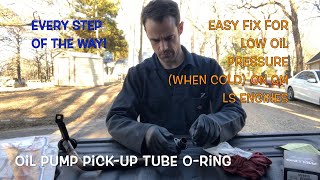
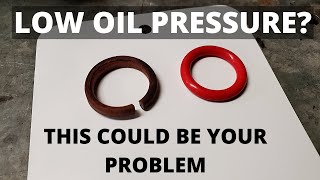
- A common scenario for P0521 is replacing the obvious parts (sensor and screen) only for the code to persist or for a mechanical gauge to still show low pressure. In these cases, where there are no external leaks, the actual cause is often a hardened and flattened oil pickup tube O-ring inside the oil pan. This allows the oil pump to suck in air, causing aeration of the oil and a loss of stable pressure, a fault that standard diagnostic procedures for the sensor circuit will miss.
When the Usual Fixes Don't Work
- While the most common fix for P0521 is replacing the oil pressure sensor and the screen beneath it, a significant number of owners report that this does not solve the problem. In these cases, the next most likely culprits are not electronic. A recurring P0521 after a sensor replacement often points to using the wrong type of oil filter; these engines are sensitive to filter bypass valve specs, and using a non-ACDelco filter is a known cause of the code returning. If the oil filter is correct and a mechanical gauge confirms true low pressure, the problem is almost certainly a hardened oil pickup tube O-ring inside the oil pan, which is a very common failure on high-mileage GM V8s.
OEM Part Supersession History
12596951, 12621234→12673134— GM often updates electronic components to improve durability, accuracy, or to address known failure patterns. The multiple supersessions suggest an evolution in the sensor's design.
Heads up: While physically compatible, many owners and technicians strongly advise against using non-ACDelco (OEM) sensors, as they are widely reported to have a high premature failure rate, causing the code to return.
Model Year Variations Within This Range
- 2015-2019: The 6.0L L96 V8 in this range is equipped with Variable Valve Timing (VVT). VVT systems require a high-volume oil pump to supply the necessary flow to operate the cam phasers. These engines may also have an oil pressure relief valve in the oil pan to bleed off excess pressure when VVT is not active. This adds complexity to the oil pressure system compared to non-VVT engines and can introduce unique failure points, like issues with the relief valve, that contribute to P0521.
Helpful Videos


We Have This Part in Stock


The information in this article is provided for general reference and educational purposes only. Vehicle specifications, procedures, and part compatibility can vary by production date, trim level, and region. Always consult your vehicle's factory service manual and verify part numbers before purchasing or performing repairs. Safety-critical components such as airbags, seat belts, and braking systems should be installed by a qualified professional.
- Gmc SAVANA:
- 🧭 Diagnostic Flowchart
- 🎬 Helpful Videos
- 🛍️ Shop This Part
- What's Unique About the 2015-2019 Gmc SAVANA
- Symptoms You May Notice
- Most Likely Causes
- Rare But Worth Checking
- Diagnosis Steps
- Parts You'll Likely Need
- Related Codes That Often Appear With This One
- Technical Service Bulletins (TSBs) & Recalls
- Platform-Specific Known Issues
- Mechanic-Grade Diagnostic Values
- Scan Tool Commands That Help
- Wiring & Ground Locations
- Real Owner Repair Stories
- "I Checked Everything" — The Actual Cause
- When the Usual Fixes Don't Work
- OEM Part Supersession History
- Model Year Variations Within This Range
- 🎟️ Get 5% Off