

P0521 on 2005-2012 GMC Savana 2500: Oil Pressure Sensor Causes and Fixes
For the 2005-2012 GMC Savana 2500, code P0521 is most often caused by a faulty engine oil pressure sensor or its small, clogged filter screen. Both parts are located at the back of the engine and should be replaced together. Expect parts to cost between $40 and $80 for a DIY repair. Using the correct OEM-spec oil and filter is also critical.
- Do not drive your vehicle with an active P0521 code until you have verified the actual oil pressure with a mechanical gauge.
- The most common fix is to replace both the oil pressure sensor and the small filter screen located underneath it.
- Always use the manufacturer-specified 5W-30 Dexos synthetic oil and a quality oil filter (like the ACDelco PF48E) to prevent sludge buildup.
- Be prepared for a difficult repair due to the sensor's location at the back of the engine, requiring removal of the interior engine cover.
What's Unique About the 2005-2012 Gmc SAVANA 2500
On these GMC Savana vans, particularly with the V8 gas engines (4.8L, 6.0L), the P0521 code is a very common issue. The primary culprits are the oil pressure sensor itself and a small, thimble-sized filter screen located in the engine block directly beneath it. This screen, officially called the Valve Lifter Oil Filter, is notorious for getting clogged with engine sludge or debris, which restricts oil flow to the sensor and causes false or erratic readings. TSB PIP4786C specifically calls out inspecting this filter for debris as a key diagnostic step. Due to the sensor's difficult-to-reach location at the top rear of the engine block against the firewall, it's a labor-intensive job, but a frequent and well-documented repair for this platform and its platform mates like the Chevrolet Express and Silverado.
Diagnostic Flowchart
Tap your situation to follow the diagnostic path that matches what you're seeing on this vehicle.
Symptoms You May Notice
- Check Engine Light is on
- Low oil pressure warning light or message on the dashboard.
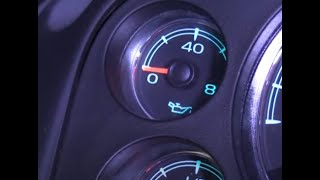
- Oil pressure gauge reading is erratic, jumping from 0 to 80 PSI, or stuck at an incorrect value.
- Engine making unusual noises like ticking or knocking (in cases of actual low oil pressure).
- Engine may enter reduced power mode.
- Replacing the oil pump before verifying the actual oil pressure with a mechanical gauge.
- Replacing only the oil pressure sensor without also replacing the small filter screen underneath it, leading to the code returning.
- Assuming a major engine problem when the cause is an incorrect or poor-quality oil filter.
Most Likely Causes
- Clogged Oil Pressure Sensor Filter Screen 🔴 High Probability → Shop Engine Oil Pressure Sensor This small filter screen (GM Part #12585328), also called a Valve Lifter Oil Filter, is known to get clogged with sludge and debris, especially on higher-mileage engines or those with infrequent oil changes or Active Fuel Management (AFM) oil consumption issues. This blockage prevents the sensor from getting an accurate pressure reading. TSB PIP4786C directly identifies this 🎬 Watch: How to diagnose and fix the P0521 error code. as a primary cause.
How to confirm: The screen is located in the port underneath the oil pressure sensor. It can only be inspected and confirmed as clogged after the sensor is removed. It is often destroyed during removal.
Typical fix: Replace the filter screen when replacing the oil pressure sensor. The old screen can be extracted with a pick, or by threading a coarse-thread bolt (like a 5/16") into it and pulling it out. It is a small, inexpensive part that should always be replaced as part of the job.
Est. part cost: $5-$15 - Faulty Engine Oil Pressure Sensor (Sender) 🔴 High Probability The sensor itself is a common failure item due to heat and vibration. It can fail internally, leading to incorrect signals, or leak oil through its electrical connector, which is a sure sign of failure. A failed sensor may also rattle when shaken, indicating it is broken internally.
How to confirm: After verifying the actual engine oil pressure with a mechanical gauge, if the mechanical pressure is good but the scan tool reading is incorrect, the sensor is faulty. Visually inspecting the connector for oil contamination is another key indicator. A failed sensor may also rattle when shaken.
Typical fix: Replace the engine oil pressure sensor. This is often done at the same time as replacing the filter screen. Using a genuine ACDelco part is highly recommended, as some owners report aftermarket sensors being faulty out of the box.
Est. part cost: $35-$65 - Incorrect Oil Viscosity or Wrong Oil Filter 🟡 Medium Probability → Shop Engine Oil Filter Adapter These engines, particularly those with Active Fuel Management (AFM), are sensitive to the type and condition of the oil. Using oil other than the recommended 5W-30 full synthetic Dexos-approved oil can trigger this code. Furthermore, GM TSBs (like PIP5276E) specifically link P0521 to using incorrect or certain 'E-core' (PF48E) oil filters, especially in cold weather.
How to confirm: Check the oil level on the dipstick and review service records to confirm the correct oil viscosity and a quality filter were used. Some owners have fixed persistent P0521 codes simply by switching to a different high-quality filter like a Mobil 1 M1-113A or ACDelco UPF48R.
Typical fix: Perform an oil and filter change using the manufacturer-specified oil (e.g., ACDelco PF48 filter and 5W-30 Dexos oil) and ensure the oil is filled to the correct level.
Est. part cost: $40-$80 - Damaged Wiring or Connector ⚪ Low Probability
How to confirm: Visually inspect the wiring harness and connector going to the oil pressure sensor for any signs of damage, corrosion, brittleness, or loose connections. The connector's locking tab is known to break from heat.
Typical fix: Repair or replace the damaged section of the wiring harness or the connector pigtail. Check for 5V reference and good ground at the connector.
Est. part cost: $15-$50
Rare But Worth Checking
- Failing Oil Pump or Sticking Relief Valve: → Shop Engine Oil Pump If a mechanical gauge confirms that the engine has genuinely low oil pressure across all RPMs, the oil pump may be worn or its pressure relief valve may be sticking. TSB 20-NA-161 discusses this possibility, especially at hot idle. This is a much more serious and labor-intensive repair requiring oil pan removal.
- Worn Internal Engine Components: On very high-mileage engines, excessive clearance in main or camshaft bearings can lead to a true loss of oil pressure, which would be confirmed by a mechanical gauge test. In rare, severe cases, dealers have quoted engine replacement for this issue.
Diagnosis Steps
- Check the engine oil level and condition. If low, top it off. If dirty or incorrect, perform an oil and filter change using OEM-spec products.
- Connect an OBD-II scanner to read the live data from the oil pressure sensor. Note the pressure reading at idle and with the engine revved.
- CRITICAL STEP: Connect a mechanical oil pressure gauge to the engine. Compare the mechanical gauge's reading to the reading from the scan tool. Healthy pressure is typically >12 PSI at 1,200 RPM when warm, with hot idle around 20+ PSI.
- If the mechanical pressure is within specification but the scanner reading is incorrect, the problem lies with the sensor or its circuit.
- If the mechanical pressure is low, a more serious internal engine problem exists (e.g., oil pump, worn bearings, sludge). Do not proceed with sensor replacement.
- Assuming mechanical pressure is good, inspect the oil pressure sensor's electrical connector and wiring for damage, oil contamination, or corrosion.
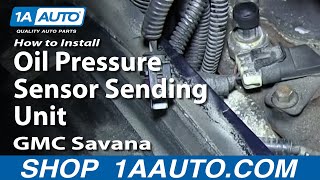
- If wiring is okay, proceed with replacing the oil pressure sensor. The sensor is located at the top rear of the engine, near the firewall. Access requires removing the interior engine cover ('doghouse'). A special deep 1-1/16" (27mm) oil pressure sensor s 🎬 See this clever trick for reaching the sensor more easily.ocket is highly recommended.
- When the sensor is removed, use a pick or a coarse-threaded screw to carefully extract the old filter screen from the port in the engine block.
- Install the new filter screen and the new oil pressure sensor, torquing it to the proper specification (typically around 15 ft-lbs).
- Reconnect the electrical connector, clear the trouble codes, and start the engine to verify the repair and check for leaks.
Parts You'll Likely Need
- Engine Oil Pressure Sensor
(OEM #12673134 (supersedes 12621234, 12596951))— This is the most common part to fail, causing incorrect readings. The OEM part is recommended to prevent recurring issues.
Trusted brands: ACDelco
OEM price range: $50-$65
Aftermarket price range: $30-$50 - Valve Lifter Oil Filter Screen
(OEM #12585328)— This screen is located under the sensor and is notorious for getting clogged with debris, causing the P0521 code. It should always be replaced with the sensor.
Trusted brands: ACDelco
OEM price range: $7-$15
Aftermarket price range: $5-$10
Related Codes That Often Appear With This One
- P0522 — This code for 'Engine Oil Pressure Sensor/Switch Low Voltage' can appear if the sensor fails or has a wiring issue causing the signal to drop out completely.
- P0523 — This code for 'Engine Oil Pressure Sensor/Switch High Voltage' can be set if the sensor fails and sends an erratically high signal, often causing the gauge to read maximum pressure.
Technical Service Bulletins (TSBs) & Recalls
- PIP4786C: Mentions that vehicles may display a low oil pressure message and store a P0521 code. Advises technicians to inspect the Valve Lifter Oil Filter for sludge if scan tool data shows low pressure but a mechanical gauge shows proper pressure.
- SB-10059078-4342 (PIP5276E): Addresses P0521 on various GM V8s, particularly after an oil change. It recommends using a PF48E oil filter and cross-references TSB 10-06-01-008 for oil consumption issues that can lead to sludge.
- 20-NA-161: A more serious bulletin that links P0521 to a sticking oil pressure relief valve in the oil pump or, in worst cases, a damaged #1 crankshaft bearing, requiring an oil pan inspection if low mechanical pressure is confirmed.
Platform-Specific Known Issues
- The location of the sensor at the back of the engine block, tucked under the firewall, makes this repair difficult. Accessing it requires removing the interior engine cover ('doghouse') inside the van. Some owners find removing a plastic cover on the firewall behind the engine improves access significantly.
- GM Technical Service Bulletin #PIP4786C specifically addresses this code, instructing technicians to inspect the Valve Lifter Oil Filter for debris/sludge before replacing any parts if mechanical pressure is confirmed good.
- Another TSB, #PIP5276E (also found as SB-10059078-4342), addresses P0521 setting after an oil change, linking it to the use of PF48E oil filters and referencing oil consumption repairs from TSB 10-06-01-008.
Mechanic-Grade Diagnostic Values
- Mechanical Oil Pressure (Engine Warm) — expected: Minimum 12 PSI @ 1200 RPM. Normal hot idle is ~20 PSI or higher. Highway cruise is ~40-60 PSI.. Failure: Pressure below 12 PSI at 1200 RPM indicates a serious mechanical issue.
- Oil Pressure Sensor 5V Reference Circuit — expected: 4.8V - 5.2V with key on, engine off.. Failure: Voltage below 4.8V can indicate a short to ground or open circuit. Voltage above 5.2V can indicate a short to voltage.
- Oil Pressure Sensor Low Reference Circuit Resistance — expected: Less than 10 Ω to a known good ground.. Failure: Resistance higher than 10 Ω indicates an open or high resistance in the ground circuit for the sensor.
- Oil Pressure Sensor Signal Wire Voltage — expected: Approximately 0.5V with engine off. Voltage should increase with engine RPM, typically operating between 1V and 4V.. Failure: Voltage that is stuck, does not change with RPM, or is outside the expected range when mechanical pressure is good.
Wiring & Ground Locations
- Oil Pressure Sensor Signal Wire — Pin 37 (Purple/White wire) on the C1 (Blue) ECM connector in some model years.. This is the specific wire that carries the pressure signal from the sensor to the ECM. It can be tested here for continuity or voltage to isolate a wiring fault from a sensor fault.
- G103 — On the front of the passenger side (right) cylinder head.. This is a primary engine ground point. A poor connection here can affect the reference voltage and ground for multiple sensors, including the oil pressure sensor, leading to erratic readings.
- G104 — On the rear of the driver's side (left) cylinder head, often connecting a ground strap to the firewall.. This ground is physically very close to the oil pressure sensor. Corrosion or a loose connection at this point is a prime suspect for causing electrical interference or a poor ground path for the sensor circuit.
Real Owner Repair Stories
- Reddit user in r/ChevyTrucks (Chevrolet Silverado with 5.3L V8 (platform mate)) — Persistent P0521 code returning 100-1000 miles after reset.
❌ Tried (didn't work) Replacing the oil pressure sensor., Confirming the filter screen underneath was already removed.
✅ What actually fixed it The issue was resolved by performing an oil change and specifically using a Mobil 1 M1-113A oil filter. The code did not return. - YouTube video by 'Enjoying the Journey' (2008 GMC Savana 2500 with 6.0L V8) — Codes P0521 and P0523, with the oil pressure gauge jumping erratically from 0 to 80 PSI.
✅ What actually fixed it Replacing the oil pressure sensor. The old sensor rattled when shaken, indicating it had failed internally.
"I Checked Everything" — The Actual Cause
- The equivalent scenario for P0521 is when a mechanical gauge confirms good oil pressure and the sensor and screen have been replaced, yet the code persists. In these cases, the root cause is often an overlooked detail. One documented fix was switching from a standard or aftermarket oil filter to a high-quality filter known to work well with these engines, such as the Mobil 1 M1-113A or ACDelco UPF48R. Another common cause is using a cheap aftermarket sensor that is faulty out of the box; switching to an OEM ACDelco part often resolves the issue.
Model Year Variations Within This Range
- Approx. 2007-2012 (for this range): Engines equipped with Active Fuel Management (AFM), particularly the 5.3L and 6.0L V8s, are more susceptible to P0521. TSBs directly link this code to AFM-related oil consumption issues (TSB 10-06-01-008) which can cause sludge to clog the sensor screen. AFM lifter issues can also complicate oil pressure diagnosis.
Helpful Videos

We Have This Part in Stock


The information in this article is provided for general reference and educational purposes only. Vehicle specifications, procedures, and part compatibility can vary by production date, trim level, and region. Always consult your vehicle's factory service manual and verify part numbers before purchasing or performing repairs. Safety-critical components such as airbags, seat belts, and braking systems should be installed by a qualified professional.
- Gmc SAVANA 2500:
- 🧭 Diagnostic Flowchart
- 🎬 Helpful Videos
- 🛍️ Shop This Part
- What's Unique About the 2005-2012 Gmc SAVANA 2500
- Symptoms You May Notice
- Most Likely Causes
- Rare But Worth Checking
- Diagnosis Steps
- Parts You'll Likely Need
- Related Codes That Often Appear With This One
- Technical Service Bulletins (TSBs) & Recalls
- Platform-Specific Known Issues
- Mechanic-Grade Diagnostic Values
- Wiring & Ground Locations
- Real Owner Repair Stories
- "I Checked Everything" — The Actual Cause
- Model Year Variations Within This Range
- 🎟️ Get 5% Off