

P0521 on 2007-2011 GMC Sierra Denali: Oil Pressure Sensor & Filter Guide
Code P0521 on a 2007-2011 GMC Sierra Denali most often points to a faulty oil pressure sensor or a clogged sensor screen located behind the engine. The ECM triggers this code when the actual oil pressure reading differs from the expected pressure by more than ~7 PSI. Replacing the sensor and screen is the most common fix, costing around $40-$80 for parts and 1-2 hours of labor.
- P0521 on your Sierra Denali is most likely caused by a bad oil pressure sensor and/or its clogged filter screen.
- Do not ignore this code. You must determine if it's a faulty sensor or a true low oil pressure condition to avoid engine damage.
- When replacing the sensor, it is critical to also replace the small filter screen underneath it.
- The repair is difficult for a DIYer due to the sensor's location at the back of the engine, but it is possible with the right tools.
- Before performing expensive repairs, try an oil change with the correct viscosity oil and a high-quality ACDelco PF48E filter, as this can sometimes resolve the issue.
What's Unique About the 2007-2011 Gmc SIERRA DENALI
On these GMT900 trucks, particularly those with Active Fuel Management (AFM), the P0521 code is notoriously common. The primary culprits are a uniquely failure-prone oil pressure sensor located in a difficult-to-access spot behind the intake manifold, and a small filter screen underneath it that clogs with sludge. Additionally, GM issued several Technical Service Bulletins (TSBs) regarding the use of specific oil filters (PF48 vs. the newer PF48E) which can also trigger this code, especially in cold weather due to differences in their internal bypass valve design.
Diagnostic Flowchart
Tap your situation to follow the diagnostic path that matches what you're seeing on this vehicle.
Symptoms You May Notice
- Check Engine Light is on
- Low Oil Pressure warning message on the instrument cluster
- Oil pressure gauge reads zero, erratically, or is stuck at maximum (e.g., 80 PSI).
- Engine may run rough or stall in severe cases.
- Audible ticking or clattering from the lifters, especially on a cold start, which may indicate true low pressure.
- Replacing the Engine Control Module (ECM) without confirming the sensor and wiring are good.
- Replacing the oil pump without first verifying actual oil pressure with a mechanical gauge. A healthy 6.2L engine should typically show 25-30 PSI at hot idle and 40-60 PSI at cruising speed.
- Replacing the oil pressure sensor but failing to replace the small, clogged filter screen underneath it, causing the code to return quickly.
Most Likely Causes
- Faulty Engine Oil Pressure Sensor (Sender) 🔴 High Probability The sensor on these V8 engines is a very common failure item, with thousands of confirmed fixes. Its location at the back of the engine exposes it to significant heat, which can cause the internal electronics to fail over time or the sensor body to leak oil into the connector.
How to confirm: With the engine running, observe the oil pressure gauge on the dash. If it's erratic, at zero, or maxed out, but the engine sounds normal (no ticking or knocking), the sensor is the most likely suspect. A scan tool can also monitor the sensor's voltage output; as pressure increases, the sensor's resistance should decrease, causing the signal voltage to increase.
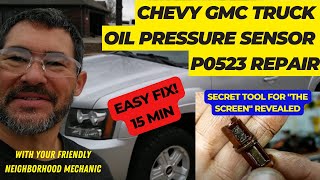
Typical fix: Replace the oil pressure sensor. This is a challenging DIY job due to its location behind the intake manifold, requiring special tools like a 1-1/16" (or 27mm) oil pressure switch socket, a swivel adapter, and extensions. 🎬 Watch: This secret tool makes replacing the sensor much easier.
Est. part cost: $40-$80 - Clogged Oil Pressure Sensor Filter Screen 🔴 High Probability → Shop Engine Oil Pressure Sensor A small, thimble-sized filter screen sits in the oil passage directly below the sensor. It's designed to protect the sensor but often becomes clogged with engine sludge or debris, starving the sensor of pressure and causing a false low reading. This is especially common on engines with AFM due to potential oil consumption issues outlined in TSB 10-06-01-008H.
How to confirm: This can only be confirmed by removing the oil pressure sensor. The screen is often found completely blocked with dark debris. It can be difficult to remove from its bore; technicians often use a pick or thread a coarse bolt into it to pull it out. 🎬 See how to remove the filter screen using a pick or bolt.
Typical fix: Remove the old screen with a pick or bolt and install a new one. This should always be done when replacing the oil pressure sensor; skipping this step is a common reason for the code to return.
Est. part cost: $5-$15 - Incorrect or Defective Oil Filter 🟡 Medium Probability → Shop Engine Oil Filter Adapter GM has specific TSBs (PIP5276B, PIP5276E) for these trucks that link code P0521 to the oil filter, particularly after an oil change. The transition from the metal-core PF48 to the plastic E-core PF48E has been associated with this code. Some TSBs even recommend switching to a UPF48R filter, which has a more robust design, to resolve persistent P0521 issues.
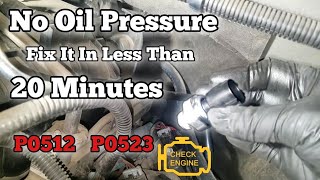
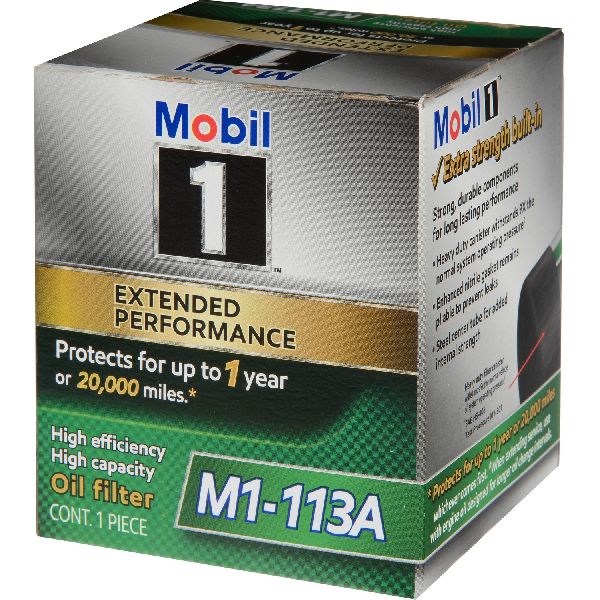
How to confirm: Check the part number on the installed oil filter. If the code appeared after an oil change, this is a strong possibility. 🎬 Watch: How to fix a P0521 code on your Silverado or Sierra. Some owners on forums report that switching from a budget filter to a premium one like a Mobil 1 M1-113A or an AC Delco PF48E resolved the code.
Typical fix: Change the engine oil and replace the filter with a high-quality OEM-spec filter, such as an ACDelco PF48E or UPF48R as specified by the latest TSBs.
Est. part cost: $10-$20 - Low or Incorrect Viscosity Engine Oil ⚪ Low Probability Engines with AFM can be sensitive to oil level and viscosity. Excessive oil consumption, a known issue on some of these engines, can lead to low oil levels that trigger the code.
How to confirm: Check the engine oil level using the dipstick. Verify that the correct oil viscosity (e.g., 5W-30) is being used as per the owner's manual.
Typical fix: Top off or change the engine oil with the manufacturer-recommended grade and quantity.
Est. part cost: $40-$80
Rare But Worth Checking
- Failing Oil Pump or Pick-up Tube O-Ring: → Shop Engine Oil Pump A worn oil pump or a hardened/cracked pick-up tube O-ring can cause genuine low oil pressure, triggering P0521. This is a much more serious mechanical issue characterized by lifter tick and low pressure readings on a mechanical gauge, especially at hot idle. A stuck pressure relief valve inside the oil pump is also a known cause per GM bulletins.
- Wiring Harness Damage: The wiring and connector for the oil pressure sensor can become brittle and damaged from heat or chafing, leading to a bad signal. Inspect the harness for any visible damage. The pigtail connector is available as a separate part (e.g., GM Part #PT121) if the original is broken.
- Stuck AFM/DOD Oil Pressure Relief Valve: On engines equipped with Active Fuel Management (AFM), there is a pressure relief valve located in the oil pan. If this valve becomes stuck open, it can cause a significant drop in overall oil pressure, leading to P0521 and potential engine damage. This is a less common but critical potential cause.
Diagnosis Steps
- Check the engine oil level and condition. Ensure it is full and not overly dirty.
- Verify the correct oil filter is installed. Per TSBs, an incorrect or faulty filter can cause this code.
- Connect a scan tool to monitor the oil pressure reading. Note if the reading is erratic, stuck at zero, or maxed out while the engine is running.
- If the engine is making any ticking, knocking, or grinding noises, shut it off immediately. This could indicate a true low oil pressure condition.
- If the engine sounds healthy but the gauge/scan tool shows an abnormal reading, the sensor is the primary suspect.
- Perform a mechanical oil pressure test. This involves removing the oil pressure sensor and connecting a mechanical gauge to the port. A GM bulletin states that if the pressure is below 20 PSI at hot idle when measured at the sensor port, a stuck oil pump relief valve is likely.
- Compare the mechanical gauge reading to the scan tool reading. If the mechanical gauge shows good pressure (e.g., >25 PSI at hot idle) but the scan tool does not, the sensor, its connector, or the wiring is faulty.
- Inspect the sensor connector for oil saturation (from a leaking sensor) or physical damage to the pins or locking tab.
- If both the mechanical gauge and scan tool show low pressure, you have a serious mechanical issue, likely related to the oil pump, pickup tube O-ring, or an internal pressure relief valve.
- If replacing the sensor, ALWAYS replace the small filter screen located in the port underneath it.
Parts You'll Likely Need
- Engine Oil Pressure Sensor
(OEM #12673134)— This is the most common point of failure for code P0521 on these engines due to heat and electronic failure.
Trusted brands: ACDelco, Dorman
OEM price range: $50-$70
Aftermarket price range: $35-$55 - Engine Oil Pressure Sensor Filter Screen
(OEM #12585328)— This small screen frequently clogs with sludge, blocking oil flow to the sensor and causing a false reading. It should always be replaced with the sensor.
Trusted brands: ACDelco, Dorman
OEM price range: $8-$15
Aftermarket price range: $5-$10 - Engine Oil Filter
(OEM #PF48E)— Multiple TSBs indicate that an incorrect or faulty oil filter can trigger P0521. Using a quality OEM filter is a critical diagnostic step. Some owners and TSBs suggest using a UPF48R for persistent issues.
Trusted brands: ACDelco
OEM price range: $10-$15
Aftermarket price range: $8-$12 - Oil Pressure Sensor Connector Pigtail
(OEM #PT121)— The original connector can become brittle and break during sensor replacement due to heat cycles.
Related Codes That Often Appear With This One
- P0300 (Random Misfire) or other cylinder-specific misfire codes, which can occur if low oil pressure affects lifter function.
Technical Service Bulletins (TSBs) & Recalls
- PIP5276E: Addresses P0521 after an oil change, recommends using a PF48e filter.
- PIP5276B: Links P0521 to cold starts and discusses PF48E vs PF48 filters.
- PIP4786B: General bulletin for low oil pressure messages and P0521.
- PIP5276F: Connects P0521 to specific V8 engine codes and references bulletin 10-06-01-008.
- 10-06-01-008H: Details fixes for oil consumption issues on AFM engines, which is a root cause of sludge that clogs the sensor screen.
Platform-Specific Known Issues
- TSB #PIP5276E / #PIP5276F: These bulletins directly address P0521 appearing after an oil change and recommend inspecting for leaks and using a PF48E type filter. They also reference bulletin 10-06-01-008 for proper engine cleaning procedures.
- TSB #PIP5276B: This bulletin notes P0521 can occur during cold starts (below 0°F) and, interestingly, suggests changing from a PF48E to a PF48 filter if one is available, highlighting known issues with filter bypass valves in extreme cold.
- TSB #10-06-01-008H: This is a major TSB for AFM engines experiencing high oil consumption. It details installing an oil deflector shield in the oil pan and cleaning pistons to reduce consumption. This is relevant to P0521 because high consumption can lead to low oil levels and increased sludge, which clogs the sensor screen.
- Forum Experience - Sensor & Screen Replacement: Numerous owners on forums like TahoeYukonForum.com and in YouTube repair videos confirm that replacing both the sensor and the screen is the definitive fix for a false P0521 code.
- Forum Experience - Oil Filter Choice: Multiple threads on Reddit and CorvetteForum discuss the code appearing with aftermarket or cheap oil filters and disappearing upon switching to an AC Delco PF48E, Mobil 1 M1-113A, or UPF48R filter.
Mechanic-Grade Diagnostic Values
- Scan Tool: Engine Oil Pressure (Engine Running) — expected: 41 - 448 kPa (6 - 65 psi). Failure: Reading is stuck, erratic, or significantly outside this range while the engine sounds normal.
- DTC P0521 Set Condition — expected: Measured pressure should be within a calculated range based on RPM and temperature.. Failure: The ECM detects that the measured oil pressure is at least 6.8 psi (47 kPa) lower or 7.3 psi (50 kPa) higher than the expected oil pressure for more than 4 seconds.
- Mechanical Oil Pressure Gauge at Sensor Port (Hot Idle) — expected: Typically >25 psi. Failure: If the reading is less than 20 psi, a stuck pressure relief valve in the oil pump is suspected.
- Sensor Circuit Test (KOEO, Connector Unplugged) — expected: 4.8V - 5.2V at the 5V reference circuit terminal. Less than 10Ω between the low reference circuit terminal and ground.. Failure: Voltage outside the range indicates a short or open in the 5V reference circuit. High resistance indicates an open/high resistance in the ground circuit.
- Sensor Circuit Test (Jumpered) — expected: > 550 kPa (80 psi) on scan tool. Failure: Install a 3A fused jumper between the signal and 5V reference circuits. A reading less than the specified range indicates a short to ground or open/high resistance in the signal circuit.
Scan Tool Commands That Help
- Tech2 / GDS2 / Professional Scan Tool: View Live Data: Engine Oil Pressure Sensor Parameter — This is the primary method to observe the sensor's reported pressure in real-time to see if it is erratic, stuck, or illogical for the given engine state (e.g., 80 psi at idle).
- Tech2 / GDS2 / Professional Scan Tool: View Freeze Frame / Failure Records — Crucial for determining the conditions when the code was set (engine speed, temp, etc.) and whether the pressure was reported as too high or too low, which can guide diagnosis between a clogged screen (low) or other issues.
Wiring & Ground Locations
- Engine Oil Pressure Sensor Connector — Top rear of the engine block, behind the intake manifold, driver's side.. This 3-wire connector provides the sensor with a 5V reference, a low reference (ground), and sends the signal back to the ECM. The connector itself often becomes brittle and can be damaged during sensor replacement. Oil can also leak through a failed sensor and contaminate the pins.
- G102 / G104 — Rear of the engine block, typically on the cylinder heads (driver's side or passenger's side).. These are primary engine ground points. A poor ground connection at these locations can introduce electrical noise and cause erratic readings from various engine sensors, including the oil pressure sensor.
- G103 — On the cowl, in the left rear of the engine compartment, often above the brake booster.. This is a major ground point for the Body Control Module (BCM), Instrument Panel Cluster (IPC), and the Data Link Connector (DLC). While not a direct engine ground, a fault here can cause communication and display issues related to the oil pressure reading.
Real Owner Repair Stories
- Reddit user in r/ChevyTrucks (Chevy Truck with P0521) — Persistent P0521 code after replacing the oil pressure sensor.
❌ Tried (didn't work) Replacing the oil pressure sensor
✅ What actually fixed it Changing the oil filter to a premium Mobil 1 M1-113A filter resolved the issue. - Reddit user in r/ChevyTrucks (Chevy Truck with P0521) — P0521 code remained active after installing a new sensor.
❌ Tried (didn't work) Replacing the oil pressure sensor with an aftermarket part from a local auto parts store.
✅ What actually fixed it Replacing the aftermarket sensor with a genuine OEM (ACDelco) sensor finally cleared the code. - BobIsTheOilGuy forum member (GM LS4 Engine) — P0521 code after replacing sensor and screen.
❌ Tried (didn't work) Replacing sensor and screen (VLOF).
✅ What actually fixed it The user was advised to check the freeze-frame data, as P0521 can indicate pressure that is too HIGH, not just too low. This can happen if an AFM oil pressure blow-off delete has been performed without changing from the stock high-volume oil pump. The resolution path is to analyze freeze-frame data first.
When the Usual Fixes Don't Work
- In several documented cases, replacing the oil pressure sensor (even multiple times) and the filter screen did not resolve the P0521 code. The final fix was often found to be either using a genuine ACDelco sensor instead of an aftermarket one, or switching to a specific high-quality oil filter like the Mobil 1 M1-113A or the older ACDelco PF48 design. This indicates that the ECM is highly sensitive to the specific electronic characteristics of the sensor and the flow/bypass characteristics of the oil filter, and that aftermarket parts may not meet the required tolerances.
OEM Part Supersession History
ACDelco PF48→ACDelco PF48E— Transition from a metal internal core (PF48) to a plastic 'E-core' design (PF48E).
Heads up: Several TSBs (like PIP5276B and PIP5276E) were issued because the PF48E filter was associated with setting P0521, especially in cold weather. Some bulletins advised switching back to the original PF48 design or upgrading to the more robust UPF48R to resolve persistent issues.12585328→N/A— This part, the oil pressure sensor screen, is also referred to as the 'Engine Valve Lifter Oil Filter'. It has not been superseded but is a critical and often overlooked component.
Model Year Variations Within This Range
- 2007-2011: Engines equipped with Active Fuel Management (AFM) have an additional oil pressure relief valve in the oil pan and are more susceptible to lifter issues and oil consumption that can contribute to P0521. Diagnosing this may require special procedures to isolate the AFM-specific components.
Helpful Videos
We Have This Part in Stock


The information in this article is provided for general reference and educational purposes only. Vehicle specifications, procedures, and part compatibility can vary by production date, trim level, and region. Always consult your vehicle's factory service manual and verify part numbers before purchasing or performing repairs. Safety-critical components such as airbags, seat belts, and braking systems should be installed by a qualified professional.
- Gmc SIERRA DENALI:
- 🧭 Diagnostic Flowchart
- 🎬 Helpful Videos
- 🛍️ Shop This Part
- What's Unique About the 2007-2011 Gmc SIERRA DENALI
- Symptoms You May Notice
- Most Likely Causes
- Rare But Worth Checking
- Diagnosis Steps
- Parts You'll Likely Need
- Related Codes That Often Appear With This One
- Technical Service Bulletins (TSBs) & Recalls
- Platform-Specific Known Issues
- Mechanic-Grade Diagnostic Values
- Scan Tool Commands That Help
- Wiring & Ground Locations
- Real Owner Repair Stories
- When the Usual Fixes Don't Work
- OEM Part Supersession History
- Model Year Variations Within This Range
- 🎟️ Get 5% Off