

P0521 on 2009 Hummer H2: Engine Oil Pressure Sensor Performance Causes and Fixes
On a 2009 Hummer H2, code P0521 is almost always caused by a faulty oil pressure sensor and/or a clogged filter screen located directly beneath it. Replacing both parts is the most common fix, with parts costing between $40 and $90. The repair is known for being difficult due to the sensor's location, but can be done without removing the intake manifold.
- P0521 on your Hummer H2 is most likely a sensor issue, not a sign of imminent engine failure.
- Always replace both the oil pressure sensor and the small filter screen underneath it at the same time to prevent the code from returning.
- Before buying parts, the most important diagnostic step is to confirm the real engine oil pressure with a mechanical gauge.
- The repair is difficult due to the sensor's location. While it is a possible DIY for an experienced person with the right tools (deep socket, swivels), it can be a frustrating job.
What's Unique About the 2009-2009 Hummer H2
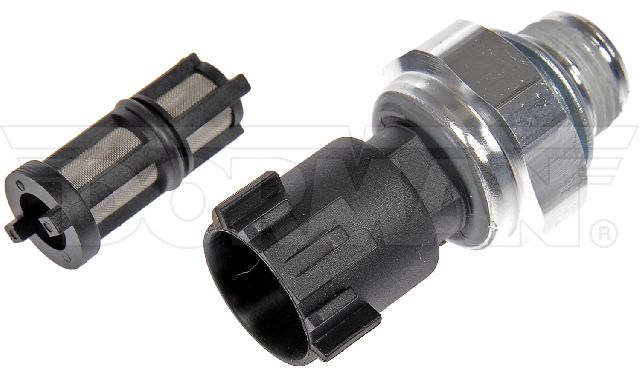
The 6.2L V8 engine in the 2009 Hummer H2, specifically the L9H variant which added Flex Fuel capability, has a design quirk that makes it prone to the P0521 code. A small, thimble-sized filter screen is located in the oil passage directly beneath the pressure sensor. This screen, officially called the Valve Lifter Oil Manifold Filter, is intended to protect the sensor but frequently becomes clogged with engine sludge and debris. This blockage restricts oil flow to the sensor, causing a false reading and triggering the code. As a result, P0521 on this vehicle and its platform mates is very often a sensor or screen issue rather than a major mechanical failure.
Symptoms You May Notice
- Check Engine Light is on
- Oil pressure warning light is on, or a "Low Oil Pressure" message appears on the driver information center
- Oil pressure gauge reads zero, abnormally high (pegged at max), or fluctuates erratically
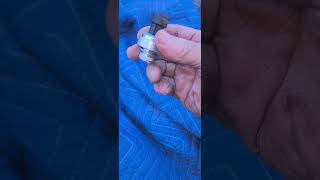
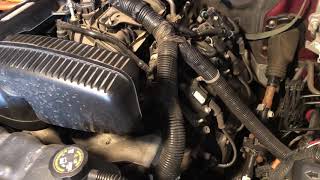
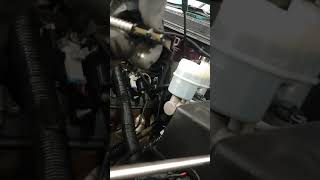
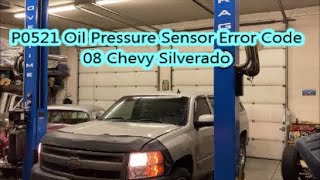
- In some cases, the code may appear with P0523 (Engine Oil Pressure Sensor/Switch High Voltage), further pointing to a sensor circuit fault. 🎬 Watch: Diagnosing the P0521 error code on GM trucks.
- In rare cases of actual low oil pressure, ticking or knocking noises from the engine.
- Replacing only the oil pressure sensor without replacing the clogged filter screen underneath. The new sensor will still read incorrectly, and the code will return.
- Assuming a major engine problem (like a bad oil pump) before verifying the actual oil pressure with a mechanical gauge. The sensor and screen are far more common failure points.
- Replacing the sensor with a cheap aftermarket part. Many owner forums report premature failure of non-OEM sensors, leading to the code returning within months or even days.
Most Likely Causes
- Clogged Oil Pressure Sensor Filter Screen 🔴 High Probability → Shop Engine Oil Pressure Sensor This small screen (GM Part #12585328) is a known weak point in the GM V8 lubrication system. It easily clogs with sludge, starving the sensor of an accurate pressure reading. GM TSB PIP4786B specifically calls for inspecting this 'Valve Lifter Oil Filter' for debris.
How to confirm: The screen is only visible after removing the oil pressure sensor. If it is visibly clogged with dark, sludgy material, it is the likely cause. In many cases, the screen itself is the sole cause of the code.
Typical fix: Remove the old screen using a pick or by carefully threading a small screw (a 5/16" bolt is often cited) into it to pull it 🎬 See how to easily remove the filter screen with a pick. out. Install a new filter screen. This should always be done when replacing the sensor.
Est. part cost: $5-$15 - Faulty Engine Oil Pressure Sensor 🔴 High Probability The sensor is a common high-failure part on this engine family due to its location exposing it to high heat and vibration. It can fail internally, causing erratic readings, or leak oil through the electrical connector, which is a definitive sign of failure.
How to confirm: After verifying true mechanical oil pressure is good, this is the next logical part to replace. If the gauge is stuck at max or zero, or jumps around, the sensor is the prime suspect. A definitive test compares the scan tool reading to a mechanical gauge; if they differ significantly, the sensor is bad.
Typical fix: Replace the engine oil pressure sensor (OEM Part #12673134). Due to its difficult location at the back of the engine, it's highly recommended to replace the filter screen at the same time.
Est. part cost: $35-$75 - Incorrect Oil Viscosity or Oil Filter 🟡 Medium Probability → Shop Engine Oil Filter Adapter GM V8s of this era can be sensitive to oil filter specifications. Using a non-spec aftermarket filter or the wrong oil viscosity can lead to pressure reading issues that trigger P0521, especially after an oil change. TSBs have been issued regarding this sensitivity.
How to confirm: Check service records or inspect the oil filter to see if it's a non-OEM or incorrect model. Verify the engine oil is the correct grade (SAE 5W-30). An ACDelco PF48 or PF48E is the specified filter.
Typical fix: Perform an oil change using the manufacturer-specified oil viscosity and a quality OEM-spec filter, such as one from ACDelco.
Est. part cost: $40-$80 - Damaged Wiring or Connector ⚪ Low Probability
How to confirm: Visually inspect the wiring harness and connector pigtail going to the oil pressure sensor for any signs of heat damage, brittleness, corrosion, or oil contamination from a leaking sensor.
Typical fix: Repair the damaged section of wiring or replace the connector pigtail.
Est. part cost: $15-$30
Rare But Worth Checking
- Stuck Oil Pressure Relief Valve: A known issue documented in GM TSB 24-NA-173. If actual mechanical oil pressure is low at hot idle (below 20 psi when measured at the sensor port), the relief valve inside the oil pump may be stuck. This requires replacing the entire oil pump.
- Worn Internal Engine Components: In high-mileage engines, worn camshaft bearings, main bearings, or a failing oil pump O-ring can cause a genuine low oil pressure condition. This is a worst-case scenario requiring major engine repair. A Reddit user with a 210k-mile 6.2L reported P0521 along with a misfire and confirmed mechanical pressure of only 12 psi, indicating a severe internal issue.
Diagnosis Steps
- Check the engine oil level and condition. Top off or change the oil if it is low, old, or sludgy. Ensure a quality oil filter is installed.
- Scan the ECM for any other stored trouble codes that could be related.
- Observe the oil pressure gauge on the instrument cluster with the engine running. Note if it is stuck at zero, maxed out, or fluctuating erratically.
- Crucial Step: Connect a mechanical oil pressure gauge to the engine to verify the actual oil pressure. The test port is the same one the sensor uses. GM's minimum specification is typically around 20-24 psi at 1000 RPM with the engine at operating temperature.
- If mechanical pressure is within spec, the problem is electrical or a sensor blockage. Proceed to the next step.
- If mechanical pressure is low, the engine has a serious internal problem (e.g., stuck pressure relief valve, worn bearings, bad oil pump) that requires professional diagnosis.
- Inspect the oil pressure sensor's electrical connector and wiring for damage, corrosion, or oil saturation. A connector full of oil indicates a failed sensor.
- If the wiring is okay, remove the oil pressure sensor. This is located at the top rear of the engine block, behind the intake manifold, and is difficult to access. 🎬 Watch: Step-by-step 6.2L oil pressure sensor replacement walkthrough. A special socket (1 1/16" or 27mm), a universal swivel joint, and several extensions are required.
- Once the sensor is removed, inspect the filter screen in the port below it. If it is clogged with debris, it is a primary suspect.
- Use a pick tool or thread a screw into the old screen to extract it from the engine block.
- Replace both the oil pressure sensor and the filter screen. It is highly recommended to use OEM parts to avoid repeat failure.
- Clear the trouble codes and perform a test drive to ensure the gauge reads correctly and the code does not return.
Parts You'll Likely Need
- Engine Oil Pressure Sensor
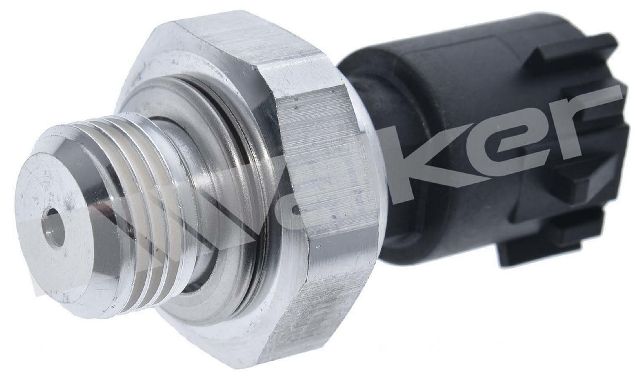
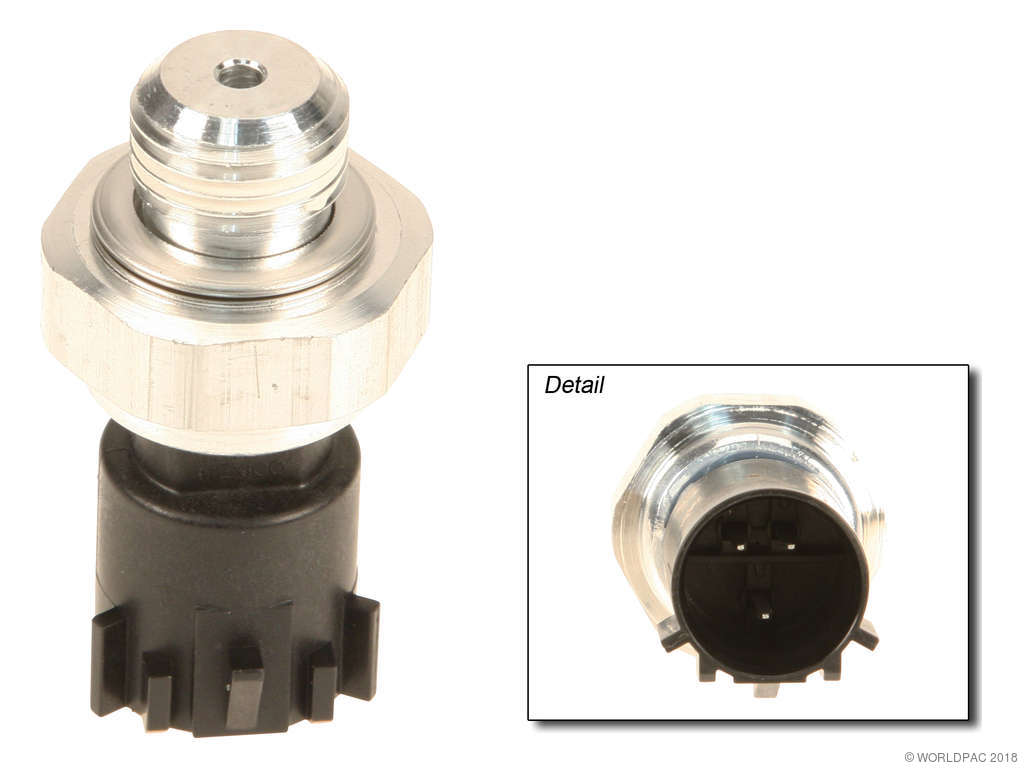
(OEM #12673134 (supersedes 12621234, 12596951))— This is the most common part to fail, causing erratic or incorrect readings that trigger P0521. Using a genuine OEM/ACDelco part is strongly recommended to prevent premature failure.
Trusted brands: ACDelco (OEM), Standard Motor Products (SMP), Delphi
OEM price range: $50-$75
Aftermarket price range: $35-$60 - Engine Oil Pressure Sensor Filter Screen
(OEM #12585328)— This screen is a known failure point that clogs with sludge, blocking oil from reaching the sensor. It is also called the 'Valve Lifter Oil Manifold Filter' and should always be replaced with the sensor.
Trusted brands: ACDelco (OEM), Dorman
OEM price range: $8-$15
Aftermarket price range: $5-$10
Related Codes That Often Appear With This One
- P0523: Engine Oil Pressure Sensor/Switch High Voltage. This code often appears with P0521 and points to the same root cause: a faulty sensor or circuit.
Technical Service Bulletins (TSBs) & Recalls
- PIP4786B: Instructs technicians to inspect the 'Valve Lifter Oil Filter' for debris when diagnosing oil pressure issues.
- Bulletin #PIP4786C: Provides information regarding vehicles that may display a "Low Oil Pressure" message and store code P0521 in the Engine Control Module. It advises technicians to follow published service information and use a scan tool to verify if the oil pressure is indeed low.
- SB-10052311-5425 (PIP4158H): Addresses low oil pressure caused by a sticking oil pump pressure relief valve on various GM V8 engines, including the 6.2L L9H in the 2009-2010 H2.
- 24-NA-173: A recent TSB that also points to a stuck oil pressure relief valve as a cause for P0521, especially if the sensor and ECM have been replaced without fixing the issue. It notes that pressure measured at the filter can be 10 PSI different than at the sensor port.
Platform-Specific Known Issues
- The location of the oil pressure sensor at the back of the engine block, tucked behind the intake manifold, makes replacement very difficult. While the factory service manual may suggest removing the intake manifold, many technicians and DIYers have developed a method to replace it without doing so, saving significant labor time. This 'shortcut' requires a specific set of tools, including a 1 1/16-inch (or 27mm) oil pressure sensor socket, a universal swivel joint, and multiple long extensions to reach the sensor from the top of the engine bay.
Mechanic-Grade Diagnostic Values
- Engine Oil Pressure Sensor Signal Voltage (Key On, Engine Off) — expected: ~0.5V. Failure: Voltage significantly higher or lower, or 0V, indicates a sensor or wiring fault.
- Engine Oil Pressure Sensor Signal Voltage (Engine at Hot Idle) — expected: 1.0V - 2.0V (corresponds to ~20-40 PSI). Failure: Voltage that is stuck, erratic, or does not correspond to pressure readings from a mechanical gauge.
- Engine Oil Pressure Sensor 5V Reference — expected: 5.0V ± 0.5V. Failure: No voltage or low voltage indicates a wiring issue or a problem with the ECM.
- Mechanical Oil Pressure (Hot Idle) — expected: Minimum 20-24 PSI at 1000 RPM. Failure: Pressure below 20 PSI at the sensor port points to a mechanical issue like a stuck relief valve or worn components, not a sensor fault.
Scan Tool Commands That Help
- Tech 2 / GDS2: Graphing Engine Oil Pressure (EOP) Sensor data — Use this to monitor the sensor's voltage or pressure reading in real-time while varying engine RPM. A healthy sensor will show a smooth, corresponding increase and decrease with engine speed. Jumps, dropouts, or a flat line indicate a faulty sensor or circuit.
Wiring & Ground Locations
- G103 — On the front of the right (passenger side) cylinder head.. This is a primary engine ground point. While the sensor has a dedicated low-reference wire back to the ECM, a poor engine block ground can create electrical noise and potential differences that may affect sensor readings.
- G104 — On the rear of the left (driver's side) cylinder head.. This ground is physically closer to the sensor's location at the rear of the engine. A loose or corroded G104 ground strap can cause erratic behavior in various sensors that use the engine block as a ground reference.
- Oil Pressure Sensor Connector — At the sensor, top rear of the engine behind the intake manifold.. The 3-wire connector provides the 5V reference, signal return, and low reference (ground) to the sensor. The pigtail is prone to heat damage, becoming brittle. Oil leaking through a failed sensor can also contaminate the terminals, causing a poor connection. Pin A (Gray wire) is the 5V reference, Pin B (Tan/White wire) is the signal, and Pin C (Black wire) is the low reference.
Real Owner Repair Stories
- Reddit user in r/ChevyTrucks (2010 Chevrolet Silverado 5.3L) — P0521 code returned 100 miles after replacing the oil pressure switch. The filter screen had already been removed by a previous owner.
❌ Tried (didn't work) Replacing the oil pressure sensor with a non-OEM part., Clearing codes with a scan tool.
✅ What actually fixed it The consensus from other users was that the problem was the aftermarket sensor itself. The final fix recommended by multiple users was to replace the sensor again, but this time with a genuine ACDelco OEM part. Another user also fixed their recurring P0521 by switching to a high-quality Mobil 1 (M1-113A) oil filter, suggesting flow characteristics of cheap filters can be a cause.
OEM Part Supersession History
12596951, 12621234→12673134— Improved design for better reliability and to address performance issues of older versions.
Heads up: The connector style for 12673134 (large plug) is specific to 2009-onward models. While it supersedes older numbers, it may not be backward compatible with the harness of much older LS engines without a pigtail adapter. For the 2009 H2, 12673134 is the correct part.
Diagnostic Flowchart
Used vs. New Parts: Buying Guide for This Vehicle
When a used part is the smart pick: For this specific repair, using used parts is NOT recommended. The primary failure components are a low-cost filter screen and a high-failure electronic sensor. The risk of a used sensor failing quickly is very high, and the labor to access it is significant, making a used part a poor economic choice.
What to inspect on the donor part:
- Not applicable. Do not source a used oil pressure sensor or screen.
OEM-only on this vehicle (don't cheap out):
- Engine Oil Pressure Sensor
Aftermarket brands forum-validated for this vehicle:
- Standard Motor Products (SMP)
- Delphi
Brands owners have reported issues with on this vehicle:
- Dorman (for the sensor; the screen is generally okay)
- Unbranded, 'white-box' parts from online marketplaces
Real Owner Stories
Aggregated from forums and TSBs cited above. Mileages and costs reflect what owners reported in those sources.
2010 GMC Yukon Denali 6.2L
Symptoms: Owner experienced P0521 and low oil pressure readings immediately after having engine lifters replaced, suggesting debris was introduced into the oiling system.
What fixed it: Changing the oil pressure sensor did not fix the issue, indicating the problem was more complex and required a full system diagnosis for debris clogging the system.
Source hint: Tahoe Yukon Forum - 'P0521 code fix'
2008 Cadillac Escalade 6.2L L92 — 210000 miles
Symptoms: The vehicle had code P0521 along with engine ticking noises. A shop confirmed the issue was severe, with actual mechanical oil pressure measuring a dangerously low 12 psi.
What fixed it: The diagnosis confirmed a severe mechanical problem causing genuine low oil pressure, not a simple sensor fault. The fix would involve major internal engine repair.
Source hint: Reddit (r/MechanicAdvice) - '6.2L L9 Engine help PLEASE'
GM Truck with Gen IV V8
Symptoms: The P0521 code appeared specifically after performing an oil change.
What fixed it: The issue was linked to the use of an incorrect aftermarket oil filter. The fix was to perform another oil change using the correct, manufacturer-specified oil filter (e.g., ACDelco PF48/PF48E).
Source hint: GM-Trucks.com - 'Replace your tiny oil filter...'
Related OBD-II Codes
Frequently Asked Questions
How can I replace the oil pressure sensor on my H2 without removing the entire intake manifold?
I just changed my oil and the P0521 code appeared. What could be the cause?
What is the small filter screen under the oil pressure sensor and do I need to replace it?
My oil pressure gauge is stuck at the maximum reading. Is this a serious problem?
Are there any official GM Technical Service Bulletins (TSBs) for P0521 on this engine?
How can I tell if I have a real low oil pressure problem versus just a bad sensor?
Helpful Videos
We Have This Part in Stock


The information in this article is provided for general reference and educational purposes only. Vehicle specifications, procedures, and part compatibility can vary by production date, trim level, and region. Always consult your vehicle's factory service manual and verify part numbers before purchasing or performing repairs. Safety-critical components such as airbags, seat belts, and braking systems should be installed by a qualified professional.
- Hummer H2:
- 🧭 Diagnostic Flowchart
- 🎬 Helpful Videos
- 🛍️ Shop This Part
- What's Unique About the 2009-2009 Hummer H2
- Symptoms You May Notice
- Most Likely Causes
- Rare But Worth Checking
- Diagnosis Steps
- Parts You'll Likely Need
- Related Codes That Often Appear With This One
- Technical Service Bulletins (TSBs) & Recalls
- Platform-Specific Known Issues
- Mechanic-Grade Diagnostic Values
- Scan Tool Commands That Help
- Wiring & Ground Locations
- Real Owner Repair Stories
- OEM Part Supersession History
- Used vs. New Parts: Buying Guide for This Vehicle
- Real Owner Stories
- 2010 GMC Yukon Denali 6.2L
- 2008 Cadillac Escalade 6.2L L92 — 210000 miles
- GM Truck with Gen IV V8
- Related OBD-II Codes
- Frequently Asked Questions
- 🎟️ Get 5% Off