

P0521 on 2009-2010 Hummer H3: Oil Pressure Sensor Causes and Fixes
For the 3.7L I5, P0521 is almost always a faulty, leaking oil pressure sensor that is easy to replace. For the 5.3L V8, it is often a faulty sensor and a clogged filter screen beneath it, but you must first rule out serious internal engine issues with a mechanical pressure test. Using a non-ACDelco oil filter is also a known cause on the V8.
- For a 2009-2010 Hummer H3, you must first identify your engine: 3.7L I5 or 5.3L V8.
- On the 3.7L, P0521 is very likely a bad sensor that is easy to replace. Check for oil in the connector.
- On the 5.3L, P0521 can be a bad sensor and clogged screen, but you MUST first test the actual oil pressure with a mechanical gauge to rule out a failing oil pump.
- The repair for the 5.3L V8 is significantly more difficult and time-consuming due to the sensor's location behind the intake manifold.
- Always use a high-quality ACDelco oil filter and the correct oil viscosity to prevent this code from appearing.
What's Unique About the 2009-2010 Hummer H3
The Hummer H3 uses two very different engines, and the cause and repair for P0521 differ significantly between them. On the 3.7L I5, the sensor is a common failure point but is easy to access on the passenger side of the block. On the 5.3L V8 'Alpha' models, the sensor is notoriously difficult to reach, and this code can also be a symptom of more severe mechanical issues. These V8s can have issues with the Active Fuel Management (AFM) system, which can create sludge or debris that clogs the small filter screen under the sensor. Furthermore, GM has issued Technical Service Bulletins (TSBs) noting that using non-OEM oil filters can trigger P0521. Therefore, proper diagnosis is critical on the V8 before attempting a difficult repair.
Symptoms You May Notice
- Check Engine Light is on
- Oil pressure warning light is illuminated or flickering on the dashboard
- Oil pressure gauge reads erratically, is stuck at maximum (80+ PSI), or drops to zero
- Visible oil leak from the sensor itself, often seeping into the electrical connector
- Engine ticking, clattering, or knocking noises (if actual oil pressure is low)
- "Stop Engine, Low Oil Pressure" message on the driver information center
- Replacing the oil pump on a 5.3L V8 without first confirming low pressure with a mechanical gauge. The sensor and its screen are far more common failure points.
- Replacing the sensor on a 5.3L V8 without also replacing the small filter screen underneath it, leading to the code returning shortly after.
- Condemning the engine for low oil pressure when the issue is a simple clogged oil filter or a failed pickup tube O-ring.
Most Likely Causes
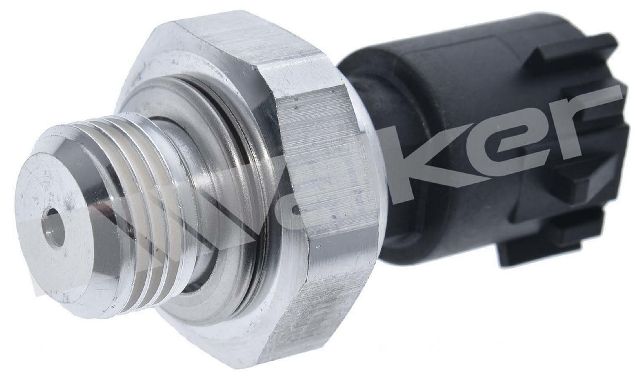
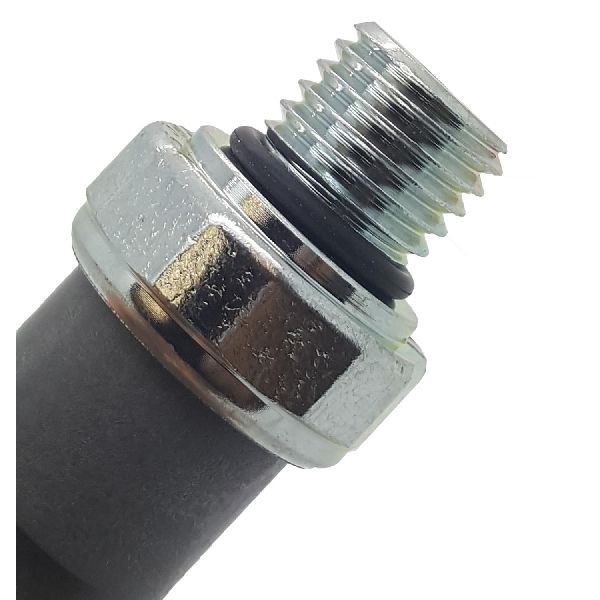
- Faulty Engine Oil Pressure Sensor (Sending Unit) 🔴 High Probability These sensors are a very common failure item on many GM vehicles of this era. They frequently develop internal leaks, causing oil to seep through the body of the sensor and into the electrical connector, which disrupts the signal. Aftermarket sensors are reported to fail more frequently than the OEM ACDelco part.
How to confirm: Visually inspect the sensor's electrical connector by unplugging it. If it is wet with engine oil, the sensor has failed and must be replaced. You can also monitor the gauge; erratic behavior like jumping from zero to max is a classic sign of a failed sensor.
Typical fix: Replace the engine oil pressure sensor. The location and difficulty vary greatly by engine.
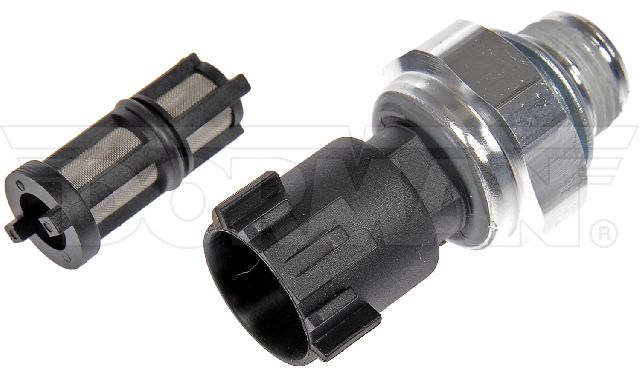
Est. part cost: $30-$80 - Clogged Oil Pressure Sensor Filter Screen (5.3L V8) 🔴 High Probability → Shop Engine Oil Pressure Sensor On the 5.3L V8, a small, thimble-sized filter screen is located in the block directly beneath the oil pressure sensor. This screen is notorious for becoming clogged with sludge and debris, sometimes from issues related to the Active Fuel Management (AFM) system. This blockage restricts oil flow to the sensor and causes a false low-pressure reading.
How to confirm: This can only be confirmed by removing the oil pressure sensor. The screen is often found dark and full of debris. It is considered mandatory to replace this screen whenever the sensor is changed.
Typical fix: Remove the old screen with a pick or by threading a coarse screw (like a 5/16" lag bolt) into it and pulling it out. Install a new one 🎬 See how to remove the V8 sensor and filter screen. before installing the new sensor.
Est. part cost: $5-$15 - Incorrect or Clogged Engine Oil Filter 🟡 Medium Probability → Shop Engine Oil Filter Adapter GM has issued service bulletins for V8 engines indicating that using non-OEM oil filters can lead to P0521. The bypass valve characteristics of the specified ACDelco filter (PF48E) are important for maintaining correct pressure readings. Some owners have reported fixing the code simply by switching from an aftermarket filter to an ACDelco one.
How to confirm: Check the brand and part number of the installed oil filter. If it is not an ACDelco filter (specifically PF48E for the V8), it could be the cause. If the code appeared shortly after an oil change, the filter is a prime suspect.
Typical fix: Change the engine oil and replace the filter with a genuine ACDelco oil filter.
Est. part cost: $10-$15 - Low or Incorrect Viscosity Engine Oil ⚪ Low Probability
How to confirm: Check the oil level on the dipstick and verify its condition. If the oil is very old, dirty, below the minimum level, or the wrong type (e.g., too thin), it can affect pressure.
Typical fix: Perform an oil and filter change using the manufacturer-specified oil viscosity (e.g., 5W-30 meeting Dexos spec).
Est. part cost: $40-$80
Rare But Worth Checking
- Sticking Oil Pump Pressure Relief Valve (5.3L V8): → Shop Engine Oil Pump This is a known issue on GM V8s, documented in TSBs like 20-NA-161. If a mechanical gauge confirms that oil pressure is actually low, the oil pump's internal pressure relief valve may be stuck. This is a major repair requiring oil pan removal.
- Failed Oil Pickup Tube O-Ring (5.3L V8): The O-ring that seals the oil pump pickup tube to the oil pump can become hard and brittle with age, allowing the pump to suck in air. This leads to aerated oil and genuinely low/fluctuating oil pressure. This is a common issue on higher-mileage GM V8s and requires dropping the oil pan to replace.
- Damaged Main or Rod Bearings: In a worst-case scenario where a mechanical gauge confirms very low oil pressure (e.g., under 10 PSI at idle), excessive internal engine wear (bearings) could be the cause. This creates excessive clearance that the oil pump cannot overcome. This would typically be accompanied by engine knocking noises and would likely require a complete engine rebuild or replacement.
Diagnosis Steps
- Check the engine oil level and condition. Top off or change if necessary, ensuring the correct viscosity oil is used.
- Crucial First Step: Connect a mechanical oil pressure gauge to the engine to verify the actual oil pressure. For the 3.7L, the port is where the sensor is located. For the 5.3L, a special adapter (like the EN-47971 or J-42907) may be needed at the oil filter housing for an easier test point. If pressure is genuinely low, stop and diagnose the mechanical fault (oil filter, pickup tube O-ring, oil pump, bearings).
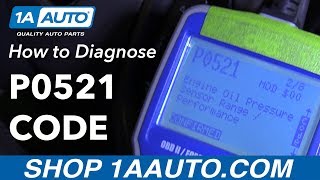
- If mechanical pressure is good, proceed with diagnosing the sensor circuit. 🎬 Watch: How to diagnose a failed oil pressure sender code.
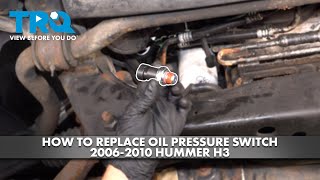
- Locate the oil pressure sensor. On the 3.7L I5, it's on the passenger side of the block above the oil filter, easily accessed from the wheel well. 🎬 Watch: Step-by-step sensor replacement for the 3.7L I5 engine. On the 5.3L V8, it's at the very back of the engine behind the intake manifold, against the firewall.
- Disconnect the electrical connector and inspect for oil. Oil inside the connector confirms a failed, leaking sensor. Clean the harness connector with electrical contact cleaner.
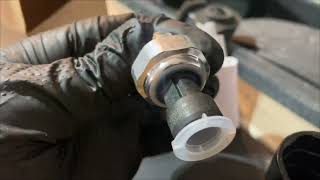
- Using a special deep oil pressure sensor socket (typically 27mm or 1 1/16"), remove the old sensor.
- For 5.3L V8 only: After removing the sensor, locate and remove the small filter screen from the engine block below it. A pick, or threading a small coarse screw into it, can be used to pull it out.
- Install the new filter screen (5.3L V8) and the new oil pressure sensor. Torque to specification (typically around 15 ft-lbs).
- Reconnect the electrical connector, clear the trouble codes with a scan tool, and start the engine.
- Monitor the oil pressure gauge and check for leaks. A test drive will confirm the fix.
Parts You'll Likely Need
- Engine Oil Pressure Sensor (for 3.7L I5)
(OEM #ACDelco D1843A)— This is the most common failure part for P0521 on the 5-cylinder engine. It is known to leak internally and send false signals.
Trusted brands: ACDelco, Standard Motor Products (SMP)
OEM price range: $45-$75
Aftermarket price range: $25-$50 - Engine Oil Pressure Sensor (for 5.3L V8)
(OEM #12673134 (supersedes 12621234, 12596951))— This is the primary failure part for the V8 engine. It is located in a difficult-to-access area and should be replaced with its filter screen. Using the OEM part is highly recommended as aftermarket versions are known to fail prematurely.
Trusted brands: ACDelco
OEM price range: $50-$90
Aftermarket price range: $30-$60 - Engine Oil Pressure Sensor Filter Screen (for 5.3L V8)
(OEM #12585328)— This small screen gets clogged with sludge, causing a false low reading at the sensor. It is considered a mandatory replacement item when changing the sensor on the 5.3L V8.
Related Codes That Often Appear With This One
- P0520 — This code indicates a general circuit malfunction for the oil pressure sensor, often appearing with P0521 when the sensor fails electrically.
- P0522 — Indicates the sensor circuit voltage is too low, which can happen when the sensor shorts internally or there's a wiring issue.
- P0523 — Indicates the sensor circuit voltage is too high, which can happen when the sensor fails and sends a maxed-out reading.
Technical Service Bulletins (TSBs) & Recalls
- PIP5276E: Mentions that incorrect oil filters can cause P0521 on GM trucks.
- 10-06-01-008M: Addresses oil consumption issues on V8s with Active Fuel Management (AFM), which can create debris that clogs the sensor screen.
- PIP4786B: Specifically addresses the issue of the oil pressure sensor screen becoming clogged with debris on V8 engines.
- Bulletin #PIP4786C: Provides information to technicians regarding vehicles that may display a low oil pressure message and find diagnostic trouble code P0521 in the engine control module.
Platform-Specific Known Issues
- On the 5.3L V8, the location of the sensor at the back of the engine block behind the intake manifold makes replacement a labor-intensive job, often requiring 3+ hours. Mechanics often have to climb on top of the engine to reach it from above.
- On the 3.7L I5, the sensor is relatively exposed on the passenger side of the engine. Many owners find it easiest to access by removing the front passenger wheel and wheel well liner.
Mechanic-Grade Diagnostic Values
- Mechanical Oil Pressure (3.7L I5, minimum spec) — expected: 12 PSI at 1,200 RPM (hot). Failure: Pressure significantly below this value indicates an internal engine issue (pump, bearings, etc.).
- Mechanical Oil Pressure (5.3L V8, minimum spec, hot) — expected: ~24 PSI at 1,000 RPM, ~35 PSI at 2,000 RPM, ~38 PSI at 3,000-4,000 RPM.. Failure: Readings consistently below these minimums point to a mechanical fault, not a sensor issue.
- Oil Pressure Sensor Signal Voltage (Scan Tool) — expected: Approx. 1.3V at idle, rising towards 4.0V under load/higher RPM.. Failure: Voltage is stuck near 0V or 5V, or does not change logically with engine RPM.
- Oil Pressure Sensor Parameter (Scan Tool, Key-On-Engine-Off) — expected: Should read below 1.2 PSI (8 kPa).. Failure: Any significant pressure reading with the engine off indicates a faulty, electrically skewed sensor.
- Sensor 5V Reference Circuit (at connector, KOEO) — expected: 4.8V - 5.2V. Failure: Voltage outside this range indicates a wiring or ECM problem, not a sensor failure.
Scan Tool Commands That Help
- Tech2 / GDS2 / Professional Scan Tool: View Live Data: Engine Oil Pressure Sensor Parameter — This is the primary method to observe the sensor's reported pressure in real-time to see if it is erratic, stuck, or illogical for the given engine state (e.g., 80 psi at idle).
- Tech2 / GDS2 / Professional Scan Tool: View Freeze Frame / Failure Records — Crucial for determining the exact engine conditions (RPM, temp, load) when the P0521 code was triggered, which helps differentiate between a sensor glitch and a real pressure drop under specific circumstances.
Wiring & Ground Locations
- Oil Pressure Sensor Connector (5.3L V8) — At the top rear of the engine block, behind the intake manifold, against the firewall.. This connector is in a high-heat area and is prone to becoming brittle. The wiring harness is often tight, and flexing it to disconnect the sensor can break aged wires. It is also the point of inspection for oil intrusion from a leaking sensor.
- Engine to Chassis Ground Straps — Key grounds are typically located from the rear of the cylinder head to the firewall and from the engine block to the frame rail on the passenger side.. A poor ground connection can cause floating or incorrect readings from various sensors, including the oil pressure sensor. While not a common cause for P0521 specifically, it should be checked if sensor and wiring tests are inconclusive.
Real Owner Repair Stories
- Chevrolet Forum user (2013 Chevrolet Suburban 5.3L V8 with 120k miles) — Low oil pressure reading on the gauge at idle.
❌ Tried (didn't work) Initial diagnosis pointed towards a major mechanical issue.
✅ What actually fixed it Replacing the oil pressure sensor and cleaning the filter screen underneath it resolved the issue. The screen was noted to be about 5% obstructed with debris. - Chevrolet Forum user (Chevrolet 1500 with 5.3L V8) — P0521 code with dash gauge reading 20-25 PSI at idle.
❌ Tried (didn't work) Replacing the oil pressure sensor and the screen underneath it.
✅ What actually fixed it The user was advised that a restricted oil filter can cause a 10 PSI drop. The final fix suggested was to replace the existing oil filter with a new one (specifically an OEM ACDelco) to see if the pressure reading returned to normal, which is a common fix when other parts do not resolve the issue.
OEM Part Supersession History
12596951, 12621234→12673134— Improved design and reliability to address common failure modes.
Heads up: While older numbers may still be found, 12673134 is the current recommended OEM replacement for the 5.3L V8 and is considered the most reliable version.
Diagnostic Flowchart
Used vs. New Parts: Buying Guide for This Vehicle
When a used part is the smart pick: For this repair, using used parts is not recommended. The primary failure components are low-cost sensors and screens that degrade with heat and time. A used sensor carries the same risk of failure as the part being replaced.
What to inspect on the donor part:
- Not applicable, as used sensors/screens are not advised.
OEM-only on this vehicle (don't cheap out):
- Engine Oil Pressure Sensor (ACDelco)
- Engine Oil Pressure Sensor Filter Screen (ACDelco)
- Engine Oil Filter (ACDelco PF48E for V8)
Aftermarket brands forum-validated for this vehicle:
- Standard Motor Products (SMP) is generally considered a reliable alternative if OEM is unavailable, but forum consensus strongly favors ACDelco for this specific part.
Brands owners have reported issues with on this vehicle:
- Unbranded, 'white-box' parts from online marketplaces are frequently reported to fail quickly or be inaccurate out of the box.
Related OBD-II Codes
Frequently Asked Questions
Where is the oil pressure sensor located on my 2009-2010 Hummer H3?
I'm replacing the oil pressure sensor on my H3 with the 5.3L V8. Is there anything else I should replace at the same time?
Is it difficult to change the oil pressure sensor on the H3 Alpha (5.3L V8)?
My P0521 code appeared right after an oil change. What should I check first?
My oil pressure gauge is jumping from zero to max. Is this a symptom of P0521?
How do I know if I have a bad sensor or actual low oil pressure?
Helpful Videos

We Have This Part in Stock


The information in this article is provided for general reference and educational purposes only. Vehicle specifications, procedures, and part compatibility can vary by production date, trim level, and region. Always consult your vehicle's factory service manual and verify part numbers before purchasing or performing repairs. Safety-critical components such as airbags, seat belts, and braking systems should be installed by a qualified professional.
- Hummer H3:
- 🧭 Diagnostic Flowchart
- 🎬 Helpful Videos
- 🛍️ Shop This Part
- What's Unique About the 2009-2010 Hummer H3
- Symptoms You May Notice
- Most Likely Causes
- Rare But Worth Checking
- Diagnosis Steps
- Parts You'll Likely Need
- Related Codes That Often Appear With This One
- Technical Service Bulletins (TSBs) & Recalls
- Platform-Specific Known Issues
- Mechanic-Grade Diagnostic Values
- Scan Tool Commands That Help
- Wiring & Ground Locations
- Real Owner Repair Stories
- OEM Part Supersession History
- Used vs. New Parts: Buying Guide for This Vehicle
- Related OBD-II Codes
- Frequently Asked Questions
- 🎟️ Get 5% Off