

P0521 on 2014-2020 Kia Sorento 3.3L V6: Oil Pressure Sensor Performance Guide
On the 2014-2020 Sorento 3.3L V6, code P0521 is almost always caused by a failed and leaking oil pressure sensor located under the intake manifold. This is a labor-intensive repair, but the part itself is inexpensive and may be covered by a Kia warranty extension.
- P0521 on a 2014-2020 Sorento 3.3L V6 is most likely a failed oil pressure switch, not a major engine failure.
- This is a very common, well-documented issue, and Kia has extended the warranty to 15 years/150,000 miles for 2014-2018 models.
- The oil leak from the failed switch is frequently misdiagnosed as a more expensive rear main seal leak.
- The repair is labor-intensive due to the sensor's location under the intake manifold, making it a difficult DIY job.
- Always check for warranty coverage with a Kia dealer before authorizing or performing any repairs.
What's Unique About the 2014-2020 Kia Sorento
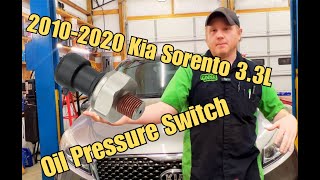
The Lambda II 3.3L V6 engine is known for a very common failure of the oil pressure sensor/switch. Unlike sensors on many other engines that are easily accessible, this one is buried deep in the engine valley, underneath the entire upper and lower intake manifold assembly. 🎬 Watch: Step-by-step guide to replacing the oil pressure switch. The failed switch often leaks oil, which drains out a weep hole at the back of the engine, frequently leading to a misdiagnosis of a much more expensive rear main seal leak. Kia has acknowledged this common failure by issuing a warranty extension for the part.
Symptoms You May Notice
- Check Engine Light is on
- Red oil pressure warning light may be on or flickering, especially at idle
- Noticeable oil leak dripping from the area where the engine meets the transmission (bell housing)
- Oil pressure gauge (if equipped) reads abnormally high or low
- A smell of burning oil if the leak drips onto hot exhaust components
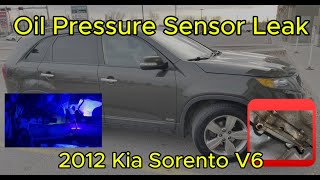
- Rear Main Seal Leak: The dripping oil from the failed pressure switch weep hole is very often mistaken for a leaking rear main seal. Kia TSB ENG237 (which supersedes ENG133) specifically warns technicians to use a borescope to check the oil pressure switch for leaks first to avoid this misdiagnosis. 🎬 See how a leaking sensor mimics a rear main seal.
Most Likely Causes
- Leaking/Failed Oil Pressure Sensor (Switch) 🔴 High Probability This is a well-documented, common failure point on the Kia/Hyundai 3.3L and 3.5L Lambda II engines. The switch fails internally and begins to leak. Kia has extended the warranty to 15 years/150,000 miles for this specific issue on 2014-2018 models.
How to confirm: Visually inspect the weep hole at the back of the engine valley (where the engine and transmission meet) for fresh oil. A borescope can help see the sensor itself under the intake. The definitive test is to measure actual oil pressure with a mechanical gauge.
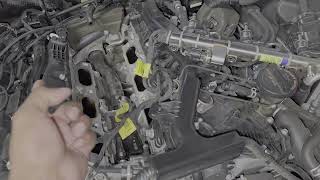
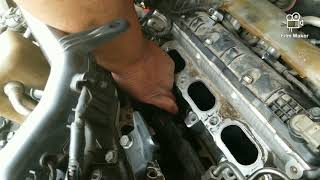
Typical fix: Replace the oil pressure sensor. This requires removing the upper and lower intake manifolds to gain access. 🎬 Watch this walkthrough of the intake manifold removal process. It is highly recommended to have a Kia dealer check for warranty coverage (WTY026) before attempting a repair.
Est. part cost: $20-$50 - Low Engine Oil Level or Incorrect Oil 🟡 Medium Probability
How to confirm: Check the engine oil dipstick. Ensure the oil is at the full mark and is the correct viscosity (e.g., 5W-20 or 5W-30) as specified in the owner's manual.
Typical fix: Top off or change the engine oil and replace the filter with a quality OEM or equivalent part. Using a non-OEM oil filter has been anecdotally linked to oil pressure issues.
Est. part cost: $40-$80 - Damaged Wiring or Contaminated Connector ⚪ Low Probability The connector can become saturated with oil from the leaking switch, causing a poor connection.
How to confirm: Once the intake is removed, inspect the sensor's electrical connector for oil saturation, corrosion, or broken wires.
Typical fix: Clean the connector with electrical contact cleaner or repair the damaged section of the wiring harness.
Est. part cost: $5-$25
Rare But Worth Checking
- Failing Oil Pump or Internal Engine Wear: → Shop Engine Oil Pump While rare to be the cause of P0521 without other symptoms, it's the worst-case scenario. The Lambda II engine has known reliability concerns regarding premature bearing wear which can lead to low oil pressure. If a mechanical gauge confirms low oil pressure, the problem is internal to the engine and requires significant mechanical repair.
Diagnosis Steps
- Check for Warranty Coverage: If you have a 2014-2018 model, contact a Kia dealership with your VIN. This issue may be covered under warranty extension WTY026 (15 years/150,000 miles).
- Verify the engine oil level and condition. Top off or change if necessary, using the correct viscosity oil and a quality filter.
- Scan for any other accompanying trouble codes, such as P0520, P0522, or P0524.
- Carefully inspect the area where the back of the engine meets the transmission for signs of an oil leak. This is the primary symptom of the common switch failure.
- Use a borescope to inspect the engine valley under the intake manifold for pooled oil around the sensor. TSB ENG237 recommends this as a key diagnostic step to avoid misdiagnosis.
- THE CRITICAL STEP: Before replacing parts, confirm the actual engine oil pressure. Disconnect the sensor and connect a mechanical oil pressure gauge. Start the engine and compare the pressure readings to the manufacturer's specifications (typically around 15 PSI at idle and 18-22 PSI at 1000 RPM, but always verify with a service manual).
- If actual oil pressure is good, the fault lies with the sensor or its wiring. If pressure is low, the engine has a serious internal mechanical problem.
- If the sensor is determined to be the cause, proceed with replacing it. This involves removing the throttle body, surge tank (upper intake), and lower intake manifold to access the sensor.
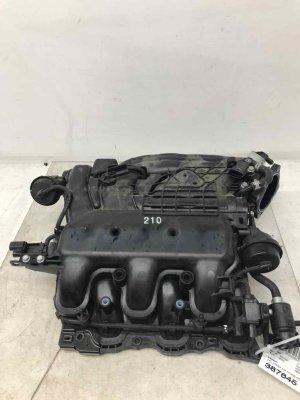
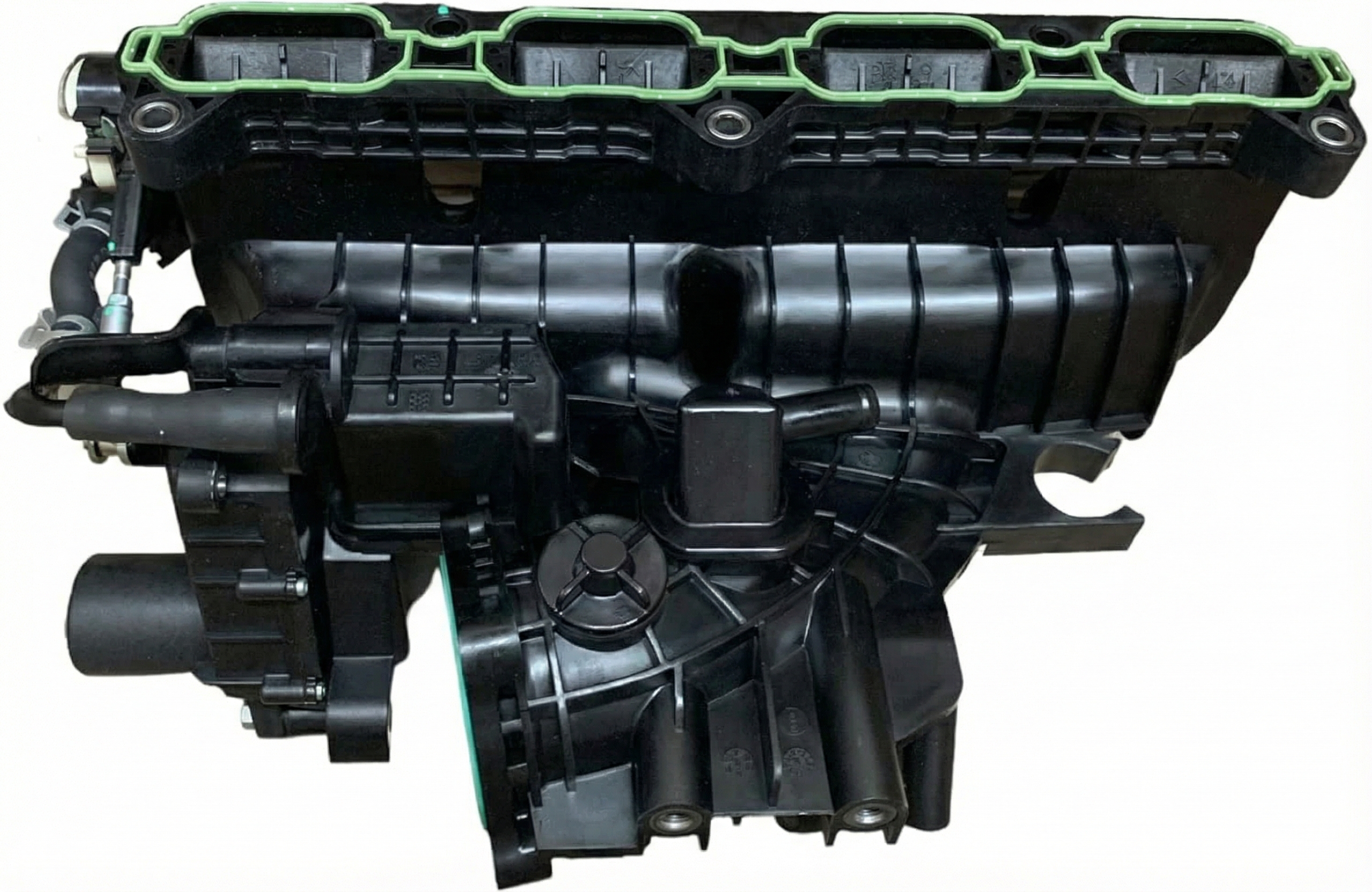
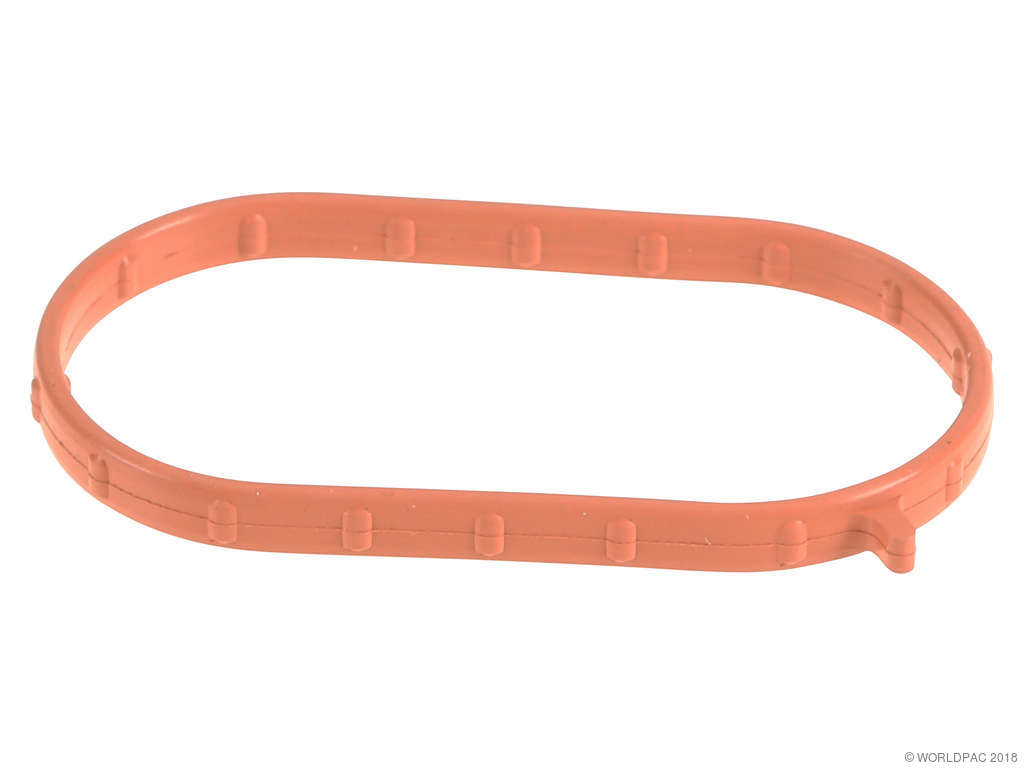
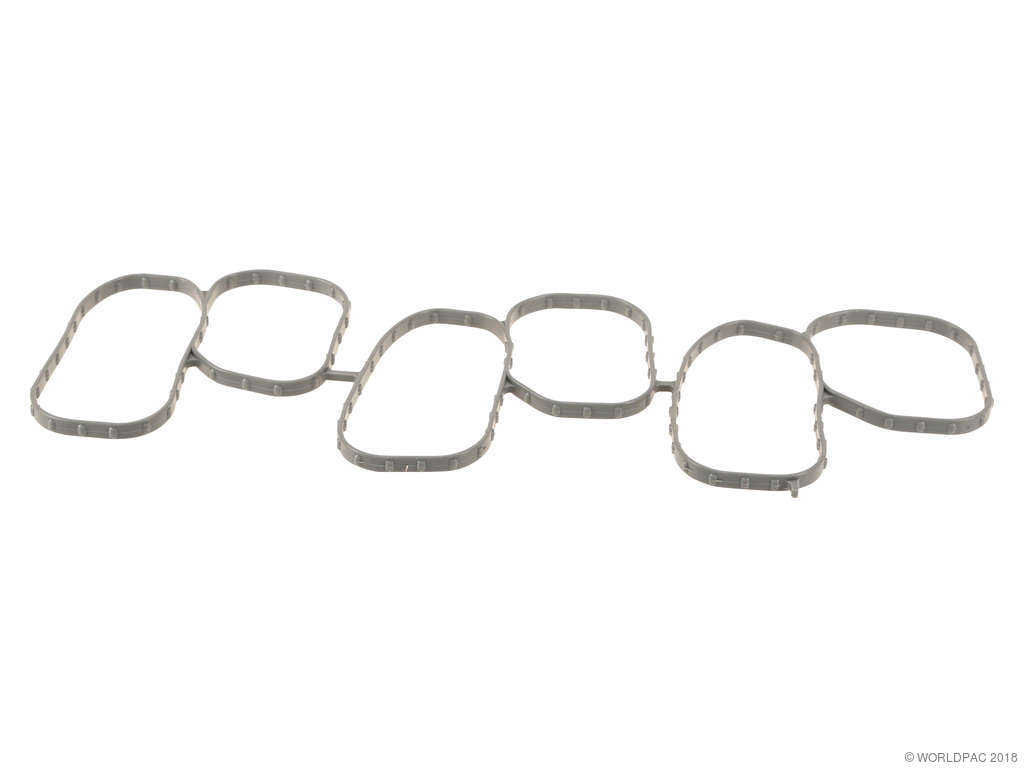
- While the intake is off, it is highly recommended to replace the upper and lower intake manifold gaskets to prevent future vacuum leaks.
- After reassembly, clear the trouble codes and perform a drive cycle to ensure the repair was successful.
Parts You'll Likely Need
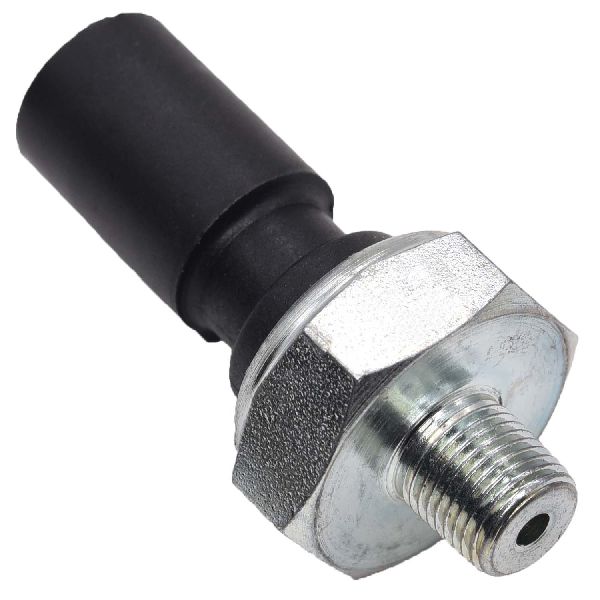
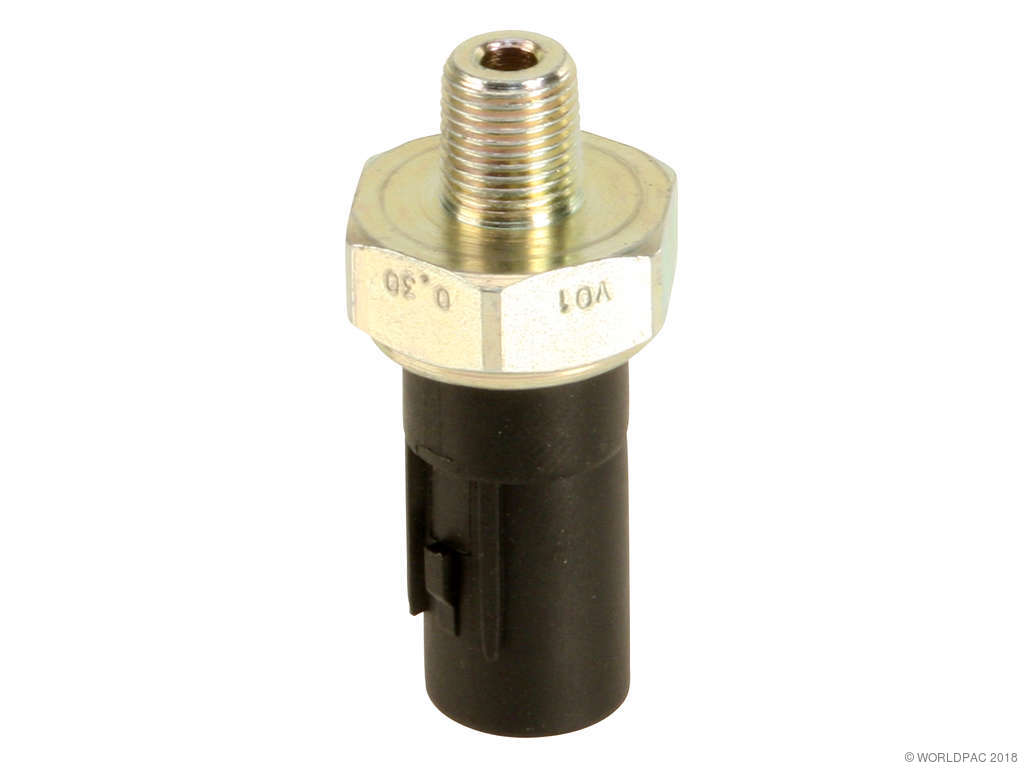
- Engine Oil Pressure Switch
(OEM #94750-3C100)— This is the most common point of failure for this code on this engine, often failing by leaking internally. An alternate OEM part number is 94750-37100, which supersedes 94750-37000.
Trusted brands: Kia (OEM), Hyundai (OEM), Standard Motor Products
OEM price range: $25-$40
Aftermarket price range: $15-$30 - Intake Manifold Gasket Set — The upper and lower intake manifolds must be removed to access the sensor, and the gaskets are single-use and must be replaced to prevent vacuum leaks.
Trusted brands: Kia (OEM), Fel-Pro (Upper Set: MS 98024, Lower Set: MS 97226), Mahle
OEM price range: $40-$60
Aftermarket price range: $20-$40
Related Codes That Often Appear With This One
- P0520 — This code indicates a general malfunction in the oil pressure sensor circuit and is often a companion code to P0521 when the sensor fails.
- P0522 — Indicates the sensor circuit voltage is low. This can be triggered by the same sensor failure, especially if it's internally shorted or the connector is oil-fouled.
- P0523 — Indicates the sensor circuit voltage is high. This can also be triggered by an open circuit within the faulty sensor.
- P0524 — Indicates 'Engine Oil Pressure Too Low'. While P0521 points to a performance/range issue with the sensor, P0524 suggests the PCM is seeing a dangerously low pressure reading. This could be a faulty sensor reading zero, or a genuine, critical lack of oil pressure.
Technical Service Bulletins (TSBs) & Recalls
- TSB ENG237: This Technical Service Bulletin (superseding ENG133) provides dealers with the procedure for inspecting and replacing the oil pressure switch under warranty extension WTY026. It specifically advises using a videoscope to correctly identify the source of the leak to avoid misdiagnosing it as a rear main seal leak.
Platform-Specific Known Issues
- Kia has issued warranty extension WTY026 for the leaking oil pressure switch on 2014-2018 Sorento models with this engine, extending coverage to 15 years or 150,000 miles. Owners should contact a Kia dealership with their VIN to check for eligibility before paying for repairs.
Mechanic-Grade Diagnostic Values
- Engine Oil Pressure (Mechanical Gauge) — expected: Idle: ~15 PSI; At 1000 RPM: ~18-22 PSI. Failure: Pressure significantly below these values indicates a mechanical engine issue (e.g., worn bearings, failing oil pump), not a sensor fault.
- Oil Pressure Sensor/Switch Type — expected: This is a single-wire on/off switch, not a variable pressure transducer.. Failure: The sensor's primary failure mode is internal leakage, not electrical resistance deviation. The single wire carries a signal to the dash light/PCM, and the sensor body provides the ground.
- Oil Pressure Switch Torque Specification — expected: 11-16 ft-lbs (15-22 Nm). Failure: Over-tightening can damage the new switch or its threads in the engine block. Under-tightening can cause leaks.
Scan Tool Commands That Help
- Kia GDS (Global Diagnostic System): Resetting adaptive values — While not strictly required for an oil pressure switch replacement, it is good practice to use this function after any significant engine repair to clear the ECM's learned values and force it to re-adapt to the new components.
Wiring & Ground Locations
- Oil Pressure Switch Connector — On the sensor itself, located in the engine valley beneath the lower intake manifold, near the starter motor.. This is a single-pin, sealed, black connector with a green TPA (Terminal Position Assurance) lock. The wire from this connector runs up and attaches to the main engine harness near the intake manifold. It is critical to inspect this connector for oil saturation from a leaking switch, as this can cause a poor connection and trigger the code even if the switch itself is functional.
Real Owner Repair Stories
- Forum discussions and mechanic videos (Multiple 2014-2020 Kia Sorento and related models with 3.3L V6) — P0521 code, flickering oil light at idle, oil leak from bell housing area.
❌ Tried (didn't work) Replacing the oil and filter with a non-OEM (aftermarket) filter.
✅ What actually fixed it In several documented cases, issues persisted until a genuine Kia/Hyundai OEM oil filter (P/N 26320-3CAA0) was installed. Aftermarket filters can have incorrect bypass valve pressure ratings (e.g., opening below the specified 11-14 PSI), which can cause pressure fluctuations that the PCM interprets as a sensor performance issue, setting code P0521.
OEM Part Supersession History
94750-37000→94750-37100— Likely an internal revision to improve reliability or material composition, though not officially stated.
Heads up: The parts are interchangeable. 94750-37100 is the current replacement for 94750-37000.94750-3C100→N/A - This is a valid, commonly used part number for this application.
Model Year Variations Within This Range
- 2014-2018: These model years are explicitly covered by Kia's warranty extension (WTY026) for the leaking oil pressure switch, extending coverage to 15 years/150,000 miles.
- 2019-2020: These model years are not officially included in the WTY026 warranty extension for the oil pressure switch, even though they use the same engine and part and are known to experience the same failure. Owners of these vehicles would likely have to pay for the repair out-of-pocket unless covered by the standard powertrain warranty.
Diagnostic Flowchart
Other Known Issues on This Vehicle
Issues unrelated to this code that are worth knowing about as an owner of this generation:
- Catastrophic Engine Failure / Seizure 🔴 High — Increasingly reported, especially on earlier models in the generation (2014-2016), often before 100,000 miles. Linked to internal wear from metal debris and potential oil starvation. (Ref: Multiple lawsuits and NHTSA petitions filed, but no universal recall. Some VINs were covered under specific campaigns for crankshaft issues.)
- Frequent Headlight Bulb Failure 🟡 Low — A very common complaint where low-beam headlight bulbs burn out prematurely and frequently.
- Engine Rattling Noise on Startup 🟠 Medium — A rattling noise lasting 4-5 seconds after a cold start, often appearing after 50,000 miles. It's typically related to the timing chain tensioner. (Ref: An updated timing chain tensioner is the common fix.)
- Peeling Exterior Paint (Especially 'Snow White Pearl') 🟡 Low — Widespread complaints of paint bubbling and peeling in large sheets, particularly on models with 'Snow White Pearl' paint. (Ref: No recall issued, often handled on a case-by-case basis by dealers.)
- Engine Compartment Fire Risk 🔴 High — Affects some model years within this generation. Can be caused by short circuits in the ABS or Hydraulic Electronic Control Unit (HECU), even when parked. (Ref: Multiple recalls issued, including NHTSA campaign 23V877000, but not all vehicles are covered.)
Used vs. New Parts: Buying Guide for This Vehicle
When a used part is the smart pick: For this specific repair, using a used part is almost never a smart choice. The primary failure part, the oil pressure switch, is inexpensive new and is a known high-failure item. The labor to access it is extensive, so installing a used switch with unknown life remaining is extremely risky and not cost-effective.
What to inspect on the donor part:
- Not applicable for the sensor itself. If sourcing larger components like an intake manifold damaged during repair, inspect for cracks, warping, and ensure all threaded inserts are intact.
OEM-only on this vehicle (don't cheap out):
- Engine Oil Pressure Switch: Given the high failure rate and critical function, using an OEM Kia/Hyundai part (94750-3C100 or 94750-37100) is strongly recommended.
- Engine Oil Filter: Use only the OEM Kia/Hyundai filter (26320-3CAA0) to ensure the correct bypass valve pressure rating and avoid inducing oil pressure codes.
Aftermarket brands forum-validated for this vehicle:
- Fel-Pro: Widely trusted for intake manifold gaskets (Upper: MS 98024, Lower: MS 97226).
Brands owners have reported issues with on this vehicle:
- Generic/unbranded oil filters: Often have incorrect bypass valve specifications that can cause P0521 on this engine.
Real Owner Stories
Aggregated from forums and TSBs cited above. Mileages and costs reflect what owners reported in those sources.
2014-2018 Kia Sorento 3.3L V6
Symptoms: Oil leak dripping from the area where the engine meets the transmission (bell housing); often misdiagnosed as a rear main seal leak.
What fixed it: Replacement of the oil pressure switch located under the intake manifold, as identified in TSB ENG237.
Source hint: Reddit r/MechanicAdvice
2007-2018 Kia Sorento 3.3L GDI V6
Symptoms: Flashing oil light and oil leak.
What fixed it: Replacement of the oil pressure switch; required disassembly of the intake manifolds and replacement of a fuel delivery pipe.
Cost: $270-$270
Source hint: YouTube - Automotive Insight
2014-2016 Kia Cadenza 3.3L V6
Symptoms: Failure symptoms including a leak misdiagnosed as a rear main seal.
What fixed it: Replacement of the leaking oil pressure switch under warranty extension WTY026.
Source hint: Go-Parts.com Blog
Related OBD-II Codes
Frequently Asked Questions
Is there a warranty extension for the oil pressure switch on my 2016 Kia Sorento 3.3L?
My mechanic says I have a rear main seal leak, but I see a P0521 code. Could it be something else?
Why does the repair for a simple oil pressure sensor cost so much in labor?
Can using a non-Kia oil filter cause oil pressure codes like P0521?
What is the procedure recommended in TSB ENG237 for diagnosing this issue?
Are there other Kia models that share this same oil pressure sensor failure?
Helpful Videos
Used OEM Parts in Stock
New Aftermarket Parts Available


The information in this article is provided for general reference and educational purposes only. Vehicle specifications, procedures, and part compatibility can vary by production date, trim level, and region. Always consult your vehicle's factory service manual and verify part numbers before purchasing or performing repairs. Safety-critical components such as airbags, seat belts, and braking systems should be installed by a qualified professional.
- Kia Sorento:
- 🧭 Diagnostic Flowchart
- 🎬 Helpful Videos
- 🛍️ Shop This Part
- What's Unique About the 2014-2020 Kia Sorento
- Symptoms You May Notice
- Most Likely Causes
- Rare But Worth Checking
- Diagnosis Steps
- Parts You'll Likely Need
- Related Codes That Often Appear With This One
- Technical Service Bulletins (TSBs) & Recalls
- Platform-Specific Known Issues
- Mechanic-Grade Diagnostic Values
- Scan Tool Commands That Help
- Wiring & Ground Locations
- Real Owner Repair Stories
- OEM Part Supersession History
- Model Year Variations Within This Range
- Other Known Issues on This Vehicle
- Used vs. New Parts: Buying Guide for This Vehicle
- Real Owner Stories
- 2014-2018 Kia Sorento 3.3L V6
- 2007-2018 Kia Sorento 3.3L GDI V6
- 2014-2016 Kia Cadenza 3.3L V6
- Related OBD-II Codes
- Frequently Asked Questions
- 🎟️ Get 5% Off