

P0521 on 2020-2024 Kia Telluride: Engine Oil Pressure Sensor Explained
This code usually points to a faulty engine oil pressure sensor. Before replacing it, check your oil level and condition first, as low or dirty oil is a common trigger. If the sensor needs replacement, it's a labor-intensive job as it is located under the intake manifold, making the repair costly.
- P0521 means the oil pressure sensor is sending an illogical signal. It is a serious code that should be addressed immediately.
- First, check your engine oil level and condition. This is the simplest and most common fix.
- The most likely cause after verifying oil level is a faulty oil pressure sensor, which is a difficult and expensive repair due to its location under the intake manifold.
- Always confirm actual oil pressure with a mechanical gauge before replacing the sensor to rule out a severe internal engine problem.
What's Unique About the 2020-2024 Kia Telluride
On the Kia Telluride's 3.8L V6 engine, the most significant factor for this code is the location of the oil pressure sensor. It is buried deep in the 'V' of the engine, underneath the upper and lower intake manifold assembly. This design turns what would be a simple sensor swap on many other engines into a significant, labor-intensive repair. This high-heat area can also contribute to the electronic failure of the sensor over time due to heat-soak. A common failure mode is for the sensor to leak oil internally into its own electrical connector, causing signal disruption. While there are no widespread, documented failures specific to this part on the Telluride, the repair complexity is a key consideration for owners and the primary driver of the high repair cost.
Symptoms You May Notice
- Check Engine Light is on
- Oil pressure warning light is illuminated on the dashboard, often flickering at warm idle and disappearing with higher RPM.
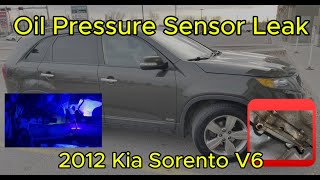
- Oil pressure gauge reading is abnormally high or low 🎬 Watch: Understanding P0521 causes and how to fix them
- Engine may run rough, make unusual noises (clattering, ticking), or stall
- Replacing the oil pressure sensor without first checking the oil level and condition.
- Replacing the oil pressure sensor without first verifying the actual oil pressure with a mechanical gauge. If the pressure is truly low, a new sensor will not fix the underlying mechanical problem.
Most Likely Causes
- Low or Dirty Engine Oil 🔴 High Probability This is the most common and basic cause for this code on any vehicle. Neglecting oil changes can lead to sludge or incorrect oil levels, causing unstable pressure readings.
How to confirm: Check the engine oil dipstick when the engine is cold and on a level surface. Note the level and the color/condition of the oil.
Typical fix: Perform an oil and filter change using the correct viscosity oil specified for the 3.8L V6 engine (6.5L of 5W-30). Clear the code and see if it returns.
Est. part cost: $50-$100 - Faulty Engine Oil Pressure Sensor 🟡 Medium Probability The sensor operates in a high-heat, high-vibration environment under the intake manifold and can fail electrically or start to leak over time. A very common failure mode is an internal leak, causing the sensor's electrical connector to fill with engine oil, disrupting the signal.
How to confirm: After confirming the oil level and pressure are correct with a mechanical gauge, the sensor is the next likely culprit. A technician can test the sensor's voltage output. Visually inspect the disconnected sensor connector for any presence of engine oil.
Typical fix: Replace the engine oil pressure sensor. On this engine, this requires removing the upper and lower intake manifolds for access. A modified, slimmed-down 24mm wrench may allow removal without draining coolant and removing a coolant pipe.
Est. part cost: $100-$150 - Incorrect or Clogged Oil Filter ⚪ Low Probability → Shop Engine Oil Filter Adapter Using a low-quality aftermarket oil filter or one that is clogged can restrict oil flow and cause erratic pressure readings. Some owners on other platforms have fixed P0521 by switching to a high-quality or OEM filter.
How to confirm: Inspect the oil filter currently installed. Check if it is a reputable brand and if it has been replaced at the recommended service interval.
Typical fix: Replace the oil filter with a genuine Kia (OEM) or high-quality aftermarket equivalent and perform an oil change.
Est. part cost: $15-$30
Rare But Worth Checking
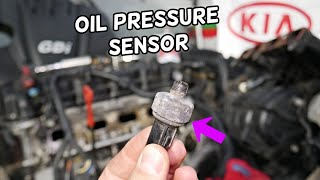
- Wiring Harness or Connector Issue: The wiring to the sensor can become damaged, corroded, or loose, especially given its location under the manifold where it 🎬 Watch: Visual guide to the oil pressure sensor location is subject to heat and difficult to inspect. This should be inspected during sensor replacement.
- Failing Oil Pump / Internal Engine Issues: → Shop Engine Oil Pump This is the worst-case scenario. If a mechanical gauge confirms that the engine's oil pressure is truly low, it points to a severe mechanical problem like a worn oil pump or worn engine bearings. While not common, there are isolated reports of catastrophic engine failure on Tellurides just outside of warranty.
Diagnosis Steps
- DO NOT DRIVE THE VEHICLE if the red oil pressure light is on or the engine is making unusual noises.
- Check the engine oil level and condition using the dipstick. Ensure the engine is cold and on level ground for an accurate reading.
- If the oil is low, top it off to the correct level. If it is old, dirty, or sludgy, perform a complete oil and filter change using an OEM or high-quality filter and the specified 5W-30 oil. Clear the code and see if it returns.
- If the oil level and condition are good, the next step is to test the actual engine oil pressure. This requires a special tool (a mechanical oil pressure gauge) and should be performed by a qualified technician. Compare readings to spec (a commonly cited minimum is 18 PSI at 1000 RPM).
- If the mechanical gauge shows good oil pressure, the problem is very likely the oil pressure sensor or its wiring.
- Access the sensor by removing the upper and lower intake manifolds. Inspect the sensor's wiring and connector for any signs of damage, corrosion, or oil contamination. If the connector is full of oil, the sensor has failed internally and must be replaced.
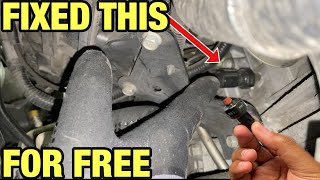
- If the wiring is intact, replace the engine oil pressure sensor and the required intake manifold gaskets. A 24mm wrench may be needed 🎬 See this walkthrough for replacing a leaking V6 pressure sensor for removal.
- If the mechanical gauge shows low oil pressure, the vehicle has a serious internal engine problem (e.g., failing oil pump, clogged oil passages) that requires professional diagnosis and repair.
Parts You'll Likely Need
- Engine Oil Pressure Sensor
(OEM #94751-3C000)— This sensor is the most common part to fail that will trigger a P0521 code, assuming the oil level and pressure are actually correct. Its location contributes to heat-related failure, and it is known to leak oil into its own connector.
Trusted brands: Kia/Hyundai (OEM)
OEM price range: $95-$130
Aftermarket price range: $25-$70 - Intake Manifold Gasket Set
(OEM #28411-3LTA0 (Upper), 29215-3LTA0 (Lower))— Required for replacing the oil pressure sensor, as the upper and lower intake manifolds must be removed to access it. These are single-use gaskets and must be replaced.
Trusted brands: Kia/Hyundai (OEM), Mahle, Fel-Pro
OEM price range: $50-$80
Aftermarket price range: $30-$50
Related Codes That Often Appear With This One
- P0524 —
Mechanic-Grade Diagnostic Values
- Engine Oil Pressure Sensor Signal Voltage — expected: Typically 0.5V at low pressure (idle) and rises towards 4.5V at high pressure (high RPM).. Failure: Voltage that is stuck, erratic, or does not correspond logically to engine RPM. A reading of 0V or 5V would likely trigger a different code (P0522/P0523).
- Mechanical Oil Pressure Gauge Reading — expected: A commonly cited minimum specification for the Lambda II engine family is ~18 PSI at 1,000 RPM with the engine at operating temperature.. Failure: Pressure significantly below the specification, or pressure that does not rise with engine RPM, indicates a mechanical fault (e.g., oil pump, worn bearings).
- Engine Oil Capacity — expected: 6.5 liters (approx. 6.87 quarts). Failure: N/A
Scan Tool Commands That Help
- Professional Scan Tool (e.g., GDS): Live Data Monitoring — Monitor Engine RPM and Engine Oil Temperature. Note that many scan tools may NOT provide a live data PID for oil pressure itself on this platform, making a mechanical gauge test essential for diagnosis.
Wiring & Ground Locations
- Engine Ground Points — General ground points for Kia engines are commonly found on the cylinder head, engine block, and intake manifold.. A poor ground connection for the engine block or the sensor's own circuit can cause erratic voltage readings and trigger a P0521 code. While inspecting the sensor, ensure the engine block's main ground straps are clean and secure.
- Oil Pressure Sensor Connector — Deep in the 'V' of the engine, under the lower intake manifold, connected to the oil pressure sensor.. This connector is a critical failure point. It is common for a failed sensor to leak oil directly into this connector, causing a poor connection and irrational signals. Visual inspection for oil contamination is a key diagnostic step.
Real Owner Repair Stories
- YouTube video on a Hyundai Genesis with a similar 3.8L Lambda V6 (Hyundai Genesis (year not specified), 3.8L V6) — Oil pressure warning light would illuminate when the engine was warm and at low idle RPM (around 500-600 RPM). The light would go out as soon as the throttle was applied.
❌ Tried (didn't work) The owner first confirmed the oil level was correct.
✅ What actually fixed it The oil pressure sensor (switch) was replaced. The original sensor had failed and was leaking engine oil into its electrical connector. A key tip from the repair was using a 24mm wrench that was ground down (made thinner) to access and remove the sensor without having to remove a coolant pipe, saving significant labor time. - YouTube video on a Kia Stinger with a 3.3T Lambda V6 (Kia Stinger (year not specified), 3.3L Twin Turbo V6) — Oil light coming on at idle despite the oil level being correct, typically on vehicles with over 80,000 miles.
✅ What actually fixed it The oil pressure switch was replaced. The video provides a detailed list of required gaskets for the job, including injector seals (35313-3L000 x6), surge tank gasket (29215-3L100), intake manifold gaskets (28411-3L100 x6), and coolant passage assemblies, confirming the complexity of accessing the sensor under the intake.
OEM Part Supersession History
94751-3C000→N/A— This part number appears to be stable and has not been superseded. It is used across a wide variety of Hyundai and Kia models with 3.3L and 3.8L Lambda V6 engines.
Heads up: Do not confuse with part number 94750-2M454, which is for smaller 1.6L/2.5L turbo engines and is not compatible.
Diagnostic Flowchart
Other Known Issues on This Vehicle
Issues unrelated to this code that are worth knowing about as an owner of this generation:
- Spontaneous Windshield Cracking 🟠 Medium — Widespread complaints across all model years (2020-2024+). Hundreds of NHTSA complaints filed. Cracks often appear without impact, starting from the edges. (Ref: Kia issued a 'Customer Satisfaction Initiative' for 2020 models, but issues persist on newer models. A class-action lawsuit has been filed.)
- Headlight Moisture Intrusion & Dimming 🟠 Medium — Common on 2020-present models. Moisture and condensation build up inside the headlamp assembly, leading to dimming, poor visibility, and eventual failure. (Ref: A class-action lawsuit has been filed. Kia has TSBs regarding condensation but owners report recurring issues even after dealer service.)
- Tow Hitch Harness Fire Risk 🔴 High — Affects 2020-2022 models equipped with the genuine Kia 4-pin tow hitch harness. (Ref: Recall NHTSA 22V-626 / Kia SC247. Owners were advised to park outside away from structures until the repair, which involves installing a new fuse and wiring harness extension, is completed.)
- Vehicle Rollaway While in Park 🔴 High — Affects 2020-2024 models. An improperly assembled intermediate shaft could lead to spline damage and cause the vehicle to roll away even when the shifter is in Park. (Ref: Recall NHTSA 24V-209 / Kia SC303. The fix involves a software update to the Electronic Parking Brake (EPB) to automatically engage when the vehicle is off or a door is opened, and inspection/replacement of the shaft if needed.)
- Power Seat Motor Fire Risk 🔴 High — Affects 462,869 vehicles from 2020-2024 model years. A stuck power seat slide knob can cause the seat motor to overheat, creating a fire risk while parked or driving. (Ref: Recall NHTSA 24V-404 / Kia SC316. Owners advised to park outside. Dealers will install a bracket for the switch covers and replace the knobs.)
- Engine Failure from Valve Spring 🔴 High — Rare, but affects certain 2024 models. Valve springs can break, leading to loss of power and potential for catastrophic engine damage. (Ref: Recall issued in February 2024. The fix is a replacement of the engine sub-assembly.)
Used vs. New Parts: Buying Guide for This Vehicle
When a used part is the smart pick: For this specific repair, using a used part is NEVER recommended. The primary failure part, the oil pressure sensor, is a known high-failure item that is relatively inexpensive. The cost of the repair is almost entirely labor (4-5 hours). The risk of a used sensor failing shortly after installation far outweighs the small cost savings on the part itself.
What to inspect on the donor part:
- Not applicable. Do not use used electronic sensors for this repair.
OEM-only on this vehicle (don't cheap out):
- Engine Oil Pressure Sensor: While aftermarket sensors are available, the extreme labor cost to access this part makes using a genuine OEM sensor a wise investment to minimize the risk of premature failure and having to repeat the job.
- Intake Manifold Gaskets: Always use new, high-quality or OEM gaskets. Re-using old gaskets or using low-quality ones will almost certainly result in a vacuum leak, requiring the entire job to be done again.
Aftermarket brands forum-validated for this vehicle:
- Mahle (for gaskets)
- Fel-Pro (for gaskets)
Brands owners have reported issues with on this vehicle:
- No-name, unbranded electronic sensors from online marketplaces should be avoided due to the high labor cost of replacement if they fail.
Real Owner Stories
Aggregated from forums and TSBs cited above. Mileages and costs reflect what owners reported in those sources.
2020-2024 Kia Telluride 3.8L V6
Symptoms: Oil pressure warning light illuminated on the dashboard, flickering specifically when the engine was at a warm idle but disappearing once the RPMs increased.
What fixed it: Replacement of the engine oil pressure sensor after discovering the electrical connector had filled with engine oil due to an internal sensor leak.
Source hint: Article Context
Related OBD-II Codes
Frequently Asked Questions
Can I use a used oil pressure sensor to save money on my 2020-2024 Kia Telluride?
Is there a specific oil type and capacity I should use for my 3.8L V6 Telluride to avoid P0521?
My Telluride's oil light flickers at idle but goes away when I drive. Is this P0521?
Does the P0521 issue also affect the Hyundai Palisade?
Is there a trick to replacing the sensor on the 3.8L V6 without removing the coolant pipe?
Helpful Videos

We Have This Part in Stock

The information in this article is provided for general reference and educational purposes only. Vehicle specifications, procedures, and part compatibility can vary by production date, trim level, and region. Always consult your vehicle's factory service manual and verify part numbers before purchasing or performing repairs. Safety-critical components such as airbags, seat belts, and braking systems should be installed by a qualified professional.
- Kia Telluride:
- 🧭 Diagnostic Flowchart
- 🎬 Helpful Videos
- 🛍️ Shop This Part
- What's Unique About the 2020-2024 Kia Telluride
- Symptoms You May Notice
- Most Likely Causes
- Rare But Worth Checking
- Diagnosis Steps
- Parts You'll Likely Need
- Related Codes That Often Appear With This One
- Mechanic-Grade Diagnostic Values
- Scan Tool Commands That Help
- Wiring & Ground Locations
- Real Owner Repair Stories
- OEM Part Supersession History
- Other Known Issues on This Vehicle
- Used vs. New Parts: Buying Guide for This Vehicle
- Real Owner Stories
- 2020-2024 Kia Telluride 3.8L V6
- Related OBD-II Codes
- Frequently Asked Questions
- 🎟️ Get 5% Off