

P0521 on 2002-2004 Oldsmobile Bravada 4.2L: Oil Pressure Sensor Causes and Fixes
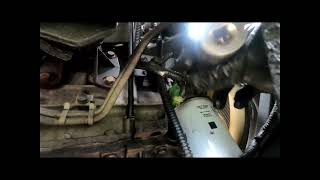
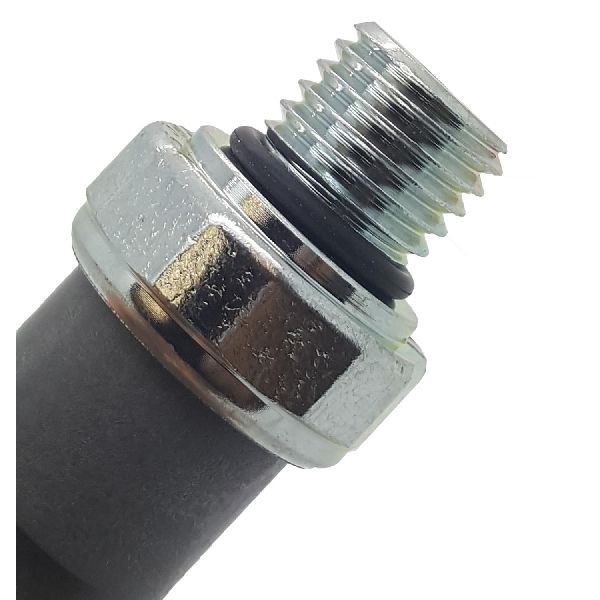
On the 4.2L LL8 engine, code P0521 is most often caused by a failed engine oil pressure sensor. Before replacing it, you must verify the engine's actual oil pressure with a mechanical gauge to rule out a serious internal engine problem. The sensor is a relatively inexpensive part, typically costing between $20 and $60. The sensor is located above the oil filter housing and can be replaced with a special 1-1/16 inch socket.
- P0521 on your Bravada is most likely a bad oil pressure sensor, a common and relatively cheap fix.
- You MUST verify the actual oil pressure with a mechanical gauge before assuming the sensor is bad. Skipping this step could lead to destroying your engine if a real pressure problem exists.
- The correct replacement sensor is GM part number 12621234 (superseded by 12673134) or ACDelco 213-4411.
- Unlike the V8 models, the 4.2L I6 does not have a filter screen under the sensor that needs to be replaced.
- The job is DIY-friendly, with the sensor located above the oil filter. Access can be tight but does not require major disassembly. A special 1-1/16" socket is highly recommended.
What's Unique About the 2002-2004 Oldsmobile Bravada
The 2002-2004 Oldsmobile Bravada is part of the General Motors GMT360 platform, which includes the nearly identical Chevrolet Trailblazer and GMC Envoy. All share the 4.2L LL8 inline-six engine, and information for one model is directly applicable to the others. On this specific engine, the P0521 code is a very common issue, and the cause is overwhelmingly a faulty oil pressure sensor rather than a more serious mechanical failure. Unlike the V8 versions of these trucks where the sensor is notoriously difficult to access at the rear of the engine, the sensor on the 4.2L I6 is located in a more manageable position on the passenger side of the block, just above the oil filter housing. It's also important to note that the instrument cluster gauge on the 4.2L models is often a 'dummy' gauge; it's buffered by the PCM and may not show a true, live reading, making a scan tool's live data more valuable for diagnosis.
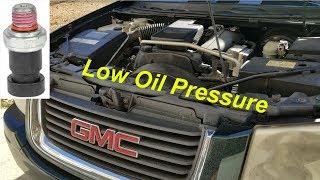
🎬 Watch: A professional guide to diagnosing low oil pressure issues.Symptoms You May Notice
- Check Engine Light is illuminated
- Low Oil Pressure warning light or message on the instrument cluster
- Oil pressure gauge reading erratically, dropping to zero, or staying at maximum.
- Engine making ticking or knocking noises (in cases of actual low oil pressure)
- Oil pressure gauge drops to zero at idle, then jumps back to normal when accelerating.
- Replacing the instrument cluster due to an incorrect gauge reading without first testing the sensor and verifying mechanical pressure.
- Replacing the oil pump without first confirming a true low-pressure condition with a mechanical gauge.
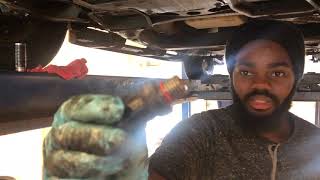
- A dealer incorrectly recommending a full engine replacement based only on the P0521 code, as reported by some owners who later fixed the issue by simply replacing the sensor. 🎬 See how one owner fixed a low oil pressure warning.
Most Likely Causes
- Faulty Engine Oil Pressure Sensor 🔴 High Probability The original equipment sensors on the GMT360 platform are known to have a high failure rate, leading to incorrect readings. The sensor can fail internally, sometimes leaking oil through the connector itself, or simply send erratic voltage signals.
How to confirm: First, verify the engine's actual oil pressure with a mechanical gauge. The LL8 engine should have a minimum of 12 PSI at idle (around 600-1200 RPM) and around 65 PSI at 3000-3500 RPM. If the mechanical pressure is normal and within specifications, but the dashboard gauge is incorrect and the P0521 code is present, the sensor is faulty. A special 1-1/16" deep socket is needed for removal.
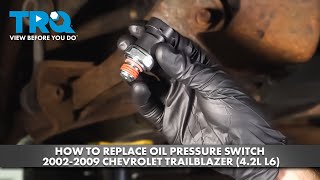
Typical fix: Replace the engine oil pressure sensor. 🎬 Watch: Step-by-step walkthrough for replacing the 4.2L oil pressure switch.
Est. part cost: $20-$60 - Low Engine Oil Level or Incorrect Oil Viscosity 🟡 Medium Probability This is a universal cause not specific to the vehicle. Neglecting oil changes or using oil of the wrong weight (e.g., too thin) can cause pressure to fall out of the expected range. The LL8 engine specifies 5W-30 oil.
How to confirm: Check the engine oil level using the dipstick. Ensure the oil is at the full mark. Verify that the correct oil viscosity (5W-30 for the LL8 engine) is being used. Some owners on forums have reported the code appearing after an oil change and disappearing after switching to a higher-quality or OEM-spec oil filter.
Typical fix: Top off or change the engine oil and filter with the manufacturer-specified grade.
Est. part cost: $30-$70 - Damaged Wiring or Connector ⚪ Low Probability The sensor's location near the oil filter can expose its wiring to oil, heat, and physical damage during service. Oil leaking from a failed sensor can contaminate the connector pins, causing a poor connection.
How to confirm: Visually inspect the wiring harness and connector leading to the oil pressure sensor for signs of oil saturation, corrosion, chafing, or loose pins. Flex the wires near the connector to check for internal breaks.
Typical fix: Clean the connector with electrical contact cleaner or repair the damaged section of the wiring harness. If the connector is damaged, replace the pigtail.
Est. part cost: $10-$30
Rare But Worth Checking
- Failing Oil Pump or Clogged Oil Pickup Tube: → Shop Engine Oil Pump This is a serious mechanical failure. If a mechanical gauge confirms low oil pressure, the engine should not be run. Symptoms would include loud ticking or knocking noises from the engine. The oil pickup tube screen can get clogged with sludge, starving the pump.
- Sticking Oil Pressure Relief Valve: Less common, but the pressure relief valve within the oil pump can stick, causing pressure regulation issues. This would be confirmed by mechanical testing showing pressure that is either too high or too low and does not respond correctly to RPM changes.
Diagnosis Steps
- Check the engine oil level and condition. Top off if low and ensure the correct viscosity (5W-30) is being used.
- CRITICAL STEP: Connect a mechanical oil pressure gauge to the engine. The port for the sensor is an M16 x 1.5 thread. This is the only way to know if the oil pressure is actually low or if the sensor is just reporting it incorrectly.
- Start the engine and let it warm up. Compare the reading on the mechanical gauge to the vehicle's instrument panel gauge and the scanner's live data.
- Check mechanical pressure at idle and at higher RPMs. For the LL8, expect at least 12 PSI at idle and around 65 PSI at 3,000 RPM.
- If mechanical pressure is good but the vehicle's gauge is faulty, proceed with diagnosing the sensor.
- If mechanical pressure is low, stop the engine immediately. The problem is internal to the engine (e.g., oil pump, bearings, clogged pickup tube) and requires professional diagnosis.
- Inspect the oil pressure sensor's electrical connector and wiring for damage, corrosion, or oil contamination. The connector is a 3-pin connector.
- If wiring is intact and mechanical pressure is good, the oil pressure sensor is the most likely culprit. Replace the sensor. A special 1-1/16" oil pressure switch socket is recommended.
- After replacement, clear the code and perform a test drive to ensure the fix was successful.
Parts You'll Likely Need
- Engine Oil Pressure Sensor
(OEM #12621234, superseded by 12673134)— This is the most common failure point for code P0521 on the GMT360 platform.
Trusted brands: ACDelco (OEM), Standard Motor Products, Delphi
OEM price range: $45-$60
Aftermarket price range: $20-$40 - Oil Pressure Sensor Connector Pigtail
(OEM #ACDelco PT2783)— Needed if the original connector is broken, corroded, or oil-soaked from a leaking sensor.
Trusted brands: ACDelco, Standard Motor Products (S-955), Dorman
OEM price range: $30-$40
Aftermarket price range: $10-$25 - Oil Pressure Switch Socket — A special deep socket is required to remove and install the sensor without damaging it. The common size is 1-1/16 inch.
Trusted brands: Lisle, OEMTOOLS (25254), GearWrench
Aftermarket price range: $10-$20
Related Codes That Often Appear With This One
- P0520 — This code indicates a fault in the sensor's electrical circuit, while P0521 points to a performance/range issue. A failing sensor can trigger either or both codes.
- P0522 — This code indicates the sensor circuit voltage is too low. It can be caused by the same issues as P0521, such as a bad sensor or wiring problem.
- P0523 — This code indicates the sensor circuit voltage is too high. An internally shorted sensor can cause this code, often resulting in a gauge that reads maximum pressure.
Technical Service Bulletins (TSBs) & Recalls
- While no TSB is directly for P0521 on the 4.2L, TSB PIP4786C for GMT360 V8 models discusses P0521 and low oil pressure warnings, pointing to a clogged sensor filter screen. This highlights the platform's known issues with the oil pressure monitoring system, though the 4.2L does not have the screen. Manufacturer TSB Bulletin #PIP4786C further notes that technicians may find a low oil pressure message or P0521 in the engine control module and should verify pressure using a scan tool.
Platform-Specific Known Issues
- While the V8 engines on this platform have a filter screen under the sensor that is notorious for clogging, the 4.2L I6 engine does not have this screen. Do not attempt to find or replace one.
- The instrument panel oil pressure gauge is not a real-time indicator on the 4.2L I6. It is buffered by the PCM and will often show a 'normal' reading even if the sensor is unplugged or reading incorrectly at times. A scan tool showing live data is more reliable for diagnosis.
Mechanic-Grade Diagnostic Values
- Oil Pressure Sensor Signal Voltage — expected: Approx. 0.5V with key-on, engine-off. Voltage should increase as engine RPM and oil pressure rise, varying between 0V and 5V.. Failure: Voltage is stuck at 0V, 5V, or does not change rationally with engine speed.
- Oil Pressure Sensor Connector Pins — expected: The 3-pin connector should have a 5V reference wire, a ground wire, and a signal wire that returns a variable voltage to the PCM.. Failure: Missing 5V reference or poor ground at the connector will cause incorrect readings.
- PCM Pin for Oil Pressure Signal — expected: The oil pressure signal wire from the sensor terminates at Pin 58 of the RED PCM connector (C1).. Failure: Testing for continuity between the sensor connector and this pin can identify a broken wire in the harness.
Wiring & Ground Locations
- G103 — Located on the right (passenger) side underhood, often on the radiator support or front of the cylinder head.. This is a primary engine-to-chassis ground. Corrosion or a loose connection here can cause erratic voltage and unstable sensor readings for the entire engine management system, including the oil pressure sensor.
- G104 — Located on the driver's side of the engine, sometimes on the back of the cylinder head or near the starter motor.. A critical engine ground point. A poor connection here can cause a floating ground reference for sensors, leading to illogical readings and codes like P0521.
- Oil Pressure Sensor Connector — A 3-pin connector attached to the sensor, located on the passenger side of the engine block just above the oil filter.. The sensor is known to leak oil internally through the connector pins, contaminating the connection and causing signal issues. The wiring here is also subject to heat and oil exposure, which can degrade the insulation over time.
Real Owner Repair Stories
- Reddit user in r/ChevyTrucks (Chevrolet Truck with P0521) — Recurring P0521 code.
❌ Tried (didn't work) Replacing the oil pressure sensor.
✅ What actually fixed it Changing the oil and using a high-quality Mobil 1 (M1-113A) oil filter resolved the issue, and it did not return 5,000 miles later. - Reddit user in r/GMT800 (GM Truck (GMT800 platform, 99-02)) — Weird starting issue and erratic oil pressure readings.
❌ Tried (didn't work) Replacing the oil pressure sensor with an aftermarket brand (Standard Motor Products).
✅ What actually fixed it After extensive troubleshooting, the owner found an obscure forum post pointing back to the sensor. Swapping in a used OEM sensor from a junkyard engine immediately and permanently fixed the problem. The user noted, "These trucks are really weird with aftermarket sensors."
"I Checked Everything" — The Actual Cause
- In cases where a mechanical pressure test is good and a new sensor has been installed, the brand of oil filter has been reported to be the root cause. Some aftermarket oil filters with different internal bypass valve specifications or flow characteristics can cause pressure fluctuations that the PCM interprets as a range/performance fault, setting P0521. Switching to an OEM-spec filter (e.g., ACDelco or a premium equivalent like Mobil 1) has resolved the code for some owners.
OEM Part Supersession History
12621234→12673134— Standard part lifecycle update, likely for improved reliability or material changes.
Model Year Variations Within This Range
- 2002-2004: Within the 2002-2004 model years of the Oldsmobile Bravada, there are no significant documented changes to the LL8 engine's oiling system, sensor, or wiring that would affect the diagnosis of a P0521 code. The major revisions to the LL8 engine, such as changes to the cylinder head, connecting rods, and VVT system, occurred in the 2006 model year, after the Bravada was discontinued.
Diagnostic Flowchart
Used vs. New Parts: Buying Guide for This Vehicle
When a used part is the smart pick: For the primary fix (the oil pressure sensor), a used part is strongly discouraged. It is a low-cost electronic part with a known high failure rate. The risk of getting a part that is already failing or will fail shortly outweighs any minor cost savings.
What to inspect on the donor part:
- Not applicable for the sensor. Avoid used sensors.
OEM-only on this vehicle (don't cheap out):
- Engine Oil Pressure Sensor: While not strictly 'OEM-only', forum consensus strongly suggests that using an OEM ACDelco sensor is the safest bet to ensure the code is resolved without comebacks. Some aftermarket sensors are known to be poorly calibrated and can cause the code to persist.
Aftermarket brands forum-validated for this vehicle:
- ACDelco (OEM/Professional Line)
- Delphi (Often an OEM supplier)
Brands owners have reported issues with on this vehicle:
- Unbranded/white-box parts
- Standard Motor Products (SMP): While a major brand, there are specific forum reports of their oil pressure sensor not resolving P0521 on this platform, requiring a switch to OEM.
- Airtex / Wells: Generally regarded in forums as a lower-tier brand for electronic parts.
Real Owner Stories
Aggregated from forums and TSBs cited above. Mileages and costs reflect what owners reported in those sources.
2006 GMC Envoy Denali
Symptoms: Check engine light with code P0521 would not clear.
What fixed it: The owner did not report a final fix, but commenters suggested checking live data with a scanner, verifying voltage at the sensor connector, and confirming the actual oil pressure with a mechanical gauge.
Source hint: Reddit r/MechanicAdvice
2005 Trailblazer 5.3L — 171000 miles
Symptoms: Check Engine Light (CEL) with code P0521 and the oil pressure gauge on the instrument panel was reading at the maximum pressure.
What fixed it: Another user in the thread reported a successful fix by replacing the sensor.
Source hint: GMTNation
Related OBD-II Codes
Frequently Asked Questions
I read about a clogged filter screen under the oil pressure sensor causing P0521 on these trucks. Does my 4.2L Bravada have this screen?
My oil pressure gauge on the dash seems to work fine, but I still have a P0521 code. Can the gauge be trusted?
What is the correct oil pressure for my 4.2L I6 engine?
Do I need a special tool to replace the oil pressure sensor on my Bravada?
I just did an oil change and now the P0521 code appeared. What could be the cause?
How common is it for the oil pressure sensor to fail on the 2002-2004 Bravada?
Helpful Videos
We Have This Part in Stock


The information in this article is provided for general reference and educational purposes only. Vehicle specifications, procedures, and part compatibility can vary by production date, trim level, and region. Always consult your vehicle's factory service manual and verify part numbers before purchasing or performing repairs. Safety-critical components such as airbags, seat belts, and braking systems should be installed by a qualified professional.
- Oldsmobile Bravada:
- 🧭 Diagnostic Flowchart
- 🎬 Helpful Videos
- 🛍️ Shop This Part
- What's Unique About the 2002-2004 Oldsmobile Bravada
- Symptoms You May Notice
- Most Likely Causes
- Rare But Worth Checking
- Diagnosis Steps
- Parts You'll Likely Need
- Related Codes That Often Appear With This One
- Technical Service Bulletins (TSBs) & Recalls
- Platform-Specific Known Issues
- Mechanic-Grade Diagnostic Values
- Wiring & Ground Locations
- Real Owner Repair Stories
- "I Checked Everything" — The Actual Cause
- OEM Part Supersession History
- Model Year Variations Within This Range
- Used vs. New Parts: Buying Guide for This Vehicle
- Real Owner Stories
- 2006 GMC Envoy Denali
- 2005 Trailblazer 5.3L — 171000 miles
- Related OBD-II Codes
- Frequently Asked Questions
- 🎟️ Get 5% Off