

P0521 on 2008-2009 Pontiac G8: Engine Oil Pressure Sensor Causes and Fixes
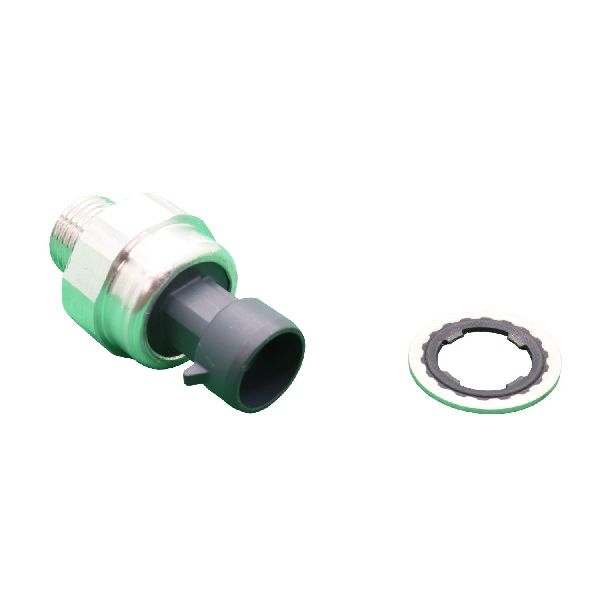
On a 2008-2009 Pontiac G8, code P0521 is most often caused by a faulty engine oil pressure sensor (ACDelco D1846A / GM 12677836). On V8 models, a small, clogged filter screen (GM 12585328) underneath the sensor is also a very common culprit. Replacing both the sensor and the screen is a common DIY fix that requires a special 1-1/16" or 27mm deep socket.
- P0521 on a Pontiac G8 almost always points to a bad oil pressure sensor, especially on V8 models.
- Do not drive the vehicle until you confirm the cause. A faulty sensor is cheap to fix, but a real low oil pressure condition can destroy the engine.
- The most important diagnostic step is to verify the true oil pressure with a mechanical gauge.
- On V8 models (GT/GXP), always replace the small filter screen located in the block underneath the sensor at the same time as the sensor itself.
- Replacing the sensor on a V8 is a manageable DIY job but requires a special deep socket (27mm or 1-1/16") and long extensions to reach it behind the intake manifold.
What's Unique About the 2008-2009 Pontiac G8
For the V8-powered G8 GT (L76) and GXP (LS3) models, this code is extremely common and almost always points to the oil pressure sensor itself, which is known to fail frequently across the entire GM LS engine family. These engines also feature a small, replaceable filter screen (GM Part #12585328) directly underneath the sensor. This screen's primary purpose is to protect the oil passages for the Active Fuel Management (AFM) / Displacement on Demand (DOD) lifters from debris. This screen can get clogged with sludge, restricting oil flow to the sensor and causing a false low-pressure reading that triggers P0521, even when the engine's main oil pressure is fine. The sensor's location at the very back of the engine valley, tucked behind the intake manifold, makes replacement a bit tricky, requiring a special deep socket (1-1/16" or 27mm) and long extensions.
Symptoms You May Notice
- Check Engine Light is on
- Oil pressure warning light is on
- Oil pressure gauge reading is erratic, stuck at zero, or stuck at maximum (e.g., 127+ psi).
- "Low Oil Pressure" message on the driver information center
- Engine may enter a reduced power mode.
- Replacing the oil pump before verifying actual oil pressure with a mechanical gauge.
- Replacing the Powertrain Control Module (PCM) when the issue is a simple sensor or wiring fault.
Most Likely Causes
- Faulty Engine Oil Pressure Sensor 🔴 High Probability The original equipment sensors on this platform are known for high failure rates. They are exposed to intense heat cycles at the back of the engine, which can cause them to fail internally and send erratic signals. This is a well-documented issue across the GM LS engine family.
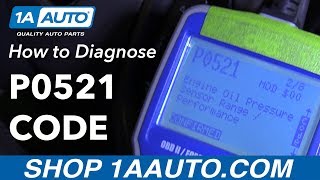
How to confirm: If the oil pressure gauge reads high (e.g., pegged at max) with the key on and engine off, the sensor is faulty. The ultimate confirmation is to check the actual oil pressure with a mechanical gauge and compare it to the sensor's reading. 🎬 See how to diagnose a failed sender and verify the code. If the mechanical gauge is steady and in spec, but the dash gauge is erratic or incorrect, the sensor has failed.
Typical fix: Replace the engine oil pressure sensor. The most common replacement part is ACDelco D1846A (GM #12616646), which has been superseded by GM #12677836. It is highly recommended to also replace the filter screen underneath it on V8 models.
Est. part cost: $35-$75 - Clogged Oil Pressure Sensor Filter Screen (V8 Models) 🔴 High Probability → Shop Engine Oil Pressure Sensor V8 models (L76, LS3) have a small filter screen (GM Part #12585328) under the sensor to protect the Active Fuel Management (AFM) system hardware. This screen can become clogged with engine sludge or debris, especially on higher mileage engines or those with extended oil change intervals, starving the sensor of oil pressure and causing a false low reading.
How to confirm: This is typically found during the sensor replacement. When the old sensor is removed, the screen can be inspected and pulled out with a pick or hook tool. A clogged screen will be visibly full of dark, sludgy material.
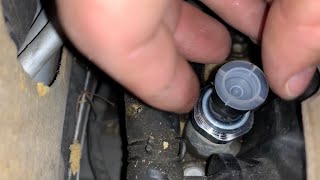
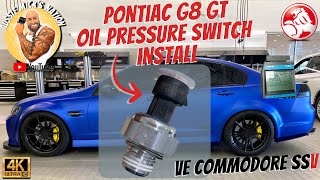
Typical fix: Remove and replace the small filter screen 🎬 Watch: This detailed walkthrough shows the sensor and screen installation. when replacing the oil pressure sensor. Do not just clean the old one; a new part is inexpensive and ensures no debris remains.
Est. part cost: $5-$15 - Incorrect or Degraded Engine Oil 🟡 Medium Probability The AFM system is sensitive to oil viscosity and cleanliness. Using oil that is too thick, too thin, or broken down from age can affect pressure readings and trigger the code.
How to confirm: Check the oil level and condition on the dipstick. If the oil is very old, dirty, or the wrong viscosity (e.g., not 5W-30 as specified), it can affect pressure readings. Some GM TSBs also note that using non-OEM oil filters can contribute to this code.
Typical fix: Perform an oil and filter change using a full synthetic oil of the manufacturer-specified viscosity (5W-30) and a quality OEM filter (e.g., ACDelco PF48E).
Est. part cost: $50-$120 - Wiring or Connector Issue ⚪ Low Probability The sensor connector is at the back of the engine and can be exposed to heat, which may make the plastic brittle. Oil can also leak from a failed sensor and contaminate the connector, causing poor contact.
How to confirm: Inspect the wiring harness and three-pin connector for signs of damage, corrosion, or oil saturation. A user on LS1Tech.com noted the importance of checking for 5V reference, ground, and signal voltage at the connector to rule out a wiring fault. Clean any oil out with electrical contact cleaner.
Typical fix: Clean the connector. If the connector or wiring is damaged, a new pigtail may need to be spliced in.
Est. part cost: $15-$30
Rare But Worth Checking
- Sticking Oil Pump Pressure Relief Valve: → Shop Engine Oil Pump GM TSB 20-NA-161 discusses how a sticking pressure relief valve inside the oil pump can cause intermittent low oil pressure and trigger a P0521 code. This is a more serious mechanical issue that requires oil pump inspection or replacement.
- Failing Oil Pump or Worn Internal Engine Components: → Shop Engine Oil Pump This is the worst-case scenario. If a new sensor is installed and a mechanical gauge confirms that the actual oil pressure is low (e.g., below 26 psi at warm idle), it points to a serious mechanical issue like a worn oil pump, a bad pickup tube O-ring, or worn engine bearings.
Diagnosis Steps
- Check the engine oil level and condition. Ensure it is full and clean. Using the correct oil viscosity (5W-30) and a quality filter is crucial.
- Observe the oil pressure gauge with the key on, engine off. If it reads anything other than zero, the sensor is faulty.
- Start the engine and observe the gauge. Note if it is erratic, pegged high, or reads zero. Listen for any unusual engine noises like knocking or ticking, which would indicate a true low pressure problem.
- If possible, connect a scan tool to view the live oil pressure data reported by the sensor and to check for the specific conditions under which the code was set.
- CRITICAL STEP: Connect a mechanical oil pressure gauge to the engine. On V8 models, this is typically done at an oil galley port on the side of the engine block. Compare the reading from the mechanical gauge to the reading on the dashboard gauge/scan tool at both idle and ~2000 RPM when the engine is warm.
- If the mechanical gauge shows normal pressure (e.g., >26 psi warm idle, rising with RPM) but the vehicle's 🎬 Watch: A mechanic's guide to diagnosing true low oil pressure. gauge is incorrect, the problem is with the sensor, wiring, or connector.
- If the mechanical gauge confirms low oil pressure, the vehicle has a serious mechanical issue (e.g., oil pump, relief valve, bearings) that needs immediate attention.
- Inspect the oil pressure sensor connector for oil contamination, corrosion, or damage. Test the 3-wire circuit for proper voltage and ground if you have a multimeter.
- If all signs point to the sensor, proceed with replacing the sensor and, on V8 models, the filter screen beneath it.
Parts You'll Likely Need
- Engine Oil Pressure Sensor (Switch/Sending Unit)
(OEM #ACDelco D1846A (GM 12616646), superseded by GM 12677836)— This is the most common failure item for code P0521 on the Pontiac G8 and related LS engines.
Trusted brands: ACDelco, Delphi
OEM price range: $45-$75
Aftermarket price range: $25-$50 - Valve Lifter Oil Filter (Sensor Screen)
(OEM #GM 12585328)— On V8 models, this screen often clogs with debris, causing a false pressure reading at the sensor. It should always be replaced with the sensor.
Trusted brands: ACDelco, Dorman
OEM price range: $10-$15
Aftermarket price range: $5-$10 - Oil Pressure Sensor Socket — A special deep socket, specifically 1-1/16 inch or 27mm, is required to remove and install the sensor due to its shape and tight location on V8 models.
Trusted brands: Lisle, OEMTools
Aftermarket price range: $10-$20
Technical Service Bulletins (TSBs) & Recalls
- GM TSB 20-NA-161: Discusses P0521 being caused by a sticking oil pump pressure relief valve in some V8 engines, requiring inspection of the oil pump if a sensor/screen replacement does not fix the issue.
- Manufacturer TSB Bulletin #PIP4786C provides information for technicians regarding vehicles that display a "Low Oil Pressure" message and a P0521 code stored in the Engine Control Module. It advises following all published service diagnosis when a scan tool indicates low oil pressure.
- While not a specific TSB number, a common recommendation found in GM documentation is the use of genuine ACDelco oil filters (PF48E), as some aftermarket filters can cause oil pressure discrepancies.
Platform-Specific Known Issues
- On V8 models (GT, GXP), the oil pressure sensor is located in a difficult-to-reach position at the top rear of the engine valley, behind the intake manifold. Access requires long extensions and a swivel, but the intake manifold does not typically need to be removed.
- The Active Fuel Management (AFM) system on the L76 V8 engine relies on specific oil pressures to activate and deactivate cylinders. A faulty sensor or clogged screen can disrupt this system and is why the protective screen exists.
- Real-world owner story: A user on GRRRR8.net reported going to the dealer 5 times for P0521. After replacing the sensor, filter, oil pan relief valve, and PCM, the final fix was a new oil pump.
Mechanic-Grade Diagnostic Values
- Normal Engine Oil Pressure (V8, Warm Idle) — expected: 26-35 PSI. Failure: Consistently below 25 PSI at warm idle may indicate a mechanical issue.
- Normal Engine Oil Pressure (V8, 2000-3000 RPM) — expected: 45-70 PSI. Failure: Pressure not increasing with RPM points to a potential oil pump or internal engine issue.
- Sensor Signal Voltage — expected: Approx. 1.0V - 4.0V. Failure: Voltage that is stuck, or reads 0V or 5V constantly, indicates a sensor or wiring fault.
- Sensor 5V Reference Voltage (Key On, Engine Off) — expected: 5.0 Volts. Failure: No voltage or low voltage indicates a wiring or PCM issue.
- Sensor Low Reference (Ground) Circuit — expected: Near 0 Volts. Failure: Voltage present on the ground wire indicates a bad ground connection.
- P0521 DTC Set Condition (Low Pressure) — expected: Pressure < 1.16 PSI when Engine Speed > 1520 RPM for 4 seconds.. Failure: This is the specific threshold the PCM uses to trigger the fault code.
- P0521 DTC Set Condition (High Pressure) — expected: Pressure > 127.6 PSI when Engine Speed < 640 RPM.. Failure: This specific, illogical condition is a clear indicator of a sensor electrical fault.
Wiring & Ground Locations
- Oil Pressure Sensor Connector — Top rear of the engine valley, behind the intake manifold on V8 models.. This 3-pin connector is the direct interface for the sensor. Pin 1 is Low Reference (Ground), Pin 2 is 5V Reference, and Pin 3 is the Signal wire. Checking for voltage and continuity here is a primary diagnostic step.
- G103 — On the ABS bracket in the engine compartment.. This is listed as the engine block ground. A poor connection here can cause a variety of sensor issues, including erratic readings from the oil pressure sensor which relies on a stable ground reference.
- G111 / G112 — G111 is from the right front cylinder head to the engine harness. G112 is from the left rear cylinder head to the engine harness.. These are the primary engine harness grounds attached to the cylinder heads. A loose or corroded connection at these points can affect the ground reference for multiple sensors, including the oil pressure sensor, leading to incorrect readings and codes like P0521.
Real Owner Repair Stories
- GRRRR8.net user 'Mkoz' (2009 Pontiac G8 GT, ~50,000 km) — P0521 code, primarily setting during light cruise with AFM engaged.
❌ Tried (didn't work) Replaced oil pressure sensor, Replaced lifter filter screen, Replaced oil pan relief valve, Replaced PCM
✅ What actually fixed it The dealer replaced the oil pump, which finally resolved the recurring P0521 code. This indicates that even with a new sensor, an intermittent mechanical issue with the pump itself was the root cause. - LS1TECH.com user 'Red89GTA' (2009 Pontiac G8 GT, ~210,000 miles) — P0521 code returned after 2 drive cycles, even after replacing the sensor and screen.
❌ Tried (didn't work) Replacing the oil pressure sensor and filter screen (screen was not clogged).
✅ What actually fixed it The user connected a mechanical gauge and confirmed oil pressure was within spec (26psi warm idle, 48psi at 3k RPM). The thread concludes with the user suspecting worn cam bearings as the likely cause for the discrepancy between the good mechanical pressure and the code being set, although a final repair was not posted, the diagnostic conclusion points away from the common sensor fix.
When the Usual Fixes Don't Work
- While the vast majority of P0521 codes on the G8 are fixed by replacing the sensor and screen, a notable forum case documents a 2009 G8 GT that required five dealer visits. After replacing the sensor, screen, oil pan relief valve, and even the PCM, the code persisted. The ultimate fix was the replacement of the oil pump, highlighting that in rare cases where the common fixes fail, an intermittent mechanical pump issue can be the root cause.
OEM Part Supersession History
GM 12616646 (ACDelco D1846A)→GM 12677836— Updated design. The newer part is aluminum, while some older versions may have been different. There have been reports of quality control issues with various batches over the years.
Heads up: While a direct replacement, some users on forums have reported repeated failures of the newer aluminum sensors, sometimes opting for brass aftermarket alternatives like Standard Motor Products PS308, though this is not an official GM recommendation.N/A→GM 12585328— This is the standard part number for the valve lifter oil filter screen used across many Gen IV LS engines with AFM.
Model Year Variations Within This Range
- 2009: For the 2009 model year, GM eliminated the center-console digital oil pressure and voltage gauges, replacing the space with a storage cubby. This means 2009 owners rely solely on the instrument panel cluster (IPC) gauge and any warning lights/messages for oil pressure information.
Diagnostic Flowchart
Used vs. New Parts: Buying Guide for This Vehicle
When a used part is the smart pick: For this specific repair (P0521), using used parts is NOT recommended. The primary failure components—the oil pressure sensor and the filter screen—are inexpensive, high-failure-rate wear items. A used sensor has an unknown history and is likely to fail soon, if it isn't already faulty. A used screen is likely to be clogged. It is not a smart place to save money.
What to inspect on the donor part:
- Not applicable. Do not use used sensors or screens for this repair.
OEM-only on this vehicle (don't cheap out):
- Engine Oil Pressure Sensor
- Valve Lifter Oil Filter (Screen)
Aftermarket brands forum-validated for this vehicle:
- ACDelco (OEM supplier)
- Delphi (Often an OEM supplier)
Brands owners have reported issues with on this vehicle:
- Unnamed, no-brand sensors from online marketplaces are a significant gamble. While some may work, forum discussions often contain stories of these parts being dead-on-arrival or failing within weeks, forcing the owner to repeat the difficult repair.
Real Owner Stories
Aggregated from forums and TSBs cited above. Mileages and costs reflect what owners reported in those sources.
2008-2009 Pontiac G8 V8
Symptoms: Persistent P0521 code that required five separate visits to the dealer to troubleshoot.
What fixed it: After attempts to fix it by replacing the sensor, filter, oil pan relief valve, and PCM all failed, the issue was finally resolved by replacing the oil pump.
Source hint: GRRRR8.net, as cited in vehicle_specific_issues
2009 Pontiac G8 GT
Symptoms: The P0521 code returned even after replacing both the oil pressure sensor and the filter screen underneath it.
What fixed it: The owner used a mechanical gauge to confirm the actual oil pressure was good (26psi at warm idle, 48psi at 3k RPM). This diagnosis pointed the problem away from the oiling system and towards an electrical issue in the sensor's circuit.
Source hint: LS1TECH.com thread titled '09 G8 GT w/P0521'
Pontiac G8 GT (L76 engine)
Symptoms: Vehicle was setting a low oil pressure code, P0521-00.
What fixed it: The code was resolved by cleaning sludge out of the engine's oil pickup tube.
Source hint: Just-Commodores.com thread titled 'VE L76 & L77 Low Oil Pressure - P0521-00 DTC'
Related OBD-II Codes
Frequently Asked Questions
Where is the oil pressure sensor on my G8 V8, and is it difficult to replace?
I'm replacing the oil pressure sensor on my G8 GT. Is there anything else I should replace at the same time?
My oil pressure gauge is pegged at maximum even with the engine off. What does that mean?
What is the correct replacement part number for the oil pressure sensor on my 2008 G8?
I replaced the sensor and screen, but the P0521 code came back. What does GM TSB 20-NA-161 suggest?
What is the correct oil and filter to use to help prevent P0521 on my Pontiac G8?
How does the Active Fuel Management (AFM) system relate to this oil pressure code?
Helpful Videos
We Have This Part in Stock


The information in this article is provided for general reference and educational purposes only. Vehicle specifications, procedures, and part compatibility can vary by production date, trim level, and region. Always consult your vehicle's factory service manual and verify part numbers before purchasing or performing repairs. Safety-critical components such as airbags, seat belts, and braking systems should be installed by a qualified professional.
- Pontiac G8:
- 🧭 Diagnostic Flowchart
- 🎬 Helpful Videos
- 🛍️ Shop This Part
- What's Unique About the 2008-2009 Pontiac G8
- Symptoms You May Notice
- Most Likely Causes
- Rare But Worth Checking
- Diagnosis Steps
- Parts You'll Likely Need
- Technical Service Bulletins (TSBs) & Recalls
- Platform-Specific Known Issues
- Mechanic-Grade Diagnostic Values
- Wiring & Ground Locations
- Real Owner Repair Stories
- When the Usual Fixes Don't Work
- OEM Part Supersession History
- Model Year Variations Within This Range
- Used vs. New Parts: Buying Guide for This Vehicle
- Real Owner Stories
- 2008-2009 Pontiac G8 V8
- 2009 Pontiac G8 GT
- Pontiac G8 GT (L76 engine)
- Related OBD-II Codes
- Frequently Asked Questions
- 🎟️ Get 5% Off