

P0521 on 2008-2009 Pontiac Torrent 3.6L: Oil Pressure Sensor Range/Performance Causes and Fixes
On a 2008-2009 Pontiac Torrent with the 3.6L V6, code P0521 is most often caused by a faulty oil pressure sensor and its small, clogged filter screen. The repair is moderately difficult as the starter motor must be removed for access. Expect to pay around $40-$70 for the parts.
- P0521 on this vehicle is a serious warning. Do not ignore it.
- The first and most important diagnostic step is to verify the actual engine oil pressure with a mechanical gauge to rule out a major mechanical failure.
- The most likely fix is replacing both the oil pressure sensor and the small filter screen (GM Part #12585328) located underneath it.
- The repair is difficult for a DIYer because the starter motor must be removed to access the sensor.
- Use only a full synthetic 5W-30 oil meeting dexos1 specs and a high-quality ACDelco oil filter. Shorten oil change intervals to 5,000 miles to help prevent sludge and protect the timing chains.
What's Unique About the 2008-2009 Pontiac Torrent
The 2008-2009 Pontiac Torrent uses the GM 3.6L LY7 V6, an engine known for timing chain issues that are often linked to oil pressure and quality. Therefore, a P0521 code on this vehicle warrants extra attention. A very common failure point on this engine is a small, thimble-sized filter screen located in the oil passage directly under the sensor (GM Part #12585328). This screen is notorious for clogging with sludge, which starves the sensor of an accurate pressure reading and is a frequent cause of this code. GM acknowledged this issue in Technical Service Bulletin (TSB) PIP4786C.
Symptoms You May Notice
- Check Engine Light is on
- "Low Oil Pressure" or "Oil Pressure Low - Stop Engine" message on the driver information center
- Oil pressure gauge reads zero, is stuck at maximum, or fluctuates erratically
- Engine ticking or knocking noises (in cases of actual low oil pressure)
- In some cases, the vehicle may enter a reduced power 'limp mode'.
- Replacing the oil pump before verifying actual low pressure with a mechanical gauge.
- Replacing the instrument cluster or gauge because of an erratic reading.
- Replacing only the oil pressure sensor but not the small filter screen underneath it, which often leads to the code returning.
- Using a cheap, low-quality aftermarket oil pressure sensor that fails quickly.
Most Likely Causes
- Faulty Engine Oil Pressure Sensor 🔴 High Probability The sensor operates in a high-heat, high-vibration environment and can fail electronically, sending incorrect voltage signals to the ECM. It is also known to leak oil through its body, which can contaminate the electrical connector.
How to confirm: After confirming real oil pressure is good with a mechanical gauge, the sensor is the prime suspect. If the gauge on the dash reads pressure when the engine is off, the sensor is bad. Many owners report that using non-OEM sensors leads to a quick return of the code. If oil is found in the electrical connector, the sensor has failed internally.
Typical fix: Replace the oil pressure sensor. On this vehicle, this requires removing the starter motor for access. A special 1-1/16" (or 27mm) thin-walled oil pressure sensor socket is required.
Est. part cost: $25-$50 - Clogged Oil Pressure Sensor Filter Screen 🔴 High Probability → Shop Engine Oil Pressure Sensor This is a known issue on the GM 3.6L V6 engine family, addressed in TSB PIP4786C. Sludge and debris from normal engine wear, or from extended oil change intervals, collect in this small screen, blocking oil flow to the sensor and causing a false reading.
How to confirm: The screen is located directly underneath the oil pressure sensor. It is typically inspected and found to be clogged during the sensor replacement process. It is often black and filled with sludge.
Typical fix: The screen should always be replaced when replacing the oil pressure sensor. It is a very inexpensive part (OEM #12585328). Skipping this step is a common reason for the code to return.
Est. part cost: $5-$15 - Low or Incorrect Engine Oil 🟡 Medium Probability The LY7 engine can consume oil between changes, and running the engine low on oil is a primary cause of low pressure. Using oil that is not 5W-30 full synthetic that meets the GM dexos1 specification can accelerate sludge formation and clog the sensor screen.
How to confirm: Check the engine oil dipstick on a level surface when the engine is cool. The level should be in the cross-hatched area.
Typical fix: Top off or change the engine oil and filter using a full synthetic SAE 5W-30 oil that meets the GM dexos1 specification.
Est. part cost: $40-$80 - Incorrect Oil Filter ⚪ Low Probability → Shop Engine Oil Filter Adapter GM engines can be sensitive to the oil filter's internal bypass valve pressure rating. Using an aftermarket filter with the wrong specifications can cause pressure reading anomalies and trigger a P0521 code. Some owners have reported resolving persistent P0521 by switching to a high-quality filter like an ACDelco PF48E or Mobil 1 M1-113A.
How to confirm: Check the part number of the currently installed oil filter. Cross-reference it with the OEM-specified ACDelco filter (PF48 or its successor, the PF63).
Typical fix: Replace the oil filter with a high-quality, OEM-specified filter, such as from ACDelco (PF48E/PF63E) or a premium equivalent.
Est. part cost: $10-$20
Rare But Worth Checking
- Stretched Timing Chains: The 3.6L LY7 engine is infamous for premature timing chain wear, acknowledged by GM in TSBs like #12-06-01-009F and Special Coverage Adjustment #11340C. This code can be an early symptom. Low oil pressure accelerates chain wear, and debris from failing chain guides can clog oil passages, creating a vicious cycle. This is often accompanied by timing-related codes like P0008, P0016, or P0017.
- Failing Oil Pump: → Shop Engine Oil Pump While rare, a worn or failing oil pump can cause genuine low oil pressure. This would be confirmed by a low reading on a mechanical pressure gauge across all RPM ranges. Some GM engines have a pressure relief valve in the pump that can stick, a problem noted in TSB PIP4158E.
- Wiring or Connector Damage: The wiring harness or 3-pin electrical connector for the sensor can become damaged, oil-soaked, or corroded, leading to an intermittent or incorrect signal. The connector's locking tab can become brittle and break during removal. The replacement pigtail is GM part #12085500.
Diagnosis Steps
- Check the engine oil level and condition. Top up or change if necessary. Ensure the correct viscosity oil (SAE 5W-30) and a quality oil filter are being used.
- Scan for other DTCs. Pay close attention to any timing-related codes (e.g., P0008, P0016, P0017), as this points to a more serious issue on this engine.
- Connect a mechanical oil pressure gauge in place of the sensor. This is the most critical step. Start the engine and compare the mechanical gauge reading to the vehicle's gauge and scan tool data.
- Expected oil pressure for the 3.6L LY7 is a minimum of 69 kPa (10 psi) at hot idle and 138 kPa (20 psi) at 2,000 RPM. If the mechanical gauge shows good, stable oil pressure but the vehicle's gauge is erratic or incorrect, the problem is electrical. Proceed with replacing the oil pressure sensor and the filter screen beneath it.
- If the mechanical gauge confirms low or fluctuating oil pressure, you have a serious mechanical problem. Do not run the engine. Investigate potential causes like a clogged oil pump pickup tube, failing oil pump, or excessive wear in engine bearings or timing components.
- While replacing the sensor, inspect its electrical connector and wiring for any signs of damage, corrosion, or oil contamination. Repair or replace the connector pigtail if necessary.
Parts You'll Likely Need
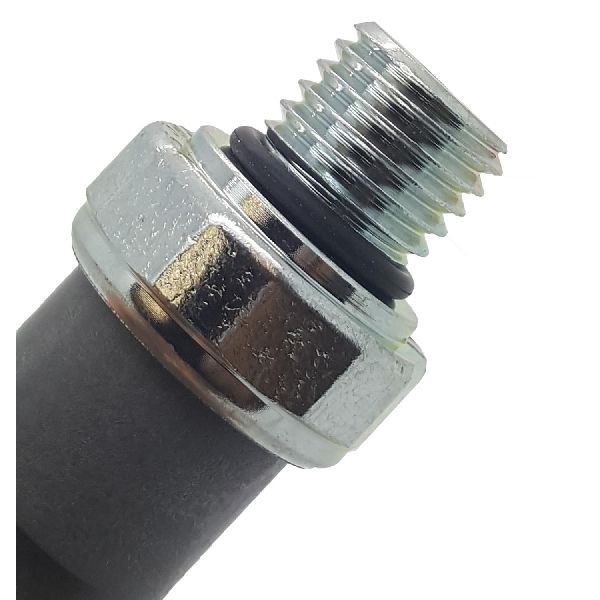
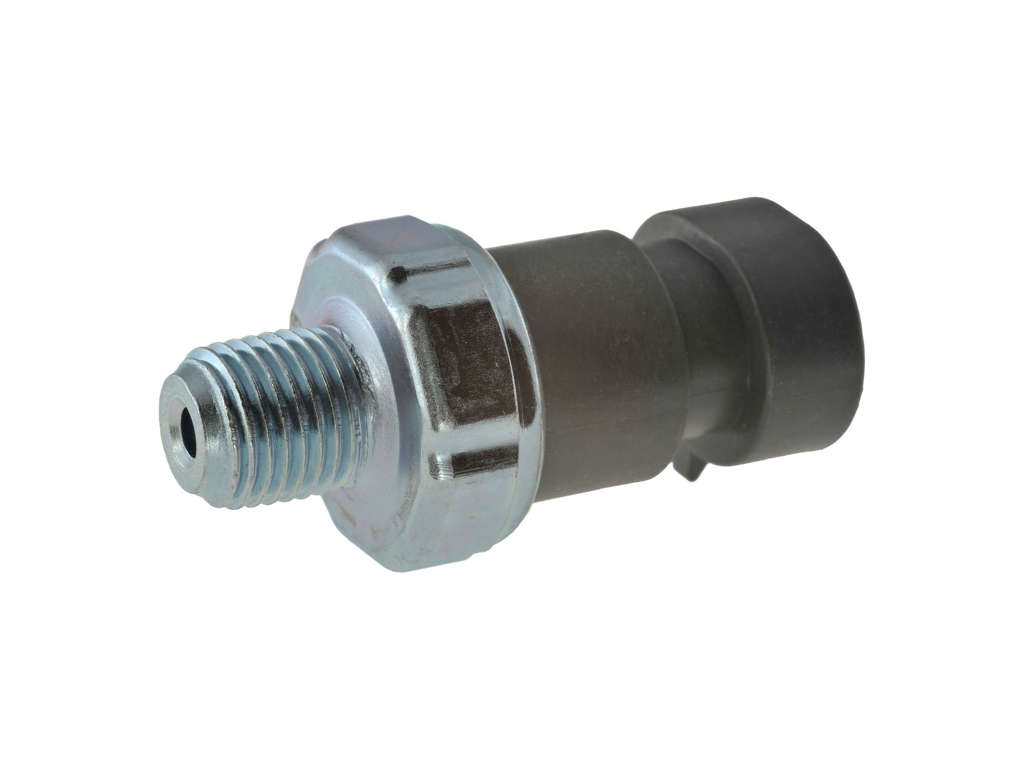
- Engine Oil Pressure Sensor
(OEM #12635954)— This is the most common part to fail, causing erratic and incorrect pressure readings. Note: Several part numbers exist for the LY7 family (e.g., 12621649, 12673134); verify the correct part with the vehicle's VIN. Part number 12621649 was superseded by 12674782.
Trusted brands: ACDelco, Standard Motor Products (SMP), Delphi
OEM price range: $35-$60
Aftermarket price range: $25-$45 - Engine Oil Pressure Sensor Filter Screen
(OEM #12585328)— This small screen, located under the sensor, is a known failure point on the 3.6L V6. It clogs with sludge and must be replaced with the sensor to ensure a lasting repair, as noted in TSB PIP4786C.
Trusted brands: ACDelco, Dorman
OEM price range: $5-$15
Aftermarket price range: $3-$10 - Engine Oil and Filter
(OEM #ACDelco PF48E / PF63E (Filter))— Low or degraded oil is a common cause. A proper oil change with the correct filter is a critical maintenance and diagnostic step. The PF63 is a longer version of the PF48 and can be used for slightly better filtration where space allows.
Trusted brands: ACDelco (Filter), Mobil 1, Valvoline
OEM price range: $10-$20 (Filter)
Aftermarket price range: $40-$80 (Oil and Filter)
Related Codes That Often Appear With This One
- P0520 — This code indicates a general fault in the oil pressure sensor circuit and often appears with P0521 as part of the same sensor failure.
- P0008, P0017 — These are engine timing correlation codes. On the 3.6L V6, they are strong indicators of stretched timing chains, a serious issue that is directly linked to oil pressure and can be a root cause for P0521.
- P0522, P0523 — P0522 (Circuit Low) and P0523 (Circuit High) are specific electrical fault codes for the same sensor. They often point to the same root causes as P0521, such as a failed sensor or wiring problem.
Technical Service Bulletins (TSBs) & Recalls
- PIP4786C: Addresses the clogged oil pressure sensor filter screen as a primary cause for P0521.
- 12-06-01-009F: Details the diagnosis and repair for stretched timing chains on the 3.6L V6, which can be related to P0521.
- 11340C: GM Special Coverage Adjustment extending the warranty for premature timing chain wear (now expired by time).
- 10-06-01-008H: Relates to oil consumption issues on some GM engines, which can lead to low oil levels and sludge, contributing factors to P0521.
Platform-Specific Known Issues
- The 3.6L LY7 engine has a well-documented history of premature timing chain stretching, which is often exacerbated by the original oil life monitor's long change intervals. P0521 can be an early warning sign of oil pressure or quality issues that contribute to this major engine failure.
- Accessing the oil pressure sensor on the Torrent requires removing the starter motor, making the repair more labor-intensive than on many other vehicles. A leaking sensor often drips oil directly onto the starter, causing premature starter failure.
Mechanic-Grade Diagnostic Values
- Mechanical Oil Pressure (Minimum @ Hot Idle) — expected: 69 kPa (10 psi). Failure: Pressure below this value indicates a mechanical lubrication issue, not a sensor fault.
- Mechanical Oil Pressure (Minimum @ 2,000 RPM) — expected: 138 kPa (20 psi). Failure: Pressure below this value under load confirms a mechanical lubrication issue.
- EOP Sensor 5V Reference Circuit Voltage (Gray wire to ground) — expected: 4.8V to 5.2V. Failure: Voltage outside this range indicates a wiring or ECM problem.
- EOP Sensor Low Reference Circuit Resistance (Black wire to ground) — expected: Less than 1 ohm. Failure: Resistance greater than this indicates a bad ground connection.
- Scan Tool Oil Pressure (Key On, Engine Off) — expected: 0 PSI / 0 kPa. Failure: Any reading above 0 PSI, especially a high fixed value, confirms an electrical or sensor fault.
- EOP Sensor Signal Wire Voltage (Tan/White wire) — expected: Varies with pressure, typically ~0.5V at idle up to ~4.5V at high pressure.. Failure: Voltage is stuck low (near 0V) or high (near 5V) and does not change with engine RPM.
Scan Tool Commands That Help
- Tech 2 / GDS2: Engine Oil Pressure Sensor Parameter — Used to view the live oil pressure data as seen by the ECM. This value should be compared against a mechanical gauge reading to determine if the fault is with the sensor/circuit or a mechanical engine problem.
Wiring & Ground Locations
- B37 Engine Oil Pressure (EOP) Sensor Connector — On the front of the engine block, screwed into the oil filter adapter housing. On the Torrent, it is located behind the starter motor.. This 3-wire connector is the primary interface. Pin 1 (Tan/White) is the signal, Pin 2 (Black) is the low reference/ground, and Pin 3 (Gray) is the 5V reference from the ECM. Oil contamination, heat damage, or a broken locking tab are common failure points here.
- G105 / G106 — G105 is at the lower right rear of the engine. G106 is on the engine at the left front top corner for the 3.6L engine.. These are primary engine ground points. A loose or corroded connection at these locations can introduce noise or voltage offsets into sensor readings, including the oil pressure sensor, potentially causing false codes.
- ECM Connector X1, Pin 50 — The gray connector on the Engine Control Module (ECM).. The signal wire (Tan/White) from the oil pressure sensor terminates at this pin. Testing for continuity between the sensor connector and this pin can confirm if the signal wire is intact or has a break.
Real Owner Repair Stories
- Reddit user in r/ChevyTrucks (GM Truck (specific model not mentioned, but uses same sensor/screen design)) — Persistent P0521 code returning after multiple repairs.
❌ Tried (didn't work) Replacing the oil pressure sensor three different times., Removing the filter screen entirely.
✅ What actually fixed it Another user reported fixing the identical issue by replacing a cheap aftermarket sensor with a genuine OEM sensor. A third user fixed their persistent P0521 by switching to a specific high-quality aftermarket oil filter (Mobil 1 M1-113A).
OEM Part Supersession History
12621649→12674782— Part has been updated by the manufacturer.
Heads up: These parts are generally interchangeable for the application, but it is always best to verify with a VIN.12635954→19436252— Part has been updated by the manufacturer.
Heads up: This is another common sensor part number for GM vehicles. Compatibility must be verified by VIN as it may not be correct for all LY7 engines.
Diagnostic Flowchart
Other Known Issues on This Vehicle
Issues unrelated to this code that are worth knowing about as an owner of this generation:
- Premature Timing Chain Stretch 🔴 High — Very common, especially on engines with over 75,000 miles, often accelerated by extended oil change intervals. Can occur earlier. (Ref: TSB #12-06-01-009F, Special Coverage #11340C)
- Failed Transmission Clutch Wave Plate (6-Speed Auto) 🔴 High — A common failure in the 6T70/6T75 transmission, often resulting in loss of reverse and issues with 3rd and 5th gears. Typically occurs between 80,000 and 120,000 miles.
- Excessive Oil Consumption 🟠 Medium — Some LY7 engines can consume oil, requiring owners to check levels frequently. This can be exacerbated by PCV issues. (Ref: Related to TSB 10-06-01-008H for other GM engines)
- EVAP Vent Valve/Solenoid Failure 🟡 Low — Common issue that leads to a check engine light (EVAP codes) and difficulty filling the fuel tank (pump clicks off repeatedly).
- Worn Front Lower Control Arm Bushings 🟠 Medium — The rubber bushings degrade over time, causing a clunking or rattling noise from the front suspension, especially over bumps.
- Water Pump Failure 🟠 Medium — The water pump can fail and leak coolant, leading to overheating if not addressed. A known issue on the 3.6L V6 family.
Used vs. New Parts: Buying Guide for This Vehicle
When a used part is the smart pick: For this specific repair, using used parts is not recommended. The primary failure components are a low-cost electronic sensor and an even cheaper filter screen, both of which are wear items. The risk of getting a used sensor that is already near the end of its life is high, and the labor involved in the replacement is significant enough that you want to ensure the repair lasts.
What to inspect on the donor part:
- Not applicable as used parts are not advised for this repair.
OEM-only on this vehicle (don't cheap out):
- Engine Oil Pressure Sensor
Aftermarket brands forum-validated for this vehicle:
- Standard Motor Products (SMP)
- Delphi
Brands owners have reported issues with on this vehicle:
- Unbranded, 'white-box' sensors from online marketplaces. Forum users frequently report that these cheaper sensors fail quickly or are inaccurate out of the box, leading to the code returning.
Real Owner Stories
Aggregated from forums and TSBs cited above. Mileages and costs reflect what owners reported in those sources.
2008 Pontiac Torrent 3.6L V6
Symptoms: The owner noted the oil pressure sensor was leaking oil internally, which then dripped directly onto the starter motor. The repair required removing the starter to reach the sensor located behind it.
What fixed it: Replacement of the oil pressure sensor using a 1-1/16" (27mm) thin-walled socket after removing the starter motor.
Source hint: YouTube video titled '2008 Pontiac Torrent Oil Pressure Sensor Replacement (Oil Change and Starter Tutorial)'
2008-2009 GM 3.6L V6 (Theta Platform)
Symptoms: A recurring P0521 code that persisted even after multiple sensor replacements.
What fixed it: Switching to a specific high-quality Mobil 1 oil filter (M1-113A) resolved the pressure reading anomalies.
Source hint: r/ChevyTrucks - Reddit user story on persistent P0521
Related OBD-II Codes
Frequently Asked Questions
Why is the P0521 code often linked to timing chain issues on the 2008-2009 Pontiac Torrent 3.6L?
I replaced my sensor but the light came back. Did I miss a part?
Where is the oil pressure sensor located on my Torrent, and why is the labor so high?
What specific oil and filter should I use for my 2008 Torrent to avoid P0521?
My dash gauge reads pressure even when the engine is off. Is the sensor definitely bad?
Can a low oil level alone trigger the P0521 code on the LY7 engine?
Helpful Videos
We Have This Part in Stock


The information in this article is provided for general reference and educational purposes only. Vehicle specifications, procedures, and part compatibility can vary by production date, trim level, and region. Always consult your vehicle's factory service manual and verify part numbers before purchasing or performing repairs. Safety-critical components such as airbags, seat belts, and braking systems should be installed by a qualified professional.
- Pontiac Torrent:
- 🧭 Diagnostic Flowchart
- 🎬 Helpful Videos
- 🛍️ Shop This Part
- What's Unique About the 2008-2009 Pontiac Torrent
- Symptoms You May Notice
- Most Likely Causes
- Rare But Worth Checking
- Diagnosis Steps
- Parts You'll Likely Need
- Related Codes That Often Appear With This One
- Technical Service Bulletins (TSBs) & Recalls
- Platform-Specific Known Issues
- Mechanic-Grade Diagnostic Values
- Scan Tool Commands That Help
- Wiring & Ground Locations
- Real Owner Repair Stories
- OEM Part Supersession History
- Other Known Issues on This Vehicle
- Used vs. New Parts: Buying Guide for This Vehicle
- Real Owner Stories
- 2008 Pontiac Torrent 3.6L V6
- 2008-2009 GM 3.6L V6 (Theta Platform)
- Related OBD-II Codes
- Frequently Asked Questions
- 🎟️ Get 5% Off