

P0521 on 2005-2009 Saab 9-7X: Oil Pressure Sensor Causes and Fixes
On a 2005-2009 Saab 9-7X, code P0521 is almost always caused by a faulty oil pressure sensor or a clogged filter screen located beneath it. The fix involves replacing both parts. On V8 models, the sensor is in a notoriously difficult-to-access location behind the intake manifold, often requiring a special socket (Lisle 13250 or similar) and is done by feel. The 4.2L I6 repair is significantly easier as the sensor is above the oil filter.
- P0521 is a critical code. Do not drive until you have verified the actual engine oil pressure with a mechanical gauge to rule out a severe mechanical problem.
- The most likely fix by far is replacing both the oil pressure sensor and the small filter screen located underneath it.
- The repair is simple on the 4.2L I6 but very difficult and labor-intensive on the 5.3L/6.0L V8s due to the sensor's location behind the intake manifold.
- Always use the correct viscosity oil (5W-30) and a high-quality OEM-spec oil filter (ACDelco PF48E for V8s) to prevent pressure-related issues.
What's Unique About the 2005-2009 Saab 9-7X
The Saab 9-7X is based on the General Motors GMT360 platform, sharing its engines and electronics with the Chevrolet Trailblazer, GMC Envoy, Buick Rainier, and Isuzu Ascender. This code is 🎬 Watch: How to fix low oil pressure on GMT360 SUVs extremely common across all these vehicles due to two specific, well-documented issues: a failure-prone oil pressure sensor and a small, thimble-shaped filter screen directly beneath the sensor that frequently clogs with engine sludge. The combination of these two failure points makes P0521 a very frequent issue, with the repair difficulty varying dramatically between the I6 and V8 engines due to the sensor's location.
Symptoms You May Notice
- Check Engine Light illuminated.
- Oil pressure warning light on the dashboard.
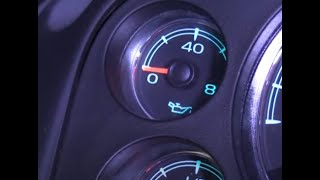
- Oil pressure gauge reading erratically, dropping to zero, or pegged high (often 80+ PSI).
- "Check Gauges" message on the driver information center.
- Engine running rough or making ticking/knocking noises (in case of actual low oil pressure).
- On V8 models with Active Fuel Management (AFM), low oil pressure can cause misfires and trigger a P0300 random misfire code alongside P0521.
- Replacing only the oil pressure sensor but not the clogged screen underneath it, leading to the code returning quickly.
- Assuming the engine is failing and needs an oil pump or rebuild without first verifying the true oil pressure with a mechanical gauge.
- Replacing the sensor with a cheap aftermarket part. Some owners report the code returning until a genuine ACDelco sensor was installed.
Most Likely Causes
- Faulty Engine Oil Pressure Sensor (Sending Unit) 🔴 High Probability The original sensors on these GM engines are known to fail frequently, either by leaking oil through the top of the sensor's plastic housing or by sending incorrect voltage signals. A common failure mode is the gauge pegging to maximum pressure.
How to confirm: After confirming good mechanical oil pressure, if the gauge/scan tool reading is still erratic or incorrect, the sensor is the prime suspect. 🎬 Watch: Step-by-step guide to replacing the sensor on I6 engines Visually inspect the sensor's connector for engine oil; if oil is present, the sensor has failed internally and is leaking through the pins, requiring replacement of both the sensor and often the connector pigtail.
Typical fix: Replace the oil pressure sensor. It is critical to also replace the filter screen underneath it at the same time. On V8s, a special 1-1/16" oil pressure switch socket (e.g., Lisle 13250) is almost essential.
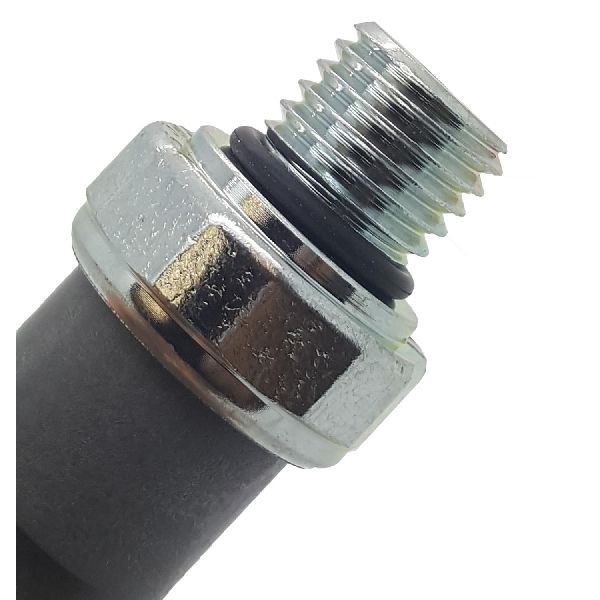
Est. part cost: $30-$75 - Clogged Oil Pressure Sensor Filter Screen 🔴 High Probability → Shop Engine Oil Pressure Sensor This small, thimble-shaped screen (GM Part #12585328) sits directly below the sensor to protect it from debris. It is highly susceptible to clogging with sludge, especially if oil change intervals have been extended, which restricts oil from reaching the sensor and causes false low readings.
How to confirm: The screen cannot be inspected without first removing the oil pressure sensor. It is often found to be completely blocked with dark, gritty sludge.
Typical fix: Remove the old screen and install a new one. A common and effective removal method is to thread a coarse screw (like a drywall or lag screw) into the old screen's opening and use it as a handle to pull the screen out. This part should always be replaced whenever the sensor is replaced.
Est. part cost: $5-$15 - Low or Incorrect Engine Oil 🟡 Medium Probability All engines consume some oil, and a low oil level will naturally cause low oil pressure, triggering the code. Using oil of the wrong viscosity can also cause pressure readings outside the expected range.
How to confirm: Check the engine oil dipstick. The level should be within the full range, and the oil should not be excessively dirty or sludgy.
Typical fix: Top off or change the engine oil and filter, ensuring the correct viscosity (typically 5W-30) is used.
Est. part cost: $40-$80 - Incorrect or Clogged Oil Filter ⚪ Low Probability → Shop Engine Oil Filter Adapter GM has issued service bulletins (e.g., PIP5276E) noting that some aftermarket oil filters have different internal bypass valve specifications than the OEM ACDelco filter, which can cause oil pressure irregularities and trigger P0521, especially on the V8 engines in cold weather.
How to confirm: Check the brand of the installed oil filter. If it is not an ACDelco filter (e.g., PF48E for V8s) or a high-quality equivalent with correct specs, it could be the cause. Some owners report that switching to a premium filter like a Mobil 1 M1-113A resolved their issue.
Typical fix: Replace the oil filter with a new, OEM-spec ACDelco filter.
Est. part cost: $10-$20
Rare But Worth Checking
- Failing Oil Pump or Sticking Pressure Relief Valve: → Shop Engine Oil Pump This is a worst-case scenario. If a mechanical gauge confirms that actual oil pressure is low, the issue is internal to the engine. GM TSB PIP4158H points to a sticking oil pressure relief valve in the oil pump as a potential cause on some GM V8s.
- Worn Internal Engine Bearings: If the engine has high mileage or a history of poor maintenance, worn crankshaft or camshaft bearings can cause excessive clearance, leading to a system-wide loss of oil pressure. This is a catastrophic failure requiring an engine rebuild or replacement.
- Wiring or Connector Issue: The wiring to the sensor, especially on V8s where it's tucked behind the engine against the firewall, can become brittle from heat cycles or damaged by rubbing against other components, causing a short or open circuit. If the sensor connector is full of oil, the pigtail should be replaced.
Diagnosis Steps
- Check the engine oil level and condition. Top off or change if necessary, using the correct 5W-30 oil.
- CRITICAL STEP: Connect a mechanical oil pressure gauge in place of the sensor to verify the actual oil pressure. A healthy engine should have at least 25 PSI at hot idle and pressure should rise with RPM.
- If mechanical pressure is low, STOP. The problem is mechanical (oil pump, bearings, clogged pickup tube, etc.) and requires professional internal engine diagnosis.
- If mechanical pressure is good, the problem is in the sensor circuit.
- Inspect the oil pressure sensor's electrical connector for oil contamination, corrosion, or loose pins. If oil is present, the sensor has failed internally.
- Replace the oil pressure sensor and the small filter screen located in the engine block directly beneath it.
- For V8 models, use a specialized 1-1/16" oil pressure sensor socket (e.g., Lisle 13250, Duralast 50-530) with extensions and a swivel joint to access the sensor behind the intake manifold.
- Clear the trouble code with a scanner and perform a test drive to ensure the code does not return.
Parts You'll Likely Need
- Engine Oil Pressure Sensor / Switch
(OEM #ACDelco D1846A (supersedes 12616646, 12673134))— This is the most common failure point. The sensor fails internally, sending erratic signals or leaking oil through its connector.
Trusted brands: ACDelco (highly recommended), Standard Motor Products (SMP)
OEM price range: $40-$60
Aftermarket price range: $25-$45 - Engine Oil Pressure Sensor Filter Screen
(OEM #12585328)— This small screen is located directly under the sensor and becomes clogged with sludge, restricting oil flow to the sensor and causing false readings. It must be replaced with the sensor.
Trusted brands: ACDelco, Dorman
OEM price range: $10-$15
Aftermarket price range: $5-$10 - Oil Pressure Switch Socket (Tool)
(OEM #Lisle 13250 or similar)— Required for V8 models. A standard deep socket will not fit over the long plastic body of the sensor. This special socket is designed to fit.
Trusted brands: Lisle, Duralast, OEMTOOLS
OEM price range: $10-$20
Aftermarket price range: $10-$20
Related Codes That Often Appear With This One
- P0300 (Random/Multiple Cylinder Misfire): On V8 engines with Active Fuel Management (AFM), incorrect oil pressure can affect the function of the AFM lifters, leading to misfires.
Technical Service Bulletins (TSBs) & Recalls
- SB-10059078-4342 (PIP5276E/F/G): Mentions P0521 setting after an oil change, especially in cold weather, and the importance of using the correct PF48E/PF48 oil filter on V8 engines. Also suggests inspecting the left rocker cover baffle for leaks.
- 20-NA-161: For confirmed low oil pressure with P0521, this bulletin advises checking for a sticking oil pressure relief valve in the oil pump or damage to the #1 main bearing.
- PIP5276D: Specifically recommends trying a UPF48R oil filter if P0521 sets in cold weather with a PF48E filter.
- Bulletin #PIP4786C: Provides information for technicians regarding vehicles that may display a "Low Oil Pressure" message alongside DTC P0521 in the Engine Control Module. It advises following published service information and checking for low oil pressure using a scan tool.
Platform-Specific Known Issues
- V8 (5.3L/6.0L) Sensor Location and Replacement: The location of the oil pressure sensor on the V8 engines is extremely difficult to access. It is at the top rear of the engine block, behind the intake manifold and against the firewall. Replacement is a 'blind' job that must be done by feel, often requiring a combination of long extensions, a swivel/universal joint, and the special oil pressure sensor socket. Many technicians and DIYers access it by reaching from the driver's side of the engine bay. While difficult, it is possible to complete without removing the intake manifold.
- 4.2L I6 Sensor Location and Replacement: In contrast to the V8s, the oil pressure sensor on the 4.2L I6 engine is located on the driver's side of the engine block, just above the oil filter housing. It is relatively easy to access from underneath the vehicle, making replacement a much simpler and faster job.
Mechanic-Grade Diagnostic Values
- Minimum Mechanical Oil Pressure (5.3L V8, Hot) — expected: At least 6 PSI @ 1,000 RPM, 18 PSI @ 2,000 RPM, and 24 PSI @ 4,000 RPM.. Failure: Pressure below these minimums indicates a mechanical engine issue (oil pump, bearings, etc.), not a sensor problem.
- Sensor 5-Volt Reference (V8) — expected: 5.0 Volts at Pin A (Gray wire) of the sensor connector with Key On, Engine Off.. Failure: Voltage significantly lower than 5V points to a wiring issue or a problem with the ECM's 5V reference circuit.
- Sensor Ground (V8) — expected: 0 Volts / continuity to ground at Pin B of the sensor connector.. Failure: Any voltage reading above 0V indicates a bad ground connection, which could be at the PCM or an engine block ground point.
- Sensor Signal Voltage (V8) — expected: ~0.5V with engine off, increasing with engine RPM/oil pressure, up to ~4.5V at high pressure.. Failure: Voltage is stuck high (e.g., 5V), stuck low (0V), or does not change with RPM. A gauge pegged at max often corresponds to a shorted sensor sending a constant high voltage.
Scan Tool Commands That Help
- Tech 2 / GDS2: Engine Data Display (Oil Pressure PID) — Used to view the oil pressure value as reported by the sensor to the ECM. This is the primary data point to compare against a mechanical gauge to confirm a faulty sensor. If the scan tool value is erratic (e.g., pegged at 129 PSI) while a mechanical gauge reads normally, the sensor or its wiring is faulty.
Wiring & Ground Locations
- Oil Pressure Sensor Connector (V8) — Top rear of the engine block, behind the intake manifold, against the firewall.. This 3-pin connector is the direct interface. Pin A is the 5V reference, Pin B is the ground, and Pin C is the signal return to the PCM. Checking for voltage and ground at this connector is the most direct way to test the circuit. Oil contamination from a leaking sensor commonly fouls this connector, requiring replacement of the pigtail (ACDelco PT121 / GM #12085499).
- G103 — On the 5.3L, located on a stud at the front of the driver's side cylinder head.. This is a primary engine block ground. While the sensor uses a low-reference circuit back to the PCM, a poor engine block ground can create electrical noise and voltage offsets that affect multiple sensor readings, including the oil pressure sensor.
- G104 / G108 — On the 5.3L, located on a stud at the rear of the passenger side cylinder head (G104) or lower left side of the engine (G108).. These are additional critical engine-to-chassis ground points. A loose or corroded connection here can cause erratic behavior in multiple systems, including the instrument panel cluster and sensor circuits. Verifying these grounds are clean and tight is a key step in diagnosing persistent or intermittent electrical issues.
Real Owner Repair Stories
- Reddit user on r/ChevyTrucks (Chevy Silverado (GMT800/900 platform equivalent)) — Persistent P0521 code returning 100-1000 miles after being cleared.
❌ Tried (didn't work) Replacing the oil pressure sensor multiple times., Removing the filter screen underneath the sensor.
✅ What actually fixed it The user reported the issue was finally resolved by switching to a Mobil 1 (M1-113A) oil filter, suggesting the previous aftermarket filters had incorrect bypass valve specifications that caused pressure fluctuations. - GMTNation forum user 'CajunWon' (2005 Trailblazer 5.3L V8) — P0521 code with oil pressure gauge pegged at full pressure. Scan tool showed 128.9 psi.
❌ Tried (didn't work) The user was unable to remove the filter screen during the repair and left the old one in place.
✅ What actually fixed it Replacing only the oil pressure sensor (sending unit) fixed the issue. The user noted the special socket was a 'must have' and the repair took about an hour, working by feel. This confirms the sensor itself is a common solo failure point.
OEM Part Supersession History
12616646, 12573107→ACDelco D1846A / GM 12673134— Standard part evolution and consolidation.
Heads up: While physically similar, using non-ACDelco or unverified aftermarket sensors is a common cause of repeat failures or immediate return of the P0521 code. Owners and technicians strongly recommend using the genuine ACDelco part.ACDelco PT121→GM 88953311, JT&T 2823F— This is the 3-wire connector pigtail for the oil pressure sensor. Various manufacturers produce equivalents.
Heads up: Ensure the replacement pigtail is a weather-pack style connector to prevent moisture intrusion. This part is needed if the original connector is brittle, cracked, or contaminated with oil from a leaking sensor.
Model Year Variations Within This Range
- 2005-2009: The 5.3L V8 (RPO code LH6) used in the 9-7X was equipped with Active Fuel Management (AFM), also known as Displacement on Demand (DOD). The 6.0L V8 (RPO code LS2) in the high-performance 'Aero' model did NOT have AFM. This is significant because the AFM system relies on oil pressure to operate the special lifters. A P0521 code on an LH6 engine is more critical as incorrect pressure can cause AFM system faults and associated misfires.
Diagnostic Flowchart
Used vs. New Parts: Buying Guide for This Vehicle
When a used part is the smart pick: For this specific repair (P0521), buying used parts is NOT recommended. The primary failure components—the oil pressure sensor and its filter screen—are inexpensive, high-wear, and have known failure rates. The risk of getting a used part that is already failing or will fail shortly is extremely high and not worth the minimal cost savings.
What to inspect on the donor part:
- Not applicable for this repair.
OEM-only on this vehicle (don't cheap out):
- Engine Oil Pressure Sensor
- Engine Oil Filter
Aftermarket brands forum-validated for this vehicle:
- Mobil 1 (for oil filter, e.g., M1-113A)
- WIX (for oil filter)
- Standard Motor Products (SMP) (for sensor, though OEM is preferred)
Brands owners have reported issues with on this vehicle:
- Unbranded or 'white box' oil pressure sensors from online marketplaces. Forum consensus strongly indicates these parts have a very high failure rate, often right out of the box or within a few hundred miles.
- Low-cost, non-name-brand oil filters. GM has noted that incorrect filter bypass specifications can cause this code.
Real Owner Stories
Aggregated from forums and TSBs cited above. Mileages and costs reflect what owners reported in those sources.
2008 Saab 9-7X 5.3L V8
Symptoms: Vehicle had a P0521 code, requiring replacement of the oil pressure sensor.
What fixed it: The owner replaced the oil pressure sensor and demonstrated removing the clogged filter screen using a 'lag bolt' method to pull it out.
Source hint: YouTube - Midnight Road Garage - Saab 9-7x 5.3L V8 Sensor Replacement
Chevrolet Trailblazer (platform mate) 5.3L V8
Symptoms: The owner experienced a pegged-high oil pressure gauge and a P0521 code.
What fixed it: Other forum users confirmed that the most likely fix was replacing the faulty oil pressure sensor and the clogged filter screen located underneath it.
Source hint: GMTNation.com - P0521 Discussion
Chevy Truck (platform mate)
Symptoms: The owner was dealing with a recurring P0521 code that kept coming back after repairs.
What fixed it: Users in the discussion suggested potential fixes included avoiding non-OEM sensors, checking the wiring, and switching to a high-quality oil filter like the Mobil 1 M1-113A.
Source hint: Reddit r/ChevyTrucks - P0521 Keeps Coming Up
Related OBD-II Codes
Frequently Asked Questions
Where is the oil pressure sensor on my 5.3L V8 Saab 9-7X, and is it difficult to replace?
Is the sensor in a different spot on the 4.2L I6 engine?
Do I need a special tool to change the oil pressure sensor on my V8?
What is the small filter screen that needs to be replaced with the sensor?
My oil pressure gauge is stuck at the maximum reading (80+ PSI). Is this the sensor?
I got a P0521 code right after an oil change. Could the filter be the problem?
Helpful Videos
We Have This Part in Stock


The information in this article is provided for general reference and educational purposes only. Vehicle specifications, procedures, and part compatibility can vary by production date, trim level, and region. Always consult your vehicle's factory service manual and verify part numbers before purchasing or performing repairs. Safety-critical components such as airbags, seat belts, and braking systems should be installed by a qualified professional.
- Saab 9-7X:
- 🧭 Diagnostic Flowchart
- 🎬 Helpful Videos
- 🛍️ Shop This Part
- What's Unique About the 2005-2009 Saab 9-7X
- Symptoms You May Notice
- Most Likely Causes
- Rare But Worth Checking
- Diagnosis Steps
- Parts You'll Likely Need
- Related Codes That Often Appear With This One
- Technical Service Bulletins (TSBs) & Recalls
- Platform-Specific Known Issues
- Mechanic-Grade Diagnostic Values
- Scan Tool Commands That Help
- Wiring & Ground Locations
- Real Owner Repair Stories
- OEM Part Supersession History
- Model Year Variations Within This Range
- Used vs. New Parts: Buying Guide for This Vehicle
- Real Owner Stories
- 2008 Saab 9-7X 5.3L V8
- Chevrolet Trailblazer (platform mate) 5.3L V8
- Chevy Truck (platform mate)
- Related OBD-II Codes
- Frequently Asked Questions
- 🎟️ Get 5% Off