

P0521 on 2008-2010 Saturn Vue 3.6L: Engine Oil Pressure Sensor Causes and Fixes
On a 2008-2010 Saturn Vue with the 3.6L V6, code P0521 is most often caused by a faulty engine oil pressure sensor, a clogged filter screen beneath it, or an incorrect type of oil filter. Replacing the sensor and screen, which costs about $30-$70 for the parts, usually resolves the issue. Always check your oil level first and use a high-quality oil filter.
- Always check your oil level and condition first; it's the simplest fix.
- The most likely cause is a faulty oil pressure sensor, which should be replaced along with its small filter screen.
- Before replacing any parts, you must verify the true engine oil pressure with a mechanical gauge to rule out a serious internal engine problem.
- The sensor is located between the alternator and A/C compressor, making replacement a moderately difficult DIY job that requires accessing it from under the vehicle.
- If a new sensor doesn't fix the code, the problem could be in the wiring or, in rare cases, the oil pump itself.
What's Unique About the 2008-2010 Saturn Vue
The 2008-2010 Saturn Vue is a General Motors (GM) platform, and its 3.6L LY7 engine was used in many GM vehicles. On these engines, the P0521 code is extremely common and often points to more than just a bad sensor. A small filter screen located directly under the oil pressure sensor is notorious for getting clogged with engine sludge, which gives the sensor a false reading (an issue noted in TSB PIP4786C). Furthermore, these engines are sensitive to the type of oil filter used; incorrect or low-quality filters can cause this code to appear, especially after an oil change. Lastly, GM has issued service bulletins for similar engines regarding sticking oil pressure relief valves inside the oil pump, which can also cause this code, making a proper diagnosis crucial before replacing parts.
Symptoms You May Notice
- Check Engine Light is on
- Oil pressure warning light is on or flickering
- Oil pressure gauge on the instrument cluster reads zero, is maxed out, or fluctuates erratically
- In some cases, the engine may enter a reduced power 'limp mode'
- Engine may run rough or make knocking/ticking noises if true low oil pressure exists
- Replacing the oil pump without first confirming genuinely low oil pressure with a mechanical gauge.
- Replacing the ECM. While a faulty ECM is a remote possibility, it is almost never the cause for this specific code.
- Overlooking a recently installed, incorrect-spec oil filter as the root cause.
Most Likely Causes
- Faulty Engine Oil Pressure Sensor (Sender) 🔴 High Probability The sensor is located in a high-heat area of the engine bay, leading to wear. It can also fail internally, causing oil to leak into the electrical connector, corrupting the signal. Some owners report that using aftermarket sensors can lead to the code returning, recommending an OEM ACDelco part for a lasting fix.
How to confirm: After verifying the actual oil pressure is normal with a mechanical gauge, inspect the sensor's electrical connector for oil contamination. If oil is present, the sensor has failed internally. A good electrical test: with the engine off and key on, if the gauge reads high, unplug the sensor. If the gauge then drops to zero, the sensor is internally shorted and must be replaced.
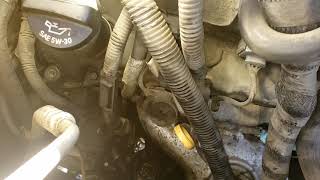
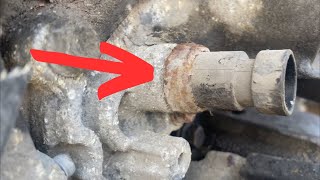
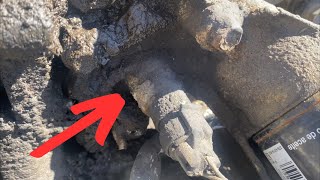
Typical fix: Replace the engine oil pressure sensor. On the 3.6L V6, it is located on the front of the engine block, near the oil filter housing, but tucked in a difficult-to-access spot. 🎬 Watch this walkthrough for locating and replacing the sensor. A special 1-1/16" (27mm) thin-wall oil pressure switch socket is required.
Est. part cost: $25-$60 - Incorrect or Low-Quality Oil Filter 🔴 High Probability → Shop Engine Oil Filter Adapter The GM 3.6L engine family is notoriously sensitive to oil filter construction. TSBs (like PIP5276E) and extensive owner reports confirm that using non-spec or cheap 'E-core' filters can lead to incorrect pressure readings and trigger P0521, often immediately after an oil change.
How to confirm: Check the brand and part number of the currently installed oil filter. If the P0521 code appeared shortly after an oil change and a non-ACDelco or budget filter was used, this is a highly likely cause.
Typical fix: Replace the oil filter with a high-quality, OEM-specification filter. The ACDelco PF48 (or its modern equivalent) is often recommended. One owner on a forum fixed their persistent P0521 issue by switching to a Mobil 1 M1-113A oil filter. Clear the code and re-evaluate. 🎬 See two quick DIY methods to fix the P0521 code.
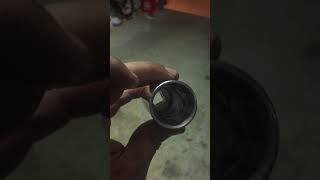
Est. part cost: $10-$20 - Clogged Oil Pressure Sensor Filter Screen 🟡 Medium Probability → Shop Engine Oil Pressure Sensor This is a well-documented issue on GM engines, referenced in TSB PIP4786C. A small, thimble-sized screen (GM Part #12585328) is installed in the oil passage just below the sensor. It can become clogged with sludge, especially if oil changes have been neglected, starving the sensor of an accurate pressure reading.
How to confirm: This is typically found during the replacement of the oil pressure sensor. When the old sensor is removed, the screen can be seen (and removed with a pick) in the threaded port. If it is full of debris, it is clogged.
Typical fix: Remove and replace the filter screen when replacing the oil pressure sensor. Some aftermarket sensors, like the Dorman 926-040, include a new screen in the kit.
Est. part cost: $5-$15 - Low or Dirty Engine Oil 🟡 Medium Probability This is not vehicle-specific but is a common oversight. Old, sludgy oil or a low oil level can cause pressure fluctuations that the ECM flags as a performance issue.
How to confirm: Check the engine oil level with the dipstick and observe its condition. If the level is low or the oil is dark, thick, and past its service interval, this is a likely contributor.
Typical fix: Perform an oil and filter change using the manufacturer-specified oil viscosity (full synthetic Dexos is recommended). Top off the oil if it is just low.
Est. part cost: $40-$80
Rare But Worth Checking
- Sticking Oil Pressure Relief Valve: GM has issued service bulletins (e.g., 20-NA-161) for other vehicles with similar engine architecture where a sticking relief valve in the oil pump causes P0521. This can lead to genuinely low oil pressure at idle. Diagnosis requires a mechanical gauge test; the fix is to replace the oil pump.
- Damaged Wiring or Connector: The wiring harness to the sensor can be damaged by heat or chafing, causing a short or open in the circuit. This should be checked if a new sensor does not resolve the code.
Diagnosis Steps
- Check the engine oil level and condition. Top off or change the oil and filter if necessary. If an oil change was just performed, verify an OEM-spec filter was used. Clear the code and see if it returns.
- If the code returns, connect a mechanical oil pressure gauge to the engine. This is a critical step to differentiate between a sensor issue and a real lubrication problem.
- Start the engine and compare the mechanical gauge reading to the vehicle's oil pressure gauge (if equipped) and the scanner's live data. Per GM specs for the 3.6L, minimum pressure should be around 10 PSI at hot idle and 20 PSI at 2,000 RPM.
- If mechanical pressure is good but the code is present, the problem is in the sensor circuit. Proceed to the next step.
- If mechanical pressure is low, stop immediately. You have a serious internal engine problem (e.g., worn bearings, failing oil pump) that requires professional diagnosis.
- Inspect the oil pressure sensor's electrical connector for damage, corrosion, or oil saturation. Clean with electrical contact cleaner if necessary. Perform an electrical check: with the key on/engine off, if the gauge reads high, unplug the sensor. If it drops to zero, the sensor has failed.
- If the inspection looks good, replace the oil pressure sensor and the small filter screen beneath it. This will require a special 1-1/16" thin-wall socket.
- Clear the code and perform a test drive to ensure the repair was successful.
Parts You'll Likely Need
- Engine Oil Pressure Sensor / Switch
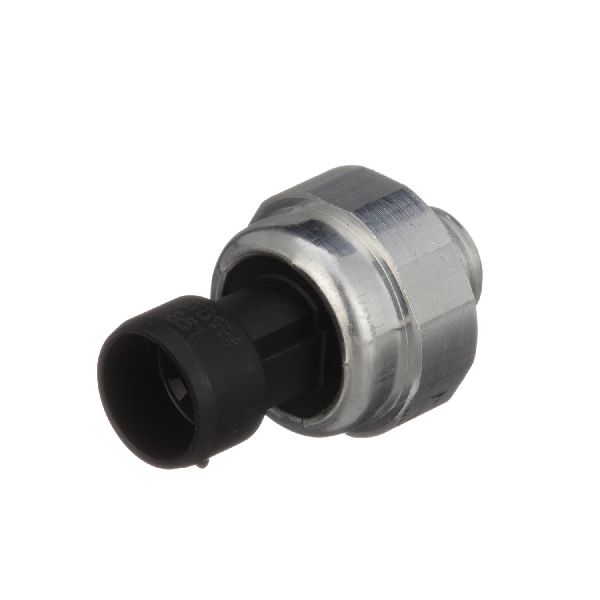
(OEM #12673134 (supersedes 12596951, 12621234))— This is the most common failure part for code P0521. It either fails electronically or develops an internal leak. Using an OEM/ACDelco part is highly recommended.
Trusted brands: ACDelco (GM Genuine), Delphi, Standard Motor Products (SMP)
OEM price range: $45-$60
Aftermarket price range: $25-$45 - Oil Pressure Sensor Filter Screen
(OEM #12585328)— This small screen, located under the sensor, frequently clogs with sludge on GM engines, causing a false reading. It should be replaced whenever the sensor is replaced.
Trusted brands: ACDelco (GM Genuine), Dorman
OEM price range: $5-$10
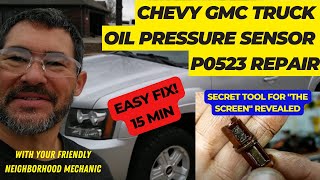
Aftermarket price range: $5-$10 - 1-1/16" (27mm) Thin-Wall Oil Pressure Switch Socket — A standard deep well socket is too thick to fit into the tight recess where the sensor is located on the 3.6L engine. This specialty tool is required for removal and installation. 🎬 Check out this easy way to replace the sensor using a secret tool.
Trusted brands: Lisle, OEMTools, Performance Tool
OEM price range: $10-$20
Aftermarket price range: $10-$20
Related Codes That Often Appear With This One
- P0522 — Indicates the sensor circuit voltage is too low, often pointing to a shorted sensor or wiring.
- P0523 — Indicates the sensor circuit voltage is too high, often pointing to an open circuit or faulty sensor.
- P06DE — A GM-specific code related to the oil pressure control solenoid. A TSB notes that P0521 can appear with P06DE when debris is stuck in the oil pump's check ball.
Technical Service Bulletins (TSBs) & Recalls
- 20-NA-161: Information on Low Oil Pressure Indicator / DTC P0521, potentially caused by a sticking oil pressure relief valve in the oil pump.
- 24-NA-173: Further information on P0521 caused by a stuck oil pressure relief valve, emphasizing mechanical testing.
- PIP4786C: Instructs technicians to inspect the 'Valve Lifter Oil Filter' (the screen under the sensor) for debris or sludge before replacing other parts for a P0521 code.
- PIP5276E: Recommends changing the engine oil and using a specific type of filter (PF48E) to resolve a P0521 code that appears after an oil change.
Platform-Specific Known Issues
- While no recall exists for this specific part on the Vue, GM has issued recalls (e.g., A222379711) for other models where the ECM software fails to properly clear a permanent P0521 code, which can cause a vehicle to fail an emissions test even after the repair is complete.
- The location of the sensor on the transverse 3.6L V6 is notoriously difficult to access, tucked behind other accessories like the alternator, making the repair more labor-intensive than on other engines.
Mechanic-Grade Diagnostic Values
- Mechanical Oil Pressure (Minimum @ Hot Idle) — expected: 69 kPa (10 psi). Failure: Pressure below this value indicates a mechanical lubrication issue, not a sensor fault.
- Mechanical Oil Pressure (Minimum @ 2,000 RPM) — expected: 138 kPa (20 psi). Failure: Pressure below this value under load confirms a mechanical lubrication issue.
- EOP Sensor 5V Reference Circuit Voltage — expected: 4.8V to 5.2V (Gray wire to ground). Failure: Voltage outside this range indicates a wiring or ECM problem.
- EOP Sensor Low Reference Circuit Resistance — expected: Less than 10 Ω (Black wire to ground). Failure: Resistance greater than 10 Ω indicates a bad ground connection.
- Scan Tool Oil Pressure (Key On, Engine Off) — expected: 0 PSI / 0 kPa. Failure: Any reading above 0 PSI, especially a high fixed value like 129 PSI, confirms an electrical or sensor fault.
Scan Tool Commands That Help
- GDS2/Tech2: Oil Pressure Gauge Command — A technician can use a bidirectional scan tool to command the instrument panel gauge to sweep through its range. This helps verify if the gauge itself is functioning correctly, separating a gauge failure from a sensor/circuit failure.
Wiring & Ground Locations
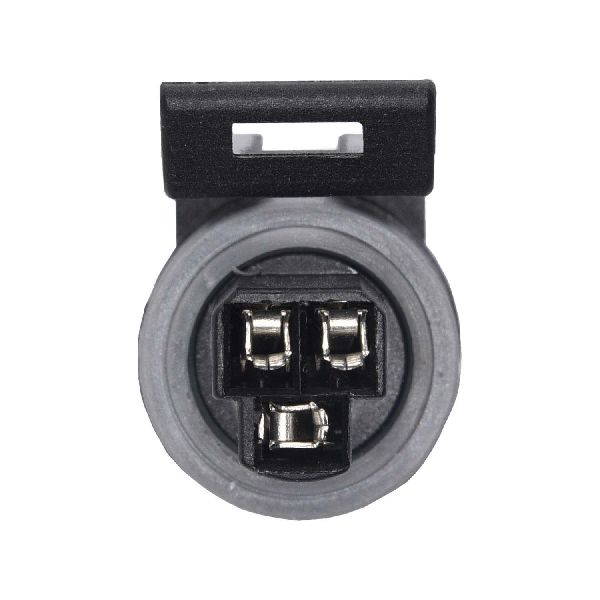
- B37 Engine Oil Pressure (EOP) Sensor Connector — On the front of the engine block, screwed into the oil filter adapter housing.. This 3-wire connector is the primary interface. Pin 1 (Tan/White) is the signal, Pin 2 (Black) is the low reference/ground, and Pin 3 (Gray) is the 5V reference from the ECM. Oil contamination or heat damage here is common.
- G106 — On the engine at the left front top corner for the 3.6L engine.. This is a primary engine ground. A poor connection here can introduce noise or voltage offsets into sensor readings, including the oil pressure sensor, potentially causing false codes.
- G107 — At the rear of the engine.. This is another critical engine ground point. Verifying it is clean and tight is a key step in diagnosing any electrical fault related to engine sensors.
- G105 — At the left rear of the engine.. This ground point serves various engine components. A fault here can contribute to erratic electrical behavior and should be checked when diagnosing persistent codes.
Real Owner Repair Stories
- Reddit user on r/ChevyTrucks (Chevy truck with similar GM engine architecture) — Recurring P0521 code, check engine light would return 100-1000 miles after clearing.
❌ Tried (didn't work) Replaced the oil pressure sensor three different times., Removed the sensor filter screen.
✅ What actually fixed it Switching to a specific high-quality oil filter (Mobil 1 M1-113A). Another user in the same thread confirmed this fix worked for them as well. - GMTNation forum user (GM SUV with 5.3L engine) — P0521 code with oil pressure gauge pegged at maximum (128.9 psi on scan tool).
❌ Tried (didn't work) The user was considering complex diagnostics before attempting the simple fix.
✅ What actually fixed it The issue was resolved by replacing the faulty oil pressure sending unit. The failure mode of being stuck at max pressure was a direct indicator of an internally shorted sensor.
OEM Part Supersession History
12596951, 12621234→12673134— Standard part evolution for improved reliability and manufacturing consistency.
Heads up: The newest part number, 12673134, is the correct service replacement for the earlier numbers and should be used for all repairs.
Model Year Variations Within This Range
- 2009: In 2009, some Saturn Vues may have been equipped with the direct-injection LLT version of the 3.6L V6, which replaced the port-injected LY7. While the engine architecture is similar, the direct injection engines can be more sensitive to sludge buildup from extended oil change intervals. However, the cause and diagnosis for P0521 (faulty sensor, clogged screen, wrong filter) remain identical for both LY7 and LLT engines.
Diagnostic Flowchart
Used vs. New Parts: Buying Guide for This Vehicle
When a used part is the smart pick: For this repair, buying used parts is generally not recommended. The primary failure components (sensor, screen, filter) are inexpensive wear items. The only exception might be sourcing a used wiring harness pigtail if the original connector is damaged, as this can be more cost-effective than replacing a larger section of the harness.
Donor-vehicle mileage cap: roughly under 80000 miles for the part to have meaningful remaining life.
What to inspect on the donor part:
- For a wiring pigtail, ensure the plastic is not brittle or cracked.
- Check for any signs of oil contamination inside the connector.
- Verify the locking tab is intact and functional.
OEM-only on this vehicle (don't cheap out):
- Engine Oil Pressure Sensor
- Oil Pressure Sensor Filter Screen
Aftermarket brands forum-validated for this vehicle:
- Mobil 1 (for oil filters, specifically M1-113A reported to solve issues)
- Delphi (for sensors)
- Standard Motor Products (SMP) (for sensors)
Brands owners have reported issues with on this vehicle:
- Unbranded, 'white-box' oil pressure sensors are frequently reported on forums to fail quickly or be inaccurate out of the box.
- Low-quality or 'E-core' design oil filters have been linked to this code on GM 3.6L engines.
Real Owner Stories
Aggregated from forums and TSBs cited above. Mileages and costs reflect what owners reported in those sources.
GM 3.6L V6 (similar engine)
Symptoms: A recurring P0521 code that kept coming up.
What fixed it: The final fix was switching to a specific Mobil 1 (M1-113A) oil filter.
Source hint: Reddit r/ChevyTrucks
GM 3.6L V6 (similar engine)
Symptoms: A persistent P0521 code that would not go away.
What fixed it: The code was resolved after replacing an aftermarket oil pressure sensor with an OEM ACDelco part.
Source hint: Reddit r/ChevyTrucks
Related OBD-II Codes
Frequently Asked Questions
My P0521 code appeared right after an oil change on my Vue. What's the most likely cause?
I'm replacing the oil pressure sensor. Is there anything else I should replace at the same time?
What special tool is required to change the oil pressure sensor on the 3.6L V6?
Should I use an aftermarket oil pressure sensor or stick with an OEM part?
How can I be sure my engine actually has low oil pressure versus just a bad sensor?
I replaced the sensor and the screen, but the P0521 code won't clear. What could be the issue?
Helpful Videos
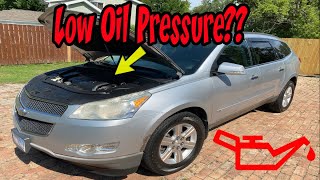
![How to Fix P0521 Engine Code in 4 Minutes [2 DIY Methods / Only $6.87]](https://img.youtube.com/vi/W9EL9QHCDMo/mqdefault.jpg)
We Have This Part in Stock


The information in this article is provided for general reference and educational purposes only. Vehicle specifications, procedures, and part compatibility can vary by production date, trim level, and region. Always consult your vehicle's factory service manual and verify part numbers before purchasing or performing repairs. Safety-critical components such as airbags, seat belts, and braking systems should be installed by a qualified professional.
- Saturn Vue:
- 🧭 Diagnostic Flowchart
- 🎬 Helpful Videos
- 🛍️ Shop This Part
- What's Unique About the 2008-2010 Saturn Vue
- Symptoms You May Notice
- Most Likely Causes
- Rare But Worth Checking
- Diagnosis Steps
- Parts You'll Likely Need
- Related Codes That Often Appear With This One
- Technical Service Bulletins (TSBs) & Recalls
- Platform-Specific Known Issues
- Mechanic-Grade Diagnostic Values
- Scan Tool Commands That Help
- Wiring & Ground Locations
- Real Owner Repair Stories
- OEM Part Supersession History
- Model Year Variations Within This Range
- Used vs. New Parts: Buying Guide for This Vehicle
- Real Owner Stories
- GM 3.6L V6 (similar engine)
- GM 3.6L V6 (similar engine)
- Related OBD-II Codes
- Frequently Asked Questions
- 🎟️ Get 5% Off